|
|
[Page 133]
[Page 134]
[Page 135]
by Melech Glotzer
Translation from Yiddish by Beate Schützmann-Krebs
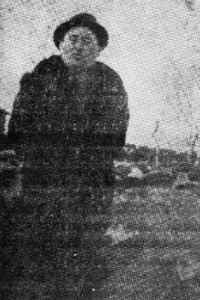
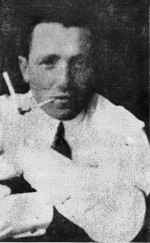
Yankev Meir Zalkind was born in Kobryn in the eighties of the previous century. From early childhood on, he was regarded as an iloy [prodigy]. His religious teachers used to say that a great man was growing up in Kobryn.
For Yankev Meir, the dalet ames [the “four cubits,”the narrow confines] of the yeshiva soon became too small, and he went off to pursue further education in Switzerland. His dynamic temperament immediately made him a leading figure among the student circles. Secular philosophical education did not hinder Yankev Meir's religious outlook. On the contrary, he organized and led religious student groups, maintaining the strictest kashres [kosher observance] and other religious requirements. With persistence and ingenious arguments, he would uphold and defend his principles.
Yankev Meir's brilliant mind enabled him, in a relatively short time, to learn some twenty languages. Many of his literary and political-social works were in fact written in English, Russian, German, and French.
Yankev Meir's fiery and restless nature allowed him to formulate his positions in the social-political sphere with remarkable speed. His temperament was too stormy for him to remain for long with any single social or literary-scientific ideology. His changes were very frequent.
At one moment he would throw himself, body and soul, into the anarchist field, editing brochures and journals with anarchist educational material. Then again he would turn to the Zionist sphere, defending with endless polemics his Zionist line of thought. For a certain period he was an outspoken Yiddishist and published his works only in Yiddish. At another time he was once more the fanatical Hebraist. Among his numerous philosophical-historical works we also find his theatrical creations or translations of foreign-language plays, his work as editor of political publications, and at the same time his writing of children's literature.
Yankev Meir was an exceptionally multifaceted personality. With great brilliance he shone in his numerous historical, scholarly, and literary works. It is true that his political-social ideas and positions changed more than once. This was, naturally, a product of his restless temperament. Dr. A. Mukdoni reflects Yankev Meir Zalkind's nature[a] very accurately: Yankev Meir's prodigy-like mind and his ingenious abilities did not allow him to remain for long in any single field of activity.
However, Dr. Mukdoni's conclusion is not entirely accurate – that Yankev Meir changed in everything and had to change in everything. For we see clearly that in the religious-national sphere he held fast, aside from small nuances, throughout his entire life. And this is likely the very motive that enabled him to serve as a rabay [rabbi] of a Yiddish-English congregation; probably the same motive led him to devote himself to translating the Talmud into Yiddish. (Because of his death, he did not manage to translate more than two tractates – Brokhes and Zroim.) And, last but not least, his settling in Erets Yisroel.
All of this strongly demonstrates his unwavering religious-national feeling.
Author's Note:
by Noach Priluk
Translation from Yiddish by Beate Schützmann-Krebs
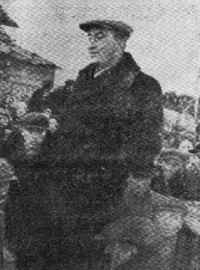
Rabbi Shafit was a son of R. Marim, of blessed memory. He was a Jew who embodied both secular learning and Toyre [Torah]. He knew several languages and was a great sage, a man of distinguished appearance – tall of stature, with a handsome beard, not a large one, neatly dressed, and always with a smile on his face.
Rabbi Shafit lived at the corner of Pinsker Street and Market Square. His home was always full of people; anyone who had some trouble would go to the rabbi. The household was conducted in a strictly religious spirit. Because of his frail health, the rabbi did not go to daven in the bes-medresh every day; instead, he prayed at home. On Shabbats a minyan was arranged in his house. After the prayers one made kiddush and had a bite of kugl [pudding].
On festivals the rabbi prayed in the Great Shul [Synagogue], where his seat was in the mizrekh [the eastern section reserved for honor].
From early morning until late at night, something was always cooking in his kitchen. Every poor person who came in would receive a kopek and a plate of hot food. Respectable poor folk the rabbi himself would receive personally, giving them rubles – even three-rubel coins.
On Purim both doors of the rabbi's house stood open. On the table, all manner of good things were laid out. Poor people, Purim performers, little boys in costumes with smudged faces, and big boys–they all went to see the rabbi.
The rabbi had already prepared full plates of small coins: new one-kopeck pieces, four-, six-, and ten-kopeck copper coins, and ten-, fifteen-, and twenty-kopeck silver coins, as well as half-rubles and rubles. The rabbi would sit at the head and distribute. According to their size, each one received his donation, along with a drink of bronfn [brandy] and a piece of honeycake.
All day long people would bring the rabbi Purim gifts.
Around his house it was like a fair. In the evening all the lamps were lit; the guests sat at the table, a Purim meal fit for a king. The rabbi with his entire family sat assembled; the table was piled high with layered pastries, cakes, small bowls of marinated herring, chopped fish, brandy, liqueur, and wine.
In the evenings, large groups of masqueraders would come. They would receive ten-kopeck and fifteen-kopeck silver coins.
A major attraction was the wagon with the band of Purim performers. They would stage a Yosef play – Mekhires-Yosef [The Selling of Joseph] – or an Akhashverosh play, in which the leading roles were played by Tevl the Blind as Queen Esther, Shloyme Tentsl as Haman, and Flaskin as Mordekhay the Righteous, along with several others who supported the performance.
Before the High Holy Days, a special commotion would arise at the rabbi's house. One would see people from out of town. The priziv [conscription list] was being prepared.
The rabbi, who handled the Jewishmetrikes [vital-records registers], kept in his home all the books with the names and years. He had to make the living into the dead and the dead into the living; and from three sons, he would list one of them as already in active army service. Then a frenzy of writing and crossing-out began, corrections to the right and to the left – anything to keep Jewish young men from being drafted.
Once the rabbi was denounced to the guberniya authorities. A commission came from Brisk and carried out an inspection. The rabbi was arrested and kept at the uspravnik's [police prefect] house. After a bail payment of 3,000 rubles he was released until the trial. Knowing full well the punishment that awaited him, he left for Erets Yisroel. His house was purchased by Dr. Kindler.
His position was later taken over by his son-in-law Panovke, who became the rabbi. His second son-in-law was a doctor. With the outbreak of the war in 1914, both were drafted into the army with high ranks.
A legend is connected with the rabbi's priziv dealings. After issuing a death certificate for a prizivnik–a young man subject to conscription–a commission arrived and demanded that the rabbi open the grave of the “deceased”to verify the truth of it. Some time earlier, an unmarried young man who had studied in the Gas Bes-Medresh had died in Kobryn. On the rabbi's instruction, the gravedigger opened that grave. The police commission came with the rabbi to the cemetery to convince themselves of the correctness of the matter.
[Page 137]
Some time later, the same gravedigger was digging a grave. Not waiting for the corpse, he stepped into the house for a moment. When he came back, he saw a small animal in the pit. As he tried to lift it out with his shovel, it leapt up and struck him in the eye, blinding him. In town people said that this had happened as punishment for disgracing a dead man.
by Itsl Kobryniets
Translation from Yiddish by Beate Schützmann-Krebs
Dr. Yosef Pribulski was born in Kobryn in 1890. Until the age of thirteen he studied in the kheyder [cheder]. Later his parents enrolled him in the only Russian school then existing in Kobryn, the gorodskoye utshilishtshe. After completing the four-class school, he entered the state real school in Warsaw; at nineteen he finished that school and went to Switzerland to study at the medical faculty of the University of Basel.
He studied in Basel for two years. Returning to Russia, he entered Kazan University, where he completed his studies as a doctor of medicine. When the First World War broke out, he was drafted into the army as a physician. After the war ended, Dr. Pribulski came home to his native town, where his mother, whom he loved dearly, had been looking out for him. His father had died when he was very young.
Upon arriving in Kobryn, Dr. Pribulski began to practice immediately. Not even half a year passed before the young doctor already had a large practice. In the early period of his work he was strongly supported by the then very popular Christian Kobryner physician Dr. Kindler, who was greatly beloved by the entire population of Kobryn.
Dr. Kindler met very often with the young Dr. Pribulski for consultations, and later, when Dr. Kindler grew weak and could no longer practice, he sent all his patients to his young colleague, Dr. Pribulski. Despite the large practice he was already conducting, this did not keep Dr. Pribulski from engaging on a broad scale in social work, and together with the Jewish doctors and activists of Kobryn he reopened the Jewish hospital, which had been closed since the outbreak of the First World War.
Some time later, a vocational school for carpentry and women's tailoring was established by the central ORT Society. In the administration of this school he worked not only as chairman, presiding over the meetings, but was occupied with its work every day, trying to convince everyone he met to support the school. Dr. Pribulski encouraged all his friends and acquaintances to place their furniture orders only with “his” school, and when an order was completed he praised the work to the skies. For the employees of the school he was not only a chairman but a loyal friend, taking care of their interests.
Some time afterward, through his initiative and with the help of the then chairman of the Artisans' Association, the Kobryner folks-bank [People's Bank] was founded, and Dr. Pribulski was immediately chosen as its chairman.
When a district committee of the cooperative banks of the Polesie voivodeship was established, Dr. Pribulski was chosen as its chairman, and the representatives of the Warsaw central office would make no decision concerning their banks in Polesie without first consulting the chairman of the district committee, Dr. Pribulski.
When a branch of TSYSHO [Central Yiddish School Organization] was founded in Kobryn, and the Yiddish school – which had previously been affiliated with the Tarbut central office – passed over to the Central Yiddish School Organization, Dr. Pribulski
[Page 138]
entered its administration and was immediately elected chairman there as well. He devoted himself to this institution with all his fire, not only as its chairman but as a fighter for a Yiddish school, and together with his colleagues he waged a persistent struggle against the opposing side – that is, against those who opposed a Yiddish school on the TSYSHO model.
In this work Dr. Pribulski devoted not merely hours but very often entire days and evenings, frequently neglecting his medical practice.
Later, when the TSYSHO could no longer subsidize the Kobryner Yiddish school because of a lack of funds, and the school faced the danger of being shut down, Dr. Pribulski signed promissory notes for the sum of 2,000 złoty – which he later had to pay out of his own pocket, since there was no longer any outside support, and the tuition paid by the mostly poor children of the Jewish working masses could not sustain the folk school [community elementary school]. In the end, the Kobryner Yiddish folk school was closed, and this was a painful experience for Dr. Pribulski.
But Dr. Pribulski did not give up. He quickly threw himself into another area of social work. At that time, elections to the local city council were approaching. Dr. Pribulski then headed the democratic slate in the elections. The democratic slate won a significant victory. Dr. Pribulski was elected vice-mayor. It is worth noting that, despite the bitter struggle he and his group waged during the elections against the other slates, all the Jewish councilmen nevertheless voted unanimously to elect him vice-mayor.
His term as vice-mayor lasted a full five years, during which he brought great benefit to Jewish interests in the municipal administration. There was not a single Jewish issue before the city council for which Dr. Pribulski did not wage a persistent fight for Jewish rights within the framework of municipal self-government.
Many times the Christian councilmen withdrew their proposals, which had provoked displeasure in the widely respected Dr. Pribulski.
After completing his term as vice-mayor, Dr. Pribulski decided not to take on the office again. From year to year, his medical practice kept expanding. It turned out that he had to work late into the night. He then ran in the elections on a united slate, which came into being thanks to his involvement, and at the very first session he was elected by the city council as chair of the audit commission.
In 1935, Dr. Pribulski, together with his wife Hela, made his first trip to Erets Yisroel [Land of Israel], where they were warmly welcomed by all the Kobryner landsleit. Dr. Pribulski and his wife visited every city in Erets Yisroel with a Jewish population, as well as all the larger Jewish colonies.
Upon returning from Erets Yisroel, he shared his impressions through joint lectures together with his wife, which drew a very large audience. Dr. Pribulski returned deeply inspired by the building work in Erets Yisroel, and, true to his nature, he threw himself with full energy into work on behalf of the Land of Israel.
He was then received with open arms by the Zionist organizations. From that point on, no Zionist activity took place without the participation of Dr. Pribulski, who was appointed by the local Zionist organizations to head all their committees. And despite the fact that he carried out the work of general Zionist activity, his sympathies lay with the democratic currents within the Zionist movement.
Dr. Pribulski died on January 10, 1939, of a heart attack. Until the very last moments of his life, the universally respected and beloved physician Yosef Pribulski fulfilled his duty as a doctor and as a social activist.
May his memory be honored!
[by Itsl Kobryniets]
Translation from Yiddish by Beate Schützmann-Krebs
Dr. Pribulski's wife was born in Łódź. She came from the very prominent Zionist family Levinzon and had been raised under strong Zionist influence. Upon her arrival in Kobryn, she entered the Zionist
[Page 139]
circles, where she contributed greatly through her activity, her influence, and her collaboration in the Hit'achdut party, in which she served for a time as vice-chairwoman. She also worked in WIZO [Women's International Zionist Organisation] and in other social institutions.
Thanks to her devotion to Zionism, she influenced and drew her husband, Dr. Pribulski, closer to the Zionist ideal.
In 1935, they made a trip together to Erets Yisroel [Land of Israel]. Returning, deeply inspired by what they had seen there, they shared their impressions through lectures for Kobryn's Jewish community.
Thanks to her influence, Dr. Pribulski became an enthusiastic worker for Zionism and took part in all Zionist undertakings.
After the death of Dr. Pribulski, his wife Helena remained in Kobryn until the arrival of the Nazis, yemakh shemam [may their name be erased]. She was murdered in a bestial manner together with all the Jews of Kobryn.
May her memory be honored.
by Melech Glotzer
Translation from Yiddish by Beate Schützmann-Krebs
During the First World War, the figure of the Hebrew teacher Noach Alkon appeared on the Kobryner horizon. Short in stature, somewhat stout, with long, pitch-black hair, dark eyes, a sharp gaze, and the expression of a poet. He gave the impression of a nervous person. Yet, as it later turned out, he was one of the kindest and gentlest of men.
In the sphere of old Kobryn – which, until the war, had known nothing beyond simple melamdim [traditional elementary teachers], who, aside from a few exceptions, did not know grammar or rules (of the sacred Hebrew language) – the appearance of the teacher Noach Alkon was something entirely new. One could say that the Kobryn youth was fortunate that Noach Alkon had married in Kobryn (to Katsherekhe's daughter), becoming a Kobryn resident and, most importantly, the first Kobryner Hebrew teacher.
It did not take long before the teacher Noach Alkon became popular among a large part of Kobryn's youth, who strove for haskole [enlightenment] and for the modernization of religious life. His private lessons were among the best paid. And his school lessons – at first in the pro-gymnazye under the name “Alkon, Garber, and Pribulski,”later in the Tvuna school and in the Polish gymnasium [upper secondary school; academically oriented] as a Hebrew teacher – were of great value.
|
|
At that time, the Zionist idea was spreading, and with the Balfour Declaration a strong
[Page 140]
Zionist activity developed. The teacher Alkon was one of those who most energetically helped disseminate the Zionist ideal. A convinced General Zionist, he was active in most Zionist undertakings. He was deeply knowledgeable in Hebrew and Yiddish literature. One could say that not only in Kobryn, but even in larger towns near Kobryn, there was no one who surpassed him in his thorough knowledge of Hebrew and Yiddish literature. His literary lectures enjoyed a reputation in Kobryn and even in the surrounding towns.
In general, he never refused when he was invited to participate in lectures or cultural events, provided they carried a national character. It never happened that any national or cultural institution organized an event and Alkon was not among the principal speakers.
Being himself a General Zionist, he nevertheless had great sympathies for all the Zionist youth organizations, regardless of the fact that many of them were socialist-oriented. He often expressed himself as a supporter of fairness and justice – which, after all, is socialism – yet he was afraid of those organizations that propagated socialism, believing that, in time, they would shed their national content. Above all, he was always drawn to the youth organizations, with their activity and vitality.
More than once he reproached his own party comrades for their passivity. He would admonish them, urging them to take an example from Hashomer Hatzair and Poalei Zion, who, in various election campaigns within Zionism – for example, for the Congress, or even in local elections such as for the Keren Kayemet or Keren Hayesod – received more votes and emerged victorious. He would say that the left-wing groups won because they were active. They worked the entire year, not like his own party people, who only roused themselves an hour before the elections. Therefore, he said, they had rightly earned their victory.
He actively assisted Hashomer Hatzair in its educational work, and also Hechalutz and Hechalutz Hatzair, giving various lessons and lectures and participating in different kestl-ovntn [quiz evenings]. He was the spiritual pillar of all the Zionist youth organizations. Indeed, there was not a single young person in Kobryn who did not know Mr. Alkon – as he was called.
A small legend circulated in town (naturally, it came from a handful of jokers) that he was terribly frightened of everything. They “confirmed”this with the claim that, when the Bolsheviks entered Kobryn and began conducting oblaves [raids], he supposedly hid under a feather bed. Reality, however, proved the falseness of that notion. Our beloved teacher Alkon showed extraordinary strength and heroism during the annihilation Aktion carried out by the German murderers in Brona Góra in 1942.
According to the notes of Itshe Shraybman [Schreibman], Noach Alkon was the one who stood up and hurled the truth into the murderers' faces, and, like a prophet, foretold their end – saying that the same would be done to their children as they were doing to us – and was shot on the spot.
Sadly, the latter part of his prophecy has not yet been fulfilled.
Great honor to his memory!
Translator's Note:
by Leybl Sirote (Haifa – Israel)
(Translated by: Aharon Khludnyevitsh [Chłodniewicz])
Translation from Yiddish by Beate Schützmann-Krebs
Born in 1903 in Kobryn. His father, Berl Pantol, of blessed memory – a Zionist already from the era of Dr. Herzl and one of the first in the Zionist movement in Kobryn – gave his son the name Ben-Zion. And the son did not disgrace that name.
|
|
– leader of the Poalei Zion party |
One brother, an active Communist, was tortured to death in the Białystoker prison; the second paid with four years of imprisonment in the grimly notorious Shedletser [Siedlce] prison.
After finishing the Shlivinski Gymnasium, he continued his studies at the Vilna Technikum, but quite unexpectedly he broke off his studies, returned to Kobryn, and threw himself – with all the fire of his youthful, turbulent nature – into the movement of Workers for Erets Yisroel, and especially into the Poalei Zion Ts.S. [Left Poalei Zion faction] party.
By nature he was cheerful, always with a loving smile on his lips, although deep inside a family tragedy gnawed at him and kept him tied to home – at a time when his only aspiration was to leave, to make aliyah to Erets Yisroel, in order to build his home there. And so he accompanied, with a well-hidden feeling of envy, a number of comrades on their way to Erets Yisroel. His last words as we took leave of each other after midnight on that 16th of May 1939 were: “For, ikh vel dir nokhkumen.”[Go – I will follow you].
He was a true friend of people, a man of mezeg-tov [good temperament], beloved by everyone; it seems there was no one who was hostile toward him – except, of course, the Polish regime, which from time to time would harass him and cause him all sorts of troubles.
Gifted with unusual organizational and oratorical abilities, he brought great prestige to the party through his public appearances, from the narrow party tribune to the broader Zionist arena in general, and likewise in general civic matters in the Kobryner town council. He was liked and respected even by non-Jews who worked with him in the council. They knew how to appreciate his abilities and intelligence, although they opposed the majority of his proposals and his social improvements and reforms.
Thanks to him, one can say with full certainty, the party in particular – and the movement of Workers for Erets Yisroel in general, and the Zionist cause in Kobryn as a whole – attained a significant stature and was regarded as one of the active centers in the Polish province. More than once he was entrusted with important tasks from the Central Committee (merkaz) in Warsaw. Weighty assignments awaited him – but cruel fate willed something else.
It was not destined for this faithful son of his people to live to see the fulfillment of his ideals – the State of Israel. He gave his best strength for it,
[Page 142]
and he would surely have been among its builders and educators. Without interruption, he stood – until the destruction of the Kobryner Jewish community – at his post in the movement, as its founder and guide.
…As I write these lines, my hand trembles and my heart bleeds. Dear comrade and unforgettable friend – where are you? Where did you find your final rest? Did you perish at the hands of the filthy Nazis, as did all our dear ones and those closest to us? Or were you delivered over by the peasants, the murderers – our former neighbors, with whom we had even maintained good relations and more than once stood up for them? Woe is me, that such an end awaited you.
Yet in my thoughts – and in the hearts of your countless comrades and admirers, scattered across all corners of the world and especially here in Erets Yisroel – you live, and you will forever be remembered for good.
Yehi zikhrekha barukh – may your memory be a blessing!
Haifa, Israel
30 September 1950
Translator's Note:
by L. Sirote (Haifa, Israel)
(Translated by: Aharon Khludnyevitsh [Chłodniewicz])
Translation from Yiddish by Beate Schützmann-Krebs
Born in 1902 in Kobryn, he was the son of the well-known and widely connected family of Pintshuk-Margolis. As the only child of parents of the middle class, he received a traditional-modern education. He completed Shlivinski's Gymnasium with the intention of continuing his studies. But he broke off his career, as did other friends, returned from Berlin, and devoted himself “body and soul”to the Zionist-socialist movement. He passed through all the stages of Hechalutz, Tze'irei Zion Ts.S., Poalei Zion (Right), and Poalei Zion Ts.S., and became one of the founders and instructors of the party in Kobryn.
He was alert and active in all social affairs of Kobryn's Jewish life. By day he worked hard with his father in the tannery; in the evenings, and in every free hour, he gave himself to the movement: educating the youth who worked and wanted to study, evening courses, the People's University, and so on.
The library – Kobryn's famous Brener Library – was transformed thanks to him into one of the richest book collections in town. In addition, he took part in various commissions, where he served as secretary and the central driving force. An ish-ha-sefer [a man of books, i.e., a learned man] he possessed a fine, subtle humor. He took part in a series of discussions on current problems, showing clear logic and a solid scholarly background. Well known in the central institutions of the party, he participated in nearly all party congresses, whose resolutions he spread and popularized in Kobryn.
Thus one can say with certainty that he contributed a very large share to the cultural rise of the party in Kobryn.
…It is hard to write calmly when everything in you is bleeding and the heart trembles with pain and sorrow. So often it seems as if it is nothing more than a nightmare. Where are you all, dear comrades and devoted friends of our youth? Among them your figure stands out, Itshe – an educator and teacher of adults and youth for a full twenty years, until the outbreak of the Holocaust, and even then you did not abandon all those to whom you had devoted everything – your entire life.
One of the hundreds, of the thousands of our holy martyrs!
With respect and reverence, we recall your sacred memory – all your friends and comrades throughout the world, and especially here in Israel.
Blessed be your memory!
Translator's Note:
by E. Lebnshul
Translation from Yiddish by Beate Schützmann-Krebs
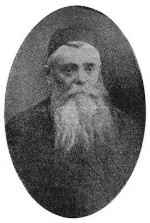
Reb Ari was a tall Jew with a long, full beard, an elongated face, small sharp brown eyes, and large ears. He lived on Pinsker Street. In his youth he had been a shoemaker, but suddenly he felt the urge to go off to North America. In the neighborhood lived a great friend to the Jews, Dr. Andzheyevski, who often asked Ari's wife how her husband was doing in America. She told him that Ari complained that, being a newcomer, he was struggling and regretted having gone. The doctor advised her to write her husband that he should come back.
|
|
When Ari returned, Dr. Andzheyevski took him in and taught him medicine al regel akhat [in a nutshell]. Reb Ari absorbed everything. He began to find favor with the other doctors, especially with Dr. Kindler, as a good healer. That was how Ari the Royfe's career began. There was not a single home in Kobryn where, if someone was ill, they would not call Reb Ari. And when the patient did not improve – as sometimes happens – they would call a doctor. The doctor, learning that Ari the Royfe had been there, would ask to see the prescriptions. Most of the time he would simply have Ari repeat them.
A pious Jew himself, Ari would not ride on Shabbats to visit a patient and would not write a prescription, but went on foot. Most of the time he himself placed the prescriptions, explaining to the pharmacist the contents of each one.
Translator's Note:
by Melech Glotzer
Translation from Yiddish by Beate Schützmann-Krebs
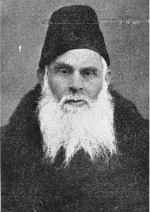
Naftali Weisman was regarded as the chief royfe [healer] of Kobryn. When Ari [the Royfe] appeared on the Kobryn horizon as a healer, Weisman was already established and well known, enjoying great respect among the Kobryner doctors Andzheyevski and Kindler. Besides his medical abilities and knowledge, he was beloved by the Jewish population for his good character, honesty, and learning. In addition to his general medical practice, he also had specialties in eye care and dentistry. Despite the courses he had taken in Warsaw, he was unable to complete his studies and obtain a doctor's diploma because of the Russian-era antisemitic tendencies.
Weisman the Feldsher came to Kobryn from Horodetz, where he had practiced as a healer. He followed in the footsteps of his father, who had been a royfe in the nearby towns of Horodetz, Antipolye [Antopol], and Drohitshen [now Drahičyn]. Because the practice in Horodetz provided only a weak livelihood, he moved with his family to Kobryn in the period before the First World War.
Being a learned Jew, he loved to speak about Torah; perhaps for that reason he was held in high esteem by Kobryn's religious community. He distinguished himself by his good heart, which he showed toward the sick and especially toward the poor. Besides not taking any payment for his visits, he often paid out of his own pocket for their prescriptions.
In contrast to Ari the Royfe (who listened to the patient directly), Weisman examined the patient's respiratory organs and also the heart with a small tube. Weisman was popular in Kobryn for his recommendations to keep the windows open as much as possible, even in winter, in order to breathe fresh air. The air, he would say, possessed limitless healing power (“vitamins”).
|
|
Being a widower, he sadly suffered in his old age because of his children, who had gone off in different directions. His daughter Esther, for example, had become involved with the Left (in the political sphere) and was very active in the Communist circle – giving lessons, delivering lectures, doing clandestine work, and being pursued by the police. All this caused Weisman great pain.
For a short time Weisman went over to Brisk and practiced his eye specialty there. Whether he did this to improve his livelihood or because of the deep sorrow caused by his children is not known.
His broad, magnificent beard, framing his wide face with its two large eyes, inspired respect and deference.
Translator's Note:
by E. Lebnshul
Translation from Yiddish by Beate Schützmann-Krebs
Dr. Pribulski
Among the first Jewish professionals one must count Dr. Pribulski. A young Jewish doctor, he graduated at the beginning of the First World War as a doctor of medicine and was immediately drafted as a mobilized physician into the Russian army.
During the time of the Russian Revolution, Dr. Pribulski returned to his hometown and began to practice medicine. He quickly gained the trust of the population, especially after the well-known Dr. Kindler recommended him and sent many patients to him.
Dr. Pribulski did not remain solely within his profession; he was not content with that. He became active in the social sphere. He helped reopen the Jewish hospital, which had been closed since the Russians had withdrawn. He became a central figure in the Kobryner vocational school of ORT [Jewish Society for Trades and Agriculture, a global Jewish vocational-training organization], in which he carried out a great deal of work. At the same time he was drawn in as president of the Artisans' Bank.
He also did not neglect to serve as chairman of the Kobryner TSYSHO, in which the Kobryner Yiddish folk school was included. His role went further still: he was elected vice-mayor of Kobryn, a position he held for several years.
Dr. Pribulski took an active part in all activities on the Zionist front, especially after his return from a trip to Erets Yisroel. Not being an outspoken party man, he generally supported the democratic wing within Zionism, the Poalei Zion.
To the great sorrow of the entire Jewish population, Dr. Pribulski died in the prime of his life, on the eve of the Second World War, of a heart attack.
Dr. Liberman
At the end of the First World War, the young, newly certified doctor Liberman appeared in Kobryn (a son-in-law of Faynshteyn, across from the pamyatnik [monument]). With his calm and quiet manner, he gradually won the trust of the Jewish population. He had a particular habit of saying, in a soft “tak, tak,”[a gentle “yes, yes,”] when the patient or the relatives of the patient would describe the symptoms of the illness.
In contrast to Dr. Pribulski, Dr. Liberman concentrated mainly on his profession and took only a very small part in the social institutions.
During the liquidation of the Kobryner ghetto, Dr. Liberman's strength became visible. He showed greatness in taking his own life and that of his family with his own hands, so as not to fall into the hands of the German murderers.
May his memory be honored!
Dr. Hershl Feldman
As one of the very young Jewish professionals, Dr. Feldman distinguished himself through his energetic character and very quickly earned a respected place in Kobryner society. He was close to and active in the progressive Zionist circles and enjoyed much esteem. He resisted the murderers, the Germans, and took his own life during the destruction of the Kobryner ghetto. May his name be honored.
Dr. Milner
One of the very quiet and hardworking doctors was Dr. Moyshe Milner (a son-in-law of Breytbard of the steam mill). He enjoyed great popularity, not only among Jews. Dr. Milner was widely known in the region around Kobryn. He was also the doctor of the workers' sick fund (kase-khori). He was active in the social sphere and held democratic views.
It is told that there was not a single day on which the non-Jews did not bring him gifts in gratitude for his good treatment of their sick.
[Page 146]
The shame and mockery endured under the murderous German occupation during the Second World War hardened Dr. Milner so deeply that, at the time of the liquidation of the Jewish ghetto, he resolved to take his own life and that of his family with his own hands, taking poison.
Great honor to his memory!
Advokat Abrasha Herman
Advokat Abrashe Herman was among the first Jewish attorneys who illuminated and elevated the Jewish honor of Kobryn. With his law diploma he demonstrated that Jewish youth was not merely a merchant-oriented youth, a broker's youth, but an energetic, studious youth. And, despite endless hardships and the numerus clausus, he proved – through persistent effort and heroic courage – the boldness to attain a professional career.
Advokat Abrasha Herman took an active part in the Poalei Zion movement and was, in recent years, one of its leaders.
Raised in a nationally minded Jewish spirit, he went through the Hashomer Hatzair organization during his gymnasium years, which showed its influence on the young Abrasha and helped shape him for future social activity.
In the last years before finishing university, we already find Abrasha Herman working diligently in the ranks of the Poalei Zion party, side by side with Ben-Tsion Pantal [Pantol] and Itshe Pintshuk.
Before the annihilation of the Jewish population by the German murderers during the occupation period, he was one of the leaders of the Judenrat [Jewish Council] in the ghetto.
The exact circumstances of Abrasha Herman's death in the ghetto are not known to us. He is mentioned in Gedalyah Bil's description of the ghetto.
May his eternal memory be honored!
Dr. Khayim Goldberg
An exceptionally dynamic personality was embodied in Dr. Khayim Goldberg. A native of Kobryn, the son of a farming family, he finished the gymnasium in Kobryn and, with great difficulty, continued his studies. Despite all the antisemitic obstacles, he nevertheless succeeded in completing the university with distinction.
|
|
Dr. Khayim Goldberg was one of the founders of Hashomer Hatzair. This wonderful scouting organization wrote one of the most spirited and uplifting chapters on our Kobryner Jewish front. With full confidence, Kobryn took pride in Hashomer Hatzair, and this was a great satisfaction for our dear Dr. Khayim Goldberg.
The social life of Kobryn gained greatly from Dr. Khayim Goldberg's return. He devoted himself, with heart and soul, to Kobryn's communal life, being active in almost every sphere.
During the destruction of the Kobryner ghetto, Dr. Khayim Goldberg fought with a revolver in his hand, killing several German murderers and reserving the last bullet for his own death.
Peace to his ashes!
|
|
JewishGen, Inc. makes no representations regarding the accuracy of
the translation. The reader may wish to refer to the original material
for verification.
JewishGen is not responsible for inaccuracies or omissions in the original work and cannot rewrite or edit the text to correct inaccuracies and/or omissions.
Our mission is to produce a translation of the original work and we cannot verify the accuracy of statements or alter facts cited.
 Kobryn, Belarus
 Yizkor Book Project
 JewishGen Home Page
Copyright © 1999-2026 by JewishGen, Inc.
Updated 22 Sep 2026 by LA