|
[Page 58]
Translated by Mira Eckhaus
|
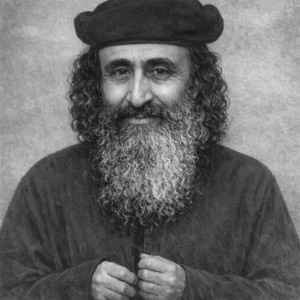
Rabbi Shlomo Zalman from the exiles of Spain – Tikkun Chatzot with
Jeremiah the prophet – Rabbi Chaim Auerbach – Rabbi Akiva Eiger and Rabbi
Chaim – Legends about Rabbi Chaim and his generation – On Yom Kippur
he resigns from the rabbinate – The father of the humble and the
unfortunate – The history and the in-laws of Rabbi Chaim – His death
and the eulogy upon him.
|
With the expulsion from Spain, thousands of Jews were scattered to all corners of the world, and many of them were absorbed by the large and famous Amsterdam community, which served as a support and protector for the exiles and the deported. Among the families who arrived in Amsterdam was one family of secret righteous people, who passed away at a young age due to their hardship, suffering and hard work, leaving behind them a young man who, through his wanderings, arrived in the important city of Poznań. The young man's name was: Shlomo Zalman.
And the young man behaved in asceticism and piety; he secluded himself and was humble and was sitting day and night studying Halacha. The residents of the city spoke about the strange behavior of the young man, saying that he was a Gaon and a very holy man of God, but nothing was uttered from his mouth.
And in those days arrived in Poznań to serve as the rabbi the Gaon, Rabbi Naftali Katz, who received a Rabbinic Ordination, and was famous in his generation as a great sage and a divine kabbalist. This Gaon, the Av Beit Din, had a Beit Din (court), from whom the Shekhinah did not depart. Among the members of this Beit Din was the famous Gaon of his generation, Rabbi Elyakim Gatz. The members of the Beit Din noticed the amazing diligence of the young Rabbi Shlomo Zalman, who even ate his meals in the Beit Midrash and did not depart from it and from the study of the Torah. The Gaon Rabbi Elyakim Gatz was very eager to marry his daughter, and he proposed the matter to the young man himself. Since the young man had no relatives or redeemers, Rabbi Shlomo Zalman did not want to hear anything about this matter, because he claimed the claim of Ben Azzai: My soul yearns for Torah and marriage will distract me from my studies, but the Gaon Rabbi Elyakim Gatz promised to give him a special room and take care of his financial needs, so that he could engage in Torah as much as he wants without any worry or disturbance. After much effort also on the part of the Gaon Rabbi Naftali Katz, the young man agreed to the match. And the Gaon Rabbi Elyakim kept his promise in full.
And then one day his wife came to her father and told him that every night at midnight her husband would leave the house for a few hours and then return home. This was a wonder to her and she did not dare to ask him about it, because she knew that he was a holy man. However, when she told the secret to her father, the Gaon Rabbi Elyakim Gatz went and told the matter to the Gaon Rabbi Naftali Katz, the Av Beit Din. Then it was agreed between them that the next night when the young Torah scholar left his house, the Gaon Av Beit Din and the Gaon Rabbi Naftali Katz would guard his steps together with the congregation leaders. And so, they did and followed him until they were a long way from the city. And then Shlomo Zalman stopped on his way, extinguished the menorah he was holding and entered a deep
[Page 59]
cave and to the great astonishment of the two Gaons, two voices came out of the cave, weeping and wailing over the destruction of the Temple. When Rabbi Shlomo Zalman came out of the cave, the Gaon Rabbi Naftali Katz approached him and said: I order you with the decree of the Rabbi of the city, that you reveal to me who was the owner of the second voice that you heard? Rabbi Shlomo Zalman replied to him that it was Jeremiah the prophet, but from that day forward he would no longer appear before him because the matter was revealed. At that very moment he asked the Gaon Av Beit Din that throughout his life he would not reveal the matter to anyone, and the Gaon fulfilled his request and did not reveal the matter to anyone until the day of his death. – – –
He never prayed in the synagogue except alone. And when the Gaon Rabbi Naftali Katz urged him to come to the synagogue, he stood behind him, when they reached the blessing of “Yotzer Or” (the Creator of Light), he was holding in Rabbi Naftali's tallit. When the Gaon turned his face to him, Rabbi Shlomo Zalman showed him angels standing on the stage, recording every conversation that took place in the synagogue between the “Yotzer Or” and the end of the prayer. The Gaon, Av Beit Din, then said to him: A divine man like you should not come to the synagogue. And the worshippers saw that the Gaon Rabbi Naftali trembled completely when he spoke to Rabbi Shlomo Zalman. And it is interesting that in the Book of “Divrei Mishpat” it is said of Rabbi Shlomo Zalman: “He performed a “Tikkun Chatzot” with Jeremiah the prophet”.
Rabbi Shlomo Zalman wrote several works in the Nigleh and Nistar (The Exoteric and Esoteric Torah). Only a few of them were printed. In Breslau in 5597, his commentary on the Book of Ecclesiastes was published. His son was Rabbi Menachem, Av Beit Din and Rosh Yeshiva of the Poznań congregation, one of the greatest rabbis of his time. Rabbi Menachem's son was Rabbi Itzhak Itzik, who was among the dayanim of Lissa, the son-in-law of the Gaon Rabbi Chaim Kara, Av Beit Din of Łęczyca and Lissa. Many wonderful legends were told about his righteousness and honesty. Among other things, it was told about him that once thieves came to his house at night. He lay down in his bed and whispered to his wife, not to shout or disturb them in their work, for if they go in the middle of the night to steal, they are certainly poor, therefore they should not disturb the thief because he starves. And when Rabbi Itzhak Itzik of Lissa had a son, the whole room was filled with light. This son was named Chaim, after his grandfather, the Gaon Rabbi Chaim Kara. He is the Gaon Rabbi Chaim Auerbach, the author of “Divrei Mishpat”, the Av Beit Din of Łęczyca and the progenitor of the Auerbach rabbinic family, whose members served as rabbis in dozens of communities throughout Poland.
Rabbi Chaim was raised and educated in the city of Lissa. His righteousness and uprightness were glorified by all. All the Gaons of Israel who studied with him in the city of Lissa greatly admired him, the gaon. The author of “Chemdat Shlomo” writes of him in this language: “The great Gaon, the tzaddik of the foundation of the world”, and the Gaon Rabbi Akiva Eiger said of him: “There is in Rabbi Chaim a spark from the soul of our forefather Abraham, for in the commandments of hospitality and charity there is no one like him in our generation”. And also, he crowned him with the title: “The Gaon, the tzaddik, the Av Beit Din of Lissa”. Already in his youth he was appointed as one of the dayanim of Lissa, and later he was accepted as the rabbi of Lissa on the recommendation of the Gaon Rabbi Avraham Tiktin, the author of “Petach HaBayt” in his place, as described above. This Gaon and tzaddik enriched the treasure of legends of the Lissa congregation, for his holiness and righteousness were famous in the most distant places.
[Page 60]
|
His son the Gaon, the author of “Divrei Chaim”, Rabbi Itzchak Itzik zt”l, told that at the time his father the Gaon Rabbi Chaim was supported financially by his father-in-law together with the Gaon Rabbi Akiva Eiger, the Gaon Rabbi Chaim once came to the Gaon Rabbi Akiva Eiger with a proposal: Listen, my friend, you are eating at your father-in-law's and the dowry money you received is not used, and here is a scholar who has lost his assets and has small children he needs to take care of, and if you had given him your dowry you could have helped him. In my opinion, you should give him the money. The Gaon Rabbi Akiva Eiger looked at him in astonishment and refused to accept such a strange proposal. However, after Rabbi Chaim did not let go of him and did not stop pressing, Rabbi Akiva replied to him in irritation: “Leave me alone and do not press me anymore”. Rabbi Chaim let him go and went away. At two o'clock in the morning, Rabbi Chaim heard knocking at his window. When he went down to open the door, he saw Rabbi Akiva standing outside, Shivering from the cold. Rabbi Chaim was astonished and let him into the house. To his question: What happened? Rabbi Akiva replied: Before going to sleep, I began to say before the blessing of “Hamapil”, and I remembered how I had grieved your honor when I said in irritation, “Leave me alone”, and now I had brought the dowry to give to the scholar, whom his honor had mentioned.
When Rabbi Chaim married his daughter from his second wife (who was the daughter of the Gaon Rabbi Yaakov Simchat Landa, Av Beit Din of Kamsna, the author of “Maon HaBarachot”, and the granddaughter of our teacher, the Shach (Rabbi Shabbethai Cohen), of blessed memory), he told her that he was asking her for one request before the wedding: Because your mother brought me a large fortune
[Page 61]
money, and I distributed all of it to needy Jews, I ask you to forgive me for distributing your inheritance (as is known, his second wife died during the birth of her daughter. And according to the Shum Ordinance, the husband doesn't heritage his wife if she died in the first year of their marriage, and therefore he asked her to forgive him for distributing the money).
It is known that several times Rabbi Chaim was late for the “Kol Nidrei” prayer. This happened when, on his way to synagogue, he would hear the sound of a baby crying because his parents had rushed to the synagogue and had not had time to put him to sleep. Rabbi Chaim would stand and rock the baby's cradle until he fell asleep.
Once, Jewish merchants brought silk from Prussia, and the commissar seized them and imprisoned them. In their distress, their wives came to Rabbi Chaim. Rabbi Chaim put on his fur coat and went to the commissar. However, the commissar did not want to talk to him. Rabbi Chaim said: It is enough for me that I saw you. Immediately after he left the house, the commissar's nose began to swell, and every moment it swelled more and more. The doctors who were called in were unable to find a cure for this illness. Then his wife remembered that the rabbi had said: It is enough for me that I saw you. She therefore demanded that her husband go and appease him, for it is known that the rabbi was a holy man. He immediately went to the rabbi's house. When Rabbi Chaim saw him, he said to him: “Reform your deeds and a covenant will not be broken” – release the Jews and everything will return to its former state. By the way, he regularly said this saying. He would repeat it to himself: “Reform your deeds and a covenant will not be broken”.
When he was about to send someone, even a small child, to some kind of a mission, he was always careful to ask if he was not a Cohen, and if he heard that the child was a Cohen, he would immediately retreat in horror and say: “And you sanctified them”. –
[Page 62]
He corrected Łęczyca that they should not say the confession and the 13 middot every day, but only on the ten days of repentance, so that a person would not become too accustomed to them and say “I am guilty” without intending to. This regulation was later extended to all of the Jewish congregations in Poland, and his grandson, the Gaon Rabbi Meir Auerbach, the author of “Imrei Bina”, the Av Beit Din of Kalisz Jerusalem, also introduced this custom in Kalisz. Similarly, Rabbi Chaim used to resign from the rabbinate on Yom Kippur before the “Kol Nidrei” prayer, before he began his words of awakening. And after the entire audience had accepted with shouts: “May our rabbi, the Gaon and Av Beit Din live long life”, he began with the words of awakening. Thus, he said: our old sages say: Rabbi Zira hid himself in order not to receive the ordination to the rabbinate”, because he heard that Rabbi Eliezer said, “No one ascends to greatness unless all his sins are forgiven, he happened to find himself”. – his mind was at ease and he accepted the rabbinate happily – the meaning is that the rabbi's job is to speak words of rebuke, and Rabbi Tarfon said that in this generation no one would accept rebuke, because if the one who rebukes a person says, “Remove the speck from between your teeth”, he will respond to him, “Remove the beam from your eye”. Therefore, Rabbi Zira did not want to accept the rabbinate because he would not be able to speak words of rebuke to the congregation. However, after he heard that Rabbi Eliezer saying that no one ascends to greatness unless all his sins are forgiven – he no longer had to fear that they would say to him, “Remove the beam from your eye”, and he could, therefore, accept the rabbinate position, since he would be able to speak words of rebuke to the congregation as he himself free from sin. And so am I: After you have accepted me as rabbi again, all my sins have been forgiven and I am able, therefore, to speak to you words of rebuke. –
The Gaon Rabbi Gedaliah Tiktin, Av Beit Din of Breslau, the son of the Gaon, the author of “Petach HaBayt”, was a student of Rabbi Chaim Auerbach in Łęczyca, to whom his father sent him to study. And at that time the head of the congregation of Łęczyca was the famous Shraga Feivish, who was called: Feivish the Great. – This Rabbi Feivish offered to the author “Petach HaBayt” to marry his educated daughter. The author of “Petach HaBayt” replied that if Rabbi Chaim agreed to this, he would agree to the shidduch. Rabbi Chaim said, I too am willing to marry with such a son-in-law. And so, the grandson of Reb Chaim, the Gaon the author of “Imrei Bina”, became the son-in-law of the aforementioned Rabbi Feivish. –
And the Gaon Rabbi Gedaliah Tiktin used to tell this fact from the time he was supported financially by his father-in-law: Two days before Yom Kippur I was walking down the street and I was dressed in beautiful silk clothes like one of the wealthy people. And then I met Rabbi Chaim, who addressed me in this way: Gedaliah, I will ask you for one thing, but promise me that you will not refuse to fulfill my request. When I heard these words, I thought to myself: Surely, he will ask me for decent alms, since he was customed to go around the streets of the city every Shabbat evening and collect money for the poor and needy. I thought: Surely, he will not demand anything from me that I cannot fulfill. Therefore, I said, “I promise not to refuse”. Then he said, you know, every fair I go to the market to collect money for the poor, and this year the market day will be on the eve of Yom Kippur. I ask you to fill my place this year in this mitzvah, and in return I will give you “Maftir Yona” in the Mincha of Yom Kippur, which is my possession, therefore, I will give you the Maftir as a gift. When I heard this, I was amazed: How can I, the son of the Rabbi of Breslau and the son-in-law of a famous man,
[Page 63]
will go to the market to collect small alms from the women who sit there? I told him that I am willing to give the entire amount that, according to the hypothesis, can be collected that day, from my pocket. He said to me: You promised not to refuse, and in particular that before Yom Kippur you would not tell a lie. I want you to go to the market and collect alms from the shopkeepers, vendors, and women sitting there and bring me the money. What could I say to him? I was forced to go to the market and collect the money. Rabbi Chaim was very pleased and gave me the “Maftir Yona” in the synagogue. – So much for the words of the Gaon Rabbi Gedaliah Tiktin.
The Gaon and teacher Rabbi Zvi Yechezkel Michelson, Av Beit Din of Plonsk, tells in his book about Rabbi Chaim: “One night in Tevet, when all the people in the house were in a deep sleep, Rabbi Chaim suddenly heard a knock at the window. The rabbi asked the knocker: Who is knocking? The man answered that he was a poor shoemaker and that his wife had just given birth to a son, and that it was very cold in the house, because he had nothing to light the stove with. Rabbi Chaim immediately ran outside to the shoemaker, went to the house of one of the rich people, and began knocking on the door with great force. The rich man was frightened, and his question was answered that the rabbi was knocking. He immediately grabbed a light garment and hurried to open the door. But the rabbi remained standing outside and did not want to go inside. Out of respect, the rich man was forced to stay outside and hear what the rabbi had to say. However, the cold was great. The man began to beg the rabbi to come into the house, because it was very cold outside. Then Rabbi Chaim said: And why don't you feel like your poor brother, whose wife had given birth to a son and whose life is in danger because of the cold. Of course, the shoemaker left the rich man's house with wood and bundles of twigs, which will last him more than just one day (this was also published in the “HaMelitz” newspaper from 5647, issue 276, as will be quoted below).
His great-grandson, Rabbi Eliezer Auerbach, the last Av Beit Din of Łęczyca, also told me several stories about the righteousness and greatness of Rabbi Chaim. Once, in the town of Ozerkov, near Łęczyca, thieves stripped the shrouds of the deceased. Hearing of the abomination, the town was shocked and its residents sent a delegation to Rabbi Chaim to come there. Rabbi Chaim agreed. He came to Ozerkov, decreeing a public fast, and towards evening he stood up and preached moral and awakening words, and in the middle of his words he said: Of course, you are hungry and you want to eat, know that I have closed the doors of the synagogue and I have the keys in their hands. So, you will not be able to leave the synagogue unless you collect now a sum of money, which will be enough to install a fence to the cemetery. Of course, the money was collected. Then women and children came and asked for his blessing. The blessing of a righteous man. The Rabbi told them that he was willing to come to anyone's house to bless them on the condition that they give eighteen coins for each blessing. After collecting the money, he said: I already have a few hundred gold coins, it's my money, and I'm giving it to you as a gift, so that you can build a fence and hire a guard for the cemetery.
When he returned from the mikveh, he would never bring his robe home. And to the Rebbetzin's question: Where is the robe? He would answer that he had changed his robe. And when the rebbetzin asked him: Where is the other robe? He would answer that the man who had changed it apparently forgot to leave his robe. – Once a man came from the city of Dabri. Rabbi Chaim asked him: What does my son,
[Page 64]
Rabbi Itzik (the Gaon, the author of “Divrei Chaim”, Av Beit Din of P³ock, Dabri and Łęczyca, the father of the Gaon, the author of “Imrei Bina”) do there? The man replied that he had not seen him for several months. Rabban Chaim asked him: How is it possible that he had not seen him for so long in the synagogue during prayer? The man replied that he could not go to pray because he had borrowed money from the rabbi and could not repay him, and therefore it was difficult for him to appear before him. Then Rabbi Chaim told him not to leave the place and sent a special messenger to Dabri and ordered him to immediately bring his son Itzik to him, to Łęczyca. Rabbi Itzik immediately came to Łęczyca with his disciple Rabbi Yaakov Kolski, a dayan in Lodz. When he came to his father's house, Rabbi Chaim did not greet him. And when the son asked why he did not greet him, Rabbi Chaim replied angrily: Because of you, a Jew cannot go to the synagogue to pray, and he immediately sent for the man and in his presence he said to his son, the Gaon: I demand that you immediately forgive him the debt, a complete forgiveness, and more than that, he will sit at your table among the first.
In the commandment of “hospitality” he was unparalleled in his generation, as the Gaon, rabbi and teacher, Akiva Eiger, testified about him. He himself would make the beds to the guests and would ask them again and again if the bedding was soft enough. To the guests' question: Why would he bother himself in these things? He would reply: I make it for myself and not for you… – Once he gave his fur to the guest to cover himself with. Early in the morning the guest left the house and took the fur with him. When the rebbetzin heard about this, she was very angry and shouted: Look what your guests are doing to you! He began to appease her and said that he would immediately go after the guest and get the fur back from him. When he caught up with him, he said to him three times: I completely forgive you for taking the fur and I am giving it to you as a gift. When he returned home, he said to his wife: It was good that the guest took the fur with him, as the cold on the way is terrible! Truly – he did a very good thing.
Once on a Shabbat evening, many poor people came to Łęczyca. After the Shabbat evening prayer, the worshippers dispersed without inviting the poor to dine with them. When Rabbi Chaim heard of this, he immediately put on his fur coat and said to the poor people: Let's leave this city and do the Shabbat in nearby Ozerkov: If the poor people cannot celebrate the Shabbat here, I cannot celebrate the Shabbat here either. When the people of the city saw that the rabbi and all the poor people were about to leave the city, they realized the evil deed they had done and immediately arranged places to host all the poor people for the Shabbat.
Once when his wife, the rebbetzin, pestered him and said: Why do you give everything to guests? He answered her: Come and I will show you that all your ketubah is in my envelope in cash…
When Shmuel the coachman, a simple Jew who kept the straight and narrow, died in Łęczyca and left behind an adult daughter, Rabbi Chaim tried to marry her. He came to the wedding and tried to make the couple happy. He danced with the audience and in the middle of the dance said: “Here came the father-in-law to the joy of his orphaned daughter”. He danced with his arms outstretched, as if he was hugging someone, and it looked as if he was dancing with the father in-law.
On his way from Poznań to Warsaw, the Gaon Rabbi Akiva Eiger got off at Kutna and took a wagon to travel to Łęczyca to visit Rabbi Chaim. He said to his companions: “This Jew has in matters of hospitality and charity something of the soul of our forefather Abraham”. This was told by the Gaon Rabbi Gedaliah Tiktin, who heard it from Rabbi Akiva Eiger. – To commemorate the character of Rabbi Chaim, it should be
[Page 65]
added that he did not lean towards Chassidism and grumbled about the Chassidim, that they are not strict about “Kaddish” and “Barchu”, while on the other hand they are strict about the “Bnei Heichala” in the minyan. The Chassidic Rebbe of Kotzk, Rabbi Menachem Mendeley Morgenstern, ztk”l, said about him: Even though he does not believe in the Holy Spirit that dwells upon me, I do believe that the Holy Spirit dwells upon him.
In the “HaMelitz” issue 276 from 5647, the author Bonnie Ben Amitai writes:
The writer said: Woe for what is lost and cannot be recovered. Who will uncover dust from the eyes of the wise and righteous Rabbi Chaim Oirbach of Łęczyca, and come and teach us justice in this question: Which is the right path that the Rabbi will choose for himself, whether to dwell in the house of God forever and ever and buy for himself the world to come, or to help the poor and needy in this world?
Few of the “HaMelitz” have heard about this Tzadik Gaon. Therefore, I considered it right to put into a book the little I knew of him so that the rabbis living with us today may see the image of a faithful shepherd in Israel. I will not speak of the depth of his knowledge in the Torah, which is witnessed by his magnificent book: “Divrei Mishpat”, for this is not what the boaster should boast about: The wisdom was granted by God, therefore why should a man boast about it?” There are not enough words to praise his elevated spirit and the preciousness of his pure soul. He was a father to the poor, a brother and a friend to those who are in trouble – he was eager to visit the sick, comfort the mourners and help the brokenhearted. – All the people of his city knew well that it was their rabbi's desire to know where anyone was in need, and everyone who informed him that there was a place to act in kindness and benevolence, was in his eyes like a great spoil.
It is easy to understand that a holy man of God like him was respected in the eyes of his city's residents, and his words were to them like the voice of God.
A student who was studying in his yeshiva and living in his house told me the following story: once, on one of the nights of Tevet, when all the household members were asleep, he suddenly heard a knock at the window of the rabbi's bedroom. Who was he and what did he want in the house (and here the writer talks about Rabbi Chaim who went with the cobbler to the rich man, as mentioned above) – this act is a shining mirror to see from within the precious soul of this exemplary man and the strength of his spirit. Who would give us such rabbis, the dust of their feet we kiss? They will be our crown. Such a rabbi is a good treasure full of God's blessing for his congregation. Such a faithful shepherd's flock is entirely beautiful and there is no blemish in him. They will walk together in peace, in good fellowship – and in circles of honesty. Not a single shout and commotion about slaughterers, aliyot, etc., – things that degrade the honor of the nation and desecrate the holy things of heaven, will not be heard there. And God will also give good to such a congregation that has such a rabbi at its head. For indeed, those who do righteousness and justice are better than all the multitudes of scholars who learn in order not to do it. And
Among his students were:
- His son: the sharp Gaon Rabbi Itzhak Itzik, the author of “Divrei Chaim”.
- His son: the Gaon Rabbi Menachem, the Av Beit Din of Ostrov.
[Page 66]
- The holy Gaon Rabbi Avraham of Tschechnov.
- The Gaon Rabbi Yissachar, the Av Beit Din of Tschenstokhov, the author of “Pitchei She'arim”.
- The Gaon Aharon Yechiel, the Av Beit Din of Iz'vitz.
- His grandson: the Gaon Rabbi Meir Auerbach, the author of “Imrei Bina”.
- His grandson, the Tzaddik Gaon Rabbi Zvi Hirsch, from the Beit Din of the Gaon Rabbi Yaakov of Lissa, the author of “Havat Da'at” and later Av Beit Din of Konin, the author of “Divrei Torah” on Choshen Mishpat.
- His grandson: the Gaon Rabbi Asher, the Av Beit Din of Dombia,
- Rabbi Meir Schodner of Prentshov.
- The Gaon Rabbi Gedaliah Tiktin, the son of the author of “Petach HaBayit”.
His brother-in-law was the Gaon Rabbi Noach of Lissa, Av Beit Din of Boyanova, ordained to teach by the Gaon Rabbi Yechezkel Landau, the author of “Hanoda Beyehuda”. He studied Torah from Zvi Hirsch of Poznań and Rabbi David Tabil Horwitz, the Av Beit Din of Lissa, a poet and great writer. When the Gaon Rabbi Akiva Eiger accepted the position of rabbinate in Friedland, he asked the consent of Rabbi Noach of Lissa, who was later appointed rabbi in Blaszki and later in Lubernitz. The sons of the famous Gaon Rabbi Zalman Pozner and the son of Rabbi Akiva Eiger – Rabbi Avraham Eiger, studied with him. His book “Toldot Noah” received the approvals of the Gaon Rabbi Akiva Eiger, the author of “Hemdat Shlomo”, the Gaon Rabbi Chaim Auerbach of Łęczyca and the Gaon Rabbi Moshe Ephraim, the Av Beit Din of Kalisz. -
The gaon Rabbi Chaim had three tzaddikim and Gaons sons, to the point that the holy Gaon Rabbi Eliyahu Raguler, the Av Beit Din of Kalisz and the author of “Yad Eliyahu”, would say that he envied Rabbi Chaim for his three sons, which even Rabbi Akiva Eiger did not deserve. – His first son was Rabbi Menachem, the Av Beit Din of Ostrov (born in Lissa 1773, 5533). He invested all his money in printing his father's book: “Divrei Mishpat”. At the end of the book are the Chidushim of Rabbi Menachem himself. Rabbi Menachem was one of the famous tzaddikim. In the answers of Rabbi Akiva Eiger, part 1, section 182, there is an answer to him.
His second son, the great and sharp Gaon Rabbi Itzhak Itzik, the Av Beit Din of Kalisz, and later in P³ock, succeeded him in Łęczyca. He led a large yeshiva in Łęczyca with hundreds of students. Among his students was the holy Gaon, the Rebbe, Rabbi Henich HaCohen Danziger of Alexander. Rabbi Itzik wrote the book: “Divrei Chaim”, and Chidushim from it were also printed in his father's book, Rabbi Chaim: “Divrei Mishpat”. – The third son was the tzaddik and Gaon Rabbi Eliezer Auerbach, the Av Beit Din of Kalisz, the author of the books “Chidushei Mahara”, “Mayim Chaim”, “Divrei Eliezer”, “Migdanot Eliezer”. Many books were written about his righteousness and his seclusion.
[Page 67]
And this is what is written in his book “History of the Lissa Congregation”, published in German, about the life story of the Gaon Rabbi Chaim Auerbach:
Rabbi Chaim was born in Lissa. When his father, Rabbi Itzhak Itzik, died on the 5th of Tammuz in the year 5548 (1788), Rabbi Chaim was surrounded by admirers, among whom was Rabbi Akiva Eiger. In his answers, section 139, part one, and section 54, part two, as well as in his answers “Darush VeChidush”, he writes about Rabbi Chaim: “The great Gaon and tzaddik, Rabbi Chaim Auerbach, the Gaon and Av Beit Din of Łęczyca”. Rabbi Chaim has a genealogy scroll in his possession, according to which he is a descendant of the Maharal of Prague – he signs, starting on 26th of Tammuz 5530 (1770), on many rulings. On 8th of Sivan 5534, he signs his approval of the book “Yain HaLebanon” – and signs as the first dayan in Lissa on 2nd of Elul 5531 - 1775 - 24th of Cheshvan 5535 and on Pesach 5535 - in 5572 (1812) he was accepted as Rabbi of Łęczyca. There he signed his approval for the book “Toldot Noah” by the Gaon Rabbi Noah of Lissa – Lubernitz. On the 18th of Iyar on the 18th of Menachem-Av 5535 he signed the publication of the Mishnayot in Altona. In section 84 of the questions and answers “Hemdat Shlomo”, the Gaon Rabbi Shlomo Zalman of Poznań writes about him: “a member of my family, the great Gaon, Maran Rabbi Chaim Auerbach” – he wrote the book “Divrei Mishpat”, three parts on the Shulchan Aruch Choshen Mishpat. It was printed in Krotschin 5595. A special eulogy for him was printed in the book “Misped HaMishna”, Krotschin 5600.
His son Rabbi Menachem was born in 1773 in Lissa, he married the daughter of Rabbi Yoel, the son of the Gaon Rabbi Zvi Halberstadt. He printed his father's book with his own money and added his own Chidushim. On the 27th of Menachem Av 5604, he gave his approval for the book “Zivchei Ratzon”. He died after serving 25 years as rabbi in Ostrov on March 19, 1848. – Rabbi Menachem's son, the Gaon Rabbi Zvi Hirsch, signed in Lissa as the first dayan on the approval of the dayanim for the book “HaEmuna VehaChakira” by Rabbi Yehoshua Heshil Kutner and in 1849 for the book “Nachalat Yaakov” by the Gaon Rabbi Y. of Lissa. – He married the daughter of Rabbi Eliezer Lipman Ravitch. Later, he served as a rabbi in Konin, and printed an important book on Choshen Mishpat called “Divrei Torah”. His son, Rabbi Yehoshua Falk, the Av Beit Din of Plock, Berlin. – So far, for the excerpts taken from the book “History of the Lissa Congregation”. –
In his second marriage, Rabbi Chaim married the daughter of the Gaon Rabbi Yaakov Simcha Landau, the Av Beit Din of Afta, the brother of the Gaon, the author of “Ma'on Habrachot”, the Av Beit Din of Kampna. The Gaon Rabbi Yaakov Simcha used to call the “Hanoda Be'Yehuda”: “my cousin”. And he himself was the son-in-law of the Gaon Rabbi Natan, the Av Beit Din of Davremil, the son of the Gaon the author of “Pnei Yehoshua”. – The aforementioned Rabbi Yaakov Simcha had one daughter who was married to the Gaon Naftali Hirtz Itinga, the descendant of the Gaons: Rabbi Mordechai Zeev Itinga, the author of “Mifarsei Hayam”, and Rabbi Yosef Shaul Nathanson, the Av Beit Din of Lvov, the author of “Shoel Umeshiv”. His second daughter married Rabbi Yitzhak Reich and had two daughters who married Rabbi Feibel Hurwitz, and Rabbi Tebli Berliner, the son of the Gaon Shlomo, the Av Beit Din of London, the son of the Gaon Rabbi Zvi Hirsch, the Av Beit Din of Berlin. After the death of her husband Rabbi Itzhak Reich, she married Rabbi Chaim Auerbach in her second marriage. I saw her tombstone in our city of Łęczyca, and it says that she was the granddaughter of our Rabbi Shach, of blessed memory. Rabbi Chaim's third wife was, in her first marriage, the wife of the Gaon Rabbi Zvi Hirsch, the Av Beit Din of Peterkow, the author of “Brit Avraham”, she was the daughter of Rabbi Yehuda,
[Page 68]
the son-in-law of the Gaon Tzaddik Rabbi Shmuel Katz of Lask, the brother of the divine Rabbi Avraham HaCohen of Jerusalem, the author of the books “Veshav HaCohen” and “Lavash HaCohen”, both of whom are sons of the Gaon Rabbi Yechiel Michal of Lask, the son of the Gaon Rabbi Eliezer Mochiach Katz (the son-in-law of the holy Rabbi Yechiel of Nemirov, the son of the Gaon Rabbi Eliezer of Zlutshov, the son-in-law of Rabbi Yechiel Michal Epstein, the son-in-law of the Gaon Rabbi, the author of “Halevushim”. And the son of the Gaon Avraham Epstein, the Av Beit Din of Brisk, the Gaon Rabbi Meir Segal, the son-in-law of Rabbi Yechiel Luria, the son of our Rabbi, the Maharshal of the lineage of Rashi). The son of the Gaon Rabbi Yaakov Katz, the son-in-law of the Gaon Rabbi Avraham Halevi, the brother of the Marsha, son of Rabbi Yehuda Halevi, the son-in-law of the Gaon Rabbi Helman of Prague, the brother of Rabbi Bezalel, the father of the Maharshal of Prague.
On the tombstone of Rabbi Chaim Lintschitz, these words were engraved:
| Good deeds have been gathered | – | righteousness has ceased |
| Heads will move | – | the poor will cry |
| The good people | – | will spread their hands |
| Who will guide us | – | speak pleasant words to us? |
| Upon the Death of our master | – | Father in the Torah |
| With the death of our rabbi | – | the crown on our head fell. |
| Who will judge | – | with clear legality? |
| Whom should we ask | – | regarding matters of impurity and purity? |
| You were our father | – | our eyes |
| And now as a blind person | – | we will search our way at noon |
|
Our master, our rabbi and teacher, the great Gaon, the true Tzaddik. Our
master, a man of good deeds, the famous Rabbi Chaim, zt”l, author of the
book “Divrei Mishpat”, the son of our rabbi and teacher, Rabbi Itzhak
Itzik Auerbach zt”l of Lissa, passed away on the 12th of Elul 5599.
|
* * *
All the Gaons of Israel said a eulogy and lament for him. I also found a bitter eulogy for him in the book “Beit Aharon”, written by the famous Gaon and Tzaddik of his generation, Rabbi Aharon, the Av Beit Din of Kolo, in which, in his long eulogy, which I quote from because it is not possible to obtain the book now, he says:
On the death of the greatest man among giants, the Gaon, the Av Beit Din of Łęczyca, the teacher and Rabbi Chaim Auerbach, who passed away of Thursday, Parashat “ki tetze”, 5599.
[Page 69]
And now we must weep and mourn and cry bitterly because we have lost the Gaon, Tzaddik and Chassid Chaim Auerbach, zt”l, the Av Beit Din of Łęczyca, who suddenly fell and died while performing a mitzvah, who went as is his wont to show kindness to the poor and fulfil the mitzvah of redeeming captives, to redeem a captive from prison, and there he found his death. I will lament upon him, as David lamented upon Shaul and Yehonatan. “Beloved and pleasant in their lives, and in their death, they were not parted”, their desire: even in their death they did not part from the mitzvahs, because Shaul and Yehonatan gave their lives for the honor of God to fight for Israel, even though they knew that they would die as Shmuel had told them, they nevertheless did not prevent themselves from going.
Likewise, this Tzaddik man who gave up his life, even though he felt very bad that day, he did not prevent himself despite his weakness from going to fulfill a mitzvah, and I am sure, as it is said about Rabbi Akiva, when they combed his flesh with iron combs, “all my days I would have expected to die for Kiddush Hashem, to fulfill “with all your soul”, even when He takes your soul. And his soul went out immediately. Likewise, this Tzaddik man who always held himself to this mitzvah, to repay kindness and do good to the poor and did not spare his body or his honor, he was eager to give up his life for this mitzvah. And it happened to him like this, and the angel of death could not reach him in his house, where he was surrounded only by Torah and mitzvahs, and therefore he took him outside.
And now we must lament for this Gaon, as Micah said: “Alas for me, for I am as when they have gathered the summer fruits, as the grape-gleanings of the vintage; there is no cluster to eat, my soul desired the first ripe fruit. The good man is perished out of the earth and there is none upright among men… The best of them is as a brier” – And now who will extract from the thorns something for the poor as this Gaon and Tzaddik man did, because his thoughts were always directed to support the poor. He himself would go from house to house and strive with all his might to collect money and clothe the poor and feed them, and he also tried to allow respectable people to gain satisfaction from giving in secret. – And who will we have now to try to help the poor and the unfortunate? Who will see to it that orphans get married? Who will take care of the widows' finances? Who will gather poor guests to his house? – Because his hospitality was extraordinary, and he would offer guests to stay the night in his house, and in the winter, he covered them with his garments. About whom Job said, “If I will escape from helping the poor and the orphan, the blessing of the lost will come upon me, and the heart of the widow will be full of angry towards me… I was eyes to the blind and legs to the lame I was a father to the poor and I searched out the cause of him that I did not know… If I have withheld the poor from their desire, or have caused the eyes of the widow to fail; Or have eaten my morsel myself alone, and the fatherless hath not eaten thereof… If I have seen any perish for want of clothing, or any poor without covering; If his loins have not blessed me, and if he were not warmed with the fleece of my sheep”.
Because that was his custom: covering the poor with his clothes and feeding the poor with his own food, as is well known to all. Who will now endeavor in winter to provide housing for the poor? Who will provide for their needs on a good day as he did? And when he wrote to me once and calculated in his letter how much he needed for the year, he calculated a huge sum that was needed every year, and not only did he engage and endeavor for the poor and orphans in his place, he also did it here, in the congregation of Keil -
[Page 70]
now, a portion of every large chicken slaughtered is donated to the sick and to scholars. – Until now, he had given us as a shield in his charity and kindness to the poor: they had nothing to cry out to heaven about – and all his actions were for the sake of heaven without any favoritism, and he was worthy of all the things that the Tanna said about the one who studies Torah for its sake. We all know that he was loved by everyone, everyone would come to ask his advice and give him honor and respect. It is known that besides spending most of his days engaged in the commandments and acts of kindness, he would study the Torah with great diligence, and he wrote a large work on the “Choshen Mishpat”. -
Look and see if there is pain like our pain. Pay attention: “If a flame has fallen among the cedars, what shall the hyssop on the wall say” – woe to the world that has lost its leader and woe to the ship that has lost its captain – a ship full of the poor in the world who have lost their captain. And they would cry out as a child cries out when his father died, saying: It is written in the Torah “If a bird's nest chance to be before thee in the way in any tree… But thou shalt in any wise let the dam go, and take the young to thee” etc., as it is said in the Zohar, Parashat Balak.
I propose to immediately establish a society of “Gemiluth Hasadim and Giving in Secret” so that the holy Tzaddik man will be our intercessor on the Day of Judgment, and we must also follow in his footsteps to always pray with a minyan in the synagogue. Just as this late Gaon and Tzaddik man behaved, who, when he was on the road, did not cancel the congregational prayer, and I am here to testify to that.
Once I was with him in a hotel in the village, and there were not enough people for the minyan and he was very sad, and then he learned that two people were a long way from the village. He immediately left me and went himself towards them, even though it was winter and it rained heavily, and the road there was full of swamps and mud, and about this it is said: “And the people of Israel and their prayer, you will accept with love and willingness…”
If we were to recount all of Rabbi Chaim's greatness and glory, a whole book wouldn't be enough for this. However, it would be sufficient if we note that he left his mark on the Łęczyca congregation until the day of its destruction on the 24th of Nissan 5702. His sons after him were honored to sit on his throne, and many renowned Gaons refrained from accepting the position of rabbi in Łęczyca so as not to violate Rabbi Chaim's will, according to which only his sons after him should fill his place, and those greatest rabbis who did not honor this will were scalded by boiling water, as will be recounted below.
|
JewishGen, Inc. makes no representations regarding the accuracy of
the translation. The reader may wish to refer to the original material
for verification.
JewishGen is not responsible for inaccuracies or omissions in the original work and cannot rewrite or edit the text to correct inaccuracies and/or omissions.
Our mission is to produce a translation of the original work and we cannot verify the accuracy of statements or alter facts cited.
 Łęczyca, Poland
 Yizkor Book Project
 JewishGen Home Page
Copyright © 1999-2026 by JewishGen, Inc.
Updated 13 Mar 2026 by OR