 |
The ancient fortress called: “Zamek”
|
[Page 23]
[Page 24]
[Page 25]
Translated by Mira Eckhaus
|
Łęczyca in the old days – The seat of the Kings of Poland –
The legend of rabbi Shlomo Efraim, the author of the book Kli Yakar – The
trial of the blood libel – The life of the Jews in the 16th century –
The Maharal of Prague in Łęczyca – The war with the Swedes
– The Council of the Four Lands – The years 5408 and 5409.
|
At the time of the establishment of the Kingdom of Poland in the years 970-980
AD by King Mieceslaw I, Łęczyca already appeared as one of the main
cities of this country, and even today, at a distance of hundreds of meters
from the city, people look at the ancient church in the village Tom, where the
first Catholics in Poland received their faith. The 1000-year-old church still
exists today. It is stated in Polish history books that in the years 1060-1062,
King Bolesław Chrobry convened the national assemblies in
Łęczyca, and in 1181, King Stanisław I convened the national
assembly in Łęczyca, despite being in the capital. The place of this
city in history is between Kraków and Gniezno, the oldest cities in Poland.
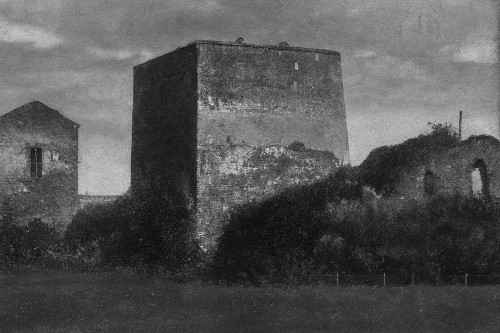
There was an ancient fortress (zamek) in Łęczyca that served as a
royal palace in ancient times, and under its foundations there is a cave that
extends underground to the church in the village Tom. Many legends
|
|
|
The ancient fortress called: “Zamek” |
|
|
|
“Bzura” River |
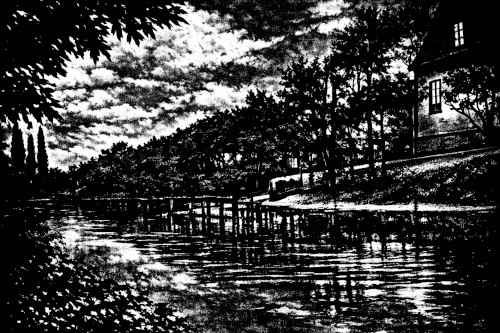
were woven around the fortress and the cave. Their images appeared as painted postcards for tourists. The fortress was, according to the legend, the palace of King Jan Leszczyński, whose legendary figure hovered above this ancient fortress. Near the fortress there was a wonderful garden, whose ancient trees hid the sunlight, and between the cypresses and pines the famous river Bzura flowed slowly, hidden between the trees that protected it from both banks. This ancient garden was called the “King's Garden” in memory of that Polish king who planted it near his palace, and it served as a place for physical and spiritual rest. And the stay in it caused people enter to another world, a world full of legend and poetry. These were beautiful relics of the period during the heyday of the Polish kingdom, when Łęczyca was considered as an important place in the country.
However, what interests us most is the history of the Jewish settlement in this city, which is shrouded in legends. Ancient majesty spread over the geonim, personalities and community leaders of Łęczyca, which made it a large and important city in Israel whose name was known even outside the Polish borders, and many are the people who boasted that they were from Łęczyca. Among these was the great gaon Rabbi Shlomo Ephraim, the son of Reb Aharon, whose origin was Łęczyca, the author of “Olelot Ephraim” and “Kli Yakar”, the Av Beit Din of Prague.
Our Rabbi Shlomo Ephraim, the son Reb Aharon, whose origin was Łęczyca, was born, according to the assumption, in the year 5305 and died on the 4th of Adar Sheni 5379. He lived in his youth in the city of Yaroslav and wrote his first book there, “Ir Giborim”, which is full of moral reproof. In his introduction to the book “Olelot Ephraim” he writes that all the references from the Torah and Talmud were written in the book solely from his memory, without the help of books. In the year 5341 he lived in Lviv and was one of the greatest preachers. He also delivered sermons in Lublin. In 5344, he was appointed Rosh Yeshivah and preacher in Prague, and the Maharal of Prague was the Av Beit Din.
[Page 27]
After the Maharal's death in 5369, he was appointed Av Beit Din. In his introduction to his book Siftei Da'at (Prague 5377), he writes: “And now, in the month of Adar of the year 5364, a heavy burden was placed upon me, heavier burden than I never had before, as I was chosen today by the members of the holy and magnificent community of Prague to be a servant of God to this people, to carry the burden of bringing before them the word of God, and to serve them in matters of the community. And this is truly a heavy burden on me, especially in such a glorious community, whose name is known far and wide, a great city before God, full of scholars and scribes who have always had a good reputation, and since they chose me and travelled a great distance until they reached me at the holy community of Lviv, I decided it was time to do my duty and accept the position”.
At the end of his days, Rabbi Yeshayahu Halevi Horowitz, the Shelah, was a member of his Beit Din. His books “Olelot Ephraim” and “Kli Yakar” made him famous throughout the world. He also wrote the books: “Siftei Da'at”, “Orach Chaim” and “Amudei Shesh”. Among his students were Rabbi Yom Tov Lipman Heller, the author of the “Tosafot Yom Tov”, and Rabbi Sheftel Halevi Horowitz, the son of the Shelah, the author of the book “Vavai Ha'amudim”, Av Beit Din and Rish Yeshiva in Fjord, Frankfurt, Poznań and Vienna. And also, the son of Rabbi Shlomo Ephraim, Rabbi Zvi Hirsch of Łęczyca (died on the 19th of Tammuz, 5384 in Prague). Rabbi Shlomo Ephraim was a Rosh Yeshiva and Av Beit Din in several communities and served in Prague for many years as a dayan and darshan. On his tombstone is engraved: “He is called the head of preachers, seeking good for his people”. In the year 5376, he signed an approbation to the book “Yesh Nochalin” of Rabbi Avraham Sheftlish, the father of the Shelah, together with the Maharsha, the Sama and the Bach. – These is his history in brief, according to the authoritative sources, but the story of his birth and childhood, wrapped in a legend, is told in the book “Sipurei Kedoshim”, that was printed in 5597 (1837) in the city of Leipzig, (see also “Sefer HaMa'ashiyot” by T. Ben Yehezkel) and since the book is a valuable source, I am transcribing the words as they are.
“In the year 300 of the creation, there was a man in the kingdom of Poland named Reb Aharon, and his livelihood was that he held a land from the hand of the lord, the duke of Łęczyca, and he was an honest and upright man, turned away from evil and a God-fearing Jew. As he got older, the man became very poor, and he could not find the means to pay the debts that he owed the duke for holding the land for six years, and also for the crops and the schnaps. And one day the duke became angry with him because he had delayed the payment from day to day, and he ordered his servants to put Reb Aharon and his family in a pit without food and water, as well as garbage, so that they would die of hunger and thirst. The servants fulfilled the order of the duke, and took Rabbi Aharon and his family and put them in a dark and gloomy pit. And Rabbi Aharon's wife was pregnant at that time, and Rabbi Aharon prayed to God from the depth of the pit and cried and pleaded to God, whom he served in in all honesty, and God heard his voice. God caused one of the eunuchs to spare him and his family: he rose early in the morning and as he saw that there was no one around the pit, he threw bread and water into the pit, and returned to his house. He did every day, and no one knew it, and he also refrained from throwing garbage to the pit despite the commandment of his master.
Six months had passed from the day they were thrown into the pit, and the wife of Reb Aharon gave birth to a sone in the pit. The son's beauty was extraordinary and he was truly a shining lamp in the darkness of the pit. Reb Aharon named his son Shlomo Ephraim, and circumcised him at the age of eight days, according to the commandment of the Lord.
[Page 28]
One day, when the eunuch went to throw water and food there as was his custom, Reb Aharon's wife was holding her son in her hands. The eunuch saw a bright light shining from the pit, he was greatly astonished, and he approached the pit and cried out to Reb Aharon: “Are you still alive? And what is this light that shines down there?” And Reb Aharon answered and said, “I thank God that he has not forsaken me, and has given me a son whose beauty illuminates the world. Come near and see him with your own eyes”. The eunuch's eyes opened wide and he hurried home because his compassion was aroused. One day, while the duke was sitting on his throne and his servants were standing before him, the duke said, “Does any of you knows what happened with the Jew and his family? Surely no sign of them was left”. And the eunuch answered, “No, my lord, today as I passed by the pit, I saw that a light was shining from the pit. I shouted into the pit, and suddenly, I heard the voice of the Jew, that they were alive and a son was born to them, whose beauty was unparalleled, and who illuminated their darkness, and if I had not seen it with my own eyes, I would not have believed. And the duke answered angrily: Are you mocking me? Is it possible that someone could live six months without water and food? And the eunuch answered and said: Why are you angry with me? Have we not heard our fathers recounting the wonders that God did with the people of Israel when he brought them up out of Egypt, when he rained manna on them from heaven, and when he parted the great sea before them, so they could cross it? Can't God save this poor man, and rain manna on him and satisfy him with the bread of heaven, to command the ravens to feed him? After all, the pit is not so far from here, go, see with your own eyes, and then you will believe. And so, the duke prepared his chariot and he and his wife set out to see this great sight. The duke and his wife were old and had no children. And so, the duke reached the pit and called out: Aharon, Aharon: and Aharon replied: I am here. The duke continued: Show me the son that was born lately. Aharon lifted up the child and showed him to the duke. And thus, the duke realized that the words of the eunuch were true, and he replied: Now I realize that God done wonderful things with you. But you are still in my hands and I can kill you, and no one can save you. If you give me the child as a gift, I will keep you alive and I will also give you the land as a gift forever. When Reb Aharon realized that the duke would take the child from him by force anyway and that no miracle would occur to save them, he gave the child to the duke and the duke kept his word and was kind to Reb Aharon.
And so, Shlomo Ephraim was raised in the duke's house. The duke ordered all his servants not to ever mention the child's past, and the child knew nothing. And the child grew up and was taught all kinds of subjects, and with his sharp mind and wisdom he surpassed all his teachers, and when he was about six years old his knowledge and wisdom were so side as if he was an old man. One day the duke made a feast for all his friends and acquaintances, the ministers and the counts, and he boasted of his son and everyone were amazed at his wisdom. And there was a certain gentleman there, and he said to Shlomo Ephraim: It is true that you have already learned all the wisdom; but when I was in Paris, I saw there a musical instrument that all the conductors and the best players were trying to find a way to use, as a great wisdom is contained in it, and maybe you, with your wisdom, will grasp the secret. So, the boy asked the duke if he would agree to let him go to Paris to find out how to use the musical instrument, and the boy went and succeeded very well in his studies and in a short time he learned the matter completely, and he returned to his home, and the duke made a great feast for his return, and the boy played on the musical instrument that he had brought with him and everyone enjoyed the music. And this musical instrument was all his amusement and his whole life depended on it. When the boy was about thirteen years old, one month before his Bar Mitzvah, the boy was sleeping on his bed, and his father, Reb Aharon, appeared to him in a dream and said to him: My son! Know that you are not the son of this uncircumcised man, you are my son. You are a Jewish man and are obligated to observe the commandments, and as long as you were not
[Page 29]
obligated to observe the commandments, I was quiet. But now, as you approach the age where you must keep the commandments, run away from here quickly to the place of the Jews and tell them everything, and he warned him not to deviate from his words and flee from the Gentile. And the boy woke up and understood it was only a dream and he did not attach importance to it. The same dream repeated on the second night and on the third night, then did the boy realize that it was not a dream, he became gloomy and distraught and did not know what to do. And the master asked him: Why are you so sad? And the boy gave him various excuses, because the duke loved the boy deeply.
The boy saw this sight every night until the week of the Bar Mitzvah arrived. Then, his father began to frighten him greatly and even beat him in the dream, and since the boy slept in the same bed with the duke out of love and affection, when he heard the boy screaming in fear, he too was frightened, hence the boy was forced to reveal the whole matter. The duke understood that the matter was not simple. However, he told the boy that his dreams are false, and he is his father and his wife is his mother and she is the one who gave birth to him. But the words no longer entered the boy's heart, and when the night of the Bar Mitzvah arrived, the boy began to scream out of fear, and the old man was forced to sleep in another room in order to rest. Then Reb Aharon came and took his son from his bed and stood him before the gate of the synagogue in the city of Prague, and commanded him: My son, when the shamash comes to open the synagogue and he asks you who you are, do not answer him, just ask him to lead you to the Rosh Yeshiva. When you come before the Rosh Yeshiva, tell him on my behalf that I ask him to teach you Torah, and that today is the day of your Bar Mitzvah and he will teach you to put on tefillin, and he will be careful of you because your soul is holy and pure, and the Satan is chasing you to catch you in its net, and if he watches over you and studies with you, you will become a great and important rabbi. In the morning, when the shamash arrived, he found the naked boy standing before the synagogue, and he led him to the Rosh Yeshiva, the gaon Rabbi Yehuda Liwa, who is called the Maharal of Prague, and he told him these things. The rabbi took him into his home and studied with him and took a melamed with whom he learned the order of the prayer and the laws of tefillin. Thanks to the sharpness of his mind, within a short time he was able to sit with the scholars in the yeshiva and study Torah. And the boy grew up, developed and studied until he was very great in Torah and in deeds. And the Rosh Yeshiva was very pleased with him because he had never seen such a wise scholar in his life.
When the duke awoke in the morning and saw that the boy was not in his bed, his heart was broken and he mourned for him for many days, until he became very ill, and the doctors said that if he did not find what his soul loved, there would be no cure for his illness. And all his servants arose to comfort him, but he refused to be comforted, and he decided to travel and wander from city to city with the boy's picture in his hand to show to every passerby, lest he saw his loved son, but everyone answered him that they had not seen him. One day he came upon a poor man who was a beggar and asked him, have you seen the boy in this picture? The poor man answered him: I have not seen him, but not far from here sits in the forest an old man who is a sorcerer who knows the future, and he will tell you everything you want to know. And so, the duke went to the forest, and wept before the old man and begged him, because his whole life depended on this boy, and he said to him: Stay here tonight, I will consult with the wisdom of the stars tonight, and in the morning, I will tell you what you ask. The morning dawned and the old man said to him: “The boy is in Prague, studying with the rabbi in a holy place over which I have no control. However, if you have anything in your house that the boy loved very much, bring it to me and I will see what I can do”. The duke remembered the musical instrument that the boy loved as much and left it in his house, and he quickly sent a special runner to bring the instrument to the
[Page 30]
old man. The duke and the old man traveled to the city of Prague and arrived in Prague at night. The Maharal of Prague immediately sensed their arrival, and ordered three of his students to study with Shlomo Ephraim all night without interruption and not to sleep, not even a temporary sleep, and if Shlomo Ephraim wanted to leave for even a moment, do not let him, even if he cried and begged you, and I will go and rest a little. And the old man and the duke performed various spells around the house, and when the boy tried to leave, they did not let him. So, he tried to break the door, but they would not let him, and then a sleep fell on the students and the sorcerer began to play the boy's favorite instrument. When the boy heard the playing of his favorite instruments, he broke the window and jumped out straight into the arms of the duke and the old man. They hurried away from the place to the inn and wanted to leave the city immediately, but the gates of the city of Prague are closed at night and they could not leave until morning, and they drank and got drunk until morning. The Maharal woke up from his sleep and sensed that something had happened, and he hurried to the yeshiva, and realized that the students were asleep and Shlomo Ephraim was gone. He was shocked and felt very sorry that such a great soul that would fall into the hands of Satan. He immediately chose ten students who immersed themselves in the Mikveh and prayed with great intention. In the morning, word spread that the old sorcerer was dead, and the rabbi immediately rushed to the court and requested an order to close the city gates because some people had stolen a young boy from his home, one of his chosen students. Since he was close to the kingdom, the order was given that only one gate would remain open for exit and the rabbi would stand there and if he recognized his student, he would take him. And indeed, an hour later, the boy was found, but the old duke raised a cry that the boy was his son. And so, an order went out that the old duke must bring proof from his house that the boy was indeed his son, and in the meantime the boy would be with the rabbi. The old duke started returning to his home full of sorrow and grief, and from his sorrow he died on the way. And the rabbi, fearing that the old duke would bring witnesses that the boy was his son, decided to send him to the city of Pressburg, a large and important city to the people of Israel. And he gave him a letter to the gaon, the Rabbi of the holy community of Pressburg, in which he described to him his greatness in Torah and that he was the most distinguished of his scholars, as well as describing everything that had happened to the boy and the history of his life, and asked him to take care of the boy so that he would not fall into the net of the Satan that was pursuing him, for he was a great soul. With a farewell blessing, the young man said goodbye to his rabbi and set out for Pressburg, and the rabbi of Pressburg received him with great honor and taught him with love. In Pressburg there was a great rich man who had an only daughter, he took Shlomo Ephraim into his house, took care of all his needs as he thought of taking him as a son-in-law to his daughter. And there, Reb Shlomo Ephraim was honored and liked by everyone and was a great Torah scholar and worshipped God, but the wicked forces were not silent and the Satan once again started his journey to catch this holy soul.
Suddenly, the young man Reb Shlomo Ephraim fell ill with severe ailments, and the doctors could find no cure for his affliction except that he should go every day for forty days in the evening to breathe air in a city garden. And the rich man harnessed his chariot for him every day to travel to the city garden to breathe air, and on the fortieth day, as he strolled through the garden and walked around immersed in lofty thoughts, he stood by a tree, completely immersed in his thoughts until he lost track of time. The charioteer waited for hours upon hours, and seeing that he did not return, he drove home. The rich man thought that Reb Shlomo Ephraim must have left the garden by another route, knowing that this was not dangerous as the garden was inside the city. When he did not return in the evening either, they thought that he was studying with the rabbi. Reb Shlomo Ephraim returned to reality only several hours later. Seeing that he was alone in the garden and there were darkness and gloom all around,
[Page 31]
he was very afraid, being young and gentle, and he wept bitterly and his tears reached God. And God sent him a holy helper. And so, Reb Shlomo Ephraim saw an old man standing before him, and the old man said to him: Fear not, my son, I am David, the king of Israel, fear not at all, whatever happens to you tonight will pass quickly. Only be strong and courageous. You are here with me, observe the intentions of God that I am conveying to you. And when you see a mighty army passing by with a noise, and they shout: Give honor to the king, and so pass a second and a third army with a great noise, you should know that these are the sects of the Satan Samael and the sect of Delilah. Fear not and be not dismayed. After that a chariot will pass by in splendor and glory, and in it is the Satan himself, fear not before him, and do not pause even for a moment being devoted to God. For this is the main thing. Then the old man left.
In the middle of the night noisy armies approached, but they could not approach him, and Reb Shlomo Ephraim was holding his devotion to God, but when Satan's chariot passed by in all its splendor, glory, and noise, he stopped his intentions. Satan immediately approached him and said: Know that I have the power to do with you as I desire, however I will be willing to let you return to your home if you swear to me in the name of God that you will study the book that I will give you, one page every day, but you will swear to me in such a way that annulling it will never benefit you. And the young man saw that he had no choice, and he swore to him about this matter and took the book from his hand, and returned to his home very sad and studied the first page, and immediately lost the desire to study Torah as he had done up to now. And when he studied the second page, he already hated looking at the Gemara, and after the third page he began to disdain the commandments. The rich man, who knew the young boy well, noticed that he did not go to the rabbi's yeshiva and also disregarded the commandment of washing hands and committed several other offenses, and decided to inform the Rabbi of the matter. The Rabbi immediately asked him to come to him, but he did not want to go, and after he was taken forcefully to the rabbi, he burst into tears before the rabbi. The rabbi ordered him to tell him what had happened to him, and the boy told him the whole matter. The rabbi was very frightened, and when his anger had subsided a little, he told ten of his senior scholars to take with them Reb Shlomo Ephraim and the unclean book and go bathing in the bathhouse with true intentions. While doing so, they heard shouts from all around the house: He is ours, he sworn to us with a solemn oath. And the rabbi continued with his thoughts and actions, and fire came out from God and consumed the bathhouse and the unclean book. And they returned to their home in peace and joy, and Reb Shlomo Ephraim devoted to God and the Torah with all his heart.
After that, the rabbi called Reb Shlomo Ephraim and said to him: My son, I am old, the Satan is chasing you with all his might, go back, my son, to the city of Prague. The Maharal's power is greater than mine. He listened to the rabbi's voice and returned to Prague. He stood before the gaon, the Maharal, and told him all that had happened to him. The gaon said to him: You have rebuked Satan and they will never be able to harm you again. Now listen to my advice. Travel to Lviv in a modest way, busy yourself with the work of the common people so that they will not recognize you as great in Torah, and get married with a daughter of a man who is as secretive in his actions as you are. After my death, if people come to you with a letter from me, do not refuse them and fulfill my words, and God will be with you. And he listened to the voice of his rabbi and traveled to Lviv and lived there. Then he began to write his book, “Olelot Ephraim”, married the daughter of a humble scholar, and called himself “Efraim Olelot” and made a living by selling eggs to inns. He continued with this for years and years. On contracts and receipts, he would sign as “Efraim Olelot”, and most people called him “Ephraim Yeitshnik” (eggs
[Page 32]
supplier) in Polish, and no one knew whether he have even studied the Torah or not. He and his family lived in poverty, and at night he would sit and study Torah very diligently.
The years passed and the Maharal was old and his death was near. He called the people of the city and said to them: “After my death, travel to Lviv, find a man named “Ephraim Olelot”, deliver to him the letter that I am giving you, and he will be rabbi in my place. He passed away and at the end of the days of mourning, the notables of the city traveled to Lviv as ordered by their rabbi, and they thought they would find a great and honorable man who would fill the place of their rabbi as Av Beit Din in Prague. They came to the most honorable inn, as befits the notables of the city of Prague. The owner of the inn asked them the purpose of their visit, and said he could advise them if their purpose relates to trade matter. They told him that they had come to take the gaon rabbi, Rabbi Ephraim Olelot, to serve as rabbi in their city. Upon hearing this, the man was astonished and said: My ancestors lived in this place, and there is no respected person in our city that I do not know, but I have never heard of such a name, and especially not a man who can serve in such a high position and carry the place of the Maharal of Prague. The people were greatly astonished and inquired for three days about the whereabouts of such a man, but they did not find him. And just when they were about to leave and return home empty-handed, the innkeeper's servant intervened and said, “I know such a name. We have a simple man who sells us eggs and signs on the papers under the name Ephraim Olelot”. When the innkeeper heard the servant's words, he became very angry and said to him, “Why do you mock such honorable men? Do you want “Ephraim Yeitshnik” to become a rabbi in Prague? – The people, who knew the great righteousness of their rabbi, the Maharal, understood that the servant was not speaking idle words. They began to inquire about the place where Ephraim Olelot lived, and went to him, but they did not find him in his house, and his wife and sons were dressed in torn clothes, as the poor do. They asked his wife, “Where is the rabbi?” The woman replied, why do you laugh at us? My husband is not a rabbi, but a commoner, and he has just gone to get some wood to heat the stove. And while they were standing and talking, rabbi Ephraim entered with a bundle of wood in his hand, dressed in rough clothes but his face joyful and gentle, and they said to him: Peace be upon you, our teachers and rabbis! Here is a letter from the great Maharal to you, come with us to Prague and be our Av Beit Din. And he read the letter and said: I understand from this that the Maharal is dead, and he tore his clothes and wept, and then he turned to them and said: I accept our rabbi's command, but I will come to you only after six months because I must prepare myself as befits one who receives such a high position. And the men left five hundred gold coins so that he and his family could dress appropriately and they understand that he was a great and important man to the Jews, but his ways were hidden. And they rejoiced greatly and went home, happy and good-hearted for the kindness that God had done for them. And Rabbi Ephraim bought for his wife and his children proper garments.
One day a great deal of money was stolen from a certain gentleman's house, and it was not known who had stolen it. And when the people saw that Ephraim the egg seller had begun to dress nicely, he and his household, they slandered him, saying: This means that he stole the money or had a share in the theft, and they kept him in custody, and his arguments that men who had come from Prague had given him the money were of no avail, and no one would listen to him. Six months passed and since he did not come to Prague, they sent messengers Lviv to bring him. And when they came to his house, his wife told them all that had happened to them. The people hurried
[Page 33]
To the city's leaders and told them about the whole matter, which had until now been a secret, and he was released and sent away with great honor to the city of Prague to sit on the throne of the eloquent Rabbi Yehuda Liwa, who was famous in his generation as the Maharal of Prague.
Such is the image of one of the great men of Łęczyca, wrapped in legends of wonders and mysteries. However, generally the atmosphere of Łęczyca was saturated with many legends about the righteous of the world, such as about the author of “Kav Venaki”, the author of “Kol Yehuda”, Rabbi Chaim Orbach, the author of “Divrei Mishpat”, his son Rabbi Itzik Orbach, the author of “Divrei Chaim”, his son Rabbi Meir Orbach, the author of “Imrei Bina”, Av Beit Din of Kalisz and Jerusalem, and lastly the great Rabbi Meir Leibusch Malbim, who wrote most of his books and commentaries on the Bible in Łęczyca, as he noted in his commentary on the Book of Joshua. The great men of Israel whose lives we present in this book are the ones who left their mark on this city and its Jewish residents.
According to historical sources, the Jewish settlement in this city began during the Spanish expulsion, i.e. at the end of the fifteenth century (see Monumento Polonia Historica Lviv, 1888, page 837 and Sternberg, “History of the Jews in Poland”, page 109, and the Warsaw City Archives, in the section “Province of Posen”, page 250), but it is difficult to determine exactly the year in which the Jewish settlement in the city began. In the ancient cemetery, remains of tombstones from the year 5263 (1503) were found. However, other sources state an earlier period.
In the authoritative Russian Hebrew encyclopedia “Brockhaus” about Łęczyca, it is said: During the reign of the Kingdom of Poland, Łęczyca was the main provincial city. The Łęczyca community is one of the oldest in Poland. In 1453, the representatives of the Jews of Łęczyca received, together with other Jews, a privilege (special rights) from King Casimir Jagiellonian. The census of residents in 1564 indicates 17 houses belonging to Jews. For this right to purchase houses, the government received payment from each house. The Jews also occupy three houses of Christians. The famous Maggid Ephraim Łęczyca was born in this city. In 1639, the famous Łęczyca Trial took place here (see below, Łęczyca Trial). After a fire that destroyed the synagogue and the Jewish homes and after their ancient privileges were revoked, King Jan Casimir ordered in 1652 the local authorities not to interfere with the Jews from rebuilding the synagogue and engaging in trade. He also authorized they could use all the privileges, the certificates for which were burned during the city fire. Four years later, a great disaster befell the Jews of Łęczyca. The city was at that time in the hands of the Brandenburg army or Polish rebels. King Jan Casimir, who laid siege to the city, encountered a courageous defense of the enemy. The Jews felt the terrible consequences in advance, especially when on Yom Kippur all the candles in the synagogue suddenly went out. On October 4, 1656, the second day of the Sukkot holiday, the city was conquered by the king's army. The latter wanted to have mercy on the population, but the Poles killed in a barbaric and unchristian manner all those who were not killed, especially the Jews, of whom more than a thousand people
[Page 34]
perished, regardless of age or sex (Teatrum Európeum, vol. 7, p. 88). One polish nobleman gathered the Jewish children and converted them to Christianity. Jewish sources tell of three thousand or five hundred families who were killed and describe the destruction of the city. 600 Torah scrolls were burned. The names of several saints were preserved in various memoirs. According to the description of 1661, the city began to rise again from its ruins, but the number of Jewish houses was null (five). During the Swedish War in the early eighteenth century, Łęczyca suffered again. After the war ended, Jews began to settle in Łęczyca in greater numbers. In 1724, they obtained a license to engage in trade, slaughter animals, produce wine, and establish inns and bars. In 1728, they were permitted to build a synagogue. The data of 1765 is of interest. At that time, there was one non-Jewish tailor in the city, and there were over twenty Jewish tailors. The number of Jews in Łęczyca and the surrounding area reached 1067 that year. The Łęczyca Committee included Jews in Stryków – 625 people, in Brzezin – 243, in Owod – 212, in Sobota – 114, in Bielany – 88, in Prantszew – 267, in Piątek – 139, in Przesniewice – 79, in Katow – 69. The total number of Jews in the district was 2905. According to the description of 1789, the Jews of Łęczyca were also engaged in other professions besides tailoring. The number of houses in that year was 47. In 1856, there were 2903 Christians in Łęczyca, 2496 Jews. According to the population census in 1897, there were 8863 inhabitants in the city, of whom 3471 were Jews. In the entire Łęczyca district, the number of inhabitants was 100,000. The percentage of Jews is the highest. In Grebov – 1054 inhabitants, of whom 640 were Jews: in Ozerkov – 11533, of whom 5838 were Jews, in Prantszew – 984, of whom 254 were Jews; in Piątek – 2325, of whom 1090 were Jews; in Poddębice – 2724, of whom 1266 were Jews. That ends the data from the Russian Hebrew Encyclopedia, but it is not the only source for the history of the Jews in this city.
In 5684 (1924), excavations were carried out near the synagogue wall and it was discovered that in ancient times the city was a fortified city surrounded by a strong wall that was up to three meters thick. The synagogue – which was also built in the form of a medieval fortress – was built next to the city wall, in such a way that the city wall served as the wall of the synagogue's vestibule, and within its windows an entire family could live with their belongings. In order to close the barred windows, it was necessary to walk three meters through the thickness of the wall. In the aforementioned excavations were discovered thing that made a great impression on the archaeologists. After digging in the ground to a depth of two meters, a hole was suddenly discovered in the wall, and thus it became clear that the wall was hollow. When the first researchers entered the wall through the hole, they found themselves in a space the size of a room, with bones scattered throughout it, and various Jewish names were engraved on the stones of the wall. There were different versions of this. According to one version by Polish scientists, this was during the Swedish invasion of Poland. During their victorious march through lands and peoples, they encountered bitter and cruel resistance in Poland. In the spring of 1656, they managed to reach the heart of the country and conquered the entire country, as the historian Prof. S. Dubnov recounts in “History of the Jews”:
[Page 35]
“The lawlessness in the country and the moral laxity made it easier for the occupiers to act. The betrayal of the Polish vice-chancellor, the quarrels among the nobles opened the gates of the large cities to them. The Swedes did not reciprocate any harm to the Jews. And the Jews paid them the war taxes imposed on them. Polish reaction arose to redeem the land of Poland from the hands of the occupiers. At the head of the volunteer battalions was the cruel and murderous Stefan Tchernetsky. With storming and outpoured fury, they liberated most of the cities from the Swedes. It was in 5415, eight years after the destruction of Khmelnytsky (the decree of 5408 and 5409). The savagery of the Polish battalions was no less than that of the battalions of the Hetman Khmelnytsky. Due to the plots that the Jews helped the Swedes, they furiously attacked the communities of Israel and wiped them off the face of the earth. The saviors of Poland behaved with the same savagery and cruelty as the Cossack battalions. They cut off limbs, raped and slaughtered women; children were slaughtered in the arms of their fathers. In this way, the communities of Greater Poland were completely destroyed, Brisk, Dakuia, Gniezna, Lissa, Płock, Kalisz, – Łęczyca, which was occupied by the Germans and the Swedes, was besieged by a Polish army battalion, led by King Jan Casimir himself. The events took place during the Days of Awe: during prayer in the synagogue on Yom Kippur, the wax candles suddenly went out and the Jews saw this as a bad sign. A few days later, on the second day of Sukkot, the city was captured by the enemy. The king wanted to spare the peaceful inhabitants of the city, but the rebellious Poles attacked – according to a German description from those days – everything that had survived the fire, especially the Jews, in a barbaric and unchristian manner, and killed more than a thousand men and women, old men and children. A Polish source says: “We were especially cruel to the Jews, because they had helped the enemy in defending the city. Furiously we also killed the Jewish women and children, and many of them died in the flames. One of the king's knights, named Wolf, gathered all the surviving children of Israel, some of whom had been saved from the flames, half-burnt, and baptized them into Christianity, in order to save their souls. According to Hebrew sources, about five hundred families, numbering about three thousand people, were killed in Łęczyca. Many threw themselves into the fire or water to escape the cruelty of the haters”.
The elders of Łęczyca themselves tell, as their ancestors told them, generation after generation, that the Swedes were dressed in long clothes and fur hats, which resembled “Streimelach” and thus stood on the city wall and poured boiling water and oil on the Polish battalions. When they entered the city, the Poles claimed that those who poured boiling water and oil over the wall were Jews because they were dressed in Jewish clothes. This is in fact the only excuse for the reason for the terrible murder and extermination. Apparently, a number of Jews hid inside the wall, since they knew about the existence of this “bunker”, and before their death they engraved their names on the stones of the wall.
But Łęczyca had known many troubles even before that. In 1633, two synagogue collectors, Meir and Eliezer, were accused of murdering a Christian child from Kamerzice and were tried before the city court and then before the Supreme Court. The perjurer in this trial was an old Polish beggar named Thomas, who testified, after tortures, that he himself had stolen the child and sold him to the Jews. In vain did the city mayor of Łęczyca claim that there was a violation of the law here, and that according to it, only the court of the minister of the district,
[Page 36]
in the presence of royal appointees, is permitted to impose punishment on the Jews. This was also brought before the Supreme Court, which issued this verdict: “Even though the accused Jews claim, even after the torture, that they are innocent, then from equivalence, and also from the fact that there are more than a hundred wounds and stab wounds on the body, it is almost certain, even if there is no complete certainty, that the Jews are the murderers”. Despite this reservation of the Supreme Court, a death sentence was issued on the mentioned collectors. And this verdict was immediately carried out. The two martyrs were cut into pieces and hanged on poles at a crossroads.
After some time, the true causes of the plot were discovered. In the Bernardine church in Łęczyca, a coffin containing the bones of the holy child was put on display. A metal plaque was attached to the coffin, on which the incident was engraved, and on the wall were painted Jews sucking the blood of a child. Since then, the church in Łęczyca has become increasingly famous, and until recently, crowds of pilgrims would come to it. This is what Prof. S. Dubnov and other researchers of Jewish history say. However, the Russian Hebrew Encyclopedia, in the letter “L”, gives more details about this blood libel.
“In June 1633, the trial of Meir and Eleazar, who were accused of killing a child from the village of Kamerzice, was heard before the Crown Tribunal in Łęczyca. The child disappeared on April 20, the Wednesday before Passover. The parents went and left him near the house. When they returned, they found him dead. His body was covered in wounds in many places. Suspicion fell on a wandering beggar (Christian), who admitted of kidnapping the child and selling him to the Jews of Łęczyca. After an interrogation, the Starosta allowed the Jews to appeal to the Court of Appeal in accordance with the special privileges granted to them by the king. The tribunal declared the Starosta's actions unreasonable and illegal, since the Jews accused of murder belonged to the municipal court and its decisions must be appealed to the tribunal. During the interrogation, the beggar testified that he sold the child to Meir and Eliezer for a zloty and a half, and the next evening he received the child dead and put him in the bushes in the forest according to the Jews' instructions. The beggar repeated these words after torture and interrogation in the presence of the Jews.
Before their execution, the accused Meir and Eliezer denied the charge, even though they were severely tortured. They were sentenced to death and to have their bodies torn into four parts. The other ten Jews, who were recognized as “intellectually guilty”, including the head of the congregation, the rabbi, and the heads of the community, were acquitted after swearing that they knew nothing. The local Bernardines priests were very pleased with the situation for a very simple reason: in 1632, they founded a monastery and a church in Łęczyca, and it was necessary to find a way to attract the faithful to their new sanctuary. The murder of the child was a real bargain for the monks. They placed the bones of the murdered child in a glass coffin inside the church, and to this day a picture in oil paints is preserved there, depicting how the Jews suck the child's blood, and next to the coffin was a metal plaque with a description of the event” – – –
A remembrance to the Jewish saints was preserved in a prayer order, found in a manuscript in the synagogue in Pintschow. The short version is: “For the tortures that our teacher Rabbi Meir, the son of Rabbi Mordechai HaCohen, and Rabbi Eliezer, the son of Rabbi Avigdor, went through in the city of Łęczyca, in the year 1699”. Elsewhere in the same siddur, in the general “Yizkor” prayers for the saints who died in the sanctification of God due to false accusations, the two saints are mentioned again.
Rabbi Shlomo Cohen, may he live long life, (one of the founders of the Mekor Haim neighborhood near Jerusalem, one of the community leaders of Łęczyca, who immigrated to Israel thirty years ago) says that in Łęczyca there was a bookshop in 1915 called “Kreiva”. This bookshop printed the painting that was placed in the church which describes how Jews dressed in “streimlech” stand around a table on which the Christian child is lying, holding silver cups in their hands, and the blood flows from the child's body into the cups. And everyone who bought a book was given a postcard with this picture inside. This was before Passover. The postcard created an atmosphere of a pogrom. And then Rabbi Shlomo Cohen saw a carriage standing in front of the city government building and two people getting out of it: one in a general's uniform, and the other he recognized from the picture printed in the newspapers as Prof. Bodenheimer, who was then very respected by the authorities. Rabbi Shlomo immediately went up to him and told him the matter. Prof. Bodenheimer told him to send someone to buy the book so that he could verify the truth of the things. And indeed, Rabbi Shlomo Cohen sent his sister-in-law, Mrs. Rivka Rachel Libson, and she brought him the book and the aforementioned postcard was inside the book. Prof. Bodenheimer immediately reported the matter to the general, who gave the order to close the bookshop. – Even in our days, we avoided crossing Poznańska Street, where the Bernardine church was located, while the Polish crowd would leave it after prayer. Only twenty years ago did an order come from the Pope to remove the coffin, but the painting on the wall of the church remains there to this day.
These are just a few chapters from the endless suffering of Polish Jewry in general and of the Jews of Łęczyca in particular, because not only the fate of the Jews of Łęczyca was cut short in this city, but also the fate of all Polish Jewry. And here is an excerpt from “The Council of the Four Lands Register” from 5416: In an order dated February 27, 1656 (Adar B 5416), the Polish King Jan Casimir threatens with severe punishment “if the leaders of Polish Jews do not pay the poll tax without delay on behalf of the entire Jewish population in Poland, all Jews being guarantors for one and one being guarantor for all”. The poll tax in the amount of 70 thousand gold coins was paid in this way: the Jews of Lviv paid the lord of Łęczyca ten thousand gold coins, and they also paid him three thousand for the office of the land registrar Jan Sapieha, and by the aforementioned lord for the Cossack company – 2600 gold coins. To the infantry regiment of Jan Zamoyski – four thousand, to Kotsky, the minister of the military camp – 1600 gold coins, to the Polish infantry, to the company of Andrzej Potocki, etc. (Zheshemsky Archive, Lviv, volume 405, page 142).
In the registers of the Council of the Four Lands, signatures on judgments signed by the great Jewish figures who headed the Council of the Four Lands are often found, including:
[Page 38]
the author of Turei Zahav, the author of Pnei Yehoshua, the Gaon Rabbi Naftali Katz, Av Beit Din of Amsterdam, Austria, etc., Among these signatories the community leaders of Łęczyca are also included: “In a judgment, which was sent to the city of Hamburg regarding a quarrel between them and the community leaders of Altona, even though it is for a different country and a different government, nevertheless, an order is given, and both sides are invited to Lublin for the Gromnitz fair and whoever does not come will lose his right. These are the words of the generals, the counts, the deputies, the chiefs and leaders of the state of Poland, here on the market day in the city of Danzig on Tuesday, the 28th day of Av 5426. And among the signatories are also Naftali, the son of Rabbi Shraga zt”l Blach of Łęczyca”.
In the book History of the Jews of Lissa in German by Dr. Louis Levin, it is said that in 1628 the first head of the Lissa community was a Jew named Eliezer from Łęczyca, and he was the one who received the privilege for the Jews of Lissa. There is a complete bibliography on the history of the Jews of Łęczyca, printed in various files by the renowned historian Prof. Meir Balaban and Dr. J. Schiffer, may God avenge him, as well as by Dr. Emanuel Ringenblum, may God avenge him. A special booklet on the history of the Jews of Łęczyca was published by the YIVO by Dr. Philip Friedman.
The history is very rich and surrounded by many legends, but the books of the dead tell us more than the books of the living. The synagogue and Chevra Kadisha registers tell us much more than history books. In my youth, I managed to go through these registers in Łęczyca. From them I learned a lot about Łęczyca's past, things that are not known at all to historians. And before we approach this chapter, I must tell one more of the legends about Lintschitz, as printed in the newspaper “Hatzfira” from 1920, issue 46, under the title: “Wealth of impurity” (folk legend about Łęczyca) by Michal Rabinowitz.
“Many years ago, lived in Łęczyca in Greater Poland a poor Jew named Reb Avraham. Like all the poor of Israel in those days, he had many children, and by the eleventh year of his marriage his wife had already given birth to five sons and five daughters. And how does a poor Jew like Rabbi Avraham make a living? In trade. From dawn until sunset, he went from house to house and from yard to yard, buying old clothes, rusty metal utensils, broken wooden utensils, and on the night, after Reb Avraham returned from his tour, the main work of examining the various objects and arranging them began. Each type and its special price. And Reb Avraham lived his normal life, and days and years passed without any change. He did not complain about God, the Holy One, nor did he complain.
And suddenly Reb Avraham rose to greatness, he stopped buying secondhand goods and no longer goes from house to house looking for items with a sack over his shoulder. He already has a new house, his own place in the market square, a bar that the noblemen and ministers come to from all over the area, and a silk and velvet trading house that the wives of the noblemen and dukes come to buy from it. And Reb Avraham does not visit his people as often as before, and he is extremely intimidating with his appearance. And he is becoming more and more successful. He buys from the duke the fish ponds and the dense forests, which extend over a very large area. Thousands of workers work in the timber division. And Rabbi Avraham has not changed. He helps everyone
[Page 39]
in need and every beggar generously and always with a smile and kindness; all the charitable societies in Łęczyca are financed at his expense. He often finances the Talmud Torah and built a new house for it, he hired expert melamedim for it, dressed the students and fed them with fine food as if they were his own sons and members of his family. Sarah, Reb Avraham's wife, is a pure and modest woman and a faithful helper to the husband. Poor brides, women who just gave birth to a child, widows and “chained” women (agunah) would come to her, and she receives them all with kindness and promises them that God will not abandon them and she helps them generously and modestly, and they all leave her house happy and at ease. The rich man from Łęczyca becomes famous all around, everyone recounts great and wonderful stories of his righteousness and his secret generosity, and the poor call him Avraham our father and his wife – Sarah our mother.
But he was not satisfied with this. He established a large yeshiva, and sent special emissaries to the countries of Italy and Holland to buy books, among them expensive books from the finest printing houses. And he placed at the yeshiva, at his own expense, the geniuses of the generation in the role of the Rosh Yeshiva. And the rumor about the voice of Torah of the Łęczyca Yeshiva is spreading throughout the world, the young scholars sit and innovate innovations in the Torah and expanding their knowledge, and the rich come from all over the world to choose grooms from the magnificent scholars of Łęczyca Yeshiva for their daughters, because all the young men excel in sharpness and knowledge of the Torah. Reb Avraham's wealth grew day by day and in the same measure his generosity grew. He brought great and famous rabbis and took care of them and their family members, and he printed their compositions and their books of questions and answers at his expense. The name of the wealthy man from Łęczyca became famous in the world, because Torah and greatness were found in him in one place. – -
In those days, the Maharal of Prague sat on the rabbinical throne. One day, the Maharal received a pamphlet with Torah innovations from a scholar who was among the rabbis who sat in Łęczyca. The Maharal wanted to take the pamphlet, but the pamphlet slipped from his hand and fell, and the room was filled with a bad odor of impurity. The Maharal was shocked and said: “Torah words do not accept impurity”. Impurity has no control over the Torah. Where does the bad unbearable odor come from? To bless and mention the name of God in this place is certainly forbidden! And the Maharal was upset. Does impurity also have control over the Torah? The danger is very great, and it is necessary to muster all one's strength and overcome it.
Despite his weakness and old age, the Maharal decided to travel to Łęczyca. The man, who had already reached the age of eighty, realized that from afar there would be no help, he needed to be in a place where impurity was spreading throughout the Diaspora, so that he could fight it and uproot it, even if it had taken root in the Holy Torah. When the Maharal entered the city area, he felt a bad and threatening odor and knew that a difficult battle was in store for him. Here impurity mixed with holiness and the scoundrel entered the Beit Midrash and barricaded in it. And when the Maharal came to the heart of the city and heard the voice of the Torah from one side, and the sound of the bells of the Dominican church on their Easter holiday on the other side, he already knew what was happening here. After praying a short prayer, which is said at the entrance to the city, the rabbis and the yeshiva students arrived
[Page 40]
to welcome the great man. He didn't want to meet them but rather asked to bring before him the wealthy of the city, and especially the famous rich man, who he did not even mention his name. And the rabbis understood that was beyond their reach happened, and their hearts pounded with fear and anxiety. When Reb Avraham heard that all the trouble was because of him, he hurried and stood before the Maharal of Prague. He stood before him silently, bowed his head and listened to the Maharal's words, who spoke to him not in anger but out of mercy and compassion, and thus he said to him: Listen, Avraham! You are a sinner and leading the people of Israel into sin, and many of its great men have stumbled and been cast down by you into a deep abyss. And we have the rule: “He who sins and causes many to sin, it is not enough for him to repent”. However, I assure you that your repentance will be accepted. I will place all of my Torah on the scales so that they will tip the scales in your favor, and they will also help you from heaven. Because those who come to purify themselves are helped. Abraham, from where does this wealth come from?
Holy Rabbi! I will reveal everything to you, provided that you save my soul. My property is given to you. Then he told the Maharal that once, when he was still poor and a merchant of old goods, he found among them a statue made of metal and two precious stones were set in the statue's face instead of eyes. He sold the statue with the stones to the governor and received in return a sack full of gold coins, and from then on, he grew richer. The Maharal sank into his thoughts, his eyes burning, and he spoke to his heart: How great are the words of the Sages: “The paganism renders impure”, the same impurity and the same bad smell, and no one feels it because of the dullness of the senses, may the All-merciful protect us.
That night, the Maharal and Reb Avraham and his family disappeared from Łęczyca without leaving any trace, and the next day the rabbis and young scholars left the city. Reb Avraham's property remained abandoned, but no one touched it, because both Jews and Gentiles were afraid to enjoy it. After several days of fear and anxiety for all the residents of the city, a fire broke out and the fire consumed all the property. For three consecutive days and nights, the buildings that Avraham had built were immersed in the fire. However, the other houses were not harmed by it, as if a limit had been set for it; and no one approached to extinguish it, because they knew that the fire came from heaven. – - – That night, they revealed to the gaon rabbi, the Av Beit Din of Łęczyca, that the city had already been cleansed of impurity, and that it no longer had any control over the city, and from now on there would be no more fires in the city”.
And now I will write down a few chapters from the history of the Jews in this city, which I have collected and compiled from various sources: from the registers of the synagogue, the Chevra Kadisha, and from the stories of faithful elders, who are careful to convey things as they really were.
|
JewishGen, Inc. makes no representations regarding the accuracy of
the translation. The reader may wish to refer to the original material
for verification.
JewishGen is not responsible for inaccuracies or omissions in the original work and cannot rewrite or edit the text to correct inaccuracies and/or omissions.
Our mission is to produce a translation of the original work and we cannot verify the accuracy of statements or alter facts cited.
 Łęczyca, Poland
 Yizkor Book Project
 JewishGen Home Page
Copyright © 1999-2026 by JewishGen, Inc.
Updated 13 Mar 2026 by OR