|
[Page 41]
Translated by Mira Eckhaus
|
Rabbi Leib Perger, Rabbi of Łęczyca, The “Kara” Rabbinic
Family – Their Attribution to King David – Rabbi Ze'ev Wolf Auerbach
– The wonder of his grave – His grandchildren: Rabbi Avraham of
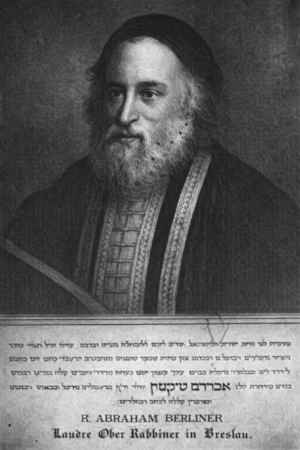
Tschechnov and the author of “Zait Ra'anan – Rabbi Avraham Tiktin,
the author of “Petach HaBayt” and his glorious period – Jewish
life during this period – An incident with the Prince of Prussia –
The appeal of Rabbi Akiva and the Rabbi of Lissa – The letter of the
rabbinate.
|
In the year 5370, Łęczyca was the main city of Greater Poland, and
its citadel extended over the entire country. At that time, the famous gaon of
his generation, Rabbi Leib Perger, a contemporary of the Maharal of Prague and
one of his family members, served as Av Beit Din. His signature was: Av Beit
Din of Łęczyca and the country. In his day, Łęczyca was the
center of all Judaism in Greater Poland. The words of Rabbi Leib Perger were
sacred to all the Jews of this country. When he left Łęczyca after
being appointed as the rabbi of Greater Kraków, his place was taken by
his son, the Gaon, Rabbi Sander, Av Beit Din of Lasła and Krotoszyn, the
father of the famous Gaon, Rabbi Yosef Chaim Kara, Av Beit Din of Kalisz and
Kramsir. Rabbi Yosef Chaim was the son-in-law of the great Gaon, Rabbi Yitzhak
Zelig Kara, Av Beit Din of Poznań, Szceps, Kalisz, Breslau, Dessau and Hanover,
and was called by the name “the rabbi of twenty communities”. –
After Rabbi Sander, Rabbi Chaim Kara, the son of the great Rabbi Yitzchak Zelig
mentioned above, was appointed as the rabbi of Łęczyca. From him
began the continuous chain of the glorious rabbis of Łęczyca of the
previous century. Rabbi Chaim Kara laid the cornerstone of this
Łęczyca rabbinate, whose lineage has continued to this day. There is
a tradition in this famous family that originates from David, King of Israel.
It is therefore worthwhile to copy here the genealogy of this family. It is
found among the documents of the Łęczyca community register, signed
by Rabbi Chaim Orbach, author of “Divrei Mishpat” and the leaders of
the Łęczyca community.
* * *
And this is the language of the certificate in the community register: And a branch shall grow out of the stem of Ishay, and a branch shall blossom out of his roots, a root of salvation, which shall stand for a wonder to the nations.
[Page 42]
Genealogy book of the holy Kara family
David, king of Israel, his son Solomon, his son Rehoboam, his son Avim, his son of Asa, his son Yehoshaphat, his son Yoram, his son Ahaziah, hi son Yehoash, hi son Amaziah, his son Azariah, his son Yotam, his son Ahaz, hi son Hezekiah, his son Manasseh, his son Amoz, his son Yosiah, his son Yehoiakim, his son Yeconiah, his son Assir, his son Shaltiel, his son Pedaiah, his son Zerubbabel, his son Hananiah, his son Yeshaiah, his son Rephaiah, his son Arnon, his son Ovadiah, his son Shechaniah, his son Shemaiah, his son Neariah (3 Chronicles 22). Neariah is Hillel because he was in the land of Shinar. A hundred years before the destruction of the Temple, Hillel went up from Babylon to Israel and was called Hillel from Babylon (Pesachim 66). After him, Reb Shimon, his son, was appointed as president, and after him Rabban Gamliel, his son (Avoda Zara 11). After him, Rabbi Shimon, his son, in whose tenure the temple was destroyed, after him Reb Gamliel, the son of Rabbi Shimon, after him Reb Shimon ben Gamliel, after him Rabbi Yehuda, also called Rabbeinu HaKadosh, author of the Mishnah, and he had two sons: Rabbi Shimon (Berachot 13, Eruvin 9, Beitza 25, Megillah 24) and Rabbi Gamliel. Rabbi Gamliel (Shabbat 151, Ketubot 10 and 13, Chullin 106, Minchot 84) was president. Rabbi Gamliel had two sons: Hillel (Avot 84 44, Sanhedrin 38) and Yehuda, the deceased was the grandfather of Rabbi Nechoniya ben Hakana. The grandfather of the Tanna Rabbi Hanina Kara. The grandfather of our Rabbi, Shimon Kara, was one of the Geonim and is mentioned in Rosh on Chullin. He had one son, our Rabbi Yosef Kara (Tosafot Eruvin 15). Rabbi Yodel Kara was the son-in-law of Maor HaGola, the elder Rabbi Klonimos, the father of our Rabbi Eliezer, the grandfather of our Rabbi Shmuel Chassid, the father of Rabbi Yehuda Chassid. His sons were Reb Yudel Kara, Rabbi Yosef Kara, the author of the prohibition on drinking wine alone. who agreed with the boycott made by Maor HaGola (Yoreh Deah 123), and Rabbi Reb Avigdor, Av Beit Din of Prague, who composed in 5549 the Selicha “Et kol hatla'a” and the Selicha for the Mincha on the Eve of Yom Kippur, “Eftecha bemashal pi”. He had two brothers: one is the author of the book “Toldot Yitzchak”, and the Gaon Rabbi Ephraim, the father of the author of “Knafaim, Magid Davar”, who is our Rabbi, the author of the “Shulchan Aruch” called by the name of Beit Yosef, Rabbi Yosef Kara, Av Beit Din of the holy city of Safed, the son-in-law of the Gaon Rabbi Aharon who proofread the articles. And his brother, the Gaon Rabbi Yitzchak, a preacher of the holy congregation of Prague. The Gaon Rabbi Avigdor had a son named Rabbi Yehuda Yodel, Av Beit Din and Rosh Yeshiva of the holy congregation of Greater Głogów, the son-in-law of the Gaon Rabbi Akiva Ginzburg, the father of Rabbi Shimon Ginzburg, the father of the Gaon the author of “Naftali Sheva Ratzon”, followed by the Gaon Rabbi Zeinwil and the second Reb Chaim, Av Beit Din of Vienna, the grandson of the Maharshal, the cousin of the Maharam of Padua and the Ramah.
The Gaon Rabbi Yodel Kara had two sons: a) the Gaon Rabbi Yosef Kra, the Av Beit Din of dozens of congregations in Poland, the son-in-law of the Gaon Rabbi Eliezer Lipman of Szczebrzeszyn, the son of the Gaon Rabbi Zelig of Wiermiza, the father-in-law of Reb Israel Av Beit Din of Ostrea, the son of Rabbi Feibish Av Beit Din of Krakow. b) the Gaon Rabbi Meir Av Beit Din of Bumsla (his wife was the daughter of Rabbi Shmuel Bezalel's Primus, the son of only son of our Rabbi, the Maharal of Prague) and his uncle the Gaon Rabbi Pelta Kara, the Dayan of the holy congregation of Poznań, he was the father of Mrs. Eidel, the mother-in-law of the Maran Gaon Maharsha. The Gaon Rabbi Yosef Kara had seven sons: one, the Gaon Rabbi Lipman Kara, the Dayan of the holy congregation of Głogów, the father of the Gaon Rabbi Aryeh Leib, the father of the Gaon Rabbi Yitzhak Zelig Kara, the Av Beit Din of Poznań, Szceps, Kalisz, Breslau, Dessau and Hanover
[Page 43]
and more (Rabbi Lipman's sister was the wife of Rabbi Yehuda of Łęczyca, the author of “Kol Yehuda”, Dayan of the holy congregation of Głogów).
And the Gaon Rabbi Yitzhak Zelig had two sons: one, Rabbi Chaim Kara, the Av Beit Din of Łęczyca, who died with honor in the holy congregation of Lissa, and next to him was buried the Gaon Rabbi Yaakov of Lissa, and the other son, the Gaon Rabbi Israel Kara, Dayan of Głogów and Av Beit Din of Fronstadt, the son-in-law of the Gaon Yav”tz (letters from him can be found in the book “Sfat Emet”, by Yav”tz in 5502). The Gaon Rabbi Chaim Av Beit Din of Łęczyca had one son: the Gaon Rabbi Aryeh Leib Av Beit Din of the holy congregation of Krotoszyn and Lesla, called Rabbi Leib Harif, author of “Eyal Hamiluim” (he had a son, Rabbi Yaakov Kara, Av Beit Din of Slozewi, the son-in-law of Rabbi Shmuel Teomim, the brother of the Gaon Rabbi Yehoshua Yechezkel Teomim, Av Beit Din of Ostrovets, the father of the Gaon the author of “Baruch Ta'am”) and four daughters: one named Zisa, married to the Gaon Rabbi Ze'ev Wolf Oirbach, Av Beit Din of Littermorsk and Łęczyca, where he was also buried. He was the son of the Gaon Rabbi Menachem Mendel, Av Beit Din of Krotoszyn, the grandson of the author of “Ateret Zkanim”.
And the Gaon Rabbi Wolf had five sons and three daughters: a) Rabbi Yehuda Leib, the son-in-law of Rabbi Yitzhak Itzik Katz, Dayan of Łęczyca, grandson of the Gaon Rabbi Naftali Katz, Av Beit Din of Poznań and Frankfurt am Main. b) One daughter named Freida, married to Rabbi Meir Horowitz of Łęczyca, the grandson of the Gaon Rabbi Shmelki of Nickelsburg. c) A second daughter named Foigel, the wife of the Gaon Rabbi Issachar, Av Beit Din Bison, d) The wife of Rabbi Binyamin Beinisch, the father of the Gaon Rabbi Moshe Leib, Av Beit Din of Kitna Jerusalem, the author of “Zait Ra'anan”, and her name was Basha, e) The fourth daughter, the mother of Mrs. Rada, the mother of the Gaon Rabbi Avraham of Tschechnov. – The Gaon Rabbi Chaim Kara, Av Beit Din Łęczyca, had two more daughters, one of them was Mrs. Rika, the wife of the Gaon Rabbi Yehuda Leib, Av Beit Din of Koblin, the brother of the Gaon Rabbi Mendel, Av Beit Din of Przemysła, the sons of the Gaon Rabbi Shmelki, Av Beit Din of Krakow, and his wife was the sister of the wife of the Gaon Rabbi Chaim HaCohen Rapaport, Av Beit Din of Lvov, and the second daughter, Mrs. Yakhet, was the wife of the Gaon Rabbi Yitzhak Itzik Orbach from Lissa, the father of the famous Gaon Rabbi Chaim Orbach (he is the Gaon Rabbi Chaim, the author of “Divrei Mishpat”, Av Beit Din of the holy congregation of Łęczyca).
And to reassure that the things said here are real and true, the honorable HaMaor HaGadol, Av Beit Din and Rosh Yeshiva of Łęczyca, accompanied by the Honorable leaders of our congregation signed.
Rabbi Chaim Itzik Auerbach of Lissa, zt”l
The holy Rabbi Shmuel Zainville Barbani Shmeril, z”l
The holy Michael, the son of Rabbi Yitzhak Landa, z”l
This genealogy book was found in the possession of the famous tzaddik Gaon of his generation, Rabbi Aharon, Av Beit Din of the holy congregation of Koyl. He himself referred to the Kara family. As can be seen in this book, the author of “Kol Yehuda”, Rabbi Aryeh Leib Weina, the rabbi of the Greater hoy congregation of Głogów, would sign his name with the title “A man from Łęczyca”. We also learn from the genealogy that the Gaon Rabbi Chaim Auerbach, the founder of the rabbinical dynasty named Auerbach, was actually the grandson of the Gaon Rabbi Chaim Kara and was named Chaim after him, and Rabbi Ze'ev Wolf Oirbach was his uncle. Even though his family name was Auerbach, not Oirbach, like Rabbi Ze'ev Wolf's name, they were from the same family –
During the time of Rabbi Chaim Kara, there was a yeshiva and a Beit Midrash in Łęczyca, and great scholars from all over Poland would come there to further their studies. In the Beit Din of Łęczyca sat the gaon Rabbi Yosef Kalisher, the son of the Gaon Rabbi Yehuda Leib, known as Maharam Lissa, according to documents from 1727 (see History of the Jews of Lissa in Germany by Dr. Levin). Interestingly, the letter written by the Gaon Rabbi Yitzhak Zelig Kara, Av Beit Din of Kalisz, in his old age, to the Gaon Rabbi Arieh Leib Amsterdam, in which he resents being drawn into a dispute against the Gaon Rabbi Yehonatan Eybschitz and rebukes his family member, the Gaon, the author of “Pnei Yehoshua”, for acting against the Holy One of God, Maor HaGola, the Gaon Rabbi Yehonatan, may he live long life, who is unique in his generation (found in a manuscript with Rabbi Naftali Wirschover zt”l), states: “This is Łęczyca”. Apparently, Łęczyca occupied such a central place in Jewish life in Poland that it was worth moving to Łęczyca from other large cities, which were considered less valuable than Łęczyca, which was full of sages and writers. We encounter these phenomena in the life of the city many times. The Malbim also mentions the name of the city of Łęczyca in his signature on the book “Mei Noach” by Rabbi Noah of Lubernitz: “Meir Leibish, the Malbim, formerly the Av Beit Din of Bucharest and now the Av Beit Din of Łęczyca”.
Rabbi Chaim Kara had – as mentioned – a daughter, who married the significantly tall for his generation Gaon, Rabbi Ze'ev Wolf Auerbach, who was rabbi in the city of Litermorsk. And when the Gaon Rabbi Chaim Kara died in the city of Lissa, while he visited it for his regular lessons at the Lissa Yeshiva, his son-in-law, Rabbi Ze'ev Auerbach, was appointed as the rabbi of the city in his place. This Gaon enriched the legends of this ancient community both with his life and his death. We wrote above that he was “significantly tall for his generation” since in the community's register we find that he was taller than all the people, he was broad and had an unusually radiant face, so that his appearance alone instilled awe into the hearts of all those who came into contact with him. He served as the Rabbi of Łęczyca for more than sixty years and died at the age of 133 in the year 5570. In his will, he commanded that no tent or memorial be erected over his grave, and if anyone finds himself in need and comes to his grave and wants to recite a few chapters of Psalms, he will find the place even without a memorial, “and I will always recommend my community members well”. These words of him were fulfilled in their entirety, and this matter is considered a miracle to this day. Because while all the graves in the cemetery in Łęczyca sank into the ground after decades, this grave did not sink at all and remained exactly as it was on the day of burial, even though it was not built differently from the other graves. Only one hundred and fifteen years after his death, in 5685, did his great-grandfather, the Gaon Rabbi Naftali Silberberg,
[Page 45]
known by the name Rabbi Naftali Wirschover of Warsaw, established a new and simple tombstone on his grave, very small one, so as not to violate his will, and on the tombstone, it was written: “Here is buried the great and famous Gaon, Rabbi Ze'ev Wolf Auerbach, zt”l, Av Beit Din of Litomersk and Łęczyca. He died in the month of Tishrei, 5570”. Next to his grave are the graves of the city's Dayanim who were at that time, among them the grave of my grandfather, the Gaon, Rabbi Israel Dayan, zt”l, the great-grandfather of my grandfather Rabbi Israel Getzil König, may he rest in peace. (Rabbi Israel Dayan was also the father-in-law of Rabbi Chaim Auerbach).
Near his grave are the graves of three of his daughters. On one tombstone it is written: Here is buried the most righteous of the women, may be blessed Mrs. Basha, the daughter of the Gaon Rabbi Ze'ev Wolf Auerbach, Av Beit Din of Dafat, mother of the rabbi, Rabbi Moshe Leib, Av Beit Din of Kitna, the author of the book “Zait Ra'anan” and “Tiferet Yerushalayim” on Mishnayot, the Gaon Rabbi Moshe Yehuda Leib, Av Beit Din of Kitna, was born in the city of Łęczyca in 5554 (1794) to his father, Rabbi Binyamin Beinisch, and his mother, Basha, the daughter of the Gaon, Rabbi Ze'ev Wolf Auerbach, who served as a rabbi in Litomersk and later in Łęczyca in place of his father-in-law, Rabbi Chaim Kara. Rabbi Moshe Yehuda Leib served earlier as a rabbi in the towns of Kwahel, Sheaps, Dabri, Lask, and later in Kitna. He was known throughout the diaspora as a Gaon and tzaddik, he taught many great Torah scholars and teachers, he wrote two books: “Zait Ra'anan” (two parts) and “Atzei Zait” on the Torah. After he handed over the rabbinate to his son, Rabbi Avraham Binyamin Beinisch, and the son to upon himself to send him enough money to live on, so that he could engage in Torah in peace without having financial problems, he immigrated to Israel in 5617 and settled in Jerusalem in an apartment that he rented in the courtyard of Rabbi David Yellin of Lomza, in which he allocated one room for a Beit Midrash for Torah and prayer, and every day he gave two lessons to outstanding scholars, one in Talmud. And one in Poskim, in the Beit Midrash “Menachem Zion” in the courtyard of the synagogue of the Chassid Rabbi Yehuda, and he would sit all day in a tallit and tefillin and teach Torah without ant payment. From 5186, he was one of the presidents of Talmud Torah at Yeshivat Etz Chaim. Among his students in Jerusalem were: Rabbi Yehoshua Zvi Michal Shapira, Rabbi Yeshaya Orenstein, Rabbi Yehuda Blumenfeld, and Rabbi Nissim Charlin. During his stay in Jerusalem, he wrote his book “Tiferet Yerushalayim” on Mishnayot. He prayed daily at the Western Wall, was considered the head and leader of the Ashkenazi and Sephardic Jews of Jerusalem, and in 5624, he signed the letter of mission of Rabbi Yaakov Sapir (the author of “Even Sapir”). He died in Jerusalem, 3rd of Shevat, 5625. His daughter, Sarah Liba, was the wife of Rabbi Israel Yaakov Halevi, rabbi in Plonsk and later rabbi and Av Beit Din in Jerusalem. His son, Avraham Binyamin Beinisch, was a rabbi in Kitna and later in Wierzów. He was the author of the book “Atzei Zait” (Encyclopedia of the Pioneers of the settlement in the Land of Israel and its builders, D. Tidhar). On the tombstone of his second daughter is written in a difficult-to-read script: “The wife of Rabbi… the grandson of the Gaon, the author of “Beit Shmuel al Even HaEzer”, and on the third tombstone, which has also become blurred by the passage of time, we read: “The daughter of the Gaon Rabbi Ze'ev Wolf, Av Beit Din of Dafa… the son of Rabbi Zechariah Mendel… the author of “Ateret Zkenim” on Shulchan Aruch. From one daughter, the Gaon Rabbi Ze'ev Wolf had a granddaughter named Rada. She was the mother of the Gaon Rabbi Avraham of Tschechnov, a Gaon and a Tzaddik, well-versed in the Torah. This granddaughter, whose mother died when she was young, was raised and educated in the home of the grandfather, the Gaon Rabbi Ze'ev Wolf, and she did not find a suitable Shidduch.
[Page 46]
The girl suffered mental anguish due to this matter. Don't be sorry – said the Gaon – I promise you that you will find the perfect match. That same day, a resident from one of the villages near Łęczyca came to the rabbi to ask a question about the mourning of his wife, who was buried that day… As he was about to leave the house, the rabbi said to him: After the Shiva, come to me, please. When the villager got up from the Shiva and went to the rabbi, the rabbi suggested that he take his granddaughter as his wife. When the girl heard this, she burst into tears. However, her grandfather calmed her down and said to her: I promise you a generation of righteous people from him. Confident in his grandfather, she agreed to this Shidduch. This villager was the holy Rabbi Raphael, one of the hidden righteous of his generation, and from this couple was born the holy Gaon Rabbi Avraham of Tschechnov zt”l.
In the same part of the cemetery are also the graves of the leaders of the Łęczyca congregation from centuries ago, and with the passing of Rabbi Ze'ev Wolf, a glorious chapter in the history of this ancient community came to an end. –
Lissa and its glorious persons
Among the ancient communities that occupied a prominent place in the history of the Jewish people in general and were distinguished by their greatness in Torah, the Lissa community should be particularly noted, which shines like a gem among these communities. In this community, which is located on the border of Poland, in German Pomerania, lived the greatest of Israel, whose Torah illuminated the entire world. Answers in matters of Halacha were sent to inquirers from all corners of the world, and books were compiled in this city that became the heritage asset of the Torah world.
One hundred and fifty years ago, sat and studied Torah in the great Beit Midrash of this city, and also served as Dayanim in it, the great Gaons, Rabbi Avraham Tiktin, the author of “Petach HaBayit”, Rabbi Akiva Eiger, Rabbi Chaim Auerbach, the author of “Divrei Mishpat”, Rabbi Yaakov Lorberbaum, Ab Beit Din, the author of “Chavat Da'at” and a group of other great men of Israel. It is easy to imagine the atmosphere of that Beit Midrash, where the great scholars, the giants of the spirit, spread the light of their Torah, and from them Torah and instruction for Israel emerged beyond the borders of countries and beyond the boundaries of time and period. Indeed, we follow their ways to this day, and they serve as our guides and beacons of light in the darkness of these times. In the Lissa community's registries, some of which have been published in various books, we find rulings rendered by the Lissa Dayanim, including Rabbi Yitzhak Itzik Orbach, Akiva Moshe Ginez, Yaakov Lorberbaum, Av Beit Din of Depa. Each of these Dayanim earned a worldwide reputation and engraved his name in letters of gold in Jewish history. Much has been written about their personalities and the extent of their righteousness. However, here we would like to focus on a special one among them, whose history is not as well known, and is directly connected with the history of the Jews in Łęczyca.
[Page 47]
|
Łęczyca acquired for itself a place in the Jewish world as “a city full of sages and writers, Torah scholars and God-fearing and people” (as the Gaon, the author of “Petach HaBayit” says in the introduction to his book) and as a place where the great men of the generation served, and therefore this righteous man, a foundation of this world, a great Gaon, a well-versed in the revealed and hidden things in the Torah, Rabbi Avraham Tiktin, the son of the Gaon Rabbi Gedaliah Tiktin, agreed to sit on the rabbinical throne in this city. And here is what is said about him in the archives of the Royal Library in Berlin, volume 4: “Rabbi Avraham Tiktin, the son of the great Rabbi Gedaliah, was born to his father, Rabbi Gedaliah, Dayan of the holy congregation of Głogów in 1764 in Swarzędz. His father died when he was young and he was raised and educated by his brother-in-law, the Rabbi of Gradeitz and the Dayan Rabbi Yaakov of Poznań. After his marriages
[Page 48]
And after a period of being the head of the Beit Midrash in Lissa [Leszno], he was appointed rabbi in the city of Swarzędz. After a short time, he was appointed as a rabbi in Łęczyca. From Łęczyca he moved to serve in the rabbinate in the city of Greater Głogów. From there to the city of Breslau. From 1816 until his death on the 20th of Tevet 5580 (1820), he was the chief rabbi of Breslau and the state. Before his death, he was invited to serve in the rabbinate in the city of Pirt. Rabbi Avraham Tiktin was one of the greatest in Torah, among the unique ones of his generation, and he was well-versed in the revealed and hidden things in the Torah. He wrote many books, which show the depth of his knowledge and also the degree of his sharpness. His most famous book is “Petach HaBayit” (printed in Diehrenfort in 5580). His son was the Gaon Rabbi Zalman Tiktin (born in Swarzędz in 1791). He filled his father's place as chief rabbi of Breslau and the state, was a great Torah scholar and the main fighter against Geiger who preached religious reforms. He left two sons: one – the Gaon Rabbi Gedaliah Tiktin, a student of the Gaon Rabbi Chaim Orbach, the Rabbi of Łęczyca, the author of “Divrei Mishpat”, he was rabbi in Breslau and chief rabbi of the entire state of Silesia for forty-three years (Rabbi Gedaliah was also the brother-in-law of the Gaon Rabbi Meir Orbach, the author of “Imrei Bina”, the Rabbi of Kalisz; both were sons-in-law of the great Reb Feibish, who is called “Rabbi Feibish the Great”). This is part of the history of Rabbi Avraham Tiktin as reported in the aforementioned archive.
However, this Gaon of Israel deserves to be discussed in more detail. Let us examine this great person in the Torah literature. In his introduction to his great book “Petach HaBayit” on the issues of the Shas, printed in Diehrenfort in 5580, the author himself writes:
“When I was nine years old, my father, the great and famous Gaon, Rabbi Gedaliah Tiktin, zt”l, passed away, he was only fifty-one years old in his death. It was known and famous that he did not stop learning Torah. And from afar came wise students, great men of Israel, to hear his Torah and explanations. And He delved into the issues, he was knowledgeable in all the Shas and the first and last Poskim, everything was like a table set before him, as his great students of the generation, who sat on thrones for judgment, testified about him, and as appeared in the holy books and assays he wrote. And here, the Blessed One, in His great mercy and grace, soften the pain in the death of my father, and four weeks before he passed away, he married his daughter, my sister, the righteous Rebbetzin Mrs. Ita, may she live long life, to my honored brother-in-law, the truly righteous Rabbi Mordechai, Av Beit Din of the holy congregation of Graditz, and commanded him before he passed away as follows:
[Page 49]
“Please keep your eyes and heart on my only son, and not because you are my son-in-law and the husband of my daughter, remember that you studied with me for eighteen years. And my righteous brother-in-law did more for me than my father commanded him, and he became a real father to me, and from my youth he raised me to study Torah. And I also had as my teacher the brother-in-law, the devout and righteous Rabbi Yaakov, zt”l, a Dayan of Poznań, with whom I studied for several years, and he taught me the way of God in the right way, because he was a very sharp and a wise scholar. And when I reached the point of marriage, I married a righteous and wise woman, Mrs. Esther, may she live long life, the daughter of a righteous and innocent man, from the distinguished people of Israel, Rabbi Aharon Kutner zt”l. For twelve years I lived in their house and all their desire was that I will study without worry, and even when I was accepted as the Av Beit Din in my hometown of Swarzędz, a magnificent congregation full of Torah and reverence, even then my livelihood was very limited, and my father-in-law and mother-in-law, zt”l, supported me and fed me with all their might, and even in previous generations there was only one of a thousand people who loved the Torah like them. After that I was accepted as the Av Beit Din of Łęczyca, a glorious congregation, composed of God-fearing people, Torah scholars and Torah keepers, the people of the holy congregation of Greater Głogów, which had always been a joyful city full of wise men, writers and God-fearing people, set their eyes on me, to appoint me as their rabbi. And praise be to God; I was a shepherd of these holy people for thirteen years. Until God brought me here, to the holy congregation of the capital, Breslau, a great city for God. And I can only pray to God: Please, God, may the souls of the people of this congregation be precious in your eyes just as my soul is precious to you”.
This is roughly how Rabbi Avraham Tiktin himself describes his life story, and he adds at the end that he had a young son, a witty and righteous man named Gedaliah zt”l, who died young, and his soul ascended to heaven with the holy book of “Shala” in his hand, and the sages of the city of Swarzędz agreed to eulogize him on Chol HaMoed as accustomed to such a wise man. The book “Petach HaBayit” was printed as stated during his lifetime and brought to print by his young son Rabbi Moshe Tiktin, who at the end of the book brings some of the chidushim of his brother, the Gaon Rabbi Zalman Tiktin, Av Beit Din of the holly congregation of Breslau and the State, who came to rebuke the Gaon Rabbi Zvi Hirsch, Av Beit Din of Peterkow, the author of “Brit Avraham” and the Gaon Rabbi Zvi Hirsch, Av Beit Din of Hamburg Altona, the author of the question and answers book “Tiferet Zvi”, who sometimes opposed to the sayings of the book “Petach HaBayit”, whose sayings are very profound. And if he indicates somewhere “refer there”, then one should read it carefully because he wrote briefly and deeply, and without much study, one cannot grasp his ideas”.
This is the testimony of his son about his father's path of learning, but the elders of Łęczyca told the following, which they heard from Rabbi Chaim Auerbach: After Rabbi Avraham Tiktin left Swarzędz, he arrived in Berlin on his way, and remained in Berlin for several weeks until after Yom Kippur. On the night of Yom Kippur, he prayed in the Great Synagogue, and as usual the Prussian Crown Prince came to honor the Jewish congregation and visit them in the synagogue on the night of Yom Kippur, and upon seeing Rabbi Avraham Tiktin, who was handsome and of an extraordinary figure, and after talking
[Page 50]
with him a few words, the prince said: “I have always wished for such a rabbi for the capital of Ashkenazi, which is Berlin”. And since Berlin was lacking a rabbi, on the end of Yom Kippur the leaders of the congregation came to Rabbi Avraham Tiktin and requested him to accept the position of the rabbi of Berlin and they also told him the prince's words. Rabbi Avraham immediately jumped up from his seat and said: “I will be appointed by a Gentile. This will not happen”. And he left Berlin despite all the entreaties. And when he arrived in Łęczyca, he was received with royal honors: the celebrations continued for a month on the occasion of the success of choosing a Gaon of such stature for their city.
The Gaon Rabbi Aharon Yechiel, Av Beit Din of Izvitz, one of the students of the Gaon Rabbi Chaim Auerbach, the author of “Divrei Mishpat”, said: The Gaon Rabbi Chaim Auerbach studied in Swarzędz together with the Gaon Rabbi Avraham Tiktin. Once they went for a walk in the evening outside the city. When the time for the evening prayer came, the two of them stood to pray, each under a different tree. After the eighteenth prayer, the Gaon Rabbi Chaim said to the author of “Petach HaBayit”: Now it has been revealed to me in my prayer that in the future your name will be greatly magnified in the world, so when you will be in a good position, do not forget me. And here, the Gaon Rabbi Avraham Tiktin was called to serve a as rabbi of Greater Głogów, and the leaders of the Łęczyca congregation were awaiting the words of Rabbi Avraham, that he would decide who should be appointed in his place. And Rabbi Avraham Tiktin's brother-in-law was a great scholar, and therefore his wife begged him to propose her brother as rabbi in his place. The Gaon Rabbi Avraham answered her: Since the words of Rabbi Chaim Auerbach have come true, then it is a word from heaven that Rabbi Chaim will be appointed as the Rabbi of Łęczyca in my place. And indeed, before his departure, he called the city leaders and told them: in Lissa there is a Gaon and a righteous man named Rabbi Chaim Auerbach, appoint him as rabbi in my place, and he will protect the city and its residents with his righteousness. And so, they did as it will be told hereunder. However, to complete the description of the character of that Genius and righteous man, it is worth telling what happened afterwards.
With God's help, here, in the holy congregation of Poznań, on Wednesday, 19th Shevat 5571, greetings to our rabbi and teacher, the well-versed in the Torah, whose wisdom lights the world, the glory of Israel, man of great deeds,
[Page 51]
our Rabbi, the Gaon of the Gaons, the splendor of the ages, HaMaor HaGadol, the wise man that one can't stop praising and glorifying, who is famous in his Torah and everyone eagers to hear it, the one who teaches his Toran to many and everyone praise and glorify his holy name, Rabbi Avraham, may he live forever.Here we write in these two lines that we heard the news that our rabbi and teacher, the famous Gaon and Chassid, our Av Beit Din, agreed to leave us and travel to the holy congregation of Eisenstadt, his hometown, in the Hagar State, in the next summer. And since the in summer is approaching and there is no more spirit in us, all the people of our congregation and all the people of the state in this district, and this matter is very difficult for us, after our Honorable rabbi and teacher has lived with us for twenty years, and we have loved him with an eternal love. And there is not a single one of us who would doubt any of his words and acts, and although he was born in the state land of Hagar, he was raised in this country from the day he reached the age of thirteen until now, may God prolong his life. Our hearts ache as we remember his departure from us, and it would be of great difficulty for us to find another rabbi who will fill his place as we desire and as we deserve, and the great Gaons already serve in positions in other cities and they will not move their positions in order to serve as the rabbi of our city. And if, God forbid, the throne of the rabbi in our city would remain vacant even for a few days, things that our rabbi and teacher fixed could be ruined. And our rabbi, the Gaon, our Av Beit Din, after speaking with him time after time and softening his pure heart, it seems he wishes to remain with us and it is very difficult for him to uproot himself from our congregation and from this country, after seeing with open eyes the magnitude of the aforementioned corruption that will branch out from this.
Therefore, we are obliged to make every effort in the world and will not allow him to be uprooted from us, even if it is necessary to cut off the carriages that will carry him. And it seems to us that our rabbi and teacher already has doubts about his positive response to the leaders of the holly congregation of Eisenstadt. Therefore, we decided to try to soften the pure heart of the Honorable Gaon, may he live long, to remain with us, and to assure him that he will also endeavor with the people of the holy congregation of Eisenstadt that they will not be angry with him, and to remove all his concerns. After all, his wisdom is like the wisdom of an angel of God, and he knows well how to soften his heart and remove the resentments of the people of the holy congregation of Eisenstadt, so that the mind of our rabbi and teacher, our Gaon and Av Beit Din, may be at ease and also calm. And we ask him to send us his response quickly by mail, and we hope he will fulfil our desire for the honor of His blessed name and for the honor of the Torah. May God help us convince him that our rabbi and teacher, our Gaon and Av Beit Din, will remain with us
[Page 52]
for many days and years, and how great would be his reward if he does so. And with a bow and reverence, we, the chief officials of the congregation, will conclude.
Binyamin br”l Shmuel, the son of Rabbi Avraham Meir br”l
The Gaon Rabbi Avraham Tiktin accepted their request and wrote a letter to the Gaon Rabbi Akiva, urging him to listen to the request of the leaders of the Poznań congregation. This is the text of the letter that the Gaon Rabbi Akiva wrote to him:
With God's help, Sunday, 25th of Adar, 5571Many greetings to my beloved rabbi, the true and great Gaon, the, the light of Israel, my support, the famous rabbi, the great rabbi and teacher Avraham, may he live long life.
Your letter arrived today. I was very pleased to see that his honor remembered me. And since I see that many prophets, Gaons of our time, think that it is better that I would stay here, I have decided not to transgress the opinion of these great and honorable Gaons, if the people of the congregation of Eisenstadt would forgive me, and as his honor mentioned in his letter that he wanted to write to this congregation, if I wish he would do so, it would be good if he would do so as early as possible.
I pray to God that he will always strengthen me to be engaged in his work and in his Torah, lest I fail in matters of Halacha, God forbid. Akiva Ginz.
I sent a copy of the letter to Rabbi Pressburg and he still haven't replied to me. I will write to them immediately to hasten their reply.
His words bore fruit both with the Gaon Rabbi Akiva Eiger and with the congregation of Eisenstadt as his words were significant in all the congregations of Israel of those days.
And here is another letter that testifies to the extent of the admiration of all the Gaons of his generation towards him: With God's help, Sunday, 25th of Nissan, 5580
Blessings to the righteous man, the foundation of the world, the light of the land and its residents, with his well-known books, a cornerstone, my true friend, the hoy and true Gaon, Avraham, may he live long life.
[Page 53]
It is indeed very difficult for me to bother that righteous, the foundation of the world, my Gaon friend, may he live long life, as I know how troubled he is and the nature of his temper, but I know the greatness of his goodness and righteousness and the righteousness of his sharp sons, may they live long life, who are used on doing only good, I said to myself, with his humility he will help me, and with his understanding he will answer me. As I am not able to stop the things and I can't avoid telling the great sorrow I have for my humble sister, may she live, who is the widow of her husband, who was from a great and wealthy family. In her widowhood, she lived with her son, the rabbi and teacher Yaakov Meir, may he live long life, and they were earning a respectable living and the hand of G-d touched them, as last year, their house and property in the holy congregation of Burshtin, their place of residence, burned down, and they were left with nothing. And I ask for help for them from everyone who can, in every way possible, so that they can live properly.
These are the words of a soulmate who sends you warm greetings with intense love. Yaakov, the chazan and posek of Lissa.And to his sharp sons, I wish lots of peace and great salvation.
These letters spread a bright light and teach how much the Gra Tiktin was admired and accepted by all congregations and his words were heard in all the Diaspora of Israel. – On the cover of the book “Petach HaBayit”, which was printed in 5580 in Diehrenfort is written: “The book “Petach HaBayit” by our rabbi and teacher, our crown of honor, our true gaon, famous in all corners of the earth, the light of Israel and its glory, Maor HaGola, the glory of the generation, Rabbi Avraham, Av Beit Din and Rosh Yeshiva of holy congregations in the state of Poland and the holy congregation of Greater Głogów and now the Av Beit Din and Rosh Yeshiva of the holy congregation of Breslau and the state. – That is: this is how he was described when he was alive. In part two, which was printed in Krakow in 5650 on the cover of the book “Yoreh De'a”, is written: “Man of God, Knight of Shepherds, well-versed in the Torah, Maor HaGola, president of Israel, Kadosh Israel and its light, the rabbi and teacher Avraham zt”l, the son of Gaon Maran Gedaliah Tiktin – Av Beit Div of Łęczyca, Greater Głogów, Av Beit Din and Rosh Yeshiva of the holy congregation of Breslau and the state”.
This book of his on “Yoreh De'a” was written in the margins of the pages of the book “Yoreh De'ah” in which he studied, and therefore the things in it were said – in contrast to his large book printed in Diehrenfort – in a concise and concise manner. It contains short and sharp comments that get to the point. They are reminiscent of the books of the Rishonim, z”l. – In 5670, Rabbi Naftali Wirshover, zt”l, printed the book “Davar Be'itu” by the Gra Tiktin, a large book on the Pesach tractate and on the Rambam and Shaulchan Aruch halachas
[Page 54]
Regarding Passover. The righteous Rabbi Naftali Wirshover, zt”l, referred to the family of the author of “Petach HaBayit” and wrote on the title page of the book: “With respect to the true Gaon, a righteous tzaddik, well-versed in Halacha, and known for his sharpness and wonderful knowledge, the entire House of Israel relies on him, the divine rabbi and teacher Avraham Tiktin, Rosh Yeshiva and Av Beit Din of the congregations of Swarzędz, Łęczyca, Greater Głogów, Breslau and the state”.
And these are the sacred essays that he wrote:
- “Petach HaBayit” on the issues of the Shas (printed in Diehrenfort in 5580).
- “Har HaBayit” on the Rambam and some tractates belonging to it (Printed in Warsaw 5676).
- “Har HaBayit” on Halachas that were collected from the Rambam, Shulchan Aruch, Orach Chaim, tzitzit Halachas.
- “Davar Be'ito” on the tractates of Rosh Hashanah, Yoma, Sukkah.
- “Davar Be'ito” on Megila, Beitza, shekalim, Chagiga, etc.
- “Makor HaBracha” on Tractate Yevamot.
- “Makor HaBracha” part 2 on Tractate Ketubot.
- “Makor HaBracha” part 3 on Tractate Kiddushin.
- “Makor HaBracha” part 4 on Tractates Gitin, Sota.
- “Makom HaMishpat” on the Tractate Baba Kama.
- “Makom HaMishpat” part 2 on the tractate of Baba Metzia.
- “Makom HaMishpat” part 3 on Tractate Baba Batra.
- “Makom HaMishpat” part 4 on Tractates Avoda Zara, Makot.
- “Birkat Avraham” on Shulchan Aruch “Even Ha'ezer”, the halachas of marriage and divorce.
- “Birkat Avraham” part 2 on “Even Ha'ezer”, the halachas of Ketubot and divorce.
- “Dvar HaMishpat” on the Shulchan Aruch Choshen Mishpat part 1.
- “Dvar HaMishpat” on the Shulchan Aruch Choshen Mishpat part 2.
- “Choker Lada'at” on Shulchan Aruch Yoreh De'a part 2 (Part of this work was printed in Krakow in 5650).
- “Pinot HaBayit” – Shulchan Aruch about parts of Shulchan Aruch (Some of them were printed and distributed in Warsaw in 5641).
- “De'a LaChoker” on tractates belonging to Yoreh De'a part 2.
- “Miftan HaBayit” on the 613 mitzvahs.
- Questions & Answers Rabbi Avraham.
- “Liketei Chidushim” in scattered places in Shas and Poskim.
- “Ginat HaBitan” – Sermons on moral reproof.
- “Ginat HaBitan” part 2 – Sermons on moral reproof.
- “Ginat HaBitan” part 3 – Sermons on moral reproof.
- “Ginat HaBitan” – Commentary on the Torah.
[Page 55]
Most of the manuscripts were found in the possession of the righteous Gaon Rabbi Naftali Wirshover, and he was willing to give them to anyone who wanted to print them – for free, with no payment. Several of his books have been printed over time and the rest unfortunately were lost in the destruction of the Warsaw congregation by the Damn Nazi tyrant in the years 5700 -5704, when God poured out His wrath on the Jews of European countries and gave permission for the destroyer not to distinguish between good and evil. May God will quickly remove our sins.
And in order to highlight the attitude of his contemporaries towards the Gaon, the author of “Petach HaBayit”, I will copy here the text of the rabbinical document of the Breslau congregation, which was given to the Gra Tiktin and was printed at the beginning of the book “Davar Be'ito”.
With God's help, the ruler of his world, he will have mercy from heaven and will command his goodness and kindness and glorify Avraham his servant. A source of wisdom. A tabernacle of righteousness. A treasure and a previous man. His purity can't be uttered. His humility is like praise; the measure of his goodness is above all praise. Sharp and knowledgeable. His teaching is short and sweet, a God-fearing Chassid, a holy light, the rabbi of all the people in the exile, HaMaor HaGadol, may he live long life and may his name be exalted.I am responsible for the holy congregation of Breslau, a city blessed by God. It sits quietly and securely, and is filled with wealth, honor, and greatness, to the extent that God wills. God-fearing reigns in the hearts of its inhabitants, and the faith of our fathers, also the Torah of the Lord within it. From the beginning of the world, it is a place of peace, where the abode of kindness and righteousness is, and the virtue of mercy and pardon reigns in it. Its leaders are men of truth and justice, lovers of the common good. They will have mercy on the orphan and the widow, and they will hold the hands of the poor and needy. From the day of its founding, the Gaons of the land guided us, have enlightened us with their Torah and guided us in the ways of life. And the last of our teacher and rabbi, the Genius of our glory and our spirit, died not long ago and we are desolate. And we gathered together for the honor of God and His Torah and for our happiness to choose one of the saints in the land, who has put in his heart the spirit of wisdom and justice, the knowledge and the fear of God, to guide us in everything. And so that our congregation of God will not be without a shepherd. And behold, the Spirit of the Lord spoke to us and his word was on our tongues. We all answered with one voice and said: After we have heard about the glory and fame of our rabbi and teacher and after we have seen his glory and his greatness, there is no one wiser and smarter than him and he is the proper person to be our leader and our teacher of justice and righteousness. From His mouth will come the Torah for us, and in all His righteousness we will live. He will guide us and we will live according to his way. And now, if our rabbi and teacher is willing to do us kindness and righteousness, quickly will come an angel of God and sit on the throne of the kingdom of our Torah, and we will be rescued
[Page 56]
and eagerly we will come to bring his majesty to the place of glorious abode that we have prepared for him, and there we will be happy and rejoice with the kindness of God, who has done great things for us.
And these are the laws and details that we have placed between us and our master:
And after these words of honesty and truth, we pray to God that he will send his angel, to guard him on the path he will take and bring him with no harm to live among us. May the favor of the Lord be upon us
[Page 57]
and upon him and may we rejoice in him and he will rejoice in us, and may he live with honor, peace, secure and serene from now on and forevermore, Amen Sela.
And for the validity and fulfillment of all that is written and recorded here, we, the leaders of our congregation, signed this letter. This letter was written here, in Breslau, on Sunday, the eve of the holiday of Sukkot, 5577.
Among the letters of blessing he received, upon accepting the rabbinate in Breslau, there is one interesting letter from the Gaon and Tzadik, Rabbi David Pollack Landau, Av Beit Din of Dresden, in which he writes, among other things: “To my brother, the glory of Israel, the crown of the rabbis and the glory of the shepherds, the light of Israel, our rabbi and teacher Avraham, may he lie long life…. May the generation be educated according to your ways. Today I have made Pidyon Nefesh for your precious soul and pleaded for you with a broken and contrite heart, and this sign of the alliance between me and God is kept with me as the apple of my eye, as a something precious to me, as a seal on my right hand. … My heart tells me that it will be easy for you to be gracious to the city so that your brother who is bound by your love that does not depend on anything will rejoice, this is the love of David to Yehonathan, Landau”.
The words of the Gra Tiktin are cited in the books of the Poskim, see also “Pitchei Teshuvah” in many places and in section 33, letter 8: “and the book “Petach HaBayit” by the Gaon, our rabbi and teacher, Avraham Tiktin, z”l, section 11”. As we have already written, this Gaon of Israel passed away with good reputation in the city of Breslau on the 20th day of Tevet, 5580. Abitter obituary was said by the Gaon Rabbi Yaakov of Lissa, the author of “Chavat Da'at”. The obituary is printed in the book “Nachalat Yaakov”.
|
JewishGen, Inc. makes no representations regarding the accuracy of
the translation. The reader may wish to refer to the original material
for verification.
JewishGen is not responsible for inaccuracies or omissions in the original work and cannot rewrite or edit the text to correct inaccuracies and/or omissions.
Our mission is to produce a translation of the original work and we cannot verify the accuracy of statements or alter facts cited.
 Łęczyca, Poland
 Yizkor Book Project
 JewishGen Home Page
Copyright © 1999-2026 by JewishGen, Inc.
Updated 13 Mar 2026 by OR