 |
|
|
[Page 142]
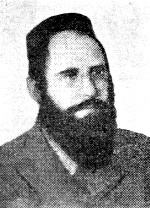
by Rav M. Ch. Efraim Bloch
Translated by Moshe Kutten
I get my pen and inkwell ready, awed, to write about the greatness of Kosov, where for 103 years, many Hasidim came from Galicia, Hungary, and Bukovina.
The beginning of this community is unknown—but its end… woe to us who are bound to this town by a thousand threads! Kosov, too, was destroyed, becoming a heap of ruins. My heart melts with sorrow, and as I write, I weep bitterly. Kosov remains only in the memory of those who left it and of the few—very few—who were saved from the inferno.
Kosov is interwoven and intertwined with the life of the founder of the Hasidic movement, Rabbi Israel Baal Shem Tov, the BESH”T. Between Kosov and Kitov, the soul of this wondrous man conceived and gave birth to the Hasidic idea that captured a large part of our people. In the introduction to my book “The World of Hasidim,” I wrote at length about these two towns.
[Rabbi Aharon Walden], the author of the book “Kahal Hasidim” [“Community of Hasidim”] writes:
“It is known that the BESH”T before his fame, and before he traveled to Medzhibozh in the area of Kosov and Kitov, hid in forests and caves, “…so that he might have solitude between himself and the Lord, blessed be He… And most often his hiding place was between the towns of Kosov and Kitov. There is a large cave in which he hid; there was also water there for immersion, and it remains there to this very day…”
I have a letter from the Polish author, Stanisław Winczenz,who conducted research about the life of the BESH”T. He climbed mountains and hills and traveled in the forests. He found old Christian farmers, aged 100 and more, who told him about the BESH”T told to them by their ancestors, and they showed him the trails and traces of his walking, as well as the pools and springs associated with the BESH”T.
Winczenz published a book based on his research titled “Erzählungen und Sagen aus den Hutsulischen Höhlen” [“Stories and legends from the Hutsul region”]. He wrote to me that he had found the spring in the Yasinova Forest, having received information about it from the Hutsulites. He noted that the BESH”T immersed himself in it when he secluded himself in this forest, and once during a drought; “He struck a rock and water gushed out” [Psalms 78:20].
Although the principal part of my role here is to write about the dynasty of Kosov Hasidism, five generations, I do find it necessary to write about rabbis who served before the appearance of [Rabbi Menachem Mendel Hager,] the author of “Ahavat Shalom” [“Love of Peace”], the founder of the dynasty, and, to my sorrow, also about a wicked rabbi
[Page 143]
who spoiled his ways and attached himself to the Sabbatian sect. He was apparently the first rabbi of the Kosov community.
A very old man named Reb Zecharia Shmerler from Delyatin, whose great-grandfather knew that wicked rabbi in Kosov, told me that the rabbi came to Kosov from a foreign country, was a scholar, an excellent preacher, a man of impressive presence and stature. However, he became attached to Shabbetai Ẓevi, and on one occasion, on the Shabbat-Teshuva [Shabbat of Repentance], he openly declared that Shabbetai Ẓevi was the Messiah. A great dispute arose in Kosov, for there were people among the common folk who followed this rabbi. In the end, he was expelled in disgrace, later became involved with Frank Sect, and apostatized. His name was Yerachmiel.
Following the expulsion of Rabbi Yerachmiel, Kosov became home to two great and holy figures: Rabbi Nacḥman of Kosov and Rabbi Baruch of Kosov.
In the writings of my grandfather, Rabbi Moshe Chayim Efraim, the author of “Degel Machaneh Eferaim” [“Efraim Camp's Flag”], it is mentioned that the father of the BESH”T's mother used to say that through the spirit of harlotry that had passed over the people of Kosov—when they set their hearts on Shabbetai Ẓevi and later on Yaakov Frank—Kosov became “Kozev” (falsehood). But through Rabbi Nacḥman, the community was purified of the husks and became worthy to be called “Kosef” (yearning), meaning that the Holy One, blessed be He, longs for this holy community.
Rabbi Nacḥman from Kosov
Rabbi Nacḥman was a native of Kosov, and his father traded in fields and forests. Nacḥman was his only son. According to some accounts, he was associated with Shabbetai Ẓevi in his youth and maintained ties with Yaakov Frank. Rabbi Yaakov Emden mentions him in his book “Hit'abkut” [“Struggle”], and this is his wording: “Nacḥman of Kosov, a heretic and an empty ignoramus, was sent to Opatow to defile a holy community. But when the worthy people recognized him for what he was, they exposed him as a strange and brutish fellow. At this, the Korah-like rabble there—the adherents of the sect of Shabbetai Ẓevi—became greatly agitated, and because of him they kindled the fire of strife.”
Reb Nacḥman was a lessee of fields, grains, and cattle, traveling regularly throughout Galicia and Podolia. He is mentioned several times in the book “Toldot Yaakov and Yosef” [“The History of Jacob and Joseph”] by Rabbi Jacob Joseph of Polonne. [Dov Ber ben Samuel,] the author of “Shivchei Ha-BESH”T” [“The praises of the BESH”T”] records that Reb Nacḥman initially opposed the Baal Shem Tov, but later, the two reconciled, and Nacḥman became a supporter of the BESH”T's teachings. During his business travels, he actively spread the Baal Shem Tov's ideas and gained new followers. In my book “Olam HaHasidim” [“The Hasidic World”], I elaborated on Reb Nacḥman and included several of his sayings. For example, on the verse “Shiviti Hashem lenegdi tamid” [Psalms 16:8] [“I have set the Lord always before me”], he taught: “If a person aligns his character traits with the will of God, then it is good. If not, the Lord is always set against him.”
The location of his burial is unknown, and none of his own writings have survived.
[Page 144]
Rabbi Baruch ben Rabbi Avraham of Kosov
Rabbi Baruch was the author of “Yesod HaEmuna, VeAmud HaAvoda” [“The foundation of faith, and the pillar of worship”]. He passed away in Kosov on 13 Cheshvan, 5542 [1 November 1781]. His book shows that he knew the BESH”T from the days the latter lived in the area of Kosov, Kitov, and Kolomyia. Rabbi Baruch spoke beautifully and was seen as a pleasant Hasidic preacher.
Rabbi Yekutiel Greenwald, my youth friend and a rabbinic historian, describes in “Matzevat Kodesh leSighet in Pelech Marmaros” [“Sacred Monument to Sighet in Marmaros”] how Rabbi Barukh traveled widely to rescue survivors of the Frankist sect. He visited Marmara's towns and villages, speaking to rekindle bonds between children and fathers. Yaakov Greenwald also notes Rabbi Barukh's opposition to the Frankists in “Ha-Shiloach,” vol. 33, p. 331.
Rabbi Barukh moved among remote villages, “like a wandering bird,” guiding people in faith. Greenwald writes he served as “Shaliach Tzubur” [prayer leader] during the High Holy Days in Marmaros, while living in Kosov. The book stands out as a Hasidic masterpiece, mentioning the Baal Shem Tov, the Maggid of Mezritch, Rabbi Menacḥem Mendel of Premishlan, Rabbi Nacḥman of Kosov, and other contemporaries.
It is said that Rabbi Baruch once entered the Beit Midrash in Kolomyia. He watched students debating Talmudic teachings and teasing one another. After observing, Rabbi Baruch remarked, “The Beit Midrash is filled with Torah,” and explained: He shared a story about the Baal Shem Tov, who visited Brody's Beit Midrash and saw young scholars engaged in sharp pilpul (analytical argument). The Baal Shem Tov called it full of Torah, which made them proud. However, he clarified: 'When Torah is studied for its own sake, it ascends to Heaven, and the hall remains empty. But when it is studied for show, the Torah stays below, filling the study hall.'
Aphorisms of Rabbi Baruch of Kosov
– “The joy a person feels in performing a commandment is valued more by the Holy One, blessed be He, than the act of performing the commandment itself.– “A person cannot adequately thank the Blessed Name for all the good He has bestowed upon him, for he cannot truly comprehend the magnitude of such goodness and kindness.
– “A person who gives thanks to the Blessed Name but does not feel pain over the inadequacy of his gratitude does not possess a complete love of God.”
[Page 145]
We should note that Rabbi Baruch has no familial connection to the Kosov Hasidic dynasty.
And now, as I stand poised to write about the Kosover “dynasty,” I find it appropriate to preface:
I have the courage to write about the Admo'rs of the Kosov dynasty because I have researched Hasidism thoroughly and focused specifically on the Kosov dynasty. My ancestors on both sides were Kosov Hasidim for five generations. I set a boundary: I only present miracle stories if they contain a moral lesson—the moral is essential, the miracle is secondary. Praise to God, I have published three books on Hasidism: two in German—“Di Gmeinde der Hasidim” (in two volumes) and “Priester der Liebe”—and one in Hebrew—“Olam HaHasidim,” in four volumes.
Rabbi Menachem Mendel [Hager], the author of “Ahavat Shalom” about the Torah.
He was born on 5,529 [1768] in Kolomyia to his father, Reb Yaakov Kopel, nicknamed “the Hasid.” Reb Yaakov knew the BESH”T from when the BESH”T lived in Kolomyia, and he was considered one of his students. Alongside his religious pursuits, Reb Yaakov had a small shop and traveled to market fairs with his merchandise. The common people loved to buy from him, calling him “spravedlyvi” (Ukrainian for “honest”) for his honesty in trade, and also “Shivitnik” after the verse “Shiviti Hashem before me” [Psalms 16:8].
The “Hager” dynasty began with Rabbi Mendel'eh. But where does the name “Hager” come from? Tradition says that when a law required everyone to adopt an Ashkenazi surname, an official asked Reb Yaakov Kopel which name he had chosen. Lost in thought, Rabbi Yaakov Kopel kept repeating the verse: “Ger Anochi Ba'Aretz…” [“I am a stranger in the land…”, Psalms 119:19]. The official overheard this and assigned him the surname “HaGer”—meaning “the stranger.” Some say Reb Yaakov Kopel was thin, and the official gave him the nickname “Hager,” meaning “thin” in Yiddish.
Rabbi Mendel'eh moved to reside in Kosov
At about age seven, Rabbi Mendel'eh lost his mother. His grieving father devoted all his attention to Menachem Mendel, who grew and progressed each day.
[Page 146]
When Mendel'eh came of age, he married Sheina Rachel, the daughter of his uncle, Reb Shmuel Simcha Zimel of Kosov. Reb Shmuel was the brother of the renowned tzaddik of his era, Rabbi Yehoshua of Kosov. According to family tradition, when Rabbi Zimel recognized Mendel'eh's remarkable talent, he wished to forge a close connection and arranged for his daughter to be betrothed to him while she was still young. After the wedding, Mendel'eh lived in his father-in-law's home, as Reb Shmuel had promised to support him for life.
Rabbi Mendel'eh's consecration to becoming a rabbi
Following the passing of the Maggid of Nadvorna, Rabbi Tzvi Hirsch, author of “Ẓemacḥ Hashem leTzvi,” his Hasidim were left feeling like sheep without a shepherd. My grandfather, Reb Binyamin Avish—a wealthy man and close adherent of the Maggid—was acquainted with Reb Mendel'eh, one of the Maggid's most esteemed disciples. Recognizing his qualities, my grandfather approached Reb Mendel'eh and presented him with the pitkah [note, kvitel in Yiddish][1]. Reb Mendel'eh responded, “One does not refuse a great man [“Ein mesarvin legadol”, Babylonian Talmud, Pesachim 86b]”; and if an elderly Torah scholar and man of discernment such as Reb Binyamin has resolved that I should be a 'Rebbe,' one does not refuse.” The other Hasidim and disciples of the Maggid likewise recognized Reb Mendel'eh's worthiness to succeed their teacher, and they became his followers.
A few stories about Rabbi Mendel'eh
Rabbi Mendel'eh's heart burned with love for the people of Israel. This profound compassion became the legacy of the Hager family, guiding every branch and inspiring every action.
While still a young man, Reb Mendel'eh journeyed on foot to visit Rabbi Shmuel Feivish HaLevi Heller, author of “Derech Emet,” [“The Path of Truth”] in the town of Zbarazh near Skalat, by the Skalat stream. Along the way, he stopped at an inn for the night. Hearing the innkeeper sigh, Reb Mendel'eh inquired about his troubles. The man explained that he had fallen on hard times, owed the local nobleman (“Paritz”) 100 rubles, and faced eviction for his entire family because he could not repay the debt. When Reb Mendel'eh asked his name, the innkeeper replied, “Baruch” [meaning “Blessed” in Hebrew]. Reb Mendel'eh responded, “Baruch—Blessed is the man who trusts in God” [Jeremiah 17:7].
The next morning, as Reb Mendel'eh continued toward Rabbi Feivish, a distinguished carriage passed by, carrying a wealthy man. Seeing Reb Mendel'eh walking—unable to afford transportation—the wealthy man asked, “Where are you going?”
“I am going to Skalat to see Rabbi Feivish,” Reb Mendel'eh replied.
“I am going there too; you can ride with me.”
Reb Mendel'eh told the wealthy man, “Listen, pious and wealthy Jew, you have an opportunity to secure a share in the World to Come.” He recounted the innkeeper's plight and urged, “Let us both return to the inn; you will witness his distress firsthand. A commandment that presents itself—do not let it go unfulfilled.” Moved by Reb Mendel'eh's words, the wealthy man agreed to help and said, “Fortunate are you for bringing me the mitzvah of 'Vehechzakta Bo' ['and you shall support him'][2].”
[Page 147]
Here is a story about Reb Efraim-Froik'eh from Yagolnitza, a Hasid of Rabbi Mendel'eh. He was an exceptional Torah scholar, known for his spiritual depth and character. As a prosperous merchant, he always welcomed the poor and fellow Jews. He longed to free the world from judgment and witness Elijah's revelation, believing the two were linked. Despite ascetic practices and fervent prayers, his yearning was unmet. He fell gravely ill. When Rabbi Mendel'eh learned of his illness, he traveled to Yagolnitza to perform the mitzvah of visiting the sick. Reb Ephraim greeted him with humility, awe, and love. The Rebbe asked, “Reb Ephraim, perhaps Elijah has been revealed to you, and the awe made you ill?”
“No, not at all,” replied Reb Ephraim. He poured out his heart to the Rebbe, expressing the deep sorrow he felt at not having yet merited such a revelation.
Reb Mendel'eh said: “You have afflicted your body and prayed—but only for yourself. Remember the holy Zohar: 'One casts his prayer outward when he fails to direct his heart to the true will.' Embrace this, and you may attain even the Holy Spirit. Then, all you seek will follow.”
The next story concerns a Jew in Kosov on market day who lost the money he intended for a cow. A Hasid saw him weeping and, after asking what was wrong, learned the man had lost a sum of money wrapped in a handkerchief. The Hasid inquired where he was staying and promised to investigate. After a few hours, he returned with another Hasid and the money. The owner said, “The money is mine, but not the kerchief—for mine was old, and this one is new.” However, those who found the items insisted, “This is what we found.” When they brought the matter before Reb Mendel'eh, they explained the Almighty had granted them the merit of a great mitzvah. Reb Mendel'eh responded, “Deceivers! Please, include me in this deception as well, so that I, too, may share in the mitzvah.”
There is yet another story about the so-called “court Jew” who served the Nadvorna's “paritz” [wealthy nobleman] of Nadvorna. Shortly before Rosh Hashanah, the paritz entrusted him with a large sum of money to travel to Zhabie and purchase oxen on his behalf. The Jew decided to stay for the holiday with the rabbi, Reb Mendel'eh, before acquiring the oxen. He hid the money among his belongings at the inn for safekeeping. On the morning of the Fast of Gedaliah, he went to retrieve the money, only to discover it missing—a substantial and troubling loss. Distraught, he confided in the rabbi, explaining that returning to the paritz without the money would arouse suspicion and could result in accusations of theft, leading to harsh punishment, possibly flogging and life imprisonment. Rabbi Mendel'eh responded by sending the rebbetzin's and his daughter-in-law's “shavisim” (ornamental headpieces) to the pawnshop, securing enough funds to reimburse the Hasid. He told him, “I caused your loss, and it is upon me to repay you.”
Additionally, there was the story of my granduncle, Reb Moshe Avraham Avish from Nadvorna—a Torah scholar, a very wealthy man, and a generous benefactor. He employed a trusted agent in his business, and both were Hasidim of Kosov. The agent, who had a daughter, arranged a match for her and promised a dowry of 300 rhenish [guilders]. When my uncle learned of this, he became suspicious that the agent might steal from the company, so he dismissed him.
[Page 148]
The poor Hasid brought his grievance before Rabbi Mendel'eh, who then summoned my great uncle to appear before him. Upon his arrival, the Rabbi questioned my great uncle about his harsh behavior toward his fellow man. The Rabbi continued: “The episode of the Binding of Isaac teaches us how one should act toward others. God commanded Abraham, 'Take your son… and offer him there as an offering.' Abraham prepared everything—he bound Isaac and took the knife to sacrifice him. But then an angel called out, 'Abraham, Abraham—do not stretch out your hand…' and Abraham obeyed the angel's voice. Rashi asks: If the command to sacrifice came directly from God, why did Abraham listen to an angel telling him to stop? From this, we learn: one must heed the voice of the angel. Now, I command you—do not stretch out your hand! Regarding the dowry: you will give half, and the father of the groom—who is one of our own—will forgo the other half, so everything will be settled peacefully.” And so, it was…
I first heard this story as a child from Avraham's son, Avish. Since then, it has been published in numerous other sources.
Rabbi Mendel'eh's Sayings
– “At the giving of the Torah, the Holy One, blessed be He, said to Moses Rabbeinu, peace be upon him: 'So shall you say to the house of Jacob… These are the words that you shall speak to the children of Israel.' Rashi explains, 'These are the words — neither less nor more'. Rashi hints that a person through whom God truly speaks is filled with awe of Heaven and speaks neither less nor more—only what is written in the Torah; that is, he does not teach a 'Torah' of his own invention.” (I heard this teaching from Rabbi Moshe'le, of blessed memory, who attributed it to his grandfather, Rabbi Mendel'eh, of blessed memory).“We drink LeChayim [To Life], for its numerical value (Gematria) is the same as 'Minhag' ['custom'], and a good custom has the power to annul a divine decree.”
In addition to the previous teachings, here is another I received from Rabbi Moshel'eh, of blessed memory, as recounted from his grandfather, Rabbi Mendel'eh, of blessed memory:
– “There is no person in the world who possesses the whole truth; rather, there is one who is farther from falsehood and another who is even farther still.”– “If a man gives charity to a poor person, and the poor man returns and asks again, and he gives to him with a cheerful countenance, such a man is on a very exalted level.”
– “Scripture says [Psalms 38:19]: 'For I declare my iniquity; I worry because of my sin.' Our many sins are that we suffice ourselves merely with saying, 'I worry because of my sin.'”
And yet another saying I heard from Rabbi Moshel'eh, of blessed memory, who passed it down from his grandfather, Rabbi Mendel'eh, of blessed memory:
– “The Torah commanded us: 'Love your fellow as yourself,' and hinted thereby that with the same
[Page 149]
completeness and self-sacrifice with which our forefathers cried out at the sea, 'Who is like You among the mighty, O Lord…' [Exodus 15:11], so too—with that very same completeness and self-sacrifice—every person is obligated to love his fellow.”
Rabbi Mendel'eh's teachers and mentors were Rabbi Zeev Volf from Chernyi Ostrov, Rabbi Tzvi, the Maggid from Nadvorna and the author of “Tzemach God le-Tzvi,” and Rabbi Meshulam Feivish Halevi Heller from Zbarozh.
Rabbi Mendel'eh passed away in 17 Cheshvan, 5586 [October 29, 1825] and was buried in Kosov, where a burial cemetery “tent” was erected over his grave.
This is what is written on his gravestone:
On the 9th of Cheshvan, in the year marked by the gematria of the verse “Rest of the Hasid, the Great of Israel” (with the thousands digit omitted, as is customary in Hebrew), a Hasid and revered leader of Israel passed away.The loss was deeply mourned by the clever ones and by the devout;
Bitter was the soul of the pious and the preachers.
The light of our eyes, the pride of our generation,
The beloved of our hearts in our affliction—
His spirit was gathered into the precious Garden of Eden.May he continue to stand as a pillar of fire and holiness,
And in the awakening of our redemption.
Our master, the glory and salvation of his people,
The great rabbi, righteous, pious, and humble,
A distinguished leader who strengthened the hands of the inhabitants of our land:Rabbi Menachem Mendel, son of the pious Rabbi Yaakov Koppel.
May his soul be bound in the bond of life,
And may the memory of his righteousness be preserved.
Rabbi Chayim, author of “Torat Chayim” about the Torah.
He was born in Kosov around the year 5555 [1795]. It was told that Rabbi Mendel'eh praised him while he was still a young child, on knowing the meaning of the verse “Hodu L'Adonai Kir'u Bishmo…” [“Give thanks to the Lord, call in His name…” - a piyut from the Shacharit prayer]. Rabbi Chayim'el's wife, Tzipoa, was the paternal granddaughter of Rabbi Pinchas from Koritz and the maternal granddaughter of Rabbi Yaakov Shimshon from Shepetivka.
My uncle, Reb Yona Bloch, was orphaned at the age of seven after the passing of his father, Reb Avraham Bloch. Rabbi Chayim'el took him to his home, raised and educated him, and told, among other things, that he slept in a room adjacent to Rabbi Chayim'el. “Every night, the rabbi would rise at midnight for Tikkun Chatzot, weeping in hushed whispers. After his worship, he would come to my room and lift the blanket that often fell off, so that I would not feel the cold. He would also put the yarmulka on my head if it had fallen off. Afterward, he returned to his room and recited Psalms quietly, so as not to awaken the members of the household.”
My uncle once recited the Nishmat kol chai prayer[3] for me as Reb Chayim'el would. “When Reb Chayim'el reached the words 'kol halevavot yira'um' ('all hearts shall revere You'), he would add in Yiddish: 'And I, Chayim son of Sheine Rachel, also fear You.' Those words became etched in my heart and mind. During my time in Nazi detention, I recited Nishmat several times a day, and it brought comfort to my soul.
In the cowshed of Rabbi Chayim'el, there were two horses and a cow. Each day, following his prayers,
[Page 150]
he would put on his short jacket (a Shepntzer, in Yiddish) and walk to the cowshed, asking the servant whether the horses and cow had received food and water. My uncle, Reb Chayim Yona, would always remark, “Der rabbi, Reb Chayim'el hot zikh gefirt vi a proster ba'al habayis” (“Rabbi Chayim'el carried himself like a plain, unassuming layman”). Despite his humility, Rabbi Chayim'el was a renowned Torah scholar and a wise man; even Rabbi Yisrael [Friedman] of Rozhin once visited him. Many stories and wondrous tales about him are collected in the book “Even Shetiyah” [“the Foundation Stone”] by Rabbi Berger of Sighet.
Rabbi Chayim'el passed away on the 25th of Iyar, the 40th day of the Omer, in the year 5614 (1954).
Left behind him were three sons and three daughters: 1) The eldest, Rabbi Yaakov Shimshon, who inherited his rabbinical position, 2) Rabbi Yosef Alter from Radovitz, and later in Safed, who passed away in Tiberia, and 3) Rabbi Menachem Mendel from Vizhnitz. However, I shall remain at my post and continue to write only about Kosov.
Some of Rabbi Chayim'el's teachings
– “As long as a Jew serves the Holy One, blessed be He, with both mind and fervor, Esau cannot harm him.”– “True tzaddikim are always cleaving to the Holy One, blessed be He. Only because the people of Israel require them for material matters must they separate themselves from that state of closeness.”
– “A complete person must be 'set upon the earth'—that is, must act with humility, guarding himself from even a trace of pride. Then, 'his head reaches the heavens' [Genesis 28:12]—he will merit all good qualities.”
– “And Moses went down from the mountain to the people.” The double expression, “from the mountain to the people,” is difficult. Rabbi Chayim'el explained: “Our holy Torah hints here that even if a leader rises to a great spiritual height, he must still descend to the people.”
– Rabbi Israel from Rozhin once asked Rabbi Chayim'el why he prayed among the crowd in the same room. He said he prayed alone in a room. Rabbi Chayim'el responded as mentioned above and added: “If the leader does not come down from the mountain at all, he cannot mix with his people.”
In 1921, I published this teaching in “Nayer Viener Zhurnal” [“New Viennese Journal”]. The matter—and that same article—eventually reached the hands of the High Priest, Ignaz Seipel, who had served for several years as Prime Minister of Austria. He was greatly impressed by it, invited me, and wanted to know who Rabbi Chayim'el of Kosov was. From then on, a friendship developed between us, and through him, I was able to accomplish many favors for individuals.
[Page 151]
Rabbi Yaakov Shimshon
He was born in Kosov around 5575 (1814). His first two marriages were childless. Later, he married his third wife, Mrs. Chava, granddaughter of Rabbi Yaakov Yosef [ben Yehuda Leib]—a renowned preacher from Ostraha (Ostrog) and the author of “Rav Yevii” (a title derived from his initials). After several years, Mrs. Chava gave birth to their son, Moshe'le.
In 5614 [1854], upon the passing of his saintly father, Rabbi Shimshon was invested with the mantle of leadership as Admo”r Rebbe of Kosov. The leading sages of the generation spoke highly of Rabbi Yaakov Shimshon. Rabbi Gaon [Chayim Halberstam] of Sanz, author of the “Divrei Chayim,” held Rabbi Yaakov Shimshon in great esteem. In Divrei Chyaim, Even HaEzer, part II, siman 30, there appears a responsum addressed to Rabbi Shimon Tzvi Eiger, Rabbi of Kriptsh, in which he writes: “Your letter has reached me, and were it not that you wrote to me that you are among the household of the holy Rabbi of Kosov … and that you dwelt in the home of the righteous tzaddik … I would not have replied to you, for my strength has waned …”
It is said that in Kosov, there was an official overseeing the “Salina” — the salt mine — who was sympathetic to the Jewish community and often assisted them. On one occasion, a Jewish resident of Kosov became involved in a court case in Kolomyia and faced the prospect of several years in prison. The prosecutor in the Kolomyia district court happened to be the brother-in-law of the official from Kosov. The Jewish resident approached Rabbi Shimshon for help, explaining the situation. Rabbi Shimshon traveled to the official, explaining that the accusation against the Jewish resident was false and that he was innocent of the crime, and asked him to intervene on the accused's behalf.
That official received the Rabbi with great honor, greeted him warmly, and promised to intercede with his brother-in-law. He only asked that the Rabbi explain a difficulty to him: Why did Abraham, in the biblical story, lie to the youths? In his mind, he intended to slaughter his son, yet he said, “Stay here with the donkey, and the lad and I will go yonder; we will worship and then return to you.” Rabbi Yaakov Shimshon replied, “What is so remarkable about that? He also lied to the angels who came to lodge with him. He told them, 'Let a little water be brought … and I will bring a morsel of bread…' yet in the end he served cakes, a tender and choice calf that had been prepared, together with butter and milk, and placed it before them. So, what do we see from this? Such is the way of the upright and righteous: they promise little and do much.” This explanation pleased him greatly, and he promised to do everything for the benefit of the Jewish resident.
The official's grandson, Studinski, also served as an official in the royal salt industry in Delyatin. On one occasion, when Rabbi Moshe'le visited Delyatin, Studinski met with him and presented a written note from his grandfather recounting a conversation with Rabbi Yaakov Shimshon. The note also mentioned that in Kolomyia's court, Ernest, a Jewish resident, had been acquitted and released.
[Page 152]
I recall that Rabbi Moshe'le used to say that this was the greatest wonder wrought by his late father.”
Rabbi Shimshon passed away on 19 Adar 5640 [2 March, 1880], and was buried adjacent to the grave of his Tzadick father.
I heard from Rabbi Israel Berger, author of “Eser HaTzachtzachot” [“Ten Monographs on Righteous Men”], that he asked Rabbi Moshe'le, of blessed memory, to give him the manuscripts that had presumably remained from Rabbi Yaakov Shimshon, so that he could arrange and publish them. But he replied: “My father did not instruct me to publish them, and I have no right to give them over for publication.”
Rabbi Moshe, the author of “Leket Ani” [“Gleanings of the Poor”], “Ezor HaEmunah” [“The Realm of Faith”], and “Sefer HaTzava'ah“ [“The Book of the Testament”] was born in Kosov in 5619 [1860].
In my youth, I heard from a trustworthy man, Rabbi Menashe, rabbinical judge of the holy community of Nadvorna, that once, when he was in Kosov with Rabbi Yaakov Shimshon, Reb Moshe'eh was, shortly after his bar mitzvah, already head and shoulders above others. One of the Hasidim remarked: “Moshe'le iz kein ayin hara, a mashin” [“Moshe'le is, without the evil eye, a real machine”] — meaning a powerful young man. Rabbi Shimshon, who had been engrossed in conversation with the above-mentioned Rabbi Menashe, overheard the remark, turned toward that Hasid, and said: “Yes, yes — he will become the savior of Israel!”
Reb Moshe'le was ordained as a Rabbi
After his father, Rabbi Yaakov Shimshon, passed away, Reb Moshe'le was about 21 years old and unsure of his next steps. While a member of the Vizhnitz Hasidim suggested he enter business and leave the rabbinate, his mother objected. Additionally, several elder Hasidim from Kosov encouraged him to remain in his father's position. Seeking clarity, Reb Moshe consulted Rabbi Avraham Yaakov of Sadigura. He notified Rabbi Avraham Yaakov in advance of his visit, and the latter sent three of his people to greet him at the city limit. When Reb Moshe'le arrived, Rabbi Avraham Yaakov warmly received him, saying, “Welcome, Kosov'er Rebbe!” Then he added, “Please sit down, Kosov'er Rebbe.”
Continuing their meeting, Reb Moshe'le took out a note along with a pidyon[4] of one Rhine coin and placed it before Rabbi Avraham Yaakov. As he began to speak, Rabbi Avraham Yaakov advised all the people in the room to leave. But Reb Moshe'le replied, “I do not have any secret, and as far as I am concerned, your people can stay in the room.” Rabbi Avraham Yaakov, smiling, responded, “If it is agreeable to you, they will remain in the room.”
[Page 153]
|
|
Once the others stayed, Reb Moshe'le continued, “I was left an orphan. My mother and some of my father's Hasidim urge me to become a rabbi, but I am uncertain whether I am worthy or suited for this.” Rabbi Avraham Yaakov replied: “Your mother and the Hasidim are right. Your father brough salvation.” At that moment, refreshments were brought in. After they raised a glass for a lechayim, Rabbi Avraham Yaakov said to him, “May you, too, merit to bring about salvations.”
Once, Reb Moshe'le came to spend Shabbat in Delyatyn for the Torah portion Mishpatim — if my memory does not fail me, it was in the year 5671 (1911). At that time, Reb Shechter of Sniatyn was also there. His wife was ill, and the doctors had given up hope for her life. When he handed over the kvitel (note), and Rabbi Moshe read it, Reb Dan burst into bitter tears: “Rebbe, I am blessed with many small children — what will become of me if, God forbid, I am left alone?” I was present at that occasion and deeply moved, as was everyone else in the room. All could see on Rabbi Moshe's face that he shared in Reb Dan's sorrow. Suddenly, Rabbi Moshe rose from the bench and exclaimed: “Our Sages said in Pirkei Avot: 'Do not judge alone' ('Al tehi dan yechidi'), and so too it is the halakhah. Trust in God, may He be blessed, that He will send your wife a complete recovery — and you shall not remain alone.”
The health of the sick wife improved
[Page 154]
day by day, bringing hope to her family. She lived for many more years—until the Nazi axe cruelly came down upon her. Her son, Rabbi Yeshayahu Shechter, became the famous mohel in Tel Aviv, carrying her memory forward.
Rabbi Moshe'le first married, at the time his father was still alive, the granddaughter of Rabbi Yitzchak Meir of Zinkov, himself the son of Rabbi Avraham Yehoshua Heschel of Apta and author of “Ohev Israel.” From this marriage, he had a daughter, Rachel, before the couple divorced. He then remarried, this time to the daughter of Rabbi Mendel'le Steinberg, who served as a rabbi in Siniatyn and Brody and authored the responsa “Machazeh Avraham.” His second wife gave birth to a son, Rabbi Chayim, who would later succeed his father and ancestors in their rabbinical position.
Rabbi Gershon Hager, who was the head of the rabbinical court [AB”D] in Tluste, and later died in New York as the Rabbi of Zabolotov's landsmen, shared with me some of the teachings of Rabbi Moshe:
– “We find in Pirkei Avot, chapter 1, that Shimon the Righteous used to say: 'The world stands upon three things: upon Torah, upon worship, and upon deeds of loving-kindness.' In the same chapter, Rabban Shimon ben Gamliel says: 'The world endures through three things: through truth, through justice, and through peace.' And in my humble opinion, there is no disagreement between them; one complements the other. When is the Torah a pillar of the world? When it is studied through 'truth' rather than distortion. When is divine service a pillar of the world? When it is performed according to 'justice,' without overstepping the law. When are acts of kindness a pillar of the world? When they serve 'peace.' One who bestows kindness upon another while knowing that the recipient will use it to harm someone, or to gamble, Heaven forbid—it is forbidden to perform such an act of kindness, for through it peace will be undermined. If the wealthy grant loans to nations for the production of weapons of destruction and the waging of wars, the world does not stand on such 'kindness,' because it is not done for the sake of peace.”– A certain Hasid urged Reb Moshe'le to begin leading the prayers from before the lectern, as is the custom of all rebbes, for this would increase the number of Hasidim attached to him. Reb Moshe'le replied: “It is written in the Torah: 'When a leader sins and does one of all the commandments of the Lord his God which ought not to be done…' [Leviticus 4:22]. This hints to leaders and shepherds of Israel that they should not do things that appear to be commandments but, in truth, contain an element of sin and pride. For in what way can a leader—the rebbe of Hasidim—sin? If he were to commit an actual transgression, the Hasidim would cease coming to him, and he would lose his livelihood! So, what then? If he performs one of the “commandments which ought not to be done”—for example, leading the prayers from before the lectern [without being the rebbe] —outwardly it seems a mitzvah, yet it contains pride and haughtiness. A leader, the shepherd of Israel, must guard himself against such commandments.”
In the winter of 5,684 [1924], on his way from Miran to his home, he stayed in Vienna for ten days. What he said there was etched in my memory: “The world is a prison, containing people whose punishment is light and others whose punishment is unbearably heavy—each according to his degree.”
In the summer of 1925, he traveled to Neuenheim in Germany. On his way back, he stayed in Berlin
[Page 155]
with one of his Hasidim, and there, in his host's home, he was struck by a stroke. In his pocket, they found a will in which he requested to be buried in his final rest beside his forefathers in Kosov. And so it was: his coffin was brought to Kosov.
After his passing, his son, Rabbi Chayim'el, published his book “Ezor ha-Emunah” [“The Region of Faith”], together with his will.
In his book “Ezor ha-Emunah”, the poem of Rabbi Meshe'le, of blessed memory, was published:
What [Ma in Hebrew] drives you so to spoil your ways,
With envy, hatred, lust that fills your gaze?
You rage at all who dare to dim your pride,
Like apes, you mimic, with a haughty stride.
And bend your ear to wealth, your constant guide?Hear [Shma] now your parents' voice while you remain,
For soon you'll fade and not be here again.
Then great and small, from wrath released, will wane.
And none will fear the thunder of your cry,
Your hates and jealousies in the grave will lie.
Only worms and maggots underneath you creep nearby.Did you know [Hayadata] voice, weighs all your deeds, and knows each thought and smile.
Even the faintest flicker, the twitching of your eye,
No sense of yours can grasp Him, though you seek Him all the while.
And no bribe or favor can sway His judgment's style.Therefore, mend and better all your ways,
That you may reach the goal of all your days.
And joyfully of heart, you'll eat and drink with fathers, not forgotten,
In the pleasures of the world to come, by your King and God allotted.[The bolded letters spell the name Moshe in Hebrew]
It is characteristic that my childhood friend, Rabbi Yeshayah Halevi Ish Horowitz, of blessed memory—the son of the eminent Rabbi Yosef, Av Beit Din of Osytsia, and the younger son of the great Rabbi Meshulam Yissachar, AB”D of Stanislawów, who certainly could not be regarded as a man given to fantasies—responding to my letter about a dream I had dreamt, related to me in his letter dated Wednesday, Pekudei Torah weekly portion, the 29th of Adar 5708 [April 9, 1948], an interesting dream, and I hereby convey the contents of his letter:
“And the matter of your dream involving Rabbi Sheftel, of blessed memory, is in itself remarkable. Yet for you, having already encountered even Maimonides in a dream, it is perhaps not so extraordinary. I, too, will share a recent dream. On Wednesday night, the fifteenth of Adar, I visited in my dream,
[Page 156]
the Tzadik Rabbi Moshe, may he rest in peace, of Kosov. We talked, and then I turned to say goodbye and wished him 'Gut voch' [a good week] (because it was after Shabbat). When I was near the door, and he was across the room, he nodded and said, 'Ir zolt oyfgerecht vern' ['May Heaven prove you right']. I replied, 'Amen.' Then I left him, thinking about what that extra blessing meant and why it was added. In any case, let us say I had a good dream.”
This dream is particularly significant, as Rabbi Yeshayah was known to be both the son and the grandson of Mitnagdim [5]. Yet, through marriage, he came to reside in the Hasidic town of Kosov.
Rabbi Chayim
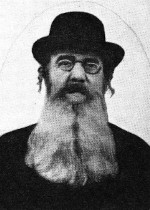
The last Admo”r of the Kosov dynasty, fell victim during the horrific Holocaust slaughter. I do not have much information to share about him. I became aware of one fact. Rabbi Feivel Willig, may God avenge his blood, the ABD in Budapest, studied with Rabbi Chayim during the years he stayed at Rabbi Moshe'le's home, and in the year 5680 (1920), Reb Feivel'eh conferred rabbinic ordination upon him. In that same year, Reb Moshe'le sent him to Kuty, where Reb Chayim underwent examination before Rabbi Yaakov Schor, of blessed memory, the ABD of Kuty, who likewise bestowed ordination upon him. Rabbi Yaakov then wrote to me: “The day before yesterday, Rabbi Moshe'le's son, Rabbi Chayim, stood before me for examination—and what can I tell you? I truly could not believe that an only son could be so filled and overflowing with Torah learning.” After Rabbi Chayim had received these two ordinations, he was also ordained by his maternal uncle, Rabbi Avraham Mendel Steinberg, author of the responsa “Macḥazeh Avraham” and ABD of Brody.
I have kept a postcard from Rabbi Chayim'el, dated 5684 [1923/4]. In it, he writes: “Should you wish to publish a new book, I possess a hundred stories, Torah teachings, and fine customs and practices—all heard from my revered, holy father, may he live long, who spoke of matters that stand at the height of the world.”
At that time, his father was staying in Neuenheim. At my request, he sent me a notebook brimming with precious insights—without asking his father's permission. When Rabbi Moshe'le returned, he instructed Rabbi Chayim'el to request
[Page 157]
that the notebook be returned to him, explaining that he had written all these things to guide and instruct his son, as he was absolutely adamant that they should not be published.
|
|
Rabbi Chayim'el learned to play the violin under the guidance of Reb Chayim Nachman, the renowned leader of the Kosov klezmers. He would arrive at his lessons in a carriage drawn by two horses, a distinguished vehicle that belonged to Rabbi Moshe'le, may his memory be blessed.
Translator's footnotes:
by Yitzhak Tannenbaum
Translated by Moshe Kutten
At the beginning of 1909, I attended a Zionist conference in Lvov [Lviv]. During the conference, my friend, Rabbi Eliezer Meir Lifshitz of blessed memory, approached me and suggested that I travel to Kosov to accept the position of principal at the local Hebrew school. I was initially hesitant to accept the offer because the local rabbi in Kosov was a Hasidic admo"r. I feared I would face opposition from the townspeople, who were likely influenced by a rabbi opposed to the Zionist movement. To ease my concerns, my friend introduced me to Mr. Shmuel Hizler, of blessed memory, who was serving as a delegate at the conference. Mr. Hizler reassured me that most of the Jewish residents in Kosov were Zionists, so I need not worry. Convinced, I accepted the position and traveled to Kosov.
When I arrived in Kosov and got to know most of its Jewish residents, I found out that the vast majority of them were loyal Zionists, and I would mention some of them:
The rest were merchants and Amcha (commoners), the vast majority of whom were fans of Zionism. Before long, I became attached to the town and its people, and I remained there for about five years. The school developed and flourished, becoming a model for the entire region. As I remember the town and its people today, they stand vividly alive before me.
May their memory be blessed!
by Pnina Stein
Translated by Moshe Kutten
Kosov, a small town in eastern Galicia, is about an hour's wagon ride from the Romanian border. The town is renowned for its natural beauty: mountains and ancient forests on one side and lush green fields on the other. Along its length flows a stream abundant with water year-round, while a mountain brook crosses it from side to side. This beautiful surrounding, which I would even call romantic, undoubtedly stamped its mark upon the character of its residents. Memories of these places–on the mountain, on the “New Road,” in Horod, and more–remain vivid. My friends and I spent our childhood in these spots, playing or taking strolls with our parents on Shabbat and holidays. Although nearly forty years have passed since I left, these places remain etched in my heart.
However, Kosov was known not only for its external beauty, but also for its internal and spiritual beauty, for the spirit of Judaism and nationalism that permeated its Jewish inhabitants, their social relations, and so forth. As an educator who worked as a kindergarten and school teacher in our town before World War I, during the war, and after it, I can provide, as much as possible, a concise review of education in Kosov during those times.
In the days before World War I, the “cheder” served as the first educational institution for Jewish children. There were teachers for young children–melamdei dardekei (literally, “babies' teachers”)–some of whom I remember vividly: Berl'e the melamed, Mikhel the melamed, and Yerachmiel. When a boy or girl turned three, their parents would bring them to the melamed, where they began learning to read and, soon after, started studying a bit of Chumash. By the age of six, children advanced to higher-level melameds, where they studied Chumash with Rashi's commentaries and began learning Gemara. At that point, girls typically completed their Jewish studies, left the “cheder,” and enrolled in state schools. In wealthier homes, girls continued their studies at home with private melameds, who visited to teach them. One such teacher in those days was Reb Mendel Mauler, may he rest in peace, also called “Mendel der Pukiker” (named for his home by a Pukiv area brook).
There were two state schools in Kosov: one for boys and the other for girls. In the girls' school, the Jewish girls constituted a majority, while in the boys' school, by contrast,
[Page 160]
the Jewish boys were a minority. Kosov Jewish residents avoided sending their boys to state schools, where a crucifix hung on the wall, Christian prayers were recited, and boys sat with their heads uncovered. Parents feared their children's Judaism would be endangered (“Er vet vern a goy” – “He will become a gentile,” they would say). Only after Baron Hirsch established a Jewish-run school did parents, though hesitant, agree to send their children to school.
At that school, Polish was the language of instruction, and the curriculum mirrored that of state schools. Following graduation, many children entered craft trades; weaving, widely practiced in our town, attracted most of them. Others, though fewer in number, pursued occupations such as carpentry, shoemaking, tailoring, watchmaking, and shop work. However, not everyone studied a craft or occupation. The sons of the wealthy, in particular, did not, since their families provided private tutors to continue their studies and ensure a general education. Similarly, children who had not attended the school relied on private tutors for instruction.
Among private tutors were Yosi'l Simcha Hizler, Eliyahu Finster, and Shimshon Drezner. My father, Shmuel Hizler, may he rest in peace, was a teacher par excellence. He was a learned man and one of the first maskilim, a pioneer of enlightenment in our town. All educated youth there had been his students. Passionate and early Zionist in the Herzlian sense, he was also a devoted champion of the Hebrew language.
Hygiene in the cheders was poor. If the rebitzen (melamed's wife) was diligent, all was clean and orderly; if not, children sat in mud and filth.
The melamed's main room, where his family lived, also served as the cheder. Family life happened there–eating and sleeping, sometimes even as chickens wandered in to peck for scraps under the pupils' desks. There were no toys or games. Instead, children brought buttons, nails, spools of thread, or a broken screw to play with.
Like other Kosov girls, my sister and I passed through the first stages of Jewish education. We began with instruction for young children, moved to the study of the Chumash and Rashi, and even learned a little Gemara. Yet our dear father, may he rest in peace, wanted more. He worked toward establishing a Hebrew school. Through his initiative, Kosov's first school, “Safah Berurah” [“Clear Language”], was founded in 1909. The Zionist association's committee, headed by my father, founded the school. If I am not mistaken, committee members included Berl Rigler,
[Page 161]
|
|
Zindel Fiber, Meir Rigler, and Yosi'l Simcha Hizler. The first teachers were Meshulam Kamil and Zindel Fiber, may he rest in peace. Fiber was a great scholar; Kamil, more effective with students, became the principal teacher. None were professional teachers–they were old-style Enlighteners who taught alongside their regular jobs.
Initially, the school had only 15 students, most of whom were boys, and no young children were enrolled. Despite its small size, the school exerted a significant influence throughout the city. Hebrew could be heard in the Jewish neighborhoods–both in conversation and in song–as the student body steadily increased. Recognizing the need for a professional teacher who could bring structure and consistency, the school soon invited Mr. Yitzchak Tennenbaum from Lvov [Lviv], who now lives in Israel. His arrival marked a turning point, providing the school with the opportunity to expand further. Mr. Tennenbaum's impact was remarkable, for
[Page 162]
besides his mastery of teaching, he impressed everyone with his well-groomed appearance and courteous, refined conduct.
The school grew rapidly, and overcrowding became significant, to the point that it was too small to accommodate all who came to register, and many children were rejected. For the following academic school, an additional local teacher, Frida Stein, was invited; may God avenge her blood.
A new school committee was elected at that time, headed by Dr. Yeshayahu Horowitz, of blessed memory. He devoted substantial time and effort to the school. After two years of work, the teacher Pnina Stein left Kosov and moved to teach at the Hebrew school at Kolomyia. Having no alternative, Mr. Tenenbaum remained the only teacher, helped by the older girl students of the school.
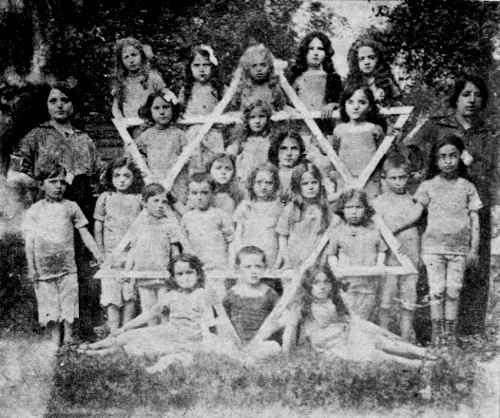
In 1913, the first Jewish kindergarten in our city was founded under the active initiative of Mr. Tenenbaum. At his urging and under his influence, I was sent for training as a kindergarten teacher. At first, I worked at the kindergarten in Buchach under the management of Mr. Baruch Berkowitz, and later I studied at the teacher seminar in Lvov. When I returned home to Kosov, the local kindergarten was opened, where I served as a teacher. It was the first Jewish kindergarten in Galicia, where Hebrew was the only spoken language, with no trace of any other language. In other Galicia kindergartens, a mixture of two languages, Hebrew and Polish, was practiced as the instructional languages (Hebrew in the morning, and Polish in the afternoon, or vice versa).
Before long, the kindergarten gained an excellent reputation throughout the town. The children made fine progress in Hebrew; they sang, spoke, and recited in Hebrew, and they were well brought up. The kindergarten's impact was clearly evident, and by the second year, 60 children were already enrolled. This was a fine example of Kosov's Jews' nationalism and their attachment to the ideal of national revival. Both the Hebrew school and the Hebrew kindergarten found fertile ground for growth and prosperity.
I still remember the names of the first children in the kindergarten. They are engraved upon the tablet of my heart, and they all stand vividly before my mind's eye. These are their names: Itah Hartler, Gitel Kamil, Chaya Rigler, Tzvi and Pinki Reichman, and Avraham Hirshhorn. These individuals survived the war, and the first five still reside in Israel today. The rest of them were: Zisli Landman, Tovah Reifer, Bela Hirshhorn, Shoshana Kromholtz, Dvora and Michal Kramer, and Rend. Except for Rend, who was killed when she was still a young child, all perished in the Holocaust. May God avenge their blood.
The influence of the kindergarten was felt not just in the streets but also at home. Hebrew could be heard everywhere. The kindergarten continued to expand, but as it grew, so did the expenses. The kindergarten constantly required equipment and supplies, including furniture, toys, pictures, and instructional materials. However, financial resources were scarce. Although tuition fees were introduced,
[Page 163]
numerous and substantial exemptions and discounts were offered, allowing many children to attend for free. The committee's guiding principle was to admit every child, regardless of payment. As the kindergarten received no financial support from any quarter, we organized theatrical shows, charity events, and social gatherings, with proceeds dedicated to covering operational expenses.
In summer 1914, World War I erupted, and all young people, including committee members, were recruited. No one was left to oversee the Hebrew kindergarten's and the school's expenses, so these institutions were at real risk of closing. Parents who depended on these services urged me to take responsibility. After a brief pause, I agreed to reopen the kindergarten and the school. Funds to cover the rent were not available, so I moved the furniture into my home. My workload became heavy: I worked from 9 a.m. to 9 p.m., taking only a one-hour break at noon and teaching class after class. Hebrew instruction was in such demand that the Pesler company opened courses in another part of the city (Monstir), which proved very successful. This situation lasted until summer 1915, when the Russians advanced. Then came the great escape. The city emptied of Jews, who were especially vulnerable to Russian oppression–and everything came to a halt.
From 1915 until 1918, the Hebrew school and kindergarten remained closed. When the war ended in 1918, Jews began to return from the places to which they had been displaced, finding their homes empty and partly in ruins. Remarkably, the long interruption had not weakened Kosov's Jews' attachment to the Hebrew language and to Hebrew education. Before long, they set about reopening the kindergarten and the school. It was a fine expression of Kosov's Jewish national consciousness.
After a brief period teaching in Kolomyia following the war, I returned to Kosov. By this time, the school and kindergarten had reopened, drawing people from across the city, suburbs, and nearby villages. Despite autumn's rain, winter's snow, and cold, group after group came. I taught kindergarten and first grade alongside two new teachers: Zalman Kamil, may he rest in peace, and Eliyahu Finster, may God avenge his blood. To accommodate everyone, we rented a large apartment–the home of Mordechai Jegerman–which had previously served as the Baron Hirsh school.
The school and the kindergarten flourished, especially serving the youngest children. The cheder was pushed completely aside. Fathers and mothers realized that, while they once sent three-year-olds to a cheder, now they needed to send them to kindergarten instead. Children attended twice a day: from 9:00 a.m. to 12:00 noon, and again from 3:00 to 6:00 p.m. I was deeply fond of the children, especially those who came through the snow and cold in winter wagons. Their eyes shone, and their cheeks were flushed red. For example, two brothers in Israel today, Avraham and Shmuel Wildehorn, came to the kindergarten every day
[Page 164]
traveling seven kilometers in a winter wagon. I rubbed their tiny, numbed fingers so they could feel them again. Alongside them were children of the Hazenfratz and Sigler families, and many others whose names I no longer remember–who perished in the Holocaust; may God avenge their blood. Their numbers are countless. These precious souls rejoiced and learned; their hearts and minds were open to all that was beautiful and good, yet were wiped from the earth by a criminal and merciless hand. O God, avenge the blood of these precious children of Israel!
I was pleased to witness the vital role that the Hebrew school and kindergarten played in the lives of Jewish children. No obstacle could keep them from attending–not mud, rain, cold, or even storms. Parents said it was a great punishment to force a child to stay home, as the children enjoyed the warm, welcoming atmosphere of the Jewish institution, free from gentile children and teachers.
It is worth noting that the Hebrew kindergarten and school were respected by local state educational institutions. This respect endured through Austrian rule, the brief periods of Romanian and Ukrainian governance, and under Polish rule. Whenever I needed to adjust class times–from mornings to afternoons, or vice versa–to minimize disruptions to studies, the other schools always considered the needs of the Hebrew school and kindergarten. The teachers at the local public school often remarked, “It is easier to work with children who attend the Hebrew institutions, because they are well-educated and well-behaved.” Like other state schools, I received firewood for heating under a government license at minimal cost. It follows that the Hebrew school and kindergarten maintained high standards and earned a strong reputation among the local non-Jewish educational institutions.
“In 1925 (in Tishrei 5686, after Yom Kippur), my husband and I, together with our three children–a seven-month-old daughter, a three-year-old son, and another five-year-old daughter–left our beloved town and immigrated to the Land of our Fathers. From that time on, I no longer knew with certainty what became of the Hebrew school and kindergarten.”
There was a town, and there was Hebrew education, and there were boys and girls studying there–and they are no more… The sun still rises, the acacia tree still blossoms, and the world goes on in its accustomed way…
|
|
JewishGen, Inc. makes no representations regarding the accuracy of
the translation. The reader may wish to refer to the original material
for verification.
JewishGen is not responsible for inaccuracies or omissions in the original work and cannot rewrite or edit the text to correct inaccuracies and/or omissions.
Our mission is to produce a translation of the original work and we cannot verify the accuracy of statements or alter facts cited.
 Kosiv, Ukraine
 Yizkor Book Project
 JewishGen Home Page
Copyright © 1999-2026 by JewishGen, Inc.
Updated 08 Jun 2026 by JH