 |
|
|
[Page 18]
[Page 19]
by Avraham Tzvi Stein
Translated by Moshe Kutten
Our town of Kosov, at the foot of the Carpathian Mountains in the province called Focaccia, eastern Galicia, was more than a town. It was the lively center of a Jewish community that flourished for 500 years. Here, rabbis, chasidim, Torah scholars, and everyday people lived together. They were united by faith and a strong sense of shared hope. That hope for redemption was visible in everyone's eyes. Sadly, it was never fulfilled, as our community suffered and was destroyed by the German oppressors, with help from local Ukrainians and Polish collaborators
This is the story of our community, stretching from the late 19th century, through our flight from Kosov in the summer of 1915 to escape the Czar's thugs, and on to 1925, when we made Aliyah to Eretz Israel.
At the time, Kosov had a diverse population. Jews comprised about 80% of residents; the remainder were mainly Ukrainians and some Poles. Despite the Jewish majority, the mayor and the district minister were always Polish, as were most government officials.
The only exception was the vice mayor, who for a time was a Jew–David (Dutzi) Engler, may he rest in peace. Later, in 1938, Dr. Gertner, also Jewish, served as mayor. May God avenge his blood.
There were two state schools in Kosov, one for boys and one for girls. Most students were Ukrainian and Jewish, while Polish students were fewer in number. The language of instruction was Polish. Most Jewish families prioritized sons' education in a cheder, a religious school, to help preserve their identity. Girls either attended the state school or studied at home. Jewish parents–especially mothers–cared less about wealth or material status. They valued raising a child as a Jew who understood a Jewish word (a Yiddish vort). Their main goal was to raise their children as Jews, emphasizing prayer and the study of the Torah, Mishnah, and Gemara. Even families with modest means ensured their sons received a Jewish education.
Education contributed its share to preserving the nation's existence, and was therefore both religious and national in character. And since there was no contradiction between the Jewish home,
[Page 20]
the Jewish street, and the kḥeder–all of them being directed toward this single goal–the inner wholeness of the Jewish child was likewise preserved.
From a young age, children were taught to mumble a few words from the Torah or prayers, such as “The Torah that Moses commanded us…”, “I give thanks…”, and “Shema Yisrael.” Our Sages taught us that parents should teach their children words of holiness from the first words they speak.
The cheder:
At age three for boys and five for girls, children were brought to the “cheder.” The melamed–religious teacher–shaped their Jewish character. Children learned to read the siddur, pray, recite blessings, and study Chumash, Bible, Mishnah, and Gemara. They were taught to follow commandments and observe Jewish customs such as Shabbat, fasting, and honoring parents. No uniform teaching method existed. One principle, though, emerged in the early stages.
From the simple to the complex was a fundamental principle in education.
The cheder used a “synthetic method” of reading instruction. This means children learned to blend individual letters and vowel signs to form words. All young students used this method.
The learning was done individually.
The educational principles found in Mishlei [the biblical Book of Proverbs] and Pirkei Avot [Ethics of the Fathers, a tractate of the Mishna] served as the foundational guidelines for education.
The stages of the cheder:
A cheder was divided into four stages, each with clear educational goals. The first stage focused on teaching young children to read and introducing Chumash [The Five Books of Moses]. The second stage covered more Chumash, weekly Torah portions, some Ketuvim, Psalms, and Proverbs. It also introduced Mishnah and Gemara. The third stage meant more in-depth study of the Bible, Mishnah, Gemara, and Tosafot. The fourth stage combined all previous subjects, adding studies of the Poskim (Jewish law experts).
The first stage–teaching young children.
This stage emphasized fundamental skills. Children learned the alphabet, formed letter combinations with nikkud (vowel marks), practiced syllables, and gradually read full words. They began reciting prayers and studying Chumash. Children usually reach this point by age five. Families celebrated with a meal and new clothes. Each celebration was special and emphasized this milestone.
The child wore new clothes adorned with gold watches, even borrowed ones, as for a Chatan Torah[1]. Instruction was individualized. Each child started the Pentateuch when ready–not waiting for others, even age peers.
[Page 21]
For each child, the celebration was a cherished moment–he became the glowing center of his family and community's attention. These occasions were not simply festive but created lasting, heartfelt memories that would remain vivid for a lifetime.
The second stage
At age six, boys entered the second stage of education and began studying the Gemara, while girls either remained in state school or continued their studies at home with a melamed, such as Reb Mendel Moiler (nicknamed Pelgi-Pokyker). This stage focused on building proficiency in reading, prayer, the weekly Torah portion, Rashi's commentary, cantillation, Psalms, Proverbs, and texts related to the Jewish calendar (such as reading the Book of Esther before Purim, the Song of Songs before Passover, and Lamentations before the 9th of Av). Gemara lessons covered four or five chapters from each of the tractates Bava Kamma and Bava Metzia. All instruction followed the principle of progressing “from the easier to the more difficult.” The study became more collective, but the imelamed still tailored the material to each child's abilities and skills.
At this stage, stories and legends accompanied the studies. In winter, the melamed told the story of the weekly Torah portion. Sometimes, teaching included haggadic material from Sefer ha-Yashar and the Midrash–stories from the Megillot, festivals, and legends of the destruction. Teachers also used visual aids and some manual work. During the study of “Terumah” and “Tetzaveh”[2], the children created items such as the Choshen [High Priest's breastplate], the Efod [vestment], the Tzitz [golden plate], and the Menorah. Before Hannukkah, they made molds for dreidels and painted “kvitlachs” [cards]. For Lag Ba'Omer[3], they made bows and arrows. All of this was in addition to the holiday celebrations.
Evening lessons began in the winter, culminating in a large celebratory meal. A similar celebration was also held when they completed their studies. There, they drank le'chaim and enjoyed beigels, pickled herring, and rolls. Many fondly recall the traditional Yiddish song sung by the children:
Hop, hop, good night,
Night is falling, dark and quiet.
What shall we have for supper then?
Sheep's milk cheese and challah bread again
On the 15th of Shvat, they ate fruits customary in Eretz Israel. On Lag Ba'Omer , the 33rd day of the Omer [the period between Passover and Shavuot], they went outside the city to forests and mountains. Lessons in the cheder continued on Shabbat afternoons during this period. In winter, they recited Barchi Nafshi[4] [the psalm “Oh my soul, bless God!”], and in the summer, chapters from Pirkei Avot[5] [a tractate of the Mishna with ethical teachings]. By then, the boy had completed
[Page 22]
four “zmanim” [terms]. A zman is either from Sukkot to Passover or from Passover to Sukkot. Some boys stayed for five or six zmanim.
The third stage
In the third stage, Gemara study expanded and deepened. Each week, the rabbi gave a Gemara lesson. Students then had to review, analyze, and fully comprehend it. This period marked the start of independent, self-directed study. Students also learned Isaiah, Jeremiah, and the weekly Torah portion with Rashi's commentary. The main focus remained on Gemara. Students covered entire folios and some Tosafot. They also practiced handwriting, arithmetic, and grammar. Boys usually stayed four to six “zmanim.”
The fourth stage
Not every child reached the fourth stage. Some left after the third stage to become apprentices or help with family work. Others kept studying in the Beit Midrash or on their own in their free time. In this final stage, young men studied Gemara with Rashi's commentary, Tosafot, and Poskim [Jewish law experts]. Learning focused on students preparing lessons on their own and bringing only difficult passages to the rabbi. The rabbi then heard what the pupil had prepared; this was a kind of exam on the material studied. Each was free to choose books or sections that suited their skills and interests. Legal texts like Yoreh De'ah, Shulchan Aruch, and Orach Chaim were studied in groups with the rabbi. Many students continued on to the Beit Midrash.
The number of students in the first stage was the largest. Therefore, the melamed's employed assistants, known as “Reish Duchna” [literally “The head of the lectern” in Aramaic]. The number of students steadily declined at the higher levels.
In the kḥeder, tuition fees were customary but neither uniform nor high. Consequently, the melameds' situation was far from prosperous. Although they did not enjoy abundance, they earned enough to subsist frugally.
The legal status of the cheders
I am unsure if any cheders operated with official licenses. Most lacked approval due to sanitary, internal arrangement, or child capacity issues. The Melameds constantly feared discovery and forced closure. Gendarmes conducted surprise inspections, but the Jewish community quickly alerted melameds,
[Page 23]
and panic would ensue. Children were quickly sent out of the cheder to disperse and hide. If teachers were caught “in the act,” they faced fines and, at times, imprisonment. In such cases, they would appeal to the “important person” – either the commander of the gendarmerie or the district governor – who would try to have the punishment revoked, usually in exchange for a secret payment.
The melamed's wife, known as the “rebbetzin,” played an important role in the cheder. She ensured the space was kept clean and would take over for the imelamed at set times of day, such as during Mincha and Maariv, when the rabbi attended public prayer. The rebbetzin's responsibility was to entertain the children and prevent them from becoming unruly. Sometimes, she would captivate the children with stories–a highlight that made the cheder especially delightful for them.
I will bring a section of the Kosov's Yiddish poet M. Fuchs' poem:
In the kḥeder, the study goes on with true perseverance..
Night has fallen; it is time for Minkḥa and Ma'ariv.
“Yosl!” says the rebbetzin, Chasia,
“It's time already to catch one's breath for a bit.”
The pupils know well what that means:
a full hour of fantasy begins,
with little tales of heroism and of righteous Jews.
Hardly has the rabbi closed the door behind him,
when the children quickly shut their books–
The rebbetzin is already telling stories,
taking her place at the head of the table–“Between Kosov and Kitev
lived Srulche, the Baal Shem Tov.
He hauled wood and lime into town,
and earned his living from that.
There is even a mikveh in the forest…”
And the little children sit, mouths agape,
swallowing the stories, their little eyes alight,
their hearts beating fast.
And the words, like pearls, are gathered up,
hidden deep in memory's depths,
to remain for all the years of eternity
[Page 24]
Winter was regarded as the harshest season in the Focaccia province, with temperatures plunging to 20 below zero, sometimes 30 below, or even colder. People worried about finding enough firewood, warm clothing, boots, and heated shelter–necessities many lacked. The roof groaned under heavy snow, and relentless winds swept through the house, making it a time of constant anxiety and hardship. Ironically, in this difficult time, there were no traditional days of mourning, except for the Fast of the Tenth of Tevet. In the cheder, this season marked a period of especially rigorous study. Students engaged in lessons in the morning, afternoon, and evening. Still, there were moments of happiness. During Hanukkah, evening lessons were suspended, and the holiday was filled with dreidel games and kvitlach crafted by the children. There were no studies on Tu Bishvat or Purim either.
With the arrival of Adar, joy increased, and evening attendance at the cheder came to a close. As the snow began to melt, the air became lighter–both outside and within the cheder. Windows were thrown open again, allowing the voices of the rabbi and his pupils to drift out onto the street. They studied Solomon's Song of Songs to its traditional melody and practiced the [Passover] four questions (“Mah Nishtanah”) and “Ha Lachma Anya.”
As the months of Passover approached, the aroma of freshly baked matzahs filled the air. For the poor, new livelihood opportunities arose: preparing, baking, and delivering matzahs to homes. Within each household, preparations for the festival intensified–scrubbing, fixing, cleaning, and removing every trace of leaven. New clothing and a pair of shoes awaited the children; the heart filled with joy and anticipation as the Seder night and the eagerly awaited festival days: the eating of matzah and playing with nuts.
After Passover, as the break between the zmanim ended, the children returned to the cheder. The studies continued as before. Meanwhile, the counting of the omer began, marking a period during which certain mourning practices are observed–such as refraining from haircuts and from marriage. But for what does the House of Israel mourn? Is it for the defeat of Bar Kochba, or for the disciples of Rabbi Akiva who perished in a plague or fell during the revolt? Regardless, the House of Israel cannot forget. Eighteen centuries after the uprising, the memory of this remarkable hero endures. Jewish children in the diaspora and in Israel commemorate his revolt against the Romans each year on Lag BaOmer (the thirty-third day of the omer ) by training with symbolic “weapons”–the bow and arrow. Outings are also organized on that day.
And now, the holiday of Shavuot approaches. The students learn the Book of Ruth, and the piyyut [Prominent liturgical poem] “Akdamut Milin”[6]. They tell of fields–days of harvest and reapers, of gleaning ears of grain. Jewish children inhale the scent of the fields as it mingles with the fragrance of Shavuot leaves and foliage.
[Page 25]
Shavuot Bletlelach [Shavuot leaves] are used to decorate residential rooms and houses of prayer in preparation for Shavuot. This is also the holiday celebrating the giving of the Torah. The festival is beautiful but brief–only two days, and how swiftly it passes…
The day after the festival, the children returned to their seats in the kḥeder. Long summer days approached, and the heat continued to intensify. The students studied in the mornings and afternoons, but left early to run home and bathe in the river. Our enjoyment was fleeting, as the oppressive period of Tammuz soon pressed against the walls. We drew near to the “Fast of the Seventeenth of Tammuz,” the “Three Weeks,” the “Nine Days,” and “Tisha B'Av”[7]–a time of remembrance for days of decline and destruction. These days, which fall between the joyous festivals of Passover and Shavuot–a season meant for gathering the fruits of one's labor–became a time when we studied “Eicha, how she sits” [Lamentations 1:1], recounted the destruction of the Holy Temple and the exile of Israel, and told the story of Kamtza and Bar Kamtza[8]. Our hearts contracted in pain at the memory of the baseless hatred among Israel that led to the destruction of our glorious House.
As the days of mourning come to a close, the “Days of Awe ” now gather just beyond our walls. We shift from reflecting on the collective–its joys and struggles–to a personal reckoning, in which each individual examines their own soul. Even the youngest children in the cheder, those innocent lambs, are called to engage in self-examination. With the arrival of Elul, the shofar's call echoes from the synagogues, urging repentance. In the cheder, students study the new year's piyutim and prayers–“Yareiti Biftzoti,” “Unetanneh Tokef,” “LeEl Orech Din.” These days are heavy with judgment: “who for punishment and who for mercy, who shall live and who shall die, who in his appointed time and who not in his appointed time…” And yet, there is also a pause–a vacation between the zmanim.
Thus, a year of “Yiddishkeit” [“Jewish essence”] passed. Everything the child learned during that year had a single purpose: to bring him nearer to the rock from which he was hewn, and to his exiled, persecuted, and often despised people.
So much for the children. But what of the melameds? For them, the days between the “zmanim” arrive burdened with worry and uncertainty. The children are entrusted to their care only for a set period. When that time ends, parents may withdraw their children and place them with another melamed. The teacher, therefore, trembles for his livelihood–who can say? Will there be enough pupils in the next “zman” to provide for his needs?
My first-stage imelamed was Berl Finster, may he rest in peace, also known as Berli Wolf-Hirsh. He stood out as one of the finest, truly a master of his craft, and exerted a blessed influence–both educational and formative–on the children. He employed one Reish Duchna. In contrast, Yaakov Fishel was not as successful a teacher as Berli, though he always had many pupils and employed two Reish Duchnas. Micheli, another melamed, was a kind man and a capable teacher, but he did not achieve much success.
[Page 26]
Among the Gemara melameds–so named to differentiate them from the melameds of the young-aged children–despite the fact that the study of the Gemara was limited at that age, I would mention the following:
Reb Yosl Stein, the father of the article's author, also known as Reb Yosl the melamed, may he rest in peace. He was an outstanding teacher, devoted with heart and soul to his students. True, he was strict with the children and did not withhold the rod, but he was even more demanding of himself. He was anxious over every moment lest it be lost. “After all, I am a hired laborer,” he would argue with himself. He loved his pupils with a father's love and felt a double responsibility for each individual's future, lest, Heaven forbids, he grows up a gentile, and it turns out that he had received the reward of Torah study for nothing. And time? Who can restore time? For even if a man were to give his entire household of silver and gold, he could not recover time wasted to oblivion.
|
|
Indeed, he had almost no unsuccessful students, and his cheder earned an excellent reputation in the city. The children left his cheder with a true sense of spiritual uplift, and throughout their lives, they remembered him fondly, loved him, and honored him. I heard this from his former students–now grown men and fathers themselves.
Another well-known imelamed in the city was Reb Avraham Berl, may he rest in peace. He was a pot-bellied, red-bearded Jew, short in stature, from whose mouth the Kabbalist ethical work “Reishit Chochmah” [“The beginning of wisdom”] seemed to speak. He would constantly cast fear upon the children with tales of destructive angels created by omitting a word or a letter from the prayer, by swallowing words, or by failing to say “Amen” or “Blessed is He and blessed is His Name.” Woe to the child whose sin caused it–those angels of destruction would then cling to him,
[Page 27]
to swallow him up and cause him to stumble at every step. Yet he was level-headed and upright, and he succeeded in imparting Torah and good deeds to his students.
Feibli the melamed, may he rest in peace, was less popular. Though he did not have a large cheder, exemplary cleanliness prevailed there thanks to his wife, a woman of valor. Beside the study table, there was even a homemade rug, adding a touch of comfort to the room.
At the third stage was the imelamed Reb Itzi, known as “the Dresdner.” Renowned for his precision and pleasant manner, he was meticulous in his dress, never lost his temper, and never raised his voice. His calm demeanor had a positive and effective influence on his students.
In contrast, the melamed, Reb Henich, was a great scholar, but his way was tempestuous. He ruled over his students with a stick in hand. His gait was scattered, the corners of his garment flying behind him, and an extra-wide tallit katan billowing before him. He was accepted in the town as a fine teacher and produced many students.
At this stage of the study, there were two more melameds: Reb Yitzchak, also called Itzik “der Rusisher” [“the Russian”] Schwartz, and Reb Antshel, known as Antshel “dem Rabines.
An unconventional imelamed was Reb Alter Heisler, also known as Reb Altoni. He followed the example of the Tan'ani Rabbi Chiya: he gathered idle children, taught them, and when they got rid of him, he would gather others instead.
Two melameds taught at the fourth and highest stage: Reb Moshe Trup, and Reb Mordechai Spiegel, may he rest in peace. I do not know much about the first one. I only know that the older youths and adults who studied with him spoke of him with reverent awe.
Reb Mordechai Spiegel, of blessed memory, was a man of rare spiritual stature, an entirely noble figure that radiated dignity. The writer of these lines had the privilege of “pouring water on his hands”. He was physically frail, yet full of majesty. How we loved him! How we strove not to cause him any pain! He never lost his temper, nor was there ever a need for it. A hinting remark, a quiet restraining gesture of the hand, was enough to calm us. He was a great scholar, well-versed in the Mishnah and Poskim, and at the same time a contemplative of the occult. He was not strict, nor did he ever utter a word of reproach. For this, he was loved. He spoke little in matters of idle conversation and openly supported Zionism, even paying the Zionist shekel. He was a chasid and would, from time to time, travel to his Rebbe in Chortkov–but he was no foolish chasid and did not believe in empty superstitions. I recall that when Menashe Flach, a follower of the Rebbe of Sieniawa, recounted with great excitement that once, while he was with the Rebbe on Friday night during the recitation of the Torah at the table, he clearly saw that the Rebbe experienced an actual ascension of the soul, Reb Mordechai replied to this, briefly and sharply:
[Page 28]
”Even when I do not believe, I am not an apikores.”
He never boasted about his broad and comprehensive knowledge of Torah. He avoided the rabbinate, even declining a position as a halachic authority in Kosov when it was offered to him. He taught under the revered Rabbi Baruch of Vizhnitz, of blessed memory–a role considered a great honor reserved for only a select few. His relationship with students was paternal: he celebrated their successes and felt genuine pain for those who struggled.
Reb Mordechai Spiegel, of blessed memory, was not a native of Kosov. He married into a long-established local family and made Kosov his home (notably, the wife of Israel's High Court of Appeal judge, Mr. Tzvi Brenson, descends from that family). He became deeply engaged in the Jewish community and earned the respect of all–Chasidim, Mitnagdim, and Zionists alike. Universally beloved, he was often sought out for his halachic guidance. He was survived by his son in Israel, teacher Mr. Issachar Spiegel.
Several other institutions also influenced the education of Jewish children during that period, to varying degrees. These included the state school, the Baron Hirsch school, the Hebrew school, and, later on, the Jewish kindergarten.
The state school had limited influence because few Jewish children attended. For those who did, however, its impact was often negative: boys abandoned traditional sidelocks and went bareheaded. The stark contrast between the state school and the cheder–in terms of organization, facilities, and hygiene–led these children to develop a dismissive attitude toward the cheder and its teachers. For girls who attended the state school in greater numbers, the experience was mixed. While they received a basic education, they also faced discrimination and did not benefit greatly overall.
A detailed description of the Jewish school and kindergarten appears elsewhere in this book. I would like to add that, although these institutions caused considerable damage to the cheder in several respects–particularly on the material level–they also had a positive influence on both boys and girls in educational, national-Zionist, and social terms. Thus, it can be said that the losses were offset by the gains.
The Baron Hirsch School, which opened in 1898, achieved significant positive results by providing a welcoming environment for Jewish children. Many parents who were reluctant to send their children to schools run by non-Jews–characterized by a Christian atmosphere and visible religious symbols–gladly chose Baron Hirsch because its teachers, staff, and students were all Jewish. However, while the school was embraced by many, it remained controversial among the chasidim and the ultra-Orthodox, who sometimes regarded it with even greater suspicion than Polish schools. In Polish schools, the teachers were non-Jews, not bound by Jewish commandments,
[Page 29]
which reduced their influence on the child. By contrast, at Baron Hirsch, although the teachers were Jewish, many were perceived as having abandoned traditional religious observance, leading critics to view their influence as potentially more problematic. The masses did not heed the opponents' words and willingly sent their children to this school. To the school's credit, it ensured that even the poorest children could attend by providing them with hot meals, clothing, and shoes. However, the school was not without shortcomings. Most notably, its fundamental character was flawed: it exhibited indifference to Jewish life and had a tendency toward assimilation. Nevertheless, despite these issues, the school will be remembered favorably.
Another important educational element at that time, which had a profound influence on shaping the character of youth who had left elementary school in any form–and especially the cheder boys, who had not attended formal schools at all–was the private tutor. Fortunately, as the foundations of the old educational system began to crumble, prominent teachers became available. These Jewish educators were faithful to the Torah and its traditions, and were Zionists devoted heart and soul to the ideals of national revival and the Hebrew language. Notable among them were Meshullam Kamil, Zindel Fiber, Sh. A. Heisler, A. Kreizler, A. Finster, Z. Kamil, and Sh. Drezner.
Most Jewish youth in Kosov were ardent Zionists, wholeheartedly committed to the cause. They worked tirelessly for the Zionist fund, studied Hebrew, organized in Hebrew-speaking groups, and diligently fulfilled their responsibilities. A place of honor is reserved for our friend Yehoshua Gertner (now in Israel), who devoted his entire life to Zionist and national work. He organized and managed all activities benefiting the KKL-JNF, with loyal assistance from A. Tz. Keren (now in Israel), A. Rigler, M. Shtumer (may God avenge his blood), Shulamith Milboyer (now in Israel), and others. Some youths, however, belonged to other parties: Socialists, Bundists, and even Communists.
We should mention here the Socialist idealist Hershe'le Ziderer, nicknamed “The Separatist.” A weaver by profession, pamphlets of “Tsukunft”[9], “Ferverst”[10], and a variety of other Yiddish brochures used to fall out of his pockets. Each morning, he would arrive at the Beit Midrash carrying his Tefillin. Rather than donning them, however, he would engage the other worshipers in spirited debates about Socialism, Bund-ism, and other “isms.” He pursued these discussions with genuine enthusiasm and true self-sacrifice, ready to defend his beliefs to the utmost.
Despite our distance from major centers, the youth remained dynamic and keenly aware of events in the wider world. They were not content with the narrow confines of small-town life and aspired to broader horizons. Many left for the big cities–
[Page 30]
some to broaden their knowledge and acquire wisdom, others to improve their material circumstances. Some achieved remarkable success and became influential individuals. These include Dr. Yosef Meir z”l , a founder and leader of the Kupat Cholim [health organization] of the “Histadrut” [The General Federation of Hebrew Workers in Israel]; Dr. Ben Zion Pesler, may God avenge his blood, secretary of The International Federation of Agudat Israel; Dr. Yaakov Gertner, may God avenge his blood, who returned to Kosov and was known as a skilled and compassionate physician; T. Tz. Keren, renowned for his contributions in Israel, especially in the development of Kfar Saba, where he served for many years as a council leader (the first workers' representative in the country to attain such a position in a moshava); and the brothers S. and A. Drezner, proprietors of hotels in Haifa.
Relations between Jewish and non-Jewish youth were strained. Aside from a few Jewish students who attended the Polish school–and maintained a degree of closeness with the non-Jewish youth even afterward–the two groups generally remained distant, if not openly hostile. Scuffles between the youths were common. When conflicts arose, those Jewish youths from the “Monastir” quarter (the upper part of town on the western side of the stream) who were known for their strong fists made their presence felt.
Finally, when news of the pogroms in Russia reached our town, a group of Jewish youths responded by acquiring a handgun and practicing target shooting. This group soon formed the core of our community's self-defense efforts.
Every place has its own Shabbat. Shabbat in a bustling big city is very different from Shabbat in a quiet small town. In Kosov, Shabbat brought complete rest–you could feel its peaceful presence in every corner of the town.
Preparations for Shabbat began at home as early as Thursday, with the streets coming alive on Friday. Early Friday morning, a trumpet-like instrument sounded, waking the townspeople and urging them to hurry to the steam bath. As the excitement peaked, the Jews rushed to the bathhouse, bundles tucked under their arms, some carrying a small broom–“ahbeziml”–made of hemp fibers and fresh green leaves. With just one bathhouse in town, it quickly became crowded. Some people were entering, others were leaving. Those departing had flushed faces from the steam, while those arriving pressed forward, eager not to be late.
Inside the sweat hall, an entirely different order prevailed. Here, there was no favoritism. Whoever could endure more steam occupied a more honored place. Reb Zusya, the caretaker, sat on the upper bench, and from there he issued his commands: “Another one–another one!”–meaning another bucket of boiling water poured onto the glowing stones to increase the steam. “Frost!” (ah, frost) he would shout. “Cheating!” (afgenart ).” The brooms went up and down,
[Page 31]
people lash themselves–and each other–ensuring every blow is reciprocated. Buckets of cold water stand ready to revive the exhausted. When the ritual ended, everyone hastened to clear the hall. It is the eve of Shabbat; no Jew has time for idle small talk. All rush out, eager to finish their work and preparations before the day grows late.
And at home, Shabbat calm occupies its place already at noon. A nice tablecloth on the table. The candlesticks on one side, and the challahs, covered by a shiny white cloth, on the other. In the middle– raisin wine, homemade, ready at hand for Kiddush. Everything in the house is clean, polished, and scrubbed. The day wanes. The beadle's knocks are heard on the shop doors, signaling that it is time to close them. The streets slowly empty. The sun's rays still linger on the mountaintop. The shutters are drawn. Here and there, at the entrance to her home, a girl appears – hair neatly combed and freshly washed, tastefully dressed – her very presence declaring: “Everything is ready in our house to welcome the Sabbath.” In the homes, Shabbat candles are lit, and Queen Shabbat celebrates her entrance into the town.
The synagogues fill with devoted Shabbat Jews, all dressed in their clean Shabbat clothes. Some wear their long velvet coats (“zhipitzis ”) and fur hats (“shtreimlach”), while others don long coats and dark velvet hats. Every chandelier and lamp is aglow, illuminating the sanctuary. The congregation recites, “Give thanks to the Lord, for He is good…” and prays the Minkḥah service. Occasionally, a latecomer still hurries in. Now Reb Zecharya Ehrlich arrives–always in a rush, even on weekdays, and invariably late. Last of all comes Reb Leizer'l, his sidelocks still dripping with water, just up from the bath.
As the Minchah prayer concludes, the congregation prepares for Kabbalat Shabbat . The cantor wraps himself in a tallit and proclaims in a resonant voice: “Come, let us sing for joy to the Lord; let us shout aloud to the Rock of our salvation” [Psalms 95:1]. Joyful voices rise in response. A gentle warmth fills the sanctuary, and faces are aglow with anticipation. Prayers are offered with deep fervor, devotion, and gladness. For a full day, all worries slip away. Each person is freed from the burdens of livelihood and obligation–there are no claims or demands, not even from within. Shabbat has arrived. Rest has come.
The prayer concludes. People warmly bless each other with the traditional greeting, “Gut Shabbes ” (“Good Shabbat”), before heading home. Any poor individuals or beggars who stopped by the synagogue are invited to join the wealthy homeowners for the Shabbat meal. The housewife, accustomed to unexpected guests, welcomes them graciously. Although there was no formal social organization in Kosov, these customs ensured that no poor Jew visiting the city was ever left without an invitation for a Shabbat meal.
On the following day, the town is enveloped in stillness. Shops, workshops, and offices remain closed. Occasionally, the quiet is broken by the sound of a Jew at home, studying the Torah portion. From the synagogue, voices rise as Psalms are recited or Torah is studied.
[Page 32]
The town awakens only in the afternoon. The streets fill with youths, male and female, strolling along the mountain, across the lawns, and into the forests surrounding the town. Others gather at the synagogues and Batei Midrash to read a book or to attend lessons in Ein Yaakov , Midrash, or Gemara.
Meanwhile, the day declines; the twilight hour, the time for the Minkḥah prayer, draws near. The day has turned; the sun has set – it is not easy to part from Queen Shabbat. They still sit for the third Shabbat meal, lingering a little before Shabbat's departure. A town whose majority are poor does not look forward with joy to the hard days of the week.
They pray the Ma'ariv service and recite Havdalah over a cup of wine, including those who may not have wine available at home. They bless “Borei Minei Besamim ” (“Creator of different types of spices/fragrances”) over a fragrant spice to revive the spirit at the departure of Shabbat's extra soul. With the blessing of “a good week”–wishing for livelihood, deliverance, and consolation–they then disperse to their homes.
The holiday of Passover is considered the most difficult among Israel's holidays, due to its special requirements, even for the middle class, and all the more so for the poor. It is no wonder, therefore, that with the melting of the snow, the appearance of a bright and warming sun, and the children's joy toward the approaching holiday, worry weighed heavily on the majority of the town's Jewish population regarding the means to prepare for the festival. In many homes, sighs were heard: “Alas, what a difficult holiday.” Nevertheless, it must be said, without any exaggeration, that when Passover Seder night arrived, there was not a single Jewish home – not even that of the poorest of the poor – that lacked the essential provisions for the holiday. And if you say how the miracle occurred, do not ask – many means by which God provided.
Above all, God did a great favor for the Jews of Kosov by placing the holyday of Purim before Passover. And on Purim, beautiful customs were observed in the diaspora at the time, and all the more so in Kosov: sending of portions (mishloach manot ), distribution of money to the poor, and welcoming every person with a pleasant countenance. Purim has the advantage that everybody tries to collect donations – even those who, on other days, would not do so even if they were hungry. Who does not go from door to door on Purim? Even homeowners, young men, and children from respectable families. Secondly, the poor could earn a little by preparing the matzot . And thirdly – the most important point – in Kosov there were capable, industrious people who took care to ensure that no Jewish home was left without matzot and four cups of wine.
The holiday of Shavuot is often regarded as the most relaxed of the Jewish holidays, both because of its timing and its culinary traditions. Traditionally, people enjoy only dairy foods during this holiday. Another benefit is that, although Shavuot falls close to Passover, it does not require the same extensive preparations–such as special clothing or footwear.
[Page 33]
The holiday of Sukkot is the festival when Jews can finally breathe freely after the Days of Awe , as if reborn, cleansed of sins. It is neither as demanding as Passover, nor as light as Atzeret [Shavuot]. There are no difficult obligations to fulfill. A sukkah ? – One may perform the Kadesh mitzvah in a neighbor's sukkah , and even eat there if there is something to eat. The Four Species? – The synagogue has a lulav [palm fronds] and etrog [citron] from communal funds. With a bit of influence with the beadle, arrangements can be made for them to be delivered to one's home each day of the festival for the blessing. And Hoshanot?[11]– simply go down to the river and take as much as your heart desires.”
On holidays, Kosov's synagogues were alive with worshippers. Every Jew in Kosov attended synagogue on the holidays, even if they seldom went during the rest of the year. The prayer services were festive, filled with abundant singing and melody–especially during the recitation of Hallel [Psalms of Praise]. On Shavuot, the congregation adorned the synagogue with greenery, hanging it from the chandeliers, lamps, and the ark. On the seventh day of Passover, believed to be when the Israelites crossed the sea, the Kosov community gave vivid expression to this event. After much singing and chanting over a cup of wine, as midnight approached, several buckets of water were poured onto the synagogue's floor. The congregation then chanted the Song of the Sea, “Az Yashir ,” together–verse by verse–with great enthusiasm: “Horse and rider He hurled into the sea…” “This is my God, and I will glorify Him… and the choicest of his captains were drowned in the Red Sea…” Reb Leizer'l would lean against the wall, spring up, and kick his legs backward like a horse. When they reached the words “They went on dry land through the sea…,” everyone hitched up their kapotes and danced through the water until they were exhausted.
The night of Hoshanah Rabbah, before the “notes” were issued[12], was also celebrated in full accordance with Jewish law and tradition. Some stayed awake all night, immersing themselves in prayer and study. The chasidim gathered with their Admo”rs–after all, what chasid would remain at home on the night of Hoshanah Rabba, let alone on Shemini Atzeret and Simchat Torah, which follow the seven days of Sukkot? These holidays were observed at home and in synagogues with great splendor. On Simchat Torah, prayer minyans multiplied in private homes, filling them with joy and song.
The Zionists used that day not only to celebrate together and deepen their bonds of brotherhood and friendship, but also to hold demonstrations and promote Zionist ideals. Groups of youths walked around the synagogues, singing Zionist songs–especially “HaTikva”–during the reading of “Chatan Bereshit ” [“Bridegroom of Genesis”]. At first, members of the congregation were angered by this, but gradually they became accustomed to it and eventually joined in the singing. In general, the last day of every holiday was spent joyfully together, perhaps as a way to help people forget that the return to gray weekdays awaited them.
[Page 34]
Anyone who claims that Kosov was a city lacking livelihoods is simply mistaken. There was no means of livelihood in the world that did not exist in Kosov: Shopkeepers, merchants, artisans, klezmers , beadles, baggers, writers, melameds, ritual slaughterers, butchers, rabbinical judges, and admor”rs. As they themselves used to say: “many livelihoods, but few blessings.” That is to say, a living was not readily available, let alone abundant.
Shopkeepers
Economically, their community was among the most stable. Several members were notably affluent, including Reb Mordechai Kamil, may he rest in peace; Reb Shimon Meir, may he rest in peace; Reb Dood'l Landman, may he rest in peace; Reb Shmerl Kramer, may he rest in peace; Reb Koki Kramer, may he rest in peace; Reb Leizer Schaller, may he rest in peace; and later, Motl Burmil, may God avenge his blood. Reb Mordechai Kamil was also a respected scholar, often found immersed in a page of Gemara at his store. Dood'l stood out as an educated individual and a true man of letters, frequently seen reading research books in his store, where an open volume was always at hand. Shmerl and Koki Kramer made Aliyah to Eretz Israel with their families, though unfortunately, the latter returned to marry a daughter and was compelled to remain in Kosov during the outbreak of World War II. Reb Shimon Meir was the spokesman for the Vizhnitz chasidim and was also the father of Dr. Yosef Meir z”l , a well-known figure in Israel.
Several stores served the broader population. The largest one of which was owned by Reb Feibish Kersel, may he rest in peace, and Reb Dood'l Milboyer, may he rest in peace. Both men were esteemed members of the Jewish community and devoted lifelong learners. Reb Feibish's older son, Meir Kersel, and his son-in-law, Zusya Shlosberg, may God avenge their blood, were active in “HaMizrachi” and partners in the store. Doo'dl's son, Reb Ovadia, may he rest in peace, inherited his father's business, eventually closing it before making Aliyah to Eretz Israel, where his children Moshe, Shulamit, and Tzila had already settled as pioneers. Reb David Landman, may God avenge his blood, was a Jew of exceptional virtue.
Grain merchants and agents
Sacks full of grains, wheat, barley, and corn were brought over on loaded carts from Romania. The main crop was corn, which was the main food of the mountain dwellers and the shepherds. The agents, with their grain probes always ready at hand, would draw samples from the sacks. They sold the grain and distributed it among the merchants who owned storehouses. These, in turn, sold it to all who needed it–especially to the common people–most often on credit. The grain merchants were considered wealthy, with some attaining significant wealth. Notably, among these rich merchants was Reb Mordechai Hirsh Gertner, may he rest in peace, a charitable man with a generous hand. He was blessed with two sons and a daughter in Israel–Avraham'che and Yehoshua Gertner, as well as Zelda Marmorush. In addition to Reb Gertner, other wealthy merchants included Reb Yos'l Rigler and Reb Leib Morgenstern,
[Page 35]
Reb Mendel Kaes, Reb Yid'l Tenentzef, and Reb Antshil Milboyer were also counted among the wealthy. Reb Antshel Milboyer was a distinguished Torah reader at the Kosov synagogue, which was known as the “Kosover Schulchen ” [Kosov little synagogue]. In contrast, less prosperous merchants included Reb Chaim Hozen and Reb Alter Feiger. Reb Alter Feiger's son, Reb Mendel Leib Feiger, now lives in Israel. Reb Benyamin Kaes and Alter Kaes were also among the less wealthy. Alter Kaes had two daughters in Israel.
The agents, known in Yiddish as the “Shpeditoren ,” included Reb Avraham Itzi Hopper, a man of letters; his brother-in-law, Pinchi Poiker; Mordechai Milboyer (Poch); and Hirsh Singer, may God avenge his blood. Hirsh Singer has a son in Israel. The agents earned only a very modest living.
Flour mills
Kosov was home to two flour mills. One was owned by Reb Yekl Antshlis, also known as Drezner–may he rest in peace–and later by his son-in-law, Reb Meir Drezner, may God avenge his blood. Reb Meir was known for his good temperament, generosity, and dedication to acts of loving-kindness. The other mill belonged to Reb Shimshon Fpgel, may God avenge his blood.
Timber merchants
Kosov was a town surrounded by forests, and therefore, timber served as an important source of livelihood. There were two kinds of timber: firewood and construction timber. The felling of the trees and their sawing with large hand saws were in the hands of non-Jews. Later, a mechanical sawmill was established by Jewish owners–the Drezner families of Shmuel and Antshel–who are now in Israel. The Jewish merchants of firewood were: Reb Yud'l Fleisher, may God avenge his blood (he has a son in Israel named Berchi), Yos'l and Israel Sigler, and Chaim Freilach. The merchants of construction lumber were: The devoted Zionist, Reb Yek'l Rosenberg, may God avenge his blood, Reb Shimshon Rosenberg. Reb Doodi Fuchs, may he rest in peace, Chaim Rubinger, and Moshe Yosi Fuchs.
Most of the houses in the city were built from timber, while stone houses were few and owned only by the rich. This abundance of timber structures also led to the many fires in the city.
Builders
The construction of houses from timber beams was done by non-Jews, although the contractors were Jewish. The stone construction was in the hands of Jewish builders, though some non-Jewish builders were also involved. An expert in stone wall construction was Reb Lipa Mendel Reifer, may God avenge his blood, the brother-in-law of the author of this article. He was a master of his craft and also an expert in stoves. He was an honest man who avoided falsehood. Other builders were Mosh'ke Winter, may God avenge his blood, who was actively involved in the community; Reb Leibish Shirn; Yitzchak Klau; Yonah Michael Gertner; Shmcel Winter; and others.
In Kosov, there were brick kilns owned by Jewish residents: Hirsh Arenst, may God avenge his blood, and Zeidi Wizelman, may he rest in peace. The stone houses were constructed from fired bricks produced in these kilns.
Merchants of dried apples and other fruits
A significant branch of commerce in Kosov and its surroundings was the trade of fresh and dried fruits, with apples playing a prominent role.
[Page 36]
The region boasted numerous fruit orchards, especially apple orchards, which contributed greatly to the local economy.
Large quantities of apples, nuts, dried fruits, and mushrooms were distributed throughout the Austrian Empire. While fruit growers were predominantly non-Jews, some Jewish families also owned orchards. However, the fruit trade was primarily controlled by Jewish merchants. Many orchards featured basic installations for drying fruit–mainly plums, which thrived in the region. Due to inadequate packing facilities, fruits could not be shipped fresh and were therefore dried and sold as dried fruits. During the plum harvest, when prices dropped, many households stocked up on plum jam, which was cooked in large copper cauldrons. This tradition not only filled pantries but also provided a means for those without steady employment to earn extra income by helping mix the jam in its cauldrons.
Merchants of the mountains
This was a unique type of merchant known in Yiddish as “geberges socher ” [“mountain traders”]. They used to leave their home on Shabbat evening, after the Havdalah , or very early at dawn on Sunday, climb to the mountain, on carts or on foot, and trade in the villages scattered among the mountains and the forests. One bought a calf, the other mushrooms, pig hair, homemade butter, cheese, and so on. At times, they managed to buy a little merchandise, and after spending the week going from village to village among the gentiles–many of whom were openly antisemites, or simply drunk and violent–they would return home to sell their goods in the town. Sometimes they earned more, sometimes less. Often, all their toil was for nothing: they failed to buy anything, and at home, a wife and children waited–how could he return with empty hands?
I remember one such merchant among the less successful: Reb Simcha Berl, a tall, slender Jew. On Saturday night, he would come to borrow from the Gemilut Chesed (charity loan society), set out to trade in the villages, and return on Friday to repay the debt. Then, on Saturday night, he would borrow again–and so the cycle continued. Other mountain traders included Reb Mintzer, Mendel Kliger, Shiya Leib Kliger, and more.
Livestock merchants
Like other mountain traders, they conducted their business in the highlands, purchasing cattle and transporting them to the city. Reuven and his brother Zindel Reicher–may God avenge their blood–were among these merchants and were well respected in the community. Zindel's son, Yaakov Reicher, now lives in Israel. Other notable merchants included Dood'l Greiner, Shmuel Mintzer, Kalman Leib, and Shmuel Krumbein.
Market merchants
These merchants acted as hand-to-hand traders, serving as petty middlemen–Jewish individuals who moved through the market, purchasing goods from peasant women and smallholders from the surrounding area. These farmers would bring the produce of their farms, eggs, a bundle of beans,
[Page 37]
a string of mushrooms, a chicken, and similar items. The merchants then resold these goods to local housewives. The following people were market merchants: Antshel Zinger (Yoel), Shlomo Zinger (Hodkis), and others.
|
|
|
|
Banks
There were two banks in Kosov: The first one, “Komer tzieker Kredit Ferein ” [“The Commercial Credit Association”], a cooperative bank headed by two managers, Reb David Altis, an astute, enlightened Jew, dressed with elegance and in a modern style, the senior Zionist in Kosov, and Reb Yudel Tanenzaph, whose grandson is a physician in the “Kupat Cholim ” in Israel, Dr. Golan. The other bank was “Kredit Anshtalt ” [“The Credit Institution”], headed by Reb Moshe Kamil,
[Page 38]
a scholar. His grandson, Dr. Simcha, lives in Israel and works as a physician at “Kupat Cholim ” in Tel Aviv. He is the chairman of the Organization of Kosov Natives in Israel.
Physicians
Before World War I, there were no Jewish physicians in Kosov with academic degrees from medical schools. However, this did not mean there were no Jewish healers at all. One such figure was Mordechai Simcha, known as “der rofeh ” [“the doctor”]. Though a barber by trade–hence the nickname Mordechai “der razirer ” (Mordechai the barber)–he also served the community in other ways. In addition to running his barber shop, Mordechai the “doctor” would, when needed, perform procedures such as bloodletting from the ears (in Yiddish: shpaltn di oyern ), cupping therapy (in Yiddish: shteln bankes ), and tooth extraction. There was another healer before Reb Mordechai. His name was Goldhaber, and sometimes he was called Dr. Goldhaber, but it is doubtful he had any medical training.
In the past, non-Jewish physicians, known simply as doctors, were called upon only in serious situations. After World War I, our community was fortunate to have its own physicians: Dr. Yaakov Gertner, Dr. Shniberg, and Dr. Shteiner– all natives of Kosov, may God avenge their blood. Dr. Shmeterling and Dr. Zukerman, may they rest in peace, came to Kosov from elsewhere. Additionally, Dr. Meshulam Simcha and Dr. Antshel Drezner, may they be set apart for long life, both natives of Kosov, served our community with dedication.
Lawyers
Before World War I, there was a Jewish lawyer named Dr. Frenkel, who was not worthy of extended discussion because of his unfavorable attitude toward Jews and Judaism. However, it is important to mention Mr. Benyamin Erlich, may God avenge his blood. Although he did not officially hold the title of lawyer, he possessed extensive knowledge of law and jurisprudence. He worked for a Polish lawyer, and it was said that he knew more than his employer. Benyamin Erlich was well-liked, actively involved in the Jewish community, a committed Zionist, and always willing to offer legal advice to anyone who sought his help. His daughter, Dr. Genya Ravitz, is a physician in Kupat Cholim in Israel.
After World War I, several Jewish lawyers lived in our town. Dr. Yitzchak Bertler, a native of Kosov now living in Israel, was a skilled and widely respected lawyer. Menashe Mendel (may God avenge his blood) came from Kuty to Kosov; both he and Dr. Bertler were devoted Zionists. Other lawyers included: Dr. Rosenbaum, Dr. Hecht, Dr. Menkis, Dr. Schnap, and Dr. Metzger (also a Zionist activist).
Craftsmen
Being a craftsman held a respected standing in our town. Artisans even had their own synagogue, known as the Tailors' Synagogue (“Shnayderishe Shul ”) for some reason.
Tailors
Tailors were only Jewish. There were men and women tailors for women's clothes: Tailor Reb Yaakov Hirsh was a respected Jew, renowned for his expertise. Mordechai
[Page 39]
Baumwell, who was known for his generous donations; Sara Ahneiberg; Hindi Fish; Sara Steinberg; and Nathan Zemler.
The tailors for modern men's clothing were: Frizel, Eichner, Chaim and Zalman Beker, Michael Yegerman, Shmuel Snieder, Chana Wagner, and others. These were expert tailors, and their prices were high. They sewed for non-Jews and for Jews who dressed like “Deutschen ” (Germans)[13]; for the common folk, the tailors were: Tailor Dobchi, Ber Zeltzer, and Feibish Drucker (Karpels). The latter was almost always without work, but he was always in a hurry and telling jokes. These tailors were experts in tailoring “zhpitzes ” clothing–made of black silk, a long garment with back pockets along its length, and regular long coats for young men.
Shoemakers
Zusia Tzadok Hershkovitz, known as “Libo'a the Shoemaker,” was a passionate Zionist (“ah fabrenter Tzionist ”). He was among the first to embrace the core Zionist idea and was always prepared to leave for Eretz Israel at a moment's notice. He often debated whether to buy firewood for the winter, fearing a telegram might arrive calling him to depart. There were other shoemakers as well: Berl-Leib Shizl and the “Suslik” family, so nicknamed for their very narrow eyes–both men and women. The family patriarch was Zusya the shoemaker (Zusya der Shuster ). Israel the shoemaker, known as Kempel, was highly skilled in his craft. His wife was from that family. Reb Israel was fortunate to make Aliyah with his family and now lives in Haifa, Israel. Shoemakers also included Shlomo and Meir Fridel, among others.
Carpenters
Kosov was home to many talented carpenters who specialized in both furniture and construction. Among them was Reb Itzik Applebaum, a master furniture builder and respected member of the Jewish community, known for his chasidic faith and community activism. Other notable craftsmen included Vovik Goldstein and Hirsh Cohen. Interestingly, Hirsh was a fireman–perhaps the only Jewish fireman in the city. Other carpenters also included Chaim Sneider, the three Nemet brothers, Akiva, Wolf, and Shmuel, among others.
Tinsmiths
The city's tinsmiths were exclusively Jewish. Notably, Reb Zaydi Wachtel, distinguished by his flowing white beard, regularly delivered lessons in “Ein Yaakov ” at the Tailors' Synagogue. Another was Yekeli Wachtel, who never lost a moment to idleness, whose motto was “tzeit iz gelt ” [“time is money”]. Other prominent tinsmiths included Pini Druker and his son Hisrsh; Ortzi Kramer and his three sons; Itzik the tinsmith; Antshel; Itzi and Yekl Mintzer; and Chaim and Moshe Papoy.
Locksmiths
There were only Jewish locksmiths: Baruch Birnbaum, Chaim Kramer, and Meir Drezner, the son of Mendel.
[Page 40]
Blacksmith
Reb Moshe Hazenfrantz, a Jew living in a village near Kosov, was the region's only Jewish blacksmith. He was renowned among the Gentiles for his formidable strength.
Jewelers and watchmakers
The city's tinsmiths were exclusively Jewish: Reb Zady Goldschmidt, the goldsmith, a pious Jew and a man of letters; Reb Chaim Kaufman, honored and widely accepted in the community. His daughter and grandchildren live in Israel today: Yaakov and his son Yudl Hofenbetrg; Moshe Steiner, may God avenge his blood; Benyamin Winter, the watchmaker, may he rest in peace; and Yona Fuchs.
Woodcarvers
The Jewish woodcarvers were Reb Chaim and Reb Zaydi Hodes. Reb Chaim's daughter and three sons live in Israel today. He also made and fixed umbrellas.
Weavers
Weaving was common in Kosov as a home-based industry, especially among the common population (the “am ha'aretz ”). They primarily wove thick cloth from flax grown nearby, which made up most of their clothing. Jews also supplied cotton to local weavers, enabling home-based production alongside flax weaving. Several workshops operated in Kosov, run by Shimshon Letich, Hirsh Hilman, Alter Hilman, and David Fogel (may God avenge his blood), the last of whom introduced mechanical weaving machines to the area. Dood'l Fogel, a passionate Zionist, was known for his wit–when Zionists were accused of being money-grabbers, David Fogel quipped, “You have to give them so much that there's something to steal.” Many Jewish weavers found employment in these workshops. Notable figures included Zaydi Steigman, manager of Alter Hillman's factory; Chaim Nachman Freilach and his son Meir; Yosef Hazelman (whose son later settled in Israel); Bruch Shirn; Velvel and Yidl Witsher; Hirsh Zidrer (may God avenge his blood); and others. At one point, Kosov even experienced a significant weavers' strike.
Oil pressing
In Kosov, two oil presses were owned by Reb Michel Ratt and Reb Moshe Feivle. These presses produced oil from sesame and poppy seeds, while the leftover residue served as fodder for fattening livestock.
Candles
Wax candles were also produced in Kosov by Reb Moshe “Der Lichter” [“the light maker”]–likely a blend of the words Licht (light) and Tzi'er (beautiful). Reb Moshe, a pot-bellied Jew with a shaggy beard, was known as a good and honest man. Local non-Jews would purchase his candles for church use, while the Jews of Kosov used paraffin candles during this period.
Bakers
The city bakers included Reb Dood'l Winter, Reb Keizer Heshel, Reb Moshe'ki Winter (whose son now lives in Israel), Yos'l Winter, and others.
Drawers of water and hewers of wood
In the city of Kosov, where water was brought from the well in pails or large containers suspended on a yoke, the drawing of water played a major role. At that time, Jews did not occupy that occupation. Most of the drawers of water were women. There was one exception, an individual who had done it.
[Page 41]
only occasionally.
Zusya, the beadle and assistant to the Somar synagogue's first beadle, would sometimes take on the task of drawing water when needed. Yet, his main livelihood came from begging door to door–but never in Kosov itself, in line with the saying, “a prophet is not honored in his own town.” He was known to enjoy a drink or two, though he always vehemently denied it. He lived in the synagogue behind the stove–present, yet invisible. His voice was rarely heard, except in the bathhouse, where on the uppermost tier, he would come alive, his voice ringing out loud and clear.
In contrast, the first beadle of the Somar synagogue, Reb Moshe Mendel Wachtel, was highly respected within his community. He resided with his wife and son in a spacious room inside the synagogue, and He was strict and instilled fear in the children. He supplemented his income by taking on additional employment. Specifically, he operated a market stall where he sold Shabbat seeds, hot-cooked fava beans, large brown beans, and pickled cucumbers. Reb Moshe Mendel was consistently sullen, his expression marked by a habitual scowl. He appeared to derive little satisfaction from either the synagogue's property-owning worshippers or his own position. The community acknowledged this demeanor but chose to overlook it, recognizing the faithful fulfillment of his responsibilities. Community members would remark, “What choice does he have? Is there a better livelihood available to him?” He primarily sold his goods to the young men of the synagogue, particularly on winter evenings and during gatherings on Sabbaths and festivals.
Another character altogether was Reb Zeidel, the beadle of the Vizhnitz Synagogue. He was gentle. He neither showed anger nor shouted at the children. Even poorer than Moshe Mendel, he never resented anyone. He had accepted his fate. Reb Zeidel also earned extra income on the side, trading poultry and eggs. He owned no chicken coops, large or small. After synagogue duties, he went to the market, bought a fine rooster or hen, and brought it to a housewife. He stated the price. She allowed a modest profit, basing it on her generosity and the quality of his find. People trusted Reb Zeidel. They assumed he would not deceive. He was desperately poor and an upright Jew, yet always wore a smile.
[Page 42]
However, behind the smile that he wore at all times, one sensed a hidden pain. His wife sewed undergarments. They had many ways of making a living, yet no real livelihood.
While discussing Reb Zeidel, I'd also like to share about his father, Reb Shmuel Filler–known as Reb Shmuel “Ponem Naft ” (“face of kerosene”). He and his wife, Perli, lived in a low, dilapidated house directly across from my father's. They never seemed to have much money. Reb Shmuel likely received his nickname because he once sold kerosene. During the period I'm describing, their circumstances were unbearably difficult. Perli made a living by mending socks, even though she was nearly blind. Despite their hardships, they were good people, beloved by the neighbors. I remember that whenever Reb Shmuel Filler entered our home, joy entered with him.
The following picture was etched in my memory. Purim, the mealtime. A tablecloth gleaming bright white on the dining table, lit with large candles on one side and a large Purim challah on the other. In the middle of the table, there was a bottle of brandy. Small glasses and tumblers, with a plate of coins for distribution. Reb Shmuel Filler enters, a generous Purim blessing on his lips, he would sit down, drinks are poured, and immediately a festive Purim atmosphere spread throughout the house.
Reb Zeidel had a beautiful, accomplished daughter named Chaya-Sara–a flower unbowed by poverty and hardship. As she matured, she became determined to lift her family out of poverty, and she succeeded. She began work at a factory that produced knitted sweaters and skirts, quickly rising to become its manager. A young man from Kosov, who had immigrated to America and become wealthy, returned to visit his parents. He met Chaya-Sara, and soon they married. Before the Second World War, the couple returned to Kosov, now prosperous and respected. Chaya-Sara was renowned for her unparalleled generosity. When the war erupted, her husband went to renew their passports for America, but Chaya-Sara, unwilling to abandon Kosov and her parents, chose to stay–and perished in the Holocaust. May God avenge her blood.
Klezmers
God showed great kindness to the Jews of Kosov by blessing them with a remarkable klezmer ensemble. No Jewish wedding in Kosov was complete without their lively music. The ensemble was founded by Reb Chaim Nachman Witsher, a celebrated klezmer musician who mastered many instruments, composed original melodies, and taught all the other members. His reputation spread far and wide, reaching even the distant city of Kolomyia. The ensemble received invitations to perform at celebrations and balls, including those hosted by non-Jews. Among the outstanding violinists were Yekeli Witsher, son of Reb Nachman Witsher, and Lemish Aslaver (whose son now lives in Israel). Other notable members included Reb Meir, who played the flute; Nathan-David Leder, who played the bass; and the drummer, Itzik Feir (Shaul), along with several others.
Wagon drivers and porters
Kosov, located some five hundred parsas [1 parsa = 4 kilometers] from the nearest railway and in an era before automobiles, maintained its ties to the wider world
[Page 43]
around it by means of wagons, horse-drawn carriages, and, of course, on foot. Several wagon drivers transported people and goods, including Reb Michael Shizl, Reb Mendel Hack, and Ezra Beder with his son Nisan, who acted as a transport contractor. Efraim Reichman owned two wagons and horses but employed hired drivers, known as “the whippersnappers,” instead of working them himself. When we immigrated to the Land of Israel, Efraim generously lent us his vehicle at no cost.
I remember Reb Uri Bertfeld, the porter, an innocent Jew who became passionate about the Zionist idea. After the Balfour Declaration, when we sought donations for Keren HaYesod (Israel's Foundation Fund), he generously contributed five dollars. There were others as well: Moshe David Leder, another porter, and his two sons; Baruch Wolf, who now has a son living in Israel; Mendeleh and Mattityahu (Mathes); and Shifer, another porter. We should also mention the carriage owners–Herzl Henigsberg and Moshe Hirsh Hefler–as well as the porters Zelig Klein, Yosef Klau, Hirsh Winiker, David Hefler, Menashe Hefler, Zelig Klein and his son Antshel, and the two “whippersnappers,” Mordechi Altis (Kriviak) and Netah Klein.
Ritual Slaughterers
Reb Yekl the slaughterer and his son, Pinchas Fogel, were slaughterers in Kosov. Reb Yekl was an old-timer in Kosov–a clever and intelligent Jew, though not pious, and without children. He walked upright and was skilled in his craft. His favor fell in the late Rabbi Moshe'leh's eyes, leading to a conflict between them. The chasidim of Vizhnitz supported Reb Yekl, continued to eat meat from his slaughter, and brought him poultry to prepare, of course, for a fee. The rabbi (may this Tzadik's memory be blessed) brought in another slaughterer, Reb Mordechai Geller–a God-fearing, more pious Jew than Reb Yekl, and perhaps more willing to bow his head. His son, Reb Levi Geller (may God avenge his blood), was also a slaughterer. There were three other slaughterers: Reb Israel Palmer and his two sons.
Butchers
Reb Kalman (Kalmochik) Drezner, the butcher, was trusted even by the most meticulous individuals to provide “glatt kosher ” meat–meat from animals with no sircha (lung adhesion). He was also among the early Zionists and was blessed with a son in Israel. Other butchers included Eliezer Drezner, Itzik Sternberg, Akiva Steiner, Avraham Tau (a well-regarded and good man whose son Moshe Tau lives in Israel), Shlomo Steiner (Hodis) and his son Avraham, Shlomo-Izik Leder, Zerach Tau, Shmuel Meir, Yosef Leder, Meir and Leibtzi Steiner, Yehoshua and Hirsh Steiner, among others.
Our community was not blessed with much wealth. The rich were a few and could be counted on the fingers of two hands. Even the middle class was not large. Those who acquired a real asset reached that point after a toil of many years, while satisfied with little, in clothing and food, and
[Page 44]
They truly scrimped and saved, denying themselves even basic necessities. Many suffered the shame of hunger, among them people whose poverty and affliction were known to no one, for they were ashamed to speak of it.
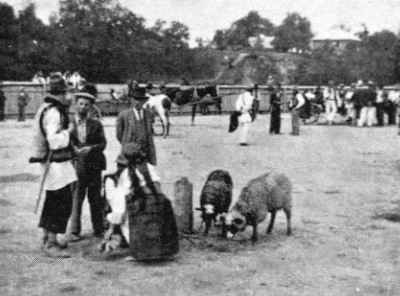
The trade was based mostly on the non-Jewish villagers in the nearby and far surroundings. Kosov was the district capital with a courthouse, land registries, a district governor, and his offices. The villagers from the surrounding areas turned to these offices only reluctantly, for the bureaucracy was foreign to them–most of the officials were Poles.
The fairs, held several times a year, breathed new economic life into the town. However, these market days were accompanied by anxiety and fear. The words of my mother, may she rest in peace, still ring in my ears before every fair: “May it pass in peace.” Among those who came to the fair from the peasantry were drunkards, thieves, and ruffians; indeed, nearly all were haters of Jews, and any small incident could ignite a great conflagration against the Jews.
The situation for shop owners was also grim. Most were burdened by debt and depended on charity to survive. Without official shop hours, stores remained open nearly all day and night. Take, for example, Reb Itzi Speicher. His shop operated from dawn until midnight, sometimes even later. A midday break was unheard of. He spent his days seeking charity, often too rushed to eat and always on the move. Rarely was he present in his own shop. Instead, his three sons, wife, and an extra employee attended to customer s. Despite high revenues, profits remained low in his small general store.
Rabbi Mendel'eh
The Admo”rs dynasty of the Hager family in Kosov was founded by the holy Tzadik, our teacher and Rabbi Menachem Mendel of blessed memory. He was the son of Chasid Rabbi Yaakov Kopel Hager, one of the Baal Shem Tov's students. He was the founder of a golden dynasty that lasted more than 150 years, from 5550 to 5701 (1790 to 1941), who occupied the rabbinical throne in our city for about 37 years, and passed away in 17 Cheshvan 5587 (7 November 1826). He authored a book filled with gentle, edifying teachings on the Torah and called it “Ahavat Shalom” (“Love of Peace”).
Rabbi Chaim'l
After Rabbi Mendel's passing, his son–the revered Tzadik, Rabbi Chaim, may the memory of a righteous and holy man be a blessing–became his successor. Rabbi Chaim, author of the book “Torat Chaim” [“The Teaching (Torah) of Life”], filled its pages with teachings as precious as pearls. He served as rabbi for 27 years before passing away on 25 Iyar, the 40th day of the Omer , 5614 [23 May, 1854]. Grave tents were erected above the graves of both father and son. Every year, on the anniversary of their passing (hilula ),
[Page 45]
rabbis and chasidim came to prostrate themselves at their graves–from Vizhnitz, Brachivka, Otynia, and elsewhere.
Rabbi Yaakov Shimshon
Rabbi Chaimel's son, the revered Tzadik, Rabbi Yaakov Shimshon, may his memory be a blessing, served for 24 years. He passed away in 19 Adar 5640 [2 March, 1880].
Rabbi Moshe'leh
After the passing of Rabbi Yaakov Shimshon, his son ascended the rabbinical seat–the holy and righteous one, our teacher Rabbi Moshe, of blessed memory, author of “Leket Ani ” on the Torah. He passed away on the 7th of Tammuz 5685 [29 June, 1925] in Berlin, to which he had traveled to seek the advice of physicians, and he was brought to his eternal rest in the cemetery in Kosov, beside his revered forefathers. He served in his rabbinical office for 45 years.
Rabbi Chaim'l
After Rabbi Moshe, his only son, our teacher, and Rabbi Chaime'l, ztz”l , inherited the rabbinical seat. He, his sons, and his entire family perished in the Holocaust in 5703 [1942/3]. With them, the splendid branch of the Hager dynasty of Hasidic rebbes–the Kosov branch–was cut off.
Here, we have described only the rabbis of the Hager dynasty who served in Kosov. Yet, this mighty lineage produced offshoots of great splendor and distinction–faithful leaders who guided numerous other communities throughout the Diaspora, including Vizhnitz, Otynia, Radevitz, Brachivka, and more. We have not detailed their histories, teachings, or the stories passed down through generations by tzadikim and chasidim. Much about them can be found in both old and new books, and those seeking further details are encouraged to consult these sources.
Before Rabbi Mendel'eh, Kosov was home to the righteous Rabbi Yehoshua, renowned as the “Master of Great Weeping.” He earned this title for pouring out his supplications before the Creator with a broken heart and abundant tears. Succeeding him was his brother, Rabbi Zimel, whose daughter Sheina Rachel married Rabbi Mendel'eh at a young age.
Concerning the antiquity of our town, a native son, Mr. Yehoshua Gartner, recounted that a tombstone dating back five hundred years was discovered in Kosov's old cemetery.
Chasidim
Vizhnitz's chasidim prayed in the synagogue known as the “Somar.” They often gathered there on festive days or the eve of Shabbat, sharing stories about rabbis and tzadikim –especially Vizhnitz's Rabbi Israel and his revered ancestors. Occasionally, they would raise a toast with a small glass of spirits; on festive days, they enjoyed wine or beer. As joy filled the room, spontaneous dancing would erupt. When excitement peaked and space became scarce, Reb Fishel Sherl and Reb Hirsh Frenkel would climb onto the benches and the table. Soon, their third companion, Reb Yosl the melamed, would join them. Some danced above, others below. Their shtreimels sat upside down in playful jest, or cocked to the side with the bravado of
[Page 46]
a reckless young ruffian (viller yung ). They sang and danced until their strength was spent. Then Reb Hirsch Frenkel, who was a baal tefillah [prayer leader], a skilled musician, and possessed of a pleasant voice, would launch into songs drawn from the joy of the heart and the outpouring of the soul: “Awaken, for in the night your soul ascends on high, to give an accounting before the Throne of Your Glory…,” and other songs of this kind–some even in Ukrainian. They were joined by Reb Shimon, an uncompromising Vizhnitz chasid known for his strong opposition to the rabbi of Kosov; by Reb Zerach Ehrlich, a devout, God-fearing, and even-tempered scholar; by Reb Moshe Rigler, who was reserved and unassuming; and by several others.
There is not enough space here to fully describe the followers of the rabbi of Kosov. They included many townspeople from both the Kosov and Monastir factions. Among them were pious Jews and scholars–Reb Pini Raublis, Reb Alter Feiger, Reb Meir Bloch, Reb Moshe Shek, Reb Mordechai Kamil, Reb Zimel Kamil, and others. The group also comprised enlightened individuals, such as Moshe Shauber and Reb Sh. A. Hizler, as well as ordinary townsfolk. Rabbi Moshe'leh spoke to everyone; he seemed to understand them all, but I am not sure whether everyone understood him. Often, on Shabbat Mevarchim (“Shabbat of Blessing”) and holidays, when chasidim journeyed from Hungary and other places to the Rabbi, joy filled the Rabbi's court. Songs and voices of celebration rose up, uplifting everyone and uniting them in genuine brotherhood.
Tensions arose between the Kosov chasidim and the Vizhnitz chasidim. Both groups spoke harshly about the rabbis of the other side, failing to restrain their tongues. In response, the “offended” parties became even more fervent in their support of their own rabbi. At times, the conflict escalated to smashing windows, but it never resulted in bodily harm or significant property damage.
There was an incident that confirmed the above statement on the first night of the Atzeret Holiday [Shavuot]. After returning from the synagogue, my late father, may he rest in peace, recited the blessing over the wine, and we gathered at the table. My late mother, may she rest in peace, brought out the food. Suddenly, the entire house shook as all the windows shattered. We were startled, but my father calmly remarked, “This is the revenge of the Kosov chasidim. After the holiday, the glazier came and replaced all the windows. Who sent him? The very ones who broke them.
Reb Yeshayahu HaLevi, known as Ish Horowitz, came to us from Stanisław (now Ivano-Frankivsk). He was descended from a distinguished lineage of rabbis and Torah scholars, tracing his ancestry to the revered Shelah. He married into the family of Yair Yagerman, one of the town's few wealthy men. His neat and orderly appearance always made a strong impression. Professor Dov Sadan wrote the following about him to the Association of Kosov Immigrants in response to an invitation to his seventy-fifth jubilee: “I am among those who honor and esteem Rabbi Y. H. Ish Horwitz–a man of profound inner culture,
[Page 47]
an outstanding Torah scholar who faithfully carries on the legacy of his family: giants of Torah and giants of character. Few of such stature are to be found in our surroundings.
Reb Fishel Simcha came to Kosov from Vizhnitz and became the son-in-law of Reb Moshe Kamil. He was known for his intelligence, good temperament, and easygoing nature. Reb Fishel earned respect for his intelligence and maintained positive relationships with others. He was a loyal Zionist.
Reb Shlomo Eisenkraft was a clever and intelligent man, well-liked and respected by all, though he was not born in Kosov.
Reb Eliezer Gutesman was known for his intelligence and pleasant appearance. He became the son-in-law of Reb Dotzi Engler, who once served as the Polish mayor's deputy.
Reb Berl Goldstein was a handsome, elegant, and well-educated man. He married into the family of Rabbi Tanenzaph and, like some others, was not a native of Kosovo.
Reb Berl Rigler was an educated individual, actively engaged with people, and known for his good-natured disposition.
Reb Moshe Shauber was a knowledgeable, active, and well-educated man.
Reb Meir Rigler was a serious, educated, and well-natured man.
All of these men were dear avrechim, each with his own virtues and, naturally, his shortcomings. What united them was their devotion and conscientiousness as Zionists. Each contributed to the national redemption, serving at various times on the Zionist Association's committee.
The doers were the philanthropists, who set aside their wealth and gave generously. The activists were those who contributed their time and energy, tirelessly collecting donations at every opportunity–on Shabbat evenings and holidays–and distributing them among the needy. Their names deserve to be remembered and recorded in the memorial book of Kosov.
Yudl and Rivka Gerbler were well-known philanthropists who gave generously.
Tzirel Kaes baked bread every week, filling her stove and distributing loaves to the needy.
Reb Doodi Gertner–Every Friday, he collected challahs and distributed them to the needy
[Page 48]
many of whom were unknown to others and could not afford to buy challahs for Shabbat.
Reb Mordechai Hirsh Gertner and his wife Risia–Their home was always open in times of need, embodying the teaching of the Sages: “And let the poor be members of your household.” When he passed away, the city's poor followed his coffin, mourning deeply and crying out: “O father of our fathers, to whom do you leave us?”
Berta Steiner, a woman of valor–both a generous donor and an active community member. In ordinary times, she was recognized for her kindness, but during the Holocaust, she displayed exceptional courage. When Jews hid in bunkers, starving, she risked her life to bring them food and comfort. She survived and now lives in Israel with her daughter.
Reb Meir Drezner and his wife Ester, known for their kindness, welcomed everyone. They offered hospitality, accepted donations, and gave charity themselves, always with dignity and joy.
Reb Yosl Stein, the melamed–On Friday nights, after prayers, Reb Yosl would wait in the synagogue until every last itinerant guest who arrived was given a place in a wealthy man's home. If no home was found for a poor guest, Reb Yosl would bring him into his own home. Though a imelamed pressed for time, needy and without money himself, Reb Yosl would borrow from charitable funds and distribute the money to others. On fast days and Purim, he visited house after house collecting alms, which he later repaid. As Passover approached, Reb Yosl busied himself finding matzah for one person, potatoes for another.
Reb Leizer'l–or Leizer Hirsh der Yoslichis [“the little Yosl”]– He personally arranged lodging for the poor with local householders, also never leaving the synagogue until every last needy person had found shelter. A humble, God-fearing Jew, he earned his living through trading in the marketplace and dealing in grain. However, he entrusted most of the business to his wife, dedicating himself to prayer and fulfillment of the commandments. He tirelessly visited synagogues, collecting donations and distributing alms to the needy.
Reb Shmuel David Hirsh–nicknamed– “flach” [“flat”]. He was called “the man of the penny,” for when he collected alms, he neither demanded nor took more than a single penny. He maintained that if one respects the donor, the donor will be at peace with his gift, and there is no need to press him excessively–whereas from himself he demanded much.
After completing his collections, he would slip his hand into the drawer of his shop–he owned a small dairy shop, which his wife managed–and take out
[Page 49]
a full handful of jingling coins. He would add them to the charity fund and only then distribute the money to the needy. His wife, when she discovered a “hole” in the drawer, knew that the old man had already rummaged through it.
Zisel Eiferman–The grandmother of Dr. Y. Meir z”l –would secretly bring food to people in need, hiding it under her apron.
Chasia Yoselis (Stein) –Although busy and tied to her market stall, she would worry as Thursday arrived: “This one has not a morsel left for Shabbat.” She would leave her stall, visit shops throughout the marketplace, collect “etleche zechser ” (a few small coins), and quietly place them into the hands of those in need.
Reb Aharon (Ortzi) Rigler–A member of a respected, affluent family and the son of Moshe Rigler–shared with me that he consistently set aside a tenth of all his income for charity.
Babtzi Fogel–the mother of the Zionist and industrialist Dood'l Fogel–was deeply devoted to acts of charity and kindness toward the city's poor.
Chaya Sara Bartfeld–herself the daughter of impoverished parents–endured real hunger and deprivation in her youth at her father's home. As she grew older, she found favor with all who met her and began working to support her family. She married a young man from Kosov who later emigrated to America. Upon her return, now blessed with great means, she distributed money generously to every poor and needy person, as if determined to banish poverty from the Jews of Kosov.
Reb Meir Kersel–a learned man deeply engaged with his community–was a loyal and active member of “Mizrahi” and dedicated himself to charitable works.
Reb Zusya Shlosberg–a brilliant young scholar who endeared himself to the community through his good deeds. When the Germans entered the town during the first Aktion and arrested thousands of Jews, leading them to slaughter, Reb Schlossberg volunteered–together with two others. He took a bundle of money and gifts and went to the Gestapo to fulfill the mitzvah of redeeming captives. They did not return from there. May God avenge their blood.
Reb Shimshon Letich was a dear Jew, active and accomplished in matters of charity, whose acts inspired many in his community.
Reb Menachem Mendel Shtumer, remembered as someone whose giving was always accompanied by a smile and a kind heart. A loyal and devoted Zionist, he gave generously.
Ester Rubinger–the wife of Reb Chaim Rubinger–was also among the loyal followers of Rabbi Moshe'leh and abounded in acts of charity.
Yenta Shpotheim from Zhabya [today, Verchovyna] was born in Kosov and married Reb
[Page 50]
Chaim Shpotheim in Zhabya was known for her good deeds for the village's poor. She was privileged to make Aliyah to Eretz Israel and join her two sons, Zalman and Abraham. She passed away in Israel at a good old age, at 83.
This matter stands in a category of its own. Only one who lived in a Jewish town in the Diaspora in those days can properly appreciate the great virtue of gemilut ḥasadim (acts of lovingkindness). When a Jew had to pay a note and at that moment had no ready cash, or needed to purchase merchandise and lacked the means, he could enter and receive assistance–without difficulty and with a gracious countenance. How great is this mitzvah! It is hard to overestimate its importance. There were those whose entire business activity rested upon the foundation of gemilut ḥasadim.
Unfortunately, I do not remember many names. Those that I do remember were: Meir Drezner, David Landman, Meir Kersel, Mordechai Heitzler, and Chaim Klau. May they all be remembered for good, and may their merit protect us and all the House of Israel forever.
There were, of course, many more doers and deeds yet to be mentioned, and may blessing come upon all who add to these names. For our town at that time was poor, and many in it were lacking in means. Yet a helping hand and goodwill were always ready and available to ease the burden of those who suffered.
Author's footnote:
Translator's footnotes:
|
|
JewishGen, Inc. makes no representations regarding the accuracy of
the translation. The reader may wish to refer to the original material
for verification.
JewishGen is not responsible for inaccuracies or omissions in the original work and cannot rewrite or edit the text to correct inaccuracies and/or omissions.
Our mission is to produce a translation of the original work and we cannot verify the accuracy of statements or alter facts cited.
 Kosiv, Ukraine
 Yizkor Book Project
 JewishGen Home Page
Copyright © 1999-2026 by JewishGen, Inc.
Updated 12 Apr 2026 by JH