 |
|
|
[Page 267]
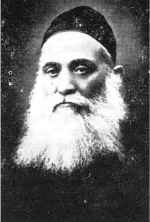
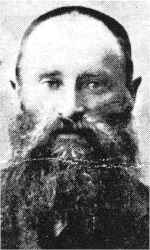
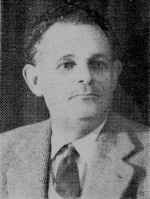
by Efraim-Zalman (Sam) Kratman
I've been gone from Grabowiec for decades, yet though my years in Grabowiec now seem like a distant dream, they are still crystal-clear. I can see the people, the alleyways, and the houses of our hometown. Like each of us, I carry in my heart the golden threads that connect us to the town. They flicker inside each of us like embers that no wind or rain can extinguish, bearing longings for our old town, the quiet alleys, the study house, and all the persons who prayed and studied there. The dearly beloved Jews of the study house live in my memory. I often feel as though I had just left them. I remember my melameds, my friends, and all those with whom felt connected as closely as though we were one family.
Cantors
Two cantors stand before me, White Itshe and Moshe Zinger, the son of Shiyeh Hesheleh the prayer leader. The latter may not have been a very good singer, but his prayer-leading was warm and lively. White Itshe was impressive and a fine Jew. When he led the prayers, his chant filled one's body. I particularly remember his Kol Nidrei prayer, which moved the congregation to tears. Although I was a small child, I sensed the gravity of the moment, and was overcome by his penetrating melody, and began to weep uncontrollably.
[Page 268]
I have listened to many cantors since then who were great artists of song, but I think that White Itshe's singing was just as good as that of those I later heard in other parts of the world. He had developed the spirit of a singer, and his prayer leading was sweet enough to melt one's heart. I will never forget his heartfelt melodies, or the way his eyes lit up with pure sorrow and such depth of feeling. It seemed that he was singing not only for the Jews of our town but for all Jews who were in need or in captivity, on land and on sea. I see his face after he finished a prayer and stood still for a long time, lost in thought, his eyes blank, as though he was still wandering through the world together with all displaced Jews. The tense silence in the study house and the gaze of the congregation members that was directed at him finally woke him from the profound thoughts anchored in his feeling of great responsibility for the congregation whose prayer leader he was, and who relied on him to convey their prayers to God.
White Itshe's singing, even when it was mournful, always seemed sweet and pure to me. It raised my spirits, roused me to profound thought, and refined my personality.
My Worldly Education
I remember when a new teacher came to town, and all the boys and girls went to him to learn how to write in Polish. I say “all,” but I actually cannot remember how many there were. There seemed to be dozens. I, too, wanted to learn, but Father said, “You won't study Polish, and won't become a Gentile…”
It was his dream that I become a rabbi, and he might have succeeded. People said that I was smart, and I wanted to learn. Mother saw my longing to know Polish, and slipped me a few coins behind Father's
[Page 269]
back. I bought a notebook and a pen. Without Father's knowledge, I went to that teacher to learn
how to read and write Polish. However, that did not last long. When Father learned of it, he was overcome with rage, fearing that it would lead me astray. That was the end of my worldly education, which I was never able to complete.
Asher Ber
Dawns in our town were magical. It would just start to be light. Around 5 a.m., the synagogue manager, Asher Ber, patrolled the town and knocked on the closed shutters, calling Jews to worship by praying and chanting Psalms. Every Thursday, his son Abtshe joined him, and walked through the sleepy alleys, singing loudly, “Wake up! Wake up for sacred worship!” The words and the melody radiated holiness that penetrated the heart and would not let you fall back asleep. You were motivated to rise, even on cold, frosty mornings.
I remember how completely I was captivated by the call. Sometime I rose on the first sound, dressed, and went out to join the crier on his route through the streets, helping him sing out the request to rise for prayer and Psalms-chanting. I was not deterred by rain or snow, mud-patches, or frost. My parents were proud of my piety and eagerness to join in the holy task. Mother was especially impressed. When I returned home, she had already prepared fritters and hot flat cakes with onions and butter.
Later, when I was older, the same Abtshe took me to Warsaw to study in a yeshiva. The Yellow Rabbi gave me a letter for the head of the yeshiva; but it was useless, because they had no space for us. The letter was actually
[Page 270]
to the head of the Novominsk yeshiva, but the response was the same everywhere: there was no room.[1] It was the same in Lublin.
Shimen the Healer
Among the figures I remember vividly from my childhood are Shimon the Healer, Mekhl the Healer, and Chana, Motl's wife, who worked mostly with women in childbirth. Actually, my grandmother was also a midwife, but she practiced only in cases of great need.
Shimon the Healer almost always offered the same remedy: cupping and leeches. Mekhl the Healer knew a bit more about medicine. He was called to people who were very ill. When matters had really deteriorated, the old Polish doctor was called. If the sick person was at death's door, he'd be taken to Hrubieszow or Zamość. This was the case with one of my brothers, who had poked his eye, and was quickly taken to Hrubieszow; by the time he arrived in Hrubieszow, the doctor could do nothing but confirm his death. When someone died in town, the synagogue manager gave two raps on the shutters, signaling that there had been a death in the community.
This was a fairly common occurrence in our town, but most of the healers' patients suffered from side stitches, constipation, or simply a bad cold. They were usually Shimon's patients. When called, he immediately went up the sick person, like a real doctor, put his ear to the person's heart and listened to the heartbeat, told the patient to take a deep breath, quickly made the diagnosis, and prescribed the treatment: cupping, French turpentine, and nothing else.[2] A person with constipation was told to show his tongue, which was usually as white as milk, and was treated by an enema, castor oil, and curdled milk. A patient who complained of a sore throat had to be treated with silver nitrate; Shimon the Healer
[Page 271]
would smear some iodine on a bit of cotton at the end of a stick.[3] In more serious cases, the patient was taken all the way to Zamość, or even as far as Lublin. More than once, the community had to take up a collection to help the family move the patient to a physician's care.
Birth Certificates
A man named Itshe (Yokl's son), who was short in stature but a high official in the administration, was in charge of births and deaths. He had to record every birth and death, and inform the city authorities. He was paid two rubles for this work. Sometimes, though, he forgot to pass on the information (mostly after he had had too much to drink). A few years might go by with the unreported newborn child living unrecorded and unregistered, and, naturally, with no birth certificate. Quite commonly, this led to complications that were difficult to resolve.
Itshe also had the duty of ringing the town bell (which was near the pump in the center of the market), whenever there was an occasion such as a lost child, or a robbery. He would ring the bell, and let the assembled residents know what had happened.
The Conflagration
This type of bell-ringing would upset the entire town. People poured out of all the homes and alleys and gathered in the marketplace to hear what had happened. This was also the case when a conflagration occurred. Then, the bell rang with special alarm, sending old and young to the marketplace. An old hut on the square contained the fire-extinguishing equipment: two carts with barrels full of water. The fire
[Page 272]
brigade hauled the carts out of the hut. Others hurried to the river along the path near Motl Garber's house and filled buckets of water before rushing to extinguish the blaze.
The fire, however, spread in the blink of an eye, and ignited the roofs of nearby houses as well as those in other alleys, until half the town was engulfed in fire. Our house was lucky, thanks to its metal roof that withstood all the fires without damage. On one occasion, though, when the inferno was especially powerful, it consumed our house as well. Our family hid in a cellar. Father was deeply affected by this event, and never fully recovered from the resulting illness.
On one occasion, the town bathhouse and mikveh (ritual bath) of Wojsławice broke down. This posed a special problem for the women who had to purify themselves.[4] A woman from nearby Wojsławice once came to Grabowiec, and met the merry prankster, Sholem Shmuelkeh's son, Yitzchak. When she asked about the local mikveh, he took her to the home of the Yellow Rabbi, instructed her to disrobe in the entrance hall, and pointed to the door of the rabbi's room as the door of the women's mikveh. It wasn't long before screams came from the rabbi's room: “Soreleh, get that impudent woman out of the room!”
On Fridays, Yankl the bathhouse attendant heated the bath, and made the rounds of the town holding a scythe, which he would strike on the pavement to indicate that the bath was hot enough. There were always people who spent hours in the bath. Leaving the bathhouse, you would feel purified, with the cares of the entire week washed away, ready to welcome the approaching Shabbat in a state of purification and sanctity.
The arrival of Shabbat transformed the town's appearance. Faces seemed purer, as people entered
[Page 273]
the synagogue, which was brightly lit by all its lamps. The two small synagogues in the study house were always packed with people at prayer. Sometimes there were disputes. The feud between the followers of the Yellow Rabbi and the Black Rabbi, was especially heated.
Another incident I remember took place in 1905. Forty-five men left the town and entered the forest, in the direction of Świdnik, which served as a hideout for those who had to report for the draft but did not want to serve.[5] A man in the forest was a “specialist” at crippling young men: he would chop off fingers and toes, cause a hernia, or deafness. My father was one of those who were “treated.” He returned home with a serious hernia, so as to avoid fighting in the Russo-Japanese war. My father was called Tuvia, the dyer's son, and I was therefore called Efraim Zalmen, Tuvia's son.
I love the memory of all the Jews and their nicknames: Yankl the bath-house attendant, Zisheh the water-carrier, Henekh the stagecoach driver, Sholem Shmulkeh's son, Mankeh the Melamed, Berl the Melamed, and many others. In spite of their many failings, they were all kind, warm people who deserve to be mentioned in our memorial book.
The First Motorcar
It was 1907. The first mention of the car was in the great synagogue. It sounded unbelievable: in a few days, a motorcar would drive through our town. It was the topic of the day in homes and on the street. All were impatient to see the motorcar for themselves, and make sure that it was real: a wagon driving by itself, without a horse, and even faster than a train.
Around 10 a.m. one Shabbat, when people were still at prayers, someone came running into the study house and announced the news: it would happen in an hour's time, and everyone would be able to see the devil drive past the town.
[Page 274]
And that, indeed, was what happened. By 11 a.m., the streets were packed with people. Spectators poured out from all directions–the study house and the Kuzmir and Turisk synagogues–into the marketplace. We all saw the “black devil” with our own eyes. That was the name given to the first ever motorcar to drive through Grabowiec. We young folks ran after the car, watching it go up to Fortress Hill, on the road leading to Hrubieszow. Older people stood transfixed, gaping at the miracle, unable to fathom it. They were speechless and couldn't explain the amazing event.
The marvel was the main topic of conversation in the study house for weeks and months afterward. Imaginations ran wild. Some folks added more miracles, such as that it arrived in Warsaw within only a few hours, or could reach Kyiv in a single day. Some maintained that it was simply an act of sorcery. Yet others reported that people in America harnessed demons who could pull the contraptions forever. They also supplied proof from the Zohar and Kabbalistic writings, which foretold that the time would come when demons would serve all human desires. The only person who doubted that demons and sorcery existed was Blind Shloyme's son, Noyekh. He claimed to know exactly how the thing worked: the machine was built and then kerosene was poured in to produce power.
Sholem Shmuelkeh's son, Yitzchak, was quite a prankster. He had a ready quip or joke for everything, and played such tricks on people that made them laughing stocks for months.[6]
Firefighters[7]
There was a bell near the marketplace pump, which sounded the alarm if anything unusual occurred: a blaze broke out, a new edict arrived from St. Petersburg, or even when a horse or pig was lost.
[Page 275]
Once, Yukl's son Itshe – who had connections with the authorities – rang the bell. When the entire town had gathered, he called out, “Will anyone who has seen a lost horse or pig, immediately let us know!” Ever since then, it was established that this job belonged to Yukl's son Itshe. However, there was no need to wait for Itshe to come and ring the bell when a fire broke out. Anyone who was near the bell was then allowed to ring it. On such occasions everyone became a firefighter. The shed in the center of the marketplace could then be opened by whoever was able to. Two barrels full of water were always ready on a cart in the shed. People then harnessed themselves to the cart, pulling and pushing it as necessary. When the barrels ran out of water, the cart had to be taken down to the river, near the tanning works, the barrels refilled, and the cart rushed back to the site of the fire.
At the time I speak of, the blaze began at the place of David's son Feivl, and quickly spread to Berl the butcher's house. Even before the water ran out, the fire expanded to nearby houses. Almost half of Grabowiec was soon engulfed in flames. This event was soon followed by a decree from Lublin, requiring all the town's roofs to consist of sheet metal, rather than shingles, and certainly not straw.
Life in town was quiet for a long time afterward, with no conflagrations. My father was the first to install a sheet-metal roof. The house is unharmed to this day, except that the residents are others. They are hostile strangers.
The Charity Hostel
The study house included a charity hostel. One of the permanent residents was a woman with two children, who was called “Mendel-Yanik's.” She subsisted on
[Page 276]
food handouts from the locals. The children wore rags and were always hungry. Another was a blind Gentile known as Blind Jędro, who sat in the center of the marketplace, playing the harmonica and warbling songs he had composed. During fairs, he seemed stronger, and his voice resounded throughout the market. The peasants would fling a few groschen, potatoes, or beans in his direction.[8] If no one gave him anything, he let loose a string of wild curses.
Water Carriers
There were two water carriers in town, Zisheh, and Shimon's son Aharon. They also brought clay to homes where something needed fixing, such as a wall or oven. In spite of their hard work, they were very poor.
Chimney Sweeps
The daughter of the Grabowiec chimney-sweep had converted to Christianity and married a peasant boy from the hill. This provoked an uproar. Her brother was so mortified that he drowned himself in the river. The girl changed her name to Stefka shortly before she and her husband left Grabowiec. When people heard about their plan, they all hurried to make sure that she was really leaving.
The first gramophone in town was introduced by Leybeleh, who had just come back from Warsaw, or perhaps even from America. The whole town came running to hear a human voice coming from the gramophone. Once again, some said that it was sorcery, or that an evil spirit had taken possession – one of those that overtake people and control them. This time, however, it had possessed the bride.[9]
[Page 277]
Yankl, the bath-house attendant, would walk through the town every Friday after 12:00, holding a scythe and pounding the pavement while chanting, “Jews, go to the bath-house, to the bath-house!” At twilight, when many Jews were still in the bath-house and showed no intention of leaving, he would come in and shout, “Jews, out of the bath! You need to go and pray!” The real reason, though, was that his wife, Chava (the female attendant) had to let in the women who required ritual immersion.[10]
Flogging
The major holidays in our town were beautiful. I was especially impressed by Yom Kippur, when I joined Father in prayers at the Kuzmir Hasidic synagogue. The floor near the heating stove was covered with a layer of straw, or hay. Before prayers began, the Jews laid down on the straw so that the synagogue manager could beat them with a short whip–a flogging in atonement for their sins.
In 1908, the administration published the order that every six-year-old boy or girl had to go to a government school, in order to learn to read and write in Polish. Father disregarded the order, and announced with determination, “My children will not attend any non-Jewish school!”
Ultimately, he prevailed, and I feel my lack of schooling to this day. I did not become a rabbi, and Father was disappointed in me. I would have held it against him, had I not known that it was because of his profound piety. When it came to my own children, I corrected the injustice done to me, and did everything so that my children could study.
Translator's footnotes:
by Abish Goldfarb (deceased)
|
There were many Hasids in our town, and five Hasidic synagogues with various leaders. All the synagogues were used by young bachelors as well as older men. They all spent days and nights studying. The Talmudic chants that came from the windows echoed throughout the surrounding streets. The bachelors sat around the tables, deep in study as they chanted, loudly or softly. Their mothers clustered unmoving at the windows, knowing that their sons were studying inside. Drawn to the synagogue, their hearts were overflowing with pride in their sons.
Whenever I think of Grabowiec, my home town, my ears ring with those beloved melodies. I remember the tales that were told about the souls of departed holy men that visited the synagogues at night, carrying a fiery Torah scroll. Angels and seraphs gathered round as the holy men prayed. The angels sang songs of praise, and the seraphs called out, “Holy, holy, holy…”[1]
The tiny town of Grabowiec, consisting of nothing more than a marketplace surrounded by a few alleys, now seems to me to be sanctified by Torah and good deeds. Its air was
[Page 279]
thick with the music of Hasidic melodies. Even the birds joined in the Talmudic chants of the devoted scholars. At such times, I regret not having been one of the ecstatic young students. They seemed to exist on a higher plane, in the beautiful realm of song and enthusiasm.
When World War I broke out, many Jews fled from the town, which was swept by panic. People dug trenches. It wasn't long before the Russian army retreated. Austrian forces took over, and the town endured all the hardships of a prolonged war.
By this time, Zionist activists were operating in our town, mostly students of Becher and Henekh. Other activists were Yosef Fink, David Shvartsenberg, Motl Gelberg, Moshe Shroyt, Motl Fink, Meir Shek, Moshe Vaynshrukh, and Gershon Bornstein. The women activists were Neche Goldfarb, Chane Reiz, Feyge Zinger, Hodis Fink, Tzvia Shvartsenberg, Chane Brandel and her sister Hefkl Brandel, Chane Blank, and others.
They were the first to establish a Zionist political party in town, and immediately began lively cultural activities. We brought in Shtern, the teacher who gave Hebrew lessons. We paid for any children whose parents couldn't afford the lessons.
After the end of the war, when a Polish government was established, many of our comrades enlisted in the Polish army. Those who stayed in town continued their Zionist work.
En Route to Immigrate to the Land of Israel
Two years after we all returned from army service, we began to throw ourselves whole-heartedly into Zionist activity. A movement towards immigration to the Land of Israel began to coalesce. First to leave was Yisro'el Mitler, who was actually not one of the major activists, but fulfilled his strong desire to immigrate.
[Page 280]
He crossed the border to Romania, and boarded a ship for Palestine. Yosef Fink left for Warsaw, where he received a British Mandate immigration certificate from the Warsaw Zionist Central Office, and immediately set out on the trip. David Shvartsenberg, one of our earliest activists, saw no legitimate avenue for himself to immigrate. He began illegally crossing the Romanian border, and was shot to death by the border patrol. He was buried in Snyatyn.
Later, other young people left on different routes; they joined many others, who all succeeded in reaching Palestine and lived through various difficulties and dangers for the sake of the Zionist ideal.
When I departed from the town, I left behind my wife Sarah and my two children Moshe and Chane, who were murdered in Ludmir.
Translator's footnote:
by Chaya Lerner (deceased)
|
Our community was small, but it contained many who were fine, even praiseworthy people. It numbered no more than 400 members, but the small community maintained a lively cultural and social life.
As I commemorate the town, I would also like to mention my father, who was known as Shabtai's son Avraham. He was famous as a kind, sincere, open-hearted man, who was ready to make sacrifices in order to help anyone who was in need of support. As a young child, I saw Father not only as a loving parent but also a community activist, beloved by all the town's Jews.
In 1914-1916, during World War I, an aid committee formed in Grabowiec to help the needy who were suffering because of the war. Besides Father, the committee consisted of Mekhl the healer, the Bechers, Moshe and Velvish Zusman, Yerachmiel Bornshteyn and others. At that time, the committee bore a great, weighty responsibility. It did all it could to help the Jews who had lost the very ground under their feet during the hostilities.
[Page 282]
Father dedicated a large room in our home to the meetings of the community leaders, who were then David Papir, Mordechai Frimerman, and Avraham Shek (Father). Yosl Zinger was the bookkeeper. I was then occupied with selling butchers the special cards that would allow them to slaughter domestic animals.[1]
Father was physically small, but possessed great energy and initiative where helping others was concerned. He was kind-hearted and always ready to give charity, a loan, or any help that was needed. Our home was open to anyone in need; it was literally and figuratively “a table spread for the community.” Naturally, the woman of the house played a major role. She was a devoted wife and a loving mother to the stepchildren as well.
There was much excitement in the town in 1925. The rabbi caused a major dispute after claiming that his salary was too low. The ritual slaughterers then followed suit and contended that they, too, deserved a raise. The upshot was that a new rabbi and slaughterers were brought to town. The new Rabbi, Hillel Shek –my father's cousin–lived in the Bychawa synagogue at first. The new slaughterer received a room in the Radzyn small synagogue.
|
My brother, Shabtai Shek, was one of the youth and community activists in Grabowiec. He was the life and soul of the drama club. Besides his acting talent, he was endlessly devoted to artists and the cause of artistic independence in the town. |
[Page 283]
The Epidemic
A few years later, an epidemic suddenly broke out in town. The rabbi's wife died unexpectedly. Doctor Stankow, who lived in town, diagnosed every illness as tuberculosis. He said the same about the rabbi's wife, but she actually suffered from typhus, and died soon afterwards. Some time later, David Papir died, followed by David Boym and Mordechai Frimerman; the latter had cut himself and developed blood poisoning. It was not long before Leibish, the slaughterer, died, followed by the rabbi, Aharon-Yosef. All this occurred in 1938.
The Storm
Turmoil began once again, first when a new rabbi had to be hired. However, in 1939, World War II began, and Jews started fleeing from Grabowiec. Father was one of those who stayed in town and refused to leave the ancestral home.
We realized that hard times were in store for the Jews of Poland under a German occupation, and begged Father to leave together with us. It was very difficult to convince him. We all stole across the border, However, we were separated when we were exiled to Siberia, and did not know what had happened to everyone for a long time. We spent bitter years suffering from hunger and loneliness. Father longed for his children the whole time. When we eventually met, he said that his only wish was to meet the children. He could then die peacefully.
In Poland Again
When he returned to Poland, he found out that both sons and seven grandchildren were no longer alive, and that they had suffered a gruesome death.
[Page 284]
The son in France had three children, all of whom were deported to camps and murdered. The son who had stayed in Poland was now forty years old, and had had a wife and four children, who were murdered. We found out that their Christian servant had created a hideout for them, where they had hidden for three years and were killed by the Nazis only three weeks before liberation. Their 17-year-old daughter, who was shot while emerging from the hideout, is buried in the servant's yard. The other family members were taken to a camp where they were murdered like all the other Jews of Poland: gassed, incinerated in the crematoriums, or tortured to death. The other son, Meir, tried to flee into the forest, but was unsuccessful. The killers found him and shot him to death.
Once Father, who made heroic efforts to stay strong throughout exile in Russia in order to survive and see his children and grandchildren, heard the dire news, he became aged and broken in a fraction of a second. His only remaining desire was to immigrate with us to the Land of Israel; he considered burial in the Holy Land to be a great privilege.[2]
He continued to suffer from the terrible heartbreak, yet attempted to console himself with his surviving descendants. However, he could not recover. He steadily grew weaker. A short illness was the final blow. He never recovered, and died at age 85.
Translator's footnotes:
by Yosef Nudel
I was really embarrassed every Saturday morning when Jews gathered for prayers or study in the study house, but Father rounded up his sheep and led them to pasture on Fortress Hill. I felt that it wasn't fitting for a white-bearded householder to be doing this job. It seemed more suitable for a Gentile than for a respectable Jew.
Over time, as I grew up, I also recognized the beauty of Father's simplicity and love for every living creature. When I remember it all now, my eyes flood with tears. The memories of that time, and even the childish embarrassment, are all dear to me.
|
Father was an artisan, and did not have a seat in the study house at the prime location– the eastern wall. But he was honest and pious. When he came home from work every Friday a few neighbors were already waiting to borrow some rubles so that they could stock their shops with merchandise. It was a long-established custom, and Father never denied their request. He lent them money, never–God forbid–with interest. They were not always able to repay the loan on time, and would bring over a bit of money
[Page 286]
from their daily earnings. Mother would use some of this money to stock the house with food.
Sometimes I would tell him, “Father, not only are you busy all week with the sheep, but on Shabbat, when all Jews go to the study house, you lead the sheep up to Fortress Hill!” Father would respond, “King David was a shepherd, and our ancestors were also shepherds… It's a real Shabbat pleasure to take the flock up the hill and then sit with them and chant Psalms. It might be more of a mitzvah than just chanting Psalms in the study house.”[1] Father was proud of owning sheep and not being simply a hired shepherd, God forbid. My embarrassment then was truly childish. When I remember his love and devotion to his charges, I am overcome by longing and affection.
The sheep, too, felt his love. One day at twilight, as Father and I were on our way to the study house for afternoon prayers, we walked through the area where the sheep spent their nights. They recognized Father's footsteps from far away, and began bleating at him. Father called out to them, and they came up instantly. People in town knew of Father's love for living creatures, and many wondered at the strong bond between this Jew and animals.
Father was born in Sielec, a large village with several dozens of Jews, about twelve kilometers from Chelm. My paternal grandfather was wealthy and owned a large village property with many fields and domestic animals, as well as a water-mill. Father was brought up breathing village air from open fields and the feeling of one's own farm. He loved animals from his early childhood, a love that extended to his life in town, distant from a farm of his own. The childhood affection for living things was part of his personality.
[Page 287]
In those days, not many Jewish boys could swim. Father was unusual in that respect. His family owned a water-mill in Sielec, and lived by the river. On summer days, he played and swam like a fish. The passion for swimming stayed with him into extreme old age. When he went to bathe in the forest on Friday afternoons, people came from all directions to marvel at a man of sixty swimming so well and performing stunts in the water.
He was called Mendl's son David. This was because Father had married the daughter of Mendl, the synagogue manager, an honest, pious Jew who woke Jews for early prayers every Friday at dawn. His cries roused not only the men, who hurried to the house of study, but also the housewives who hurried to heat the oven and bake bread and challah in preparation for Shabbat. In winter, when the frost crackled outside under people's shoes and snow fell, we children burrowed into the feather comforter and dozed off with the sweet assurance that fresh pancakes and rolls would soon be ready for breakfast.
The years went by, and the children grew into young men who began to stray from traditional ways. Of course, this pained Father very much, but he slowly made peace with the idea that changes in the world were inevitable. He would say, “I did everything I could, skimped on my own food and paid for the best teachers. Now that they are older, they are responsible for themselves.”
It was on Hoshana-Rabba.[2] It was time for the procession, and we hadn't come to the synagogue yet. Father was extremely troubled. To top it off, someone provoked him: “David, so your sons don't come to prayers even on Hoshana-Rabba?” Father rose and went home. Finding us in our beds, he was infuriated, and began yelling at us for shaming him on Hoshana-Rabba, of all days.
[Page 288]
We were furious, and left the house.
And Father? Although he was convinced, logically and emotionally, that he was in the right, our departure pained him greatly. He did not eat all day and refused to sit down at the table without us. When we returned in the late evening of Shemini Atzeret, after the Hakofes, he joined us at the table and said nothing about what had happened.[3]
More than forty years have gone by, but I will never forget these images. Whenever I think of my home I see before me the profound love my father had for his children and his home. When I began earning money in Israel, I immediately sent some home, and never gave up trying to bring my parents over. When success seemed close, the war broke out, and ended all my high hopes. When the town burned down, my parents went to live in the small synagogue. They both died in 1942, in the same month, and were buried in a Jewish cemetery.
May their memory be blessed.
Translator's footnotes:
by Moshe Vald
|
|
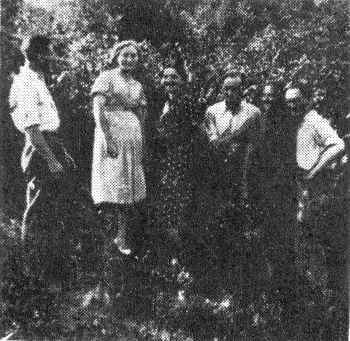
| From right: Moshe Vald, Chana Bitter, David Shisler, Malka, Moshe Vald's sister, Chana Shisler, and Yisro'el Boym |
As a young child, I was orphaned from my father. He was only 37 when he died suddenly, and Mother was left on her own with four young children, aged four months to seven years. As a small child, I felt Mother's great love, that gave her the strength
[Page 289]
to withstand the blows that rained down on her during that bitter time. In her quiet, modest way, she continued her life, and worked day and night to feed her children. She often had to travel to Zamosc in order to purchase merchandise for her fabric shop, in a cart that slogged through rain and snow. She would arrive home after midnight, exhausted, yet had to feed her four-month-old.
Whenever I am consumed by longing. I see her before me. My good mother filled the home with her kindness and heartfelt conversation, with strangers as well as with her own children. In spite of her many worries and pain over feeding and raising her children, she was always ready to deny her own needs and give charity. Whenever she heard about someone's needs for Shabbat, she dug into her purse and made a contribution.
Sweet, dear Mother, to this day I have not forgotten you. My entire life basks in your radiant kindness. My memories of you always warm my heart, all year round. I heed your words and follow your good deeds, as I would holy amulets saved from a conflagration.
From earliest childhood, I witnessed boundless charity in our home. Mother greeted every guest warmly and respectfully, and strove to provide the children with the best possible upbringing. At that time, children in Grabowiec were not yet sent to the Polish school. But Mother did all she could to enable me to study with a teacher from the Polish school in addition to the cheyder education, although paying tuition was beyond her means. Only a very few children could afford it. Those who were tutored by this teacher included Eliyahu Kutscher and Shamai Shtern, besides me.
Dear, kind Mother, how much strength and effort it must have cost you to be able to pay both the cheyder melameds and the Polish teachers. You were not content with my learning Torah, Rashi commentary, and Talmud. You wanted me to be able to read and write Yiddish, Polish, and Hebrew. The entire world has been destroyed, but the sacred memory of
[Page 290]
the marvelous beauty of your great soul lives on in my heart, together with the amazing light that you radiated and that suffused our home.
There is so much more to recount, mourn, and memorialize: brothers and sisters, friends from cheyder and the Husiatyn synagogue, including Hershl Kahan, Elyakim's son Moshe, Avraham and Nechemiah Bornstein, as well as younger people such as Chaim Kahan, Shamai Shtern, Eliyahu Kutscher, Moshe Grah, Michal Stein, David Shisler, and many others who were cruelly cut down. My eyes will never cease to brim with burning tears, and the pain will forever lie heavy on my heart. I will never forget the older students, who helped me stay afloat on the vast ocean of the Talmud and made efforts to help me understand its more difficult passages and grasp baffling problems and nagging questions. Friends my own age, with whom I studied and dreamed of a better life, and joined in efforts to redeem our people and our land live in my memory forever.
The melodies to which we chanted the Talmud and expressed our connection to our age-old heritage were full of longing and the wish for renewal of Jewish life on the twin bases of study and work. The small synagogue in which we studied was an extension of our homes, and its air was permeated with the same type of deep devotion to the highest ethical standards.
All this was so gruesomely cut off, and there is no consolation for the horrific devastation.
by Avraham Shtarker [deceased]
The leaders of the Jewish community were in Father's room, and I remember them deciding to send letters to different Jewish communities informing them that our town needed a rabbi.
Each candidate was scheduled to give a sermon in the study house on a specific Shabbat. These sermons were attended by people from all the synagogues. The process was repeated several times, as the best rabbi couldn't be selected in haste. The same audience attended each candidate's talk, until there was finally one about whom the community agreed he was perfect: “the whole package–Torah as well as business–wrapped in silk and satin.” That candidate was a sensation in the town, especially among the young folks. The sermon was scheduled for 4 p.m., after prayers. There was great interest. People began coming at 2 p.m. to secure seats. The study house was packed. The rabbi appeared promptly at 4, and began his sermon. His style was idiomatic and rich in scholarly references. The audience listened attentively, hanging on every word. One of his admonishments was that parents needed to understand their children, even if they joined Zionist organizations. After all, they were motivated by the great ideals of redemption and a return to Zion.
Whispers ran through the audience. Members of the older generation were clearly displeased,
[Page 292]
whereas the younger folks were enthusiastic. A heated dispute broke out. The older members grew angry. “What kind of talk is that, from a rabbi? He says that that the clean-shaven Zionists, who want to lead us to the Land of Israel, should not be obstructed.[1] Any rabbi of that sort is not suitable for us…” The next day was May 3rd.[2] It was customary for the Jewish children to come to the study house with their Polish teachers that day, where they were greeted by the rabbi and an official ceremony was held. This time, the visiting rabbi was asked to stay for the celebration. At 8 the next morning, the teachers arrived with their students, including my children. Like many other Jews in town, I went to the study house to hear the rabbi's greeting to the children. The rabbi's conduct made a great impression on everyone. He spoke a fine Polish and introduced himself to the teachers; his worldly education was clearly evident, along with his Jewish expertise. Then he walked up to the dais, and said the blessing for the secular authority – in this case, the President of Poland. The impression was powerful. The Polish teachers inspected him and openly expressed their enthusiasm for the new rabbi.
However, this did not help to convince the older Jews, who considered the newcomer a danger to their children's piety; they were simply afraid of his intelligence and worldly attitude. They insisted on electing the previous candidate, an idler who had come the previous week. The difference between the camps was resolved by making two lists, and the side that preferred the rabbi who had come later won.[3] He became the town's rabbi. However, he was not destined to serve long; he was martyred along with all the Jews of Grabowiec.
Translator's footnotes:
by Zelde Miller-Dobzhinski
Our town was small and remote; it lay ten kilometers from the nearest railway station, at Miaczyn. The town center was populated by Jews, whereas the Poles lived in the surrounding suburbs, and on the slopes of the hills around the town. The highest hill was called Fortress Hill. From its top, the town looked small and poor, and the buildings seemed squashed together. The only brick house was Kaprovski's.
Jews made a living by shopkeeping and various crafts. There were fruit-sellers, melameds and ritual slaughterers. Very few Jews made an adequate living. Everyone waited for the Monday fairs, praying for good weather, so that many peasants would attend. The weekly fair ensured our livelihood for the following week, and especially for Shabbat. Higher-quality food had to be prepared–fish, meat, and above all wine for Kiddush.
On Friday afternoons, the synagogue manager, Mendel's son Yechiel, paced down the alleys, calling loudly, “To the synagogue!” All the shops would then close, and the windows of homes lit up. The town looked different. Fathers and sons went to the synagogue. I remember my father going to the synagogue every Friday evening to welcome Shabbat, and rising at dawn on Saturday morning to chant Psalms in the synagogue.
After the midday meal on Shabbat, while the Grabowiec Jews enjoyed their Shabbat naps – the best of all possible pleasures –the young folks set out on walks to Fortress Hill. In summer,
[Page 294]
they strolled among the trees with their books, and held discussions.
Thirst for Knowledge
It is difficult, after so many years of wandering, to dredge up from memory the long-gone years of childhood and youth that we spent in our peaceful town. It was a quiet, placid life, but the community was rich in captivating cultural and social activities. Some of our young people were very intelligent and had advanced Jewish and worldly knowledge. This was evident as soon as you walked into a Jewish home: faces were bent over secular and religious books with deep concentration. Young Jewish men were prodigies and scholars. Some stayed up late reading secular books and taking notes. Glimmers of light behind drawn shutters cast faint rays into the dark streets. Young Jews of Grabowiec realized that studies and knowledge were the sole route to breaking free of a stifling small-town existence.
The young of Grabowiec were busy, not only reading books, but also organizing cultural events, readings, and discussions for their free time. I can still see their happy faces as they embarked on a heated argument on Jewish or international issues, and as they sang and danced.
The long winter nights did not pass in idleness. The young Jews thirsted for knowledge and sated their thirst through our library's rich collection. The gathering areas were warm, and voices rang enthusiastically all night long. As we left on frosty nights, our footsteps crunched the frozen snow rhythmically.
My memories emerge as though someone has suddenly opened a curtain that has long hidden a secret world – a world that once existed and has disappeared, apparently forever.
by Avraham Nudel
After the death of the Grabowiec rabbi, Aharon Yosef, the community resolved to select a new rabbi, and candidates for the position quickly applied. Each candidate came to town, introduced himself to the community leaders, and that evening people in the study house were informed that he would give a sermon. The community came to each sermon. The candidate then departed and waited for the community's reply. Those were very exciting days. I loved to watch the candidate rabbis, and attended each of those sermons. I listened to the scholarly address of the candidate, and later followed the opinions and impressions of the community, from which I could guess the result of the vote.
The study house would be in an uproar after each sermon. Each person expressed his opinion, and supporters of the candidate argued with opponents; each side justified its arguments. Finally, two candidates emerged: one from Parczew and the other from Janow. The Parczewer was blondish, well dressed, wore leather gloves, and carried a fine umbrella rather than a walking stick. The Janower was very young, of medium height, and rhetorically gifted. He came to spend Shabbat in Grabowiec. After the midday meal, he arrived at the synagogue to give his sermon, which lasted several hours, and electrified the listeners.
[Page 296]
The major scholars of Grabowiec said that they had never heard the like.
Shabbat was immediately followed by a celebration of May 3rd. As usual, the prayer for the ruling authority was chanted. Representatives of the Polish regime attended, headed by the mayor. The candidate from Janow also came, and gave a speech in Polish about the constitution of May 3rd and its significance for the Jewish population. The Jews of Grabowiec were excited, and the representative of the regime said that his Polish address ranked with those of the best Polish speakers.
Of course, this garnered him more approval, and it seemed that he had the best chance of being selected as rabbi of Grabowiec. However, an opposing movement suddenly appeared, headed by Efrayim Lerner. The reason given was that he was … too clever. They said, half-jokingly, that he would sell off Grabowiec without anyone noticing.
The situation began to be serious. The Janower candidate realized that his opponents were determined. He, however, liked Grabowiec, and noticed that most of the Jews were simple folks. He visited the artisans' union and spoke with its leader, promising to support them. This gesture succeeded in evoking the sympathy of all the ordinary people, who indeed voted for him. He was elected by a large majority as the new rabbi of Grabowiec. Soon after his selection, he proved to be not only a scholar, but also a capable leader of the Jewish community.
I was only able to spend a short time in town with the new rabbi. I was a witness at Ya'akov Reichman's wedding. The war broke out soon afterwards, and I had to leave.
by Mania Haus-Wielder
I would like to set down a few fragments of memories from my home town, the home that is so firmly rooted in my heart – my dear parents, sisters, brothers, relatives, neighbors, and the young folks, about whom I have so many warm memories.
My father, Shimon the Healer, helped every needy person in our small town, throughout his life. He was famous for this among the hundreds of residents, whom I now see as members of one large family.
During the week, life in the town was rushed and overworked. Each person was busy trying to make a living, including the young folks, who were therefore unable to fully develop their intellects by studying. They had to learn a trade, so as not to burden their impoverished parents; on the contrary, they needed to help ease their parents' situation.
Nonetheless, the difficult material circumstances contained a great deal of beauty. Grabowiec was a small, poor town, but rich in culture as well as in esthetic and ethical values. After a full day of hard work, the young people met in the evenings, in different venues, such as cultural clubs, libraries, and reading rooms, all created by activists of various movements. The locales were the sites of conversation and discussion of timely issues – political, social, and literary. People shared [---][1]
The cultural atmosphere changed completely with the onset of
[Page 298]
Shabbat. The observant Jews, of course, abruptly shed their weekday worries and seemed to attain the added spiritual dimension of Shabbat.[2] Nonobservant young people also sensed the beauty of the day. Boys and girls in the various cultural and political movements set out on walks to the common meeting point of Fortress Hill, where everyone converged. It was the site of debates, discussions of different topics and problems. Although the atmosphere was sometimes laden with the explosiveness of varying ideologies, I believe there was nonetheless an overarching great, true friendship.
It is difficult to accept the thought that it all went up in smoke, without a single trace left behind.
The Pioneers of Building a Paved Road
The town was poor, with no paved roads or sidewalks. During fall and spring, the narrow streets turned into mud patches. Once, my father and others, including the town mayor and his secretary, took the initiative of paving the road between Fortress Hill and City Hall. It was a costly project. To this day, I don't know where they obtained the money. I remember only that a square hole was dug near Itshe Harshever's house and faced with red bricks, to deposit the document signed by the pioneers, including my father, Shimon the Healer. The document was placed in a varnish-covered bottle and that was then laid in the bricked hole – the point where the paving began. The identical procedure was followed at Kaprovski's. I was very curious about the reason for the ceremonies, and asked my father. Naturally, he
[Page 299]
could not then imagine that such a terrible calamity could overtake the Jews of Poland, including those of our town. But he did expect to grow old and depart the world, a notion that is clear in the answer he gave to my question: “Listen, my child, the years rush by, and I don't know what things will be like years from now. It might take 100 years, maybe longer, but at some point, the road will be built over, and they'll find the bottle. They'll retrieve the document and discover who the founders were, and when they were active, and paved the road to the town, out of a belief that life progresses, and every resident must further this progress…”
I believe that the people of our town were so exhausted, with one incident following another, that over time they certainly forgot the pioneers of the first paved road. Jewish life was decimated, and it is our duty to memorialize it and describe how rooted our ancestors were in their traditional homes. My father served as the Jewish representative in the town council for thirteen years. As such, he was very helpful to impoverished Jews when they were threatened with the loss of their basic possessions for failing to pay taxes. The Jews of Grabowiec constantly suffered from various problems. Father was always ready to help as much as he could. Mother did the same, with her graciousness and open heart. She visited the homes of the poor who needed material aid and see how she could help. Helping the needy was never too hard for her. Even when she was sick in bed, she would get up and bring help to the homes of the impoverished.
These are only a few facts gleaned from all the memories that flood me whenever I think of my home town. I choke up with tears, and my hand trembles at the very thought that all of it was so gruesomely decimated.
[Page 300]
Yekutiel Friend
|
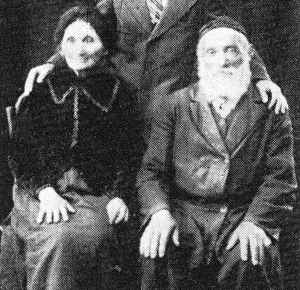
One of the important Jews who lived in the village of Mołodiatycze, seven kilometers from Grabowiec, was Yekutiel Freind. Twenty-five Jewish families lived in the village, all of whom admired his wisdom and honesty, and often came to consult him. People came to him with each and every problem. He was respected by non-Jews as well – even the village elder admired him. He was therefore able to help Jews with their problems. Jews from Grabowiec also consulted him, and came away with warm words, consolation, and help. Anyone entering his home found him sitting at a volume of Talmud. Besides his impressive appearance, with a full snow-white beard and lofty forehead, he was a true scholar. It was a pleasure to sit and converse with him on scholarly matters. He lived in Łódź briefly, but apparently missed his home town; he returned to the village. He was murdered together with all the martyrs of Grabowiec.
[Page 301]
Kalman David Licht
|
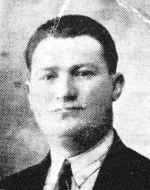
He was born in Lublin, and was married in Skrbyszew.[3] He later moved to Grabowiec, where he became one of the most respected Jews in the community. He was a Husiatyn Hasid, a scholar, and an honest merchant, who was nonetheless able to devote much time to charity matters and other community affairs.
In partnership with Sholem Vaynboym, he established a large mill in Grabowiec.[4] Both partners were Husiatyn Hasids; they lived in the same house, which became a meeting place for Hasids. Gatherings at the house on holidays were very joyous.
They were surrounded by love and respect, with homes full of merry Hasidic singing, and distinguished themselves by their honest approach to people and events, and warm hearts.
Translator's footnotes:
by Chayim Pinchas Blaff
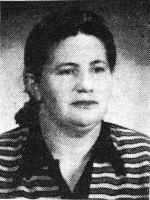
Throughout her life, Chayaleh remained connected with all that was beautiful in our hometown of Grabowiec. For her, bygone days in the town were a source of warmth and love, expressed in her connection with every Grabowiec native. To this day, the Tel Aviv home of the Lerners is a destination for any of them visiting Israel. Chaya had a kind word for everyone and greeted all comers with a smile. Visitors immediately felt welcome, and were not allowed to refuse a meal. I sometimes told her, “Chayaleh, I've just eaten.” It was useless. She was always offended. “What do you mean, you won't taste my treats? Have some Grabowiec food, it's really tasty.” Every person from Grabowiec who visited the Lerners was immediately enveloped in warmth. Each of us has stories of their hearty welcomes and friendliness. She rejoiced in every visit from a home-town native, and her kindness and decency were self-evident.
Chayaleh is mentioned as the embodiment of sincere friendship and good spirits at every meeting with Israeli friends. Any friend of a Grabowiec native was her friend, as we know from all those who came into contact with her, even he neighbors and acquaintances, who speak of her as a kind, devoted mother; as such, she is deeply mourned.
Chayaleh devoted much time and effort to compiling materials for this Grabowiec memorial book. She wrote some pieces, and encouraged others to make their contributions and memorialize the martyrs of our town, their generations-long tradition, the fine qualities of our ancestors. Everything she did was imbued with her love and spirit.
Death took her from us in the middle of her sacred task. We mourn for those who are gone and are no longer among us.
|
|
JewishGen, Inc. makes no representations regarding the accuracy of
the translation. The reader may wish to refer to the original material
for verification.
JewishGen is not responsible for inaccuracies or omissions in the original work and cannot rewrite or edit the text to correct inaccuracies and/or omissions.
Our mission is to produce a translation of the original work and we cannot verify the accuracy of statements or alter facts cited.
 Grabowiec, Poland
 Yizkor Book Project
 JewishGen Home Page
Copyright © 1999-2026 by JewishGen, Inc.
Updated 06 Jul 2026 by JH