 |
 |
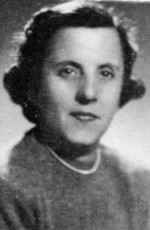
See the article on page 140
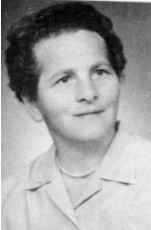
See the article on page 147
|
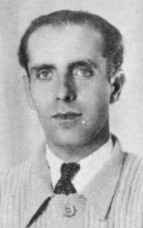
Details told by Tzvi (Herman) Gottselig
Written by Chaim Batlan
Translated by Sara Mages
The war broke out
I was a boy of about fourteen when the war broke out. At that age, I had not yet acquired any life experience, let alone the abnormal existence that befell the town's Jews. People, older, wiser and more experienced than me, were stunned and filled with bewilderment by the events unfolding in the town. Immediately after the entrance of the Germans into the town, a curfew was imposed from six in the evening to six in the morning, and it remained in effect for the Jews until the total liquidation of the Jewish community, hy”d. As for the curfew, those knowledgeable in the matter knew to explain that every occupying army declares a curfew at the beginning of its occupation. However, the Germans were not satisfied with that. They gave the first signal with fire and burned down the town's main synagogue with all its ritual articles and furnishings. (by the way, the construction of the aforementioned synagogue was completed four years before the outbreak of the war). Together with that, they imposed numerous restrictions, such as a ban on gatherings and assemblies. They also prohibited communal prayer in all Batei HaMidrash. Several weeks later, they established the Judenrat. Needless to say that the poverty was steadily increasing, and the number of hungry increased from week to week. Individual Jews were killed because the Germans were not yet trained for mass killing. The Germans initially planned to exploit the Jewish workforce and issued work orders to the Jews. Through the Judenrat, the Jews were recruited for labor in work camps, where the Germans established factories for the war effort. I also reported for work and was sent to Stutthof, a place where hundreds from the surrounding area were concentrated. I also reported for work and was sent to Stutthof, where hundreds of people from the surrounding area were concentrated. We worked hard physical labor under the German guard. They did not spare us their whips, and more than one fell to the ground, never to rise again. In those days, we still received food as well as payment for the work. We were also given time off once every two months to visit our families in the town. In early 1942, while Hitler's war against Russia was raging at full intensity, the Germans tightened their oppressive grip on the Jews imprisoned in the ghettos. In Briegel, even before the ghetto was established, up to ten Jews were shot each month. This reached the Great Aktion, as it was called then, when around two hundred people were killed in a single day. More than fifteen hundred Jews were deported from the town, ostensibly to labor camps, but in reality, they were extermination camps. A labor camp, where many from the town were held, was in Stutthof. The Germans built a large power plant powered by a natural waterfall near Stutthof. Conditions at Stutthof were steadily worsening. They reduced the food portions, and it kept getting worse. The Germans also intensified their harsh treatment of us, and more than once we were seized by the fear that they were about to exterminate us. Then unrest arose among us, and many voiced their support for an organized uprising. Suddenly, the Germans surprised us. They returned us to regular work and the standard conditions at the labor camp in Stutthof. And then, the spirit of illusion returned to us. Maybe, after all, we might stay alive. Things went on like this for months on end, each time, a different illusion, because the desire to stay alive grew stronger day by day.
On the Sabbath before Rosh Hashanah in 1942, several young men came from Briegel to the Stutthof camp. They informed the Briegel people that the Germans were about to liquidate the Briegel Ghetto and make the town judenrein [clean of Jews].
The next day we, Yosef Steinlau, Shmuel Dorff and I, decided to escape from the Stutthof camp to Briegel. We arrived in the town on Tuesday, on the Fast of Gedaliah. The vast majority of the ghetto's inhabitants had already been taken out and brought to Tarnow. On that Tuesday, there were still three hundred Jews
[Unnumbered page]
|
|
|||
|
See the article on page 140 |
See the article on page 147 |
|
|
|||
|
See the article on page |
See the article on page 133 |
|
|
|||
|
See the article on page 150 |
See the article on page 145 |
[Page 151]
who hid in bunkers. The Germans had failed to discover them the day before, yet, for some reason, they went out into the ghetto's streets. Then the men of the SS arrived from Tarnow with military trucks, loaded them onto the trucks and transported them to Tarnow. Even after this operation, several dozen Jews remained in their hiding places. A few days later, they fled to the ghetto in the nearby town of Bochnia, which was still in existence.
When we arrived in the town, we knocked on the ghetto's doors and then the Jewish Ordnungsdienst [police] pleaded with us to leave the place immediately, because at any moment we would be hit by a death bullet. We fled to the fields while we were still alive. In the fields, we ran into Itchele Rosenberg. He told us everything the ghetto had gone through over the past two days and stated that he was not willing to be dragged off like an animal to slaughter. I do not know his fate, hy”d.
The three of us managed to return to the labor camp in Stutthof. We walked with a sense of shame. All human senses froze within us. The grief in our hearts and minds was so great that we were unable to think like human beings. We walked completely cut off from our surroundings. A few days later, we learned that several dozen Jews had escaped to Bochnia Ghetto. Then, the three of us again began planning an escape from the camp to Bochnia Ghetto to find out who remained alive. This time we planned everything in advance. We talked to our German supervisor who was greedy for money, and he agreed to transport us in a truck to Bochnia Ghetto. On the way back, we will stop at the liquidated Briegel Ghetto, and we will bring him things that the Jews left behind in the ghetto. He hid us in a crate, and we drove off. He let us get off close to Bochnia Ghetto, and we jumped over the fence into the ghetto. Here we met a few dozen people from Briegel, but we didn't find anyone from our own families. Shortly afterward, we slipped out of the ghetto and returned to the meeting place with the German. In Briegel, we entered the ghetto, which was open on all sides because the Poles entered it and looted everything of value. Then, we returned with that same German to Stutthof camp and remained there for many months. Our physical and mental strength gradually waned, and we turned into living “robots.” In addition, the number of deaths increased, those who lacked the strength to endure the suffering.
In my opinion, it is worth noting the act that Motel Keiner had done in the camp even before the Germans liquidated Briegel Ghetto, because such acts were extremely rare in those days:
Exceptional case
I remember a particularly unusual incident while working the night shift. In one of the workshops' Motel Keiner worked on an automatic machine. By the machine grinding sounds, it was possible to tell whether it was running empty or with material fed into it. This Motel was an exceptionally burly man. From a young age, he was used to being the one who struck the first blow. The shift supervisor, a German named Weingart, felt that Motel's machine was running empty. So, he approached Motel confidently and gave him a rough shove. In the blink of an eye, Motel swung his hand forcefully into Weingart's face, who fell to the ground, stunned and covered in blood. Motel did his part, disappeared from the scene, and slipped out of the camp. To this day, I do not know how. In time, we learned that he had been roaming the forests of Bochnia armed with a weapon. It is presumed that he established contact with the underground unit, which was formed by members of the Akiva movement from Kraków in the Bochnia forests. We also received reports that the Germans pursued him and paid a heavy price in casualties. During the final pursuit, he was cornered in his hiding place in the hayloft. The Germans surrounded him on all sides, but he managed to position himself within the roof, woven from sheaves of straw, and anyone who approached the hayloft was shot. So he stood, all alone against many, until his very last bullet, which he saved for himself so as not to fall into the hands of the German alive. And that is what he had done. May HaShem avenge his blood.
[Page 152]
The labor camp in Mielec
The labor camp in Stutthof was liquidated a short time after the liquidation of the Briegel Ghetto, and we were transferred from there to Mielec camp. The conditions there were even harsher, because the Germans began to feel that only then, in 1943, the war has reached its peak. The Germans built an airfield and a factory for manufacturing aircraft spare parts in Mielec. They felt the tide of the war turning against them, and then they intensified their cruelty. And, as if all these troubles weren't enough, one of the Kapos (not from Briegel) took a fancy to spending time with a girl, and chose the horse stables, of all places, for the occasion. When he left the stable, he forgot to close the door. The camp commander's horse got out, approached the fence, and was electrocuted.
The next day, everyone in the camp was summoned to a special roll call due to the incident with the horse. Then, the Jewish mind went to work, as has long been the custom in the Jewish street. The, azoy viln eydn trakhtn [as the Jews think] and they began to spread a rumor that we were about to be exterminated, and that we would be saved by a miracle when they would count us in groups of ten. That is, every tenth man would be shot. As we stood in line, there was pushing and shuffling; no one wanted to be the tenth man. Then came the biggest surprise: the camp commander warned us that if another incident like the one from the previous night occurred, we would all be shot dead on the spot, and he ordered us to return to work without trouble. Calm returned, and the illusion grew, the illusion that we could stay alive, no matter what.
Over time, the Germans' confidence was further undermined. Then they moved the aircraft factory deep into the Wieliczka Salt Mine. They also moved us there. However, they soon discovered that the machines were being eaten away by rust caused by the salt. Unable to overcome this problem, they dismantled the entire camp in Wieliczka.
The labor camp in Płaszow near Krakow
At the end of 1943, a great number of people from the Wieliczka camp were transferred to Płaszow labor camp. There, we were overcome by deep sorrow at our work. We cleared away high mounds of earth from above deep pits into which thousands of Jews' bodies had been thrown. When we discovered the corpses, we had to bring them up to the surface, row upon row. Then, a group of our workers came and examined the corpses to see if there were any gold items on them. They also had to remove the gold teeth from their mouths. Then came another group of workers whose task was to collect the corpses and move them onto very high piles. A layer of corpses and a layer of wood on top of them, then they poured kerosene and burned them. There were many instances when those who placed the corpses on the piles lay down among the corpses, they were covered by layers of wood and burned alive. All this work was done under heavy German guard, with the whistling of their whips over our heads. They struck out left and right, and our only reaction was to blink. Thousands were brought to the camp, and day after day, hundreds died from horrific torture. We were all struck with a deadly disease. Today it is him, tomorrow you, and the day after, me. Our entire being and existence was one thing: death.
[Page 153]
Death during the day, death by night, death when we lay down, death when we got up, and death when we went to work, death! death! death! and all this befell us simply because we were Jews. And so I remained, sinking into total apathy for many months, amidst everything that surrounded us in this camp. I will only note that by eliminating the pits containing these corpses, the Germans sought to obliterate the traces of the ongoing mass murder, carried out by shooting victims beside the trenches, that had begun with the outbreak of the war. Tens of thousands of people were buried in them before all the gas chambers were put into operation. In early 1944, several hundred people were suddenly taken away for transport, no one knew where we were being sent. We also didn't care, either. We marched to the railway station. There, we were shoved into freight cars and transported to the Gross-Rosen camp. It was an extermination camp with a crematorium, but none of us knew about it. We knew and sensed that hundreds of people were disappearing every day, yet new transports filled the void. What would have happened had we known about the crematorium? What would have happened if we *had* known about the crematorium? At the Płaszow camp, did the shadow of death not stalk us at every step? After all, we were led like herds of cattle to the slaughter. For three years! For some reason, our shipment's turn to go to the crematorium was delayed, and we remained at the camp for two weeks. Among the hundreds in our group, there were four of us from the town of Briegel. Moshe Mintz, Yakov Gotlig, Chaim Tatush and I. I am happy to note that all three are in Israel. Suddenly the entire transport was called to a special assembly, and we were informed that we had to go to the train station. We were again loaded into freight cars in terrible overcrowding, without food or water, and transferred to Brünnlitz in Czechoslovakia.
In the possession of Oskar Schindler z”l
Brünnlitz, was like all labor camps. The same style, the same layout. Enclosed by a high, tangled barbed-wire fence. Yet, from the very first day of our arrival, we felt that the arrangements here were far more humane than in any of the camps we had previously been to, such as the latrines and the showers. Above all, there was the quantity and quality of the food, and the attitude of the German guards was not as cruel as in the other camps. It is clear that this helped us greatly to regain, to some extent, our human semblance. Here, we worked in the ammunition factory of Oscar Schindler, who is remembered for being the best. Although we saw him only rarely, thanks to his influence and guidance, these conditions gave us the ability to go on with our lives. Admittedly, we were slaves here too, for such was the German system of order in the camps, yet we were granted the status of slaves as in ancient times, and that sufficed for us to stay alive in this camp. Just before the end, I stole a few potatoes, and to my good fortune, I received a very lenient sentence: a sign was hung around my neck and across my chest bearing the inscription, “The Potato Thief,” and I was forced to hold a potato in my mouth and run the length of the pavilion fifty times. Towards the end, we discovered that an underground movement had existed there all along. Oskar Schindler, the factory owner, was aware of it, and the camp conditions had to be maintained as they were for the sake of cover. In February 1945, we also received weapons to defend ourselves, because there was a fear that the Germans might want to eliminate us before fleeing the camp, just as they had done in so many other camps. The Germans in our camp were denied this pleasure. We drove the Germans out with the weapons in our possession before the Russians entered Brünnlitz. We held only the German, an SS officer who had tormented us the most as a prisoner in the camp, and after a few days of hunger, we hanged him. On May 3, 1945, we were completely liberated from the camp upon the arrival of the Russian army in Brünnlitz.
[Page 154]
I make aliyah to Eretz Yisrael – Palestine Eretz Yisrael
Two days after I was released, I managed to secure a pair of mules hitched to a wagon in Czechoslovakia and fled to Krakow. There, I sold the mules with the wagon, and it was my first income after my discharge. That money allowed me to manage during the early days of my life as a free man. From Kraków, I made a detour to Briegel, where I found a handful of Jews who had managed to return to the town. They lived there temporarily because no one thought of staying and building a new home there. Since I discovered that not a single soul from my family had returned to the town, I went back to Krakow. It was here that I ran into Binyamin Burgnicht. We hugged and kissed. We told each other about the past and how we survived. During the conversation, he asked me what I was planning to do now, after liberation, and suggested that I should travel to Eretz Yisrael. I was surprised by his proposal, and I simply asked how and in what way? Then, he gave me an address in Kielce where I needed to report. The next day, I traveled to Kielce to the address. There, I found a large group of young men and women, the first hakhshara company that was preparing to make aliyah to Israel. A short while later, we set off, mostly on foot towards Austria, and from there to Italy. There we gathered, nine hundred young men and women from among the survivors from all the countries of Europe. We boarded a ship and sailed from there towards Israel. However, the British captured the ship on the high seas, and newspapers around the world reported that the British had seized a ship carrying three hundred refugees. But in fact, there were three times as many on the ship, nine hundred people. They brought the ship to Israel's shores and imprisoned us in a military camp at Atlit. The ship's name was “Enzo Sereni.”
A few weeks later, we were released from Atlit.
I have told this story so that it may serve as a mark of infamy and an eternal disgrace to the German people, and as a warning to all Jews.
by Y. L. Blaugrund
Translated by Sara Mages
Life in Briegel Ghetto was difficult and complicated throughout the entire existence of the ghetto. The terrible overcrowding, the cramped conditions, and the appalling plight of twenty people in a single room, especially after all the Jews from the villages surrounding Briegel, had been concentrated in the ghetto. Several families had to crowd together, living in a single room and one kitchen, a situation that was particularly difficult for the women. A shared kitchen for dozens of people, a kitchen by day and a sleeping area by night, and the problem of the lack of a toilet. Woe to us! Such suffering is indescribable under ordinary conditions and in normal life.
[Page 159]
I remember an instance when my mother hy”d, was critically ill and there were no doctors in the ghetto. There were only two medical graduates from a Jewish hospital in Kraków. They were the only ones who could be turned to for medical treatment and assistance for the patient. An Aryan doctor was forbidden to treat a Jewish patient without permission from the German Landesrat [formal council]. It entailed financial expenses and immense difficulties. We had almost given up hope of finding medical help for my dying mother, but with the aid of the “healer of all flesh,” her condition improved, and she regained her health. She opened her heart to us and told us. When it seemed to her, in her final moments, that she was being judged at the Divine Court, she only asked for this: “leave me a remnant in the family.” This serves to show that the thoughts of the people in the ghetto were consumed by one single concern: how to sustain life. And the one and only – a remnant, a survivor!…
So expressed himself before me Mr. Wolf, a respected and educated Jew who had arrived in the ghetto from Bielitz-Biala, saying: (I was a boy of about fifteen-year-old at the time) once there were many worries, earning a living, matchmaking, health, and so on – and that was a good thing. In the ghetto, there is only one concern: how to stay alive? There are no other concerns… In the early days of the ghetto and the appearance of the Ordnungsdienst, the Jewish police, Jews were abducted by them for various forms of manual labor. Afterward, every Jew was required to register at the Labor Office (Arbeitsamt) and obtain a work card.
Many were sent to work in camps outside the ghetto, to the SS labor and concentration camp, Pustków, near Dêbica-Mielec. Due to the harsh conditions prevailing in the camp and the grueling, back-breaking labor to which the Jews were unaccustomed, many collapsed and never returned to their families…
At that time typhus, heaven forbid, was discovered in the ghetto. The Jewish patients were gathered at the Great Beit Midrash in the Hasidim Shtiebel, which had been converted into a closed hospital due to the risk of the disease spreading outside. Without diagnosis, appropriate treatment and almost any medical assistance, the sick lay at the Hasidim Shtiebel and many fine people fell victim to it…
This wretched and terrifying period, which brought about poverty and destroyed human lives, sowed panic and chaos. The first Aktion took place on the second day of Passover 5702. These are the various infamous Aktions that were accompanied by killing and murder. Dozens of Jewish murderers from the SS entered the ghetto and murdered in cold blood ten Jews, men, women, and children, in their homes. Among the dead were well-known and respected heads of families. Dozens of orphaned children and widowed women were left without anyone to care for or provide for them.
About three months after the aforementioned murder shots fired by SS soldiers were heard again in the ghetto. At sunrise, men were dragged from their beds and shot to death by the gates of their homes in front of their wives and children, indeed, woe to the eyes that saw this. Woe!
Close to forty men, from the most prominent figures in the ghetto, were brought for burial in this Aktion. Public activists, dentists, property owners, members of the Judenrat, and others who were known to the German authorities and were murdered by them on an individual basis. The Judenrat was ordered to prepare a list of three hundred Jews for the SS. The deputy chairman of the Judenrat asked for what purpose the Jews were required. If the intention was to shoot and murder them, the Judenrat had no Jews available for that purpose. The SS response was given on the spot. They shot him and murdered him on the spot. God, the Avenger of Israel will avenge their blood!
The ghetto residents were required to pay a ransom to the Judenrat in gold, silver, and expensive jewelry, for the SS in exchange for their lives and for the right to remain in the ghetto. The Aktion of 3 Elul 5702
[Page 160]
was the most frightening and terrible in its results. SS tropes and forces from the German and Polish police burst into the ghetto like beasts of prey. With pistols drawn in both hands they murdered a man and a woman, infants, and anyone else who crossed their path. The Jews tried to flee to the fields outside the ghetto to seek a hiding place. The SS men chased them, caught up with them, and shot them with deadly bullets!
Close to a thousand victims were counted in this Aktion. Their blood was spilled like water in the ghetto's streets, and pools of blood flowed into the sewers. The bodies of the dead lay scattered in the corners of the ghetto, and the Jews did not dare to attend to them. Only in the evening were the bodies collected by municipal workers, loaded onto garbage carts and transferred to the cemetery. At the risk of their lives, the ghetto's survivors brought them to burial in a mass grave. Our troubles and difficulties have not yet reached their peak, not yet!
On that day, a thousand brothers and sisters were loaded onto trucks and transported to Tarnow Ghetto, and there their traces were lost.
Religious and cultural life did not cease for a moment, despite the dangers and fears that were the Jews' lot in the ghetto. Minyanim were held at private homes on the Shabbat and holidays, while regular prayers, Shacharit, Mincha and Maarive, were held in the synagogue. Beit HaMidrash of R' Chamle Titlbaum z”l, a judge in Briegel, was transformed into a yeshiva from which the sound of Torah study emerged from dozens of young men and boys until the liquidation of the ghetto. Indeed, out of the mouth of babes and sucklings You have established - death! More than once, the German police caught them by surprise, bursting in while they were in the midst of their studies, yet they could not overcome the stubborn resolve of the students, who embodied the teaching of Rabbi Akiva: “If it is so in the place of our living, how much more so in the place of our dying. Assistance and care were provided to the bereaved families of those killed in the ghetto, as well as to the sick, the elderly, and destitute families with children who had arrived in the ghetto from the villages. The assistance was provided by good, conscientious people who went beyond their capacity, with true self-sacrifice, for the sake of others. Indeed, “Blessed is the nation with such sons.”
The Aktion under the slogan Judenrein
Throughout the month of Elul, rumors and whispers circulated within the ghetto that the day of its liquidation was near. Grim news arrived regarding the liquidation of ghettos in the Tarnow district. As is known, the Briegel Ghetto was affiliated with the SS in Tarnow.
The Judenrat denied the ominous rumors and attempted to persuade and entice people with the claim that the decree could be averted through bribes and payments to the Germans.
Those who had the financial means to obtain a permit to leave the ghetto fled for their lives to the Bochnia Ghetto or another place of refuge. However, most of them lacked the means, or remained in the ghetto due to the burden of their families. Amidst an atmosphere of destruction and annihilation, God forbid, that hung in the air, the people of the ghetto prepared themselves for the High Holidays. On Rosh Hashanah 5703, they wrapped themselves in their tallitot, and with heartbreaking prayers and tearful eyes, wept over their bitter fate.
After the prayers, before sunset, we descended into the underground bunkers. They were in hermetically sealed cellars, into which we crawled through a small, hidden opening.
A great deal of thought and ingenuity went into ensuring they would not be discovered by the Germans.
Every building in the ghetto built a bunker, and those in charge equipped it with water, food, a designated area for bodily functions, etc. About fifty people were gathered in our bunker, and the discipline was exemplary. Children, three to four years old, sat and kept quiet all night, and not a word was heard from them. If a sigh or cough was heard,
[Page 161]
it was possible to feel the fear that gripped these children. They begged the adults to keep quiet, so that sounds from the bunker would not be heard outside.
What we feared and dreaded ended up happening!
On the Fast of Gedaliah 5703, as the sun rose on Monday morning, strange sounds of SS soldiers were heard in the ghetto. With triumphant cheers and signs of drunkenness, the ghetto was declared Judenfrei [clean of Jews]. The Jewish police announced over loudspeakers that there was no point in playing hide-and-seek. This time it's final, Jews will no longer remain in the ghetto. Therefore, you must come out of the bunkers and present themselves to the Germans. Our bunker was known to the Jewish police. They broke into it, almost everyone was taken out of it to the market behind the bathhouse. There, they underwent a selection, men were separated from women, and children were torn from their parents.
In the afternoon, they were taken to the train station, loaded onto closed cars, and transported to an extermination camp, probably Belzec.
After the storm, in the evening hours when things grew quiet in the ghetto, the Jews emerged from the bunkers that had not been discovered. They visited their homes to find out what was happening and to consider their next steps.
When the Jewish police (the Ordnungsdienst) spotted them, Disler, the chief of police, reported them to the SS headquarters in Tarnow. The police were ordered to gather and assemble the Jews at the bathhouse, and, regrettably, they carried out the order with excessive zeal. The next day, hundreds of men and their families were gathered in the bathhouse under lock and key after they managed to survive the riots of the Fast of Gedaliah. The next day, Wednesday, the SS arrived from Tarnow, loaded them onto trucks, drove them to Tarnow Ghetto and added them to the transport of Tarnow Jews to an extermination camp. During the Ten Days of Repentance, searches were conducted in the ghetto, and dozens of Jews were captured and murdered by the SS, and the Jewish police took care of their burial.
On the eve of Yom Kippur, Judenrat. organized an escape from the Briegel Ghetto to Bochnia Ghetto. Approximately fifty Jews, survivors of Briegel Ghetto, were saved in this way. After a night of wandering fraught with danger, they arrived in Bochnia Ghetto. The writer of these lines was also among the survivors.
This is the tragic and miserable end of the Jews of Briegel Ghetto, an important Jewish center. Thousands of pure and innocent souls perished for the sanctification of God's name, through harsh and cruel deaths.
And I will conclude with a passage from the Book of Lamentations.
“The Lord has destroyed and has had no pity on all the habitations of Jacob, in His wrath He has broken down the strongholds of Judah, He has struck [them] to the ground, He has profaned the kingdom and its rulers.” (Lamentations2:2)
Told by Tzvi Lepholz
Written by Chaim Batlan
Translated by Sara Mages
The story I present here may shed light on and clarify what transpired within the Jewish community on the eve of Hitler's war. Of course, this is just a drop in the ocean of all that transpired in the town, which was part of all the events that took place in the towns and cities of Greater Poland.
[Page 162]
I would add that, in those days, Hitler annexed Austria and set his sights on Czechoslovakia, which later fell into his hands like a worm-eaten fruit dropping from a tree.
The wedding in the town
In the year…, something happened in the town. It was an evening of “heavy darkness” that descended on the town, and because of it, the Jewish community was wiped off the face of the earth.
And the event: the daughter of R' Chemla Din is getting married. It might not have been all that impressive, but what? The father-in-law on the other side was none other than the Bobover Rebbe. So, it was already a special event. The entire town, without exception, Hasidim and their opponents, heretics and ordinary people, Zionists and socialists. Everyone, everyone lifted their hearts up high, caught up and swept away by a wave of magic as if the Messiah was coming to them. In the weeks leading to the wedding, rumors and hushed, secretive whispers circulated that people would come from America for the wedding, and also from every corner of the world. From here, they moved on to estimating the number of participants at the wedding. A special Hasidim train of fifty cars will arrive from Krakow and its surrounding area, a similar number from Tarnow and its surrounding area, and such and such rabbis will come. And above all these, the special, direct train, provided free of charge by the Polish railway service for the use of the Bobover Rebbe, his entourage and his thousands of accompanists that will depart Bobov [Bobowa] directly for Briegel. Even the fast and direct trains, which never stopped at the town's train station, will stop at the Briegel station. Day after day, the townspeople received new and joyful tidings, each piece of news surpassing the last, further heightening the delight of the entire town. And as the Shabbat preceding the wedding drew near, the town received astonishing news, namely, that Baron Goetz of Okocim, owner of the largest brewery in Poland, is gifting all the beer for this wedding, in the three types produced at his factory. Before they had a chance to properly appreciate this gift, they added that eight barrels of beer were already brought from Okocim, and this is only for the Shabbat before the wedding. From the news about the beer, the conversation shifted directly to the daily talk about the delegation from the community and the town's notables, who will welcome the rabbi at the train station. However, this time, various whispers began to circulate, as there were those who objected to the inclusion of certain individuals in the “welcoming delegation,” and immediately two camps were formed. Those in favor, with their reasons, because in light of this event there is no room for reckoning even with the opponents of the Bobover Hasidim. But, the Bobover Hasidim had the right to stand their ground. They argued that, as a matter of principle, those who oppose Bobov must be honest with themselves and voluntarily remove their own names from the list of notables. The Jewish community was in a state of confusion… and turned into a boiling cauldron between the supporters and their opponents. The moderate elders started to cry out gevald! [help], they want to take us back to the era of “unity” and the “Yashkes” [Jesus], and the incident involving the Apter Rav. But the Bobover Hasidim stuck to their opinion, and who knows where the quarrel might have led, or why. But salvation arrived! and, incredibly, it came by way of a gentile, Baron Goetz. He informed the Jewish community that he himself wanted to participate in the welcome delegation for the Bobover Rebbe. This brought about a sharp and rapid turn of events. Those individuals unwelcome to the Bobover Hasidim removed themselves from the list of people welcoming the Rebbe. With this, tensions subsided, and the Jewish community in the town grew quiet.
And so, Tuesday, the “lucky day,” on which the wedding was to take place, arrived. Early in the morning, the Bobover Hasidim, along with those close to R' Chemla Din, arose for the Shacharit [morning] prayer at his Beit Midrash. They immediately set to the arduous task of preparing for the feast, a feast the likes of which the town had not seen in the town since its founding. From late morning, a stream of people began arriving in the town from neighboring towns, places not reached by the train, and they came in carts and on foot.
[Page 163]
In the afternoon, shops began to close, and about an hour later, hundreds of people started streaming toward R' Chemla Din's Mark, so was called this part of the small market that stretched across from the house of R' Chemla Din. In no time, the field was filled with people, and suddenly a group of breathless runners arrived, bearing the news that Baron Goetz was indeed approaching riding on a horseback, and his executives were also on horseback. As the runners announced their arrival, two mounted police officers approached to maintain order. Then, in an orderly, almost military procession, four riders appeared, spanning the width of the road, about fifteen meters from Baron Goetz. Behind him came ten riders, followed by two of the Baron's magnificent carriages, carrying the town governor and the gentile mayor. Following them came the town council, comprising both Jews and non-Jews, as well as the Jewish community committee and the town's notables, including the gentiles! All the carriages in the town, eight belonging to Jewish drivers, and one to a non-Jew, were occupied and packed with people. Behind them moved a multitude of people, heading toward the railway station to welcome the rabbi.
When they arrived at the train station, they found it packed and teeming with throngs of people; the open area in front of it, stretching for about half a kilometer, was also filled to absolute capacity.
Since this train station was established, never had so many people passed through it as on that day. Not many moments passed, and the train from Bobov slowly approached the station, and this was the first time a passenger train reached the end of the station platform. Then' the Baron dismounted and waited for the rabbi at the exit of the platform, and when the rabbi drew near, the Baron fell, knelt at his feet, and kissed them. He stood up, and the two shook hands. The rabbi asked for his name and where he came from, a practice he followed whenever his Hasidim came to him, and he would welcome them with a “Shalom Aleichem. ” After handshakes and “Shalom Aleichem, ” the caravan turned back toward the town. While the head of the caravan reached the town center, those at the rear were still at the turn to the village of Szczawa near the last Jewish home. The convoy was a kilometer and a half long. When the Hasidim, dancing with enthusiasm and spiritual elevation through the streets arrived, Yozek, the owner of the violin that he built himself, stood at the corner of Berek Joselewicz Street, or as it was called by the townspeople, the “Hasidim Street”. He was the water-carrier's crazy and outcast son, sporting a wild beard and a “hippie” outfit (yes, even back then). He stood there chuckling, then chuckled again, this time out loud, and let two words escape his lips: “The Jews have become dim-witted. ” Good God, who will remove the ashes from the Jews' eyes, so that they may see and understand the value of the words of the Sages, when prophecy departed, it was handed over to minors and fools. To our sorrow, our misfortune and disgrace, the words of the prophecy were poured from the mouth of this crazy gentile.
(In brackets, I allow myself to add a few words about the gesture of that Baron Goetz. In those days, he intended to run for the Polish parliament (the Sejm) on his own independent ticket. Therefore, he was keen to win over a portion of the Jewish electorate, in order to challenge the Zionist candidate, who had consistently been elected in the Krakow area)
We leave the town
I was a young boy when the great catastrophe befell European Jewry. I did not know, nor did I have the capacity to grasp or sense, what was about to unfold, and this, despite an atmosphere that was electric and so stiflingly dense that it was hard to breathe. Yet public opinion and the routine of daily life prevented the realization from penetrating the mind and heart that we were approaching the threshold of hell on earth. A few days before the eruption of the German volcano crater, which would sweep European Jewry to destruction. On those days, two Jewish personalities from the Bund movement stood
[Page 164]
in the streets and declared that German Nazism is indeed cruel and dangerous, but it would not be able to overcome the millions of Jews in Poland. They voiced this announcement to tens of thousands of Jews in the city of Lwow [Lviv[, a city to which hundreds of thousands of Jewish refugees from Poland, and especially from Western Galicia, had flocked during the first days of the outbreak of the war.
The day after the war broke out, my father z”l swiftly and suddenly initiated our departure from the town. He secured a carter with a flatbed wagon. Two families, Batepreind and Wolf, also joined us. They loaded onto the wagon everything that could possibly be loaded for such a journey, a journey of refugees and wanderers. Clearly, such a lifestyle was unknown to them, and they were less experienced in every respect than the Gypsies. This became clear to us as we continued our wanderings. One evening we left the town and were the first to leave Briegel.
The trouble of many is half a consolation
After several hours of driving, especially as we moved further away from Tarnow, we began to feel the discomfort of the journey. Furthermore, as we covered kilometer after kilometer, we realized that our family's wisdom had not been entirely exceptional, for the road was flooded by thousands of Jewish refugees. They scurried back and forth, like mice fleeing a sinking ship. The closer we drew to Lwow, the greater the sense of distress grew. Yet the mind was incapable of forming a single coherent thought, for what purpose and why do we continue, and where to? and so, we arrived in Lwow. The overcrowding there was unbearable. We moved on to Zhovkva. There, too, the number of refugees kept growing by the hour. The Russians took Zhovkva under their control without firing a single shot. The impression was that the war was drawing to a close; indeed, the thought crossed the minds of the vast majority of the refugees: “We shall return to our homes.” And so, one consideration followed another, and rumor piled upon rumor, each one contradicting the next. Even the communal leaders, those who supposedly knew everything, advised seeking only a reprieve, a way to wait until the storm had passed. But the reality was quite different. The Russians demanded that all refugees accept Russian citizenship. This placed the Jews in an even more difficult position, and, as time went on, the Russians established their own administrative order. The first striking feature of the new regime was the introduction of a rationing system for food and essential goods, distributed via ration cards. Until then, everything had been freely available, even at competitive market prices. With the implementation of this new system, modeled after the Russian approach, a black market emerged, causing prices to soar day by day and leading to a decline in the population's morale. The usual routines of life were disrupted, and the center of life centered around the long queues that had been forming for centuries. The public was trained to concoct all manners of fabrications, and even to engage in popular jokes, to such an extent that the tales of Chelm and its sages were nothing compared to them. In addition to all these, there were the Jewish Communists, who seized the opportunity to secure positions of power in Zhovkva. They joined the local militia. Some of them acted with cruelty and baseness, and their denunciations spread fear. A man feared his fellow's shadow. This caused complete chaos among the population. All these factors led many to move back to the German side. My two sisters hy”d, returned to Briegel, thinking that German courtesy would compel them to show respect toward women and young women. Over time, we began to receive food packages from my sisters.
[Page 165]
The Road to Siberia
Before the end of winter in the town of Zhovkva, The local Jews warned us that we were about to be sent to Siberia. Many tried to escape, but most of them were caught by the Russians or the Germans. In those days, the borders were increasingly closed. In a situation of, “Woe to me from my inclination, and woe to me from my Creator,” go devise a plan and summon your wisdom for maze with no way out. Then, absolute panic set in, but no one knew how to defend themselves against the calamity that was drawing ever closer. Suddenly, in the middle of the day, there were roundups and arrests. Hundreds, even thousands, of people were seized and sent toward the railway station. On the way to the station, I risked my life and escaped through a tunnel, making my way back to where we lived. I packed everything I possibly could and took it back with me to the train station, where my mother z”l was waiting for me. Through a friend, I informed my father that we were taken to the train station, where we were under heavy military guard. The NKVD announced that we were being sent back home, but no one believed them. The number of people at the station kept growing from hour to hour, and my father also appeared. He was already able to inform us that the town was emptying of refugees, and we also learned from a Russian Jew that we were being taken to Siberia. Many who arrived last at the train station recounted this, while the thousands of people packed into the station were busy making all sorts of guesses. A very, very long freight train, whose end could not be seen from a distance, approached. As it entered the platform, we saw that it was a train with two locomotives and an unusually large number of carriages, a clear indication that such a train was destined only for Siberia. Immediately, the order came to board the railcars. At each car, there were two soldiers, along with many others accompanying them, whose task was to hasten the population to board the cars. Then panic erupted. People called out to their relatives, urging them to stay together. There were wails from children and women, along with hysterical shouts and shrieks, an ear-splitting clamor; never since the town's founding had such a cry of anguish been heard. Indeed, there were also some eager individuals who rushed to board in order to secure a better spot. They evidently forgot that the train car was not Beit Midrash, and no place on the eastern wall would grant them special privileges…
Traveling to Siberia
I must note that preparations for the transfer of people to Siberia began many months before the outbreak of the war between Russia and Germany. By the end of the day, the loading of people into the railcars was complete. The guards in charge of the cars shut the doors on us. The cars were packed far beyond their capacity, and during that first hour in this enclosure, the people had not yet figured out how to manage under such conditions. This led to quarrels and even physical altercations. Yet, the harsh reality took its toll, forcing both the heroes and the villains to adapt to a situation from which there was no escape. Towards evening, the train moved in the direction of Siberia, contrary to what the NKVD men had said, that they were taking us back home. In the car, the only facility for about sixty people was a hole in the middle of the floor, men, women and children, all together. The journey lasted all night. At the crack of dawn, the rush toward the latrine began; just then, a boy of about eight woke up needing to use the toilet, but he absolutely refused to do so in front of everyone present. Explanations, pleas, and even blows were of no avail. He remained adamant: he would not do it in the presence of others. So, I, the boy's father, and two other men stepped forward. Each of us held a coat in our hands, creating a private enclosure around him, and everything was resolved peacefully. From this stubbornness of the child, all the wise adults learned that there is a possibility of an exit point that could also serve grown-ups. Indeed, the
[Page 166]
wisdom of a small child and it was better and more comfortable in every respect. In the morning, we arrived at a railway station within the borders of Russia, before Hitler's war in Poland.
The Wait
Well, after four solid hours of travel, spent sitting on the floor of a freight car, all we wanted was to be allowed out for a bit, into the fresh air. When we arrived at the station, the guards opened the doors of the carriage and announced that we were free to get out. At the same time, they warned us not to dare to escape. They also informed us that everyone would receive a portion of food at the station, and that we should bring our own eating utensils with us. Each family left one of its members in the railcar to guard their belongings, while the others went off to eat, get some fresh air, and stretch their legs. Although the food was meager, it tasted good, simply because we were so hungry. We then realized that, given these new circumstances and arrangements, the most useful items were cans with a capacity of three kilograms or more that can be used for anything. Already at this station many people obtained such cans. It did not matter to them what was inside them, the main thing was the can. And at two in the afternoon, most of them returned to the car, and the families began making the beds for the night. Some even lay down and fell asleep, having not slept at all the previous night. It should be noted that by the second day, there was a significant improvement in interpersonal relations. Everyone tried, as much as possible, to shrink into themselves and avoid disturbing others. While one cannot say that things became ideal, they were, for human beings, more or less reasonable. We, the youngsters, were still playing outside. R' Moshe Hasid, as we called him from the very first moment we encountered him, remained outside, sitting on an overturned bucket, hunched over the holy Zohar book. He took advantage of the daylight to read, for inside the carriage it was dark even during the day, indeed, “you shall meditate on it day and night.” The light that filtered in through the gaps in the bars was very faint. Toward evening, the order came to board the train cars we closed the doors. Everyone got on and lay down on their bedding. Most were already asleep. A short while later, the train began to move, and this time the journey lasted until the following evening. Once again, we came to a stop. The doors were opened, and we were told not to stray from the train, as we would be continuing our journey immediately. People wanted to get some water and even a bit of food, but half an hour later the order came to board: We are closing the doors. We set off, and it was only in the early hours of the following day that we reached the station. This time the doors opened and with the sound of them opening, everyone woke up and got out of the carriages. On this occasion, only bread and salted fish were distributed. We remained there all day and received words that there were others both ahead of us and behind us. Before we arrived, a train with Jewish and Polish prisoners had stopped there. It rained that day, so we returned to the cars. We filled up with water from any container that would hold water. It was Friday. In the evening, the daughter of R' Moshe Hasid fashioned two wicks out of fabric, placed them into the lid of a shoe-polish tin, poured in some oil, lit the Shabbat candles and R' Moshe prayed the Kabbalat Shabbat prayer. At the conclusion of the prayer, he sang the song “Shalom Aleichem, ” etc. He washed his hands, recited the kiddush over the two loaves of bread, his own and his daughter's. He sliced the bread, peeled an onion and separated it into individual layers. In this manner, he partook of the Shabbat-welcoming meal and moved to traditional Jewish hymns. Indeed, blessed are the people who did not forget their Torah in the day of wrath and anger. At midnight, the train began to move, and this time we traveled for three consecutive days without stopping at a station. Boredom consumed the adults. The children, by contrast, adapted to the conditions and began their games, their shouting, as well as singing and dancing, which added a measure of variety to life. As time went on, an epidemic of dysentery broke out throughout the entire train, and there was no one to save them! Although there were doctors on the train, there were no medicines; and quite a few perished along the way due to dysentery. The “and they journeyed and encamped, ” lasted about three months. Without thinking, I recalled a biblical verse: “For the children have come as far as the crisis… ”
[Page 167]
We arrived in Siberia
After a long and arduous journey, we finally arrived in Siberia. The train entered an endless forest, and every few dozen kilometers, fifty or sixty families were let off. Now it was our turn to disembark. From each carriage, several families were taken off. In this way, they continued to scatter the population across various locations. Towards evening, we were dropped off in a forest, where we spent the night among the trees, under the guard of soldiers assigned to watch over us. In time, we learned that our guards, too, had been deported here from Russia. The next day, tools were brought, and we were told that we had to build our own living quarters. We set to work immediately. My father, an expert in timber since his childhood, a skill he acquired in his own father's home, was appointed as a work supervisor. It was summer, which provided the necessary time to construct the houses before the arrival of winter. We were shown the Yenisey River from which we were to draw water. With every bucket of water we drew, we also found fish. Word of the fish spread rapidly among all the families, and everyone rushed to catch some. As early as the first day, the housewives prepared fish dishes. There was no shortage of wood for fuel, the locals could make use of the trees that had already been felled, as well as the branches. Each family also built itself a shed among the trees, using these branches, until they could construct their homes. My mother z”l became a fisherwoman. We fashioned a sort of net-pole: we tied the four corners of a bedsheet to a long stick, and that served as our fishing rig. In truth, it provided us with some relief regarding food at the time. Throughout the short Siberian summer, these fish saved our lives. It was a pity, though, that we couldn't get any salt, and worse still was the wretched bread we were given, which we received only in accordance with our work quota. We worked twelve hours a day. Yet, no one managed to meet the quota that entitled one to six hundred grams of bread; those who fell short received only four hundred grams. In time, we learned of the settlement from which the food supplies were brought. It was a settlement of kulaks, exiles deported by the Communist regime. We engaged in barter with them, trading clothing for food, and in this way, we found some relief.
The Egyptian plagues
I cannot fathom or comprehend how the lice were transported all the way from Egypt to Siberia. Only those who have experienced it can truly understand what the plague of lice and bedbugs means under Siberian conditions. After twelve hours of grueling labor in a bone-chilling cold, so intense that the saliva and breath exhaled from one's mouth froze in the air, we faced further torment: not only was the food insufficient and barely nutritious, but lice descended upon us, devouring us to the very marrow of our bones. They were like dew on the grass, and no cunning means were of any use in getting rid of them. From all that has been said, the lice brought upon us the scurvy disease. The first signs were that our teeth had fallen out. This disease has wreaked havoc among us. Many in the population have died from it, and there was no remedy to be found. The only remedy required to cure the illness was garlic and onions, but where could one get them? And in Siberia, of all places? That is a mystery known only to the communists' God!…
I fashioned some sleds for myself, with which I could travel to the regional center, Krasnoyarsk, and bring back some garlic and onions. The distance was vast; it took me about three weeks traveling on sleds. It was worth it, back then, they had set up a communal dining hall for everyone, but since we observed the laws of kashrut, we did not eat the food prepared there. There were no fish because the Yenisey River froze, and it was impossible to fish in it. The hunger tormented us terribly, so we turned to trapping gazelles. We boiled various herbs to alleviate the pangs of hunger. We also dug pits, covered them with thin branches and
[Page 168]
placed various types of grasses that we had saved from the summer. The grass attracted the deer because they, too, were hungry, and when a deer came to eat the grass, it fell into the pit and was trapped. But that was not enough because a deer was rarely caught. After many months, a bathhouse was also established on the site. It included a room for roasting lice. The bathhouse was heated with wood. And although, to my regret, not a single pleasant memory remains with me from those days, I must admit that when I recall the bathhouse, my entire being stirs to offer words of praise. And why is that? Because “many walked with me” to the bathhouse, and from the bathhouse, I went on alone because, upon our arrival, the first step was to strip off our clothes and place them in the room used for “roasting” the lice. That's what it was called. In this room, it was over one hundred degrees, and it seemed that Siberian lice were immune only to the cold and the intense heat roasted them inside their clothes. They also could not withstand the heat of the “sweat room,” which was about sixty degrees. But a day or two later, everyone felt themselves becoming infested with lice once again, yet they were permitted to go to the bathhouse only twice a month. Truly, the law and order of the Communist regime!…
The Sikorski agreement
With the Sikorski Agreement, all Polish citizens in Russia were released from Siberia. Everyone headed toward warmer countries, and we were among them.
It was in the second half of 1941. Those who remained alive were fortunate enough to be liberated from this nightmare named “Siberia.” From our forest hideout, we moved to a settled area, as we were exhausted and destitute in every respect. Father decided to join a kolkhoz, where he was appointed as an accountant. My mother worked spinning wool yarn, and I worked as a simple laborer. Father took this step to ensure we would not die of starvation. Sometime later, I contracted typhus. I was taken to a hospital and, by a miracle, survived thanks to a one-of-a-kind occurrence. My attending physician was a German doctor who feared he might be blamed for my death; the truth was that the appropriate medication for me had not been found. Consequently, he summoned a consultation from local physicians, who issued an order to procure the medication immediately. Thanks to this, I overcame the illness and returned home. Since we had been at the collective farm for over a year, we were granted permission to move to the city and settle there. My father was appointed as a guard at the hospital, and I, too, was given a position as an office guard.
A minyan for the High Holidays
The person in charge of the hospital where I lay as a typhus patient was a Russian Jew named Davidoff. He formed a closer bond with my father, getting to know him well enough to realize that the man before him was a Jew well-versed in the laws of Judaism. He approached my father regarding the arrangement of a minyan for the High Holidays, and my father will serve as the cantor. He expressed hope that there would be a minyan, since there was no synagogue or Jewish communal institution in the area. The location for the minyan was set in one of the hospital offices. They had hoped for a minyan, but to their surprise, many arrived for the prayer service. Since the hospital was moved forward to the front, and we remained in the place, my father got a job at the bakery as an accountant. My mother, who suffered from a malignant disease, passed away shortly thereafter. Following her death, my father developed an intestinal complication and died within a few days as well. I lost my parents far away in Siberia, uprooted from my surroundings, nothing remained for me but to weep bitterly for them. The only thing he managed to do for them was to erect a tombstone out of scrap iron. I joined them together and engraved their names on the iron memorial plaque and in my heart. May their memory endure forever, alongside all the holy victims of the community of Briegel.
[Page 169]
Conscription into the Russian army
The situation of the Russians in those days was dire. Every available human resource was conscripted into the army. They established the Wanda Wasilewska unit, but its gates were closed to Jews, and only a few individuals managed to infiltrate its ranks. The Russians saw thousands of men of military age wandering about and declared a general mobilization. We were conscripted immediately, but the vast majority managed to escape. This was possible given the state of utter chaos that prevailed at the time, even within the army. Immediately after that, we were conscripted into a labor battalion in the “Trudovoy” army. In this battalion we rebelled, demanding winter clothes for work, because most of us were cold and worn out. However, we encountered no answers, and I even dared to turn to NKVD, which secured winter work clothes for us. This time, my taking a risk was crowned with success.
The war ended
After the war ended, an agreement was reached between the Russians and the Poles regarding the Polish refugees who had remained in Russia and their repatriation to Poland. In one of these transports, I too was sent from Russia directly to Krakow where relatively large Jewish community formed, Two days later, I went to Briegel to see what remained, but, to my great sorrow, this visit dashed all my hopes of finding or encountering any of my family members or relatives. When I visited my father's house, I found everything still there, furniture and all, but it was occupied by a gentile. After a heated exchange with this man, I turned to the municipality, and that very same day, he was thrown out. I sold the house, along with its contents, to another gentile, returned to Krakow, and joined kibbutz Hapoel HaMizrachi. Even then, with the end of the war, all those movements and parties that had existed before the war re-emerged within the Jewish community. Starting with the communists, who back then considered themselves the homeowners. It should be noted that the Polish authorities at the time viewed all the organizations with absolute trust. Thus were formed Agudat Yisrael and Poalei Agudat Yisrael, Mizrachi and Hapoel HaMizrachi, as well as all the various movements within the socialist Zionist streams. Even the Bund and the Revisionists, as well as Hasidic shtiblach, as if nothing had happened to the Jewish people. Naturally, all of this was carried out with the encouragement of the emissaries who arrived from Israel, in accordance with the capacity of each individual party. This took place after everyone had been rendered fit for a single gas chamber…
It is with great sorrow and a heavy heart that I note these matters, as the survivors have once again become submerged in a sea of academic and public debates, as well as philosophical musings, only in light of the terrible tragedy that befell the European Jewry. This heartbreak stayed with me for about two years in my wanderings, until I made aliyah to Israel. In 1946, I arrived in Israel. Here, I settled in Moshav Neta'im and lived there for six years. Today, with God's help, I have established a home, and a magnificent Jewish family that continues to expand and branch out.
May God grant that we soon merit a complete redemption, Amen!
|
JewishGen, Inc. makes no representations regarding the accuracy of
the translation. The reader may wish to refer to the original material
for verification.
JewishGen is not responsible for inaccuracies or omissions in the original work and cannot rewrite or edit the text to correct inaccuracies and/or omissions.
Our mission is to produce a translation of the original work and we cannot verify the accuracy of statements or alter facts cited.
 Brzesko, Poland
 Yizkor Book Project
 JewishGen Home Page
Copyright © 1999-2026 by JewishGen, Inc.
Updated 29 Oct 2026 by OR