 |
|
|
[Page 733]
Translated by Tina Lunson
Reb Khayim Shmuel Rozenberg, May God Avenge His Blood
The wealthy man of the town, a fine Jew, a fine householder–according to the concepts of a small town in those years–fine on the outside, always polished, well-dressed, clean, without a flaw and without a defect. Measured steps, fine bearing and well received. A constant smile on his face, and he accepts every person warmly. He is all about respect.
He was the biggest charity provider in town, giving the finest alms with an open hand. Everyone who he approached donated to him. On the eves of Shabes and holidays he sat in his office, not conducting any business but specially siting there and distributing charity. To say nothing of Purim and Peysakh. Many tales are told about his anonymous donations. Many families were supported by him and sustained by charity and acts of loving kindness. In his later years, when he was no longer a rich man, he still tried with all his strength to keep up appearances, to continue with his lovely traditions. He was also the first Zionist Mizrakhist in town. Usually, Zionists were all young people, but as a fine proprietor–in fairness, a hasidic Jew who would stand for Zionism and become a Mizrakhi–that was a rarity. He came to almost all the Zionist meetings, and trusted us young ones, encouraged and strengthened us, gave us hope. He was a person apart, an original creation, and never chased after glory.
He was truly a fine Jew.
Mordkhe Zalman (Vinogura)
He was a teacher of children, though according to his scholarship and sharp mind, according to his uprightness, goodness and fine character, he could have been an excellent rov–at least a judge.
He had an inborn technical ability, was a good mathematician, worked on an eternal clock, sometimes on a scale, and other technical inventions. In other circumstances, he could have been a great engineer, an inventor. He was also an idler, one of God's blessed idlers, who have drawn nourishment from the atmosphere of religiosity, modesty, honesty and other fine characteristics of the shtetl.
[Page 734]
He did not have any other livelihood in town. His wife helped make their living, she was a baker–she made “little bombs” of kasha groats fried in oil.
It was interesting to see with what naturalness, simplicity, and devotion the scholar and “inventor” helped in the bakery, in all the hard and dirty work. He had the appearance of a Talmud expert; he was a broad-shouldered, with nimble movements and strong. But he would never hurt a fly. A loveable person. His pupils, bitter and difficult, never drove him to lose patience. His two sons (Khayim Neyekh and Borekh) diverged far from his ways; going far, far away, and openly, publicly. That did not weigh on his heart, but in his anger against their deeds, he punished them in a fatherly way, without anger or scorn.
He was a dear and accomplished Jew.
Yisroel Yankele
He was small and lively, energetic and industrious, knew a lot of trades but with few blessings. He was a “pauper in seven coattails”. If his wife had not earned any money, there would not have been a bite of bread in the house.
In truth, how did he have time to earn a living, since in town there was such a need for mediating so many sick to heal. First of all, he was a bit of a doctor. He could identify the illness and could minister to a patient, could take a pulse, give an enema, apply bankes [cupping jars], do a rub-down, make a bandage and so on. He knew when they needed warm or cold compresses, when to purge the bowels, or when it was constipation. People used him, why not? In particular, because it was free, not a groshen of money. He was especially busy in the time of an epidemic, God help us–and that was a frequent event in the town. Epidemics of typhus, pox, measles and cholera. My grandmother, may she rest in peace, used to calculate her dates according to the first cholera outbreak, the second cholera, and so on. The only treatment for cholera was rubbing down, and Yisroel Yankele was the best specialist in that area. And to the point, he was the only one who had the dedication and was not afraid of getting infected.
And once, after a hard day of work, he had simply run out of energy. People were dropping like flies, and he tried to rest in his house, but then heard a desperate scream, “Master of the universe! Don't take away my only support, all the doors are closed!” Here
[Page 735]
Yisroel Yankele could not stop himself and, dead tired, he ran to help.
Yisroel Yankele was also a merry maker. He could sing and make poor simkhes merry, and for weddings and circumcisions, he helped with everything he could. And when needed, beginning with providing cakes and whisky for poor weddings, peas and kvass water or licorice for the birth of a male child, to carrying tables and chairs in poor houses to celebrations, wherever there was no provider.
Continually smiling, continually spirited, lively, and ready to help. It was only he himself that he could not help.
Avrom Yoel Melamed (Hokhberg)
People called him the lame Avrom Yoel. As a small child, he had fallen from a table and broken a leg and remained a cripple all his days. And that fate determined his whole life. He was a bitter pauper. Despite his enormous energy (and his wife was also a desperate case) doing all kinds of work and commerce, in his house there was never enough food to eat.
He was, as stated, a teacher, and had torn out his heart with difficult pupils. So it was a period of relaxation for him when he went in the evening to the Amshinover shtibl [prayer room] and alone or with a scholarly young man studied a difficult Ketzot [refers to the Ketzot Hachoshen, a major Talmudic commentary] or Tumim [another major commentary]. He loved to weary himself in learning. There were times when sweat came out of his forehead from his strenuous effort. But he was happy when he had clarified the meaning or found a solution. The only happiness in his poor life.
He had a fiery temperament, and loved hot mikves [ritual baths], boiling hot tea and of course 96-percent spirits. He was a zealot and not partial to anyone; he had a holiday with the wealthy and powerful men at the shtibl. He marched at the head of a group of hasidim who went from house to house, drinking without stop. Of course, he was a drunk–a Talmud scholar must not get drunk–singing and dancing without end. He made the town merry but did not have much joy in his life. Yet his good qualities and Yidishkayt were his life.
He was a merry Jew.
Khane Sheyne Khave's
An open and smiling face, her countenance an expression of energy. A true “woman of valor”, well-respected in the town. At home, in the family, she
[Page 736]
had the first and the last word. But her energy, will, and authority went beyond the confines of home and family. She was active all around the town. Any trouble, Khane Sheyne Khave was there with her good advice, and even more with her good deeds. The Doctor Podbilski did not want to go to the sick paupers unless Khane was there. She would have already seen to it that when the doctor arrived, the poor and dark apartment was clean and lit. She saw to it that prescriptions were bought, and the point was she understood the illness. She knew how to carry out the doctor's instructions. And something else–here some broth was required, there a bit of meat to eat, a woman in childbirth would like a little preserves, and let it not be uttered that if sometimes there was no food in the house for the healthy, that lay on Khane Sheyne Khave's head as well; and all was provided with a smile, with a calming word.
And as there was no suitable ark for the Torah in the new study-house, it became Khane's ambition that the wives would install an ark. She organized all the women in town and in a short time two hundred rubles was collected–a huge amount of money in those times–for the purpose. And when the ark was installed, the town went off its wheels, and Khane was the main boss of the project. Women went to her to pour out their bitter hearts, and for every one, she had a comforting word and often something more. People even came to her for advice–a true mother to the town.
by Hershl Y. Koyfman, (Paris)
Translated by Tina Lunson
Old Yekl
Sokolow also had her wise men and philosophers. “Old Yekl” was the great expert of all knowledge and all abilities; of all the wisdom in the world, as well as all trades. For a small price, he could do all the work of shoeing a horse or repairing a wagon, shoemaking, bookbinding, paving the street with cobblestones, or laying a floor.
He was religious and intolerant. Every night he woke himself from sleep and, together with his God-fearing Mrs., fluidly recited the prayers for Jerusalem. He could not bear any interpretation but his own. He considered himself the proper expert and advocate for the Godly duties and actions. He was good at study and constantly searched in the holy books in order to improve his knowledge of all the secrets of God's will. His strongest attraction was to the books of the Mussar movement.
He was always dissatisfied and angry with the poor sinning world, which according to him, was not good and did not walk in God's path. He could not tolerate children because of their empty inexperience of everything that existed. He wanted a child to be a ripe fruit right from birth.
He married Little Dvoshe's daughter, the widow of Gedalye Yelin (Milner). He had a single daughter from his earlier marriage, who was childless her whole life. He himself, because of his old age, was tired and wore a rueful smile. He often spoke about the purpose of the world, and about the sin of living. He expounded on the [good] sense of death and the usefulness of war because it was all arranged by God, because otherwise there would be too many people and the earth could not feed them all. Because the world was sinful, it brought many misfortunes on itself. Good was done by the One who lives forever. He laid the blame for all this on those who did not walk in God's way, who were heretics, in particular. He put forward that God, like him, was simply angry. He died in the time of the First World War.
[Page 738]
The second wise man was Shaye Dvoshe's, who was held in great respect. He often walked around with his hands in his sleeves and was helpless, incapable of caring for his material wellbeing. He was a grandchild of Yoel'ke Garber and a son of Gedalye Yelin. He knew the tanning trade well, but almost never practiced it, perhaps because he lacked any initiative. Before the First World War, he operated a business in leather. During the war he was robbed and after that he always remained poor. He had a small grocery store and very little livelihood. He was a clever Jew–it was interesting to chat with him. He was tolerant and people were not afraid to tell him what they thought. He himself doubted everything and on the entire position of humankind did not find any sensible base or logic.
Yankl the Wise, the “Broker”
The third and most original was Yankl the wise “broker” (the father of Yidele Grinberg). In wisdom and in outwitting, he competed with the above Shaye Dvoshe. They were both very cozy with religious books and also nibbled a little on secular knowledge and philosophy. People came to each of them when in need of advice.
Yankl the broker mostly loved tricky juridical topics, but his advice was rarely helpful, and often his clients got headaches and problems because it usually led them down wrong paths. When giving advice, he interpreted things according to the rules of logic; only he was naive about it and often calculated the logic in places where logic could not be found. Also, his overthinking did not match up and did not provide the foreseen results, which very much annoyed him.
Yankl the broker believed that in the trade, the workers were honest and thought continually only about truth and justice. Now, being disappointed, he recalled that in order to win a lawsuit, a proven method already existed: bribery. That advice was indeed the best and it also rescued his prestige. He planted a tree in front of his house and then he always had to deal with the street urchins who wanted to disturb him. Passers-by asked
[Page 739]
why a tree was needed there. But in the hot weather they came into its shade to protect themselves against the baking sun.
Mordkhe Zalman's
The fourth was Mordkhe Zalman's Vinogura (the father of Borekh Vinogura). He labored hard for his livelihood, in the small bakery where he helped his wife baking bagels; and in that they wore themselves out to make a living.
He was a great scholar and thinker; he pondered the difficulties over which others had wracked their brains and unfolded the sense of them. He also wrote his thoughts in a book. He often came out of his house tired and dusty with flour, his cap crooked across his high forehead and his patriarchal, long yellowish beard white with flour or just with grey hair. Passing Shaye Dvoshe's little food shop, he would often stop in and chat a bit. One could very often see them there with Yankl the broker locked in a warm conversation. He was clever and tolerant. People had respect for him and in his presence, young boys often put their caps on. He would remark to them that they did not need to put their caps on for him because for anyone who goes with a covered head, it is better for them to be as they want. In depth, he tended to the teasing apart of the strands in his method and explained them.
It was interesting when those wise men gathered for a morning meeting and quibbled about various matters. Besides them, there was another philosopher in town, Mordkhe Lukover (Farbiazsh) who had gotten bored living in his own house in a gentile neighborhood. He apparently passed by there and got a lot of pleasure engaging those wise men in a passionate discussion. They, of course, called on him to state the meaning in these touching matters. With a Socratic doubt in all the accepted truths, he would demolish, with one breath, all those houses built of cards.
Mordkhe Lukover
Those in the scholarly circles did not quite consider Mordkhe “Lukover” a heretic, but he never took that upon himself. He was clever and was not afraid to answer according to his
[Page 740]
convictions. He responded to every word. He once had a clash with the great rabbi Rov Mordkhe Halbershtam for tearing down the Zionists' posters by the door of the study-house where the name of Dr. [Theodore] Hertsl was mentioned. Our great Rov could not tolerate that name, and in retaliation to that started a quarrel, the Rov threatened to serve him with a slap. At that, Mordkhe Lukover simply answered smoothly that he would give him two. That is to show how Mordkhe Lukover would not flatter anyone and was not afraid of anyone.
He was among the modern friends because of his questioning the accepted truths, and he became very respected and people considered him “one of us”.
Mordkhe Lukover was an immigrant to the town, and as such, could not live with the people. In such cases, it was usual to maintain a separation, but he did not accept that either. He had connections in all circles and was a world unto himself. He was thought of as wealthy. He was a trader, and because of that, he had connections to other towns. He often drove around in his travels. In the later years, because of the continual crises, his business went very poorly, and he was left with no livelihood. He migrated to Argentina but came back from there. He could not bear the heat and also could not create any business and so remained in great need. He had beautiful and accomplished children who learned trades and earned enough for their needs. His youngest son worked as a laborer in a pelt processor and, in his spare time, was always busy with his customary carving, drawing and painting, for which he had an inborn talent.
by Baltshe Hendl Raysman (Detroit)
Translated by Tina Lunson
My grandfather was called Pinye Osher's and his two sons were my uncle Khayim-Dovid Hendl and my father, Leyvi, who inherited the continuation of grandfather's nickname–Leyvi Pinye Osher's.
We all lived together in a house painted red in the shul courtyard. My uncle Khayim-Dovid and his family occupied the part of the house that let out onto the courtyard and was bordered by the Yenkl Pletsl's mother-in-law's yard. We lived on the second floor and my grandfather lived on the ground floor with his second wife Khaye-Leye. Going up the steps to our apartment, part of the masonry wall was not painted: a remembrance of the sack of Jerusalem.
I did not know my real grandmother–grandfather's first wife–as my father's mother died just before I was born. I was named after her, so I called my grandfather's second wife Grandma, and my grandfather was very pleased about that.
When my grandfather died and Khaye-Leye married Yankev Simeon of the tavern, I went to visit her every Shabes after the afternoon tsholent meal. She used to give me black beer to drink. She took me in very warmly and asked about each person in the family as if she were a part of our family. When I left, she reminded me every time not to forget to invite her to my wedding.
Pinye Osher's was a scholarly Jew and a devoted Kotsker Hasid. He spent his free time in his chamber alone, where he studied every day, or rested after meals on the leather couch. No one dared to disturb grandfather in his special room, although I did pop into his room from time to time and I felt that grandfather appreciated my boldness.
All around the walls were large bookcases full of holy books. The large volumes of the Talmud made a special impression on everyone.
[Page 742]
They were bound in brown leather and their spines were embossed with gold. Near the window stood a table with chairs and at the head of the table was grandfather's high-backed chair. Grandfather sat there and studied, and when he wanted to rest, he would stretch out on the couch bound with red leather, which was further into the room.
Grandfather's study left me with an other-worldly impression. Even now I can envision the appearance of grandfather's “temple” where he probably fled the noise of the every-day surroundings and sought to live out his life intellectually, and at the same time protect his poor health.
I recall that when grandfather would invite someone in to study with him, it seemed to me that it was his intimate corner for pouring out his heart. It sometimes happened that someone would bring a bridegroom for examination, and then after he finished the examination, grandfather would request snacks to be served in the big dining room. To me, it appeared that grandfather, may he rest in peace, kept his study as a temple which he did not like to show to a strange eye, and thus, the exceptional place for a guest was the dining room.
In his young years, grandfather operated large businesses and, as a “first guild” merchant, received several medals from the governor for certain praiseworthy actions. Given that he was later, and for years, a member of the town council, he frequently had to go to the authorities to mediate. He then put on the medals, combed out his broad, flattering beard, and in his Shabes clothing, went to the “ruverzshe” or even to a high chief's home, where officials were waiting to see him. On such journeys, he seated himself in his beautifully painted carriage (which was driven by a driver) and in his proud bearing, he looked like a Jewish prince.
Grandfather always maintained his pride and his bearing called up respect from everyone. But if he noticed someone in need, he quickly tossed off his proudness and became the most devoted of providers for the needy. One case etched in my memory is when a poor woman whose husband had been recruited into the military threw open our door one autumn evening and with a wail pushed her three children into our house and sobbed out “Take my living orphans!”
[Page 743]
My grandfather took in the children, had them washed up, given food, and put to bed to sleep. He managed the children himself and quieted their weeping with love. He also arranged for the family to have a place to live. No sign of anger or aversion was ever shown on the face of this proud Jewish head of the community. Deep inside he understood and sympathized with the ordinary Jews and their impoverished situation.
Translated by Tina Lunson
Kalman Yekhiel Fridman
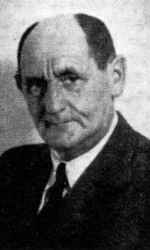
One of the first worker activists in Sokolow, one of the founders of the Jewish workers' party “Bund” in the town, a leader of the rebellion in 1905, he took an active part in community work and had a large influence on the worker and artisan masses. He would discuss things out loud but never had dislike for anyone, not even his political opponents.
|
When Hitler's army came into Poland, he succeeded in fleeing to Russia with his family and, after a few “cold” and a few “warm” years, was among the first liberated [Jews] to arrive in Erets Yisroel. Despite his being in his elder years, he set right to work.
Almost every Shabes, he went searching for the Sokolow Jews, wanting to know how each was doing, interested in each one and sharing his impressions.
“I am newly born”, he used to say.
He died at the age of 76 years.
[Page 745]
Avrom Shteynvaks (Shteynberg)
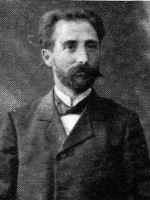
When he was born in 1899 in Sokolow, the recorder at the magistrate's office wrote in the books that to Hersh Osher Shteynvaks was born a son with the name Avrom Shteynberg, and so he did remain, and the official family name was Shteynberg.
In his youth, he studied in the yeshives of Brisk, Kobrin and others, and was a pupil of the “Khofits Khayim” [Rov Yisroel Mayer Kagan 1893-1933]. In Sokolow, he learned at the old study-house with his brother-in-law Shmuel Leyb Kats. Under his influence, he became a Zionist with all 248 organs of his body.
|
Disregarding the fact that he was very successful in trade, had arranged a beautiful home, and lived in high style in Sokolow, in 1925, he liquidated everything and moved with his wife, Khave, and a baby in arms to Erets Yisroel.
When he disembarked from the ship in Haifa, he bent down and kissed the earth and tears of great astonishment and joy poured from his eyes. Here he labored in the most difficult construction work in digging what would today be done with the help of machines, suffered from unemployment, and often went hungry.
When “Irgun Yotsey Sokolow” was founded, he was chosen as chairman and all the meetings and gatherings were held in his home.
He devoted life and limb to aid work and in creating the means, first, for an aid committee in the Jewish community and Sokolow, later for survivors who had found refuge in Russia, and, finally, for the survivors who had begun arriving in Erets Yisroel. When he got up from bed early one morning in 1946, he fell and never stood again. His wife, Khave, and daughter, Leye, and her husband and three daughters, lived there with us and took part in the work of the organization.
[Page 746]
Khenokh [sic] Dagin (Henekh Pshenena)
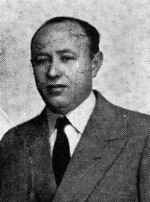
He was born in Malave. He lived for several years in Shedlets and when he came to Sokolow with his parents to live with his grandfather Reb Mendl Moyshe Aron, he was about 15 years old. The grandfather never let him out of his sight. The grandfather studied with him and took him everywhere. He prayed with him in the Ger Hasidic shtibl and put a great deal of hope in him. Henek [sic] met and made friends with the Sokolow youth, became active in the “Tsirey tsion” party, played the main roles in the drama society, and was a librarian in the library for a long time. Since the library was in Yitskhak Skole's bakery, when he filled out the questionnaire for a certificate to go to Erets Yisroel, he listed himself as a bakery worker. And he represented himself as such in Erets Yisroel. Thanks to our member Zelig Zaremski, may he live a long life, who was at the time (1925) secretary of the Bakers' Union, he got a few days' work from time to time in the bakeries of Tel-Aviv. He was a good comrade and friend, always joking and offering good encouragement.
He was also one of the founders of the Irgun Yotsey Sokolow and every year helped in the management of the society. He strove with all his might and brought over his mother, his father-and mother-in-law, but also, may she live a long life, his sister Nekhame, who is here with us now.
In 1950 when it came time to celebrate his 50th year and his 25th year of coming to Erets, he became sick with an uncurable illness and all efforts to save him were of no help. His wife, Rivke, his daughter, Devore, and sons, Moyshe and Menakhem, are in Israel.
Tsvi Beytsali (Hershel Tsibule)
In his childhood years, he was already orphaned of his father and so helped to support the family all his life. In 1915, during the German occupation of Poland, when almost the entire town suffered from hunger, he worked with the military and helped to provide food for the poor population. Jews and Christians knew the value of his good deeds.
He was one of the founders of the Tsirey tsion and chairman of the party in Sokolow. He took part in all the national and worker fund-raisers for Erets Yisroel. He was one of the most straightforward and trusted warriors for Zionism. Not having any money for the travel expenses for Erets Yisroel, he
[Page 747]
went to Germany and worked hard there for several years, and in 1924, achieved his goal: Erets Yisroel.
After years of being partly unemployed, he managed to get into
|
road-building and became one of the best tradesmen in Solel Boneh; but because of a serious illness he had to go into retirement.
Beyond the Sokolow landslayt society he had many comrades and friends. After much suffering, he died in 1956, leaving behind in deep sorrow his wife, Tova, and son, Mordkhe.
Khaye the Baker
In a cellar room at Berl Akiva's house is where they lived in recent years. They had a bakery there and labored hard regularly. They kneaded and baked all night, and during the day sold their pletsl and brown bread; ran to get an interest-free loan to purchase flour, yeast, wood and other things that the bakery required. The whole week they did not properly lie down to sleep, but caught a nap by the oven, by the “zshizshe”, or just while standing, or even while walking…
It was rare that anyone paid for the bread, but would very quietly say, “Khaya'shi, I don't have any money now”. With a smile, Khaye would answer, “Who mentioned money to you, go eat in good health”. When
[Page 748]
she noticed that some Jewish woman had not been in the bakery for a long time, she would say something in Naftali-Pinkhas' ear and Naftali-Pinkhas would take a loaf of bread, wrap it up, and quickly carry it away.
On Thursday, when Naftali-Pinkhas began preparing for Shabes. He was concerned about tea, sugar, milk, pieces of wood and coals, and Friday, very early, he lit the big copper kettle that was installed in the brick wall near the tiled stove. He also made the tables wider and covered the pot well so it would hold the heat, and then went to the Skiernievitshe shtibl to welcome in the Shabes.
On Shabes morning, hundreds of Jews came to drink a glass of warm tea. Besides plain tea, they also had tea with milk for those who didn't feel well. Women and children came too, with cups or little jugs in hand, to request a little warm milk for a pregnant woman or a sick person. All their children and grandchildren came to help out, as there was a lot of work: pouring tea and milky tea, serving the tables, washing glasses, taking the pots of milk from the tiled stove, and so on.
In 1916, when the Germans requisitioned copper and brass, they also took the big copper boiler from Khaye. Tishe b'ov found them at home: How would they be able to prepare the tea for Shabes; the Sokolow Jews could, heaven forbid, go without something warm. Their anxiety was indescribable. Yona the tinsmith came to their aid. He promised them that over the coming few days he would make a big kettle from tin, which would be no less than the copper one. When on Thursday evening several porters accompanied by Yona the tinsmith brought in the new tin kettle, Naftali-Pinkhas served whisky and appetizers. They drank a l'khayim, and soon after the evening prayers R' Dovid Miler came by to see the craftwork. After a whole night of hard work, the kettle stood ready to heat up at dawn on Friday. When Velvele the water-carrier filled the kettle with river water, Naftali-Pinkhas, with tears of happiness in his eyes, lit the fire under the kettle. Both of their lips whispered prayers of thanks to the Creator of the world for the great love, their faces beaming with happiness and the joy in the cellar was without limit.
by Leybush Rubinshteyn
Translated by Tina Lunson
Reb Pintshe
Outwardly–a teacher like all such melamdim, a long dirty coat with a thin sash wrapped around it, and as was the custom then, a cap with a vizor; he was in the Radzin shtibl on Shabes for the third meal to help sing Bney Haykhola.
The Radzin Hasidim supported him, sending him their children to study with and “make” mentshes of them. He had a kheyder for “better” children and despite that earned what all the melamdim did–bread and water.
It is hard to imagine the old-time khedarim today. The room where the children spent an entire day was also the teacher's apartment: a small, low-ceilinged room, sometimes in an attic, with two beds against the walls and in a corner, the kitchen. The smell of cooking carried through the small room. Only when the smoke from the chimney began to stink did they open a window halfway, and it was possible to see the blue sky. That is how Pintshe sat the whole day, and taught the pupils handwriting the Hebrew alphabet, blessings, and the goring ox.
Although the melamed must fulfill important, sacred obligations, he still did not occupy any important place in the society. The teacher felt that. Yet one could find a few melamdim who occupied an honorable place in the community, whose word was listened to and the respected; prince-like proprietors tried to find favor in their eyes.
Pintshe the melamed belonged to the teachers who learned with older children. In his youth, he sought the Tree of Knowledge; dreamed of a better world and another sort of life. The circumstances, however, forced him to adjust to the reality and although he was much distanced from his dreams, he was not ashamed of his path. He was good-natured, greeting everyone with a smile. After work he loved to get together with people. He cultivated the friendship of his pupils' parents and became house friends with them. It was no secret from him; he knew everything, people
[Page 750]
asked his advice about everything, as with a true friend, and he had resolved various conflicts in the community.
The doors were open to him not only in the circle of the Radzin Hasidim, but he also held a respectable place among the town Zionists. He was full of Zionism because, since his youth, he had lived with the ideals of changing the structure of Jewish life. He read Avrom Mapu and other writers of his time. While other melamdim found comfort for their hard life in belief that they were doing a sacred work, Pintshe could not be comforted with that.
He had great joy in the moment when he closed the holy books and went out in the community, where one could breathe the air freely and dream of a new world. One must also remember that when he came into the company of the Zionists, he risked his livelihood. He was between two worlds: he could not lose his dreamed of world of Zionism, and also not lose his environment–the Radzin Hasidim.
He died in the [Nazi-imposed] Sokolow Ghetto.
Reb Moyshe-Aron
His grey eyes bored deep into the soul of a person. A shake of his head, or a gesture with his hand, indicated more than a thousand words. He was a Ger Hasid although he never traveled to the Ger Rebi. He was the gabay in the Ger shtibl. On Shabes he stood by the reading table where men read the Torah, and the honors were in his hand. No one dared to offer him an opinion, he was then the highest authority. On Simkhes Toyre he assigned the hasidim their circuits of dancing with the scrolls; on Purim he went around with the red kerchief and collected money for hidden people in need. If one needed to write a note to the Rebi, a request for a cure for a patient, one went to Moyshe-Aron; he was an expert in that sort of writing. If he came to the hasidim about some matter they accepted him with great respect and tried to fulfill his desire. In family conflicts, the women consulted with Moyshe-Aron. He did not take his guests into the room where he studied with his pupils, but into the kitchen. His second wife, Ita-Dobe, left her place in those instances in order not to hear the secrets of another's house.
He always found his assistants who would manifest their religious observance.
[Page 751]
He was a talented narrator of stories about Good Jews as well as repeating teachings appropriate to any situation.
He was born in Sokolow between the First and Second World Wars.
Reb Zelik'l
Among the melamdim who were beloved by the hasidim, we must mention Reb Zelik'l. His family was generally located in Sokolow, but he, himself, spent his years with the Ger Rebi and taught the Rebi's children there.
He was also a teacher to the very rich hasidim in Warsaw and in Lodz. He was one of the regular “sitters” at the Rebi's table on Shabes and listened to the Rebi's teachings. When he came home for a holiday, the hasidim came to his table to hear Torah and stories about the Good Jews.
Reb Zelik'l was small and thin, walked a bit bent over and did not want to take up too large a place in the world; rather, with quiet steps, quiet words, not to disturb anyone.
He loved each Jew with his whole heart. When he was residing in his home, the big proprietors gave him their children to guide them in the hasidic ways. He was beloved by his pupils, to whom he told stories about Napolean and his wars with the Russian Tsar and about the quarrels of the “Holy Jew” [Y.Y. Rabinovitsh, 1776-1813] with the Lublin Rov, the “Khoze “ [”Seer” of Lublin, Rov Yankev Yitskhak Ha'Leyvi Horovits, 1745-1815]. But he did not stay long in our little town, the larger world called him. After a short time he traveled back to the Rebi and to his wealthy hasidim.
by Dr. Avrom Shpilman (Jerusalem)
Translated by Tina Lunson
The Sokolow Musician
My father, Moyshe Khayim Shpilman, was born in 1873 in Vengrove and reared by poor parents. His grandfather, Barukh Nosn, stemmed from Kobrin (Polesia) from where he, due to his part in the Polish Rebellion in 1863, fled to Vengrove. There he married and established a home. According to stories from the older people
|
he ( the grandfather) was a rare player of the fiddle and bewitched his listeners. He would sit back and play out enchanting melodies on a little fife. His talent was inherited by his grandson Moyshe Khayim. The other children–sons and daughters–were not great artists in playing, except a few did became instrumentalists.
My grandfather, Alter the klezmer, was not very knowledgeable in his trade. He played with a few others at Jewish weddings. From early childhood, the son showed a curiosity in
[Page 753]
the fiddle, which was then not appropriate for his size. But he did learn about the instrument in every detail, even teaching himself, and gathered materials and made a whole fiddle himself. After becoming bar-mitsve, he left his parents and set off wandering the world; seeking out the famous instrumentalists of the day so as to learn from them. In those years, in the town of Pultusk, lived the famous musician Leybke Skshiptse, also known as a music theorist, who composed music of his own, recreated various animal voices on the fiddle, and so on. Khayim Moyshe then spent several wonderful years in Leybke environment, learning to read and write Yiddish and Russian, and even speak it, which was unusual in those days; but the point was that at 16 or 17 years of age he was already known as an accomplished musician.
Overcoming conscription into the tsar's military, which he was able to sidestep, he married a girl from Ostrów, Khave Beyle, a good seamstress, settled in Vengrove, and organized an orchestra under his leadership. In 1903 he left Vengrove and settled in Sokolow and renewed his band.
Then, still a young man and a fervent supporter of the early Zionist groups, he subscribed to all the Zionist journals and newspapers of the time in Yiddish: “Der Yud”, “Di Velt”, as well as the first daily newspaper “Der Fraynt” (printed in Petersburg).
At the beginning of the 20th century Sokolow was a backward town, without any cultural institutions or school. Quietly the “Bund” began to rise on the Jewish street, and a little later, the “Poaley-Tsion” movement, in which Khayim Moyshe actively participated. His circle gathered at Leybish Rubinshteyn's, and also included Note Finklshteyn, Gad Zaklikovski (Godl), Mendl Lashitski, Yankl Tikulski, and the woman Zlote Butshe's and one of her cousins and Devore'le Rubinshteyn. They read Yiddish literature aloud, chatted, and discussed various timely news and politics.
Since Khayim Moyshe had a significant number of Yiddish books and journals, he created a lending library and for a few groshen a month one could take out a book to read. Thanks to that, the afore-listed young people gathered at the house. The library possessed, according to the concept of those times, a completely respectable treasury of literature and books.
Once, just before the First of May, they even sewed the red flag
[Page 754]
with revolutionary slogans. All this, of course, very conspiratorially; one person stood on watch outdoors and guarded against a malicious eye…
That was an uneasy time, and Khayim Moyshe packed up almost all the books and buried them in a garden behind the house out of fear of inspections by the police. Then the cholera epidemic broke out, and his wife, Kahye Beyle, died at age 32, one of the first victims.
He was alone for a year with five children; then he married one of Leybke Mandlboym's daughters, Alte Nemi, with whom he had three daughters (three of them live in America today). Also all his children were musicians. One son, Yosele, then 7 years old, he used to take with him to play at weddings or balls. He had to place him up on a table and he played the most difficult musical pieces. That young musician later sought a music education with the Warsaw Philharmonic Orchestra and today conducts a radio orchestra in New York.
Khayim Moyshe was known as a musician in the entire area of Sokolow and Podliash, among Jews and non-Jews.
With the inflation after the First World War, Khayim Moyshe sold his house, and, because of the depreciation of the currency, lost everything. He suffered greatly from that and that brought about his early death. He died at the age of 51.
by Kh. Bar-Shalom (Givatayim)
Translated by Tina Lunson
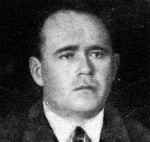
He came from a poor hasidic house and in his early youth he was taken away from study to help his parents support the family. But Abish possessed an in-born life-wisdom with which he acquired his position in life and was among the activists in the Poaley-tsion (Right) Party in town. He did his work without noise and almost never appeared in public–yet people listened to his point of view. He was a logically-thinking person; his quietness and moderation were persuasive.
He belonged to the Party more than ideologically, but fraternally. He bore the yoke of aid for every needy member, especially concerning himself–along with Yitskhak Zaremski–with the members making alia [to Erets-Yisroel].
|
In 1932 when zoological antisemitism began to rage in Sokolow (as in all of Poland) and pickets appeared in front of Jewish shops, Abish was one of the initiators in founding Jewish self-defense groups. When he was called before the authorities about it (he was denounced) he answered bravely: “If the authorities cannot guarantee our lives, we will do it ourselves.”
[Page 756]
In 1937, when the rage of antisemitism was rising from day to day, Abish was one of the first to utilize the slogan, “Let us flee from here to wherever our eyes lead us”. And when the gates of Erets-Yisroel were locked, he left for Argentina, at first alone. He struggled hard and barely managed to bring over his family in the last months before the outbreak of World War II.
There, he also, despite the difficulties, dedicated himself anew to his community activities.
After the emergence of the State of Israel, the old dream of returning to the Land of Yisroel was awakened again in Abish. So, without letting his good economic situation stop him, he decided to make alia to Israel. First, his wife, Khane, and the children made alia, then later he himself.
With joy and renewed courage, he set to building his life in Israel; but his sudden death interrupted this life, leaving behind a deep sorrow for all his friends and relatives.
by K. Giser (Givatayim)
Translated by Tina Lunson
Yidl Grinberg's origins were in Sokolow. His father was Yankele Broker, who used to repair watches for the peasants around Sokolow.
|
Yidele Grinberg (or “Zshidele” as we used to call him) was not my ideal buddy. But he was my good friend. I met him around 1927. My first encounter with him took place after one of his numerous presentations on general and trade gatherings of the professional union of Jewish tailor workers in Warsaw. His presentations against the direction of our union were always sharp.
Very different, however, was Yidele's opposition to our leadership; he was an anarchist. The influence of anarchism on the Jewish tailor-workers in the Warsaw of that time was very small, and Yidele knew that very well. Thus, his presentations were not motivated by any aggressive or political goals, but for the improvement of the economic situation and to reinforce their social position. Yidele's speech was honest and sincere.
[Page 758]
When Hitler attacked Poland and almost all the politically active Jewish workers had to “hit the road”, it turned out that we were all fleeing on one hellish road along with Yidele. After a devilish air attack when Nazi bombs literally hailed on us from overhead and each person ran to hide in a different hole somewhere, Yidele had disappeared from our eyes and I never saw him again, even to know whether he was still alive. Only some years later when I accidentally found one of my surviving relatives, did I find out about Yidele Grinberg's tragic end.
For unmarried young men, the living in those years in the Asiatic lands in the Soviet Union was very painful. Both Uzbekistan and Kazakhstan had an old barbaric custom of not allowing into their homes any strange man, even for one single night. And just as thousands of other young Jewish men, Yidele became homeless and sick–without a roof over his head, without a warm spoon of food. With his last strength, he dragged himself one grey morning into a courtyard where his sister lived, and on the hard stones, not far from her threshold, Yidele coughed out his soul. When the sister went out that morning to go to work, she nearly fell over the exhausted body of her dead brother.
So Yidele was lost, a young victim.
All of us who knew him will always mention Yidele's name with respect. His trade-brothers, the members of the one-time professional union of Jewish tailor-workers in Warsaw will, with a tear in the eye, remember “Zshidele's” fiery presentations and they will hold his memory dear.
|
|
JewishGen, Inc. makes no representations regarding the accuracy of
the translation. The reader may wish to refer to the original material
for verification.
JewishGen is not responsible for inaccuracies or omissions in the original work and cannot rewrite or edit the text to correct inaccuracies and/or omissions.
Our mission is to produce a translation of the original work and we cannot verify the accuracy of statements or alter facts cited.
 Sokołów Podlaski, Poland
 Yizkor Book Project
 JewishGen Home Page
Copyright © 1999-2026 by JewishGen, Inc.
Updated 14 Jan 2026 by JH