 |
|
[Page 301]
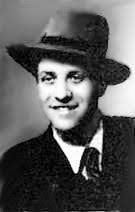
by Yitzchak Rabinowitz
Translated by Roslyn Sherman Greenberg
|
I was in the Lida Ghetto from its beginnings until the last day of its existence – the sad day of September 17, 1943, the day of the total liquidation of the Ghetto. I was lucky to remain alive, running from the path of the boxcars which carried away the last residents to Meidenek.
The Germans said that they were taking us to work in Lublin. On that unforgettable, sad day I lost my whole family. I want to tell you about two episodes from that horrible day.
On one of the frosty days of the winter of 1941-42 I had not gone to work because I didn't feel well and was running a high fever. Lying thus, near the low window, in the cold house, thinking, looking outside, I saw two armed gendarmes driving the famous teacher from the Lida Povshekner Shul, Lichtman, on his final journey. He was the chairman of the first Judenrat.
One of the gendarmes was Sobolevsky. Lichtman was very pale, his hands behind him in handcuffs. Several days later his tortured corpse, along with the tortured corpses of several other members of the first Judenrat, were brought to the section of the Ghetto on Petovsky Street, where they were buried in the Jewish cemetery.
Now, about my experience on a summer day in 1943, before the liquidation of the Lida Ghetto.
I was going from work in a work gang along Fabritshine Street. There was the headquarters of the Whites. These were members of the Hitler Youth. They stopped us and held a search to see if anyone was carrying any products into the Ghetto. They found potatoes on me that a Pole had given me. They took me out of the work gang and brought me into the headquarters. There they ordered me to read an anti-semitic placard on the wall. After each sentence they rained blows on me from all sides. My face became swollen and full of bruises. Then they ordered me to undress and lie on a table. They put a sack on my head and told me that I would get 25 blows, and that each time I would make a cry or a groan, I would get the same amount of blows again until I would remain still.
From both sides they started beating me with long whips. I bit my lips and kept silent. How many times they hit me, I don't know. When they told me to stand, I could barely stand on my feet. I was half-conscious. Then they ordered me to clean up the courtyard, which had a fence, and in the entrance there was a post. I understood that they weren't going to let me leave there alive.
While I was cleaning the courtyard, I noticed a German enter it. Not having anything to lose, I went over to him. I told him that my family was starving. I was bringing them a few potatoes from work, and because of this they had arrested me.
He had me freed, gave me back the potatoes, and brought me himself to the gate of the Ghetto. It was my luck to meet a German with human feelings.
It was hard for me to sit for many weeks afterward. The 17th of September 1943 the Ghetto, which contained the small streets of Postovsky and Chladne, was encircled by a German military unit of gendarmes and S.D.-men. The Ghetto police said that the Germans ordered that we should take whatever we could carry, go out of the houses, and stand in groups of 50.
The German guard stood in two rows, one outside the fence and the second inside, in the Ghetto. Before going to stand in the group I told my sister, of blessed memory, that she should go over, with one of her friends from Voronovo, to a German soldier and ask him where they were taking us. They did this, and I heard his answer, that they were taking us to work in Lublin. Later, the Germans began to lead one group after the other to the boxcars.
Our family and the Kamienietzky family were in one group. I saw how the leaders of the workrooms, Altman and Alperstein and also the Commandant of the Jewish Ghetto police Stalitsky, stood with their bundles on their shoulders in one of the groups.
At a certain moment, a great hole with corpses came into my mind, and I was in the middle, and the earth started pressing on me and sticking. At that moment an overwhelming strength gave me a push. I threw the sack with my clothing off my shoulders and began to run. I ran into a house that was emblazoned with yellow Mogen Davids in back and in front. There were several men there. One asked me in Polish what I need there. Driven by momentum I ran out and into a barn near the house. There was a pile of dried turf. I wanted to dig myself into the turf, but I saw that it was impossible. I went out of the barn and saw a heap of dung overgrown with long wild grass. Lying there were also pieces of rusted sheet metal. I dug myself deeply into the dung and covered it with sheet metal.
At one time, as I lay there, an S.S. officer passed by. I was lucky that he didn't have a dog. I lay there until evening. At night I met 4 other escapees, among them Movshovich from Lida, who had had a booth of second-hand clothing in the marketplace. To add to our worries, a full moon lit our dark world. We decided to wait until morning.
At daybreak we divided into two groups. Two other escapees and I went first. Behind us, at a distance, went Movshovich from Lida with a boy, a refugee from Poland. His name was Shliamush.
We had to go through one part of Suvalsky Street and were afraid to be noticed by passersby. If we saw someone coming toward us, we crossed to the other side. At one time we heard a cry of “Halt”. We didn't stand still but went in the direction of Lida Street.
I found out later that the area Commandant had stopped the two behind us and had taken them to the boxcars. Shliamush was able to run away from the boxcars, and he told me this when I met him later in the woods.
We went through Lida Street. I threw a petrified glance at the small mound of our house. We crossed the small river Lidzeike, the small town Ruslaki, and went into the woods. I glanced back in the distance and saw from the abyss, my family, my forever lost family.
In my memory, I parted with the neighborhood which was bound up with my golden childhood years. I couldn't cry because my heart was turned to stone and my blood curdled. I cried myself dry at a later time, after many years.
We went deep into the woods, and after a while came to the partisans.
[Page 302]
by Chana Movshovitch
Translated by Roslyn Sherman Greenberg
This happened in September 1943. Quite early the Ghetto on Postovsky Street was encircled by the S.S. Polish police and soldiers with machine guns in their hands.
There were then in the Ghetto about 4,000 Jews from Lida and the surrounding shtetls. The S.S. started to drive everyone without distinction to the railroad station and loaded them into the boxcars. It was hard to run away since they would be shot right away. Many hid in cellars, but they were all caught. By chance my brother Eltchik went into a house and noticed a cellar. From the cellar there was a tunnel dug all the way to the foundation. The tunnel was six meters long. About ten people were already sitting in it. He quickly got out, took my mother and Chana, and we entered the tunnel. Quickly more people ran in. The S.S. noticed the path, and started searching in the area. However, they didn't notice the tunnel. They opened the cellar door, and not seeing anyone, they departed and left behind Polish police so that no one should hide in the cellar.
In the evening already no Jews remained in Postovsky Street. Only Polish looters came to take the little Jewish goods that remained.
It was dim. The people who sat in the tunnel began to dig further and made an opening under the house.
It was already dark outside. The second house was 15 meters from the river. One by one we slowly went out and crossed the river. The water reached as high as our necks. My mother was carried across.
When the Polish police heard a noise they began to shoot. Four people were killed, but ten saved themselves and entered the road through the fields on the other side of the river. We finally reached the woods. We walked for two days and slept under the free sky. When we went deep into the woods we met partisans from Bielski's Detachment and thus we were rescued.
by Fishel Bialovroda
Translated by Rabbi Molly Karp
At the outbreak of the German-Polish war I was in Warsaw and I participated in the defense of the city.
After the German conquest I was witness to a scene like this: a Jew carrying water from the Visla River. A German approaches him, pours out his water, hits him, and shears off half of his beard. In that moment I decided to flee from the German regime.
At the outbreak of the German-Russian war I was in Lida. With the entrance of the Germans into Lida I moved to Radon. In Radon Kotliartchik (killed by the Partisans) stood at the head of the police. I lived in his house on the basis of Aryan papers and I opened a barbershop.
In December 1941 the first slaughter was carried out in Eisishok. Before the mass murder of the Jews Kotliartchik came to an agreement with the head of the police in Eisishok, that he would receive the horses of the slain Jews. At that time Kotliartchik received an order from the regional Commissar in Lida, to send 10 policemen to Lida.
On the next day Kotliartchik needed to travel to Eisishok to receive the horses. Kotliartchik forced me to travel with the three policemen that remained in Radon to bring the horses from Eisishok.
When we arrived the slaughter was in full force. I saw how they were chasing my friend Podolsky with his wife and children to the area of death.
My heart was broken within me and I could not take it anymore. I caught the first two horses and I fled with them to Radon. The other three policemen remained in order to participate in the slaughter.
In Radon Kotliartchik informed me that they were preparing the slaughter in Lida. I immediately set my steps towards Lida. At that time the concentration of the Jews in the ghetto began. The Judenrat in Lida proposed that I serve in the role of policeman. I put off this offer and moved to the barracks.
On March 18, 1942, the ghetto was surrounded and the men of the Judenrat were imprisoned. Among them were: Lichtman, Kotok, Tzidrovitch, Sokolovski. They were imprisoned for eight days and were tortured with the tortures of hell.
One day an order was received to send wagons. We already knew beforehand, from the mouths of the Jews who worked in the prison, that the wagons were intended for transporting the bodies of the members of the Judenrat.
I was among the wagon-movers. They put us into a stable and there the 24 slain men were revealed before our eyes. Some of them were still dying. All of them were without outerwear. We were forced to load the bodies on the wagons, cover them with straw, and our clothing. The Germans forced us to sit on the corpses and transport them to the ghetto.
From the ghetto we transported the bodies to the cemetery and there we buried them in pits that had been prepared.
At that time 15 Jews were also shot because they were a quarter of an hour late for work.
On May 8 in the morning, 1942, the Jewish and Polish police expelled all of the Jews from their houses and concentrated them in an empty lot across from the Judenrat. There a selection was organized. 5600 were directed to the right towards death, and eight hundred who were directed to the left were designated to remain alive.
Those who were directed to the right were pushed with rifle barrels and shots towards the pits, and many were shot on the way. I with my brother and my brother-in-law were directed to the right to the side of those sentenced to death.
Upon hearing the shots I said to my friend Bobka Shtzitnitzki: “We will make a way for ourselves through the first lines and see what is being done there.” When I got near the first lines I saw that people were already dressed only underwear and the policemen were pushing them towards the pits.
In that moment I began to retreat and try to flee. The guards were Poles, Lithuanians and Germans. I saw how the murderers took a nursing infant from the arms of its mother, threw him up in the air, and caught him with a bayonet, while an S.S. man filmed the scene. From an abundance of anguish the woman ran to her husband and tore off part of his cheek, and he remained standing motionless. The murderers fired at the woman and killed her on the spot.
Afterwards they ordered all the women to set their children on the ground. Children were removed by force from those who refused, thrown into the pits, and torn apart by grenades.
At first I hid in the pile of clothing, after some time I came out and turned to Shtzitnitzki with a cry “let's flee!”
My cry reached the ears of a German who had a death skull on his hat, and he caught Bobka and me by our necks and moved us towards the pit. He shot at the head of Bobka Shtzitnitzki and entirely hacked him to pieces, I fell into the pit and was wounded by a bullet in the spinal cord.
At first I began to move around so that the murderers would sense me and kill me, at that moment I felt that my strength was still with me.
Meanwhile the shooting stopped, since a second group was preparing to take of their clothing. I got up on my feet and I wanted to go out, but the pit was too deep. I piled the bodies up on top of each other, and on top I put the body of a child, and I jumped up from the bodies. I my emergence from the pit I encountered a Lithuanian guard, grabbed a rock, and struck him in his eye.
I began to run in the direction of the ghetto. A rain of bullets came down towards me. A Polish policeman, Vatzek Yanush, who was beforehand a good acquaintance of mine (we served together in the Russian militia), chased after me. When he saw me he lowered his rifle and ordered me to enter the house and he hid me in the basement.
At the time of the escape my brother and his wife met me, and he too ran after me and came across Vatzek Yanush. Vatzek pushed him together with his wife (she went afterwards towards the pits and was killed) into the basement, and dumped a bucket of excrement on the basement doors.
After the policeman left the house another Jew and a young Soviet woman, Reika, hid in it, who afterwards joined the Partisans. We lowered Reika down and a Jew went up to the attic. After a short time the Jew was caught by the Germans who penetrated the house and tortured him to death. They did not reach us and they did not open the basement door, because of the excrement that was poured on it. And thus we were saved.
Six days we lay in the basement. No food entered our mouths. I was tortured by thirst, then my brother gave me some of his urine to drink. My brother found a rotten potato, cut it, and gave it to me to chew and spit out, and this saved me.
On the sixth day we heard that the Polish population was looting the houses of the Jews. We refused that the Poles would enter our houses, then my brother decided
[Page 304]
to emerge from his hiding place. As he went out he encountered a Polish policemen that he knew – Kovalevski. That one commanded him to immediately leave the area of the ghetto since in about an hour other policemen would come to take his place.
My brother took me out of the hiding place immediately and we entered the house of Marousia, a Polish acquaintance of ours.
She took care of me for five days. She washed and bandaged my wound. On the next day she took me to the hospital while placing her brother's passport in my hand. In the hospital a Jew, Dr. Miasnik, worked, and also the director Sinkeivitz was my good acquaintance from before the war.
It became clear that the bullet had wounded the intestines. They immediately brought me onto the operating room, and the surgery took 3 hours and 20 minutes.
I was operated on by Dr. Miasnik. I lay two days with a high temperature and my life was in danger. On the second day I dreamed that a German wanted to shoot me and my father grabbed him with his hand and said to him: “Don't shoot!” In that moment I woke up and it became clear that my temperature had gone down.
For two months I lay in the hospital. For six weeks they fed me by injection. In the seventh week a captured Russian Partisan was brought to the hospital, apparently a former Captain.
The next day the Commissars Koltko and Guterman approached my bed and asked: “here lies the Partisan?” Dr. Miasnik answered “No, the Partisan is lying in the next bed.”
They approached him and asked him how did he lay the mine? And what does he have to tell? Then he grabbed a bottle and patted the Commissar on his face as he said: “I will tell nothing about my brothers.”
In his desire to prevent a conflict, Dr. Miasnik explained to them that the Captain was in a state of narcosis.
Meanwhile I introduced myself to the Captain and told him who I was (I used to bring him tobacco and food), then he revealed to me too that he was filling the place of the Commander of the Partisan regiment. He advised me to go to the village of Dokudova and join the Partisans.
When I left the hospital I entered the ghetto. I was very weakened. Many had already made connections with the regiment of the Partisans and I too wanted to join them, but the friends did not want to take me with them, since I was disabled. I spoke with Reuven Matlovoski and we turned to a poor Polish woman Stanislava Kizdrova who would hide us in her house. Together with Matlovoski, his wife and son, we went down to the basement of the Polish woman. The basement sprawled under the entire house and it was very low. With difficulty we were able to sit. To stand was impossible.
In that house also lived her husband and her daughter, a Gestapo man Zeitz, and a prostitute – Yozsha.
We gave Kizdrova money to buy necessities and she would prepare food for us.
After the matter became known to Zeitz and Yozsha, they began to demand money from Kizdrova by threatening her that they would inform the Germans about her. Since Kizdrova was not willing to pay them they informed on her.
Two cars full of policemen arrived and conducted a search in Kizdrova's house. Kizdrova and her young daughter fled to a church and only her old husband remained in the house.
The Germans beat him, wounded him, but they could not get a thing out of him. They went down to the basement, knocked on the walls with their rifle butts, they even brought dogs with them, but they did not find anything.
After the search we decided to leave the hiding place and go out to the free air. This was already at the end of the summer. In my departure I could not stand on my legs, I wobbled like a drunk. And this was also the fate of my neighbor. With the remnant of our strength we penetrated into the ghetto.
Matlovoski and his wife fell ill immediately after they reached the ghetto. He died and his wife was killed by the Germans. Only the son remained, and afterwards he joined the Partisan regiment.
While I was in the ghetto I spoke with the friends Reuven Rubinstein, Avraham Faldon, Levit, Yosef Zulkovitch (fell in battle with the Germans) and another 7 friends, and together we went to the Partisan regiment “Iskra.” In our hands were three rifles and one pistol.
The regiment that we got to was willing to accept only me, and the rest turned to other regiments.
by Naftali Kaminitzki
Translated by Rabbi Molly Karp
Jewish Lida ceased to exist. The vibrant life of tens of thousands of Jews is forever silenced; the existence of a large spiritual center has stopped, which included an extensive network of schools, a yeshiva whose name rose to fame, and many synagogues; youth movements imbued with the spirit of the Zionist-national redemption.
Already on September 18, 1939, with the entry of the Russian army into Lida the end had come for Zionist activism in the city. The Hebrew schools were liquidated, and the ancient and magnificent synagogue was turned into a warehouse for produce.
The Russians began the spiritual destruction of the city, while in June 1941 the Germans began its complete and final destruction. On June 27, 1941, at 6:00 in the morning troopers of Nazi Germany flooded the conquered Lida, and already on the next day 96 of the important and educated Jews were taken out for killing. Among them were many teachers and also the Director of the Tarbut school Baruch Sternberg, may his memory be for a blessing.
With the expansion of the front and the departure of the army the actions of the German civilian regime began, under the leadership of the regional Commissar Hanbeg. The Germans were organizing Polish Belorussian police. At the order of the regional Commissar the Judenrat was formed, which included 24 Jews led by the former teacher Lichtman.
Most of the men of the Judenrat, as opposed to the Judenrats in other cities, were admirers of the Jewish population and its friends, and acted within the best of their ability to help and save at the time of every trouble and tragedy.
New decrees appeared in the mornings, it was forbidden for the Jews to walk on the sidewalks, a heavy tax was imposed on the population. Every non-fulfillment of an order was followed by a death penalty. Already in the beginning the local authorities wanted to create a ghetto for the Jews. But thanks to the efforts of the Judenrat and bribes, the execution of the decree was prevented.
Fall 1941
Women and children are sent under the supervision of the Polish Work Directors to clean the streets of the destroyed houses. On the way to the forced labor they would
[Page 305]
frequently encounter the Hitlerist Verner accompanied by his cruel dog. He would urge his dog on with beastly screeches: “Human, catch the dog.” And the dog would attack the unfortunate Jews and tear pieces from their flesh.
Winter 1941/42
Despite the efforts of the Judenrat and the heavy taxes that were imposed on the Jewish population in December 1941 the degree about the creation of the ghetto was published. The city limits remained after the fire, and they were determined as the places of the ghetto. Three separate ghettos were created, one in the “Piaskes” area, the second in the “Kosharova” area, and the third on Postovska and Kropova Streets. This was around the beginning of 1942.
Also the Jews of the nearby towns; Zhirmon, Beilitza, Niemann and others, were brought to Lida.
A strict prohibition was imposed against Jews living together with Christians under one roof. On every door of the houses in the ghetto it was necessary to draw the ancient Jewish symbol: “Shield of David.” In the houses terrible crowding prevailed. A prohibition on the use of meat and fat began. Afterwards there also began a prohibition on bringing in bread and potatoes. The daily portion of bread that was determined for each person was 12 decagrams.[1]
Residents of the ghetto were taken out in groups every day for forced labor. Every worker received a work certificate that would be frequently exchanged.
When terrible news began to arrive about the mass slaughters in Vilna and Lithuania, from the mouths of Vilna refugees who escaped to Lida, the Nazi murderers would tell the Judenrat that these were the doings of the Lithuanians, and in Lida such a thing would not happen.
Spring 1942
Suddenly 75 Jews were imprisoned who worked in loading weapons in the “Boitonlager.” They were suspected of transferring weapons to the hands of Jews. In the city great anxiety was felt along with an expectation that something was about to happen.
On the night of May 7-8, 1942, all three parts of the ghetto were surrounded by Belorussian, Ukrainian, Lithuanian, and German police. The Jews were chased out in the night and under a hail of blows were forced to advance in straight lines towards the pits that waited for them beyond the city.
They were forced to remove their clothing by themselves, to arrange them, and afterwards to enter in groups of forty to a pit. Small children were thrown into special pits and grenades were thrown at them. For the mothers and children it was not permitted to enter one grave. Bleach was poured over the bodies whose souls had not yet left them. Only a few managed to escape and reach the hiding places of the forest.
On the next day a group of Jews was sent to cover the pits of their relatives and dear ones, many of whom were still breathing and hovering between life and death. Over a number of days the ground cracked open and streams of blood seeped out.
The clothing of the murdered was collected by the Germans in the “Erdle” galoshes factory. The good clothing was sent to Germany and the rest was sold to the Gentiles.
A similar slaughter was conducted in every district of Lida (Regional Commissariat) in the towns; Voronova, Ivye, Radon, Zheludok.
News was published in the German newspapers that a battle with Jewish robbers and Partisans took place, and 18,000 of them were destroyed.
The remnants of the Jews from Lida and the adjacent towns were concentrated afterwards in the areas of the following streets: Postovska, Chalodna, and Veiska, the place of the Jewish cemetery.
Thus concluded the chapter of the first destruction and the most tragic in the history of Jewish Lida.
Jewish Partisans
Very slowly rumors about Jewish Partisans spread, and about the four Bielski brothers who were taking vengeance for the blood of the Jews that was spilled. In the ghetto they began to seek ways to get to the Partisan stations, and how to obtain and create weapons. This was not one of the easy things. Even getting out of the fenced ghetto was fraught with mortal danger. When the police sensed preparations to go out to the forest they made it known that if someone escaped, they would wipe out all of the members of his family.
Despite all the threats the youth were secretly creating weapons, in the German factories, finding its way to the Partisan camps, and causing the deaths of Nazis.
New of the slaughters in Novogrudok, Baranovich, Minsk, Grodno, incessantly arrived, along with news of the revolt in the Warsaw ghetto. All of this encouraged and spurred on the youths who remained to escape from the ghetto and take vengeance. Whole families would slip away in various ways in secret and reach the forests.
The Partisan movement began to leave its mark, and the Germans began to feel it more and more.
It should be noted that anyone who did not have a weapon in his hand could not be added to the ranks of the Partisans, and this fact weighed very heavily, and stood as an obstacle on the path of escape and salvation.
And here an additional tragedy occurred. In August 1943 an assault of 40,000 German soldiers began on the Partisan cells in the forests. Many of those who had fled returned to the ghetto in the wake of the hunt mentioned above, and many who were already ready to go out on the road were deterred at the last minute.
Almost daily there arrived news of the explosion of trains and other acts of vengeance that the Partisan regiments of Bielski and others carried out. Once a group of Partisans from Lida approached the train tracks that were near the ghetto and blew up a train. Binyamin Baron, Leib Fardman and Yehuda Dagotzki, who was killed afterwards by the hands of Polish murderers, especially excelled in acts of heroism. They blew up tens of train cars.
There were also instances when the Partisans succeeded in penetrating into the city and killing Polish and Belorussian policemen.
The Last Slaughter
On September 17-18, 1943, the ghetto in Lida was surrounded. The official German announcement said that all of them were being sent to work in Lublin. But the road led to Majdanek. They put the approximately 3000 Jews who survived into sealed freight train cars. Individuals managed to save themselves by jumping out of the small windows that were in the cars. Their number reached a few tens, and they found a place of shelter in Bielski's Partisan camp.
Special thanks and recognition are due to the Bielski brothers, since thanks to Tuvia Bielski and his regiment upwards of 1000 Jews were saved, among them old people, women and children from various cities in western White Russia. Likewise their daring deeds raised up the pride of Israel and elevated Israel's honor.
The woman Kartchmer, who jumped from the car not far from Lublin, transmitted the final tragic regards from the remnants of the Jews of Lida who were transported for slaughter, and were offered up as victims on the altar of the Nazis and the fascist Germans.
Translator's footnote:
by Miriam Yungman Slonimtchik
Translated by Rabbi Molly Karp
I am only coming to add to the conclusion of the chapter that was concluded with quite a number of Vilna-ites who were in the Lida ghetto being taken out to be killed.
Three of them fell to the ground before they were shot and remained lying among the dead, stained with their blood and lightly wounded. After the murderers finished their work the three succeeded in escaping from the prison with each man holding on to his neighbor's shoulder in order to get to the high wall of the prison. They escaped while they had on only nightshirts and underwear.
We lived then in the Piaski ghetto together with the Shneler family (Batya and the son), father's sister – Zelda, and three refugees from Vilna who fled from the ghetto in their time and managed to hide during the time of the selection. Together – 11 people in a dwelling of two tiny rooms and a kitchenette. In the middle of the night, we heard knocks on the window, and when we opened after hesitation and fear, we saw to our astonishment the three who were fleeing that as far as we were concerned were returning from the afterlife.[1] From among the three I personally recognized only one, and he was friend from the learning bench[2] of our Shulamit. His name was Moshe (Moska) Perlstein. He fled with his father from the Vilna ghetto only to be caught in Lida. This Perlstein told us about their escape while noting that they wandered in the ghetto and reached the doctor Stolovitzki who lived not far from us, and he was afraid even to look at them, much less bind their wounds. Our Shula tended to the three of them, washed and bandaged them. Afterwards we gave them clothing to wear. On the next day in the morning it was Shula who went, as it were, to identify the dead who were brought from the prison for burial. On the grave of Moshe's father she also added the name of her friend.
The three spent another few days in Lida, until Shula managed to penetrate into their dwelling, to take out a few belongings, to sell them and pay for the continuation of the way. They continued their way as Gentiles, without the yellow patch.
I do not know for sure what was the fate of the three, but the story will be a faithful witness to the heart, the courage, and the magnificent personality of (Shula) Shlomit.
Translator's footnotes:
by Dr. S. Remigolsky
Translated by Lance Ackerfeld
After my family in Vilna was massacred, I escaped to Lida in 1941. I was sent to the Regional Council (Gebietskommissariat) to work as a translator in the main forestry office in Juraciszki near Lida. Leopold Windisch was in charge of the office and together with this he was also the acting Regional Commissar (Gebietskommissar) in Lida. During his frequent visits to the forestry office in Juraciszki, and the hunting operations that took place there, in which I was forced to act as translator, I had numerous opportunities to speak with Windisch. Windisch believed that I was a Pole and perceived me as an educated man, and expressed to me his political views and his opinions of Judaism and the Jews. He stressed that from a national socialist viewpoint the Jews should be rooted out and his task in the sphere of Gebietskommissar in Lida was to carry out the merciless extermination of the Jews of Lida. Likewise, he would reiterate in my presence that irrelevant to the Nazi ideological stance, though taking into consideration the situation on the Eastern front, the extermination of the Jews was a military necessity. To my question if this verdict applied to women and children, as well, his reply was in the affirmative.
On one clear spring day in 1941 Windisch appeared in Juraciszki leading an extermination squad whose object was to reach Ivye. He announced that he would travel to the town of Ivye in order to kill the Jews following a selection that he himself would make. On the way back from Ivye he was delayed in Juraciszki and said that before carrying out the murders, he had separated the Jews into two groups. The first group was murdered immediately and the Jews of the second group were kept alive temporarily. The second group were stronger and they would continue to exploit them as a work force. However, together with this, he emphasized that the fate of these Jews would depend on the situation at the front and in his opinion; no Jew should be left alive.
I was also present when Windisch spoke with the head of the Juraciszki-Welski(?) council. He ordered him to send a transport truck to Lida and return with large quantities of lime to pour over the murdered bodies in order to prevent plague.
Leopold Windisch was reknowned in the field of Regional Commissar (Gebietskommissar) and was located in close contact with the Gestapo and would frequent jails in Lida in which Jews were regularly executed.
Remark:Dr. Shimon Remigolsky gave this testimony in Munich, Germany on the 16th of October 1947, in the presence of the central committee of the liberated Jews in the American occupied area.
|
JewishGen, Inc. makes no representations regarding the accuracy of
the translation. The reader may wish to refer to the original material
for verification.
JewishGen is not responsible for inaccuracies or omissions in the original work and cannot rewrite or edit the text to correct inaccuracies and/or omissions.
Our mission is to produce a translation of the original work and we cannot verify the accuracy of statements or alter facts cited.
 Lida, Belarus
 Yizkor Book Project
 JewishGen Home Page
Copyright © 1999-2026 by JewishGen, Inc.
Updated 29 Jun 2026 by LA