 |
|
|
[Page 275]
by Dr. David Jakubowicz – Tel Aviv
Translated by Sara Mages
|
|
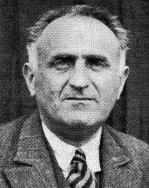
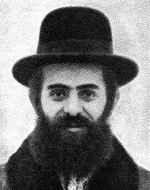
| Rabbi Dawid Awigdor |
Rabbi Dawid Awigdor
I would like to complete the biography of Rabbi Awigdor in a few words.
He became the spiritual leader of Andrychów's Jews immediately upon his arrival to the city. This city, which was partly indifferent to the Zionist idea and also assimilated, began, under his influence, to turn slowly into a Zionist city until all of its residents were enthusiastic Zionists. His patriarchal character made a huge impression during his appearances, and indeed, he won the honor and appreciation of all the members of the city. His speeches, in which he preached adherence to tradition and observance of the Sabbath and the commandments, were often heard in the synagogue. The Rabbi wasn't afraid to tell the truth and condemned unjust acts. He spared no effort to spread the Zionist idea and inspired his listeners to immigrate to Israel.
He participated in all of the celebrations of “Maccabi”, encouraged the movement to continue its work for the youth and their health, and was a consultant and supporter of the movement. He saw in the Zionist youth the future of the nation, and devoted a lot of his time to them by giving them lessons in Judaism and in the history of our nation. For this goal he also traveled to the nearby cities of Wadowice, Kalwaria, and the like.
He never differentiated between the social classes, the poor was close to him the same as the rich. He participated in all the family celebrations and in all the funerals.
Rabbi Awigdor was self-taught. He never studied in an elementary school or in a high school. In spite of that, he finished his studies in a high school in Krakow as an extraordinary graduate during his tenure in Andrychów.
A few days before the outbreak of war he participated as a delegate to the Zionist Congress in Geneva. Some of the delegates stayed there and saved their lives, but he, whose soul was tied to his beloved city and to his family, returned just before the outbreak of the war. A few days later he was forced to flee. He knew that because of his past appearances and his anti-Nazi speeches, there will be Poles who will hand him to the Nazis and they won't forgive him.
[Page 276]
|
|
|
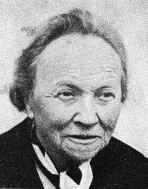
Adela Enoch
A photo from the ghetto |
Adela Enoch
She was born about 1860 in Andrychów. Her grandfather, Moritz Unger, was the head of the Jewish community who built the synagogue. She received her education in the famous lyceum [high school] for girls in Prague. She exchanged letters with Karin Michaëlis, and the cordial friendship with the famous writer encouraged her to write literary works: Fairy tales for children, songs and ballads. She also translated to German the stories of the Polish author Kornel Makuszyński. She composed works for the amateur theater in Andrychów, organized and managed it for many years, and was its director. She also wrote many texts for children's plays.
She also received many credits for her public life. She was an adviser and assistant to her grandfather and to Ferdynand Stamberger, when the leaders of the Jewish community were engaged in the building of the community. For many years she served as chairwoman of the “Union” women's association
She was also active in the international movement for equal rights for women.
In 1905, she participated in the international congress for the emancipation of women in Vienna, and tied cordial relations with the congress' chairwoman Mrs. Heinisch, whose son was elected as president of the Republic of Austria after the fall of the Austrian Empire. She was in constant correspondence with her. When the Austrian Empire crumbled, a number of former government employees from Andrychów and the surrounding area remained in Vienna. After the new government refused to give them their old age pension, Adela Enoch, with Mrs. Heinisch's help, succeeded to aid these people in their critical situation.
In 1942, she was deported by the Nazis together with her daughter Matilda to a death camp. Her daughter Clara died tragically when the Germans entered the city. Her third daughter, Irma, died in Theresienstadt (the information was obtained from Mrs. Yaja Neuberger from Bat-Yam).
Rafael Zeilender and his son Dr. Adolf Zeilender
The first was a famous figure in the whole area because of his great success in healing patients using leeches and plants. The public, including educated people, believed in his medical theory although he wasn't qualified to treat patients. Patients, not only from Andrychów and the area but also from distant towns, waited for hours in the corridor of his house to receive medical treatment. Of course, there were people who were jealous at him and reported him to the police, but he caused serious troubles when the court issued its ruling.
[Page 277]
He didn't neglect his son's Adolf legal medical profession, and sent him to the university in Vienna. After he completed his studies he became as famous as his father. As an excellent diagnostic doctor he attracted many patients from the whole area.
In 1943, Dr. Adolf Zeilender and his wife were shot by the Nazis in Tarnów. His children were deported from Andrychów to a death camp. May the Lord avenge their blood.
|
|
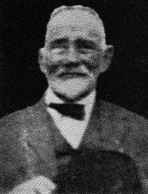
| Ferdynand Stamberger |
Ferdynand Stamberger
Emigrated to Andrychów from Krościenko near Dunajec around 1864, and built the first factory for fabric's dye and print. He served for many years as the leader of the Jewish community, and built a modern Mikve and a community meeting hall that was also used for parties. He served as a member of the executive committee of the City Council until the day of his death. He also excelled as a great philanthropist. He has done a lot for the public by his lobbying to the local authorities. He died in 1925 at age of 85.
His youngest son, Sigmund (Siga), died a hero's death as an Austrian officer in the First World War.
His firstborn son:
|
|
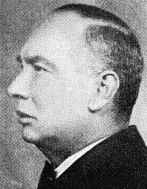
| Bernard Stamberger |
Bernard Stamberger
Was born in 1876, and was the owner of a large factory for textiles. He followed his father's footsteps and devoted himself to public affairs activities. He was the chairman of the Jewish community for several years, and cared for the maintenance of the synagogue, the community's buildings, and the cemetery. He was the first chairman of “Maccabi” and has done a lot for the community's sports activities together with his son Avraham. He was a member of the executive committee of the City Council, and when the city decided to build a swimming pool the project to given to his hands. The pool, which was built under his care, was the glory of the city and famous all over Poland, and attracted national and international swimmers.
In 1937, in recognition of thanks for his good deeds for the community, a grand assembly was held in his honor at the synagogue. A large crowd attended and he was given the honorary title ” Moreno “[“Our Teacher”, a title given to great rabbis or scholars] by Rabbi Awigdor of blessed memory.
He died in 1950 in the city of Czchów. His son Avraham lives in Tel-Aviv.
[Page 278]
|
|
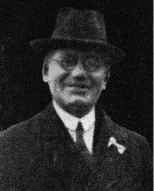
| Arnold Weinsaft |
Aharon (Arnold) Weinsaft
Aharon Weinsaft was born in 1885 in Grzymałów. After graduating university with a degree in commerce he married Regina Felix from Andrychów. He successfully ran an agency of textile products that belonged to the Tzezowizka brothers. The combination of Jewish education that he absorbed at his parents' home and his secular studies, prepared him to deal with public's needs. In 1925, he was elected as the chairman of the Jewish community, and apart from a break in the years 1937-39 he served until 1940 when he was dismissed from his office by the Nazis. He was arrested because of his demand that the Jewish residents will be provided with kosher meat.
He was loyal and impartial to his kinsman. He acted and cared for all the city's residents, from founding a nursery school to fostering the “Halutz” [pioneer] movement, from raising money for “Keren Kayemet LeYisrael” to the distribution of the “Zionist Shekel”. He stood behind the women's organizations WIZO and “Froyen Fareyn” [“Women's Association”]. He was a father and a friend to the youth whose future was his main concern, and provided their material and cultural needs. He stood proudly on public rights and fiercely protected the needs of the individual. His heart was open to all who turned to him because there wasn't a limit to his dedication to the city's residents. His work for the relations between the Jewish population and the municipally was noticeable. As a city councilman for many years he stood on guard in the conflicts between the population and the municipality or any other authorities, and didn't spare his time to help a Jew.
His wife Regina helped him and followed his ways. She was active in the women's organizations WIZO and “Froyen Fareyn”, and has done a lot to introduce the national ideas among the local women. She had a deep social sense and was imbued with love for others. She fed the poor and encouraged the helpless. Every day a number of the city's poor ate at her table, and many food rations were distributed by her to the needy. She was active in the cultural field and organized many theater productions that their income was dedicated to public needs.
The home of Aharon Weinsaft and his wife was an advanced devoted home. Both were dreamers of Zion and carried their hearts to Israel. In 1935, their eldest daughter Stella (Doron) immigrated to Israel as a pioneer. The whole family should have followed her, but only the second daughter, Irene (Wischnitzer), did. The parents and their son weren't rewarded to do so.
Weinsaft and his wife were deported to Auschwitz in 1942. The location of their burial is unknown. Their names are engraved for eternity on a common memorial in Andrychów's cemetery and in the hearts of their surviving townsmen. And so, a beautiful family was lost from the world, one of many that their children were bound to by love. It seems that righteousness doesn't protect against tyranny.
Their son, Yakov, died in Lvov after he was severely wounded in a “Luftwaffe” bombing on his flight to the east in the fateful September of 1939.
[Page 279]
|
|
| Engineer Max Felix |
The Engineer Max Felix
Son of Theodore Felix, an important textile industrialist, managed his father's factory from 1920-1934, and also coordinated all the Zionist activities in our city. He invited speakers, organized the national celebrations, and the fundraising for “Keren Kayemet LeYisrael” [The Jewish National Fund] together with Isidor Krumholz. He also participated as the district's delegate to the Zionist Congresses. He provided the equipment to the Halutzim [pioneers] and to “Maccabi”. Among his other activities he also established a kindergarten.
He was fascinated by the image of Herzl and preached his ideas among the youth groups. He already visited Israel in 1921, and when he returned he became an enthusiastic Zionist and preached about immigration to Israel. He immigrated to Israel in 1934, and founded the “Volev” company (Israel's warehouses for machines Ltd.). He died in 1958. His wife lives in Tel Aviv.
Andrychów-born Jewish Personalities
The engineer Adolf Greenspan, son of Yoachim who lives today in New-York. His invention for the oil industry is famous around the world. This invention was issued copyright certificates (patents) in different countries.
Professor Dr. Arthur Felix, bacteriologist, son of the community leader Theodore Felix, was born in Andrychów in 1887. He was a personal friend of Prof. Chaim Weizman, the first president of Israel, and cooperated with him in a scientific research during the First World War. He became famous throughout the world in the field of serology by determining a diagnosis for Typhus Fever and Typhoid Fever. In 1915 he invented, together with Dr. Weil from Prague, the method of diagnosing Typhoid Fever that is named after both of them, the “Weil-Felix-Test”. This method is being used extensively by the modern medicine of our time.
In the years 1921-25, he lived in Israel and worked for the Hadassah Medical Organization in Jerusalem, and was appointed as the director of the Hadassah Bacteriology Institute. Upon his return to London in 1925 he became a member of the Lister Institute of Preventive Medicine. He died in 1956 and his bones were laid to rest in Israel. The Bacteriology Institute of the Ministry of Health in Abu Kabir, Tel Aviv is named after him: “The A. Felix Public Health Laboratories”[1]
[Page 280]
Emelia Ziskind, the sister of Arthur and Max Felix. She was the national president of WIZO in Western Galicia that its headquarters was in Krakow. She worked a lot for this organization. She died at the prime of her life
Dr. Leopold Kirshner, Shmuel's son, a famous bacteriologist who was employed after the First World War by the Dutch government as a bacteriologist in its colonies in Asia. He now lives in New Zealand.
Original footnote:
by Isidor Krumholz
Translated by Mira Eckhaus
The first persecutions of the Nazis
When World War II broke out, I lived with my family in Bilitz. On September 2, 1939, I left Bilitz together with my wife and son and came to my parents in Andrychów. On September 3, 1939, the Germans entered Andrychów. A large part of Andrychów's Jews had managed to escape by then. Some in rented wagons and some in automobiles.
In the early days of the occupation, the Germans behaved relatively mildly towards the Jews, compared to the incitation attempts of some of the Polish residents, who incited the Germans and suggested that they conduct searches and confiscations on the Jews. The worst of all the Poles was Yosef Mazigod, who was then a city policeman and before that made a living as a shoemaker. He led the Germans everywhere, to every Jewish home and to the Jewish shops, and caused us great sorrow, suffering and fear without limit.
Many Poles, especially those who worked in the factories of the Czestowiczka brothers, who at that time mostly came from Lodz to work in this factory, immediately registered as “Volksdeutsche” and collaborated with the Nazis. The most evil and dangerous among them was Hartmann. He carried out on his own initiative confiscations and robberies in the homes, shops and business premises of the Jews.
At the same time, Adam Wiczny served as mayor of Andrychów, and he also served in this position for several months under the Germans rule, solely because he spoke German and, more than that, because he knew how to scream “Heil Hitler”. He remained in his role until changes were made in the municipal administration, and a German from Germany was appointed to the position of mayor.
Wiczny hurriedly confiscated all the Jewish shops, without receiving any instructions to do so from the Germans. He appointed his wife's relatives to manage the businesses he confiscated, and they liquidated them without returning a single penny to their rightful owners. Hartmann also continued to confiscate everything that was left. I took advantage of my acquaintance with Mayor Wiczny from my school days and tried to be present at the places where Hartmann confiscated Jewish property. I would then contact the mayor and I managed to save a lot of the property, as long as the property was still available.
[Page 281]
I also made efforts with him to ensure that all the Jews who returned to Andrychów were re-registered in the city and as a result were able to receive food stamps. I managed to get his consent that Jewish refugees who came to Andrychów were also registered and received food stamps. This was considered a great achievement at the time, since every new resident had to receive registration permission from the head of the German police. Since this person was a very easygoing person, I was able to arrange many things with him for the Jews. I will continue speaking about this later. Wiczny didn't like the fact that the German treated the Jews in a way that was too humane. He began to make things difficult for us, but despite his efforts, this time he did not succeed in anything.
The actions of the new municipal council. Forced labor.
Train and postal services were suspended for many months. We were therefore cut off from the rest of the country. From here and there we received news that Jewish councils had been elected in the surrounding towns, such as Sosnowiec, Będzin and nearby Bilitz. We refrained from doing so for the time being, until the German police called Aaron (Arnold) Weinsaft, who had been a member of the municipal council until the outbreak of the war, and ordered that Jewish men from the age of 18 to 50 be provided daily for various jobs in the town. We realized that the time had come to take this step and we elected a Jewish council headed by Aaron Weinsaft, I was appointed as secretary and deputy. The other members of the council were Israel Tiers, Joseph Silberman, Shmuel Spanglet, Emanuel Lieblich, the pharmacist Heinrich Hess and Mrs. Ella Landau. On November 25, 1939, in the evening, Wiczny and Mezigot came to Spillman, the shamash of the synagogue, and demanded that he hand over the keys to the synagogue to them (we learned this later). That night, Friday night, the magnificent Andrychów synagogue was burned down by the Nazis.
At that time, letters were frequently received from the Bilitz community, from its chairman, Joseph Roter, demanding to provide him with a list of all the names of the Jews in Andrychów. We left all these letters unanswered. We learned that Roter was handing over a certain number of young people from Bilitz and its surroundings to the Germans for the purpose of labor dispatches (at the end, we learned that these people were sent to extermination camps).
In the winter of 1939/40, there was great cold, storms raged and snow fell without a break. Every day, from 8 in the morning until 4 in the afternoon, we had to clean the streets under the strict supervision of the German police. Of course, I also participated in this work. The Poles enjoyed it and said mockingly, “Finally, you too have to work”. We replied, “The matter begins with the Jews and ends with you…”
As the cold grew worse, I asked Mr. Weinsaft to choose a few women to bring hot drinks to the forced laborers at least once or twice a day. The German police liked this and they also sipped the steaming drink, plain tea or coffee.
Many girls did cleaning work in the apartments of German officials. The boys would clean the police vehicles.
When food stamps came into effect, a number of Polish shopkeepers refused to sell
[Page 282]
to Jews food supplies, but the police set certain days and times when the Poles had to serve the Jewish shoppers.
At the beginning of 1940, we received a demand from the central “Judenrat” in Sosnowiec to give them the names of the residents and their ages. When we refused to answer, because we did not trust these people, the chairman of this center, Monique Marin, appeared in our city one day and presented us with an order from the Gestapo in Katowice, according to which the Andrychów community was included within the jurisdiction of the Jewish center in Sosnowiec. From now on, we had no choice but to give him all the names of our residents.
In those days, a new currency, the German mark, came into effect, since the city of Andrychów was annexed to the Third Reich as part of Upper Silesia. Most people avoided these exchanges, assuming that the war would not last long and the value of the Polish currency would rise again. Later, it turned out that this calculation was wrong and there was a shortage of money. There were no marks to buy food. When we learned that the Christian population received financial support from the municipality every month, we also went to the mayor at the time, Wiczny, and asked for relief for certain poor people. And indeed, we were all already poor. We also had more rights than the Christians, since the municipality obtained huge sums by selling goods from Jewish stores. Wiczny replied that he was not allowed to do this. We immediately went to the police chief and explained the situation to him. He granted our request and gave an order to the city secretary, and based on this we would receive certain amounts every month, like the Poles. This continued for more than a year, until all the men and women capable of work were recruited for forced labor in the water sector and other places.
The arrest and dismissal of the community chairman Aaron (Arnold) Weinsaft and the election of Dr. Lubitz in his place.
At that time, a shochet from Biała secretly arrived in Andrychów to provide kosher slaughtered poultry to several families. To this day, I do not know how the Poles found out about this, but based on the informing, the shochet and Mr. Weinsaft were arrested on the same day, since the bitter enemy found the shochet at his house.
The two were brought before the district court in Bilitz. We immediately sent a message to the center, saying that they would hand over the matter to a Jewish committee that had the authority to protect them on behalf of the “Gestapo”. We made every effort to save Mr. Weinsaft. I visited him several times in prison, brought him food, and after two months Mr. Weinsaft returned home safe and sound, but from then on, he was forbidden to serve as chairman of the community.
At the center, they demanded that I take on this position. I refused because of my young age. We managed to convince the lawyer Dr. Lubitz to take on this role, and I remained as the deputy chairman and his secretary.
[Page 283]
The establishment of the ghetto
After some time, the transfer of the Jewish population to the ghetto began, a step that had already been carried out in all the settlements in Upper Silesia. All the Jews were forced to leave their apartments and move into empty Polish houses, which were located in the eastern part of the city and almost outside the city. The Poles then invaded the abandoned apartments of the Jews. We were given several alleys in the eastern part of the city, which were very neglected. They were called: “na brzegach”. Thus, the ghetto was established.
The Poles, of course, made a better exchange. The Jews settled in the new place quietly and without bitterness, because our only ambition was to remain in peace in Andrychów and wait without unnecessary hardship for the end of the war.
The establishment of the Jewish discount supermarket
Only a small number of Polish merchants treated us well in selling food and helped us in whatever way they could, and even risked themselves to make things easier for us. But for the most part, as mentioned, these merchants caused us a lot of trouble. So, I went to the police chief and described to him the unbearable situation and asked him to make at least one of the empty Jewish shops near the ghetto available to us. It was the shop of the merchant Mozes, who was jokingly called “Zopkacz” in Andrychów. I told him that similar Jewish shops already existed in Sosnowiec and Będzin and that permission for this had been given by the “Gestapo” in Katowice. He agreed and brought the keys to the shop with him from the municipality. Within a week, after a thorough cleaning, the shop was opened.
Since we had no money to buy goods, we received a loan of 1,000 marks from the Jewish center in Sosnowiec and raised another 1,000 marks from the residents of the ghetto. The former merchant Jacob Ringer was chosen as the store manager, and as the bookkeeper was employed Mrs. Ella Landau, a member of the community council, who registered the store with the Treasury and compiled the necessary account books.
Mr. Metzner, a former hotel owner in Szczyrk near Bilitz, who had been deported to us by the Bilitz community government a few months ago, was appointed as the buyer of the goods. We lived in a narrow and crowded area, but despite this, he found refuge with us. We did our best to help people who were even more miserable than we were.
From the Jewish center we received goods found for sale on the free market. Even before the store opened, we arranged food cards for all residents, including newcomers, and using the cards we bought groceries from German wholesalers, who would occasionally inform us of the official prices.
We were able to provide our customers with more goods and better quality than the Polish merchants provided to the Christian customers. We were happy when we felt the satisfaction of all our customers, since everything was in order and everything was working with us. Within a few months we were able to pay off the private loans, while the Jewish center waived half of the loan it gave us, as a reward for exemplary management of the store and the community.
[Page 284]
We made a special agreement with a Polish baker and butcher. We handed them all our food cards for meat and vegetables, and they supplied us with these supplies to our satisfaction. In the middle of the year 1941, we were forced to move the shop to the community house, because the area of the ghetto was reduced and Jews were forbidden to enter the city center after the “Volksdeutsche” complained to the local authorities that many Jews with Jewish stars were walking around on the main road where the Jewish shop was located. The community house did not have a large gate on the back side. This entrance led to a side street of the ghetto, so it was very convenient for our people to enter the community house and shop from here. Mrs. Ebel, the owner of this house, was very kind to us and made additional living spaces available to us, so we were able to live in relative peace and humane conditions until the critical day, July 2, 1942, when the general deportation was carried out by the Jewish Center.
My imprisonment and release
Over time, various events occurred with us. I will talk about at least a few of them. In the fall, renovations were made in my “villa” for the mayor for his personal needs. On this occasion, the workers found a radio and a typewriter in the attic. They called me and wanted to return them to me in exchange for a bribe. I, of course, refused to give them and said that I would inform the director of public works, an engineer from Bilitz, about the objects myself. I happened to know him personally from earlier days. I turned to him and explained what he himself knew, that I had lived in Bilitz until September 2nd and had no idea who the objects in the attic belonged to. He believed me, but the mayor openly declared to me that he had been an anti-Semite even before the war and that he was still an anti-Semite and did not believe in Jews. He then added that they would hang me in the market for this very offense, and immediately called the police to have me arrested.
I was locked up in the municipal police station in an isolated cell. The cell had a porthole that led to the city yard. I happened to see outside my cousin, Nathan Larmer, who worked in the city as a cart driver. I broke the window glass and called Larmer, told him briefly what had happened and asked him to go to the police inspector and tell him where I was, in order to obtain my release. After a few hours, the police officer came and brought me to the police inspector. I told him about the entire incident. He called the mayor and informed him of my release, saying that he accepted responsibility for me not to escape until the end of the trial, and that he knows that I'm a loyal man.
After a few weeks, I was called to the police inspector again and he showed me a copy of the transcript from the Bilitz District Court. According to it, I was accused of the above matter and the police must draw up a detailed report in my presence. The inspector calmed me and sent me home. After a month, the report was drawn up at the police station. Since then, I have heard nothing more about the outcome of my trial.
The help to new families
When the deportation from Upper Silesia began, Jewish families from Bilitz and the surrounding area came to us, all poor, and asked for a shelter. Even though our living space was very
[Page 285]
limited, we helped the unfortunate families and they found shelter and help with us. We helped them as best we could. At that time, we had about fifty people with us from other cities. They naively thought that they would be able to quietly get through the war with us. However, it soon became clear that we did not have enough places to live. I went to the police inspector and asked him to give us the barracks in the ghetto area, so that we could arrange places for the new refugees. I also asked him to provide food stamps for these people. He agreed to our request and thus it was possible to arrange places and food for all the new families that very day.
Since these involved expenses, a special tax was imposed on those who could still afford it. We asked them to pay a few marks each month, and they did so.
My appointment as the chairman of the community;
After a short time, Dr. Lubitz resigned from his position. The Jewish Center in Sosnowiec then forced me to accept this position, of course without pay. My first concern was to provide medical assistance to the sick. I obtained consent from the German offices for visits by two Polish doctors to the ghetto, Dr. Matlak and Dr. Wiczny. They behaved very fairly towards the Jews, and in many cases did not even demand any payment for the treatment.
For the poorest, I worked to have the municipality pay the doctors' salaries. We also set up a small pharmacy, which was run by the pharmacist Mager Hess, a member of the community. I obtained many medicines at a pharmacy in Bilitz, where a good friend of mine worked as a pharmacist, and he sold me all the necessary medicines and also sanitary materials in any quantity and at low prices.
In urgent cases, the Jewish doctors Dr. Herbert Better and Dr. Ogenius Reich from Bilitz visited us, providing help and relief to our people.
At the beginning of the ghetto, Mr. Weinsaft and I received travel permits for the Jewish center in Sosnowiec that were approved by the “Gestapo” for use on the train. These permits allowed us to travel to Bilitz, Sosnowiec and the aforementioned pharmacy whenever necessary.
During the entire period from September 1, 1939 to July 1, 1943, we had only about eight deaths. Among them was my father, who died on February 12, 1942 at the age of 76 from heart failure. In all these cases, I received a license from the police inspector to bury the deceased in the cemetery according to the Jewish tradition. I also received a special license for a number of members of the Chevra Kadisha, in order to provide services for the deceased up to the cemetery. In the case of death of a poor person, I convinced the municipal secretary that the municipality would pay all the burial expenses (coffin, moving the body, and digging the grave).
On the eve of Yom Kippur, a number of people wanted to go to the cemetery to the graves of their ancestors. The community usually objected to Jews appearing on the streets that were closed to them, but this time we responded to the vigorous demands of the audience. I went to the police inspector and got the permission and also the authority to arrange a pass certificate for each person, so that he could present it to police officers in case they met him on the road. All the police officers also received appropriate instructions.
[Page 286]
A few days later, I was called to the police inspector and he showed me a letter written by a Pole in broken German, saying that the Jews who visited the cemetery buried valuables in gold and silver there. I replied that this was a foolish story. He believed me and tore up the letter in front of me, threw its pieces into the basket and commented: “This is how your Polish friends look like”. I had to handle a lot of things like this every time a tip came to the police that one of our people had done something that was forbidden to Jews under German law. There was a lot of running around to quiet the matter with the Germans. More than once, this risked my life, but I was satisfied that I had managed to help.
Over time, many people needed clothing, especially underwear and shoes. I went to the city hall again and asked for the necessary licenses and was successful in obtaining them in the required number. The same thing happened with licenses for receiving heating materials - coal and wood.
The first shipment of sixty people to Sosnowiec
At that time, the Jewish Center began organizing its own shipments for forced labor, and of course, it did not skip our community. We refused to provide people, claiming that everyone in Andrychów was already engaged in forced labor. We also refused because we learned about the living conditions of the people sent to the labor camps and how they were treated. When the center in Sosnowiec sent one of its employees (if I am not mistaken, Mager Smetana) to us with a shipment order, to force us to send a certain percentage of people to Sosnowiec, I approached the police inspector and he declared that under no circumstances would he deliver a single Jew, since our city had enough labor that needed people. Smetana had to return to Sosnowiec empty handed. Of course, the center did not like this, and immediately the well-known “S.S.” man was sent to Andrychów, Sturmbannführer Lindner, who appeared with some of his men and selected sixty young and old men, and immediately transported them in a freight car to a labor camp in Sosnowiec. This time, all the objections of the police inspector and the director of the water farm where the Jews worked were in vain.
From that day on, we lived in constant tension and fear. When we found out where the people were being sent to, we sent them packages with food and clothing every week. Their families never saw them again. I met some of them as I was also sent to forced work after July 1, 1943.
:
The anti-Semitic attitude of Sobel, the director of the Jewish factory Czestowiczka, regarding the work schedule.In order to initiate employment and work for Jews, a “shop” for sewing was established by the community of Wadowice and every day several women and men traveled from Andrychów to work. We had no trust in this operation. It turned out that there was disorder in the community of Wadowice which affected the course of affairs in the management of the “shop”. On behalf of the center in Sosnowiec, was sent there Commissar Maierczyk, a loyal friend of Marin, the chairman of the center. I am ashamed to put on paper what happened in Sosnowiec and Wadowice. We tried at all costs to spare our people the work in the “shop” in Wadowice. So, I approached Sobel, who for many years before had served as the manager of
[Page 287]
the Jewish factory of the Czestowiczka brothers and asked him to provide employment for our people. I explained to him that before the war, many people from our community were employed in this factory. This factory now belonged to the “A” type factories, since it worked day and night for the needs of the war and was always short of workers. But this Sobel, who publicly declared he was a “Volksdeutsch” when the Germans entered Andrychów, refused to accept Jews for work, claiming that Jews could not work together with Poles. I explained to him that the Jews could work in a separate hall and live in a separate place, in empty apartments located in the large area of ??the factory and that we were even ready to arrange a common kitchen there. But he did not agree to this proposal either. With a broken heart, I had to leave Sobel's office, over whose desk hung a picture of Adolf Hitler, Damn him.
I went to the center in Sosnowiec and presented the proposal to Marin. Marin was enthusiastic about the proposal and promised to help as best he could, provided that a certain number of people from Sosnowiec and Będzin, who were now in Andrychów, would also be hired… but how could we guarantee this?
I got a promise from Marin that if during the implementation of the plan we needed money, the center would make the amount available to us. When I heard these things, I began to worry that in the end Marin would only want to help his people, while he would turn us into victims and send us to who knows where?
I decided to work out myself the plan how to employ our people at the “Czestowiczka” factory and sent a request straight to the Berlin Labor Office, with a recommendation from the local authorities in Andrychów. After a short time, I received approval from the Berlin Labor Office with the consent of the “Authority for Forced Employment of Foreign Nations” that our people were allowed to work at the “Czestowiczka” factory in the event of a shortage of workers. But our joy lasted only a few hours. When I approached the manager Sobel and his brother, who served as a substitute, and presented this letter, a copy of which was sent directly to the factory offices, the two managers answered me with laughter and mockery that they would not hire Jews despite the approval from the higher authorities, since they had sufficient manpower. And so, with a broken heart, I returned to the community office. There the crowd awaited me impatiently.
Life in the ghetto
Although we were closed in the ghetto, we tried to make life easier to the extent we could. The youth in particular did a lot in this area. We had intelligent young people and every Shabbat we had a “Oneg Shabbat” party. We would celebrate the days of Hanukkah and Purim and continued to do so even after the deportation of July 2, 1942[1].
After work, and on their days off from work, the older youth would teach the younger youth, and thus most of them mastered the curriculum for several grades in elementary school and high school.
Until the deportation of July 2, 1942, there was one woman who cared for the small children, ages 2-10, whose parents went to work. Her job was to provide food and clothing for the children and make sure they spend
[Page 288]
their time playing games. This woman was Gina Markowitz from Biala, who perished in Auschwitz at the end of 1943 along with other women from Andrychów. Rumor has it that her husband Artur Markowitz survived and lived in Haifa after the war.
I am proud to declare that during the entire period we lived in the ghetto, until July 1, 1943, when all the men were sent to forced labor camps, not a single person in our community suffered from hunger or cold. We lived as a “state within a state”, as many people who visited us described our situation. Many people who came to us were amazed at the way and order in which we lived, the way we worked and lived together.
Economic problems in the ghetto
We had a little salvation, despite the great disaster that befell us, in that the police inspector and the municipal secretary treated us well and it was possible to influence them on various important matters. For example: whenever there was an urgent slaughter at the municipal slaughterhouse, the police would hurry up and inform us of this, asking if we needed meat. Of course, any such request would be accepted by us with great pleasure because in such a case there was no need to hand over any meat stamps and it was possible to obtain meat in any quantity.
In the winter we received licenses to buy several wagons of coal. And coal. At the bank in Bilitz, to which the licenses were sent, the coal was distributed by a clerk, who was a friend of mine from previous years, and so, we did not wait long for the delivery and we always had a sufficient amount of coal and firewood.
Even when some of Andrychów's people were transferred to Wadowice, where there was a shortage of heating materials, we sent coal there almost every week during the winter season. And if someone asks, where did we get such huge sums to cover all these purchases? The answer is that first of all, as mentioned above, small taxes were imposed on those who could afford them, and secondly, there was income from the discount supermarket. Indeed, all this income was not enough to cover the expenses, since we had to provide food, wood, coal and other things for free to many people, and also help the people who were working in the community offices. Therefore, we decided to impose a tax on all those who were employed by the Germans and received wages for their work. The wages were transferred to us by the workplaces, and this tax was deducted directly by the community itself.
In this way, it was possible to solve all kinds of economic problems to everyone's satisfaction until mid-May 1943, that is, until the time when the camp was handed over to the S.S. inspector and four German police officers. The name of the camp was: “Jewish Camp, Katowice Water Sector Office, Bilitz branch, Andrychów Construction Site”.
Over time, all those who were able to work were busy with the water sector, regulating rivers in Andrychów and Kanty. A shared kitchen was established where we all received three meals a day.
The kitchen manager was Mrs. Ella Landau, who was like our mother. The food was tasteful and in sufficient quantities. When the inspectors visited the camp, they were amazed how everything was so neat, beautiful and clean. They were really fascinated when Mrs. Landau served them food from the same pot that was intended for everyone and they almost did not believe that it was possible to prepare food so delicious in a labor camp.
[Page 289]
Some of our people moved to work in Kanty, to regulate the “Sula” river, and the Ministry of the water sector provided us with a small kitchen at the construction site. Every morning when the workers traveled to Kanty, they would receive food supplies. The food was prepared at the workplace by two people.
The refusal of the claim of the Jewish Center in Sosnowiec regarding the submission of lists of people
On July 2, 1942, the first general deportation was carried out in Andrychów, along with the Jews of the nearby communities of Zator, Kanty, Sucha and Wadowice. A few weeks before that, we had received an order from the Jewish Center in Sosnowiec to compile a list of people designated for labor shipments and to forward it to them. We refused to do so, because such a thing was not in accordance with our conscience.
In mid-June I happened to run into Mr. Weinsaft at the train station in Sosnowiec and we saw how the Jewish Center organized the deliveries and how its police treated the victims. We did not want to believe what we saw, that Jews were behaving like this. We returned to Andrychów broken in spirit at the terrible tragedy that had unfolded before our eyes. We were tormented by the severe fear - what would become of us?
Meanwhile, the center in Sosnowiec returned and demanded lists again. We refused again and said that we would not do so, since this was human trafficking and we were disgusted by it. Of course, we did not know if we would be deported at all and when, because the center did not want to reveal it to us. During those fateful days, I went around to all my superiors and asked them to give us protection and to oppose it in case the “Gestapo” wanted to take us out of Andrychów. I received promises and encouragement from all places. In fact, on the day of the deportation, the superiors did appear at the place where the deportees were gathered and tried to save us, but in vain. The deportation had been planned in advance by the center in Sosnowiec.
The deportation on July 22, 1942
That day at 4 am, foreign police surrounded the ghetto and began preparations for the deportation. At 8 am, they led us to a gathering place in the courtyard of the Czestowiczka brothers' factory, where a woman from the Judenrat of Sosnowiec named Tsarna was waiting for us, surrounded by about twenty Jewish police officers. They were all in high boots with whips in their hands. This Tsarna read us a special order, according to which Andrychów was to be freed from Jews and I must immediately prepare a meal for everyone in the general kitchen; the members of the community will move to the center in Sosnowiec and the entire crowd will be sent away in transports. For a moment I was stunned and could not utter a word, but I immediately recovered and told her that it was a shame and disgrace that the center had handed us over to the “Gestapo”. She did not even want to hear what I had to say and threatened that the “Gestapo” would immediately appear on the scene. After a few minutes, several cars with “Gestapo” men arrived, and Commissar Dreyer got out of one of them. I told Tsarna that I wanted to speak to him. She objected and ordered me to step aside. I broke out of the line and went straight to the aforementioned Commissar, stood up straight in front of him and asked permission to speak, which was granted. I had the courage and energy to approach him, because I had heard him tell his friends that he was amazed to see
[Page 290]
how clean and wonderful the Jews of Andrychów are during the deportation, in a manner that he had not seen anywhere else during the deportation, and he even added, “these are completely different Jews than what we are used to seeing”.
I told him that the Tsarna had informed me that Andrychów would be cleared of Jews. He shook his head and said: “Yes, that is true, that is what was decided”. I replied that this was not possible, since we are all employed and the German authorities are very happy with our work. We therefore ask to leave us here and send other Jews here, since we need additional manpower. These words were confirmed by the police inspector and the water sector manager who were present on the spot.
I repeated my request to leave us in place and showed him the list of Andrychów's men and their places of work. The Commissar examined the list and expressed his admiration in the words:
“It's wonderful. Almost all the Jews are busy here!”
“Yes, Mr. Commissar”, I replied, and again asked not to harm us.
“Did you prepare the transport lists?” the Commissar asked me.
– “No”, I replied. “We didn't want to do that in any way, because it's simple human trafficking. It's inhumane and it's against all human conscience!”
The Commissar responded to my remarks with the question:
“Didn't they prepare lists in every place and transfer them to the Jewish center?”
“That's true, but our city is exceptional and I ask the Commissar to take this into account and allow us to stay in place!”
Here Dreyer addressed Tsarna with the following words:
“Do you hear, Mrs. Tsarna, what Krumholz said? Why didn't he make the lists?” And again, he turned to me and announced:
“Well, Mr. Krumholz! In addition to the community members, I agree and release 100 people…”
Of course, I was not satisfied and asked again that he keep everyone in Andrychów. When I begged again, the Commissar agreed to release several more people and noted that such an extraordinary step had not yet been taken anywhere. Tsarna poked me in the ribs, commenting mockingly that apparently, I have had great success with the Commissar… “Mr. Krumholz, you should listen to Tsarna's words! That's right! I have never done anything like that anywhere, you are the first and certainly the last! Goodbye”. These were the last words that Commissar Dreyer, head of the “Gestapo” in Katowice, said to me. During this conversation, Tsarna gave the order to begin the selection. When I arrived at the concentration place, I saw that the best people and women had been selected for the “transport” and only a certain number of people would be sent to work, according to the Commissar's instructions. There was nothing to be done for these people. I collapsed and it was necessary to take me aside until I recovered. At the last moment, before the “Gestapo” officers approached us, I said in the presence of Tsarna to the chief of the Jewish police and the rest of the police: “If you would treat the Jews in Andrychów just as you do with the transports during deportations from other places, your end will be bad and bitter, you too will go on these transports!…”
As I described above, during the deportations, shocking things happened that are difficult to put into writing. I am simply ashamed
[Page 291]
to stain the paper with the things that were done by the Jewish police. The people who were selected for forced labor were taken that same day to the “Dolag” in Sosnowiec, and those who were selected for shipment stayed overnight in Andrychów and the next day were sent to Wadowice, where they were joined to a train with people who had passed the selection. It was a shocking sight that we will never forget.
The failure of efforts to keep the people selected for work in Andrychów
When the unfortunate operation was over and Tsarna gave a report over the phone to the center in Sosnowiec, I received an order from her to liquidate the ghetto and send the rest of the people to Wadowice. In addition, I was promised that the Commissar Maierczyk would give us apartments. Since I knew very well the conditions in the Wadowice ghetto and what was happening there, I did not rush to carry out the transfer of the people to Wadowice. Instead, I went to the German offices. I also went to the water sector office in Bilitz and asked them to recommend us to the “Gestapo” in Katowice that they would keep us in Andrychów, on the grounds that we were all busy and that there was enough work for us in Andrychów. The matter took a long time. In the meantime, the center, and especially Commissar Maierczyk, demanded over the phone immediate deportation. I was forced to go to Wadowice to understand clearly where Maierczyk intended to place us. I was seized with terror when he showed me the miserable places dedicated to my people. I could not agree to that. I told Maierczyk that when he could present us with better living conditions, I could start handling the moving of people to Wadowice. I went back to Andrychów without arranging the matter.
After three days, a phone call was received again from Wadowice. We were asked why we were not moving. I gave evasive answers to delay the moving because I had received a secret message from the director of the water sector of the Bilitz branch and from the office in Katowice, that they had been promised by the “Gestapo” and by the person in charge of sending foreigners to forced labor that the construction work in Andrychów would continue there and that the Jews would therefore be able to stay and participate in this work.
Almost three weeks passed until one day a special emissary from the Jewish Center in Sosnowiec appeared with Commissar Maierczyk and declared that if we did not move to Wadowice within three days, we would be sent to Auschwitz.
The transfer of the people of Andrychów to Wadowice and their return to Andrychów
We had no choice but to begin the transfer. However, it was not carried out over three days, as stated in the order, but over ten days. In the end, three families remained in Andrychów. It was the sixth day of August. I remember this day well. Me, my wife, my son, and two other families (Landau and Lieblich) were already ready for the transfer in the wagons that were given to us by the police, when suddenly a terrible storm broke out, accompanied by torrential rain, thunder, and lightning. The coachmen refused to leave and sought shelter in the empty houses until the storm calm down and pass. When the rain stopped, an unexpected messenger from the municipality arrived and demanded that I come immediately to the municipality office, because I have a phone call they wanted to call me by phone from Bilitz and Katowice. I rushed there with all my might, and after a few minutes I received a message from the water sector offices that, according to the instructions of the “Gestapo” and the commissioner for “special shipments of foreign nations”, we had to remain in Andrychów
[Page 292]
and starting next Monday, we must immediately resume our work in the water sector. I replied that everyone had already moved to Wadowice. The reply received said that I must ensure that everyone returns to continue the work that had been interrupted, and that since these people would not be enough, I must bring additional people from Wadowice.
It is impossible to describe the joy when I brought this message to the people who were still left in Andrychów for the time being. We brought all the belongings we had loaded onto the wagons into our apartments. I called Maierczyk and told him about the order I had received. He did not want to believe it and replied that he would ask Marin, perhaps he knew about it. The next day Maierczyk called me on the phone. And in a dry and indifferent manner he demanded that I come to him to talk about the return of the people.
Meanwhile, the news spread in the Wadowice Ghetto, and Maierczyk and his men instilled fear in the hearts of the Andrychów people through stories and threats that the “Gestapo” would surround the Andrychów Ghetto with a barbed wire, post an S.S. guard, and turn the ghetto into a hard labor camp. Our people began to back away from the idea of coming back to Andrychów, even though the living conditions in Wadowice were terrible. Maierczyk did not give them suitable apartments, even though they had paid money for the apartments.
I went to Wadowice to convince our people that there was no truth in what they were saying in Wadowice, and only with difficulty I managed to convince most of the people of Andrychów to return. Since the water sector office required at least two hundred and fifty people and I did not have even two hundred people at my disposal, some people from Wadowice and other places joined us of their own free will. Thus, our people returned to the Andrychów Ghetto.
Re-establishment of the Andrychów camp
In the re-established camp we also took care of the new people. We arranged everyone in a proper manner. After a few days they started working again on the river regulation. Mrs. Landau ran the public kitchen as before and everything worked to everyone's satisfaction. We had food and heating materials in sufficient quantities. I obtained permission from the water sector office to receive special clothing for the men and women who worked on the river regulation, as well as boots and rubber shoes. Electricity was also arranged in our apartments.
When the people of Wadowice learned that everything that Maierczyk had told them was a lie, and some of them even saw with their own eyes how nicely we had arranged the apartments and what good food we had, many of them wanted to move in with us, but Maierczyk stopped them. Of course, he looked badly on the fact that compared to Wadowice, we lived in humane conditions and the authorities treated us fairly. We were a small number compared to one thousand two hundred people in Wadowice. Almost every week we were sending food - mainly bread, potatoes, coal and wood to the people of Andrychów who remained in Wadowice, and we were happy that we could help others.
This situation lasted from August 1942 to May 1943. During all that time, various visitors and inspectors from the Jewish Center and the German offices, and even from the Health Ministry in Berlin, came to us. Everyone was amazed to see the exemplary order and cleanliness that prevailed in our camp. Marin also visited us several times and always praised
[Page 293]
us. During one visit, Marin handed out prizes of fifty to two hundred marks. And several times he expressed his desire that Mrs. Landau and I move to Sosnowiec and Będzin to organize everything there in the same format of our city. Of course, we did not accept his offer, because we did not want to leave our people. One day, I think it was in April, Maierczyk told me that we would not be able to enjoy ourselves in Andrychów for much longer, because changes would come. We did not know what he meant because he did not want to talk anymore. We knew that he was hostile to us and slandered us at every opportunity. Maierczyk often said that as soon as Wadowice disappeared, it would also be Andrychów's turn to be eliminated. Unfortunately, he spoke the truth.
The transfer of the camp in mid-May 1943 to the command of the S.S. and the transfer of all the people
In mid-May 1943, the management of the camp was transferred to an S.S. inspector and four police officers and changes occurred. The men and women were separated. The general kitchen continued to function, but the camp inspector provided the food. This was not the worst thing, but the constant fear and threat we felt. It was known that the center in Sosnowiec did not tolerate our relatively good situation up until then, and that its members were inciting against us everywhere and at every opportunity.
On the first of July, the Andrychów camp became a women-only camp. All the men were sent to labor camps in Karviná and Bismarckhütte. I was thus forced to say goodbye to my wife and I never saw her again. We parted forever. As I later learned, the women who remained in Andrychów were sent together with the Jews of Wadowice to extermination in Auschwitz in August. It was precisely on Tisha B'Av.
Such was the bitter and hasty end of Andrychów Jewry. May God avenge them.
Closing remarks
I was with my son in a forced labor camp in Bismarckhütte. From there we were sent to various camps. In the Wiesen camp we suffered terrible torture. There I was separated from my son. It was in November 1943. I have not seen him since. In early January 1944, I arrived in Auschwitz to the gas chambers, because due to the torture in Wiesen my right hand was severely injured and I was no longer able to work. Miraculously I was saved from the gas chambers at the last moment, and then I was transferred to various concentration camps, such as Gross Rosen, Buchenwald, Schörzingen and Bisingen. On April 22, 1945, I was liberated by the French army near Lake Bodensee.
I could write a long report, if I had wanted to describe in detail the chronicles of the suffering I went through from July 1, 1943 until the day of my liberation. It would have been possible to speak a little about everything that happened in the concentration camps, what happened and what could have been prevented. Perhaps I will try to do so in the future. In any case, I want to emphasize one thing: God and his good angels protected me, so that I could go through all this suffering and remain alive and well. And perhaps I was rewarded for this because I tried hard to save my people, our brothers, the sons of Abraham, Isaac and Jacob. It was God who gave me the strength and energy to get through this
[Page 294]
horrible times, the worst days of my life. I went through all the stages of Nazi hell and came out of it. To my great regret, I lost my wife and son along the way.
|
May God avenge them.
New York, March 1963. |
Editor's note:
[Page 294]
The Andrychów Jewry
by Yitzhak Koren
Translated by Sara Mages
At the outbreak of the war there were 387 Jews in Andrychów and all of them left the city in fear of the war. From them, around 70% returned and the rest moved to Eastern Poland which was occupied by the Russians. Therefore, the number of those who returned was about 270.
When a census was carried out by the Nazis in December 1939, it became clear that there were 370 Jews in our city. About a third of them were new. Some emigrated from Silesia. In that census all of Andrychów's Jews declared that their spoken language was Polish, unlike some of the Poles who declared themselves as “Polskie Deutsche” [Poles of German origin]. This attitude was quite typical to the Jews but not to the Poles whose country was in trouble.
During the first months the war the Jews were already taken to perform various forced labor like, cleaning the streets, clearing snow from the sidewalks, and moving the furniture that were confiscated from the Jews to the “Polskie Deutsche” apartments. The goal wasn't only to exploit free labor, but to humiliate the Jews in the eyes of the Poles. And indeed, these actions have achieved their goal. The Polish population, in particularly the rural population, rejoiced when they saw the Jews in their depression and humiliation. But, before long, this joy turned into grief and sorrow. It happened when many Poles were transferred to work for the rich farmers in Germany. The agricultural population from the vicinity of Andrychów, which was for many generations 100% Polish, was deported to the east and was replaced by Germans from Bukovina. They were forced to return to their homeland under the agreement between the Russians and the Germans.
The Jews were forced to tidy and clean the abandoned apartments, and the Nazis weren't ashamed to burn all the Christians' holy “icons” in front of the Jews. For these jobs the Nazis also used young Jewish women, who mocked the German policemen and sang Jewish and Polish patriotic songs to them. We walked to work in rows. Each row had three people. Once the Nazis ordered us to sing. We refused because we were depressed, but under the Nazis' pressure we started to sing, at first quietly and then loudly, this anti-German song:
The Poles didn't dare to do such a thing.[Page 295]
The young people were also taken to clean the police station and the Germans' offices. Groups of 100, including people from Wadowice, were transferred to regulate the “Wieprzówka” river.The names of 150 people, who were engaged in this work, appear on a list that is kept in Andrychów's city archive. Among them: 47 women, ten 14 year old boys, a 15 year old girl and a 68 year old man. An employment office was arranged in Felix's magnificent house. The Poles received unemployment benefits that were paid to all the citizens, but the Jews were deprived of all rights. The Jews couldn't buy food from the Poles and they did it in secret and with many difficulties
In 1940, Munik Merin, head of the central “Judenrat”, appeared in Andrychów accompanied by several police officers to take all the Jewish youth to forced labor. The community chairman, Aharon (Arnold) Weinsaft, alerted all the young people to flee from the city after a secret consultation with the police chief. Therefore, Merin couldn't even find one young person in Andrychów.
|
|
|
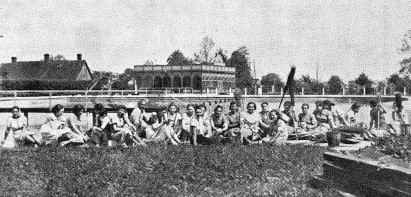
Compulsory labour in cleaning the Andrychów pool in 1940
Photographed during rest interval |
One day in June 1941 the first transport was sent to a forced labor camp. People who worked for the municipality or for the Water Department were saved from this decree. About 60 people were sent to Silesia. At the same time a list of the Jewish population was prepared, probably with a plan for additional transports to forced labor camps. In this list, which is kept in the city's archive, are the names of 456 people from Andrychów, 5 from the village of Wipesh, 13 from Ziki [Rzyki], 13 from Inwałd, and 11 from Zagórnik. The Jewish population in Andrychów grew during that period (from September 1939) by about 200 people, and included those who were exiled to the city and those who fled to it from near and far.
[Page 296]
The community leader, Aharon Weinsaft, has done all that he could to ensure kosher meat for the Jewish community. For this action he was arrested together with Pinchas Zweig.He was sent to prison in Bielitz [Bielsko-Biała] and Mr. Zweig was sent to Wadowice. After a lot of efforts both of them returned to Andrychów, but Weinsaft was deposed from his post. He always tried to fulfill the Nazis' orders in a reasonable way. The situation worsened after his dismissal.
In 1940, Olga Farber was sent to a concentration camp on the suspicion that she sold. Shortly after, her brother Henrik Lachowicz was sent to Auschwitz for smuggling food. He perished in Auschwitz. We rarely received news from the young people who were sent to Silesia, and the information wasn't good. The news said that they were employed in hard physical labor, and received a limited amount of food. We sent them food packages. Only a small portion of the shipment was given to them.
On 26 September 1941, a [ghetto] was established in Szewska and Brzegi streets. The first big Aktzia took place on 2 July 1942. At four o'clock in the morning the Germans woke up all the Jews with shouts and screams, and an order was given to go out to the street. The people were arranged in rows of 3 and each person had a backpack on his shoulders. They were transported to the courtyard of the Czeczowiczka brothers' factory. There, they were divided into five groups by the men of the S.S., and with the cooperation of Zarna, Merin's secretary. These are the groups of deportees:
On 1 July 1943, all the men from the fifth group were sent to a forced labor camp. From this group only Arthur Markowitz and Isidor Krumholz survived. The first immigrated to Israel and passed away there, and the second lives in New York. On 8 August 1943, all the women from the fifth group were added to a train that was sent to Auschwitz where they perished. There is no need to explain that all the members of the third and fourth group perished. I survived after a lot of wanderings and terrible life in the camps - Gröditz, Beranda, (where I was severely beaten just for discipline), Annaburg and Auschwitz. From Auschwitz the Nazis dragged us to Buchenwald during the evacuation of the camp. On 11 April 1945, I was released from Buchenwald by the American army.
The only survivor, who hid during the Aktzia and fled from our city, was David Zilbershitz. He immigrated to Israel and passed away there. Also Lola Bader was able to escape from a transport in Skawina. She hid in a village near the city of Maków together with her son Shimon and her nephew Adam.
As described above, a total of 25 people survived, meaning, less than 10% of the general population
[Page 297]
who was unable to escape east at the outbreak of the war. Most of the people who escaped to Eastern Galicia, Siberia and other locations died from hunger and from the cold weather.
Quite prominent is the number of 4 people (!) who were saved by fleeing. The “Judenrat” didn't even give us a hint that reporting to the gathering place meant destruction! On the contrary, prior to the Aktzia we got instructions on how to prepare for the journey to our new place, to sew bags and to take personal items not exceeding twenty kilograms with money and valuables (the money and valuables were confiscated immediately).
There is no doubt that Mr. Krumholz tried his best to save us and prevent the evil decree by giving bribes. A number of times he gave enormous amounts of money as ransom, but his efforts came to nothing. If the “Judenrat” revealed the secret of what was waiting to the Jewish youth, many young people would have escaped to the forests. And there was a place to escape to! In the area there were the famous forests of Archduke Mizewitch that stretched on for many kilometers. Mr. Weinsaft of blessed memory has done so during his tenure in 1940. Andrychów Ghetto, unlike other ghettos, wasn't completely closed until May 1943, and it was possible to escape. However, the members of the “Judenrat” were kept under the illusion that the Gestapo will have mercy on our city because of its exemplary cleanliness, the dedicated hard work of Andrychów's people for the Water Department, and because of the bribes mentioned above. It was too naive on their part. To date, we can't pass in silence the fact that the wonderful children, who could have been the glory of our town and our nation, stayed in the ghetto until it was liquidated and nothing was done to save them. There were Poles in the villages that without a doubt were willing to take them in order to return them at the end of the war, if not to their parents who perished, at least to our nation. But the “Judenrat” believed that they would be able to save us only by discipline and by obeying the Gestapo's orders. There were also rumors that an escape will cause a collective liability and a group punishment, and because of an escape of family members the parents will be sent to their death. Who knew then that the fate of the entire Jewry has been decided? Was it not that we were cut off from the outside world?
The total disaster of the destruction of all of our children in the gas chambers, when they didn't even know why they were doing it to them, shocked us so much that after the end of the war none of the survivors wanted to remain in the city on the ruins of our community. Each corner reminded us of the magnificent life that flourished there until 1939, and the last tragic days. Everyone moved away from the city, some to Israel and some overseas.
We will pay respect to the memory of our holy community, honor the martyrs and those who fought hard for their existence in forced labor camps, so they can live and tell the next generation what happened there, and keep things in our hearts so we won't forget what the Nazis have done to us and to our nation.
|
|
JewishGen, Inc. makes no representations regarding the accuracy of
the translation. The reader may wish to refer to the original material
for verification.
JewishGen is not responsible for inaccuracies or omissions in the original work and cannot rewrite or edit the text to correct inaccuracies and/or omissions.
Our mission is to produce a translation of the original work and we cannot verify the accuracy of statements or alter facts cited.
 Andrychów, Poland
 Yizkor Book Project
 JewishGen Home Page
Copyright © 1999-2026 by JewishGen, Inc.
Updated 09 Apr 2026 by JH