 |
|
|
[Columns 201-202]
[Columns 203-204]
[Column 205]
by Baruch Melamed
Translated by Jerrold Landau
@Roberta Paula Books
|
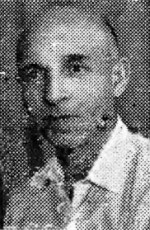
Reb Yitzchak Plott
An educated Jew, modest and humble, fleeing from honor, low in stature, with good, wise, caressing eyes. All the fine traits that the sages enumerated for people in general and Jews in particular emanated from him. He was religiously pious, but even more so, pious with his good deeds. He was never concerned with assuring his fellow a share in the world to come. Rather, he was very careful and concerned to ensure that his fellow had what he needed for this world. If a visitor came to the city, Reb Yitzchak was happy to host him in his house, serve him, benefit him with the bounty of his table, provide him with a bed, and tend to all his needs, even though he was not wealthy at all. He did all this with love, modesty, and obviously without expectation of remuneration. On the contrary, he felt that he owed something to his guest for granting him the opportunity of performing a good deed. He was unique in the town, with no equal. He merited to have the majority of his family members rooted in the homeland.
May his resting place be sweet for him.
Reb Shabtai Zifern
He was active in communal affairs. He was the head of many communal institutions. He was a good man. On account of his status in the community, especially with respect to the government, he utilized many opportunities to do good for those in need. He was a Zionist in spirit, and aspired to make aliya to the Land, but he did not receive that blessing.
Reb Aryeh Goldstein
He was a friend of and co-worker with Reb Shabtai Zifern in the communal institutions. He was happy when he was invited to collaborate in an endeavor that would bring benefit to the community or for Zionism. He faithfully fulfilled all the roles assigned to him.
Reb Mordechai Lerman
He was an educated, wise man, of the Maskilim archetype. He was a remnant of the earlier generation. Because of his critical view of the approach of some of his friends to communal affairs, he kept his distance from such,
[Column 206]
but he willingly bore the financial burden required of him for the benefit of the community and Zionism. He attempted to educate his children in the spirit of Haskalah and national culture. He was blessed to have his family continue its existence in the homeland.
Yitzchak Bernholtz
He was a faithful communal worker, with all his soul and means. He knew no weariness in his activities. He participated in all endeavors, beginning with the organization and concern for the maintenance of the Hebrew school in the town, and ending with the founding and developing of the Hebrew library. He was among the initiators and actualizers of all Zionist, organization, and cultural activity, as well as all work, whether easy or difficult, for the Zionist funds. He bore every difficult task on his shoulders with love, faithfulness, and exceptional patience, even though such could be done by his friends. He dedicated the majority of his time to Zionism, and often neglected his personal affairs for that purpose. He was also among the first donors to the funds. He served as an example to others through his self-sacrifice. He loved Hebrew literature, and he purchased and read many books.
He was a good friend, modest, straightforward, and beloved by everyone. He aspired to actualize the aspiration of his soul and make aliya to the Land, but he deferred his aliya once he entered the yoke of family life until such time as he would be firmly based from a material perspective. In the interim, he immersed himself in his private affairs, which consumed most of his time. He was too late, and it is unfortunate that he did not merit.
Aryeh Leib
He was like his name – pure of heart[1]. He was an enthusiastic Zionist, completely filled with love and dedication to the idea of redemption. He desired and longed for the homeland so much, for it enchanted him in his life of toil and manual labor! His soul was revolted by the exile and his meager shop in which he had to toil for the livelihood of his family, and which was considered by him as an exile within the exile. He would escape and find refuge and redemption for his soul in Zionist activity, and in pure and dedicated participation in all its activities. He had a refined soul and open heart. He was straightforward in his ways and beloved by his friends. It is unfortunate that he was not blessed to benefit from the radiance of his ideas and friendship in the State of Israel.
[Column 207]
Reb Zerach Kimel
He had an even temperament. He was conservative, upright, and very deliberate in his comportment. He was a Zionist with all his heart and soul. He also devoted much of his time to every Zionist activity in the town. He was faithful and generous.
Reb David Biber
He loved his fellow Jew. He had a good heart and fine traits. He was modest and humble. It was not for naught that he lived under the same roof as his friend Reb Yitzchak Plott, for they excelled in good traits that drew them close to each other.
Reb Yisrael Feldman
He was an educated man, with a refined soul and generous traits. He was modest and humble. Very few people knew him, for he comported himself humbly. He was afraid of trampling over others. The purpose of his life was – educating Jewish children as faithful children of their nation and religion, and the revival of the nation in the Land of Israel. He dedicated himself to that work throughout all the days of his life, and with his full heart and soul. His longing for the land of his aspiration flowed from deep soulful longing. Since he had a large family and was lacking in means, he was forced to postpone his aliya until his children would grow up, and he would make aliya with them. He did not succeed in actualizing the aspiration of his soul, but he merited to have his firstborn son make aliya to Israel after long, difficult wanderings, and continue his family there. May his memory be a blessing.
Lema Klorman
He was a fruitful man, with praiseworthy fruits. [Beginning here, the author writes as though he were speaking to Lema Klorman.] You grew up and sprouted on the soil of education toward a life of work and manual labor in the homeland that was coming to life. The days of your life were a constant battle. You battled in the diaspora, for you longed for a life of freedom in the homeland. You battled with your parents, since they did not want to make aliya with you, nor did they want to part from you. It was a daring act on your part to forego the blessing of your parents as well as their tears.
When you made aliya, you joined the brigade of fighters against the wasteland. You dedicated your young, vibrant life to grow vineyards, beautiful gardens, and pleasant flowers. I remember your first letter in which you wrote about your impressions from your first days in the city of Tel Aviv. You called it “Tel Koziv”[2]. What strength this was to not be impressed with and to not wax exuberant in praise of the first Hebrew city. You were a deep thinker, and you knew that the population of the cities alone will not conquer or build up our land. You expressed your wise opinion – and you turned yourself toward the kibbutz, not to unite with their protocols, but rather to distance and renew, for everything must be started anew. You reached Negba. From there, you set out to Rechavia for work and creativity. You continued in that manner with the best of your energies, until the enemies came and waved their swords
[Column 208]
against the apple of our eye, against the only hope of our people. Then, you girded yourself for the battle of the nation, to defend the homeland. Everything was satisfactory to you. You gave your life on the altar. You were blessed to participate in the coronation of the homeland with the wreath of “victory in the Negev.”
Your memory will never depart from our hearts.
Baruch Shapira
He was a small sapling that grew in Kamin Kashirsky and grew on the soil of our homeland. He breathed its air and basked in its sunlight. Before he succeeded in enjoying the pleasantries of life, he responded to the call of the nation and enlisted in the army of fighters against the great haters of Israel. When he was discharged after the war, he left the city and went together with the best of his friends to Hachshara for village life in the homeland. However, before he managed to get set up, he was called once again to defend the Land against the enemies that rose up against it. He was among the fighters who broke through the road to Jerusalem, the besieged capital. He gave his young life as a pure sacrifice on its altar. Your short life was dedicated to the nation.
Blessed [Baruch] may be your memory always.
Reb Shalom Karsch
Rabbi Shalom Karsch was one of the bright personalities in our community. He was a friend and neighbor of Rabbi Yitzchak Friedman. He was murdered by the Balachowitz gangs in 1920.
He was pious in the Jewish religion and excelled in all the good traits and nobility of the Nation of Israel, to the point of literal self sacrifice. He hosted guests, and was a philanthropist beyond his means. He occupied himself in communal affairs with complete faith and great dedication, to the point where he forgot about and neglected his personal affairs. He was always in the front, acting and promoting action in every communal affair, small or large, with his body and his money. He served as an example to the public. He influenced the masses with his enthusiasm and drew them toward positive effort.
He was the one who redeemed the synagogues, and, to differentiate [between holy and secular] the bathhouses of the town after they were sold to gentiles in a public sale in accordance with a verdict of the court. He donated the first fifty rubles and encouraged the entire community to do as he did. The required sum to redeem the communal buildings was raised on the spot, and the disgrace was thereby removed from our community.
This was before the First World War. At that time, the Czarist regime would appoint contractors to transport the mail to the small, remote towns, which were also required to pay the fees of the contractors, which were generally inflated in comparison to the deficient service they performed at their own whims.
[Column 209]
Our community was in arrears in its payments because of complaints it had regarding the contractor (a Jew from the nearby town of Ratno). He brought his complaint to the court and won the case. Nevertheless, the citizens of Kamin did not hurry to pay the debt, for they were sure that the Jewish contractor would not sell the synagogues in a public sale – which were the only communal property in the town – to gentiles (for no Jew would purchase them). Only at the end, when they saw that this travesty had occurred, and gentiles became owners of the synagogues did Reb Shalom Karsch rise up to redeem them.
Reb Shalom Karsch was the first in Kamin to donate gold coins to the redemption fund immediately after the Balfour Declaration (Keren HaYesod had yet to be founded). He also influenced others to do like him. He educated his children in the atmosphere of love of Israel and its Land, with the hope of returning to it, to build it up, and be built through it. Two of his daughters, Fruma and Mina, made aliya to the Land during the Third Aliya as pioneers. Two of his sons survived the Holocaust, and one of them made aliya to the Land.
(From the mouth of Reb Shmuel-Yosef Verba)
Reb Pesach-Tzvi Ormland
He was a scholar who made Torah his occupation. He was the best of the elder generation of the town. A Jew such as him was called “a fine Jew” [Yehudi Naeh]. Those two words encompass the essence of Jewish morality and sanctification of the Divine Name.
He was modest. He satisfied himself with little, and was happy with his lot. He never had complaints against the Holy One Blessed Be He, even though he could have had a long list of injustices that an excellent Jew such as he suffers in this world. He educated his children and grandchildren toward labor, and thereby brought them to Zionism, aliya, and actualization.
Avraham-Aryeh Burstein
He was a communal activist and faithful Zionist. Even though he was very busy with his work to earn a livelihood to sustain his large family, he always responded, along with his friend and neighbor Avraham David Avrech, may he live, to any call to participate in Zionist or communal activity. He was straightforward in his ways and faithful to the nation. May his memory be a blessing.
Yaakov-Yitzchak Klorman [Father of Lema Klorman]
He was a faithful communal activist, and very pious, not only in his religion, but also in his honesty, uprightness, and weltanschauung. He went so far
[Column 210]
as [to fulfill the verse], “He did not acknowledge his children” [Deuteronomy 33:9] (when his son, Lema Klorman of blessed memory, made aliya to the Land as a chalutz, he did not part from his son with a blessing). He was a staunch opponent of Zionism, but his opposition stemmed from his faith that this was not the path to maintain the nation, and he thought that those who try to bring nigh the end[3] are destroying rather than rectifying. To our dismay, those who were greater and better than him made the same serious error, and we cannot blame him the small one.
Aryeh Dekelbaum
He was pure in his ways, upright of heart, and very modest. For the most part, being involved in communal work was against his will. However, when he took upon himself the burden of a specific communal task, he fulfilled it with full responsibility, and carried out all that was expected of him.
Dov Nisan
He was of the simple folk. A pure, populist charm was etched on his countenance. When, on very rare occasions, he was aroused to ask his question at a Zionist or other communal meeting, he would hesitate, as someone placing his head between large rocks…
Avraham Katan
He was modest and unassuming. All his days were spent in worries and concerns of livelihood for his large family. He did not become involved in great things, and was not diligent in repairing the world. However, he always fulfilled his communal obligations faithfully.
Two things stood at the top of his world, and to them he dedicated his life: imparting education and knowledge to his children, even beyond his financial means and above the means of many others; and love of nature and agriculture. Even though he himself did not own a plot of land that he could work, he was a regular lessee of the fruit orchard. He would work it and guard it with the sweat of his brow, not only to earn an income, but also because of his great love of nature and agriculture. He did not act like all other lessees of gardens. He would plant all types of vegetables in the open areas between the trees. He rejoiced greatly when he saw success in his toil. He was especially happy to host visitors on hot Sabbath afternoons. He would enjoy giving them enjoyment in sitting in the shade of the pleasant, wide-branched fruit trees.
He was among the first victims to fall. His death might have served as a warning about the plots of the wild Nazi beast.
May his memory be a blessing.
Translator's footnotes
by Eliezer Ginzburg
Translated by Jerrold Landau
@Roberta Paula Books
He was among those whose spiritual influence upon the town of Kamin Kashirsky played an important role. My revered father, the rabbi, Rabbi BenZion Ginzburg, came there from a Misnagdic Lithuanian city and served as the rabbi for approximately eight yeas, from the year 5672 [1912] until the year 5680 [1920]. During his brief rabbinic tenure, his influence was so great that the survivors from the city still remember him and talk about his hidden light at various occasions.
My father of blessed memory was great in Torah. He was even-tempered, pleasant in his manners, a pursuer of peace, and pleasant with his fellow.
In the year 5673 [1913], when I was studying in the Slobodka Yeshiva, I received a letter from my father of blessed memory, stating that he had been accepted as rabbi in Kamin Kashirsky. I heard the name of this town for the first time, and it was a mystery to me why my father had exchanged a scholarly, Lithuanian town with a Khassidic town in Volyn.
After a half a year, before Purim of 5674 [1914], I traveled home. I then discovered that my father was not the only rabbi in the city. There was another rabbi, Rabbi Weisman, who had been accepted by the Khassidim of Trisk on account of a dispute with Rabbi Goldschmidt, whose place my father had taken.
At the beginning, I was saddened that father, a refined person who ran away from disputes, had entered into this conflict. However, after a short time, it became clear to me that specifically his manner, father's even-tempered, deliberate manner, could impart peace around him. He worked toward calming things. The dispute quieted, and an atmosphere of peace was created. The rabbis acted in complete unity, and even the Hassidim of Trisk were among those who came to father's home. On festivals, when it was the custom to greet the rabbi, people from all sides would come to father's home and spend time in a brotherly fashion, with songs and words of Torah. Out of great respect for his uprightness and straightforwardness, the Hassidim did not reprove my father, the Misnaged, when they saw a Chumash with commentaries in his hands during the time of the reading of the Torah. Several village communities were affiliated with Kamin, and when Passover approached, father would travel to them to deal with issues of the laws of Passover. Once, I accompanied him and realized how accepted he was with them.
We slowly set up roots in the place. People of father's generation would approach him with matters of Torah laws, questions of kashruth, and to spend some time with words of Torah. Members of our generation, the children, would come and spend time in discussions about Zionism and literary matters –
[Column 212]
This is how we lived until the outbreak of the days of wrath of the First World War in 1914.
In the middle of the first year of the war, we did not feel the tribulations of the war, aside from the duty of being drafted to the army. As long as the war was restricted to Galicia, only echoes reached us from afar. In the second year of the war, however, when the front moved to Poland, a stream of refugees also arrived in Kamin. The townsfolk assisted the refugees to the best of their ability. Father's influence in this spirit of volunteerism was very great.
During the time of the war, as in every time of tribulation, longing for redemption arose among the elder generation. I remember that when Turkey joined the war, a Breslov Hassid approached my father of blessed memory and called out enthusiastically, “He fell against all his brethren, and this is the story of Isaac!” [Genesis 25 18:19] – “when Ishmael falls, Isaac rises.”[1]
When the Austrians and Germans invaded the city, forced labor was imposed upon the residents. When the community presented themselves to enlist those fit fir work, father presented himself as well, and refused to benefit from the rights of his rabbinical position. With the permission of the commandant, we moved to Glusha, one of the settlements affiliated with Kamin, and lived there for a few months. Then we moved with the stream of refugees to the area of Antopol. We were outside of Kamin Kashirsky for two years, and we only returned in 1918. Then, we found that Rabbi Weissman was seriously ill with a malignant illness. After his death, father was appointed as the sole rabbi of the community.
During the time of the war, our town also became involved in profiteering for food supplies. The poor and indigent suffered greatly. They came to father in their suffering and demanded that he stand with them as an intermediary between the two camps. His health weakened. From that time, I recall him as sick. I traveled with father to Warsaw in Sivan 5680 [1920] to consult with physicians. We could not return to Kamin, as the war between Poland and Russia had broken out. We went to my brother Tzemach in Białystok. Father died on 27 Av, the memorial day of the community of Kamin, and he rests in peace in Białystok.
When the Poles pushed off the Russians, the Balachowitz hooligans attacked Kamin and killed more than one hundred people, including my brother Eliyahu. The father and son died within a few days of each other, one in Białystok and the other in Kamin, and they did not know about each other.
Translator's footnote
by Noach Cohen, Argentina
Translated by Jerrold Landau
@Roberta Paula Books
And if there are wholesome ones among them, state with what they are wholesome.(From “In the City of Pleasantness” by Ch. N. Bialik)
Reb Dovid Kaminsky was the elder shochet who had reached the age of eighty, and Reb Abba Plott, the shochet who was a few years younger than him. Despite their advanced age, their stature was not bent, their bodies remained upright, and they were full of energy and strength.
They were both shochtim, the former in the community of Kamin Kashirsky. Reb Dovid spent his entire life in that town. He conducted his work with wholesomeness, respect, and awe, and earned the admiration of everyone. Even the butchers, who for the most part complained about the shochtim, related to him with respect and would approach him with great politeness. They would state as follows: “ With due respect, Reb Dovid, please come to my barn to slaughter a cow…” If it would happen, Heaven forbid, that Reb Dovid would decide that a valuable animal was a treifa[1], the butcher would not be so brazen as to complain about him in public – at most the butcher would cast the lung and the liver on the wet ground, and mutter between his teeth, “It is difficult times, Reb Dovid, only a treifa and a treifa.” Reb Dovid would comfort him, saying that the Holy One Blessed Be He would “make up” for his loss, and would grant him even more. In the meantime, he would dry the shechita knife [chalaf] with his large, stained towel, put it into its large wooden case, and return calmly to his home to peruse the books, until the next invitation to the holy task.
In the evenings, Reb Dovid would delve into a tractate and also review, certainly for the 101st time, the laws of shechita from worn out, yellowed books.
It was midnight. The town was completely silent, even in the shtibels. Their shutters were drawn and dark. Here and there, one could see a weak ray of light from a crack. Certainly, some Jewish mother was lighting a lamp to reassure her children who were frightened from the oppressive darkness. The famous market square was abandoned and empty. Only the moon and the stars above had not abandoned it, and guarded it faithfully.
The moon hovered above proudly and calmly. At times it was hidden behind heavy clouds, coming out and disappearing again, hinting, so to speak, that there is supreme providence, and one can sleep quietly and securely. Indeed, every Jew was lying in his warm bed, sleeping the sleep of the upright, without being disturbed… And then suddenly the call of the rooster was heard, as a sort of
[Column 214]
Tekia Gedola [elongated shofar blast], followed by additional teruot [short, broken shofar blasts] from all sides. The thin flame of a candle was already flickering in the home of Reb Dovid. The day of the shochet had begun. After Tikkun Chatzot[2], Reb Dovid slowly approached his large bookshelf, took out his two large knives, as well as the small knife for fowl and his two sharpening stones. He brought a bowl with water from the kitchen and began his tasks of sharpening and koshering. He continued in this work until the first minyan, but always remained in the shtibel until the end of the second minyan to peruse a book. People would say of him, “There are not many like him in our times.”
Reb David barely left the bounds of his town Kamin, other than to go to his native city of Pinsk or Ratno, where his daughter Doba and son Yitzchak lived, for a celebration or a circumcision or another festive occasion. Then, he would summon Feivel the wagon driver, the most famous wagon driver in the holy community of Kamin Kashirsky on account of his vehicle, known as Britshka in the vernacular, and his two leonine horses, with shiny bells around their proud necks. Reb Feivka would approach the door of Reb Dovid's house with noise and clanging, with everything exuding honor and pride. Reb Dovid would exit his house, kiss the mezuzah, and walk slowly toward the chariot, with his tallis under his arm while a child caried his famous lamb furs…
When he arrived in Ratno, Reb Feivel would urge his “lions” to speed up through the main street, with the intention of announcing that the champion of wagon drivers of the district has arrived. He would not spare his rod, disseminating sparks, and with the pouncing of his knights and the ringing bells, all the Jews would come out to the street to witness the glorious, powerful demonstration. The arrival of Reb Dovid to stay with his daughter Doba was not only a family event, but rather almost a communal event. Everyone received him with great honor and reverence. He would go to the shtibel with his illustrious in-law Reb Avraham the Shochet. The elders and notable of the community would come to greet him with “Shalom Aleichem” and obvious joy. Many recall what the Tzadik of Nesvizh, may the memory of the righteous be blessed, said about him: that he was a fearer of Heaven, illustrious in Torah, and modest – in addition to all his other fine traits and his merciful heart. His tall, noble stature also added to the feelings of esteem. Of course, the words of the Tzadik were passed from mouth to mouth, and from father to son, and their worth was no less than fine gold.
When his young daughter, Riza-Rachel, came of age – Reb Dovid married her off to Reb Yitzchak Plott, the son of Reb Abba the shochet from the nearby town of
[Column 215]
Gulsha (Lisha). He was a Heaven fearing and upright Jew. The two shochets knew each other previously, but after the marriage, their friendship increased sevenfold, and they would visit each other frequently.
Years passed, and Reb Dovid grew old. His vision declined and his hands weakened, so the shochet retired from his holy work. He gave it over to his eldest son Mordechai, and set out for Lisha, the place of residence of his daughter Ritza Plott and his son-in-law Reb Abba the shochet.
This was during the time of the civil war in Russia. Soldiers of the Red Army began to retreat and would pass in crowds through the streets of the town. Rumors spread about riots against the Jews in nearby towns, perpetrated by the “Whites” after the retreat of the “Reds.” Entire communities were destroyed. Jews were pillaged and murdered in cold blood. Their wives were wildly and cruelly raped. The soldiers of General Balachowitz particularly excelled at this.
The Jews raised their eyes heavenward, placed their trust in the Master of the World, and awaited salvation. The Master of the World did not accede, apparently, to the prayers. One clear summer morning, armed riders suddenly appear in the market of Lisha, wearing capes and Circassian helmets. In order to incite, they passed en masses through the main street until they apparently disappeared. However, they immediately galloped back and began to remove the Jewish men and concentrate them in the home of Reb Michel Goldshul. The commandant ordered eleven Jews, Reb Itza the son of Reb Abba the shochet among them, to collect a large sum of money within a brief period. Since they did not succeed, he commanded that they be taken out to be killed.
At that time, there were two elderly men in a hiding place in a haystack, like most
[Column 216]
of the Jews of the town. After they found out about the murder, especially of their son and son-in-law, great in Torah and well educated, their stature bent, their spirit fell, they mourned bitterly and refused to be comforted.
The elderly men sat in their houses broken and mourning, indifferent to everything and to their fate. Since they refused to hide and escape from the home, the two of them remained the only ones in the town, alone and forlorn, for all the Jews, with their wives and children, preferred to leave their homes and property unprotected (hefker), so as to save their lives.
Then the Holy Day, Yom Kippur arrived. The town was desolate, and the only synagogue was abandoned and unprotected (hefker). Nobody was left in the town other than the two elderly shochtim, who worshipped alone with devotion, as they sanctified the festival, enwrapped in their tallises and wearing their kittels. They poured out their bitter hearts before the Creator of the World.
The sun began to set, and its last rays appeared reddish as usual. It was as if they absorbed the color of the blood that was flowing outside. The time for the Neila service came. Rev Dovid rose from his place, straightened his noble stature, and recommended that his in-law come to the synagogue for that Neila service. “For during the entire festival, the holy place stands in its desolation, and the voice of the Living G-d is not heard – perhaps we will be the ones designated to annul the decree.” He spoke, but did not finish.
Suddenly, the door burst open and two armed murderers stood in the door. At first, they were astounded to see the two noble personages adorned with beards and dressed in white. However, they quickly took control of themselves, and each of them chose their victim…
As the two of them concluded their confession, their stomachs were crushed, their limbs were pulverised, and their fingers were cut off.
Finally, the “mercies” of the neighbors were aroused, and they brought them into a pit behind the barn.
Edited and translated from Yiddish by Moshe Paltiel (Plott) – grandson of the two aforementioned grandfathers, may the memory of the righteous be blessed.
Translator's footnotes
by Binyamin Berg
Translated by Jerrold Landau
@Roberta Paula Books
He was from among the important Jews of the town. He had a rare type of splendid countenance. He was tall and thin. His face was adorned with a fine, combed beard. He was exemplarily clean. His eyes exuded wisdom, refinement, understanding, and purity. He was a scholarly Jew, G-d fearing, exacting about the simple commandments and the difficult ones. With this, he was also at ease with those less pious.
[Column 216]
His wisdom, understanding, purity of heart as well as his heartwarming external appearance endeared him to all the Jews of the town, who treated him with honor, and would frequent his doorway to discuss their concerns, to obtain advice, and at times to ask for help.
Therefore, he served as the gabbai [synagogue trustee] in the Shtibel of the Trisk Hassidim, in which most of the wealthy people and town notables gathered. He excelled with his good spirit,
[Column 217]
and his soft hand that helped him in no small way to calm various disputes that arose at times in the shtibel regarding various honors.
He was a veteran man of the community. He was one of the chief spokesmen for every communal institution. When the activity on behalf of Zionism began at the beginning of the 1920s, the activists attempted to bring him in to various committees, especially to the Keren HaYesod Committee, in order to also influence the Orthodox circles to give their donations. He agreed willingly, even though he was far from one Zionist party or another.
His main activity was in the field of disseminating Torah amongst the Jews of the town. He was the founder of the Talmud Torah and one of its activists until the day of his death.
He concerned himself with finding good teachers, and arranging for their dwellings and salaries. His joy was great when he heard one of the students read his section and answer all the questions. He also concerned himself with providing clothing and food for children of families lacking in means. He was beloved by the children of the Talmud Torah on account of his tender spirit and good heart.
I recall a specific incident that shows the extent to which he went to avoid embarrassing even a young student who was caught misbehaving. He would find an opportunity to reprove him in private and in the most refined fashion.
There was an empty lot next to the new Talmud Torah building – which was also a synagogue – between the bathhouse and the home of Zlata Vaton. We, all the children of the town, used to play the “Planta” game on that lot. I too, one of the students of
[Column 218]
the upper grade – the class that studied Gemara with Reb Yaakov of Brisk – would at times actively participate in that game. Of course, I tried to do this discreetly, for spending time away from Torah to be involved in such “nonsense” did not add honor to a Gemara lad.
On a certain afternoon, I went from the class straight to the lot and immersed myself in the game. My turn came to bat the small ball to make it fly to the other side of the field. I girded myself, I raised the ball with my left hand, and using the bat in my right hand (an ordinary stick), I batted it with all my might, and began to run, as was the rule, to the other side of the field. Then, Reb Yitzchak Shalom suddenly appeared from the lane next to the bathhouse. It was as if a sword was thrust into my heart. I stopped, trembling and full of shame. However, Reb Yitzchak passed by me, gave me a penetrating stare, but did not say one word. He calmly continued on his way.
That evening, between Mincha and Maariv, as I was perusing a book in the Beis Midrash, he approached me, took interest in the topic I was studying, and incidentally uttered:
“As is known, modesty is a fine trait. But you certainly remember the statement of our sages that a scholar must half an eighth of an eighth of haughtiness[1].” He did not continue to talk about the matter. I immediately understood what he was intending, and I was filled with even more respect for that dedicated, refined, and upright fine Jew.
May his memory be a blessing.
Translator's footnote
by Yisrael Poznanski
Translated by Jerrold Landau
@Roberta Paula Books
The town of Kamin Kashirsky in Volyn was blessed with the splendor and the beauty of nature. This positively influenced the mannerisms and deeds of its Jewish residents.
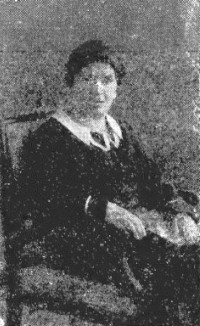
If the Jews of the place were such – Reb Yitzchak Plott and his wife Sheina-Chaya were certainly so. They were a match from heaven, a pair of doves full of tenderness, love, friendship, and dedication. Their home was an excellent home in Kamin Kashirsky, not because of its wealth, but because of the modesty and love of the fellow that pervaded there, and the pleasant way in which they welcomed every person, without exception. The trait of Yitzchak and Sheina-Chaya for tending to guests knew no bounds. Everything was done without expectation for reward. The townsfolk would say that if the Master of the World had distributed ten measures of the trait of tending to guests humanely –
[Column 218]
Reb Yitzchak and his wife had received nine of them. Every person with a bitter heart, everyone in need, anyone hungry or tired found rest and shelter in their home. This was known throughout the entire area. Emissaries, charity collectors, rabbis, Beis Midrash students, or regular passers-through would always find the way to their door, and benefit from the good heart and generous spirit of the master of the home and his wife.
Reb Yitzchak and his wife Sheina-Chaya were G-d fearing, and always occupied with mitzvot. They always conducted themselves calmly, without religious zealotry and without arousing ill feelings among those who acted differently. They both valued the movement of the return to Zion, and did not oppose Haskalah and progressive educational activities for the Jewish youth.
When Reb Yitzchak was young, he was invited by his relatives to
[Column 219]
the United States, where he lived for a period of time. The longing for his home, his town, and its way of life affected him while he was still in the United States, and he returned to his native town.
Reb Yitzchak was a shochet the son of a shochet, in accordance with family tradition. He fulfilled this role with awe and love. He was also a mohel. For him, that was a matter of mitzvah, and under no circumstances would he agree to accept payment. Furthermore, he was always especially happy when the opportunity for this mitzvah came to him.
Reb Yitzchak was a man of refined soul and precious spirit. His voice was pleasant and sweet, and many streamed to his house for kiddush and zemirot [Sabbath hymns]. His appearance evoked honor and splendor. His wife, Sheina-Chaya, was his helpmate. She was a proper Jewish daughter, full of charm and refinement. She was diligent with the education of their three daughters, two of whom, Pesia and Puah, are living in Israel.
The natives of Kamin Kashirsky will never forget the splendid efforts of Reb Yitzchak of blessed memory to support impoverished families. This poor man was completely devoted to the needy by giving discreet gifts. It was his custom to visit the wealthy people of the town every Thursday to collect money to provide practical assistance to widows and orphans. Every needy person found in him a dedicated father and a redeemer in the time of difficulty.
[Column 220]
One of his daughters, Sara, was married to a dear man, a Hassid with generous traits, whose name went before him with his good deeds. This was Shevach Bergman of Pinsk. He had a precious soul, and added connections and honor to the family of Reb Yitzchak. G-d blessed them with three dear children: Yiscah, Rachel, and Eliezer, may their memories be a blessing.
The Zionist spirit did not pass over the home of Reb Yitzchak. His eldest daughter Pesia married Mr. Eliezer Shapira. The two of them were among the first to make aliya from Kamin Kashirsky. In the Land, they suffered from the difficulties of aliya. They raised three fine sons. The eldest, Baruch Shapiro was one of the first to volunteer for the British Army to fight against the enemy Hitler. When he returned from the Second World War, he joined the fighters for freedom, and was one of the brave ones to break through the road to besieged Jerusalem. His many deeds, and his having fallen in the great battle for Jerusalem form a splendid story of bravery.
The bitter fate that was the lot of millions of our people in the lands of Europe did not pass over Kamin Kashirsky. Many of its residents, including Reb Yitzchak and all of his dear family members, perished in the terrible Holocaust. Beaten and shocked, we stand to bring forward the memories of our dear martyrs. We are certain that Reb Yitzchak the Tzadik who gave up his soul in purity, will be for us a righteous intercessor on High.
by Avraham Biber
Translated by Jerrold Landau
@Roberta Paula Books
The fear of your rabbi should be like the fear of Heaven (Pirkei Avot)
Many teachers made an impression upon the youth and imbued their spirit upon us. More than all, however, was Baruch Rubinstein. He came to Kamin Kashirsky from Brest Litovsk. He became a melamed [teacher of children] since he had become impoverished.
I was five years old when I was sent to the house of Tzalia the Rimer [saddle maker] (Chertok). I entered the room with three long tables, around which there were three groups of students at different levels. It was there that I got to know Baruch Rubinstein.
I recall that when he would teach the older ones, and we would make deafening noise, he would send us to play outside. The older students were so jealous of us at that time! Furthermore,
[Column 220]
it was as if Heaven helped us, and a new house was being built directly opposite. We would sit on the piles of lumber, and watch the work of the builders with awe and appreciation. They were all Jews, headed by Reb Feivel “Tofeles.”
After about half a year, we transferred to the house of the son of Velvel the carpenter (which was located in the alleyway in which most of the meeting places of the Zionist youth movements were located). There, the crowding was not so great, for from time to time, we even intruded into the dining room of her family.
Like all the melamdim, Reb Baruch Rubinstein was very strict. Therefore, bad and bitter was the fate of a student who did not know his lessons. Thursdays were especially frightening for us. On Sundays, the melamed would explain the lesson to us; on Monday one of the students (who was considered an eloi - a genius) would review and explain the lesson with the assistance of the melamed; On Tuesday and Wednesday
[Column 221]
we would review and study the lessons; and the test would be on Thursday. How much were we beaten and scolded that day! The melamed had his own methods to evoke in us a desire for studies. The two most famous were: He would take a heavy volume of Gemara and bang it on the head of a student, or he would bang the head of a student against the wall. The eldest son of the melamed, Yerucham, was beaten almost every Thursday. He was a refined lad, but his spirit was interested in things other than Gemara.
We learned prayers, arithmetic, and Bible. We studied Gemara from the age of seven. During our final years of study, we also learned Hebrew grammar and Jewish history. We should note that Reb Baruch Rubinstein was the only one of the melamdim who knew Hebrew grammar and Bible. He attempted to evoke the love of Bible and the Hebrew languages in all ways. For example, when we studied Proverbs, he had us memorize the entire chapter by heart.
As I have mentioned, Thursday was the day of torture. However, we earned our reward on Fridays, when we spent two hours only studying the weekly Torah portion. The melamed had a sweet voice, and we greatly enjoyed listening to his reading.
[Column 222]
On the other days of the week, we liked the afternoon hours best, when the rebbe taught the other groups, and sent us to the next room to review. Reb Baruch Rubinstein had a daughter who studied in the Polish school. She understood our spirit, and often served as an intercessor for us, explaining our lateness or absence.
Once a year, the heart of the melamed softened, and his anger departed. This was on Chanukah. Then he permitted us to play dreidel or dominos, a game we loved very much. He would also treat us with latkes made by his modest, unassuming wife, who always walked silently and never raised her voice.
I still remember the days of the ghetto, when the stature of the melamed seemingly became lower, and his shoulders sagged. He and his family succeeded in evading the murderers during the first aktion, but they were murdered during the liquidation of the ghetto.
May their souls be bound in the bonds of eternal memory, and their memory be guarded forever.
by Bracha Ben-Yehonatan
Translated by Jerrold Landau
@Roberta Paula Books
He was born in the area of Pinsk, where he received a traditional education. He studied in Yeshiva; however, he would secretly read, hidden below the pages of the Gemara, Smolenskin's “The Wanderer in the Paths of Life” and Mapu's “Love of Zion.” He absorbed the spirit of Haskalah of his times.
I recall that Father always used to smile, and there was always upon his mouth a good word, encouraging to everyone. We children would do what came to our spirit. He would intentionally tarry and cough outside the door of my room on the Sabbath, so I would have time to “hide” the writing implements… he hated people who publicized their apikorsut [heresy] and called them “heretics to anger”[1].
Even though he had rabbinic ordination, he did not want to use his Torah as a means of earning a living. He used to say: “Every father is obligated to teach his child a trade in order to fulfill the verse, ‘from the sweat of your brow you shall eat bread’ [Genesis 3:19].” He was religious but not a fanatic. He was one of the first to help set up the Tarbut School in our town. He was a
[Column 222]
communal man who concerned himself with the wellbeing of the public. He established all types of institutions, “Linat Tzedek” [for tending to wayfarers], “Gemillat Chasadim” [a charitable society], and others.
With this, he was an enthusiastic lover of Zion. He supported the Keren Kayemet and Keren Hayesod. He understood the spirit of the youth, the pioneering spirit that beat within us. Therefore, he did not stop me or reprove me when I organized a chapter of Hashomer Hatzair in our town.
When Mother would weep and complain, “Is the purpose of a proper Jewish daughter to run about with all the tailor and shoemaker youths?” he would comfort her, saying, “Don't worry Feigel, in her merit, we will yet succeed in making aliya to the Land of Israel…”
He dreamed of the Land of Israel. He would express his longing in his letters to me. However, he was not blessed to actualize his dream in life. The impure, cruel hand cut off the wick of his life. He was among the first to be murdered by the Nazi beast.
May his soul be bound in the bonds of life.
Translator's footnote
by Dov Amamit (Droog)
Translated by Jerrold Landau
@Roberta Paula Books
|
Already in his childhood, Yossele demonstrated exceptional talents. His father, Feivel of blessed memory, was a quiet Jew, pleasant to his fellow man, known throughout the entire area as an expert builder. He was not strict and did not take interest in whether his son prepared his lessons or absorbed his study material. To him, it was only important that Yossele would be healthy and strong.
However, Yossele did not require encouragement, as he was one of the excellent students in school. He took an interest in mechanics and tried his hand at inventing.
When Yossele got older, he decided on his own to study watchmaking. He went to Shaya Kroin the watchmaker, and learned the trade so well that, within a week or two, his teacher recommended him in cases of complex repairs.
After a brief time, he left this trade and decided to become a builder like his father. Yossele quickly became good at building houses.
Yossele also learned to play the violin without taking lessons and without knowing how to read notes.
Yossele was active in the Hashomer Hatzair chapter. He asked and answered many questions. He was an energetic person, and knew how to bring his thoughts to action. He never became frustrated. His soul always longed for what was new.
With the invasion of the Germans, he had no doubt that the only recourse was to escape to the forest. As good, dedicated friends, we always acted together,
[Column 224]
and we forged a plan to collect weapons. Yossele succeeded in repairing several broken guns.
After we escaped to the forest, we visited the ghetto on occasion for the purpose of enlisting weapons and youth who knew how to hold weapons.
Once Yossele went to the ghetto himself, for the commander did not permit me to join him. When he returned to the forest, he did not find me. I had been sent with a partisan brigade to a different place, farther away. We never met again.
This is what his wife, Hinda Krosznik (Gabbai) told me:
Yossele was very disturbed that he did not meet me. However, he continued energetically to gather people, weapons, and arms. To this end, he returned several more times to the ghetto. He met with several of the Judenrat members, especially with Ben-Zion Karsch. They provided him with boots, radio receives, furs, and other necessities that were required in the forest.
As long as the Russian partisans knew that the Jews could bring benefit, they behaved properly toward them. However, when they heard that the ghetto had been liquidated, they began to kill their brothers in arms.
The Christians of the area, who maintained contact with the Jewish partisans, said that Yossele was murdered by Russian partisans. This took place on 3 Tevet, 5703. Later, his body was pulled out of a stream that flowed not far from the forest.
Yossele, who was imbued with hope and faith in a better, more just future, was 25 years old when he died. His memory will be etched in my heart forever.
by Nechama Greenstein-Wernick
Translated by Jerrold Landau
@Roberta Paula Books
From the depths of loss
Bring forth the aberrant song
Black like the embers of your hearts
(Bialik – Scroll of Fire)
I permit myself to hereby recite Kaddish for my family, albeit in a style and manner different than usual.
My small town, Kamin Kashirsky in the district of Polesye, was once dear to me. Throughout generations,
[Column 224]
Jews lived there, until the wrath of G-d fell upon them, and the Nazi soldiers trampled its ground, impurified it, and saturated it with Jewish blood.
A living picture passes before the eyes of the writer of these lines: Grandfather Pinchas Wiener and Grandmother Chaya, whose purity and shine emanate from their countenances. They are smiling toward the children and grandchildren who surround them. Father Avraham Greenstein and Mother Miriam are busy and occupied with the livelihood of the family that they established, as they dream of the future of their daughters.
We were five sisters in the house. Zelda, the eldest, was already married,
[Column 225]
and she had s charming daughter. The second, Laya, was a member of Hashomer Hatzair, and hoped to build her future in the Land of Israel. Golda and Pnina were still students. I, who am recalling these memories with tears, was the fifth.
Our family was respected and loved by all the residents of the town, both Jews and Christians. However, it was suddenly decreed that it be cut off from the land of the living with tribulations unparalleled in history.
First, Grandfather and Grandmother were murdered. Then, the rest of the family was murdered at the time of the liquidation of the ghetto. My sister Lea and I succeeded in
[Column 226]
escaping from the murderers. We decided to escape, but the Germans captured her. She was taken out to be murdered along with the rest of the people of the town. I remained alone.
I was young and forlorn. Where should I go? To where should I turn in the forest? I had never been outside the town.
There were groups that succeeded in hiding in the nearby forests, but they were wary of accepting a “superfluous” person, especially a sixteen-year-old girl.
Nevertheless, I was accepted into a group consisting of 20 lads and two girls. We lived as one family until the liberation.
by Yosef Ganani
Translated by Jerrold Landau
@Roberta Paula Books
|
|
Like her brother Yitzchak, and despite her many tasks over and above running the household and raising the children, she never knew weariness when there was a need to extend assistance to the Jews of the town and the area, and frequently also to gentiles. Her name went before her, even in the courthouses and government offices. The farmers would arrange their affairs with her guidance and advice,
[Column 226]
both regarding affairs between themselves, and those relating to the Polish government. Despite this, there was nobody to save her from the Nazi murderers on the designated day.
If danger was threatening the Jews of the city, this strong woman displayed no concern for herself, as she hastened, day or night, to save and protect, to pay a ransom, and thereby to prevent disturbances and pillage.
I recall that when the First World War broke out, Cossacks camped with us. My mother found out that they were planning a pogrom before they retreated from the city. Without hesitating, she immediately approached the Etman [Hetman – a title for a military commander], whose fear fell upon everyone. She paid him a bribe, and made an agreement that he would allow the Jews to leave the town and go out to the nearby forest with their property. Indeed, he agreed. All the people survived, and the town was not set on fire. After they returned to the town, my mother made an agreement with the new commander of the town, a Russian German – thus, the city and its Jews remained whole until the entry of the Germans.
With the retreat of the Germans, my mother was very involved in obtaining weapons. She was also involved in the self-defense committee that was set up later.
The city was conquered by the Poles before the Red Army reached us. Before they retreated, the Balachowitz mobs remained in the city, under the command of Captain Darski, whose famous statement was, “I must consume the liver of a Jew.”
When my mother saw that the murderer would not leave the place without perpetrating disturbances, she began to collect money to bribe him. With the assistance
[Column 227]
of the Pravoslavic priest, in whose home the murderer was hosted, she succeeded in this and saved the town. We should note that the priest himself was not among the lovers of Jews.
Then one night, during the retreat of the Red Army from the town, we heard knocks on the door. When my mother asked who was knocking, she was told that they had come to take her to Captain Darski. We pleaded with her not to go alone with the hooligans, but she responded that they would not dare do anything to her, and even if they did, perhaps others would be saved on account of this. Before she left the house, she commanded us that if we hear that pogroms have broken out, we should hide with the farmers of the area.
When she stood before the rioter Darski, she demanded that he stop the rioters until 9:00 a.m., and she would bring him what he requested – money and jewelry – as long as innocent blood is not spilled. He promised to fulfill her request. She began again to collect money. However,
[Column 228]
in the meantime, the beast thirsty for Jewish blood murdered Shalom Karsch, who did not want to interrupt his morning prayers. This served as the first sign for the beginning of the pogrom. When my mother realized that she could no longer salvage the situation, she advised the Jews to escape, and she risked her life in offering assistance. Finally, she hid in in the forest with the Dzovs, whom she would send to investigate the situation in the town and to find out who survived.
This wise, strong woman of many deeds knew no weariness when the lives of the Jews were in danger. She was always prepared to risk her life and to dedicate all that she had for the benefit of the community. During the mass murder, she too was murdered along with all the Jews of the community whom she had succeeded in saving so many times.
May her memory be blessed and praised.
by Frieda Malek
Translated by Jerrold Landau
@Roberta Paula Books
Henia Malek from Glusha Vielka was an honorable, generous woman. She used to say, “One hand should not know what the other is giving.” Such was her level of caution in her assistance of poor people[1].
Her Husband, Yaakov Yosef, was a pleasant, intelligent man. He would serve as the prayer leader on festivals and the High Holidays, as he enchanted the hearts with his sweet voice.
She had four children: Tzipora, Itka, Moshe, and Freidka, may she live.
She looked positively on how Freidka went out to Hachshara, and how her other daughters were involved in the bustling local youth, desirous of knowledge, study, and thought.
When Freidka was about to travel to the Land of Israel, she did not part
[Column 228]
from her with tears. It was as if she was saying, “We will meet up tomorrow or the next day.” However, it seems to me that, at that point, she had premonitions about what might come, for she gestured her hand toward the accompaniers, especially the younger ones, saying, “Leave from here while there is still time. Travel and scatter to every corner. Perhaps a remnant or a survivor will remain.”
That same year, the war broke out, bringing on the Holocaust.
In Drohichen, to where she fruitlessly fled with her family members, in the commotion of boarding the vehicles setting out for the vale of murder, she was suddenly pushed to the other side due to a supernal force. She ran and reached the village of Bilinok, her native village. There, she hid for a long time in the home of a farmer, and there she gave up her soul full of agony, hunger, and drained of energy, three months before the liberation.
May her memory be a blessing.
Translator's footnote
|
|
JewishGen, Inc. makes no representations regarding the accuracy of
the translation. The reader may wish to refer to the original material
for verification.
JewishGen is not responsible for inaccuracies or omissions in the original work and cannot rewrite or edit the text to correct inaccuracies and/or omissions.
Our mission is to produce a translation of the original work and we cannot verify the accuracy of statements or alter facts cited.
 Kamin'-Kashyrs'kyi, Ukraine
 Yizkor Book Project
 JewishGen Home Page
Copyright © 1999-2026 by JewishGen, Inc.
Updated 17 Jun 2026 by JH