 |
[Page 60]
by Menukhe Shultzer, New York
Translated by Tina Lunson
My uncle Itshe Mayer Asterik was a wealthy man. He had a tavern in Rozhan and a large manufacturing business. He was tall, handsome, could study well and was a wise Jew. One could seek advice from him.
When he became rich, he moved to Ostrove-Mazowiecka. Then the First World War broke out. There were some who had gotten rich from him, but he became impoverished and literally had no livelihood. Meanwhile his children were growing up and people advised him to move to the village Sipiwo and open a shop there. He did so and it went very well. He made a nice living.
One time when he traveled to Warsaw to purchase merchandise, he left his twenty-year-old son Shleyme in his shop. A young non-Jewish youth of about fourteen years strode into the shop and asked him to change a [American] dollar. He was deceived by the bargain, bought the dollar and forgot two things: first, it was strongly forbidden to deal in foreign cash exchanges, and second, that such a youth had probably stolen the dollar, and he had fallen for buying stolen merchandise.
[Page 61]
Meanwhile the mother of the sheygets saw that the dollar was gone and gave the boy a good thrashing until he confessed that he had stolen it. He also told her that he had sold the dollar to Jews.
The mother of course went to the police. They arrested my cousin and his trial was set for Rozhan. He was freed on bail until his trial.
There was a police sergeant in Rozhan, a half-German-half-Pollak but a complete and pathological antisemite and sadist. We called him by the nickname pozshitsz (lend me) because he was always asking for loans that he would not pay back. If a Jew fell into his hands he would beat him until he did not need any court. He literally waited with joy for my cousin to fall into his hands.
My cousin knew that, and coming to Rozhan he did not have as much fear of the court as he did of sergeant Mishek. He told us so openly. I was fifteen years old and I declared that I must help him. They would not arrest me. I must contrive something in order to same my cousin from Mishke's hands. I settled back that evening and contrived a story that I could give witness to.
I had memorized my own invented story. A day before the trial I went to Shleyme Lokh's wife. (The trial was to be held in Shleyme Lokh's large building.) I told her about my innovation. Golde Lokh went to the judge – a fine, honest Pole – and told him “Tomorrow a young girl will give witness in the court. Do not frighten her. Speak with her mildly and do not let anyone else frighten her. Do me this small favor.”
In the morning the trial got underway. I went in to give witness. On one side was my cousin Shleyme, on the other side Mishek with the goyish woman and the young sheygets. They called me up and gave me the oath. The chairman of the court was taller than my mouth and obscured my lips so that when I had to repeat the oath, I did not repeat it precisely. No one noticed it.
The judge interrogated me and I related the entire history. Mishek interrupted and said to the judge, “Why are you letting her tell such lies?”
The judge answered, “She is believable. She is a child from a good home. I believe her. He is a thief from childhood on, and I do not believe him.”
My cousin was released. Afterwards the sergeant ran after Shleyme and said, “If you come into the courtroom to me, I will break you into little pieces with my own hands. But you have more luck and sense. If not for the little liars, you would not have come out alive from me!”
[Page 62]
It is important to mention such episodes. They reflect the tragic fate of Jews when they were among goyim. And retelling the events are a warning for our Jews all over the world – they should know how to assess a state where Jews are settled among only Jews.
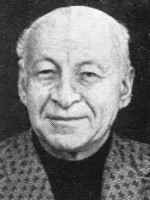
by Khayim Plotkin
Translated by Tina Lunson
|
Not far from Leyb the boot-maker's house one can see the walled-in harbor. The narrow River Narew snakes around the Sosnowa Forest [or pine forest] where a large military cemetery is “growing”. The wooden crosses scowl, bent over, as if they would clamber down the hill, to the town Rozhan.
From the damp winds that often blow from the narrow river, wild, slimy grass grows around the soldiers' graves as around a lake. The earth there is black and soft: easy for the non-Jewish youths who come with spades and dig out dirty worms to catch fish. They carry away cans full of worms, covered with damp earth. But when the Polish fisher-boys bring the gasping fish, strung out on ropes, the Jewish housewives shun them. “They are not at rest, the fallen soldiers, may God help us,” say the wives in secret, and shake their heads.
In the shtetl they say that by digging the worms in the soldiers' cemetery one digs up a shot-off ear… And although no one in town had ever seen a shot-off ear, as no one had seen Motl, Hirsh Leyb's son, floating in the river, they still do not buy the fish.
With the precision with which one would repeat a chronicle piece from a newspaper, the town still speaks of Hirsh Leyb's son:
The frozen river suddenly “let loose” and opened the sluices for a wide stream over the banks. The noise of the ice floes that broke up as the hit the sharp steel “nose” of the bridge was like the tumult of the soldier in
[Page 63]
the last battle. The tempestuous water tore out Motl's body with the shot-off ear and carried him off to Warsaw, to the Vaysl [Vistula River]. Jewish fishermen pulled the body out there and gave it over to the burial society.
Hirsh Leyb the bootmaker [kamashnmakher] – a person who was not prepared to believe the story about his son – just paced around, stunned, distracted, as if in a world of chaos. His short blonde beard became greyer, almost white. Also, his thick long eyebrows and the eyelashes over his clever brownish eyes took on a color of gloomy whiteness. On his lower lip rose the blueish, barely-noticeable wart of nervous biting – to the size of a nut.
With gnawing, hidden complaints his frightfully long, sleepless hours on his bed wore on: Maybe his son needed to hide out someplace? Was he “smuggled” over the border? Or maybe he just needed to buy a “prescription” for Motl?
Oh, no! Hirsh Leyb could not manage that by himself. Only Leyzer the painter had the way to redeem his son from the military…
Now he lay, Borekh, Leyzer the painter's son, like a not-quite killed ox. His keen protruding eyes fill with fear! His thin narrow chest rises quickly up and down, like the “prescription” that had slipped into Barukh's entrails would go on exploding.
Hirsh has thought several times of paying a sick-visit to Barukh. He is a distant relative of Leyzer the painter. But as Hersh Leyb approaches the wooden hut and hears Barukh's terrible coughing and tortured wailing, he stood for a while like a clay figure and began slowly striding toward Shul Street as if to a funeral.
Hirsh Leyb's wife Miryem the “Cossack” – as she was called in the shtetl – was also unrecognizable. A sallow complexion had veiled her round fleshy face, wrinkles without number and grooves had collected on her slack cheeks and wide forehead. Often it seems she talks to herself – although there is no clear word. She speaks more with her eyes, that peer out diminished. She doesn't change her worn-out clothing anymore. The ash-grey kerchief with the dots, like flecks of rust, is strangely tied around her head.
The diamond earrings and the gold rings she took off her rough hands long ago. Miryem was two heads taller than her husband and was always proud that her six sons completely resembled her. Now Miryem barely dragged her tall clumsy body around in soft slippers. If a neighbor would gently begin to console her, that she may do better with something to do with her hands, a new spring opened in her red-rimmed eyes: “Who am I left with, Goteniu?” she complained in the trope of the Tsene-u'rene. “I raised six sons like bears, like leafing oak trees, and now? Now…”
[Page 64]
Miryem was left in the house with two children: the barely thirteen-year-old Fishl – the youngest of the sons – and the Cossack girl who had a lot of freckles on her turned-up nose.
She did not have pleasure with all her sons, Miryem, as parents wish; but Motl who stayed to work with his father was the merriest and most loveable. Can it be possible – her thoughts did not let her rest – that Motel was in town and did not even come to visit his parents for a moment? Perhaps it is a lie, what the grey-haired Vietratshnik told her, that he himself had “caught a word” with Motl while his troop was running to guard the forts?
During the days and nights when the frightful battle to capture the fortified town was going on and people were going to hide in cellars and in pits, Miryem did not want to leave the little wooden house. Hirsh Leyb's shouting was no help, nor the plea and weeping of Sore'le, the Cossack girl. Miryem remained stubborn: “If death is destined for me, God in heaven, I will die in my own bed!”
Soon the blown-up bridge had been repaired, new panes installed in the afflicted windows; several fairs had been mounted in town and Miryem seldom left her bed. While she stayed alone in the house, she twisted her head to the pictures of her sons on the wall and looked for a long time at her children, as if they were standing by her bed.
The two eldest, Meyshe and Beynesh, the ones already married and with children who lived in a nearby shtetl – those she could at least see. With their short black little beards and white hard collars with the bow-ties in their green little frames on the wall. It seemed that she heard now as before, their songs as they worked at their sewing machines and Hirsh Leyb in the workshop led their band:
“Cut the leather with the knife!
the wheel gives chase and sews;
the boot will be bought at a fair,
when the mud covers the snows.”
The singing filled all three rooms of the small house; it even resounded in the quiet little lane and people stop to hear.
“A lucky father, the bootmaker!”
“Six sons ken-e-hore, and a seventh on the way…a golden belly!”
The children grew tall and big-boned like their mother “the Cossack”. Young mothers were envious of Miryem: “I'd like to have what you have, without taking it from you.”
But no one knew the trouble and agony Miryem got each morning when the sons got their clothes all mixed up.
Hirsh Leyb came up with a way to quiet the “rabble”:
[Page 65]
to embroider their names in their clothes! Miryem promptly carried out the plan. But who could find a trick for the boots? If the lame portrait-maker with the Gypsy eyes had not appeared at the fair, and khop-lop the photograph was ready on a thin piece of tin that he could stitch on the strap of each boot, the “rabble” would never have been quieted.
Now Miryem lay in bed and sobbed. A beam of sun that with the last rays lit up the forest in its passage through the sky, clung to the window, caressed the grooves of Miryem's round face; caressed the pictures of her sons where her glance was turned:
Near the pictures of Meyshe and Beynesh hung a picture Velvel'le who had stolen across the border. Almost the entire shtetl had seen his American photograph. She had read Velvel's letter countless times, where he told about the wonder of the “American rascal”, that trains fly over your head and disappear into the ground!
Miryem stifled the tears. With her eyes the caressed Velvel's curly hair and solid unbuttoned throat. His huge black eyes looked out with fright, speaking to her in his strange talk, like when he would speak quietly because “walls have ears”.
She did not at all understand then what Velvel was saying, that it was getting too “tight” in the shtetl. The Polish blood-hounds were spreading their net. From the police raids where they dragged people out of beds and took them to jail – Velvel, as if by miracle, had just saved himself! More than one book and pack of posters smoked out of Hirsh Leyb's chimney.
The police came searching not only for Velvel but also for Fulye – who truly did shorten his parents' lives.
When Fulye disappeared from the house, people in town began to say that he, Fulye, became the leader of a band of thieves. From a red-haired fabric merchant with a pocked face who traveled around to the farthest fairs, people realized that Fulye's band “set up” freight wagons near a forest. As luck would have it a prince rode through while hunting with a pack of dogs, and they tore Fulye apart, alive…
The news spread to the bootmaker's house.
A few days later Hirsh Leyb's sons Meyshe and Benish went out and came back with a pair of bloodied boots, like Joseph's brothers had brought back Joseph's bloody stripped shirt.
Hirsh Leyb then looked at every stitch in the twisted bootleg, looked at the dried-out button and breathed easier. Miryem, as did everyone else, searched for a sign – the little picture with all four “ears” – and all the bad dreams came begging at the red-haired fabric merchant with the pocked face.
[Page 66]
Hirsh Leyb's workshop stood like an overgrown grave. Dust and spiderwebs gathered on the shrouded forms that hung over the two sewing machines. The prepared glue in the little copper kettle had long since dried out and closed up with a green “fur coat” like moss.
When there was nothing left in the house to pawn, Hirsh Leyb gathered up the soft pieces of leather and tried to sharpen the humpbacked knife. Maybe he could get something going with the help of Fishl the bar-mitsve boy – maybe get a few orders from the other shoemakers. But his dry fingers trembled terribly: the day that they took Motl into the military they also took the bread out of the bootmaker's house!
Hirsh leyb put out a call to Berele, as before, when a machine broken. Berel with his sack of tools, like a doctor, stood at the threshold with a puzzled look at the covered sewing-machines. Hirsh Leyb quickly took the dusty piece of fabric off of one machine.
“Do you want to buy this?”
“Buy?”
“Yes! Buy! Buy, I'm saying to you!”
“Reb Hirsh, wha-at?” The confused Berl with his greasy face remained standing with his mouth open.
Hirsh Leyb stood by the uncovered machine for a while, like a person who suddenly feels faint, and leaned on the low kitchen stool. His trembling voice was now weak, tired: “I yelled at you, Berl, as if you are guilty for my ruin. Today I am let loose like a dog from his chain at every innocent person. I don't know on whom to let loose my bitter bloody heart to. Meyshe and Beynish have houses full of little children who go around tattered and torn. Velvl must flee across the sea. He wants to remake the world. True, he was a dear child. He often sends letters with money. Fulye? It would be better to have buried him as a child. He will not disgrace my name. Motl? Where will his bones be found? Will my eyes ever merit seeing him alive? He used to sit at this machine treading and singing…
Miryem, who had heard the conclusions about her sons, came into the kitchen where the uncovered machine was and looked at everything like a stranger. Man and wife had battled over this a long time and avoided one another's glances. But when they were not angry, she was not against Hirsh Leyb's selling the machine. She was not against it when he pawned the diamond earrings, the wedding gifts and the gold rings. Only Sore'le the little Cossack girl, cried and lamented that her parents let the sewing machine out of the house.
[Page 67]
The parents were not in the house. At the miller's, where Miryem had often gone, she learned that Hirsh Leyb had also come to inquire whether it was true that he, the windmill operator, and Motl had “exchanged words”.
Now Miryem was walking downhill, along the narrow footpath that led to the pine forest and to the soldiers' cemetery. She held her long, wide petticoats up with one hand so that the edges would not rub in the grass and the dried twigs. The other hand she held under her left breast, where her heart was hammering. This was not the first time she had gone to the soldiers' cemetery, but as she neared the familiar grave she needed to support her tormented heart.
Miryem stopped at every cross. She took out from her full bosom a bit of paper on which Sore'le had written in Polish “Motl Yagoda” – and she compared the letters of her son's name to the unclear names on the wooden crosses. She comes here often, Miryem, and woozy, depressed, she drags herself home. She did not ignore the graves behind the forts, extending deep into the forest.
On a tree that the wind had ripped out of the soft earth by its roots, Miryem sat down. Her weary legs with the knotty veins like rope had now become heavier than ever. She felt heaviness in her whole body. She enjoyed the breeze that began to blow harder from the river and remained sitting – in a light doze – with her eyes half closed.
The sound of footsteps, running, began to pound in Miryem's ears, knocking in her head. Steps of horses' hooves tearing up the stones of the narrow lane! The oxen and the rims of the wheels creak under the heavy load! The horses run with heads high in a wild gallop! Canon balls pelt the town; the little wooden houses catch fire. The sparks and the thick black rolls of smoke roil up to the heavens. Debris hails down from the other side of the bridge. The slaughter is in full swing. Desperate voices carry up as if from hell.
The soldiers run as if poisoned. They race to the front. Multitudes swim past before her eyes. Rows of dusty boots stretch over the flat, torn up earth! It seems to Miryem that she recognizes one pair of boots; on the “ear” of the bootleg her son's photograph peers out: “Motl! Motl!”
Miryem rolled down from the place where she had been dreaming for a few moments. She lay for a while without any strength, like the uprooted tree that the wind had pulled out by the roots.
She slowly lifted herself and stood with her face to the brick forts. Sweat from angst covered her whole body. From under the cheeky scarf on her head peeked out a strand of grey hair. Miryem began brushing the ants off her bare hand and shifted herself up from the uprooted tree.
[Page 68]
The river snaked quietly and secretively and the fire of the sunset gleamed in the water's reflection. That very same Narew River that not long ago was red – blood red – and whose current had carried the murdered away… Quiet and calm, the cows pastured in the green valley and listened to the cowherd's longing melody as he played on his fife.
Not hurrying, Miryem turned toward home. She could hardly drag her feet up the hill and stood still. On the left, from behind the shrubs near the forest, a familiar melody carried over; the same melody her husband Hirsh Leyb used recently to recite psalms. She quickly began walking and saw Hirsh Leyb. He was standing with his coattails flapping and shaking as if he were saying kadish for the fallen.
“Hirsh!”
Miryem's voice was full of tears. He looked at her as if to say that he was no longer angry with her now. Why be angry? They both felt the loss. Hirsh Leyb sat back on his outspread coattail and began explaining himself to Miryem.
“Motl came to me in a dream. He asked me why no one was saying kadish for him.”
Miryem sank down onto the other outspread coattail with a cry: “Motl also came to me in a dream. Already the second time in a week. The first time he brought two baskets full of fruit, apples, pears, plums and red raspberries that he had picked in the priest's orchard. He wasn't even afraid of the priest's dogs. Everyone there has respect for his soldier's uniform. He stood at the doorstep with the full baskets in his hands and said, 'Here, take it, try the fruit, refresh your hearts. You are hungering here.' I asked him to sit at the table, but he was in a hurry. 'I am a soldier' he said, 'and I must disappear.'
Miryem breathed heavily, wiped her ees and presented the second dream:
“The second time Motl came supported on crutches. He was torn and tattered. Miserable and humiliated. One half of his head was bandaged, and by his ear blood had soaked through the bandage. By my bed, at the head, Motl stopped, took off his boots which he carried on his arm, and gave them to me: “So,” he said, you should give these to Fishl. But do not allow him to go into the military. They treat dogs better than they treat us, the Jewish soldiers. When there is rain, or mud, they simply torment the Jews with ordeals. The officers torment us for hours on end. Do not forget: Fishl is forbidden to fall into the paws of the Polish persecutors. Look what happened to me – they sent us Jewish soldiers first under fire.”
[Page 69]
Miryem remembered this clearly, what Motl had told her. Now she became a little lighter after telling her husband all this. As if a load had been lifted from her heart, when Fishl would be grown. Not for nothing did Leyzer the painter buy a “prescription” for his son.
The evening redness in the sky was calming. A fragment of the moon began to peek out from behind the forest. Crickets in the grass started to sing and the frogs, to croak. A little boat that was tied to the shore began to sway on the water. Miryem began to cozy up to her husband. A shiver ran through her body. They both were silent, like mute mourners.
Sore'le came running up to her parents. “Tateshi, Mr. Mrodzshienski, the caretaker of the old cemetery, has been waiting for you for a long time.
Mrodzshienski, the small hunchbacked guard of the old cemetery, prepared to give a hearty “Dobri vietsheur”.
Hirsh Leybl shook his head mechanically to acknowledge Mrodzshienski, his old friend who often brought a little work to the bootmaker. Indeed, now Mrodzshienski brought a pair of bootlegs for one of his sons. Hirsh Leyb was ready to take the work. He good-moodily asked him, “Tso slichatsh?”
Mrodzshienski made a “zup” on his half-extinguished pipe, raised up his hunchback and stood more pitiful and smaller that he really appeared. With nervous fingers he took out a package from under the patched short jacket that he wore summer and winter.
“I have a pair of boots for you, Leybku. I can sell you a lot of boots. Cheap as beets – give them to you. I can certainly get a better price from shoemakers, but I don't trust those Jews. But you, Leybku, only you, I do trust. We've known each other for a long time.”
A heavy odor came from the boots that Hirsh Leybl had dragged from the backpack. A smell that resembled rotting flesh. Like the smells from the tannery, where they scraped the softened pelts. For a moment Hirsh Leyb stood absently. He was recalling a fresh grave that he had noticed yesterday near the forest…and now the disgusting stink from the boots choked off his breath.
The peasant stood pale, shocked. Maybe the boots needed more airing out, he thought, so the Jew would not guess where the boots came from.
Hirsh Leyb quickly threw the boot out of his workshop. He grabbed the peasant by the lapels of the jacket and began to shake him: “I do not want such bargains! You ugly, sinful soul! Don't bring what you dragged off a corpse into my shop!”
The outraged Hirsh Leyb was going to knock out the peasant's two loose teeth
[Page 70]
when Miryem, who was laying on the bed in the next room, ran in. “Crazy man! What do you want from a Christian? Just look how the beggar got you worked up!”
Miryem picked up Mrodzshienski's discolored, dark blue vizor and handed it to him.
“Don't talk to him. I will buy the boots from you. You said to give you eight zlotych? Good! You'll get your money tomorrow. Bring a lot, as many as you can get. Bring all the boots here. You don't need to look for any other customers.”
The peasant answered Miryem's speech with a satisfied, grateful smile. He thought to himself, “Sure, I will bring her the merchandise. There are cemeteries by the pine forest and behind the forts…” There were even cemeteries and soldiers' graves near his hut. But this very pair of boots, he could swear, he had not dug up. A pig had disturbed a grave. Now he knew, Mrodzshienski, that the soldiers lay in shallow graves…
Miryem prevailed upon her husband, pleading that he would not mix in. Of all the graves of the millions that had been shot, Miryem would insist that Mrodzshienski dig up all of them. Although Miryem could never pronounce that wild thought. She had already examined the “ears” of the boots several times and asked Hirsh Leyb if he could recognize his own work.
At her mother's order Sore'le ran to fetch Peysakh the shoemaker.
“I want twelve zlotych for the boots. Tomorrow there will be more. Every night I will have a fresh lot. Just don't spread this among the other shoemakers.”
Hirsh Leyb interrupted about the price. “Not twelve zlotych, but eight! I will pay eight zlotych. I do not want any profit! Not one penny from Esau's pig-feet!”
Peysakh the shoemaker looked at Hirsh Leybl as if the bootmaker had become demented. Hirsh Leybl knew very well that the boots were worth three times that much. Today a small piece of leather was worth its weight in gold! People went around in old clothing and dilapidated shoes. They “dressed” in dyed sacks and ordered a pair of clogs from the lathe-turner. People wore crude oaken soles and walked as if on stilts.
Mrodzshienski kept his word: almost every night when the soot-covered, pot-bellied kerosene lamps had been put out, he brought a pair of boots to the market square by the broken pump. Often, several pairs in a sack. Miryem had a ritual with them. With every boot she went through the same procedure: Searching the “ears” and asking Hirsh Leyb to “take a look”. Like a person who is drowning and is grateful to grab at a straw, so Miryem did not want to give up the last hope. The windmill operator had sworn to her that he had “exchanged words” with Motl while Motl's troop was running to protect the forts.
[Page 71]
Peysakh the shoemaker discussed with no one that Miryem had given him the dirt-cheap boots that she bought from the hunch-backed peasant and she herself lived in poverty. The town however had learned of it somewhere and began to murmur. The wives had taken on a theme:
“We do not want to by the fish from the gentile boys, from the cemetery, and Miryem Cossack the religious piss0pot is filling a sack with gold! Tfu-tfu-tfu! they spat, as if exorcising an evil-eye. “May God not punish us for our gossip.”
“It's not my business,” called out a second one with a pious tune, “anyway, may she soon pay up her swollen debts.”
In the shop, Sore'le was refused credit for the quarter-pound sugar for Shabes: “Not so fast, your mama can pay today. The book where your debts are recorded has swollen to the size of a mountain.”
The two Shabes candles fluttered darkly in the bootmaker's kitchen. The wax dripped into the sand where the warped candles stood. The brass candlesticks and the handles of the doors had been taken to “save the state”.
From the perishing wax candles, the shadows wavered on the dozing walls. By their weak gleam, in the alcove, Miryem looked at the pictures of her sons: Meyshe, Beynesh, Velvel, (Fulye's picture was framed in copper), and Motl in his soldierly, grown-up uniform. Tomorrow, at Fishl's bar-mitsve, it would not be the celebration that it was by the first five sons. The shoemakers. Who had then literally been overwhelmed with orders will not come to the kidush. The shtetl will not talk about the great feast.
Fishl, the bar-mitsve boy, sits at the spread table like his father, depressed. Sore'le sits by the oven with her just-washed head and weaves red ribbons into her blonde braid. The freckles on her pointy nose gleam with joy: tomorrow she will go with her mother to shul and watch, will see how Fishl, donning his father's talis, makes the blessing over the seyfer-Torah.
Sore'le looked down from the women's section, but her joy was ruined as soon as the shames called Fishl up and Hirsh Leyb with his son began to walk to the bima. The “Eastern wall” was in turmoil. Vove, the red-haired fabric merchant with the pock-marked face set on Hirsh Leyb with anger:
“Jew of no faith! Away from the seyfer Torah! Drive him out of the shul! He robs graves! Because of him there will soon be a plague on our heads!”
Leybke the councilman stretched out his long neck like a rooster crowing to a hen: “Throw him out, the spoiler of Yisroel! He must be eradicated to the root!”
Vove the fabric merchant and Leybke councilman with the long neck got help: those called to the sixth aliye and the leaders of the maftir service – the puffed-up aristocrats – lost their tempers and steamed. Like galloping horses.
“Shameless! Bringing shame on the Jews! Get out of the shul! Throw him out now!”
Peysakh the shoemaker and his two sons came to Hirsh Leybl's aid. The shul was in chaos. Fingers twined into beards. Torn taleysim were trampled. Velvet yarmulkes were flung from heads as in a tempest.
Several days had gone by since that Shabes and Peysakh the shoemaker paid a visit to the bootmaker. Mrodzshienski was not bringing any more boots because the peasant knew what had happened in shul and sniffed danger.
Hirsh Leyb spoke little to his wife. Although he was not angry that Miryem had bought goods from the peasant. He had quietly hoped and pleaded to learn something about his son. Where were Motl's bones? The disgrace and humiliation that the councilman and the fabric merchant had done to him did not bother him. He knew that Vove the fabric seller had never apologized to Miryem for “upstaging the wedding” in his fabric shop. Was that where the story started that Fulye had “set up” two loaded wagons near the forest?
Miryem decided to find the reason that the peasant was not coming around anymore. She took the little money that she owed him and went to the hut by the old cemetery.
She found Mrodzshienski in convulsions, wrapped up in the bed as if there were a frost outdoors. His face – black as Cain. Sometimes his frightened eyes were closed completely and his dry lips whispered as if in prayer. When he stopped mumbling his mouth still stayed open, and his few loose teeth trembled.
No everything that Mrodzshienski spoke was understandable. Yet every word mentioned Jesus's name. God had punished him for the sin.
In the dark, digging in the graves where the feet of the corpses lay, the spade had suddenly scraped on something. It seemed to him that he had “felt” the bootlegs. Soon he would bend down and drag out the boots. But who could know that in his hurry the wooden cross was pushed crooked? A dull terrified bellow tore from Mrodzshienski's throat while his hands touched the soldier's destroyed face.
For a while he lay powerless by the open grave. Afterwards – on all fours –
[Page 73]
he began crawling among the tall grasses. He did not even give a thought to the new spade and the sack that he was leaving. His hands could not cover the open grave now, to wipe away the signs of his midnight work.
Miryem stood near the peasant with damp eyes. She looked on as he twisted his hands strangely and weakly moved his dry lips. What does he want to say? Maybe he was telling her to go to the open grave? Go there and take the spade and the sack and continue his work? He knew her intent in buying the boots from him… He knew Motl very well.
She leaned over so that she could understand what he was trying to say.
“M–M–M–”
Miryem grabbed his hands and asked with pleading, “What do you want to say? Do you want to say something about my son? About Motl? Motl?”
But there was no answer.
Miryem ran through the fields, out of her senses, wailing. Her voice reverberated widely; for here, in the field, would do all the mothers of the world who had lost their sons.
Original footnote:
JewishGen, Inc. makes no representations regarding the accuracy of
the translation. The reader may wish to refer to the original material
for verification.
JewishGen is not responsible for inaccuracies or omissions in the original work and cannot rewrite or edit the text to correct inaccuracies and/or omissions.
Our mission is to produce a translation of the original work and we cannot verify the accuracy of statements or alter facts cited.
 Różan, Poland
 Yizkor Book Project
 JewishGen Home Page
Copyright © 1999-2026 by JewishGen, Inc.
Updated 10 Sep 2026 by JH