|
[Page 35]
[Page 37]
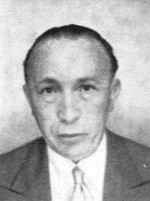
by Khayim Reytshik, South Africa
Translated by Tina Lunson
In 1920 the Bolsheviks marched through Rozhan on their way to Warsaw. They did not stop here for long, because General Haler had staged a rebellion and they had to march on. The “Democratic Polish Army” retook the areas that the Russians had captured, and Rozhan became Polish. The Russians were in Rozhan no more than two weeks but in Jewish life, much was changed.
Spiritual religious Jewish life stopped. Jews were suddenly seen as counter-revolutionaries and had to hide their feelings, attitudes and concepts. A reclassification also took place: workers – who had for generations given the control of the town to the prosperous householders and the Rozhan “money magnates” – were suddenly given the control and became the bosses of Jewish life in town, and governed very robustly. The authorities dealt only with them, and that had a very weird effect. Suddenly the boss was no longer the boss and had to consult with his workers. It was an upheaval that no one had dreamed of and not foreseen. The entire Jewish community experienced a shock.
Thus the renewed Polish regime was more appreciated. It brought back a stabilization in the Jewish street. Jews literally breathed easier.
[Page 38]
But for me the return of the Poles was life-threatening, and the episode that I relate here is unforgettable.
During the two weeks of the Bolshevik regime, they decided to purge Rozhan of all the Polish “reactionaries, nationalists, detrimental elements”. They arrested 14 Polish bosses, the most prominent in the town, sent them off to the Bialystok Forest and did away with them there.
Among the Polish prominents like Zawadski, Bonislawski, Miedzinski and others was also Mr. Gos. He was a personal friend of my father's may he rest in peace. What is a friend? He came every day to my father's tavern and drank and ate and did not pay. Jews were afraid of him because he was very important in the magistrate; and also my father had decided that it was easier not to demand any money from him and to maintain a situation of ostensible friendship with him.
But his wife Pani Gosova considered it a literal obligation of my father as a friend to go to the Bolsheviks and try to negotiate his release. If he would obey her, he would pay dearly for his intervention. But if he went to request it, he would be called a reactionary and be suspected of being anti-Bolshevik. He decided not to go and not to gamble his life for that of the Polish drunk. So, Mr. Gos ended his life along with the other 14 Poles.
When the Poles came back [into power] four armed Polish military policemen came to our house and arrested me. They took me to the military commandant. Then it appeared that the widow Gos had, for her own reasons, not complained about my father but had indicated me as her victim.
When the commandant recognised me, his eyes turned dark. He had expected a giant, and criminal, and here – what a disappointment: before him stood a half-grown boy, trembling, with two shaking peyes. My appearance did not suit the picture that she had painted. The accusation was ridiculous. But he had to fulfill his duty.
He took a big sheaf of paper from his desk, with a long complaint from Mrs. Gos. He asked me if I was Khayim Reytshik, if I was in the communist political police and if I had taken part in the arrest and murder of 14 fine honorable Polish citizens in the Bialystok Forest. According to the complaint from the widow Gos I had also delivered agitating Bolshevik speeches and so on. I had to tell him the truth, and the whole truth, because if not it would be worse for me. He did not even wait for my answer. He already knew who he was dealing with. But I was frightened to death.
Then the door to another room opened and another larger, broader peasant entered the room, armed from head to toe, and my heart that through the entire interrogation had been beating like a cheap alarm clock
[Page 39]
suddenly stopped. I was sure that right here would be judgement and sentence and the end of my young life. The peasant noticed this. He glanced at me with a smile and turned to the commandant with these words:
“I know this boy very well, over the years that I've been police chief here I've gotten to know his parents too. This is a fine, loyal family of good Polish patriots. Look at the boy. Can you believe that such a boy is capable of such things?”
Only then did I recognize him. He was a regular guest in our tavern. It seemed as though he had his own issues with either my father or with Gos. In any case, the intervention of our police commandant Polinski helped. If not for him, who knows what my fate would have been.
There are such events in other Rozhan history, and I lived to relate my own personal episode and with it to illustrate the life of Jews in Rozhan and all of Poland. Such was Jewish life and such was the value it had when it lay in gentile hands.
by Yekhezkel Geltshinski, Petakh-Tikva
Translated by Tina Lunson
|
Because of the topography of Rozhan, because of the hills surrounding it, it had its own fortifications. Because of the fortifications, everyone wanted it even more. So Rozhan experienced battles and several regimes. And if it they longed for Rozhan, it is worth remembering that there was no regime in which we Jews had a nice cup of tea.
Russians and Germans
At the beginning of the First World War, when Rozhan was under the rule of the Russians, they suspected every Jew as a German spy. Every time Nisim Katsov went to buy a calf in a village and – as was his custom – wanting to shorten his trip, he cut through the trenches, they stopped him, beat him up and deported him to Siberia. My father was also sent to Siberia.
[Page 40]
The eyruv in particular drew their attention. They could never comprehend the explanation that it was a religious installation to avoid violating the Sabbath. They were certain that it was a Jewish telegraph operated by some Jewish machinations.
When they retreated, they set fire to the Jewish town: Revenge for the espionage that they could not grasp in their hands. Jews unfortunately had to leave Rozhan.
As soon as the Russians left, the Germans occupied Rozhan. The Jews came back, wanting to have a roof over their heads. But there was no livelihood. The Germans distributed food by ration cards. One had to stand in line in order to receive bread.
But the “good” Germans carried out checks in order to ascertain that it was really true that the Jews were not making their own bread. And in order to be sure that Jews were not heaven forbid fooling them and receiving free bread, they went out at night and looked to see if smoke was coming out of any chimneys. Wherever they saw smoke, they confiscated what little flour and potatoes they found. One German, a big antisemite – Helgot was his name – led this work. He generally led everyone, and the Germans, according to their custom, followed him like sheep.
The Polish Republic
In 1918 Poland got its independence back. They promised equality to every citizen in the new state. They quickly organized a loyal army. Many gentile men from Rozhan became officers. In 1920, after a big battle, the Bolsheviks entered Rozhan. Victims fell among the Jews, too. A missile from a canon came into Meyshe Bender's house and our Yitskhak Bender had his hand blown off.
During that short time that the Poles ruled until the Bolsheviks came in, they let it be known that Jews would not get anything good from them. Every gentile was a general and the few Jews became second-ranking citizens. Of course, when the Bolsheviks were in town, Jews hoped that it would be better. But they were quickly disappointed.
That did not last long and the Russians had to leave Rozhan. And before the Bolsheviks left, they carried out a judgement on the Polish citizens. When the Poles came back in they began to quarrel. It led to a pogrom. Jewish youths had to flee or live in danger. I and a group of friends fled to Goworowo. After two weeks they told us that I could come back. Gershon Rozenblum and Shaye Bzshoze dressed as women and got in in peace. I was caught and put into the Pultusk prison. But I was released. After a certain time a gendarme arrived and arrested
[Page 41]
my father, Meyshe Kersh, Yankev Arye Yazshambek (butcher) and a few other householders and demanded money for their release. When we brought the matter before Noyekh Prilutski, the hard-working Jewish parliamentary deputy, and he intervened, and it appeared to be an initiative of the Polish intelligentsia of Rozhan.
A trial was conducted against the gendarme and witnesses were brought in. When they turned to go home, because the bridge had been destroyed, they had to cross the Narew River on a small boat. The first who went over by boat, the boat was overturned and Meyshe Kersh, Yankev Arye Yazshambek and Hershl Kashevitser and his son-in-law were drowned. The other witnesses who had watched this happen from the other side of the river, went home on dry land by way of Ostrolenke. The tragic incident brought about much sadness in the little town.
|
|
|
“The pig buys from Jews!” a call for an antisemitic boycott |
Those Fleeing the Nazis
In 1937 the Polish military stopped maneuvers in Rozhan. They took the opportunity to rampage in the streets, rob the shops and beat Jews. Just then I was returning from Warsaw with my father, and my mother was waiting for us. The Polish murderers did not rest. They attacked us. They released mother and father and set out after me.
Not so important, and painful, the blows that I got from the “brave ones” who had come for military exercises and busied themselves with robbing and beating Jews. It pained me much more when the following morning I met my Christian Polish friends and they asked with satisfaction, supposedly as a joke, “So, you got a beating, huh?”
And that was in 1937, two years before the Nazis flooded Poland with their beastly hatred of Yisroel.
by Yekhiel Vigoda, New York
Translated by Tina Lunson
|
My father, Yankev Peysakh Vigoda, was considered one of the best tailors in town. Besides his two sons – the writer of these lines and his brother Noske (Nosn) –who worked with him and learned the trade, Khayim Plotkin, Nosn Shrednia and Meyshe Yazshombek also learned tailoring with him.
There was a custom among the tailors in Rozhan on the market days on Tuesdays and Fridays, that when the peasants of the nearby villages came to sell their produce and afterwards went to purchase various things, they also came into the dry goods shops to buy fabric, one for a suit and another for a coat; then the tailors also came into those shops to represent the best craftsmen and they helped in the selection of the fabric they wanted. There were four dry-goods shops: Khane Khatskel's, Yeta the Motelekhe's, Feyge Perlmuter and Golde Lokh.
In one such market day Peyshl the tailor (as they called my father may he rest in peace) was also in a shop, this time at Khane Khatskel's. Then a gentile youth aged 12 or 13 walked straight into the tailor shop and said that his father had sent him to have his measurements taken for a pair of trousers. The group that was working that day began to bicker over which one should take the measure. While that was going on, the young sheygets was accidentally pricked with a needle or a pin. The youth ran out of there terrified, screaming that Jews were trying to stab him to death.
When the sheygets ran home and told his parents, they interpreted it as – with the Jewish Passover coming soon – they needed blood for their matsos, and they wanted to drain their son's blood. His father, who was named Partshinski and was known in town as the true antisemite, was also on the town council. His friends in the Endekes [right-wing nationalists] quickly took up the cause and immediately called together a meeting of the town council. There they spoke out against all the Jews in Poland but in particular the Jews of Rozhan. The five Jewish councilmen denied the entire event, protested against the new blood-libel, but nothing helped – the provocation grew bigger and bigger.
Two days later they published in the well-known antisemitic
[Page 43]
newspaper “Dva Groshi” the whole libel. Our father went around broken-hearted. He was shocked and pained about the whole matter, especially because he was not at home at the time. And now they were blaming all Jews.
One morning the town priest, who knew Peyshl well because he sewed for him, sent for his tailor in order to hear the truth from him about what had happened there. My father accepted the invitation happily and went off the Khane Khatskel's husband, who was considered a clever man, and asked him to go with him to the priest to be a witness that Peyshl was really with him in the shop when the incident took place. Aron Pshisusker understood that the matter was very serious and decided to go with him and relate the truth.
When Yankev Peysakh Vigoda came to the priest with Aron Pshisusker, Partshinski was already there with a certain Belditski, no small antisemite to begin with. Indeed, he had published the whole thing in the “Dva Groshi”. The priest welcomed the two Jews in a friendly way, asked them to sit down and turning to the tailor Peyshl, asked him to first relate what had happened in his shop.
Peyshl, very rattled, said that the thing had really happened, and asked Aron Pshisusker to confirm that he was in the shop that day. He turned to the two gentiles and asked them to believe him, that the entire thing was an accidental prick or a joke from an apprentice. Aron Pshisusker confirmed everything, to which the two gentiles had absolutely no reaction. Then the priest stood up, turned to the two Christians and said to them that he was certain that Peyshl was innocent and that the entire matter was overblown. “And you meant to make this an issue against all Judentum!” he said. He saw it all as joke or an accident, and he asked his brother Christians to forget it and to apologize to Peyshl.
The gentiles seemed to reconsider, calm themselves, and they shook the hands of the priest and the two Jews, and went home.
On the eve of Peysakh, when the libel had quieted down some already, my father Yankev Peysakh may he rest in peace sent the priest a package of matzo with a bottle of honey-wine; and the priest sent back a gift of sixty eggs.
For the time being the matter was silenced.
by Yosef Kvartovitsh, New York
Translated by Tina Lunson
|
This was in 1911 or 1912, when a Polack came from America and wanted to buy a plot of land with American dollars, right in the market square. He went to the owner – named Nakhman Simkhe – of a site with several shops on it and proposed that he sell him the shops along with the land. Nakhman Simkhe, unprepared, dallied a few days to decide and give the American an answer. And after he had consulted with his sons – wagon drivers, it seems –he gave an answer offering a price that they thought was too high. The customer did not see any great rush and also delayed a few days to deliberate.
Nakhman Simkhe confided in his neighbor and friend Hersh Leybl and offered to let him be the broker (the buyer pays the broker). Hersh Leybl drew his younger brother Berl Velvel into the deal, and the transaction was sealed. They also asked the buyer what he planned to do with the purchase. He said, “For now, nothing.” Because after he paid for the place, he would not have any money to build anything. He would have to go back to America and save up some fresh money and come back and build a fine house, a masonry one.
After the transaction was finished and the town found out that Nakhman Simkhe had sold his estate to a Christian, a rumor started that he would build a big business with various articles and that would mean that Christians would no longer buy from Jews. He would take the livelihood, the bread, from the mouths of all the Jewish merchants and impoverish the whole town.
Further, a Jewish Rozhan householder complained to the Rov in his home that he had wanted to buy it and even offered a good price for it. But they sold it to a goy. The seller maintained that the offer was laughable and that because of that they would lose a lot of money because they had not dared to ask more than twice as much, and they had gotten that. Today they think that they were tricked.
The Rov demanded that they refund the money to the goy and abort
[Page 45]
the sale. But the seller showed that the deal was completed and it was impossible to change it. “The town should try to buy the property back.”
After much shouting and screaming it ended with an excommunication that the Rov and the community laid on all the participants along with their wives and children.
The holidays were approaching and the situation in which those under excommunication became unbearable. They, of course, could not come into the shul, and had to be isolated from all the Jews in town. But Nakhman Simkhe had his own seyfer Torah. His family, along with the brokers and their sons, were enough to make a prayer minyen. And that is how they prayed for Rosh-ha'shone and Yonkiper.
I was there at their minyen because I was part of the brokers' family. I recall how the sons of Nakhman Simkhe, Tankhum and Simeon Hersh fell on their father's shoulders and wept. “Why has this happened to us?” they lamented. It was the first time I had heard grown men, older Jews, cry out loud.
That happened on the eve of Rosh-ha'shone, at the evening prayers. In the morning I came a little later to the service (being well before bar-mitsve age I was not needed for the minyen). When I came in, I saw only the shoulders of smallish Jews (the whole minyen consisted of small youths) in large taleysim. Their fringes reached the floor. They were just beginning the end of the first morning prayers, shakhris. Suddenly it got still, very still, and I saw that a very small Jew was shaking strongly and I heard a “Ha-ha, ha-ha”, and with a lion's voice I hear “Ha'melekh…”. This was the beginning of the Rosh-ha'shone shakhris that the prayer leader begins from the place he is standing. He began it and walked toward to cantor's desk to lead the prayers. It was Berl-Velvl, who usually prayed in a hasidic shtibl. He had come to join the fate of the fallen.
After shakhris his brother Hersh Leybl took over and led the rest of the prayers into the afternoon and so ended a painful passage in our town.
I do not know when or how the excommunication was called off. I do know that when I went back to Rozhan in 1922 that Berl Velvel was on very friendly terms with that same Rov. He was murdered as a Jew with his wife and four daughters and grandchildren by the Nazi gangs. His brother Hersh Leybl died in New York at the age of 100. May their souls be bound up in the bond of the living.
by Zakharia Khonin, New York
Translated by Tina Lunson
On the banks of the beautiful River Narew, twenty kilometers from Makow-Mazowiecki, at the crossroads to Warsaw, Ostrolenke and Ostrov-Mazowieck, laid my shtetl Rozhan. About three thousand Jewish souls lived there until that dark day in September 1939. From then on, the dear Jewish Rozhan disappeared. We must all write memories about our town and publish the of book Rozhan in order that her name will eternally remain in Jewish history and in the hearts of us, the remaining Rozhan Jews everywhere in the world.
After the First World War
During the First World War Rozhan Jews had to leave their town and migrate. The fact that Rozhan was close to the German border, within 50 kilometers, brought destruction upon her. Almost the entire town wandered off and when they returned home, the town was burned and in ruins. Only the brick chimneys remained from the engulfing fire and by them Jews could recognize their former homes.
People often mentioned and always remarked that the town looked like a cemetery, in which the chimneys were gravestones. Jews hammered boards together for little cabins, each one near their chimneys, and had a temporary place to lay their heads. Some went to live in their own cellars that remained under the ruins of their homes. And there was a case when an angry wind blowing in the night knocked over a chimney and buried the surviving Jewish residents beneath it, poor things.
After that double destruction, Jews rebuilt their houses with help from the Rozhan townspeople in America, and the town came back to life. The shul was rebuilt and the Jewish community began anew with its institutions, aid committees, with a free-loan society and other mutual help as in all the other Eastern European Jewish communities. It was really a wonderful phenomenon that after such a catastrophe the Rozhan Jews took to building back their economic existence with great bravery and industriousness. Just as they similarly organized and planned, in the most difficult conditions, the intellectual and social life in all areas.
The town continued its revival in our time, with its own education system for its children, both religious and secular. Political parties developed, and youth organizations, a sports club, help institutions. Brave and productive Jews were drawn to all these deeds and ideas.
[Page 47]
And a good Jewish community was realized, a well-organized and effective representation of its Jews. And this was no light matter, because when the elections for the town council came around, the Polish antisemites ran an operation for discrimination and destruction. They cut up the voting ordinances – despite that the town consisted 80% of Jews – so that the gentiles from around town could also vote for the council which had nothing to do with them and thus minimized the Jewish voters and introduced gentile councilmembers and mayor.
Rozhan bristled with Jewish life. there were kheydarim, schools, evening classes, libraries, hasidic prayer houses, minyonim, a doss house, a free-loan society, a handworkers' union, an inn and other help institutions. Funds were collected for Keren-kayemet-l'yisroel, Keren-ha'yesod, laborers in Yisroel, for the “Tarbus” league and one wondered: where did all this come from?
The economic situation in Rozhan had always been difficult. Jews put much effort and striving to pull a living from whatever way they could. They trudged through villages and desolate roadways to find something to buy and to sell, yawned in their miserable little shops waiting for a customer, chased around on market day for some small acquisition and then to the loan society [to pay] for the acquisition. As did the craftsmen as well – wresting a little work although there were extraordinary craftsmen among them.
In the last years the Polacks organized pickets near Jewish shops and did not allow people to buy from Jews. The government levied higher taxes on Jews and sequestered their few possessions when they could not pay the taxes. Life became unbearable. It seemed like a life in a narrow cage. One ran from place to place, one threw oneself from one line of business to another, one searched and rummaged to nourish and educate the children, always waiting for better times. Unfortunately, such a terrible time was coming that no one could have dreamed of, and Jewish Rozhan was entirely wiped out.
The Final Destruction
September 1939. The last epoch of our life. As soon as the pitiless, wild Nazi world war broke out, we had to quickly flee Rozhan. We went to Goworowo and a hail of bombs accompanied us the whole way. The murderers burned the town to the ground. No trace of that sincere, precious, Jewish town remained. Rozhan Jews fell in the first days of their exile from the bombs, and the majority were sent the way of all Polish Jews to Auschwitz, Treblinke, Belzec, and Chelmno, off on the tragic road to gas chambers, fiery ovens and other gruesome Nazi inventions.
[Page 48]
I am not capable, not in my writing abilities and not in my state of health, to describe the horrifying history of the last days of our martyrs. I know that others have written about it. I only want that we with our book set up a gravestone for our martyrs, that we not allow them to be forgotten to future generations and their names should be eternalized among us. Because they fell only because they were Jews, and as such they must be immortalized in the history of the martyrs of the Jewish people. We Rozhan Jews who were by some miracle left alive, owe them that sacred obligation.
Let us remember the dear simple Jews of our town, the laboring artisans, Jewish teachers, hasidim and those dreaming of a Jewish Land. Let us not forget the golden-hearted youth who so wanted to live and die for their own Jewish State and did not attain it.
We had a beautiful, Jewish, brave community – may their souls be bound up in the bonds of the living!
by Kopl Fridman
“Afrikaner Yiddish Newspaper”, Friday, 9 August 1953
Translated by Tina Lunson
Rozhan, in the Lomze Province, had a Jewish population of around five hundred families. But the name of the shtetl in the Jewish world signified much more than just the five hundred families : Rozhan Hasidim! Who hasn't heard of it? Their own method, their own doctrine in Hasidus. Still, I will not talk about that, but about a very important episode which shows how the threat of death was always before us in Poland long before the Germans brought their grisly destruction upon Polish Jewry.
In 1920 the Red Army took Rozhan, as well as the entire southern area of Poland. The Red Army began imposing order and immediately deported 14 Polish hooligans, antisemites, to Bialystok. And from there – to parts unknown. The Bolsheviks were, however, not in Poland for long. As soon as the Poles came into power they very quickly sought revenge for that – against Jews, as usual.
In town they started cutting off and ripping out beards along with the flesh, insulting, beating, assaulting Jews. One, Yankev Sapershteyn, was terribly tortured and murdered. Jews realized that they were abandoned. Then it came around to their deciding to bring back to the town those 14 whom the Red Army
[Page 49]
had transported: bring them back as national heroes, with a parade, music and – with a pogrom against Jews.
They were supposed to bring them back on a Shabes day. On Friday the town was already full of thousands of goyim, armed with hatchets and with sacks, ready to pogromize and rob. A Jewish delegation was soon formed, that hurried to the town priest – not without a gift – and the priest calmed the goyim, mediating the pogrom.
As tragic as this episode is, it was one of thousands. How bitter was Jewish life in independent Poland, but the Jews still lived, exhausted themselves, wrangled, through protests, through gifts, through fighting back – but lived. Until the German decimator came and exterminated Polish Jewry with its roots.
by Nosn Vigoda, Petakh-Tikva
Translated by Tina Lunson
Not everyone in Rozhan knew that his name was Sapirshteyn. They called him Yankev-the-deaf-painter's son. His father was a painter, and in all the little villages around people said that experts considered him an artist in his trade. Yankev followed his father's lead and was very successful.
He was very fine, of tall stature, with a beautiful crop of black curls, and from under a bright forehead peered out two eyes as black as coal. He was already married and a father of three children, but when he walked down the street, girls looked after him…
In 1920, when the Red Army entered Rozhan, several young men presented themselves to serve the Bolsheviks and occupied very high posts. Jews believed that with Communism would come Jewish liberation from the treacherous Polish rule and Catholic Jew-baiting. Thus, Yankev Sapirshteyn went to the police and took a high position of police commandant in the town, although he had never been a follower of socialist parties and was no police officer in general; all told he was no Communist. He donned a white Tolstoy-style over-shirt with a red sash extending from the right shoulder down to the belt on the left, and a long white sword at the side. He maintained order in the town and its nearby neighborhood and guarded it so that nothing would happen to anyone.
One day he received the report that bandits had broken into Jewish businesses and were smashing and robbing in the name of anti-capitalism. Yankev went promptly and met them in Aron Pshishusker's shop. He set upon them
[Page 50]
with bravery and, putting himself at risk, drove them away and they did not dare to start up with Jews again.
The Bolshevik regime lasted for only a short while, until the Red Army's front was broken near Warsaw. The Reds withdrew from the entire area, including Rozhan. Rozhan Jews, who could sense a danger, fled with them.
When we arrived at the first station, in Goworowo, we encountered a lot of refugees. It was a blow to the heart – taking up the wanderer's stick again! People started asking questions: Where to go? Is that place any paradise? Would it be better to wait it out?
The Goworowo Jews took us in like brothers, gave us a bite to eat. We were left to wait. Our family, Yankev Peysakh Vigoda, was lodged with Srulke Shvarts the tailor. He lived in a small wooden house and made a place for Yankev Sapirshteyn with his wife and little children.
One day his niece Feyge Vigoda arrived and told Yankele a secret, that the Rozhan goyim were looking for him here. She even told him the names of the goyim. When he heard that among them was Polianski, Yankl replied, “If Polianski is here, I have nothing to fear.”
And while he was speaking Polianski the fat came and turned on Yankl, “Come with us, you are under arrest!”
Yankl left. We waited for two days. The shooting stopped and we started slowly for home. No one knew anything about Yankl. We were passing through the Sztszawin forest. To get into town one had to cross the bridge over the Narew River. We could not drive over the bridge because it had been damaged by bombs, but there was a narrower passageway for pedestrians. Near the bridge stood some riffraff and gendarmes. They made a proper exception for us. They “caught” us, surrounded us and hit us with their bayonets, roughing us up till we bled. We were a group of twenty people. We walked bunched up in a tight ball like sheep and they beat us continually along the way.
We reached town in the evening. They led us into Golde Lokh's yard. There was a large cellar there. Our Polish persecutors opened the door and chased us in like dogs. Even before we managed to sit on the ground – tired, bloody, beaten – the door opened and in came a tall officer with a small lantern in his hand; he illuminated our faces, regarded us quietly, without a word, and suddenly let out a wild scream: “Jews, common dogs! You will have the same end with us as that dog over there!” while motioning with the lantern to the left side of the cellar.
[Page 51]
There lay a dead person. The light from the lantern barely illuminated it, and we could not see who the person was. He tossed out “That is your commandant!” And once again with a wild scream, “Finish saying your prayers, because soon you will all look like that dog there!” Jews wept, recited psalms, and with wailing begged the Master of the Universe to abolish the decree. And so we sat through the night, depressed and despairing.
When it started getting light in the morning, two of the riffraff came in and ordered us all out into the yard. There they stood us all in a row, the young ones a little distant from the adults, and we waited. We understood that we would all be shot here. Suddenly the officer approached the tallest Jew, Leyvi Vigoda the wheelwright, and said, “You, come with me. All of you go back into the cellar.”
We were certain that they were taking him to his death. Jews again wrung their hands, recited psalms, wailed, recited the confession, and each in his heart waited for his turn. The door opened again and he told us to stand in a line as before. Now he chose four of us: Aron Pshisusker, Avrom Farzshitski, Yankev Peysakh Vigoda, Yisroel Burshteyn and another Jew whose name I have forgotten. He led them not into the street but back into the cellar.
We were certain that he would shoot them there. We trembled and waited, perhaps we would hear a shot, or perhaps it would be by another method, who knew? But a few minutes later they came back out of the cellar carrying the “commandant”. His body was covered with a military quilt. They laid him at our feet. It was Yankl Sapirshteyn. His head was broken and his face was skinned. It was hard to recognize him. It looked as if they had beaten him to death with fists and sticks, but we recognized it was Yankl Sapirshteyn.
Our hearts wept. We understood what value Jewish lives would have under the regime of the Polish hooligans. And so we stood and thought our sad thoughts until we heard a shout: “Take a good look at your former leader – soon you will all look like that!”
He left us and went off with the five Jews. We were put in the cellar again and sat there until dark. In the evening the five came back to the cellar with Leyvi the wheelwright. Leyvi related that when they took him away, they took him to a field near Nuske Vietratshnik; they gave him a shovel and told him to dig out a pit “as deep as you are tall”. He was sure that he was digging a grave for himself, or even for all of us. But soon the five arrived and brought Yankl's corpse and their intent was clear.
[Page 52]
They covered him with earth, recited kadish and cried over his fate and at the fate of his young widow and their three very young children.
After three days in the cellar, without food and in long-enduring angst, they let set us free. In the town it was as we had imagined. The Polish hooligans, in the joy of their independence, were rampaging, beating and murdering. Jews were afraid to appear on the street. Until the Jewish Council let Neyekh Prilutski know and he appealed in the Parliament about the matter. An investigation was made, Jews traveled to Warsaw to give testimony and the hooliganism was stopped.
But it took a long time until Jews, with great effort and interventions, managed to get permission to remove Yankl Sapirshteyn to the Jewish cemetery and bring him to a proper Jewish grave.
by Mordkhe Armoni (Zamek), Tel-Aviv
Translated by Tina Lunson
|
The 11th of November 1918 was a usual autumn day. The winter was in no hurry to arrive, there was no snow yet, no frost, an ordinary Tuesday. As you know, Tuesday in Rozhan is a market day or a fair, and the village people come into town with their produce to sell their merchandise and to buy what they need, and in particular for their big holidays, for Christmas. The [town] merchants wait a long time for the eve of a big holiday market. The villagers buy things for everyday use and for the holiday. They buy everything for the holiday: clothes, shoes, a hat, eating utensils, gifts for the family, for friends, artistic paper flowers to decorate the house. And Jews make their livelihood.
Before dawn, while the moon and stars still shone in the heavens, Jews were already getting up from sleep to prepare for the market day. The first ones take up the yoke with the two pails onto their shoulders and go down to the Narew to bring water up to the town. They fill the pails at the Narew and carry them up the hill
[Page 55]
into the town. They stop at the town baths to rest a little. Across the way another Jew greets them good morning. “Today will be a good day,” one says to the other.
“Perhaps the One-Who-lives-forever will help out with fine weather 'til the holidays, and the peasants will come into town to buy things. God's children need their livelihood,” says the second Jew, and hums the melody of the blessing for the new moon “Oy, Master of the Universe, a life of livelihood, a life of peace…”.
“And what do you hear about the war? Yesterday in shul they said that the German Kaiser has lost the throne. If that's true, the war will end.”
“We'll be in shul soon and hear the news from the Jews who have come on the last train from Warsaw.”
In shul the Jews prayed as they did on every market day, a little hurriedly. A few Jews remained to hear the news from the last train. The Jews gradually dispersed to go home from shul.
Coming out from Shul Street they stood still as if frozen. What is it? Peasants are coming, driving in with rifles on their shoulders, or with swords. It could only be an insurrection, a rebellion against the Germans; or, heaven forfend, a pogrom against the Jews. Whichever it was, Jews were the first sacrifices. One must race home while one still could. Later there will be many more peasants, one will not be able to pass in the streets, or they will not allow one to pass.
Arriving home Jews quickly bolt the doors: perhaps with God's help they will be saved. Several Jewish laborers who worked in the barracks with the Germans, were going to the barracks very early that day but not to work. They already knew that the Germans were leaving Rozhan. Just yesterday they had been paid the wages they were due and were told that in the morning, Tuesday, the Germans would leave Rozhan. A few friendly Germans had told them to come very early and promised to give them some revolvers for protection in case they needed them. But already there were no Germans guarding the bridge. And in the barracks instead of Germans there were villagers from Kamewic and from other villages, who had robbed everything that there was to be robbed. Until there arrived a few Poles from Rozhan, with rifles in hand, and told the peasants: “Friends, why are your robbing? Now this is all ours! And who robs from himself?”
Then they went home. When the Jews came back into the town, there were already Poles with rifles guarding the bridge and demanding a permit from each one passing.
A lot of peasants came into town that day from the villages around, they had weapons, mostly from the Russian military. One could see that they had been hidden for a long time. There were no Jews to be seen in the market, neither as buyers nor as sellers. A couple of Jewish youths walked around
[Page 56]
to see what was happening there. If someone asked a shopkeeper if he would open his shop, he answered: “If all the Jews open their ships, then I will open my shop too.” Behind the closed doors of the houses people sat tensely and discussed the situation, especially the Jewish situation.
When the householder came from shul he did not go right to work. His wife asked “Why aren't you going to work? Today is Tuesday! The uncircumcised one will come today to help with the work.”
“Today I will not lift a hand to the work.”
He looked at his grown daughter with fear and horror, explaining what he had seen in the street when he was leaving shul, how so many peasants were walking around free and sassy in the streets with weapons. The Germans may soon leave Poland and then who knows what the Poles will do with the Jews!
Then he started with his own complaints – why hadn't they gone to America? It was only a short while before the world war had broken out that he had, with his own hands, sent back the ship's tickets that his family had sent so they could go to America, because of what they said, that in America people work on Shabes. And because of such heresy they had not left. Father and mother looked at their grown daughter as if they had seen for the first time that their child was already a woman. In such terrible times – what to do with her? Who could have imagined that there would be such a huge world war and that it would go on for so many years. Maybe this really is Messiah's time, as our parents used to say, that in Messiah's time the living will envy the dead. The daughter asked with wonder, “What is being envious of the dead?”
Her parents replied, “They died a natural death and went to a proper Jewish grave. May the One Above have mercy on us Jews and send Moshiakh and free us from this trouble!”
Jewish Victims
During those days the following events took place: Two gentiles from a village came to a Jewish butcher in Rozhan and told him that they were selling a few cattle and he should come to them in the village to buy them. The butcher took another Jew along with him and both went to the village for the purchase.
A few days went by and the two Jews had not come back home. They reported it to the police. At the same time, they let it be known in Goworowo that two Rozhan butchers had gone to a village near Goworowo
[Page 57]
to buy some cattle and several days had already gone past and they had not come back home.
Rozhan and Goworowo Jews organized to search for the two butchers and to find them alive or if they were heaven forfend already dead. They made a kind of iron spears with sharp points and set out over forest and field to search. They spread out on foot over several kilometers and struck into the earth with the points of their iron spears.
And so they tapped and searched until they found the two murdered Jews buried in the ground, not far from the village where the goyim who invited them to come to buy the cattle lived. The goyim had taken their money, they said, and killed and buried them not far from the village.
Soon in those days, with the rise of the new Polish republic, when Jews were hoping for a free life for Jews – there sprouted up from every corner the terrible hatred for Jews. The first Jewish victims fell. And Jews asked the gruesome question with marvel: “Why are they killing us?”
The Joint Passport
It was rare for young men to have passports. Only those boys who reported to other towns used to have passports. Until the First World War a large part of Poland was under Russian rule. Then there were Russian passports, without photographs. But if a young man wanted to travel outside Rozhan without his parents knowing about it, he could borrow a passport from another boy to travel to a yeshive or to work.
Afterwards he would send the passport back. Because of that one had to arrange for the passport in advance. A youth was afraid to remain in a large city without a passport. If the police caught such a person, they were sent home with an escort, by foot from town to town, and spent the nights in the local jails.
In Russian times a passport was very well respected. If one asked a Russian policeman the question, who is a mentsh, he would answer, “A mentsh consists of a body and a passport. And he who does not have a passport is only a half-person, and sometimes not even that!”
|
JewishGen, Inc. makes no representations regarding the accuracy of
the translation. The reader may wish to refer to the original material
for verification.
JewishGen is not responsible for inaccuracies or omissions in the original work and cannot rewrite or edit the text to correct inaccuracies and/or omissions.
Our mission is to produce a translation of the original work and we cannot verify the accuracy of statements or alter facts cited.
 Różan, Poland
 Yizkor Book Project
 JewishGen Home Page
Copyright © 1999-2026 by JewishGen, Inc.
Updated 05 May 2026 by JH