 |
|
|
[Page 226]
(From the Time When Radautz Was
a Jewish Town and We Were Young)
[Page 227]
by Mia Menczer (Dr. Noemi Pascal)
Translation from German[1] by Beate Schützmann-Krebs
I try to think back to Radautz as it was in my childhood. Defining the town is difficult: it was not the shtetl of which Jewish writers such as J.L. Perez, Manès Sperber, or S.J. Agnon tell us, yet neither was it any longer an Austrian town after the end of the First World War, which had left the Jews who had once been at home in this corner of the Habsburg Monarchy divided among a Polish, a Russian, and a Romanian territory: Bukovina. Nor can one claim that Radautz was merely an offshoot of the provincial capital Czernowitz, for the two cities differed considerably in character and mentality.
Radautz had a face of its own. It was inhabited by a mixture of peoples that, in miniature, roughly reflected the ethnic composition of the old Empire and, at least until fascist currents spread into the region during the 1930s, lived side by side peacefully and often even amicably.
My generation, born and raised in Radautz, was still shaped by the regret of our parents and grandparents. Ever since the “collapse” - a term frequently heard in conversation - they had lived on the fringes of the Kingdom of Romania, to which they felt they belonged neither by language nor by culture. Both were legacies of the prewar period, and the Jewish inhabitants of Radautz did not regard themselves as “Eastern Jews” but rather as Austrians in exile.
The new national language, Romanian, was learned only reluctantly - and then only insofar as it was needed for professional purposes. German remained the language of everyday communication, at least among those circles that considered themselves part of the educated class.
[Page 228]
But Yiddish, too, was widely spoken - or at the very least understood by everyone.
Many Jewish intellectuals had already been living much like their Western contemporaries since the beginning of the century. As Couleur students, they had adopted into Jewish student fraternities the rites and rituals of their German and Austrian counterparts. In those prewar years, people met on the tennis court and at other social gatherings and occasions, and whenever necessary or possible they traveled to Vienna - a city that many continued to regard, even later, as their spiritual home.
Among the town's Jewish population there was a considerable number of respected physicians, lawyers, judges, pharmacists, teachers, and senior civil servants, who maintained friendly relations not only among themselves but also with many of their non-Jewish colleagues and acquaintances. This remained more or less unchanged throughout the period between the two great wars.
There was also in Radautz a prosperous middle class of smaller and larger merchants, salaried employees, and craftsmen. All of them were able to pursue their trades without hindrance and, almost without exception, attained a measure of prosperity ranging from modest comfort to considerable affluence. They were solid, trustworthy people from whom one gladly bought and whom one gladly employed - men such as the painter Glaser, the tailor Heitner, the textile merchant Tannenbaum, the dealer in glassware Aron, the widow Schwammenthal, and many, many others whom perhaps only a few remember today.
In the difficult years that followed the First World War, many people had also fallen into poverty. In some cases this was obvious, and effective help could be provided. But there were also many “hidden poor” who did not wish their circumstances to become known, and whom my mother would often visit quietly, in order to help alleviate their hardship in a discreet way.
[Page 229]
During those years, ladies and gentlemen of the Jewish community founded a charitable organization known as the “Armen-Ausspeise” [“Soup Kitchen for the Poor”], where hot meals were served and clothing collected through donation drives was distributed.
I recall with a smile a story my mother used to tell:
A charity evening was to be organized for the benefit of the Armen-Ausspeise, and an artistic program was being assembled. Someone reported that a soldier by the name of Josef Schmidt was serving his military term in Radautz. He was said to have a fine voice and to be able to sing a number of songs. Soldier Schmidt was therefore summoned from the barracks to appear before the committee and invited to sing for them.
The verdict of several “connoisseurs” on the committee was: “He sings like a Rickbett.”[2]
And so Soldier Josef Schmidt was not included in the evening's program.
Only gradually did the Jews of Bukovina come to realize, after the collapse of the Imperial and Royal Monarchy, that their situation had changed under Romanian rule. Whereas they had formerly served as officers or non-commissioned officers in the army - among them Dr. Bernhard Schimmel, my uncle Karl (Chaim) Klüger, and my father, Dr. Israel Menczer - this was scarcely worth mentioning in Romania, for the fatherland to which they had sworn allegiance and for which they had risked their lives in war no longer existed, or at least they themselves no longer belonged to it.
Jews were not permitted to hold officers' ranks in the Romanian army, although they continued to be conscripted for military service as ordinary soldiers. This remained the case until Romania joined the “Axis” and those who escaped deportation were thereafter drafted into forced labor.
Jewish lawyers and judges were still able to remain members of the legal professions' chamber until the beginning of 1940.
[Page 230]
We, the postwar generation, adapted more easily than our parents to life in Romania, since we had already been born under Romanian rule, learned the language, and attended its schools. Our youth was carefree, and we felt secure in our town as long as the dark omens of the second, devastating World War had not yet begun to cast their shadows ahead.
We lived in harmony with our schoolmates, some of whom were Romanians and some “Germans,” although the designation “German” was also claimed by people who, judging by their names, were of Ruthenian, Polish, Czech, or Hungarian origin. In the melting pot of Bukovina they formed a group that would later emphasize its German identity much more strongly. Many of them answered the “call of the Führer” and went heim ins Reich [“home to the Reich”], where they often fell victim to the upheavals and privations of war.
At first, however, we were together in elementary school, at the lyceum, and at our piano lessons. Many parents attached great importance to their children learning foreign languages, for they hoped this would give them access to the “civilized” Western world in the future. Yet with remarkable foresight many of us were already studying Ivrit in the 1930s, for the idea of one day going to Israel was beginning to take shape. The first chalutzim were already there.
Many progressive intellectuals, too, among them my uncle Emanuel (Meniu) Klüger and his wife Ruth, went there in 1932-1933, where they took part in the building of the country, shared in its wars and hardships, and, in the truest sense of the word, helped prepare the ground for the later aliyah.
Meanwhile, however, we learned other things as well. Chana Rauchbach, for example, known as “Das Pitzerl” [“the little one”], taught me the rudiments of English and
[Page 231]
French, usually during long walks across the meadows and fields outside the town. And she was glad, during those hours, to escape from sitting indoors all day with her pupils. For “Pitzerl” led a quiet and modest life, tutoring children and painstakingly saving a little money in order to fulfill the dream of her life - a journey to America to visit her brother.
When the time finally came, she allowed herself to be persuaded by a cousin who was planning to establish himself as a gynecologist to lend him her hard-earned savings. She never saw that money again, for in 1941 she was deported together with all the others and died somewhere an anonymous, wretched death.
Mrs. Dr. Kusia Hamburger, née Weber, from whom we later learned English, likewise met a tragic fate. She had fled from Vienna, where she had lost her husband, and was now living in Radautz in the house of her father, Dr. Weber. There, too, her sister Thea had found refuge after the failure of her marriage to a German rittmeister [cavalry captain].
When the deportation of the Jews of Radautz was announced, Dr. Weber and Thea took their own lives. Kusia remained behind, but lost her sanity and came to a pitiable and lonely end.
I do not know the many, many fates of all the people who peopled my childhood. Surely similarly tragic stories could be told about most of them.
And how gladly I would call out all those names that still come to mind when I lie awake at night and think of the past. Names that are no longer spoken because there is no one left to utter them. The wind has scattered those names, and many who bore them lie in unmarked graves somewhere by the roads that led to deportation and misery.
In Jewish tradition, a name is something important and meaningful. It is spoken at the Kaddish and at the Yizkor service on Yom Kippur, so that the spirit of the departed may not vanish altogether.
So many names come back to me,
[Page 232]
and not only those of the wealthy people of the town. They are also the names of those whose modest lives accompanied my childhood and who belong to it.
In his book La Promesse de l'Aube (published in German translation as Erste Liebe, letzte Liebe), the Jewish French writer of Polish origin, Romain Gary, wrote about his childhood in Wilno [Vilnius]. His mother, who is the central figure of the book, had foretold for him, in what seemed an absurd vision, a great future. One day he would become a great statesman, an ambassador of France, a writer ...
In the little town of Wilno, such predictions were greeted with amusement. But an elderly man who lived in the same building spoke to him, gave him sweets, and entrusted him with an urgent request.
I shall let the author tell the story himself:
Not all the residents of 16 Grande Pohulanka were equally convulsed by the dramatic revelation of my future greatness.Among them was a certain Mr. Piekielny. In Polish, the name means “hellish.” I do not know under what circumstances the ancestors of this worthy gentleman came by such an unusual name, but surely no name was ever less suited to its bearer.
Mr. Piekielny looked like a sad little mouse - impeccably clean and perpetually lost in thought. He seemed so discreet, so blurred, so, in short, nonexistent, as only a man can appear who, by force of circumstance, is nevertheless compelled to rise, if only slightly, above the surface of the earth.
He was very easily impressed, and the absolute certainty with which my mother had proclaimed her prophecy, placing one hand upon my head in the purest biblical manner, had thrown him into the greatest bewilderment.
Whenever he met me on the staircase, he would stop and look at me with grave respect and awe. Once or twice he even ventured to pat me on the cheek.
[Page 233]
Then he gave me two dozen tin soldiers and a cardboard fortress. He even invited me to his room and showered me with candies and Turkish delight.While I stuffed myself - one never knows what tomorrow may bring - the little man sat opposite me, stroking his tobacco-stained little beard.
And then, one day, came the moving request, the cry of the heart, the confession of a consuming and boundless ambition that this friendly little mouse of a man concealed beneath his waistcoat.
“When, one day...”
Somewhat embarrassed, he glanced around. He was no doubt aware of his own naïveté, yet unable to restrain himself.
“When, one day, you are all that your mother said you would be...”
I looked at him attentively. The box of sweets had barely been touched. Instinctively, I sensed that I was entitled to it only by virtue of the dazzling future my mother had foretold for me.
“I shall become the French ambassador,” I said confidently.
“Have some more,” said Mr. Piekielny, pushing the box toward me.
I helped myself. He cleared his throat.
“Mothers know a thing or two about such matters,” he said. “Maybe you'll really become a man of distinction. Maybe you'll even write for newspapers - or books...” He leaned toward me and placed a hand on my knee. He lowered his voice.
“All right! When you meet important people - men of influence - promise me that you'll tell them...”
[Page 234]
A wild ambition suddenly flashed in the eyes of the little mouse of a man.“Promise me that you'll tell them: Mr. Piekielny lived at 16 Grande Pohulanka in Wilno...”
His gaze met mine with a silent plea. His hand rested on my knee. I ate my candies while looking seriously into his eyes.
At the end of the war, in England - where I had arrived four years earlier to continue fighting - Her Majesty Queen Elizabeth, the mother of the current monarch, reviewed our squadron's parade at the Hartford Bridge airfield. I stood at attention with my crew next to my plane. The Queen stopped in front of me and asked, with the gracious smile that had earned her the affection of her people, which part of France I came from.
Tactfully, I replied, “From Nice,” so as not to complicate matters for Her Gracious Majesty. And then… I couldn't help myself.
I felt as though I could actually see the little man right in front of me, waving his arms and gesturing, stamping his foot, and tugging at his beard to remind me of himself. I tried to hold back, but the words came to my lips all on their own, and, determined to make a mouse's crazy dream come true, I declared to the queen, loud and clear:
“At 16 Grande Pohulanka in Wilno lived a certain Mr. Piekielny...”
Her Majesty graciously bowed her head and continued to review the parade. The commander of the “Lothringen” squadron, my dear Henri de Rancourt, shot me a venomous glance as he passed by.
So what? I had earned my candy.
[Page 235]
Today, the friendly little mouse from Wilno met his humble end in the Nazi crematoria, along with several million Jews from all over Europe.I, however, continue faithfully to keep my promise whenever I meet the great and powerful of this world - from the halls of the United Nations to the embassy in London, from the Federal Palace in Bern to the Élysée, before Charles de Gaulle and before Wichinsky, before high dignitaries and builders of age-old empires. Everywhere I have spoken of the little man, and more than once I even had the pleasure of announcing to millions of viewers on American television that a certain Mr. Piekielny lived at 16 Grande Pohulanka in Wilno - may God rest his soul.
But what's done is done, and the remains of the little man - which turned to soap when removed from the oven - have, as horrifying as it is to say, long since satisfied the Nazis' “hygiene needs.”
Now, I have become neither an ambassador nor a writer, nor have I achieved any fame that would allow me to call the names of forgotten people of Radautz to the great and famous of this world.
Nor am I convinced that Romain Gary was right in believing that the old man had been driven by ambition when he expressed the wish that his name be mentioned. Surely it was only the age-old Jewish longing that a name should not disappear forever into the ocean of eternity.
And so I, too, wish to use this perhaps unique opportunity to remember, for example, Mrs. Reifler, already an old woman whom my mother always revered - just as I still see her before me, sitting on a little bench in front of the gate of the house next to Jurgrau's drugstore, a gray shawl wrapped around her shoulders.
Once I ran away from home and went racing through the streets.
[Page 236]
As I passed Mrs. Reifler, I heard her call out to a neighbor:
”Kikt's un, du loift dem Dr. Menczer san Affegefriess!”
[“Look there, Dr. Menczer's little monkey-face is running by!”]
I took this very seriously and from then on regarded myself as exactly that.
And what became of Mr. Blei, who roasted Nusserl [nuts] and pumpkin seeds on his little iron stove in the entranceway of the house at Kirchengasse No. 4 and sold crab apples to the children in the springtime?
Beside him there often stood a crippled girl. Her name was Thaler, and from birth she had had a crooked leg. In those days no one thought of operating on such a condition. And where, for that matter, would the money have come from?
Above all, however - engraved most deeply in my heart - remains Chane-Ruchel. I never knew her family name. She belongs to my childhood and to my parents' house as though she were a part of it.
Chane-Ruchel was a tiny, wizened little woman, bent from carrying heavy loads. Her hips were rubbed raw by the two enormous baskets in which she delivered freshly baked loaves of bread. That was why she had padded them beneath her long skirts and the inevitable apron.
Her wrinkled face, which made it impossible to guess her age, looked out from beneath a large headscarf in summer and winter alike. In winter, however, her eyebrows would be covered with frost when she came into the house, accompanied by the fragrance of the oven-warm loaves - a fragrance that I seem to smell even today.
Chane-Ruchel had her pride, which led her categorically to refuse meals from the Armen-Ausspeise. She wanted to earn her living through her own work, and no one could dissuade her from doing so.
She lived in a tiny little house in a side street off Voitinelergasse, where the Toplitza flowed by. In the only room, which had a carefully smoothed earthen floor, there lived also her widowed son, who suffered from lung disease, and the light of her life - her granddaughter Chanele. It was for her that Chane-Ruchel toiled and wore herself out.
[Page 237]
And yet Chane-Ruchel was full of wit and Jewish humor. She always laughed when she sat at the kitchen table with my grandmother, where a meal would quietly be set before her as if by chance. And she always had a little story ready to tell - either about something that had happened in town or drawn from the inexhaustible treasury of Jewish wisdom.
We all felt a deep reverence for her. Had Schalom Alechem or I. Bashevis-Singer known her, they would have immortalized her in their writings. As it is, I must do so myself, though I lack the gift of doing justice to so truly emblematic a figure.
In what roadside ditch may she have ended her poor life? And what became of Chanele? Who knows?
May they at least live on in these lines.
By a turn of fate, I myself was spared having to witness the expulsion and destruction of the Jews of Radautz, which began with Romania's entry into the Second World War in 1941.
I did not see how Jews from the surrounding communities were rounded up by soldiers and brought to Radautz, where some of them were taken in by compassionate fellow Jews, only to be loaded into cattle cars together with them and deported.
A large part of my own family was among them - including my seventy-year-old grandmother, my aunt Lotti and her husband Israel Locker, as well as other relatives. Some of them never returned.
Already a year earlier, in 1940, when the Russians occupied Northern Bukovina, a number of young Jews from Radautz had crossed the border into Czernowitz in the hope of escaping a darker future. Yet after the Russian withdrawal, they met the same fate as the other Jews of Radautz, and a good many of them - among them my dear childhood friend Max Jawetz - lost their lives in deportation.
[Page 238]
After the war, the survivors returned from “Transnistria.” Gradually, they emigrated to Israel and began to build new lives there.
Today, the graves of my loved ones are scattered between the cemetery of Radautz and Chof HaCarmel in Haifa.
Do I long for Radautz?
Yes.
Would I ever return there?
No.
For we do not long for places, but for the times we lived there.
Those times, however, never return.
Translator's Footnotes
by Mia Menczer (Dr. Noemi Pascal)
Translation from German by Beate Schützmann-Krebs
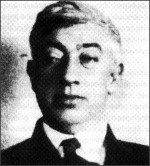
When my father, Dr. Israel Maier Menczer, died suddenly on September 1, 1938, at the age of only fifty-one, few of those who gathered at his graveside suspected that the end of an era in the life of the town of Radautz was close at hand. Exactly one year later, on that very day, Hitler's Wehrmacht invaded Poland. The Second World War and the terrible events it would bring in its wake had begun.
My father had foreseen what was coming. His keen gift for political analysis and his ever-growing, gnawing concern for the fate of the Jewish people may well have been responsible for the fact that, on that warm late-summer evening, his heart stopped beating without warning.
Speeches were delivered at my father's grave. Friends and professional colleagues, Jews and non-Jews alike, paid tribute to his abilities and accomplishments, yet much remained unsaid.
It was certainly true that my father had been an outstanding lawyer who, through the brilliance of his intellect and his sparkling wit, combined with his keen logic, fascinated judges and opposing counsel alike in the courtroom. Equally true was the fact that, with every fiber of his being, he was above all a Jew, devoted alike to Jewish folklore and to an awareness of Jewish history and Jewish suffering. It was precisely for this reason that he always stood on the side of justice and opposed injustice.
Few, however, knew the details of his path through life. As the eldest son
[Page 240]
of a pious Jew from Bilka, he had been destined by his father for the rabbinate. In his youth he therefore studied Talmud and Gemara, yet interpreted their contents in the spirit of modern times and sought to reconcile the two worlds. He retained only those teachings in which he found relevance to the social and political conditions of his own time.
He had due reverence for the truths of Jewish morality and Jewish thought, yet drew a strict distinction between genuine faith and great teachings and wisdoms, on the one hand, and anachronistic rituals of a tradition that, through routine observance, had long since been deprived of its deeper meaning, on the other.
When he believed that he had learned enough, he left the yeshiva against his father's wishes and set out on his travels. He gave private lessons to the children of well-to-do Jewish families in order to earn his own living and finance his studies in law. The hardships and privations that accompanied him during those years he endured without complaint, and he eventually earned his doctorate summa cum laude in Vienna.
There he met my mother, Rosa Klüger, who, together with her parents and three younger siblings, had fled from Radautz during the war. My parents were married in Vienna in 1918. In keeping with the difficult postwar years, it was a modest wedding.
Shortly thereafter the family returned to Radautz, and my father opened his law practice there. He soon became sought after and highly respected, and before long his financial circumstances improved considerably.
In the 1920s my father became director of the Radautz branch of the Kreditbank. Many people deposited their savings in this bank because they saw in my father a man they could trust.
I still remember an incident from my early childhood, although I understood it only much later. At the time, my mother, my grandmother, and my Aunt Lotti - still unmarried then - walked through the house with eyes red from crying,
[Page 241]
and people spoke of the “great crash.”
The director of the Czernowitz branch had taken his own life. My father, however, unwilling to betray the trust that people had placed in him, repaid their deposits to the last heller and pfennig out of his own personal fortune. We were left completely destitute, yet I can still hear my father's words:
“I cannot abandon them. We shall get through it.”
And indeed, things improved again thereafter. The law practice prospered, many important cases came his way, and my father's name became known far beyond Radautz.
During those years, Jewish cultural life in the town was flourishing. The first Zionist movements had emerged, along with youth organizations and sporting associations such as Hagwiruh. Touring Jewish theater companies came to perform, lectures were delivered, and gatherings of many kinds were held.
At the same time, however, other movements were growing in the multiethnic province of Bukovina. The German ethnic community, with which descendants of Ukrainian Ruthenians, Poles, and Czechs identified, organized itself into associations of an early Nazi character, at first still strongly German-nationalist in outlook. People exercised in the Jahn Club, performed amateur theater at the Deutsches Haus under the direction of the bookseller Schledt - who was later rumored to have lured young women from his amateur troupe - sang German folk songs at club gatherings in the evenings, and marched through the countryside singing marching songs.
The Romanian community, for its part, with its growing sense of belonging to Greater Romania after the First World War, followed a variety of political currents. These ranged from the democratic Peasants' Party - which my father approved of morally without belonging to it himself - to parties of the extreme right.
There were the Cuzists, followers of the Romanian nationalist A. C. Cuza, whose gangs of toughs made the towns of Bukovina unsafe, and there was
[Page 242]
the Iron Guard, the extreme-right fascist movement that would later drive King Carol II from the throne and, for a brief period, establish a bloody antisemitic dictatorship. It had many supporters in the town, among them a considerable number of intellectuals.
The distant flashes of lightning and the faint rumble of the approaching storm were already being perceived in the early 1930s by those with a keen sense for the signs of the times, as my father was. Yet it seemed that precisely this contributed to the ranks of the Jews drawing closer together, and to their occupying themselves more intensely with their own culture and history.
Visitors came from abroad, including from the land of hope, Palestine, of whose significance people were becoming increasingly aware. In January 1930, Schmarjahu Levin delivered a lecture in Radautz and was a guest in our home. We spoke of that visit for years afterward. The Jews of the town crowded together to hear him speak.
On another occasion, Dr. Immanuel Olsvanger, the well-known man of letters, also came to Radautz on a lecture tour. He too was our guest. My parents gave up their bedroom for him, as was the custom in those days, intending to sleep in the guest room themselves.
When bedtime arrived, however, Olsvanger said:
“Stay with me, Dr. Menczer. We still have so much to talk about!”
And my father remained with him until the early hours of the morning. They exchanged Jewish stories and anecdotes. Part of Olsvanger's book Rojinkes un' Mandeln [Rozhinkes mit Mandlen] - a collection of bittersweet stories and reflections drawn from Jewish folklore - originated in those conversations.
The gift of storytelling was in my father's blood. One often saw him walking through the streets arm in arm with friends and acquaintances, most often with his much-valued friend Alter Wassermann, or sitting on a bench in the park. Then, when he was in the mood, he would pour forth a veritable treasure of witty and thoughtful observations.
[Page 243]
More and more people would gather to listen to him.
Passersby who belonged to antisemitic organizations cast venomous glances at the group of laughing and gesticulating Jews, but as yet nothing happened.
One winter evening in the early 1930s, I was sitting on my father's lap while we looked through the Czernowitzer Morgenblatt. There, in large letters, stood the headline:
“Nazi Terror Continues.”
I thought to myself: surely I had heard the name Nazi before. Was Terror perhaps his family name?
I asked my father:
“Who is this Nazi?”
And my father replied:
“You don't know him, child. And you never need to know him.”
More and more frequently, the Cuzist gangs rode through the town in their blue shirts. They were armed with clubs, cudgels, and rifles, with which they drove people from the streets. Only a few street urchins and peasants in national costume cheered them on. All the dogs barked.
The Jews barricaded themselves behind closed shutters and listened fearfully to the slogans being shouted outside. The hardware dealer Salo Jahr was just about to close his shop when they fell upon him, beat him unconscious with his own chains, and rode off. They then brought charges against him, in order to provide themselves with an alibi, accusing him of various imaginary offenses.
My father advised Mr. Jahr to face the gang in court. He undertook his defense. To everyone's astonishment, Salo Jahr won the case. My father refused to accept a fee for a cause that he regarded as the cause of all Jews.
We, however, had to be cautious for a time, and my room was moved to the rear part of the house facing the courtyard, because stones were being thrown at the windows and the notorious deputy Nichifor Robu had declared that the first house to burn in Radautz would be that of Dr. Menczer.
[Page 244]
In the years that followed, right-wing extremism gained an ever stronger foothold in the town, and the green shirts of the Iron Guard appeared with increasing frequency. More and more often, Jewish girls and young men were brought before the authorities on the pretext that they had sung Communist songs - allegedly even The Internationale - or had committed other acts deemed hostile to the state.
My father defended these young people as well, and succeeded in saving them from severe punishment. Many of them later went to Eretz Israel. My father himself considered himself too old and physically no longer equal to the task of working the land and engaging in pioneer labor there. Yet he supported and encouraged the Zionist movement and all those who belonged to it with all the means at his disposal.
Perhaps the only meaning to be found in his early death was that he was spared the tragic experience of deportation and the utmost humiliation.
I have been told that memorable sayings of Jewish humor are still in circulation today among former residents of Radautz, most of whom now live in Israel. In the case of some of these sayings, it has long since been forgotten that they originated with Dr. Israel Menczer. He lives on in those words, just as he lives on in my memory. His grave in the cemetery of Radautz was desecrated several times by brutal members of the surrounding Communist collective farms. Pieces of marble were stolen, the monument shattered. Yet it was raised again and again. That gravestone, bearing the scars of time and senseless violence, is a symbol of the times it has outlived - just as my father's name has outlived them.
[Page 245]
|
|
by Kopl Presner [קופל פרסנר]
Translation from Yiddish[1] by Beate Schützmann-Krebs
With the end of the First World War (1914-1918), a strong desire for collective organization arose in the quiet corner of Bukovina known as Radautz. This marked the beginning of Jewish emancipation.
Jews began to understand that the sacrifices they had made in the war had been in vain and without purpose. The Jewish soldier had not been defending his own homeland.
This led to the realization that Jews needed to concern themselves with establishing a state of their own. They had to become builders, to rebuild themselves, abandon the easier means of earning a livelihood, and make their way to the land that had been promised to them thousands of years before.
Jewish organizations representing various worldviews therefore began to form. After a period of preparation (hakhsharah), some made their way to Palestine on foot, while others arrived on immigration certificates issued under British regulations. There they helped establish the Jewish commune in which they had chosen to live, so that they might help build the land.
The first founders of Hashomer Hatzair in Radautz were Fishel Genser, Muniu Genser, Hermann Gelber, Zvi Shechter, and Chaye Shechter. They immigrated to Eretz Yisroel and lived in various kibbutzim.
Zvi Shechter (Yechieli), of blessed memory, later served as a ship purchaser for the shipping company ZIM.
His brother-in-law, Tselo [צלו] Laufer, who had served as rosh ha-ken (head of the local branch) of Hashomer Hatzair in Radautz, was a member of the Haganah. He was tragically shot and killed by Arabs.
One year later, Yaniu Baumgarten fell in the encircled kibbutz of Negba.
To our great “good fortune,” many former residents of Radautz are still scattered among the kibbutzim today: Muniu Buler in Sharid; Sali Piker and Brocha Horovitz in Sharid;
[Page 249]
Davidl Buler, Medi Shechter, Yeniu Pitser, and Hershl Yeger in Shamir; Herbi Buler in Kibbutz Merhavia; Mendl Weinstein and Tsipa Pastilnik in Kibbutz Sha'ar HaAmakim; Kuno Merling in Kibbutz Eilon; and Dora Vingler in Sha'ar HaAmakim.
They established families, and among their children are soldiers serving in the Israeli army who have earned distinction.
These people transformed themselves and became Chakla'im - farmers.
In Radautz, part of the Hashomer Hatzair movement took an active role in various cultural activities and in sports. It is worth mentioning our athletes and football players: Yaniu Feingold, Nathan Grossman, Sheikele Goldenberg, Kuzio Kapezider, and Shnuki Buler, who is now in Russia.
The driving force behind these activities was Herzl Kronenfeld.
Thanks to them, the Christian population began to see that Jews were capable of many activities. They began to develop respect for the Jewish population and for the blue-and-white flag. Jews held their heads high with pride.
The cruel winds of 1941 suddenly destroyed the beauty of Radautz and its cultural life.
May this page, with its accounts of the victims who fell in all the wars, serve as an eternal memorial.
Translator's Footnote
|
|
JewishGen, Inc. makes no representations regarding the accuracy of
the translation. The reader may wish to refer to the original material
for verification.
JewishGen is not responsible for inaccuracies or omissions in the original work and cannot rewrite or edit the text to correct inaccuracies and/or omissions.
Our mission is to produce a translation of the original work and we cannot verify the accuracy of statements or alter facts cited.
 Rădăuţi, Romania
 Yizkor Book Project
 JewishGen Home Page
Copyright © 1999-2026 by JewishGen, Inc.
Updated 12 Nov 2026 by LA