 |
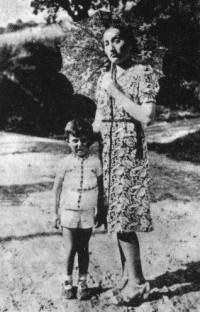
the son of Mordechai and Vita Popper;
the grandson of Reb Eliezer Loss from Strzyzow
|
|
[Page 233]
The Second World War and the Holocaust
by Itzhok Berglass
Friday, September the first, 1939, was the day that the Second World War broke out. Tension had been felt already in the last days of August, but the tidings that the war had begun came with the German bombings in our vicinity. In the first days, stillness prevailed in the town in the absence of reliable news about the situation. Indeed, the railroad schedule was in disarray as a result of sabotage and bombings by the German enemy. Nevertheless, people, including the Jews, believed in the fighting ability of the Polish army. Everybody was certain in the truthfulness of the government's promises expressed in the appeal for war bonds that we were “Strong, United, and Ready.” We also were sure that the military would defend with all their might the defense industry district, located in our area, a triangle bordering the San and Visloka Rivers. On Monday, September the fourth, and the night that followed we still saw a military movement towards the Slovakian border to the south but, at the same time, the first caravans with refugees began to appear in Strzyzow. They came from places near the German border. On Wednesday the stream of refugees increased and grew even bigger on Thursday. On Thursday night, and on Friday, September the eight, Strzyzow joined the main stream of refugees. It was like a river which on its way to the sea, absorbs all the waters of smaller creeks and continues to flow with the main stream. But, in spite of the wave of refugees which included many Poles, government clerks, and policemen, (they all returned after Poland's surrender) the number of Jews was small. During the First World War, the Russians occupied Strzyzow twice. After the Jews suffered during the first occupation because of a casualty in the Mandel family, many families evacuated the town when the Russian came for the second time. The retreat of the Austrian army was slow and orderly, transportation means such as trains and carriages were put at the disposal of the refugees. This time, the Poles retreated in disarray; the trains were out of order because of the bombings by the Germans and sabotage by their agents. To hire a carriage was impossible.
Resides, the majority of the town's Jews, including the Galician Jews, in general, did not think of running. Many of those who ran in the First World War were still alive and did not try now to do it again. Neither did the rich and well-to-do who, for much money, could still have obtained transportation. Only the older people remembered the Germans from the First World War when they were “allies” of the Austrians.
Nobody in Strzyzow read the book “Mein Kampf,” and the hearsay about the mistreatment of the Jews in Germany, Austria, Chechoslovakia, did not sufficiently disturb the Jews from Galician cities. Although a few of the German Jewish refugees who settled in Strzyzow had warned against the Germans of today, they themselves remained. The Jews were ready to
[Page 234]
suffer from the Nazis but they were not willing to live the life of wanderers, especially after they had seen the suffering of the women and children refugees who passed Strzyzow. Such Satanic thoughts that the Nazis would annihilate men, women and children were incomprehensible. The rumors were that they were sending young people to forced labor camps. Because of all the above mentioned reasons, only a few families and single men left on foot. Among those who left were the Rabbi, Kehillah leaders, community activists, several young men, and a few wealthy people who feared being taken hostage.
The path of the refugees from Strzyzow led through Dynow, a crossroads city. Thousands of refugees, families who ran out of means to continue their escape, many who were on foot and run out of energy to go any further, and well-known personalities who had not intended to go any further to begin with, were stuck there. (All they wanted was to leave town and be somewhere that nobody knew them.)
Some people who passed Dynow were stuck in Dubiecko. One of the group from Strzyzow, Reb Yechezkiel Ziebner, was killed in that town on his way from the morning services. He was carrying the bag containing his talit and tefilin, a Nazi noticed him, and shot him.
My brother-in-law, Reb Yacov Itzhok Bernstein, remained in Dynow with his three children. He refused to continue because of the Sabbath. After the German victory and the Soviet invasion into the eastern part of Poland, everybody returned to their homes. Again, caravans of refugees, though smaller, were seen moving in the opposite direction. A small number of returnees recoiled, hearing about the atrocities of the Nazis, and decided to wait for the Soviet army which, according to the Soviet-German agreement, were supposed to reach the San River. But the majority came home. Reb David Lieberman who left Strzyzow with his whole family, did not flinch from the maltreatment of the Hitlerists he had experienced, but returned home. On their way home, they prayed with a group of refugees on Yom Kippur. The Germans assaulted them and, wrapped in their taleitim, they were taken into a grove, lined up with their backs to the soldiers, and the soldiers began shooting in the air. Despite such an ordeal, he and his family came home, and he was among the first to be killed, as it will be told further on.
The systematic killing period had not yet begun. But Jewish blood was spilled freely as soon as Hitler's soldiers arrived. In our vicinity, many killings occurred. Six hundred in Przemysl, including Reb Moshe Deutch from Strzyzow. In Dynow – two hundred and thirty people, mostly refugees who were passing through town. The Nazis went from house to house, taking men only. In sendziszow, on Rosh Hashana, the Nazis selected fifty men from among the worshippers in shul and killed them. Five men were brought from Frysztak and killed in Strzyzow. Women and children – they did not touch yet. Those who were returning from the evacuation were in continuous danger. In addition to the Germans, Ukrainian bands attacked the caravans of the refugees, especially those who traveled alone. There were even incidents in which these people found shelter with the Germans while escaping from the Ukrainians. The most dangerous area was near Lesko. There the Ukrainians killed a group
[Page 235]
of refugees who were returning home. Among those killed was a son or Reb Ephraim Kneller. Only a few survived that massacre, finding refuge in a German field-kitchen unit. Tzvi Baumel was killed on his way home. He worked in Krakow before the outbreak of the war. When the Germans were approaching the city, he decided to go home to his father, Reb Benjamin, in Strzyzow. Passing through the town Preclaw, near Mielec, he went into the local Belt Hamidrash with a group of Jews. Soon the Nazis began knocking on the door, when he went to open it, they shot him and he was instantly killed.
The concentration of the refugees in Eastern Galicia was bigger than in other places because the Germans expelled all the Jews from the border towns to the Russian side. However, Strzyzow was forty miles away and had no such luck. The refugees from Strzyzow who were on the Russian side were joined by a few Jewish soldiers who remained in the east when the Polish army fell apart. Most people from Strzyzow were concentrated in Lwow. Help was extended to them by the Schiff family, the Jewelers from Rzezow, and Reb Shalom Wllach, who owned a big liquor store before the Soviets requisitioned it. Their meeting place was in the house of Reb Fishel Goldberg. He was also a refugee from Strzyzow who arrived in Lwow with his entire family, and had a spacious apartment· In his house, the refugees who were lonesome, were warmly received. Especially warm was his wife, Feiga, who was the only mother among the refugees from Strzyzow. In Strzyzow she also used to help poor Jewish wanderers who came to Strzyzow by horse and buggy. She took them into her barn yard and the horses into her stable.
During the nine months that the refugees stayed in Lwow and its vicinity, until their expulsion to Siberia, many of those who were separated from their families returned home illegally. The reports which came from Strzyzow were not bad. Everyone who left his family there was homesick, and it was also difficult to get accustomed to the Soviet way of life. Those who did not return still yearned to do so, but they wanted to do it legally. Most of them were saved by being exiled to where the Nazis could not reach them.
All the returnees to Strzyzow crossed the border safely and arrived home, except one disastrous, shocking incident involving a young woman, the daughter of Reb Elazar Loos. She lived in Dynow and was expelled to the Russian side with the rest of the Jews soon after the massacre. While returning from a visit to her parents in Strzyzow, she was shot by a border guard as a result of a Polish informer. It was not clear whether it was a Russian or a German border guard.
The refugees from Strzyzow attempted to cross the border legally, with a permit from the German-Russian Population Exchange Committee, which was located in Przemysl. Luckily, they did not succeed. Many Jews did cross to the German side with a permit by hiding their Jewishness. Those unfortunate ones were happy to receive a permit and did not know that they were going to a sure death.
The Exchange Committee was transferred later to Lwow, and there they resumed issuing permits to Poles and individual Jews whose families at home provided a confirmation from the German authorities that
[Page 236]
their return would be useful for the economy.
Tens of thousands of refugees in Lwow and Eastern Galicia who expressed their wish to return home on the German side, waited patiently, and were sure that the aforementioned Exchange Committee came to Lwow to arrange their repatriation. These refugees wanted their return to take place in an orderly manner. Therefore, they voluntarily organized themselves into groups with a central leadership. They invested much effort in this organization, but luckily, no repatriation took place.
At the beginning of June 1940, all single refugees who registered to return home, were arrested and sent into forced labor camps throughout Russia. At the end of June, all refugee families were put in freight trains and sent off to Siberia, and to the northern provinces of Russia. From among the Strzyzow families, only my family and I were exiled. The Goldbergs and Dr. Frenkel obtained Soviet passports. Also Dr. Chwal, the only Jewish doctor in Strzyzow, who at first escaped alone and later brought his family over during a population exchange, remained in Lwow, and probably perished later with the local Jews. A few single people including the Rabbi of Strzyzow, Reb Kalonymus, escaped and obtained passports. All these people remained in Lwow and its vicinity.
When the Germans attacked Russia in June 1941, and occupied Lwow, all the people from Strzyzow returned home and shared the lot of the rest of the town's Jewry. From the Goldbergs, only two sons survived. The younger son, Elazar, joined the Soviet army. The second son, who studied medicine in Italy when the war broke out, joined the Italian anti-Nazi underground. Dr. Frenkel, the lawyer, returned home from work one day and found his house empty. His wife and two daughters had been taken away to the place of no return. He survived as Dr. Wierzbicki, with Aryan documents, settled in Krakow and, after the war, served as lawyer for the people from Strzyzow who returned from Russia.
The refugees from Strzyzow who were exiled to Russia experienced all kinds of hardships, imprisonment, hard labor, starvation, sickness, and plagues. Some died and were buried there. These were: Rabbi Naphtali Chaim Halberstam; R. Alter Zev's son-in-law who at one time organized and headed the Agudat Israel in Strzyzow; Rabbi Alter Zev's grandson, Reb Menashe Horowitz, who starved in the labor camp abstaining from eating non kosher food, and on Passover living on the sugar rations only; Reb Gershon Holles, the scholar, died in an epidemic outbreak in the South Asian part of Russia after he had been released as the result of the Stalin-Sikorski agreement. He held onto a gold watch which had been presented to him on the day of his engagement as was customary then in Galicia. Ultimately, the watch survived but not the owner; Reb Aaron Taub died after he was arrested for the second time for refusing to accept Soviet citizenship which the Soviet authorities forced upon the Polish citizens. He was afraid that he would not be able to return to his wife and children. He died from exhaustion serving in a labor brigade; Reb Mordechai Weitman died in Samarkand; One of Reb Alter Yacov Weichselbaum's daughters and her husband died from starvation in Dzambul. People from Strzyzow, who lived there could have saved them, but they found out about them too late; two sons of Reb Feivel Hauben died in a remote
[Page 237]
collective farm; an offspring of the Gertner family who was expelled from Germany and settled in Strzyzow, evacuated from Strzyzow to the east and, after many wanderings, found his death in a Soviet Sovchoz, lonely and abandoned; Itzhok Schliselberg, the translator's second cousin, also died of starvation, after giving away his rations to his young children; Reb Zisha Hirshfeld's daughter from Lutcza near Strzyzow and her husband also died in Russia.
Most refugees from Russia returned from Russia to Poland in the years 1945-46. A part emigrated to different countries, mainly to the United States. The majority settled in Israel.
Only one returnee from Russia did not lived to reach Israel. This was Naphtali Roth who, before the war had been an active member in the Zionist Youth Movement. The climate and life in Russia and the long journey home in the freight trains weakened even more his failing health. He was hospitalized in Poland, where he died after having a day of happiness brought on by the visit of two relatives from Strzyzow.
As soon as the Nazis entered Strzyzow, the maltreatment of the Jews had began. The Nazis beat them, plucked their beards and sidelocks and, with their savage behavior, imposed a deadly fear upon the Jews. They looted the Jewish stores and left them bare. At the beginning the authority was in the hands of the military, headquartered in the palace of Count Wolkowitzki, and also in a few private houses, including the houses of Reb Michael Schitz and Reb Samuel Feit.
By Rosh Hashana, the storm had calmed down a little. Nevertheless, Jews did not worship in the regular prayer houses but in hiding, as the Jews used to do during the Spanish Inquisition, in basements and attics.
On the second day of Rosh Hashana, a shocking incident occurred, which made the Jews of Strzyzow realize that their lives depended on the benevolence of each Hitlerite. The Germans brought five Jews on a truck from Frysztak whom they had taken out from a prayer house, still wearing their taleitim. They were killed in a nearby grove, a place where the town Jews used to stroll on their Sabbaths and holidays. Among the slain was one from the Puderbeitel family whose father was among the two hundred and thirty victims previously murdered in Dynow. There was also one of the Kracher family who owned a stone quarry. They were buried on the same place where they were shot. Later, after the intercession of the Jews from Strzyzow, they reburied the victims in the Jewish cemetery. People said that the main credit for the intercession belonged to Reb Michael Schitz.
Not to let the Jews forget even for one moment the trouble they found themselves in, another ugly incident occurred on Yom Kippur Eve which, fortunately, ended without a tragic result. Wanting to take advantage of the existing relaxation in the last few days, some Jews rushed over to the bathhouse to immerse in the mikva for the holiest day of the year. At the same time, a truck full of German soldiers arrived in town. Apparently, they had the desire to amuse themselves by bullying the Jews. Either they noticed, or somebody had told them that Jews were in the bathhouse, and they surrounded the place. The majority escaped half naked and hid in the area, but a few were caught by the Germans and brought
[Page 238]
to the marketplace. By then, a group of young Jewish girls came out and implored the soldiers to let the captives go. At the end, the Germans released the captives.
Days passed filled with fear and worry. The military command was replaced by civilian authorities and the troubles changed to a different format. Instead the savage and wild torments, oppressive decrees started coming, one after another, denigrating the Jews and turning them into dust. The German Commandant Keller was not especially bad, and perhaps he did not add to the decrees that came from above. But there were enough of them to torment the lives of the Jews.
When the administration took over a “Judenrat” was appointed as in all of the cities in occupied Poland, and other countries of Europe. The Judenrat consisted of eight to ten members and served as a liaison between the Jews and the German authorities. Reb Abraham Brav, the Zionist activist, was appointed as head of the Judenrat. The members were: Reb Yacov Rosen, Reb Aaron Deutch, community activists who were members of the latest Kehillah Committee, Reb Elimelech Waldman, the man from Mizrachi, Sheingal from Gorlice, who had moved to Strzyzow and was the brother-in-law of Dr. Samueli, the lawyer. (During the German occupation, many reputable Jews moved to other cities where they were unknown.) A few more were appointed, including two from the exiled Jews from Kalisz who had been brought to Strzyzow. In all the days of existence, the Judenrat in Strzyzow behaved decently. It always stood up for the Jewish people and did all that was possible to ease the Nazi decrees.
Reb Yacov Rosen was killed in Strzyzow and Aaron Deutch was deported from the ghetto of Rzeszow with his family to an annihilation camp. Reb Elimelech Waldman was one of the most active intercessors who negotiated with the Germans. He continued to intercede for his brothers in the ghetto. He believed as the others did, that by intercession, he would be able to annul the oppressive orders. When the Nazis selected his wife and children to be deported to the annihilation camp, they wanted him to remain in the ghetto. But he refused and went with them.
Reb Abraham Brav and Sheingal became active members of the Judenrat in the Rzeszow ghetto. They remained there until the last of the Jews from Strzyzow were gone. They were also the last to be sent to their deaths.
Among the first anti-Jewish decrees was the prohibition to travel by train and, later, the prohibition to leave the periphery of the town. A permit from the local commandant Keller was required to leave town, and during the “good days” of that commandant, it was not difficult to get such a permit. To travel by train, a special permit had to be obtained from the regional commandant in Rzeszow, and could be obtained only through the Judenrat. The Judenrat secured such permanent permit for Itzhok Leib Rosen, who was the only official freight deliverer in town. He could travel unhindered. Later, he was also permitted to get in and out of the ghetto in Rzeszow which had been established earlier, at the time when the Jewry of Strzyzow were still in their homes. In general, Jews traveled only when they were compelled to travel, because traveling was deadly dangerous.
[Page 239]
The next decree was forced labor. The Jews and, to some extent, the Poles were forced to work, each men a few days a week. Sometimes women were forced to work too. The Jews were sent by the Judenrat· Two German companies were active in Strzyzow: “Todt” a military contracting firm, and “Kirchof.” Both used to feed the workers and also paid some wages. There were incidents when poor Jews volunteered to work, knowing that they would be fed. The Todt Co. treated the workers better than the Kirchof Company, where workers were beaten and tyrannized. The work was hard labor, paving roads, building tunnels, stone quarrying and unloading freight.
The Jews were also forced to do jobs, which were a part of the Nazi oppressive system. They were forced to remove the gravestones from the cemetery, bury them in the ground and prepare the Land for public parks. The gravestones from the rest of the Jewish cemeteries were removed after the expulsion of the Jews. The better stones were used for paving the marketplace, and the fate of the older stones is unknown.
The worst jobs which were forced upon the Jews were jobs not needed for the German war economy, but were created to humiliate and denigrate the humanness of the Jews. The Nazis made the Jews sweep the streets, do jobs in the quarters of the German soldiers and functionaries to disgrace the Jews. Jewish men and women were nabbed for these works mostly on the Sabbaths and holidays. During these works, the Jews were maltreated, their beards and sidelocks shorn off, and disgraced as much as possible.
Besides the workers from Strzyzow, a thousand young Jewish men from Warsaw, Radom, and Kalisz were also employed in our vicinity. They were organized in labor brigades supervised by Jewish supervisors and escorted by Jewish policemen. They lived in barracks outside of town in temporary labor camps. The Jews from Strzyzow were forbidden to mingle with them.
At the beginning, one of the slave-drivers of the Jews from Strzyzow was the Christian Sabbath Goy, Sibirca, who served the kloiz and the Beit Hamidrash. He was a Petlura man who escaped to Poland after the Bolshevik Revolution, where many of his kind found refuge. He had setted in Strzyzow, and the Jews with their forgiving nature had given him a job and a small house which originally was built for the sexton. Now his time had come to repay the Jews with evil deeds for their good deeds, and to torment them. After some time, he fell into disfavor with the Nazis. He informed that a certain Pole had expressed a dislike for the Nazis, and the Pole, wanting to protect himself, attributed this criticism to Sibirca, and according to Nazi justice, both were sent to a concentration camp. They never returned from there. They were the only two from among the Polish population in Strzyzow who were sent there. The city of Kalisz in northern Poland was annexed to the Third Reich, and its Jews were forced out and some were resettled in Strzyzow. They were housed temporarily in the prayer houses, in Jewish homes or abandoned stores where they lived together with the local Jews. At the beginning, they were supported by the local Jews, and later worked for the Germans and received rations for reduced prices.
Of course, all the orders which the Germans bestowed upon the local
[Page 240]
Jews were also applied to the Jews from Kalisz. They shared the same fate.
Until the expulsion to the Rzeszow ghetto, only a few of the young men from Strzyzow were sent to labor camps. These young men were snatched from the streets for this purpose,
During one such action, Itzhok Leib Rosen was caught in Tarnow. Since he had a travel permit, he was released. He also produced a document from a German firm in Sanok, approved by the General Government, stating that he was buying cattle for the German military. Most laborers were sent to Pustkow or Bieszadka, in Western Galicia. The Jews with their vitality pulled themselves together, despite the oppressions and decrees. Although the stores had been looted and abandoned by the owners, still everyone adjusted to the conditions and made an effort to find some livelihood and existence until the storm would pass. Tradesmen kept working and merchants sold merchandise which they had succeeded in concealing from the Germans during the looting, or they brought new merchandise from near and far by endangering their lives. The Jews barely survived. Many bartered household items and valuables for food, which the peasants brought to town, since Jews were forbidden to go to the villages.
The tradition of charity which was always deep-seated in each Jewish heart, expressed itself even more in those very troubled times which the Jews, including the Jewry of Strzyzow, had never before experienced, Everyone who was able to help, helped the needy. However, charitable activity was scaled down to a minimum. It was done in secret because any organized activity except the Judenrat was forbidden, and for violating the Nazi Rule, there was only one punishment – death.
Informers who would benefit from their brother's misfortune did not exist in Strzyzow. There were two Jewish policemen who helped the Nazis execute their ordinances through the Judenrat and, understandably, did not enjoy the sympathy of the Jews in Strzyzow. It was known that one of them used his position to extort money from different people. In spite of that, he was not considered to be like those known disgraceful Jewish “Kapos.” Ultimately, they were sent to the Rzeszow ghetto with the rest of the Jews and found their sanctified deaths as the others,
Besides the two policemen, there were a few helpers who worked for the Germans. One of them was a son of the better families in town. They were only simple messengers who obeyed the requests of those who were in charge.
As it was said before, the Jews adjusted to the oppressive life and edicts, hopeful that it would eventually pass. Because of those so-called “quiet days,” the Jews did not prevent their family members who were on the Soviet side, from returning home. Some even urged them to come home. Homesickness was a strong factor among the refugees as was the inability to get used to the Soviet way of life. Nevertheless, even in the quiet days, all kinds of incidents occurred which did not let the Jews forget what a mean situation they were in. Worst of all were the killings of people for the smallest violation of the oppressive rules.
Every incident that occurred shocked the population for a while, but
[Page 241]
they thought that it was only an isolated incident caused by special circumstances, and whoever would succeed to stream through between the wicked waves, would be safe. Even during the expulsion to the ghetto, they still thought that, although the situation was difficult and burdensome, their life of suffering had reached its ultimate point. They did not imagine the possibility of total destruction, which had been already decided at the higher Nazi echelon.
The first killing incident had already occurred in 1940. The German Commandant who replaced Keller while he was on his vacation, encountered Reb David Lieberman on the bridge which led to the village Godowa. The Commandant ordered Reb David to report to him at his office. According to hearsay, Reb David wanted to reach Count Filipowicz, with whom he ha done business before, to ask him for food for his family. Reb David vacillated whether to report or not. At the end he concluded that there was no escape. He went and did not return. The Commandant's office was in the house of the Notary Banski. The Hitlerites took Reb David to a nearby field, where he was shot in the neck while he was walking, his body was handed over to his family, and he was given a Jewish burial.
The excesses became stronger after the United States joined the Allies in their war against Germany. On Passover Eve, 1942, eighteen Jewish prisoners were taken out from prison in Rzeszow and executed in the Jewish cemetery, which the Hitlerites turned into a killing field. The victims were all American citizens. Among the killed was Moshe Rosen from Strzyzow, a brother of the Rosen brothers who survived the Holocaust. In that same period, the fur action took place. The Jews were ordered to hand over all the furs in their possesslon. A short time later, a fur stole was found in Reb Samuel Saphire's house. He was killed on the spot.
The worst incident occurred on May 4, 1942. When a Gestapo unit arrived in town to punish those Jews who escaped East in 1939, before the occupation, but were not exiled by the Soviets, and returned home after the Germans conquered the region of Eastern Poland. Dr· Rosenthal Oas the only one who was found in his home. The Gestapo took him to the churchyard and shot him using their modus operandi, a shot in the neck while the victim walked with his back to them. The rest of the returnees, Yechiel Rosen, Moshe Gertner, and his brother-in-law, Reb Hersh Lichtman, went into hiding as soon as they heard about the arrival of the Gestapo. Then the Gestapo killed six other Jews instead. Some of the victims were found in the house of Reb Samuel Moshe Groskopf, where they had been meeting to discuss charity problems, and the rest were caught in the street. On that day were killed: Dr. Rosenthal, Reb Samuel Moshe Groskopf, Reb Yacov Rosen, Reb Moshe Schefler, Reb Pinches Eisman and one unknown man.
This killing incident depressed the spirit of the Jews, and they never recovered until the expulsion which came soon after. Trains loaded with Jews from Biecz, Jaslo, and Gorlice passed Strzyzow on their way to the extermination camps. They traveled in locked, very crowded cattle cars. The floors were covered with whitewashing lime for disinfection. The women with their babies on their hands all tried to be near the small window gasping for fresh air.
[Page 242]
By then, the Ghetto in Rzeszow was already established. Besides the Jews from Rzeszow, all the jews from the vicinity were brought to the ghetto. The Jews in Strzyzow thought with dread what they could expect. Despite all the troubles, their situation in town was still better than in the ghetto. There, the Jews were hungry for bread and nobody knew what was coming. Like the drowning person who grasps at a straw, so did the Jews. They tried bitterly to escape the expulsion order. The Judenrat did whatever they could, they traveled to the German District Headquarters hoping that their intercession would result in some help.
The Nazis, seeing that the Jews lived in illusion, decided that was an opportunity to be the inheritors of their victims. Although Jews were permitted to take all their possessions to the ghetto where their wealth would anyway fall into the Nazi hands, each individual preferred to be the inheritor, nor somebody else. There was also the possibility that the Jews might conceal valuables in their homes, and the Nazis would not get it. Therefore, with their characteristic cunning, they promised the naive Jews that they could remain in Strayzow for the price of a few kilograms of gold, despite the fact that the Germans themselves were well aware of their intentions.
Despite of the savagery of the Nazis, the Jews believed that perhaps this time the truth came out of their mouths, and a member of the Judenrat, Reb Aaron Deutch, came to the town with an immense and bitter outcry, despairingly appealing to them to extend a helping hand for own rescue. “Jews! Save yourselves, have mercy upon yourselves,” he cried. He asked them not to hide the gold articles which were still their possession. When despite all the efforts that were made, the collected gold in Strzyzow did not meet the quota and was not enough to satisfy the Nazi demand, Itzhok Leib Rosen, the only person with a travel permit, was sent to the rich Krosno, a nearby town, with a plea for gold donations to rescue the Jewry of Strzyzow from expulsion.
In Krosno the annihilation process had not began yet. Apparently the Nazis could not possibly create their inferno everywhere at the same time. The Jews there still lived their oppressed lives working, and a few Jewish stores were still open. Only later did the Nazis come around to set up a ghetto in Krosno for the local Jews and for the Jews of its vicinity. The Jews were all murdered in the forests of Udzikan near Rymanow. Upon arriving in Krosno, Rosen turned to Reb Ever Klagswald, the shochet, who was the son-in-law of Reb Chaim Felt from Strzyzow. Despite the fact that the Jews of Krosno were not much better situated, Reb Ever, with the help of other people, succeeded in collecting a considerable number of gold articles and brought it to Itzhok Leib Rosen who was waiting in Reb Ever's house. As soon as Rosen brought the gold to Strzyzow, and when all the gold was delivered to the Hitlerites, they immediately set a date for the expulsion to the Rzeszow ghetto.
In the days of June 26, 27, and 28, 1943, hundreds of peasants with carriages arrived in town. A part were recruited by the Germans to transfer the Jews, and the others came voluntarily, expecting to benefit by plundering the expelled Jews. The Germans set a price of twenty-five zlotys for a one-horse buggy, and fifty zlots for a two horse carriage.
[Page 243]
They allowed the Jews to take with them everything to the ghetto. They knew that everything the Jews took with them would fall in their hands anyway.
In total, one thousand and three hundred men, women and children were expelled from Strzyzow.
Filled with despair, the Jews loaded all their belongings on the carriages believing that they would live in the ghetto a long time. Some took with them the leftover merchandise, which they had succeeded to hide from the Nazis to barter for food, and the tradesmen took their tools.
The exodus to Rzeszow lasted three days. S. S. men escorted the caravans and on the way killed all the incapacitated, especially the invalids. Mordechai Russ was among those killed. He was an invalid from the First World War, and his legs were amputated. Reb Aaron Borgenicht, the sick and semi-paralyzed, was also killed. It was reported that Reb David Wiener who, during the German occupation, had not left his house but studied the holy books continuously, did not respond to those who came to expel him. Whether they were Germans or their helpers the poles, he did not pay attention to them. They shot him right there in his room.
On the third day, the last day of the expulsion, when almost all the Jews were gone, Reb Itzhok Leib Rosen arrived in town from the Rzeszow ghetto under the pretext that he had to hand over a storehouse of empty barrels which he managed. In truth, he came to retrieve his uncle Reb Chaim Rosen who remained alone in his room and refused to come out, claiming that he preferred to die in his room rather than in a strange place. Rosen reported that all the Jewish homes were broken open and looted for whatever there was left and, in the air, the wind carried feathers from Jewish beddings which the pilferers tore searching for valuables. The Polish collaborators kept tab on each Jew in town. As a matter of fact, as soon as Rosen arrived in town, the mayor Wladislaw Gornicki, inquired about his business and also mentioned that his uncle had not left yet. Itzhok Leib Rosen succeeded in convincing his uncle to go with him, and he also witnessed the expulsion of the last Jews, Rabbi Nechemiah Shapiro, who was forced out from his house together with his family, to the sound of the wailing women and grandchildren. Al this did not effect the murderers. Nobody saw the Shapiros in the ghetto. They never arrived there. They were probably killed on the way.
The Nazis were helped by the Polish collaborators, headed by mayor Wladislaw Gornicki. His father, Peter Gornicki, the blacksmith, had always befriended the Jews and, for many years was elected as mayor with the help of the Jews. But the hatred for the Jews had been nourished in his house and passed on to his sons. Gornicki's helpers were all from poor Christian circles who always participated in the pogroms. The wealthy of the town this time had also stood aside, and it was hard to determine their position. The truth is that in the whole town not one Jew was saved. The only one who did hide was sent from place to place until he reached Gornicki's helpers. Ultimately, he was killed when he ran out of means to pay those who were hiding him.
Moniek (Moshe), Reb Aaron Borgenicht's son, was found by a farm worker in Jan Patryn's farm hiding in a stack of straw near
[Page 244]
the Visloka River. From there he went to Patryn's relative, Ignac Patryn, and afterwards to the house of Mrs. Maznicka. Soon somebody informed the police and when they began to look for him, he moved to the house of Wladislaw Uszlicki. He kept paying for the hiding places with valuables which his parents left with their neighbors, Polish intelligentsia. They had handed him only a part of the valuables, retaining the rest for themselves as a safekeeping fee. After he spent all that he had, he was found killed in a water puddle not far from his hiding place.
In 1948, with the new Polish regime, Uszlicki, Maznicka, and a third man by the name Stare, were arrested and brought to trial on murder charges. Mrs. Maznicka died during the trial, and the two others were freed for lack of evidence. After an appeal by the prosecutors, Uszlicki was sentenced to life imprisonment but after his appeal, he was freed again for lack of evidence. A few years later, one murderer was sentenced by Heaven, and his head was severed when he fell under a train.
According to my supposition and my knowledge, the Christian citizenry in Strzyzow could have been divided into three categories. The first category comprised of those who were hurting for the Jews but were powerless to do something about it and lacked the moral force to help them. The second category consisted of those who were happy about the Jewish calamity, thinking to themselves, “They got what they deserved.” Many of these people collaborated with the Nazis and helped them to hunt for Jews in hiding. The third category were the apathetic who worried only about themselves and did not care what happened to their neighbors with whom they lived for many generations. Nevertheless, these people also benefited from the misfortunes of the Jews. They took advantage when they bartered with the Jews, exchanging valuables and merchandise for food, and subsequently they inherited their stores, homes, and their belongings, which were abandoned by the Jewish owners after the expulsion.
The hatred for the Jews had not ceased even after the expulsion. In 1943, a group of young Jews, natives of Strzyzow and its vicinity, came to Strzyzow from the Rzeszow ghetto. They were the remnants of the ghetto. They were used for different jobs before their deportation to forced labor and annihilation camps. The Rosen brothers and Elazar Loos were among the group who came to dismantle barracks in the suburbs of the town and, on this occasion, they exchanged clothing and other articles for food to take with them to the starving ghetto. The people from Strzyzow reported them to the Germans and they barely escaped with their lives, never to be sent to perform such jobs again.
The Jews from the ghetto who worked in the vicinity and returned daily to the ghetto were sent from time to time to clean homes, which were vacated by the owners after they were sent to their deaths. During such cleaning, they found articles of clothing, which they later bartered for food. They took this food into the ghetto with the consent of their German foremen who kept a considerable portion for themselves. This time when the local Poles reported the Jews, the German foremen were also arrested. Later it was discovered that the informers and the local police had also not reported what they confiscated from the Jews but kept it for themselves.
[Page 245]
To emphasize the hatred for the Jews, here is a story about the treatment of a young Jewess, Gitel Shlosman, by a few Christian girls in Strzyzow. Shlosman left the town a few years before the war. She lived during the German occupation on Aryan papers. At the end of 1942, after the expulsion of the Jews, she came to Strzyzow to buy hides from the butcher Mr. Gocek on behalf of her Christian employer. Upon arriving in town she was recognized by a few Christian girls her age, who asked for her purpose for coming to a place where there were no Jews. Not withstanding her pretense that she did not know them, the girls did not leave her alone until she reached the butcher's store. They waited for her outside the store, and she was finally forced to escape through a back door to a village where she stayed overnight in a farmer's house. She left town early morning amidst great danger again, because the man who bought her the train ticker at her request had recognized her at last moment. The girls reported the incident to the German police, and the butcher complained to the merchant in Krakow for sending a Jewess who caused him entanglement with the German police.
That is how isolated Jews were pursued and hunted by the Poles, helping the Germans in their destruction.
The Rzeszow ghetto was set up in those streets which had been mostly inhabited by Jews before and the Nazis had concentrated all the Jews from Rzeszow and the nearby towns and villages. The living conditions in the ghetto was as in all other ghettos. The crowding was terrible. They suffered starvation, sickness, and hard labor, plus daily edicts and many other misfortunes. The worst of them was the frequent “Actions” the selections of transports to the annihilation camps.
The young people, upon arrival in the ghetto, were issued labor cards. The laborers were forced to work mostly in the stone quarry in Zarnowo.
The Nazis began the liquidation of the ghetto soon after the arrival of the Jews from Strzyzow. They were helped by Polish policemen and also by Jewish “Kapos” imported from Warsaw, Kalisz, and other cities.
The elderly were not sent to the annihilation camps but killed locally. If the younger family members refused to separate from their 1oved ones, the Nazis killed them together.
That way the whole family of my sister Nechama was killed together with my mother Yocheved, refusing to separate Killed were: My sister Nechama Bernstein, her husband Reb Yacov Itzhok, their two sons, David Dov and Elimelech Shlomo, and the little girl Bina. May G-d avenge their innocent blood.
The families of the people who worked outside the ghetto were put in the transports which passed Rzeszow on their way to the annihilation camps. They were taken to the railroad station at Staroniwa which was the second station to Rzeszow, on the Rzeszow-Jaslo line, where they joined the transports. Before boarding the train, they had to line five in a row. The first in the row had to pay fifty zlotys, per person for the fare, in total two hundred and fifty zlotys, despite the fact that all their money was extorted from them before in different ways and the possession of money was prohibited. People were killed for possession of money, Chaya, the daughter of Reb Aaron Deutch, was killed
[Page 246]
in the ghetto for possessing cash. Also Chaya Scheinman, Reb Chaim Mandel's daughter, and her daughter Frumet died for such a crime. And now on their last voyage to their extinction, whoever could not pay the fifty zlotys was killed on the spot. The wretched were led to the train in broad daylight in the middle of the street surrounded by S. S. men and Gestapo who kept hitting them with truncheons and riffle butts indiscriminately, women, children, and elders. If somebody stumbled on the way, he or she was shot and killed immediately. If the victims did not march in a straight line, they were beaten savagely. Relatives of the fallen were not permitted to stop for a moment to help their dear ones. They were forced to continue in line to the death train.
While the Jews were marched to the trains, sidewalks on both sides of the street were crowded with Poles who cheered this calamity of the Jews and jeered the afflicted, as it should be recorded for eternal abomination – the Jews were led to die to the sound of: “Your end has come, Jews!” After each such action, the road to the Staroniwa station was strewn with corpses.
After each selection, the lucky ones who remained to continue to work, were transferred to the eastern part of the ghetto until the next selection. It was called the ghetto of life. There were instances when those who remained in the ghetto succeeded in bringing with them family members and hiding them. But in their absence, the Nazis kept finding them and sent them away to their extermination. This happened to Chaya Rosen, the mother of the Rosen brothers.
The Jews knew about their fate. Nevertheless, they hoped, or deluded themselves, and believed, rather wanted to believe, the words of their tormentors, that the deported were only resettled to other places where they would be working. Upon arriving in the annihilation camps and before their annihilation, the Nazis forced their victims to write letters to their relatives who remained in the ghetto saying that they were working and feeling well. These letters were distributed all over the ghetto.
On December 11, 1942, only four thousand people remained in the Rzeszow ghetto which had thirty thousand people before, consisting of Jews born in Rzeszow and nearby towns and villages. On that day, the last transport was shipped out to an unknown annihilation camp. The camp in Belzec, where the majority of the Galician Jewry, including the Jews from the Rzeszow ghetto, were sent, had been liquidated already. The remnants of the ghetto in Rzeszow were put into a passing transport from the ghettos Tarnow and Bochnia. One hundred fifty people had been squeezed into each car. There were seven cars containing one thousand and fifty people.
From the ceiling of each car a rope was hanging, and the S. S. man announced that anybody who was tired of living can put an end to it with this rope. But the people still clung to their hopes. The last members of the Judenrat with its leader Reb Abraham Brav were also on this train.
Reb Samuel Felt, the young man, Itzhok Leib Rosen, his brother Samuel, and Chaim Adest, who were from Strzyzow, and one man from Bochnia
[Page 247]
who had jumped from trains several times before were in the same car. It was two o'clock in the morning. As soon as the train left Rzeszow, the man from Bochnia climbed over the heads of the people to get to the little window. Because of the density in the car he could not have done it otherwise. Then with pliers, which he had hidden in his clothes, he cut the barbed wire over the window and jumped from the train. After him two more from Tarnow or Bochnia jumped out. Zechariah Yaffe from Czudec, a little town near Strzyzow, followed them. He was the fourth man. Yaffe had survived the ordeal. Samuel Rosen and his older brother Itzhok Leib were the fifth and the sixth, the last ones to jump. They jumped despite the protests and shrieks of a few women who were afraid that on account of their escapes, the S. S. men would take revenge on the remaining victims. Chaim Adest, a healthy young man from Strzyzow had refused to jump despite the coaxing of the Rosen brothers. He was convinced that having a vital profession for the war economy (he had learned the plumbing and mechanical trade while preparing to make aliyah to Eretz Israel), he would get work wherever the Nazis sent him. Reb Samuel Feit refused to jump because he did not want to live anymore his wife Rachel, and their only son, Joseph, had been sent away in a previous transport. His younger daughter stayed behind in the ghetto and his older daughter escaped from the ghetto with Aryan papers, as it will be told further on.
About one hundred fifty people jumped from that death-train, Including the Rosen brothers from Strzyzow, Yaffe from Czudec, and the young man Ritter from Lutcha. Ritter was a grandson of the hero from blood libel in the days of the Kaiser Franz Joseph I, a story written earlier in this hook. This young man fled back to his village Lutcha, where he was later killed.
Far two days after jumping the train, wounded and bleeding, the Rosen brothers and Zachariah Yaffe circled around in the area until they succeeded to sneak back into the Rzeszow ghetto and were happy to be among their brothers again.
All the Jews who escaped from that death train returned to the get despite the fact that their lives in the ghetto were in constant danger. For the moment, this was the safest place. Outside of the ghetto, with a few exceptions, they were surrounded by Polish enemies who were ready to hand over a Jewish body to the Germans for the price of a half kilogram sugar, or even without being rewarded at all. The Poles were happy to help in the annihilation of the few remaining individuals who were hunt like wild animals. When during the dismantling of the barracks in Strzyzow, Elazar Loos, the son of a respectful family, was asked by the mailman, Ludwiz Kolodziej, why he did not run away? He responded: “Where to, and far how long will I succeed to be alive? There is no escape for a Jew.”
Most of those who jumped off the train on November 15, 1942, survived and safely returned to the ghetto. Upon arriving there, the three from Strzyzow found the remaining Jews still there.
Characteristically, the behavior of the Nazis was such that the Director of the ghetto accepted favorably the escapees, and even more so
[Page 248]
they were accepted by the local projects foremen, despite the fact that they knew that these people had escaped from the death trains. Although the Hitlerites were united in their goal of the oppression and killing of the Jews, still, everyone looked out for his own interests and the job he was responsible for. Every German was afraid that not having a job, he would be sent to the eastern front. At this time neither woman nor children were deported, but only young people, this caused them to be short-handed. Therefore, they were happy to accept the returnees in order to continue to use their labor and remain on their jobs. Nothing would be lost by killing the Jews later.
There were no incidents of organized resistance in Strzyzow. The town Jewry went as did the majority of European Jewry towards their deaths without active resistance. Jews had fought as soldiers in the Polish army against the Germans. After the Poles' defeat, no resistance was possible or rational. Before the German defeat in Russia, no one rebelled. Even people who lived on their own land did not rebel, and rebellion was impossible for the Polish Jewry who lived among a hostile population. Even though the Poles were enslaved by the Nazis, the majority adapted themselves to the enslavement without their individual lives being in danger. Not only did the Poles failed to help the Jews, in many cases they helped in their annihilation.
In addition to the above, the strong rulers, the Nazis, planned the killing of the Jews with deceit and hypocrisy. Before they directly attacked the powerless and defenseless Jews, they broke down their spirit and power of resistance gradually. They proclaimed their strong hatred for the Jews but the decision would have caused an armed resistance even in the difficult conditions of the Jews as the remnants of the ghettos and the partisans did. This was not a war with the Jewish people but contemptible murder by ambush.
Whenever possible, they took the aged, the women and children for annihilation, at the time when the men and youth were at work. By lying to the victims, they hid their true intentions and induced in them hope until the last moment. Any resistance, the smallest one, was a sure death, and every Jew hoped that by endurance he would survive until the end of the war. They believed that the killings were only partial and not aimed at all the Jews. On the other hand, there were many people who waited for death as a redeemer after loosing their families. Many men from Strzyzow, when the Nazis asked them to remain in the ghetto in order to exploit their labor until their turn would come, did not agree but joined their families on their last journey.
There were two incidents of resistance in Strzyzow which ended in the death of the resistant, in fact, they hastened their end.
The young man, Moshe Thim, was nabbed by a few German soldiers while they were washing their military vehicles at an open well. They tried to force him to do their job. He forcibly resisted and hit them back with their own weapons. At the end, they overpowered him and brought him to the commandant. This happened in the so called “good days” of Commandant Keller. When the boy's father, Reb Kalman the tailor, who worked for Keller and the rest of the officers, found out about it, he went to
[Page 249]
Keller and pleaded for the life of his son. Keller could not forgive the young man for having the audacity to strike the superior German soldiers, or maybe he was afraid to free such a person. On the other hand, Keller could not withstand the pleas of the unfortunate father who had served him faithfully all this time. He did not pronounce his sentence but he sent the boy to the District Commandant in Rzeszow. Moshe Thim never came back to his parents.
The second incident occurred during the actions in the Rzeszow ghetto when the family of Reb Samuel Saltzman from Niebylec was led to the railroad station, Staroniwa, for deportation. Reb Samuel Saltzman was strong and young, and the Nazis wanted him to stay behind and continue to work for them.
However, he refused and joined his family. On the way, an S. S. man who escorted the transport, struck his wife. Reb Samuel the Jew, a native of Niebylec whose Jews were known for their pride and strength, of whom the peasants were always afraid, had already escaped once from the Germans for some small infraction of their decrees. He could not endure the mistreatment of his wife by an S. S. man. He attacked him and struck him with severe and powerful blows. Another soldier from the convoy who marched behind, shot him in his neck like the “heroes” of that period, and killed him instantly.
In the forest near the village Pstrongowa, on the road between Strzyzow and Sendziszow, small groups of Jews with their families were hiding. They oftentimes attacked Nazis. But these were people Rzeszow, Czudec, Niebylec, and not from Strzyzow. In 1943, one of these groups attacked the police in Strzyzow and demolished the Station. In this action, a partisan by the name Vilf was killed. Officially he belonged to the Jewish police in Rzeszow, but secretly he was a member of the anti-Nazi underground and helped his brothers. Part of those in hiding survived and came out together with their families after the Red Army liberated the area.
The heroic deed of a native of Strzyzow who settled in another town should also be mentioned. This was Reb Menachem Groskopf, the son of Reb Samuel Moshe, a known silver ornaments maker for taleitim. Reb Samuel Moshe Groskopf came from Sassov, whose people were well-known as ornament makers. Reb Menachem was raised in Strzyzow and was an alumnus of the Belt Hamidrash. He married a daughter from Brzostek near Tarnow and settled there. He lived the traditional life of the older generation, namely, he studied Torah mornings and evenings, and in the daytime he was engaged in commerce to feed his family. Menach Groskopt was also active in the community. When the Germans occupied the town he was nominated as head of the Judenrat. As usual they demanded that he supply people for the forced labor camps. Reb Menachem, the warm-hearted Jew, could not do it, and he told them that he will not hand over Jews for hard labor and affliction and, if it is necessary, he himself was ready to go. This was at the beginning of the German rule and Reb Menachem could have hoped that by obeying the Germans, he would not be harmed. Nevertheless, he performed his heroic deed and the Nazis killed him right there for resisting their edicts.
Somewhere else in this book, Reb Itzhok Leib Rosen reported a very
[Page 250]
strong resistance to a Jewish “Kapo,” despite their brutality in helping the Nazis to inflict pain on their own brothers, there existed some possibilities for a favor by influencing them through their relatives and through the inner Jewish rulers. Because of that fact, Itzhok Leib was saved, as he told in his article.
After the above-mentioned deportation, there were no more families in the ghetto. Only men and youths remained who were sent in groups to work in the area and later to forced labor camps where the conditions were similar to death camps. Being in the ghetto, the few lonely people from Strzyzow stayed together and, if possible, lived together until they were separately sent to other camps. The Rosen brothers, Elazar Loos, Yacov Adest, Nechemiah Felber, two sons of Reb Levi Kalb, Menachem Lieberman, Naphtali Diamand and others lived together.
Naphtali Diamand was once sick and could not go to work, which often happened to many others. But this time, on returning from work, his colleagues did not find him in the room and on his bed there was a bullet and blood stains. During the daily inspection, the Nazis could not forgive him his absence from work because of his illness, and they killed him in the room.
The Rosen brothers were among the few from Strzyzow who remained alive. They were sent from camp to camp. From the labor brigade in the ghetto, they were transferred to the labor camp Huta Komarowska, which was affiliated with the Rzeszow ghetto and administered from there. The Lieberman brothers, Itzhok and Leibush, the sons of Reb David Lieberman, and Nechemiah Felber were also in that camp. A day before their arrival, the young man, Mordechai Beitler, Reb Leibush Beitler's son, was killed during an attempt to escape. The two Lieberman brothers became sick with typhus, and were taken back to the ghetto, but were never seen again. The Rosen brothers together with Menachem Lieberman and Nechemiah Felber were taken to the camp Kochanowka and later to Pustkow. From there the oldest Rosen Yechiel, was sent to a camp unknown to me, and the young men Itzhok Leib and Samuel Rosen, Menachem Lieberman, and Felber were sent to Plaszow, and from there to Mielec. In this camp, which was exclusively Jewish, worked about three thousand men in the airplane industry. When the Russians were approaching, the above-mentioned four from Strzyzow were sent to a salt mine in Wieliczka and later to the famous annihilation camp Auschwitz. Luckily, there was no room for their transport, so they were sent to Limeritz which was in the Sudetenland. Menachem Lieberman was sent from there to Dachau and was not seen again. The two Rosen brothers and Nechemiah Felber were transferred to the Mathausen camp, which the guards themselves called “Murderhousen.” This camp had three branches, the main branch, Branch No. 1 and Branch No. 2. Branch No. 2 was the worst of the three, and was burned by the Americans as soon as they came, with the intention of wiping such horror off the face of the earth. However, with their action, they did a service to the Nazis who were interested in forgetting their treacherous actions. In that camp, the people from Strzyzow encountered two more from Strzyzow, the brothers, Wolf and Nechemiah Hauben. Both of these men and Nechemiah Felber succumbed a few days before the liberation, after years of pain,
[Page 251]
hunger, beatings and hard labor. They collapsed under the last horrible edict which was bestowed upon them.
This was the decree of disinfections (“Entlausung”), which was done in the following manner: Lining up thousands of people naked for six hours outside in thirty degrees below zero temperature, and having to walk through rows of cold showers. For each four persons, there was only one blanket, and only a few fortunate people had on a pair of torn shoes.
Three thousand five hundred people succumbed to this blow, and the three people from Strzyzow among them. In the labor camp Shiwna, Yacov Felder succumbed. He was sent there from Rzeszow, after his family was deported to the annihilation camp in one of the transports.
The two Rosen brothers were liberated by the Americans on May 5, 1945, and met in the American Hospital another man from Strzyzow, Eisik Welisz-Guttenberg, who lived in Zmigrod before the war, and is currently in the United States.
Of all the inhabitants of Strzyzow who were under the Nazis, only eight survived: The Rosen brothers, Yechiel, Itzhok Leib, and Samuel Reuven Greenbaum, Elazar Loos, David Schefler, Pearl Rosen, the Rosen's sister, and Hinda Felt.
Stone quarry in Zarnowo, the Rosens and Samuel Feit obtained two Christ birth certificates – the Rosens for their sister Pearl, and Samuel Feit for his daughter Hinda. With these documents they escaped to Krakow. After the arrival of a few young Christians from Strzyzow to Krakow, these girls were in danger of being recognized, so they left Krakow and went to Berlin where they posed as Polish girls until after the war. There they found themselves many times in danger as a result of the allied bombings of the Germans.
Reuven Greenbaum was also moved from one camp to another. From the Rzeszow ghetto he was sent to Bieszadka, from there to Pustkow, to Auschwitz, Glejowice, Grossrosen, Limeritz and, finally, to Mathausen the worst of them all. With his luck, they did not let his transport in for lack of room. Ultimately, he was sent to Theresienstadt, where he met Elazar Loos, and there he was liberated. After the liberation, he was sent to Buchenwald, which by then became an American camp for the liberated. Thanks to his youth, he received an entrance permit to Switzerland, and later immigrated to the United States.
Elazer Loos who went through hell-fire in the German camps was liberated in Theresienstadt. He visited Strzyzow after the war, but as a result of all the sufferings he went through, his health failed and he did not realize his dream of going to Eretz Israel and joining his sister there. He died in the Displaced Persons Camp in Landesberg, Germany. About David Schefler, his sister Shoshana Ginsberg will write about him. Natives of Strzyzow who were stranded in the German occupied eastern part of Poland and survived were the following: Gitel Shlosman whom we mentioned before, Joseph Reich, a grandson of Reb Eliezer Loos, Shimon Mandel, a grandson of Reb Yeshayahu Mandel, Joseph Weinberg, and Dr. Tzvi Hersh Eisner.
Joseph Weinberg, who lived in Lwow until the outbreak of the war, was in the camp of Janow, which was named the “School of Murderers,”
[Page 252]
because that was where the S. S. men and the Gestapo received their education in murder and brutality. It was reported that the commandant of the camp used to stand on the balcony of his house armed with a rifle and, surrounded by his family, he showed off his marksmanship by shooting Jewish children who were thrown in the air by his subordinates. His little daughter stood near him and begged her father to continue to play which so amused her. The commandant ordered the Jewish inmates to turn around and killed them with a shot in the neck as it was customary with the Nazis. He imposed such a terror on the inmates that they always obeyed his orders despite the fact that they knew that obeying was sure to bring their death. Joseph Weinberg had prepared himself for a long time for such an order and he decided to disobey. When he did, the commandant slapped his face, but did not kill him. Joseph was later in Auschwitz and there he was active in helping his troubled brothers. According to the testimony of one of the witnesses, an inmate in that camp, the architect M. Kubowitzki, Joseph Weinberg jumped from a train transporting him to an annihilation camp. He ultimately survived by a miracle from the Russians who wanted to kill him together with a group of Jews as German spies. The group was looking for a resting place after being liberated.
Joseph Reich, the son of Adela Loos, who was the daughter of Reb Eliezer Loos from Strzyzow, moved with his parents from Rzeszow, the town where they lived before the war, to Jaslo, his father's birthplace. The pursued Jews falsely believed that by changing towns, their luck would also change and they would be able to survive. Details about his survival will be in the article of his aunt, Miss Leah Loos.
Shimon Mandel, Reb Benjamin's son, found himself at the outbreak of the war in Strzyzow, at his grandfather, Reb Yeshayahu Mandel's house. After a while, disguised as a Christian boy, he successfully reached his parents' house in Dombrowa near Tarnow. Having been moved around in German concentration camps, he was liberated in Theresienstadt, where he met Elazar Loos, and later settled in Israel.
Dr. Tzvi Eisner, Reb Yacov Eisner's son, who grew up in his parents' house in Strzyzow, together with his wife, were hidden in a bunker during the Nazi occupation. At the end, he left the bunker, and with Aryan documents in his hands, he moved into the lion's den in the Ukraine, place of arduous hatred of the Jews, and survived. Presently, he lives in Poland and works as a doctor.
Also in Western Europe, France, and Belgium, many from Strzyzow perished, and only a few were fortunate enough to be saved from the Nazi hands during the occupation of those countries. One of them was Moshe Mussler who lives in Israel with his family and participated in writing this memorial book. He also wrote about his and his family's sufferings and rescue during the Holocaust.
In the life-threatening days and destruction, the strong family ties expressed themselves with exaltation. Sons did not abandon their parents, grandparents, but went with them to the annihilation, even though occasionally they could remain in their places and stay alive, according to the false hope instilled in them by the Nazis. Parents who could not
[Page 253]
escape the Nazi hell, tried to extract their children to prevent their suffering and pains. It was told in this book by Rabbi Chanan Lehrman that his parents who were forced to return to Galicia from Hitler's Germany, succeeded in smuggling out a young girl together with their own children. Shulamit Greenwald nee Hasenkopf tells how her father, Reb Michael Hasenkopf from Strzyzow, (the translator's uncle), who could not leave Germany, implored her: “Do not remain here. Leave as fast as you can.” The only request of Reb Samuel Feit, who remained in the death train during the escape of the Rosen brothers, was that they watch over his young daughter Hernia, who was left in the Rzeszow ghetto.
Yenta Gertner, the daughter of Reb Israel, stayed in Germany until she succeeded, after much hardship and great effort, to take out her three sons and sent them to the western countries. Only then did she come to Strzyzow to join her husband Reb Joseph Berger. Strzyzow had seemed to them to be temporarily safe. Their fourth son had been sent before to Eretz Israel where he lives now and, from him, r obtained the details of his mother's effort. The youngest, Zachariah, went with a group of children to Holland on August 31, 1939, one day before the out break of the war, and, from Port Hak-Van, two hundred fifty children sailed in a Dutch ship to the British port of Dover. Upon the arrival of the ship, under the darkness of night, the British refused to permit the children to disembark, until the Christian Dutch captain threatened to sink the ship, with its passengers and staff, to the abomination of the whole world. Under this menacing pressure, the manager of the port contacted his superiors in London. When the leaders of the British Jewry, including Lord Herbert Samuel, found out about it, they successfully interceded with the Interior Ministry and obtained the necessary permit.
During the Holocaust, many Jewish children were handed over into Christian hands to rescue them and keep them from the inhuman sufferings that was the fate of their parents. Further on, I will tell about two cases of handing over children from Strzyzow to Christians.
The first was the child Aryeh, the son of Mordechai and Vita Popper, the daughter of Reb Eliezer Loos. When his mother, Vita, found her tragic death, as it was told before, the child was four years old and lived with his father in Przemysl, where most of the expelled Jews from Dynow lived. After the city was occupied by the Nazis and the tormenting of the Jews began, the father was sent to work on the railroad and could not keep the child with him. To give him to another Jewish family became dangerous and, therefore, he gave the child to a Polish family which, for a sizeable financial reward, took care of him. At times when Mordechai was marching to work in a convoy under the escort of the Nazi soldiers, his nanny would bring Aryeh out to the street so that the father could see his dear son. According to Mordechai's sister-in-law, Miss Leah Loos, the father was sent with his nephew, Joseph Reich to Auschwitz and his son remained with the Christian woman. Until this day, his whereabouts are still unknown. Whether he lives somewhere as a gentile, not
[Page 254]
|
|
the son of Mordechai and Vita Popper; the grandson of Reb Eliezer Loss from Strzyzow |
|
|
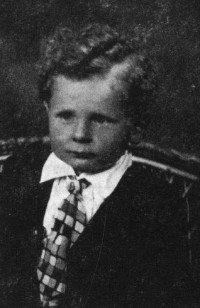
the grandson of Reb Israel Gertner, from Strzyzow |
[Page 255]
knowing about his Jewishness and the great respected family from which he originated, or, whether he was handed over to the Nazis and murdered, nobody ever found out.
Nechema and Moshe Gertner's son, Israel, who was just recovering from scarlet fever, prevented his mother from leaving Strzyzow before the Germans approached, as she planned to do. She wanted to protect him from the hardship of travel. The father Moshe, escaped by himself to Lwow. He was not exiled by the Soviets in June 1940, but returned to Strzyzow after the Germans occupied the eastern part of Poland in 1941. Their fate, his wife's and his, were the same as the rest of the town's Jewry.
After our return from Russia in 1946, we heard unconfirmed rumors, that before their deportation to the ghetto, the mother handed over the child Israel, who was then six years old, to her Christian maid who came from a village near Niebylec, and who had taken care of him in his childhood.
In Strzyzow which I visited for a short time, I was not able to find out anything, and, it was unsafe to loiter around in the remote villages. With the savage hatred of Jews which prevailed at that time, only death could have been found. Then and after my arrival in Israel, I did promise a sizeable amount of money to several Poles in Strzyzow as a fee for helping me trace down the child, without results. Neither were the many Jewish institutions which were active in Poland able to obtain any positive results.
In 1966, a cousin of the boy, Moshe Berger, from New York, without the knowledge of the Polish language, visited Galicia and reached the village near Niebylec, in order to search for a trace of his lost cousin, Israel. From conversations with the villagers, he concluded that surely the child was given to the Christian woman, but he could not find her. Therefore, the child's fate remains unknown.
Some of the Holocaust survivors and repatriates from Russia visited Strzyzow after the war. There were different motives for the visit, but the main motive was the yearning for home, the spiritual need to bid farewell to the birthplace which, along with everything that was dear to them, they had “temporarily” left years before. Before leaving the native land to begin their new life, they wanted to see for the last time all those places which reminded them of their dear ones, and of the good life when they were young. I was one of those visitors.
I went to Strzyzow not without fear. A big part of the Polish Population related with open hostility to the few Jews who came out from hiding. The Poles were particularly hostile to those Jews who had returned from Russia whose number seemed to the Poles ten times greater than it was actually. Hostile remarks were often heard about the large number of surviving Jews. The popular rumor spread among the Poles was that Poland supplied Russia with coal in exchange for their supply of Jews. There were incidents in which Jews, women among them, were taken
[Page 256]
off the trains by force and killed. Individual Jews, while visiting their hometowns for the same sentimental reasons as mine, were killed. The murderers did not know nor did they care, that those lone ones rescued from fire, the Holocaust, were leaving their homeland en masse and, that to the majority of refugees that returned from Russia, Poland served only as a transit station on their way to the wide world. From Szczecin, where thousands of repatriates were concentrated Jews were escaping nightly in trucks and sometimes by ship through the Oder-Elba Canal to West Berlin. This escape was carried out with the silent agreement of the Polish authorities and by the bribery of the Russian-German border guards. The Jews had to beware only of the Jewish-Communist activists because the escapes had undermined the existence of all kinds of committees, which the Communists had organized. The enemies of the Jews did not take into consideration that through the open Polish-Czechoslovakian border, a continuous stream of Jewish refugees was flowing to Austria and Italy. In their strong hatred of the Jews, the anti-Semites murdered Jews at the borders during their escape, though they knew that in a few hours they would have left Poland forever. Such a killing occurred before the mass exodus through Szczecin and Klacko, while the Jews were still Looking for escape routes. As soon as we crossed the Polish border on our return from Russia, we were shocked to hear the news of the murder of a group of young men who tried to cross to Slovuakia on their way to Eretz Israel.
In Rzeszow, where a small number of survivors had settled after they came out from the bunkers and tried to find some livelihood, a pogrom took place in 1945. These Jews were later transferred to Krakow under the protection of the Red Army, and there they became victims of a pogrom, which occurred shortly after their arrival.
My niece Henia and I came to Rzeszow on Our way to Strzyzow in 1946, a short time after the pogrom in Kielce. The air was saturated with hostility toward the Jews but in Rzeszow itself all was quiet. A few native Jews who returned from Russia had settled in a Jewish house and had organized some kind of a Jewish committee, which drew support from Jewish welfare organizations. The committee had a small cafeteria and provided lodging for the needy. In addition, there were in Rzeszow people from the surrounding towns and villages who waited for the liquidation of their affairs in their hometowns. The new Polish merchants, perhaps some of those who had mocked and jeered the Jews when they were led to their deaths in 1942, and who had organized the pogrom in 1945, now enjoyed this concentration of Jews who had no intentions of staying, but meanwhile were good customers in their stores, restaurants and lodgings.
As soon as entered the Primitive train on the Rzeszow-Jaslo line which passes through Strzyzow, we immediately encountered strong hostility toward the Jews. In the car, three “innocent” Peasant women were talking about the Jews who had disappeared. Of course, they did not realize that those who were sitting nearby were Jews. During the conversation, one said to the other with an expression Of satisfaction, “Their end has come,” and the other responded, “I am glad.”
We traveled the road well-known to us from before the war, and got
[Page 257]
out at the dilapidated Strzyzow station. As soon as we left the railroad station, we saw the last Jewish cemetery, which was located on a hill not far from the station. There was no sign of the concrete wall, which surrounded the cemetery nor the gravestones. In one place where Rabbi Alter Zev Horowitz was buried, a Pile of rubble was visible. That is all that remained of the Rabbi's tomb.
We walked to the town, feeling as if we were returning to the home which we only left yesterday Nothing changed, everything was so close to our hearts. This can only be expressed with a Yiddish word, “Heimish.” Then the pain awakened with more strength, and the wound which was not healed yet opened again. The same house, the same courtyards, and the same stores, only our brothers and sisters were missing. From the Poles only a few were missing, those who passed on in a natural way, but not even one Jew could be found. All the stores had new owners, but many stores still had the same merchandise as before. In our store I found merchandise which had been there when i left in 1939. All the Jewish houses and dwellings were occupied by new residents who also used the furniture of the previous owners.
Here are the changes that did occur. The house of Reb Aaron Kanner, the adjacent Beit Hamidrash, including the small house where the Christian “Sabbath Goy” used to live, were all demolished. This demolition had brought the end of the Beit Hamidrash alley, which had been the spiritual center of the Jewry in Strzyzow. Instead a broad street was opened which continues through the old Jewish cemetery all the way to the northern hills. The brick fence and the concrete wall, which surrounded all three cemeteries, were entirely destroyed. Only the old oak trees in the old cemetery survived. The two adjacent cemeteries were turned into a public park which is used by the neighbors. Nobody knew of the whereabouts of the old gravestones.
The shul remained intact, desolate, as an eternal witness to Jewish life for generations. In addition to the disturbance of the Jewish remains in their graves, the gravestones from the cemetery were used for pavement of the marketplace Maliciously, the gravestones were layed with the inscriptions up.
Witness to Jewish life in town were also the houses that were built by Jews, including the three structures which served the community: The kloiz of Reb Moshe Leib Shapiro and his son Nechemiah, the Talmud Torah and hostel for the poor, and the community bathhouse. The Jewish houses are now occupied by Christians who also inherited the household articles. The community buildings are serving the Christian population.
A few mute remnants also remained, namely, the copper candelabras and the brass chandeliers in the shul, which I mentioned before in the chapter about the prayer houses.
During the First World War, the Austrian authorities wanted to confiscate these candelabras. This took place during the action of collecting all the copper and brass articles for the war effort. The copper roof of the Catholic church in Strzyzow was then replaced with galvanized sheet metal. With great difficulty the Jews did succeed in preventing the confiscation of these candelabras, claiming that they were an inner
[Page 258]
part of the shul. Before the Germans occupied Strzyzow, a few young men hid those items to prevent their confiscation. The unfortunate did not know that they should first preserve their lives. Apparently, these articles are still hidden somewhere.
In one of the Christian cemeteries, there are graves of two young Jewish girls who were brought to town by the Germans after the expulsion of the Jews. They were killed and buried without markers on their graves. I was told that there are Christians who bring flowers to the graves on All Saints Day.
During our visit, remodeling was going on at the prayer house of Reb Moshe Leib Shapiro. The building to whose perfection he had devoted so much aptitude, was being prepared for the use of voluntary fire fighters brigade. And that is what it is used for at present.
On the eastern part of the marketplace, three homes were destroyed because the Nazis did not like their aesthetic looks.
In the center of the market is a tomb of Soviet soldiers who fell during the battle with the Germans for the liberation of the town. The tomb was surrounded with a small garden, and at present it is enlarged and engulfs the whole marketplace. For years the City Council and the clergy fought to liquidate the marketplace and turn it into a public park, but the Jews had opposed it. The store owners and tradesmen, with the help of the local inhabitants, succeeded to fail the idea, which would have meant deprivation of their livelihood.
At present, the park does not bother anyone. The town is asleep. No commerce, no traffic, perhaps because of the semi-Soviet regime, or because of the absence of the effervescent Jews. The weekly market is still on Tuesday. However, it lasts only two hours with a meager participation of peasants from the villages, and it does not last as before, from morning to evening.
We were received in town with politeness. The offices, which we had visited to arrange the return of our home, did everything to alleviate the formalities as quickly as possible. The meager funds which we had received from the sale of the house provided us just enough money to buy food and lodging during our stay in Poland, and provisions for the trip to a safer shore. We stayed in town three days, but we slept only one night in the house of Dr. Adam Patryn, the nephew of the deceased Doctor Joseph Patryn, the ex-mayor of the town. Like his uncle, he and his family were friendly towards the Jews. During the anti-Jewish boycott campaign, his mother took in as a business partner Reb Heshel Diamand, and for that reason, the stop of the annual religious procession near her store was cancelled. Dr. Patryn himself attended a wounded Jew who was hiding in the forests during the German occupation, which was a very dangerous act.
We left the town never to return, like all who visited their hometowns after the war. Few individual Jews returned and settled in the towns of Galica and Central Poland, and, from a Jewish perspective they live atropic lives, almost like the Spanish Marranos crying to hide their Jewishness. Some even paid with their lives, for yearning to live in their birthplace. In Strzyzow nobody settled. The heir to the Jewish
[Page 259]
community was the Town Council, and later the Soviet Style City People Committee. This is the situation on town at the present.
In the oldest Jewish cemetery a public park was planted. On the second and the third cemetery, which were used by the neighbors as vegetable gardens, a school was erected. Since there was no vacant space around, and foundations in Poland have to be deep, the skeletons were removed from the graves and deposited in one place.
The shul was originally planned to turn into a flourmill, but instead it was turned into a storage room for the local cooperative. In 1959, the Peoples Committee of the town decided to destroy the shul and build a public building. However, the Commissioner in charge of historical landmarks from Rzeszow District opposed, and declared that the building is sound, despite being neglected since 1939, and should be preserved as a landmark. He suggested to improve the structure and to use it for administrative or cultural purpose. After painstaking intervention of the Strzyzow organization in Israel and with their agreement, it was decided, according to information received by us, that the shul became the regional museum.
During the compilation of this book, the shul is still used as a storage room, and it is not known which proposal will prevail – the Central Authority's, which helps to preserve Jewish landmarks in many other bigger cities, or the local authority. Particularly, in such a remote provincial place, which strives to erase the memory of Jews, and has not hesitated to destroy old buildings and the desecrate cemeteries, as mentioned before.
In 1959, the gravestones were removed from the pavement of the market, apparently, by an order from higher authorities and, also as a result of our organization's intervention. After the gravestones had been lying in a pile for two years, they were moved to the hill where the last Jewish cemetery was located, except the ones, which fell apart because of their usage as pavement for close to twenty years. The cemetery is being used for farming by different people, mainly city employees.
To the Talmud Torah building, another floor was added, and it serves as a medical clinic for the townspeople.
Lately, the Jewish bathhouse was also renovated, and it is used by the public under the People Committee's supervision.
Ultimately, the central administration prevailed and the shul in Strzyzow remained intact. It was renovated in 1966. Some interior changes were made and it was turned into a city library. These are the changes that were made:
The two entrances from the south side were partially blocked and made into windows. The stairs which led to the women's balcony were demolished. Two new entrances were created, one from the east side, where the holy ark used to be, and one from the western side. Inside the main sanctuary, a balcony was build around all four walls with stairs leading to them from the inside. Only the center of sanctuary remained untouched.
[Page 260]
The four columns with the vaulted ceiling remained in its original height. The rooms around the main sanctuary were also remodeled. Out of the school room, the Kehillah room, and women's section, one large conference room was made. The interior of the shul was painted a uniform white color which covered up all the murals painted by the Garfulnkel family, and also the excerpts from Psalms which were engraved in the wall since the eighteenth century. Only the leviathan which was painted two hundred years ago and was recently restored with great effort by Polish artists remained in place. In front of the two entrances there are signs in Polish: “The Central Public Library in Strzyzow.” The fact that this building served as a prayer house for the Jews for four hundred years is not mentioned because there was no one in Strzyzow to see to it, unlike Krakow or even a smaller town like Lancut.
Shortly, two other houses near the shul will be demolished. The house of Reb Reuven Saphire which is located on the right side of the lawn in front of the shul, and the house of Reb Yacov Kanner on the left side. On these lots the city intends to build a large commercial center. The city originally planned to construct such a building on the vacant lot, after demolishing the shul, but failing to get permission from the authorities, they still found a way to build the building which will include the lot in front of the shul.
During the renovation of the shul, when the brick wall on the south side of the structure separating the stairwell from the women's gallery was demolished, an opening to the stairs leading to the attic was found. There the Poles found the attic full of used and torn books. These books had been there since I was a young man, and they had kept piling up because of the large size of the attic. Nobody ever bothered to bury them as is customary with used and torn Hebrew books. Polish scholars who were conducting research about the Jewish life, which had disappeared, found out about those books and so did we. We heard rumors that four hundred holy books were discovered in the attic of the ancient shul. After we checked it out, the true character of this find became clear to us.
The presence of the Jews in Strzyzow is being forgotten. Once in a while, some Jew living in Poland reaches Strzyzow, trying to buy Hebrew books, candlesticks, and chandeliers, which can be found in gentile houses, the heirs of the Jews. One who recently visited Strzyzow was the brother of Reb Reuven Saphire.
It is understandable that our contact with our birthplace, which we still visualize as the effervescent Jewish town, will eventually cease because we have no interest in the new gentile Strzyzow.
One more person from Strzyzow survived the Holocaust. This is Joseph Baumel, the son of Benjamin. He and his brother Tzvi, lived in Krakow and, at the outbreak of the Second World War, attempted to return home to their parents in Strzyzow. Tzvi was killed in Preclaw near Mielec and Joseph came home.
A week before the expulsion of the Jews from Strzyzow to the ghetto in Rzeszow, he returned to the place where he worked before in Krakow, a big Jewish business, which was now administered by a German. He hoped
[Page 261]
to be able to work there. Unfortunately he was caught by the Nazis and was sent to Plaszow and other camps. During a transport he jumped from a death train, which was going to Auschwitz, winding up in Mauthausen, where he was liberated. After the end of the war, he met a girl co-worker from before the war, who was with him in one of the camps and who he thought was dead. He married her, and they immigrated to the United States of America.
|
|
JewishGen, Inc. makes no representations regarding the accuracy of
the translation. The reader may wish to refer to the original material
for verification.
JewishGen is not responsible for inaccuracies or omissions in the original work and cannot rewrite or edit the text to correct inaccuracies and/or omissions.
Our mission is to produce a translation of the original work and we cannot verify the accuracy of statements or alter facts cited.
 Strzyzow, Poland
 Yizkor Book Project
 JewishGen Home Page
Copyright © 1999-2026 by JewishGen, Inc.
Updated 10 Jul 2015 by JH