 |
|
|
[Page 11]
[Page 12]
[Pages 13-17]
by Chaim Finkel
Translated by Pamela Russ
Ostroh is a very old city – one of the oldest cities in Poland and in Volhyn, which has a long history of over 1,000 years. Geographically, the city lies spread out on the shores of the rivers Villia and Horyn.
|
|
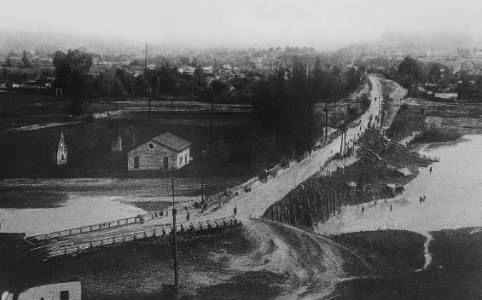
| Bridges of the new city, upon which the Jews of Ostroh marched the Death March |
From various sources we learn that at about the year 900 a significant number of Jews already lived in Ostroh, and among them were also Jews from Kavkaz [Caucus] who came to Ostroh with the stream of refugees from Germany as a result of the heavy anti-Semitic laws and assaults, and were looking for a place to settle in a city of neighboring Poland.
At the beginning of the uprising, the city belonged to the dukes and counts who viewed the settling of Jews as positive action, since the goal was to develop the city into regions of business and labor.
In the 13th century, Ostroh entered into the existing Galicia-Volhyn principality, and in the 14th century, the city was taken over by Lithuania. In the 15th century, Ostroh was under the rule of feudal Poland, and belonged administratively to the prince Ostrozhski.
More than once, the city was besieged by
[Page 19]
enemy nations who wanted to rule over them. The population suffered greatly from frequent invasions, attacks, and especially from the wandering, crooked Tatars who ruled over huge areas of Ukraine, and strongly attacked the positions of military garrisons which had protected the city. It was so bad that it became necessary to protect the city with a wall that would protect the people from thieves and bandits.
|
|
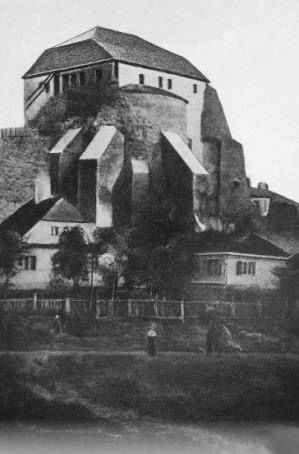
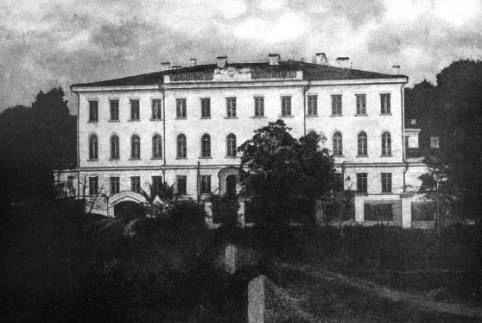
| The Prince Mansion in Ostroh (“The Castle”) |
According to the topographical structure, the city was surrounded by fortresses, towers, ramparts, and looked like a prison. From here, very likely is the source of the name of the city, Ostrog, which, in Russian, means “fortress.” According to another version, that is found in the sources, the city was called Ostrog from the name of the Prince Ostrozhski, the supreme ruler of the city, and he wanted to perpetuate his name and abridged it to Ostrog.
In opposition to that, the Jews gave another version, calling it “Os Torah” [the symbol of the Torah], since, during this time, in that city there lived great personalities, Torah scholars, rabbis, great intellectuals such as the MaHarshal (Moreinu Harav Shlome Lurie), the MaHarsha (Reb Shemuel Eliezer ben Yehudah ha-Levi Edels), HaSheloh (Reb Yeshayahu Halevi Hurvitz), and other great persons of that generation.
It is hard to find definitive plans of the architectural structures of an old city such as Ostroh. It is very likely that the development of the city over the many generations was a result of
[Page 20]
incidental circumstances: geography, social issues, political and economic issues. Until these latest times, you can find traces of the city's infrastructure and traces of special architectural design that were characteristic for the style of the buildings of a city
|
|
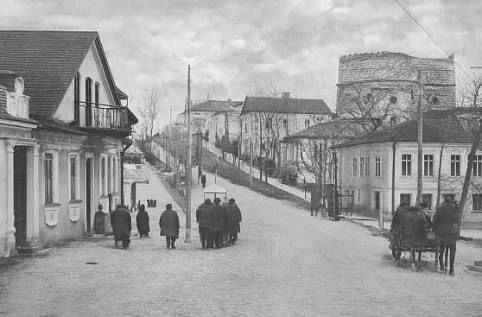
| The ancient gate on Lutzk Street |
– a fortress in those places in the long past history that placed its signature on its development through many generations. The traces of the old fortresses are still identifiable, those whose destruction bear witness to an architectural style of Middle-Age architecture.
The Evolution of the Community in Ostroh
In the broader network of settlements, cities, and towns in the former feudal Poland, and later under the rule of the Russian czars, and then in independent Poland between the two world wars, Jewish life in Ostroh flourished with multicolored rhythm, with ups and downs. The Jewish history pages of the city are soaked with tears and blood. On the long road of its historical movement, the Jewish community in Ostroh went through many incidents of bloodshed, massacres, oppressions, decrees, and pogroms, but after each shedding of blood by the enemies of the Jews, the community began anew to rebuild and develop.
Of all the cities in Volhyn during Ostroh's existence, Ostroh surpassed other, larger communities, with its well-developed network of Torah institutions, social institutions, and with its more extended education network. Ostroh was a city of Torah and knowledge and over the centuries played a leading role within the communities in Volhyn.
The Jewish community in Ostroh was the spiritual metropolis in a very rich Jewish period of history, and was very influential far beyond its geographical borders, thanks to its great personalities, Torah leaders, scholars, and great rabbis who occupied the rabbinic seat in Ostroh. The large yeshiva was prominent in the Jewish world, and the community prospered in many areas of Jewish life. Ostroh was the capital of Volhyn, where there also was the great rabbinical court, and the Jewish community in Ostroh was one of
[Page 21]
the four main pillars of the “Va'ad arba ha'artzot” [Council of Four Lands, central governing body of Polish Jewry], basically, the Jewish parliament that existed from mid-16th century until the end of the 18th century, where the Jews benefitted from spiritual and overall autonomy.
The first information about an existing Jewish settlement in Ostroh is from the year 1444, when the city became naturalized in the Polish country. The Jews who came to the city from the west, found a financially reasonable place for economic activity. They demonstrated much skill as experienced merchants who dealt with animals which they purchased in Walachia (Romania) for cash, or exchanged wool and other products in the western Poland cities, where the industrial projects were well developed. In those times, the Jewish merchants used to buy the necessary materials for the Ostroh population and for the population in the surrounding areas.
In those times, (Middle Ages), the industry of buying and selling and grains, and other agricultural products, was largely developed, and the Jewish merchants exported them. With time, a small industry evolved in Ostroh, in which the Jews took an important position. The Jewish population in the city grew, and in the mid-17th century, the Jewish population in Ostroh was 1500.
But at the same time as the Jewish population was growing in the city, and the integration of the Jews into various sectors of business and craftsmanship, the hatred and hostility towards the Jews by the Christian population grew simultaneously. The Jewish community in Ostroh was not free from uprisings and unrest, which were both a result of the ongoing friction between Poland and Lithuania regarding national territories, and the Jews were uncertain about whom they should support – this country or that one.
|
|
| In the background of one of the towers in Ostroh |
The peasant uprisings in Ukraine placed the Jews in terrible positions, which expressed themselves in the fatal years of 1648-1649, which were noted in Jewish history with bloodied letters, such as the decrees of Tach ve'Tat [referring to the Gregorian calendar years 1648-1649, and Hebrew calendar years 5408-5409, where the Hebrew years refer to the corresponding numbers], which did not skip over the Jewish community in Ostroh.
In those bloody years, in half of the 17th century, the Cossack storm of Cossack bandits from the Cossack Ottoman Bogdan Chmielnicki, destroyed 300 Jewish communities, and among them was Ostroh. Chmielnicki's wild Cossacks, with their wild bestial behavior,
[Page 22]
tore into Jewish homes, murdered, raped Jewish women, burned and tore down shuls, and left behind mountains of ash and hundreds of dead in the city.
About the bloody years of Tach ve'Tat in Ostroh, we found outstanding writings in the book by Sh. Hertz, “The Jews in Ukraine,” and in the book by Nassan-Notte Hanover, “Yavan Metzulach” [“The Cossack Chasm”], and in other sources. According to these sources, the number of Jewish deaths reached 7,000.
About the terrible destruction in Ostroh, there was also
|
|
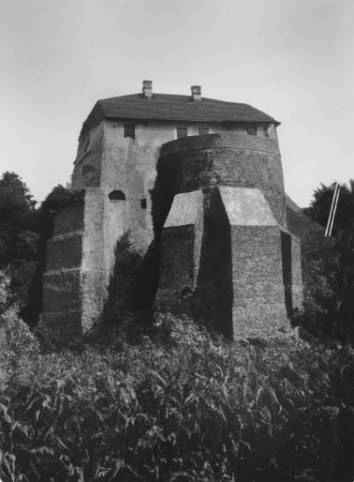
| The ancient castle of the princes of Ostroski in Ostroh |
compiled a special film, in which the agony and pain of spilled Jewish blood is clearly expressed. In the historical writings of the famous Simon Dubnow, Ostroh is mentioned as it suffered greatly under Bogdan Chmielnicki's bandits and from their pogroms in Ostroh, where only five Jewish houses remained.
Pogroms and unrests were a frequent occurrence in Volhyn during many different times, that happened on national soil and was a product of deep hatred of the Jews by the Christians.
The Cossack Haydamaks [Ukrainian Cossack paramilitaries] systematically incited the peasants and other Christian elements with a call to murder the Jews. One such famous pogrom was carried out by the students of the Theological Seminary, who lived in the monasteries in the neighboring settlement in Pavlovitz. Nine Jews were killed there, and among them was the holy Rebbe Tzvi, the mechutan [related through marriage of their children to each other] of Rebbe Yakov Yosef ben Yehuda from Ostroh.
On the day after Pesach [Passover], peasants with wagons filled with wood appeared in Ostroh, to so-called “sell” it all. But under the wood, the peasants had hidden all kinds of murderous weapons, such as axes, knives, steel rods, and other items so that they would be able to carry out a slaughter upon the Jews of the town. When the Jews sensed the danger that was upon them, they sought protection from the local Tatars, who were known to be strong and bold fighters, and for a large sum of money they agreed to protect the Jews from a pogrom. They armed themselves well with weapons and went to confront the riled peasants, disarmed them, beat them, dragged out the weapons hidden in the wagons, and then chased them out of town. The Ostroh Jews were saved
[Page 23]
from a terrible slaughter and then called that day “Nes d'Isru Chag shel Pesach” [“the Miracle of the Day after Passover”].
Another miracle that was written about in the old Pinkas [journal] of the Ostroh community was an incident that took place in the year 1792, that is in the period of the second division of Poland.
In that year, the Russian soldiers under the command of the field marshal Suvorov attacked the Polish army that had become strongly empowered in Ostroh. The Polish army, not seeing any possibility of withstanding the assault of Suvorov's army, and out of fear that
|
|
|
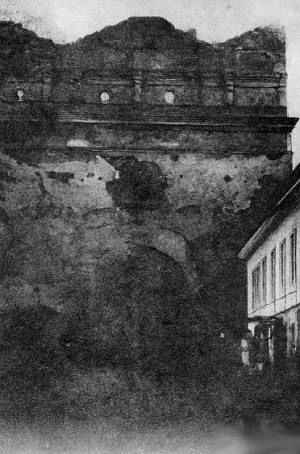
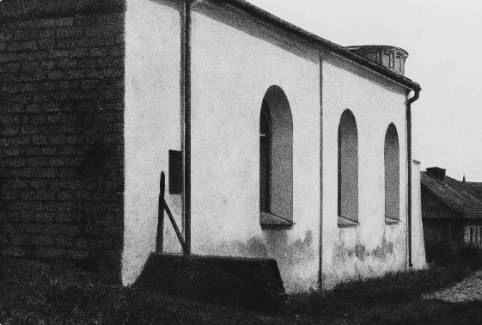
The southern wall of the Beit Knesset [synagogue] with the name of
“the Maharsha [Rabbi Shmuel Eliezer Edeles] of Ostroh.” |
the city would collapse, decided to leave the city. But as they were leaving, the Polish military blew apart the bridge along the Viliia River, which connected the old and the new city, and this complicated the assault of the Russian army. Along with the Polish military, the Polish population left the city as well.
The Russian army heavily bombed the city with cannons, and specifically targeted the direction of the Maharsha shul, which, because of its exceptional construction, looked like a fortress from a distance. The entire Jewish population hid in the shul, searching for protection between its thick and strong walls. The Russians continually bombed the shul, and one bomb hit the southern wall and remained half embedded. The second bomb, which flew in through a window, did not explode, and remained as such until the Holocaust. They hung it up on strong chains on the ceiling, and it elicited a great interest among many tourists who came at various times to see the miracle.
When it became known that the Russian army was going to renew its storm onto the city, and a great danger hovered over the Jews, fearing that they would all die in the large shul if the Russians would renew their storm in the city and would destroy the shul, there was an elderly man named Reb Eliezer (the father of the Komarno Magid, Rebbe Yosef Moshe), who mastered the Russian language. He set himself forth for the Jews, and presented himself in the dangerous situation. He swam across the Viliia, then safely came to
[Page 24]
the other side of the river, and went straight to the Russian camp, which was ready to renew the shootings in the city.
He was able to meet with Suvorov, and he told him that the Polish military had already left the city, and now he would be able to direct his army without any disruptions in the city. Suvorov designated him as the road director and the Russian army, with a triumphant gait, marched into the city. The Jews gave a beautiful welcome to their liberators, and the rabbis of the city designated the day of this entry march of the Russian army into Ostroh, which was 7 Tammuz [Hebrew month], as the “miracle day of 7 Tammuz.”
Until the 14th century, Volhyn considered itself under Russian rule. When Poland and Lithuania united in the 16th century, Volhyn was taken over by Poland. At that time, the Jewish settlement began strongly to evolve. Various trade unions were set up, and business spread. Many groups were organized, and the community prospered.
At that time, a printing press was created, and many Hebrew books were printed, particularly religious books, and even the Tanach [entire Hebrew bible; Five Books of Moses, and all books of Prophets] was printed in a Slavic translation. The printing press was founded in the year 1581, and it belonged to the Jews.
In 1797, the entire Volhyn and Ostroh were united under Russia, and only after World War One, with the rise of independent Poland, the western part of Ukraine, and in Volhyn, with Ostroh as a border city, moved over to Poland, and the city was now under Polish rule until September 1939, when the city was taken under the Soviet Union. (About the Soviet period of September 1939-1941, and about the period of destruction, see the articles by Betty Eisenstein and Aaron Waldman.)
In Ostroh, as in all the other Jewish communities, the Jews kept a Pinkas [journal], in which the most important events of the community were documented. In this Pinkas, there were also all kinds of stories written, legends, and laws that the community put forth. There were also writings about the great rabbis, Torah scholars, who lived in Ostroh in various times. But as a result of the bloody pogroms and frequent fires, there are hardly any writings left over from those times in the city, except for the notes about the Cossack trouble of Bogdan Chmielnicki in the years 1648-1649.
The Jews who left the city during those Chmielnicki unrests, returned and rebuilt the city anew, renewed community life, renewed the activity of the societal organizations, built shuls and the famous yeshiva, and Jewish life resumed as it had once been. Ostroh once again became a great spiritual center. The chassidic movement, that was founded by the Baal Shem Tov and was spread by the Maggid of Mezrich, had many adherents, and the chassidic movement put its signature on Jewish life in the city. Ostroh became the crowned center of the entire Volhyn thanks to the rabbis and the
[Page 25]
large yeshiva that grew beautifully and became one of the largest Torah centers in the entire Volhyn.
The Ostroh native, Reb Mendel Bieber, lived at the end of the 19th century and beginning of the 20th, was one of the most prevalent and important historical documenters, collected valuable documents about the history of the city during all times. With that objective, he did a full search of all old tombstones in the old cemeteries in Ostroh, wiped off the dust all the old, broken-down tombstones so that he would be able to read the letters on each one. He wrote down all the details of the deceased, the date of death, and in the end, he reconstructed the history of the Jewish community in Ostroh.
He perpetuated the city with his valuable book “Mazkeres le”Gedolei Ostroh” [A Memory to the Great Ones of Ostroh”], which was published in Berditchev in the year 1907, which is the absolute, most important source for which to learn about the history of the city and its community. With his book, he set up the great monument for the grand rabbis and scholars who lived in Ostroh in various times, until the 20th century.
Ostroh, the City of Torah Scholars
In the above-mentioned book of Reb Mendel Bieber, we find a list of names of 33 great Torah scholars, who held the highest position in the city as chief rabbis. This
|
|
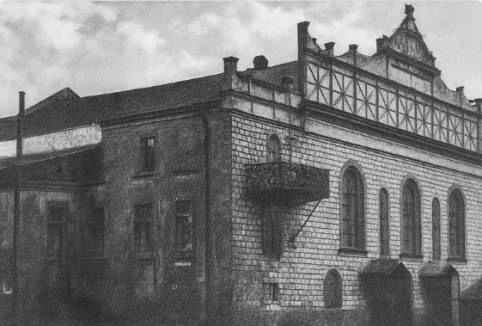
| The grand shul with the name of the Maharsha in Ostroh |
[Page 26]
is a prominent list of scholars and rabbis of which the Ostroh community was very proud, and thanks to them Ostroh became famous in the Jewish world. Of the 33 great personalities who are listed in the book of Reb Mendel Bieber, it is worthwhile to review some of them about whom the city has definitive legends.
The most famous of the rabbis and scholars, and one of the most famous personalities, without a doubt, was the Maharsha (Moreinu HaRav Rebbi Shmuel Edels), who was the chief rabbi and Rosh Yeshiva [head of the yeshiva] for about ten years, until his passing. He was outstanding with his popularity, boundless simplicity, and deep knowledge and wisdom.
As one of the characteristic traits of this great personality that defined the Maharsha, could have been the fact that in the doorway to the entrance of his house there was etched out in white stone these words: “Bachutz lo yolin ger, dalsei le'orach eftach” (the convert will not spend the night outdoors, I will open my door for the needy).
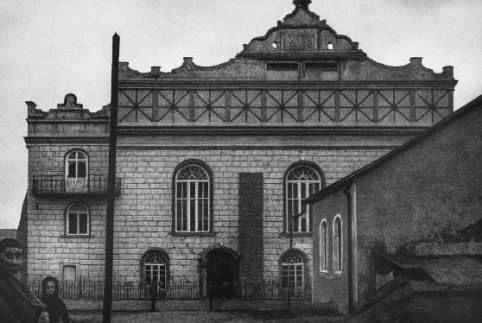
Thanks to the popularity of the Maharsha, the grand shul was called by his name, and it was known in the Jewish world as one of the historical shuls. Also, the great yeshiva in Ostroh, where he was at the head, received a world-famous reputation, thanks to the Maharsha. While he occupied the rabbinate seat for tens of years, he wrote many important books which are masterpieces of Talmudic literature until this very day. Among those, were Chidushei Halachos [commentary on the Talmud], Chidushei Agudos [commentary on the non-legal portions of the Talmud], Chidushei HaMaharsha [commentary about the explanations of Rashi on the Five Books of the Torah].
The Torah scholar Maharsha died on the fifth day of the month of Kislev, year 5392 (1632). Three hundred years after his passing, in 1932, the leadership of the Ostroh community decided to mark the 300th yahrzeit [time of death] in a celebratory manner. On that day, many rabbis and famous personalities came from all around Poland, in order to commemorate the date. This was a great demonstration towards the memory of the scholar and spiritual leader of Polish Jewry.
All the Jews of the city participated in the memorable and impressive memorial service. The shops were closed, and a huge mass of people flowed to the cemetery, to the gravesite of the Maharsha. Many eulogies were given, and the speakers lauded the great personality and genius of the great scholar and genius.
It is worth noting that the representatives of the Polish authorities also participated in these celebrations. This was a huge demonstration of the Jewish world in the holy memory of the Ostroh beloved, spiritual leader, rabbi and genius, who was one of the main pillars of the rabbinic world in the 17th century.
Among other great leaders who lived and built in Ostroh, was Hamarshal (Moreinu haRav Shlomo Luria), who lived in the 16th century and was the Rosh Yeshiva in Ostroh and at the same time, the main rabbi in the entire Volhyn. He was a rising star in spiritual Jewry at that time. He produced very important books, and among them were jewels of Talmudic literature such as Chochmas Shlomo [The Wisdom of Shlomo], and Yam shel Shlomo [The Sea of Shlomo], Yedias Shlomo [Knowledge of Shlomo], Amudei Shlomo [The Pillars of Shlomo], Ateres Shlomo [The Crown of Shlomo], and more.
The Shelah (Rabbeinu Yeshaya Halevi Horowitz), a great rabbinic personality, lived in the 17th century, and was the chief rabbi in Ostroh.
[Page 27]
He wrote several important books, and among them is the famous book Shenei Luchos Habris [Two Tablets of the Covenant], which is prominent within Talmudic literature. He immigrated to Israel, lived in Jerusalem and in Tzfat, and his grave is found in the cemetery in Tiberias, near the graves of Reb Yochanan HaSandlar [the shoemaker] and the Rambam [Maimonides].
|
|
| The front of the great shul in Ostroh |
HaRav HaGaon Reb Dovid Segal, author of “Turei Zahav” [“Rows of Gold”], also known as the TaZ, lived in the 17th century, and was the head of the Jewish court, and head of the yeshiva in Ostroh. During his time, he lifted up the reputation of the Ostroh yeshiva to become one of the highest spiritual establishments in Volhyn. His book Turei Zahav is a explanatory supplement to the Shulchan Aruch [Code of Jewish Laws], written by Reb Joseph Karo. He was one of the survivors during the Cossack slaughters of Chmielnicki's thugs in the years tach ve'tat [5408-5409, 1648-1649]. In memory of the victims of those slaughters he compiled special prayers, that presented a document about those terrible times.
HaGaon Moreinu HaRav Reb Meir Margoliot, who lived in the 18th century, was president of the rabbinic tribunal in Ostroh and the district. He was a personal friend and great follower of the Baal Shem Tov (Besht). He wrote a very important book, “Meir Netivim” [halachic responsa].
The scholar Reb Yaakov son of Reb Chaim the Cohen Rapoport, lived in the 19th century, was the president of the Jewish court of Ostroh and Volhyn, was a great personality in the rabbinic world, and his name was famous far beyond the borders of Volhyn and Ukraine. He excelled in his brilliance in Talmudic knowledge. His discussions with people who would come to him for a Jewish court case were exceptional with great objectivity, always trying to demonstrate to both sides a logical and Torah direction, and this always was successful, thanks to his excellence in explanation. He had a particular direction in Jewish law, in which he was a great genius. As Rosh Yeshiva [head of the yeshiva], he also excelled in transmitting his lectures which had a great resonance with the yeshiva students. He died in the year 5622 (1862).
[Page 28]
Ostroh in the Twentieth Century
The Ostroh community was the central axis around which the entire societal and spiritual Jewish life evolved: rabbis, statistics of births and deaths, charity issues, kosher slaughter. The community supported and held together many various good-will organizations and groups, such as the Chevra Kadisha [burial society], Bikur Cholim [aid for the sick], Batei Knesset [shuls], educational institutions, and more.
According to its role and its tasks, the community also had an influence on the economic area for the Jews in the city. At the head of the community in Ostroh there were always well-known businessmen who were selected by the community with democratic means, as well as the money providers through community elections. The representatives of the community were businessmen who worked for the welfare and growth of the Jewish population in the city, and among them, there were popular business people such as Chaim Davidson, Chaim Galberson, Avrohom Aharon Stein, and others.
The community administration was the central place for managing societal, cultural, and social issues, and their influence on the city was significant.
The community administration also represented the Jewish population regarding the local authority organizations, before the times of Czarism and afterwards regarding the Polish authority organizations. The community administration was all inclusive, mainly comprising of the representatives of the Zionist organizations, whose influence in the city was very pronounced. The community was also in contact by postal mail with their compatriots in America, Argentina, and other countries.
Among the rabbis who occupied the rabbinic positions in Ostroh in the 20th century until the Holocaust, were:
|
|
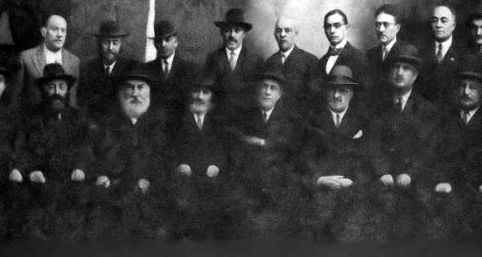
| Jewish Community Council in Ostroh | |
|
Standing from right to left: “Documenter” Ovadia Bolyn, Betzalel Bromnik,
Shlomo Komandant, Chaim Davidson, Yoel Finkelstein, Pini Takser, Berl Linski, Isak Spielberg,
Yosef Glantz
|
[Page 29]
HaRav Yosef Wertheim, who later went to Hrubieszow as a rabbi, and then later moved to Israel and died in Jerusalem. He was famous for his “sharp mind,” being a great Torah scholar, and was welcomed into the Zionist circles and by the government.
After him the chief rabbi in the city was HaRav Mordechai Ginsberg, who became the “Kazioner Rabiner” [Kazion rabbi, government appointed]. He represented the Jewish population in relation to the Polish government organizations, and he was the last rabbi in Ostroh until the arrival of the Germans. He died later during the liquidation of Ostroh Jews in the Holocaust (1941-1944).
The last Jewish judges before the Holocaust were: Reb Efraim Guberman, Rebbe Rav Kaplan (Reb Berele Dayan), and Rebbe Zev Volf Sefarad, the son of Rebbe Alteroni, the last rabbi in the city. Rebbe Elikim Getzel was the Rav in the new city.
The Zionist Movement in Ostroh
The Zionist movement in Ostroh began its activity in the first years of the 20th century, and continued until the days of the Holocaust.
In the times of Czarism, until the rise of Poland, the Zionist movement was forced to conduct their activities under illegal conditions. The meetings were held in secret and the cultural activities took place in small places so as not to elicit the attention of the authorities. At that time, there was a group that was active in learning the history of Zionism, another group that took to learning about the history of the Jewish people, another group that studied the geography of Israel, and other groups.
The youth collected donations for the Odessa committee of the Chovevei Tzion [“Lovers of Zion”]. Another group was also founded that organized trips to Israel. In those years, popular and active Zionist activists came forth, those such as Reb Shmuel Shrira, who was known in Ostroh as Shmuel Shreier [the screamer], Zalman Gerfeld, Leib Spielberg, Chaim Davidson, Avraham Bukimer, Leibish Bieber, Yisrael Vogel, Ovadiah Balin, Gur-Aryeh Sadeh, Avraham Eli Guberman, and others. This was a very active core of intellectual people, maskilim [enlightened people], who excelled in their commitment to Zionist activities, and became very popular in the city.
Ostroh was one of the few cities that conducted a blessed activity, “Dror”, which was involved primarily with cultural activity. Here, the culture elites of Ostroh were involved with cultural activities. Its directors were represented in the city's committee of the General Zionist Organization, in the management of Keren Kayemet [Jewish National Fund], and Keren Hayesod [United Israel Appeal]. The members of Dror, would put out publications for the people, and these publications would be reviewed by an intelligent group, and they were a well-known name in the city.
A multi-branched activity in the city and concrete organizational formation was the Zionist movement in Ostroh after World War One, after the revolution in the year 1917, when the activities took place in legal places. The twenty and thirty years during the Polish governance, characterized a period of political-socialist uprising of Polish Jewry, and did not leave behind Ostroh. The Zionist movement, with all of its organizations and parties, planted deep roots, and the ideas of Aliyah to Israel,
[Page 30]
took hold in town of a large circle of Zionists of all shades.
Much joy and inspiration ruled over the Ostroh Jews when they heard about the Balfour Declaration in the year 1917. Stormy demonstrations were held in the city, and the overall excitement knew no bounds. They brought to life the voices and feelings of this historical event for the Jewish nation.
The events in Israel, the fighting in Tel Chai, and the organized pogrom in Jerusalem on Pesach of 1920, and the unrests in Yaffo, gave a nudge to the Zionist organizations in Ostroh, and strengthened activity, and particularly they focused attention to strengthen the small settlement in Israel through an increased Aliyah.
The activity in this area had wished for results, and an Aliyah process began that captured a large group of active participants who had made Aliyah to Israel through all kinds of means.
In all areas of the land, in cities, settlements, kibbutzim, there are those originally from Ostroh, who made Aliyah at so many different times until World War Two, and then after that.
Among those first ones who made Aliyah at the beginning of the 1920s, there was Reb Yaakov Fishel Feldenkreiz and his wife Devora. He was a man of the books, and not a worker, and despite his age (45), he took to agriculture in Petach Tikva, and worked in the fields. He was one of the men who died at the hands of the Arab murderers during the times of unrest in the year 5681 (1921).
Prominent societal workers in Ostroh were Kalman Frenkel and Avigdor Kamerman, who also officiated as vice-representatives of the Ostroh city council, and they earnestly addressed the interests of the Jewish population. Ostroh was also
|
|
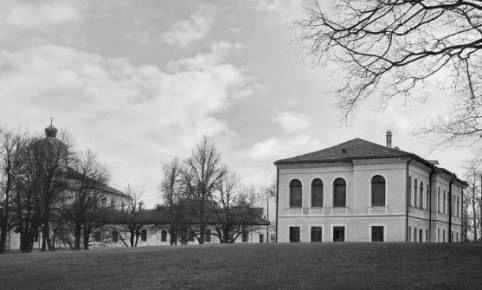
| The Polish gymnasium in Ostroh |
[Page 31]
known as the center of the Chalutzim [Jewish pioneers] activity until the Holocaust. The youth of all Zionist shades ran blessed activities in their locales, were organized in groups that ran culture activities. Some of them went out to Hachshara [training program in preparation for immigration to Israel].
In Ostroh, all the Zionist organizations were on the Jewish street, such as: Gordonia, Hashomer Hatzair, Hechalutz, Hanoar Hatzioni, Dror, Beitar, and Zionist parties such as Hitachdus, Poalei Tzion, Mizrachi, general Zionists, revisionists, and others. All these organizations also ran, other than cultural activities, sport activities, especially Maccabi, that was a prominent name in Ostroh. There was also a women's Zionist organization that managed multi-branched activities.
In Ostroh, there was also a broad network of educational institutions: a Hebrew gymnasium [high school], Ivrit, the Tarbut school, cheders, and so on. In the Polish “Powszechne” [general] schools, in the Polish teacher's seminary, and in the Polish gymnasium, there were many Jewish students.
Ostroh was blessed with many outstanding pedagogues who had a social aptitude and were also engaged in the Zionist circles; those such as Mordechai Kaplan, Yaakov Nordman, Moshe Tolpin, Tanchum Zhebyn, Yosef Finkelstein, who was a Hebrew teacher and journalist, Diuzik Barak, who as director of the Talmud Torah school had good pedagogues such as Moshe Shulwung, Meir-Tzvi Finkel, Moshe Kretchmar, Mordechai Mishna, who was the administrator of Keren Kayemet LeYisrael for a long time in Ostroh, and others.
The Zionist youth movement excelled in its organized activities. Among them, were dynamic and capable organizers from the Zionist youth movements, such as the brothers Eliyahu and Yankel Kaplan, Tzvi Mendeltzweig from Gordonia, Leibish Bieber, Shlomo Bukimer, and others from Hitachdus. Leibish Bieber was very popular as an exceptional
|
|
| The Polish government seminary for teachers in Ostroh |
[Page 32]
and fiery speaker, and his speeches had a great resonance in town. In the time of the Hitler occupation, Yankel Kaplan fought against the Nazis as a partisan, and died in the battle.
|
|
| The Gunik Refugee House, and the Credit Bank |
The following compatriots were in Hechalutz: Berke Berger, who developed extensive activity; and Dr. Yisrael Presman, Tzippora Gutman, and Eliyahu Melamed were busy organizers and directors of Hechalutz Hatza'ir. Dr. Presman and Eliyahu Melamed died in the period of the Holocaust, and Tzippora Gutman-Lindheimer merited to live in Israel, and is working as an educator in the area of Haifa.
Among the general Zionists were the organizers Avraham Bukimer, Mendel (Munye) Bukimer, Grisha Band, and others.
Beitar and the revisionists were strong organizations, and this was thanks to their directors Gedalia Gdaliewski, Avraham (Abrashe) Abelman, Boruch (Buzi) Chasid, and Y.M. Nordman. Gedalia Gdaliewski was killed by the NKVD [Soviet Union Secret Police] in Lemberg, where he studied and completed university. B. Chasid and Abelman were killed by the Nazis.
Yosef (Yofe) Katz was at the head of the organization Brit Hakanaim [Covenant of the Zealots; opposition to secularism in Israel], among other active members of the organization that was founded by Meir Grosman, were Dovid Shtulmeister, Avraham Charbash, and others.
The Mizrachi, who conducted many activities in the city, and who made a great impact with the religious Jews, was outstanding, thanks to their skilled directors such as Reb Moshe Yaakov Abelman, a well-known, popular personality in the city, a Torah scholar, and was also the director of the People's Bank in the city and a councilman in the city council.
[Page 33]
His brother-in-law, Mordechai Rabinovitch, was vice-chairman of the community, a religious Jew, also had a good name in the city as an educated person, and spent a lot of time and energy for the good of the people. Among the other leaders of Mizrachi, were Pinchas Takser, Aharon Barak, Yitzchak Lizak, Dov Linetski – the head of Keren Kayemet Le'Israel, and others.
The Hashomer Hatzair was one of the strongest and most organized youth movement in Ostroh. Its members comprised primarily of students. Many of the members went on Hachshara and later made Aliyah to Israel. Among the educated directors of this network were, in various times, Shmuel Melamed, Minia Greinims, Mottel Shkolnik, Tzippora Katz, Avraham Tzurni, Meir Zilberstein, and other activists from Hashomer Hatzair were Avraham Finkel, Dvora Familiant, and Mordechai Katzenblit, and their brother Yeshaya (Shike) Katzanblit.
The directors of Hashomer Ha'leumi – Hanoar Hatzioni were primarily Dr. Hertzel (Grisha) Aderman, Dovid Meller, Nachum Shochet, Grisha Reznik, Yitzchak Zeltzer, Yoine Lukatz, Grisha Vidra, Yosef Perlyuk, Tzila Ozherkower, Mindel Rosentak, Fanny Karker, and others.
There was not a shortage of non-Zionist organizations in Ostroh, which led active functions, mainly between the working youth such as the Bund, and the leftist elements. They were active mainly in professional areas and ran their activities in Yiddish. Among the outstanding people there was Mottel Gorin, who represented the working class in the community and in the city council. Before the Soviet era, he was the chairman of the city council until the outbreak of the German-Soviet war.
There were all kinds of institutions in Ostroh, such as Chevrat Mishnayos, which was led by Reb Meir Tzvi Finkel, and Reb Pinchas Flikop. Tens of important Jews in town studied Mishnayos, and at the Siyum [celebration for completing study of full sections of Mishnayos], they would
|
|
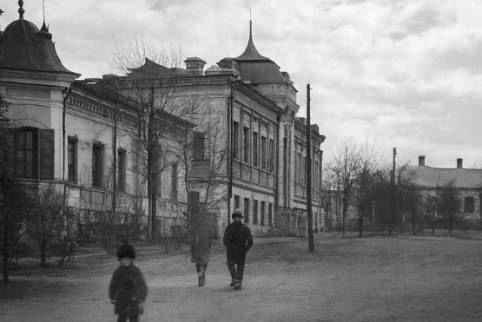
| Post Office Street |
[Page 34]
organize a traditional festive meal in the house of the head of the learning group, and as a child, I had great pleasure from this festive meal and the delicious foods that had been prepared by the waitresses.
This was the Golden Era of the broadly extended societal activities in the city, until the terrible cut of Hitlerism chopped off the huge tree and ripped out the roots along with it.
Before the Soviet period (September 1939-June 1941), the Ostroh community, as other Jewish communities under the Bolshevik regime, began the final stage of its last moments, which ended later with the destruction of the rich Jewish community of Ostroh by the Nazis.
|
|
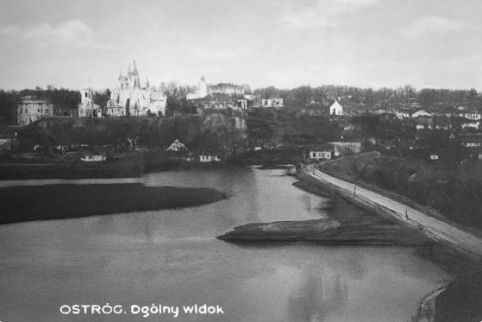
| An overall view of Ostroh |
|
|
JewishGen, Inc. makes no representations regarding the accuracy of
the translation. The reader may wish to refer to the original material
for verification.
JewishGen is not responsible for inaccuracies or omissions in the original work and cannot rewrite or edit the text to correct inaccuracies and/or omissions.
Our mission is to produce a translation of the original work and we cannot verify the accuracy of statements or alter facts cited.
 Ostroh, Ukraine
 Yizkor Book Project
 JewishGen Home Page
Copyright © 1999-2026 by JewishGen, Inc.
Updated 16 Feb 2026 by OR