The Economy
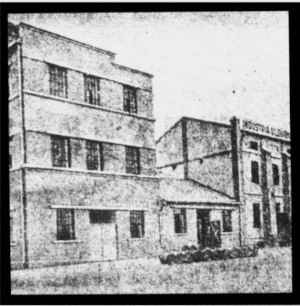
|
|
[Page 512]
[Page 513]
[Page 514]
by Y. Mazor
Translated by Jerrold Landau
The economy of Beltz [Bălţi] experienced a surge during the inter-war period, specifically on account of being cut off from Russia at the time of the annexation to Romania at the end of the First World War. There is no question that there was intentional policy on the side of the Romanian authorities, who decided to diminish the importance of the city of the Bessarabian capital of Kishinev, which was a Russian city “Par excellence,” and to transfer the center of gravity of economic activity to Beltz. In the eyes of the government, that city seemed to be more open to the absorption of Romanian influence, since it was less open to Russian influence. This was because the Russian intelligentsia of Beltz was smaller, and the middle class was large. This is already noted by Ștefan Ciobanu, who wrote a monograph on Bessarabia in the framework of a booklet on Bessarabia that was prepared for the general exhibition and fair in Kishinev from 1926:
“The shift in the economic orientation of Bessarabia since the Union will undoubtedly lead to the rise of certain cities and perhaps to the decline of others.
“Bălţi is one of the cities of Bessarabia that has the greatest prospects for development under the new living conditions.
“Situated on the small Răut River, in the middle of northern Bessarabia, at the crossroads of the roads leading to Iași and Cernăuţi, Bălţi has, in recent years, acquired very great economic importance.”
Indeed, despite the fact that the Romanian government began to restrict the lives of the Jews in the economic realm starting from 1937, Beltz continued to develop. Its standard of living increased, and the city reached the status of the economic center of Bessarabia.
The Background of the Economy of Beltz
The economy of Beltz was connected to agriculture. Until the beginning of the [20th] century, this was very prominent, and the leaning was clear to the eye. The economic background of Jewish Beltz, as seen by the writer Ephraim Auerbach, a native of the city, can be seen in his article “The Style of Bessarabia”, published in Hebrew translation in the volume “Bessarabian Jewry” of the “Encyclopedia of the Diaspora” page 826. Auerbach writes:
“One strand connects them – the ‘soil’. The Jew, whether he had a direct connection to the soil, or whether he did not have an actual connection – was bound with his soul to the steppe, the field, the grain, the wine, the lambs, and the sheep. During the summer, when the rains stopped, the Jews in the city would go about with his heads tilted upward waiting for a cloud to appear, with their nose sniffing the air to see if they could sense
[Page 515]
the humidity that would be a harbinger of impending rain. They would smell the onset of rain, since their source of livelihood was the soil, the produce of the field, and the harvest. Even manufacturing in Bessarabia was agricultural, connected to the soil and its produce. When the soil did not give its yield, the mills stood idle and the textile looms were quiet. When the sun blazed most fiercely in the vineyard tracts, or if rain fell on the harvested heaps, the grape harvest would be paltry. Such a year, which did not work out well, would leave its strong mark on the livelihoods of our Jewish brethren. That was also the same situation with regards to fruit, nuts, sheep and lambs with their hides… There was a kind of partnership between the Jew and the farmer in their relationship to the soil. It was indeed the farmer who worked the ground, plowing, planting, harvesting, and threshing; but the Jew was the one who would bring the bounty to all four corners of Russia, and after the first World War, to Romania and abroad. This was a permanent partnership. The Jew was dependent upon the farmer, the farmer was dependent upon the Jew, and both required rain in its season, and the wind in its time.
“During the time of a drought, the farmers would pray to G-d. They would go out to the fields with their crosses, and the Jews would recite Psalms.
“It is doubtful whether gentiles and Jews joined together for such a prayer, as we did on the day that we petitioned for rain, in any place other than Bessarabia…”
With the mocking of fate, this “partnership” flew away on the day of wrath, and disappeared as if it never existed.
That which the gentiles did to the Jews of Beltz, as in all the Jews of Bessarabia, with the invasion of the Nazi armies and their Romanian arms-bearers, has earned them eternal disgrace.
The proximity to the lives of the Moldavian shepherds, who lived in simplicity and whose primary food was mamaliga, which is corn meal, and served as a replacement for bread (not necessarily the bread of affliction, since for the most part it was accompanied by mutton and sheep cheese), imparted the name Mamaligar (eaters of mamaliga) to the Jews of Bessarabia and to anyone who worked in agriculture and in the branches of business connected to it. This was similar to the nickname Kira for the Galician Jews or mochot tzalmim for the Jews of Lithuania (according to Auerbach)[1]. Of course, this nickname Mamaligar also applied to the Jews of Beltz, who were occupied in the raising of sheep.
The Romanian regime, which related with tolerance to the Jewish farmers during the 1920s, with the annexation of Bessarabia, began to practice the policy of distancing of “foreigners” from working the land, and placed difficulties in the path of the Jews regarding working in that sector. The sector quickly transferred to Romanian hands. The restrictions placed upon the Jewish farmers pushed them progressively out of the villages and Jewish settlements and into the cities. There, the primary livelihood of the Jews was already commerce and trade.
Agriculture
Beltz had a semi-village character during the period in which it was still a town. Most of the Jews still earned their livelihoods from working the land. There were Jewish farmers with their own farms who grew grains, but most were tobacco growers. About half of the tobacco growers were Jewish.
The cultivation happened for the most part on leased farms, each with areas of about 160 hectares.
The main work of the Jewish farmers in northern Bessarabia is described by the Bessarabian writer Sh. Ben-Zion. Yaakov Fichman and Ephraim Auerbach, natives of Beltz, wrote about the Jewish farmers who worked the soil in the vicinity of Beltz.
Regarding the first, there were still many farmers among his family members. Childhood memories of going out to the fields and orchards on a laden wagon were not lacking from the poet until the end of his days. They found expression in his poems and his rhymes.
There were also Jewish estate–holders, men who controlled large tracts of land – usually as leaseholders under the estate owners. They were known as pasesars or orendars. They employed the local farmers who lived on
[Page 516]
or around those lands. Those Jews attained a respectable standing, as they were wealthy, prominent figures. There were many like them in Beltz and elsewhere in Bessarabia. One can find other examples of such in the Jewish Diaspora of Eastern Europe.
Jewish grape growers were a common site in Bessarabia. Jews of Beltz were also involved in this sector at the end of [19th] century and also in the years that preceded the First World War. Many Jewish grape growers remained in this sector even after the First World War, although their numbers continued to dwindle.
Fruit growers were also quite widespread among the Jewish population who lived in the suburbs of the city. There were also owners of fruit orchards in the areas closer to the Codres (a fruit growing district). However, with the passage of time, travelling to the Codres became dangerous. It was especially dangerous to remain overnight, so the Jews stopped working in that area. The most important agricultural sector for the Jewish farmers of Beltz was raising sheep. This was also the primary sector of most of the Jewish farmers in the settlements of Bessarabia.
E. Auerbach gave expression to these Jews when he created the moniker Shapene Yidn (“Jews of the Sheep”). Yaakov Pichman's family was also a family of sheep raisers and cheesemakers.
From here, [one can see that] the transition to the sheep trade, hides of sheep and especially of lambs, in which the Jews of Beltz excelled, was perfectly natural.
Agricultural Commerce
In general, the Jewish agricultural merchant was a local person who understood the language of the farmers and the area.
With the passage of years, Beltz became the largest center of agricultural products in Bessarabia, and one of the most important in the country.
The merchants from Beltz who were involved in purchasing from the source would travel around to the village before and after the agricultural season. They had cash in their hands, and they would pay for the produce on the spot, or make a deal with the farmer prior to planting. This enabled to the farmer to purchase seeds and maintain himself and his family until harvest time.
In that way, the Jewish merchants fulfilled a role that, in practice, should have been carried out by the state. Nevertheless, the enemies of the Jews did not see this as a benefit, but rather as exploitation of the farmers.
In most cases, the transaction was not based on a price fixed at the outset, but rather on an obligation for the farmer to sell his yield to the merchant who financed him in accordance with the market price at the time of the harvest.
There were established pricing practices for the grain business.
The first phase was handled by the merchants who traveled through the villages to purchase the grain from the farmers. The second phase was the small-scale, city merchant, active in the market, at the time of the fairs or at the railway station during the agricultural season. The third stage was the merchant in the bourse. All of them gathered the large quotas of grain that were set by the companies that exported to markets throughout the world.
The grain business was conducted by professionals who gained vast experience over years. The business practices included evaluation of yield, designations of quality, and arranging transport from the field to the market, all the way to the loading of the trains and everything related to that, such as bureaucratic mechanism, supervision, registration, and payments. There were two grain bourses in Beltz that fulfilled the central role in the grain business. Success in this business was not possible without the established banks that arose in Beltz. Only someone who has visited the new Beltz bourse (at the corner of Petrogradska – General Skina and Proporiski Streets), or who witnessed the loading of railway cars with grain at the railway stations (the large and the small one) to ship throughout Romania, and from there abroad to far-off lands, is qualified to discuss the roles of the Jewish grain merchants of Beltz in the grain trade of Bessarabia in general.
Jewish merchants continued to operate in inter-war Bessarabia under Romanian rule.
[Page 517]
The grain inspectors (latzarnikim) in the Moldavian village, as well as the government itself, regarded their productive work in a positive light. Even the farmers themselves would admit to the extent that they were helped by the Jewish merchants, without whom they would not be able to sustain themselves. Nevertheless, they were not always beholden to them. When the depression years came, the farmers claimed that they were exploiting them, that they were cheating on the measures, and charging usurious interest. During pogroms, the slogan was that the Jews were parasites, leeches draining the blood of the farmers – and more than once this kind of hatred led to a slaughter of Jews.
The Jewish grain merchants of Beltz are described as follows, as they were known by Auerbach at the beginning of the 20th century. Auerbach is not specifying Beltz but rather talking about the large cities. However, from the description of the places, it is clear that he was referring to the city of Beltz. This is from page 839.
“The Transport Bureau served as the grain exchange, for tens of thousands of wagons of grain were sent out from the Bessarabian transport bureaus.
“The transaction was carried out by a nod of the head. So-and-so sold to so-and-so a wagon of grain: they set the price, the time and the place of delivery. That was the entire transaction, but it did require the intermediation of a broker in Odessa, for example, or in Hamburg. The broker would announce the price of grain almost daily by telegram – at times even accompanied by a note regarding the chances of a rise or fall in price. They were satisfied with small profit margins: “an agora or half an agora per pood – and that is sufficient.” The seller and purchaser would act like experienced businesspeople: If the seller calculated and concluded that the price of wheat would fall within a month, he would hurry to sell it, fearing a price drop, even at a price lower than the prevailing margin for wheat on the Odessa bourse itself. And if the purchaser, after calculating precisely, concluded that the price of wheat would rise within a month, he would hurry to buy it at any price, and then sit and wait until time worked in his favor – a rise in the price of wheat.
“This was a proper transaction: The seller and his purchaser would nod their heads, as if saying, ‘We agree!’ Then, when the time came, the seller would busy himself with gathering wheat to fill the wagon, whereas the purchaser would wrack his brain searching for a source of money for payment… and whatever the price was at that time, both would honor the agreement. A nod of the head was always stronger and better than a contract!
“Day and night, they would be busy in the Transport Bureau loading wagons of grain for export to the wide world. There were cases where the seller would not see the grain with his own eyes: a nod of the head was sufficient. In a city such as Beltz, the business of marketing grain encompassed approximately 30,000 wagons – all of them based only on verbal agreement.
“The small-scale merchants would conduct business according to a sack of grain. They would go around with a dukeren – a field–stick ending in a point and hollow inside. They would stick the dukeren into the sack, and a handful of barley, wheat, or oats would spill out. Then the Jew would examine the sample that was before him, to determine whether he was dealing with superior or inferior product. Superior meant full grains, and inferior meant damaged grains, with any sign of green, or not sufficiently ripe. For the most part, the small-scale merchant would supply the grain wagons to the merchants of the Transport Bureau, which served as the middleman between the world of grain and the wide world.”
As has been said, Auerbach describes things as they were etched in his memory for the first decade of the 20th century. Of course, things changed over the subsequent three decades.
The Jewish grain merchant no longer traveled in a wagon, but rather in a carriage or phaeton, [accompanied by] an azivashchik – a birzar [bourse–runner].”
Business moved from the Transport Bureau to the bourse. There were two bourses in Beltz, the small one and the large one. Automobiles appeared at the end of the 1930s, albeit only for [few] individuals. The telephone was already in use, in addition to telegrams. It was in the central public office. However, there were also private telephones in many business offices and banks.
Nevertheless, the principles of business remained the same, and the marketing methodologies did not change significantly. The only change was that the export hub moved from Odessa to Western Europe, on account of Bessarabia being cut off from Russia and the sealing of the border.
The merchants of Beltz did not only work with grain. There were many dealers in cattle, horses, sheep, pigs, fowl,
[Page 518]
and eggs. Large quantities of all types of these products were prepared for export to Germany and Western Europe. Already in the middle of the 19th century, the Beltz fair became known as a center for the animal trade, which was mostly in Jewish hands, as was testified by the visitors who had come from afar.
The cattle merchant demanded great professionalism, but he was always involved in wandering among the villages. The shipping of cattle was dependent on journeys by foot on routes full of the Bessarabian mud, especially during the harsh winter. This was even fraught with mortal danger. Highway robbers existed in Bessarabia until the latter period. More than one incident of the murder of Jews on the routes was mentioned in the correspondence that was published in Hatzefirah, Hameilitz, and other Jewish newspapers of the period
The role of the Jews of Beltz was especially large in the sheep business. The city of Beltz was the largest center in Bessarabia for the sale of lamb furs, known as shmeishlach. Hundreds of Jews were involved in that sector. The investment needed for that business was minimal. The hides would be purchased from the butchers. During springtime, lamb meat was a by-product, and its price was low due to excess supply, for the main thing was the hides. The hides would be brought to the yards, and at times even to the street in front of the house. They would be stretched upon a board with several nails and left to dry in the sun. In general, this season began after Passover.
The price of these lamb hides was only set after the drying and grading. They formed the raw material for the manufacture of the famous karakul [astrakhan] furs.
After the grading and the gathering, a process that also employed tens of merchants, the merchandise would be prepared for export through the central export destination, Leipzig Germany, which was famous throughout the world as a center of commerce and processing of hides.
An agricultural-manufacturing sector related to the raising of sheep was the manufacture of sheep-milk products. Those who worked in this sector were called brindzorim, cheesemakers in the vernacular.
The types of cheeses were arda [fresh whey cheese; urda], kash [fresh white curd cheese; caș], kashkaval [semi–hard yellow cheese; kashkaval], brindza [brined white cheese, similar to feta], and ha–melucha [salted cheese], all of them well–known. All were designated primarily for the local market, albeit brindza was also designated for export abroad. A description of the image of the brindzor [the maker of brindza] is included in the chapter of Auerbach's memoirs. The image is of the father of Yaakov Pichman, Eli Pasis. He even describes how the son Yaakov, the narrator himself, and even a neighbor who was Yaakov's friend, helped in the work.
“Here was his primitive cheese factory. There was a huge copper vat installed in the workroom, taking up about half the area. Its height reached the ceiling. The height of the ceiling in that area was higher than the house itself, and there was a special chimney affixed there for its purpose. There was a pit underneath it which served as a furnace. A fire was always burning in the furnace, to heat the vat. The sheep milk was poured in from above, and as it was heated, it was stirred by a large paddle. The stirring required many hours until the milk thickened. The more the milk was cooked, the more it hardened until pieces of curd formed. Then the fire was extinguished, and it [the mass] was ready to be poured out for cheesemaking.”
As has been mentioned, the business of wines and their by-products was a sector in which the Jews of Bessarabia, including the Jews of Beltz, worked. This was an inseparable part of the agricultural products business. There were Jews who owned vineyards in most of the areas of Bessarabia, including Beltz and its environs. There were expert Jewish agronomists in the viticulture branch, many of whom were graduates of the agricultural school established by the ICA [Jewish Colonization Association] in which the agronomist E.J. Ettinger worked extensively. As such, the Jews worked in all the areas – the agricultural-agronomic; the growing in private or leased plots; the commerce, that is the purchase of wine from the farmer, whether he produces raw grapes, must, or fermented wine; the packaging and marketing in Bessarabia and outside Bessarabia; and the retail marketing. There were wine cellars in Beltz, and retail business took place primary close to Passover. The purchaser had the choice of wines of high quality, at an affordable price. However, the primary form of retail marketing was in the taverns, karchimona, since there were so many of them scattered throughout all of Bessarabia, in the cities, villages, and towns, and even on the roads – like the khan known from ancient times.
Wine-sellers, called veinshenkers in Yiddish, became a familiar figure in the Jewish settlements, and there are many images of them in Hebrew and Yiddish literature.
[Page 519]
Most of the inns in Beltz were located close to the fair area, in general on the roads at the entrance to the city. Even so, one could find some inns here and there on other roads. For example, Mesterman's inn was actually opposite the Christian cemetery (the kladbisha) on the road leading to the main railway station.
The wine-sellers were professionals, and they knew how to differentiate between various types of wine and how to mix them, (I will not say to adulterate…) The famous Jewish joke is known: A Jewish wine-seller, before he died, called his children and told them the professional secret that one can also make wine from grapes. Apparently, all the time he mixed his wine with water, especially when he felt that the purchaser, in general a farmer, was already drunk and could no longer tell the quality of the wine.
However, for the most part, those were anti–Jewish and antisemitic types, and the Jewish innkeepers ultimately paid for this – with their blood – during pogroms and the mass disturbances in the villages. In general wine selling was connected with innkeeping. This made it possible for most of the household, and especially the wife, to be involved in running the inn.
“Measuring specialists were also involved in the wine industry. Their job was especially useful, for the measuring of wine in its flask was a craft that required a high level of mathematics. The technical expert was equipped with a ruler with various numbers etched upon it. The ruler would be lowered into the flask via the top hole, and the height (i.e. the depth) of the wine would be determined by the number. Then, the length and width of the flask would be measured from the outside. That is how the inside volume was determined. It was absolutely necessary for the measuring expert to be honest and worthy of trust.
“These were fine Jews, considered as acknowledged experts fitting of the term. It is not for naught that family names such as Mester, that is, a measurer; Mesterman, that is, a man who measures; and Weinmester, a measurer of wine, and the like, were common in Bessarabia. Similarly, names of that nature did not exist in other places; for there were no Jewish measurers there. My brother, for example – Shalom, may he rest in peace – was named after our uncle Shalom Mester.” (Auerbach, Style of Bessarabia, ibid.)
The image that Auerbach portrays was certainly primitive, although very personal. However, already during the 1920s, and certainly during the 1930s, it was possible to notice technological advancements within the wine sector of Bessarabia. This was especially so with the Jewish growers in the colonies, who, with the assistance of the ICA and the cooperative institutions, succeeded in obtaining advanced agricultural equipment and machines for processing the product.
The crusher was introduced in the wine sector. In the vineyards owned by the Jews of Beltz, such as by the Goichman family (the director of the Beltz loan and credit society), it was already possible to see the modern crusher in action in the yard of his house.
The alcoholic beverage business was widespread among Jews until the end of the 19th century. Their number was high at the end of that century. Approximately three hundred families were listed as working in that sector in Beltz and its environs in the census of 1896. However, this was also a difficult period for those in that sector. At times, the authorities would nationalize the liquor trade and ban Jews from working in that sector. However, for the most part, they found a way to get back into that sector.
General Commerce
For the most part, commerce in Beltz was concentrated on the days of the fairs, especially prior to Easter and Christmas. This business was very variegated. There was almost nobody who did not do business on those days. First of all, there were agricultural products: grains, vegetables, and fruits according to the season; cattle, fowl, general merchandise, wool, etc. Home–made manufactured goods produced by the farmers were brought to market: wickerwork, mats, baskets, hand woven products, rugs, quilts, and even woodworked products. The farmers bartered these for products in the city.
They would purchase the supplies they needed for themselves and their households. They obtained or repaired agricultural implements, obtained accessories and equipment for the home economy, dishes, clothing, and shoes. They repaired their wagons and provided horseshoes for their horses.
The main source of livelihood for the Jews of Beltz came from the fairs, both directly and indirectly. That was the source of the economic flourishing, which was fully dependent on the economic status of the Moldavian farmer or any other farmer in the area.
[Page 520]
Through the course of years, Beltz turned into one of the most vibrant commercial centers of North Bessarabia. Beltz was the choicest location for retail shops of all types. Most of the purchases from the farmers who came to the market were carried out in the fairgrounds, the Maidan; whereas most of the purchases made by the agricultural farmer who came to the market took place in the retail shops, provided for by the large wholesalers. There were many shops selling household articles, paint, lime, agricultural tools, iron utensils, building materials, hides, and textiles. There were also many businesses for ready-made clothing, textiles, hats, furs, shoes, and haberdashery. There were shops for sweets and baked good, cheese and milk products, sausages, pastrami, and meat products. There were even delicatessens.
There also were many shops for paper products, books, holy books, Hebrew books, writing materials, and bicycles in the city. On the main street, Nicolaevskaya or Regele Ferdinand, more elegant shops appeared in time, as in the big cities, for women's fashions and knitted goods.
Diligent traveling agents (voyageurs) would make connections between the merchants of Beltz and the store owners of Jassy [Iași], Chernovitz, and even Bucharest. The finest merchandise that appeared in other markets in the large cities would immediately reach Beltz as well.
The proximity to Jassy by train, something lacking in other cities of Bessarabia, contributed greatly to the forging of commercial connections. Urgent orders would be filled within a few days, and at time even the next day.
The “Piazza” the Retail Market
The retail market was very diverse. The shops were of all sizes, starting from small traders, stalls that were open or under a canopy, shops built of wood, rows [of shops], and [planned] rows according to the layout of the city. This was the retail market, the “Piazza” in which the finest of fresh products, vegetables, fruit, daily products, eggs, and fowl could be found. There were butcher shops, fish stores, numerous grocery stores, and haberdasheries. There was a large grocery store at the entrance to the Piazza on the corner of Oituz Street, which had all the best [brand] of Russian ketchup Ostin, showing that not all the commerce in the city of Belz was in Jewish hands.
As has been stated above, one could find among elegant shops in Ferdinand Street, which is Nicolaevskaya, also a store for fine Russian textiles called Pechnikov, and a nice corner store for writing implements owned by Srebernikov.
There were also manufactured goods shops on the main street of the Piazza. Textiles and textile remnants were sold on stalls, with the merchants calling out the merchandise, and the merchandise spread out on the ground in front of the stores.
There were also many shops for haberdashery, especially sewing-notions, containing everything needed for the villagers for sewing.
There were many shops for household goods and utensils for the farmstead. Plows, scythes, and hoes were also sold by peddlers who did not have shops. The stores that sold lime and paints were in a special section of the market. The “New Piazza” was only founded during the 1920s. Until the end of the First World War, the main market of the city was in the yard in front of the large church, the Sobor [cathedral], at the intersection of Petrogrodskaya and Nicolaevskaya streets. That was the open market with stalls and no stores.
The new market was built with modern architecture. The municipal authorities made sure that it would be improved from a sanitary perspective as well. As time went on, that market became too small to keep pace with the rapid economic development of Beltz. Therefore, there were many stores surrounding the market area, on almost any road that was parallel or adjacent. There were many business establishments in Beltz. For the most part, livelihood was found in abundance. The city progressed and took in new merchants who moved from the towns of Bessarabia to the large city of Beltz in order to settle there and find their livelihood.
Meanwhile, the number of large modern shops in the city center increased, especially on Nicolaevskaya Street. The Srilana shop for fashionable fabrics, owned by the Valter family, the Jewish vice mayor of the city; the Waserman-Zeltzer store at the other end of the street, above, with giant display windows in Western European style; the haberdashery
[Page 521]
and fashionable clothing shops such as Grobokoftal, Trikataj (Trinko and Trimako) were branches of large textile concerns, primarily for knitwear and blouses, which began to arrive from the large cities such as Chernovitz. There was a Bata shoe store, a branch of the famous chain. There was also a branch of the Singer sewing machine company in a fine two-story building next to the prefecture. Fur shops, and Daniel Soroker's weapons shop were located in a large building. There were stores for music, musical instruments, and sheet music, since there was an intelligentsia that appreciated music in Beltz. In Russian tradition, there were children of wealthy families (and also not wealthy families, but where the children were talented) whose parents made sure that they would learn music from private teachers, both male and female.
The percentage of bookstores and stores for writing implements was relatively high – the Plachser brothers, Lipa Furer, Feuerstein, and the gentile stores of Unira and Srevranikov. There was one store for holy articles – siddurs, tefillin, and tallises – the particularly old store owned by Moshe Aharon Kishlev, founded in 1908. It was also involved in the sale of paper goods. The largest store for writing supplies was that of Furer; the Plachser brothers had two stores, one modern on the corner of Praporjescu. The Levtov family owned a well-known store that sold Hebrew books and textbooks. Levtov also owned a publishing house for Hebrew books, which were used in the Tarbut schools throughout Bessarabia. There was also a Romanian bookstore on Sokorsala in the center of the city. Beltz also had an agency for the sale of Soviet books during the era where such was permitted.
One could also find stores that sold watches, jewelry and precious-metal craftsmanship, and photography. There was a bicycle shop next to the Lucas and Scala movie theaters.
There was also a general merchandise business owned by the Zisman family. It was known by the name Nina Zisman, a woman of valor, who initiated and directed the store with great business success. It was known in the city as P.S.Z. Zisman [Zisman general merchandise outlet].
Wholesale Commerce
The wholesale commerce was centered around several main sectors: groceries and colonial products. In addition to the staples of flour, rice, sugar, oil, soap, yeast, [there was also] confectionery, dried fruits, various roots and spices, food coloring, artificial food coloring, preserves, jam, and halva, imported from all over Romania and abroad (Ichilovich, Tsefman, Ripsman, Bril, Vinokur, Aharonson, etc.) The company of the Ichilovich brothers was already founded in 1922, and was involved in the trade of sugar and colonial products. It was considered to be the largest company in northern Bessarabia, and perhaps all of Bessarabia.
There were also many wholesales shops for textiles, such as the branches of the manufacturing plants of Buchushi, Shmork, and Petrushka; and leather and shoemaking material businesses. There were more concentrated in Petrogrodska. There were also warehouses for paper (Furer, Kishlev), and household implements, such as the gigantic – in terms of the place and time – business of the Zimmerman family (Pasodona). In that business, one could find iron products, some of the finest, expensive porcelain products from Czechoslovakia and Germany, and crystal glass products. That commercial enterprise became known for its trustworthy quality and honest merchants. One of the most important of Zimmerman's sectors was the cotton business. He participated in the Romanian cartel of that product.
There were also many shops for metal and iron products. Among them were those of Fuchs and Rozentoler.
The textile business of the entire region of northern Bessarabia was also centered in Beltz.
There were many warehouses for lumber, and boards for building and carpentry, such as those of Weinberg and company: Depozite de Cherestea și Lemne de Construcţie [Lumber and Construction Wood Depot].
The Union of Grain Merchants
As was usual in all commercial centers for grain, the merchants of Beltz organized into a union or a professional organization. Membership with the union was on a voluntary basis, but almost obligatory for anyone who wanted
[Page 522]
work in the grain sector, especially relating to export abroad. The commerce and business, generally conducted by word of mouth or with a handshake without written contracts, was the heritage of members of the profession. Only trustworthy people were members of the union. In general, someone who violated professional ethics would find himself excommunicated, distanced from the union, having his possibilities of continuing to work in the grain sector removed.
The wheat merchants organized themselves into what was called a circle, Cercul in Romanian – the union of general merchants and grain merchants of Beltz (Beltzer Soichrim un Broit Handlers). This organization was founded in 1929, and received legal confirmation in 1930.
Decisions of the union were legally binding. The determinations and verdicts of the heads of the union not only obligated their members, but were also recognized by the government legal bodies and the courts. This was like an arbitration body, as existed in all open countries involved in large-scale commerce and export.
The union had one hundred members at its founding, and its number reached three hundred in 1936.
The founding committee was particularly broad, consisting of a representative slice of all the merchants in Beltz. The following is a list of the members of the committee in 1936: Yosef Oigenstein, Pinchas Levinson, Yisrael Wolman, A. Bagaratshin, Ch. Rabinovitch, Y. Schor, Sh. Schor, P. Schor, Y. Erlich, Pelnetzbaum, Sodorg, Razshi, Avner, G. Rosenthal, L. Roizman, Y. Dendler, Sh. Rapaport, and Ch. Tuchman.
The union also ran the bourse that was attached to the guild hall. The guild hall was a large, well-equipped building for the comfort of its members. It had a simple cafeteria, as well as local and external newspapers of all types.
The organization, which functioned as a professional organization, concerned itself with protecting the rights of the merchants with respect to the authorities.
Starting from the middle of the 1930s until the arrival of the Russians, the organization fulfilled an important role in the struggle with the authorities against various decrees that were imposed upon Jewish commerce.
One of the examples was the fight against the government intention to monopolize the manufacture of fats. The union indeed succeeded in keeping politicization away from that business sector.
The Bourses
There were two bourses in Beltz, over and above the open commerce at the trade-fair grounds or around the coffeehouse, the movie theater, the Sadikov teahouse, both inside and outside.
The small bourse and the large bourse were both located on Petrogradska Street, on the section between the church and the Hebrew gymnasium [high school].
The small bourse was close to the offices of the Jewish community, in the half section of the road opposite Goltzer's printing house. The large bourse was in a modern, new building. Its atmosphere was like that of most of the professional bourses in large cities.
Many transactions were conducted there, chiefly in export grains and other agricultural products – sunflowers, linseed–oil products, field crops, wool, and the like.
There is no doubt that the transformation of Beltz into an international business center, in accordance with the concepts of that time, was made possible by the fact that the Romanian authorities took care of a modernized postal service, the telegraph, and a telephone exchange. The telephone became a vital apparatus in the world of the export business. It connected Beltz and its exporters with the commercial centers of Western Europe, especially Hamburg and Leipzig.
The grain bourse of Beltz was considered to be one of the most important in Romania. There was a great deal of export business to Poland via Chernovitz, to old Romania, as well as to Switzerland in transit to other countries of Western Europe. Sunflower and linseed oil was at the center of the business. Most of the factories still worked with the press method, but their products were in great demand in Western Europe through the animal-feed merchants.
However, other merchandise was transacted through the Beltz bourse: significant quantities of wheat, barley, sunflowers, and corn.
[Page 523]
The Jewish grain merchant fulfilled a controversial role. The Bessarabian farmer was in need of credit to purchase seeds. In return for such loans, he was obligated to sell his yield to the giver of the loan.
The Chalfin family had thirty hectares near Răuţel (the same Răuţel that served as a center of concentration and murder of the Jews of Beltz during the Holocaust). They leased it from the large-scale landowner poretzes who owned large areas of land, up to even eighty hectares. Chalfin's father owned high-quality cornfields, which he would sell to large operators. They would produce a yield of 3,000 kilograms per hectare. The profit would be split fifty-fifty. Among the grain growers with whom the father worked were the Lipovans [Russian Old Believers] and local peasant farmers.
After the season, they would grow watermelons. They lived in shacks, Colibe. In the fall they would plow and plant the winter grain, and they would do so in the spring for the summer grain. The advances that the growers received from the Jewish merchants in Beltz enabled them to not only subsist, but also to maintain themselves honorably. The peasants were satisfied.
Lyuba Chalfin summarises his words: The gentile Moldavian farmers did not only work with their family members. Around Beltz, there were those who even employed Roma as slaves. There were farmers working in the fields in the summer, who became merchants of their products in the winter. Anyone who had the financial means to warehouse their harvest and avoid selling it during the harvest season when the prices were low, profited.
The Jewish merchants of Beltz also served as agents of the hereditary landowners who owned large estates, such as the Romanov-Tulpagin family, who owned large properties in the city of Beltz and its environs. Twice a month during the winter months, their representatives would make a trip through the villages to check with the farmers whether they had already sold their yield, and whether they needed money to sustain themselves or to prepare for the spring sowing.
The concept of a loan or financing for the sowing earned a special name in Bessarabia: Paine verde, which is Green Bread, since the farmer obligated himself to sell the grain prior to growing it.
In Beltz, there were a number of large-scale grain exporters of international stature. These were the Rabinovitch and Halperin family. From among the large importers abroad who did business with Beltz, there was the Kugel & Messinger company from Berlin, as well as the Halpern importers from Galaţi and Brăila. There were many agents. Others from the provincial cities operated in the grain sector of the Beltz bourse. The largest of them was Katz from Mărculești, who sold to customers in Brăila, Galaţi, and Jassy.
Approximately fifty to sixty members worked in the Beltz bourse each day. They would obtain the prices from Bucharest and other places in Europe and publicize them on the announcement board. The merchants also had rights within the professional newspapers and daily newspapers such as Dimineaţa. The information about the market prices in Europe and in the world came primarily from Berlin. Through this, they knew how to direct the sale and purchase activities with the farmers. There were also permanent purchase agents who worked in the name of the purchasers from abroad. They would receive telegraphs with instructions on how to execute the trade.
A primary sector in the Beltz bourse was raw hides and astrakhan furs from the lambs. These found their way all the way to America.
The Trades
The second largest sector in Beltz was the trades. The numerous workshops in almost every branch demonstrates the demand for these trades, not only to provide for the local need, but also for the entire area.
The most widespread of the trades was tailoring and shoemaking. The sewing workshops for cloaks, the clothing factories, and the workshops for the furs and fashions of the farmers (Kozakarim), the manufacture of leather boots primarily for the farming population – because shoes were already brought in from the large factories in Romania – all of these formed a special weight within the trade professions in Beltz. A testimony to this is the synagogues that bore names such as “The shoemakers' shul” and “The tailors' shul”.
The number of tradespeople such as smiths, wood workers (wheelwrights), and wood-beaters was no smaller.
[Page 524]
They were primarily concentrated in the entrance to the city or near the central square – the large yard where the weekly fair (yarmarok) took place. Their work included the fixing of the wagons or sleds of the farmers, and making and repairing wheels. The smiths worked with iron horseshoes or the manufacture of utensils, fixing of plows, etc. For example, Ulnik and his sons were the smiths who also owned a workshop for metalworks near the Maidan [trade-fair area]. He was a sturdy, muscular man. His muscular sons at his side were examples of Zionist youths who sought the persona of a non-Diaspora Jew, but rather of Jews with straight backs and muscles.
The saddle makers would work the hides that were prepared by the tanners for the products needed by the wagon drivers, such as straps and saddles.
As for the unusually large number of tailors in Beltz, Boignon had already noted this in his 1840 account of his journey through Bessarabia.
Hat–making was, of course, part of the larger clothing industry. Palaria, meaning hat, was even a Jewish surname. The owners of the factory-made clothing stores were connected to the tradespeople, and they provided the stock of clothing for the farmers during the fair days. The farmer would enter the factory-made clothing store (haine gata in Romanian), be measured, and discuss the purchase. However, at times it became clear to the simple farmer that he was cheated, and when he returned home, he found out that the coat was too broad, or the pants were too short or long, and at times missing the lining. These store owners brought a bad name to the Jewish merchant and aroused the ire of the gentile purchasers.
Hatmaking was not only a Jewish trade. The finest hatmaker in Beltz – who supplied the Romanian captains and also produced hats and uniforms for the high–school students, including the numbers or the initials L.E.B.[2] that had to be sewn onto the sleeve – was, in fact, a Romanian craftsman named Ghiorghiu, located in the center of Nicolaevskaya Street, opposite the prefectory. There were also many workshops in Beltz for the manufacture of fashionable hats for women, known as Olimpia.
The male and female tailors earned their livelihood all year, but especially before the festivals of Rosh Hashanah and Passover. The custom was to order suits and dresses by size. Tunics and wedding clothing would also be ordered by size. Later, they began to purchase ready-made products at lower prices than would be the case when ordered from the workshops.
We must also mention the cord–twisters among the typical tradespeople. Their work was done outdoors, under the open sky, near the sidewalks or in an open area by the fair. It was a primitive task: twisting flax cords with a hand–operated wooden wheel. As time went on, the trade disappeared with the arrival of factory–made cords.
Among the woodworkers, we must mention the various types of carpenters, for construction and for furniture. For the most part, they would work by special-order.
The barrel makers produced wooden barrels during the fall, as winter approached. For the most part, these were non-Jews. The knife sharpeners, who carried the sharpening wheel on their backs, were also not from our people.
The Jewish watchmakers and smiths were on a higher level.
The photographers were also considered to be on a high level, and some even owned a photography studio, such as “Foto Vlach”. There were even some who won medals in international photography competitions (Ulshnitzki, Foto Britva).
Tradespeople, who in general were considered by Diaspora Jews to be of a lower social stratum (the Jewish mother would threaten her son, if he did not want to study, that she would give him over to be a tradesperson), attained a social status and significant communal power in Beltz. They had influence, and at times were the decisive force in communal institutions, such as the communal council and municipal elections. Already in the census of 1897, there were 1,188 tradespeople in Beltz, 75% of whom were men's and women's tailors. At times, they became a key figure in the Zionist council, “HaOved Hatzioni”,
[Page 525]
or “HaOved HaLeumi”. They were also the main pillar in the Jewish self-defence in the city. The Jewish smiths of Beltz were a deterrent force against the anti-Semites who constantly threatened to perpetrate a pogrom against the Jews.
Industry in Beltz
That was the recognizable sign of Beltz. It differentiated Beltz from other Jewish cities in Bessarabia, and brought the economy to the point of flourishing.
Luck favored that city, and it was blessed with a number of local Jewish entrepreneurs, as well as some who came from afar. They were engineers and technicians of a high professional level, who knew how to take advantage of the unique, lenient conditions for economic development. Beltz excelled in that regard.
First of all , this was aided by the vast agricultural hinterland, as a source for raw materials. There were sources of water – the river that served to provide the water needed for manufacturing, and there was a railway with its two stations, the large one and the small one.
The primary industry was agricultural, that is, the processing of agricultural products.
There were two fundamental sectors: the flour mills, and the oil presses (masloboins). From among the numerous flourmills that surrounded Beltz almost like a ring, the largest was that of Lipson. Other mills belonged to the Brestchko and Yaffa families.
The largest of the oil presses was that of Ratner and Neustat. The Flora press, owned by the Wolman brothers was next in size. It was a modern enterprise. Next were the presses of Friedman and Frank. One oil press that was burnt down was that of Palatnik. There was a new enterprise for hardening oils owned by the Tsefman brothers. It was built as a branch of the Tsefman factory, and was damaged in the bombing that destroyed the entire factory.
Most of the oil presses were based on the processing of sunflowers. The aroma of roasted sunflower seeds filled the air in the western part of the city until one would reach the Pămînteni station, around which the oil presses were concentrated, or at Slobizia on the Răut River, where Ratner's oil presses were located.
There was also a large enterprise for the processing of beet sugar. It belonged to the Chasminski family, and was located on the banks of the Răut, near the large bridge.
There were factories for beer, spirits, and liquors in Beltz, owned by Brestchko, Peretz, and Eidelman.
The soap factories were smaller enterprises. The oldest soap factories were those of Golobti, Shmukler, and Goloborda. There were also [smaller factories] for candles, cotton, soft drinks and soda water (Komrovschki), pasta (the Zilberg family), sweets and candy (Dli), spirits (Peretz), strong drinks, liquor and syrups of Leon Eidelman - Franco–Română. Mechanized manufacturing, called by its Russian term liteinyi zavod, came to expression in two enterprises: one, owned by Shenker, was a foundry concentrating primarily on rollers and wheels for flourmills, and the second, owned by Rozentoler, for the processing of turnings and metal castings. Rozentoler also owned the electric company of Beltz. That was a veteran, Zionist family, who enabled Jewish youths to prepare themselves for their aliya to the Land of Israel.
The vegetable-oil presses in Beltz were especially modern, according to the concepts of that time. They were established after Bessarabia was annexed to Romania, apparently thanks to the support and leniencies that they received from the new government. Even though Beltz had already been a center of flourmills and sunflower oil presses, these were for the most part small, non-mechanized enterprises.
Yona Friedman (a native of Beltz) founded a modern oil press in 1920. This was a successful effort, since the enterprise was set up near the Pămînteni railway station (the small railway station), as the Jews of Beltz called it, and the railway tracks reached the yard of the factory.
[Page 526]
The enterprise was equipped with the newest equipment and machinery, and extracted vegetable oils in great quantity. The oil was pure, usable for culinary purposes. Similarly, it also produced industrial oils and boiled oils for the purposes of paint production. According to data from 1936, the enterprise produced 3,300 tons of press cake and 2,000 tons of oil annually. Most of the raw materials were sunflowers, but it also processed rapeseed and flaxseed. In 1923, a year after Friedman's enterprise was founded, the Tsefman brothers opened their oil press. It was at the other end of Beltz, as you enter the city from the central station, on the banks of the Răut River, on the left side of the large bridge.
The enterprise expanded its production capacity in stages. In 1936, it processed 10,000 tons of seeds and produced 2,500 tons of oil and 4,000 tons of press cake.
The large warehouses and wholesalers of the Tsefman brothers also stored sugar and some colonial products. They were located close to the factory.
In 1928, the Wolman brothers founded an even more modern vegetable oil press, equipped with a system of machines to extract from the raw materials through the means of benzene. This was a new process in oil product during that period. Up to that time, oil was extracted with the use of hydraulic presses or worm-gear drives. Through those processes, a great deal of oil remained in the press cakes, whereas by extracting oil by solvents, all the oil could be extracted from the seeds.
The press of the Wolman brothers produced 3,500 tons of high-quality culinary grade oil annually in 1936. That factory was also involved in the production of crude oils, and was one of the largest exporters of oil and press cakes abroad.
Lozer Wolman, the son of Yisrael Wolman, who made aliya to Israel in 1950 and was involved in the supervision of oil production in the civil service, tells about the press of the Wolman brothers. From the documents presented by Lozer Wolman, it was shown that the Wolman factory was considered to be the second largest in Romania in its time.
The Services
Beltz was known for its large numbers of inns, the famous hanim. These were primarily day inns where the farmers could rest from their journey, eat, have a drink of wine or liquor, and let their families and horses restore their energy. In each of these hanim, there was a large internal courtyard for the wagons, and a number of rooms or beds in large rooms to rent.
The hanim were mainly concentrated around the maidan where the weekly fair took place, and in the nearby streets – Kishinovska and Doarianski – like the large han of the Greenberg family. “The taverns (shenkim) or hostelries were generally attached to the hanim, though some operated independently. In practice, these functioned as coffee or tea houses serving the farmers.
There were also modern coffeehouses in Beltz, such as those of Dli and Pograbinski in the center of the city, and those of Fishinger and Renomé, with tables set out on the sidewalk as was customary in large cities. In the blazing summer, people would eat ice-cream (the famous morozhna).
In Beltz, as in Russia and also in Romania, the custom of drinking tea remained widespread both in winter and in summer. The chaynah (tea house) also sold tea – mainly boiling water drawn from the kub, the built–in wall tank – which operated until the late hours of the night.
Beltz also had restaurants, mainly for guests from outside, or for Romanian officials and captains. Some of them on Proporzhski Street had a band, especially on summer evenings. In Poilisher's they would also perform reviews or cabaret.
The restaurants in the Trajan Hotel and in Zherzhesko were refined, even a bit fussy.
There were also hotels in Beltz, some in multi-story buildings with tens of rooms. One was the Continental Hotel with sixty rooms, owned by the Bril family. It was considered a hotel for honorable guests of high caliber. That hotel hosted Zeev Jabotinski during his visit to Beltz in 1939. There was also a large hotel called Hotel Di Nord owned by the
[Page 527]
Vergolis family. Other hotels had a refined character, such as the Bristol and Trajan.
There were many pharmacies in the city of Beltz, some owned by non-Jews. They filled an important role and were the source of livelihood for the pharmacists ([for example] Danino's pharmacy). The pharmacies owned by Bigon, in large buildings, were well-known.
The large perfumeries in the city, also involved in wholesale, were in the hands of the Roizman and Zingerman families. They also provided merchandise to the area. There were numerous bakeries in Beltz. There was a bakery owned by a Greek. They would provide the bread for the city, and for those who came to the city in the days prior to the fair. They were still primitive, and their owners worked hard.
One of those bakeries, owned by Tractman, was a center of Zionist activity. The owners made sure that their children would study in the gymnasium [high school]. One of the sons of the family, Shlomo Trachtman (Harari) excelled in his Zionist activity.
The Jewish klezmers of Beltz were famous. It seems that their number was significantly large at the turn of the century, since there was a street named for them, the Kleizmerishe Gasse.
Wagon driving was also a widespread profession in Beltz. The Jewish wagon drivers performed a vital service in both city and inter-city transportation.
The numerous wagon drivers, izovchiks, were the only means of transportation in Beltz to and from the train station, or for journeys within the city.
In this regard, it is interesting to note that Beltz lagged behind other cities, in that it did not have an electric tram, as was the case in those days in the larger cities, and it did not even have bus service. The first inter-city bus service from Beltz to Soroca only began during the 1930s. The Soroker family, who owned the benzene stations, also ran a car service between Beltz and Soroca.
The Banks
The banks of the city were at the pinnacle of the economic activity of the city. There were five banks for a population of only 50,000, which is a high percentage. Some of them were in fine buildings, in accordance with the concepts of the times, and were impressive in their external appearance, especially the Bank of Moldova.
The banks were: Moldova; Bessarabia Bank; De Credit Bank; Marmaroș Bank; and Bank Samuel Rabinovich, and the Jewish bank for loans and credit. In addition, the town hosted a branch of Banca Naţională, the national government bank.
Each of the banks was capable of providing bank services at an international level.
We should note that the bank directors of all the banks, other than the national bank, were Jews.
Here are additional details on the banks of Beltz, drawn from the recollections of Lyuba Chalfin of Montreal (May 11, 1985):
Banca Samuel Rabinovici
This was a small bank, but very effective. It served the community of grain merchants. It was owned by a Jew from the city of Dorohoi, Moldova. Prior to that, he directed Bank Moldova and set up a company for the grain and animal-feed business called Saragricum. He succeeded in his business, married the daughter of Tenenbaum, a family of grain merchants from Beltz, and established the bank that also had branches in Jassy and Bucharest.
Banca Bessarabia
The other Banks were Românească Banca Moldova directed by Belcherkovski, Banca Marmaroș Blanc, and Banca de Credit Român. The banks issued loans, credit, and bank drafts, and performed all regular bank services.
All of these banks were founded by Romanians after the First World War, when Bessarabia was annexed to Romania.
[Page 528]
The Marmaroș Blanc bank went bankrupt in 1936. Those were still the years where business owners did not place much trust in banks.
According to Chalfin, most of the importers in England who purchased agricultural products from Bessarabia did so on a cash basis.
The Loan and Credit Bank (Dos Kleine Benkl [The Little Bank])
The Loan and Credit Bank was a long-standing Jewish institution, and was part of the Jewish cooperative in Bessarabia. It was established with the purpose of primarily serving the tradespeople and small-scale merchants. This was one of the oldest institutions of that nature in that sector. That bank was founded on January 12, 1907. Its primary principle was mutual assistance for the middle class. It not only served the Jewish population of Beltz, but also the Jews of the area.
This bank withstood the test also during the years of economic depression that pervaded in Bessarabia in 1931. It assisted the tradespeople, the farmers, and the small-scale merchants. It gave credit, albeit at a modest level, to anyone in need who turned to it.
In Summary
If we were to look retrospectively at the city of Beltz, it was by all opinions a vibrant city from the economic perspective. Beltz had diverse, broad-based commerce in all sectors, which grew and continued to center around the large-scale weekly fair. Thanks to that fair, and abundance of stores of all types, services, guest services, food and drink establishments, were all set up. Important agricultural manufacturing was set up in Beltz in the most advanced fashion, in reality the most important in Bessarabia. Thanks to the railway line and banking institutions, this manufacturing turned Beltz into a center of international commerce.
The Jews of Beltz were involved in founding and initiating, with diligence and care in all of these sectors. This was the greatness of that city, which was different from other Jewish cities in the Jewish diaspora of Eastern Europe.
Beltz's economic prosperity and strong standing strengthened the resolve of its chosen leaders to maintain the Hebrew educational network and to promote the welfare of its Jewish residents.
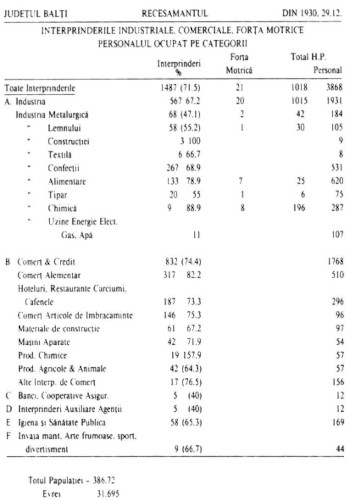
Apparently, it was the healthy economy of that Jewish city that enabled it to establish exemplary educational institutions, communal institutions, and splendid society, from the strong communal council, to the hospital, seniors' residences, and charitable funds. According to the statistical accounting of the government of Romania from 1930, there were 1,487 businesses in Beltz, of which 567 were industrial enterprises.
Food production formed 18.9% of the industrial enterprises. There were 113 food enterprises. There were about 68 metallurgy enterprises (including workshops), 58 lumber processing enterprises – especially for carpentry, six textile enterprises, 267 sewing notions enterprises, and 31 building materials enterprises.
There were approximately twenty printing enterprises in the district. Beltz was the second center, after Kishinev, for the publishing industry. In the district, there were nine chemical enterprises, eleven energy enterprises, and 832 commerce and credit enterprises. There were 82 hotels and restaurants, and 187 cafeterias and coffeehouses. There were five cooperative banks that also offered insurance services. According to the accounting of Ștefan Ciobanu from 1926 (in his monograph on Beltz[3]), there were still only 1,775 commercial enterprises in Beltz, of which eight were banks, six were cooperatives, five were modern mills, two were beer breweries, one was a spirit distillery, twelve were oil presses, one was a cotton processor. In addition, there was a large number of small businesses.
There was a large surge of economic development during the four years between 1926 and 1930. It continued until 1937-1938,
[Page 529]
when the authorities began to restrict the steps of the Jewish business owners by imposing taxes and strict oversight (Garda Financiară ).
|
|
| [This uncaptioned Romanian statistical page is taken from the 1930 Romanian census (Recensământul din 1930) for Judeţul Bălţi. Mazor appears to have inserted it as an economic snapshot of the region, summarizing industrial and commercial enterprises, motor power, and employment by sector, along with population data.] |
The Holocaust resulted in the liquidation of the Jewish owners of the manufacturing and commercial enterprises of the Jews. The foundations they had established were taken over by outsiders, who knew full well how to exploit them. The Soviet authorities who set themselves up in Beltz after the Second World war turned it into one of
[Page 530]
the primary manufacturing cities of Bessarabia.
It is unfortunate that the murderous hand cut this all off. The majority of Beltz Jewry were cruelly murdered by the Germans and Romanians. Only a few thousand residents of the city survived.
We should note that the strong economic and industrial base that the Beltz residents set up during the course of approximately 150 years still exists. The Soviets built a large, new city on the ruins of Jewish Beltz, but it is virtually empty of Jews. In any case, it has very few original Jewish natives of Beltz. And if there are still Jews there, Jewish life in its normative sense, with Judaism and cultural Jewishness, does not exist.
The Jewish community of Beltz disappeared and is no more.
Translator's footnotes:
by M. Mazor
Translated by Jerrold Landau
|
|
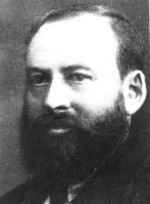
He was a known personality in Beltz, a positive personality. He exemplified the wealthy communal leader – not just with his external appearance, a short Jew with a belly and a beard, walking with a cane tied to his hand, calmly and with self-assurance – as Jews of his type were typified – a shtot baal habayis [a respectable city householder].
More than anything, his honorable status in the city was symbolized by his house in the center of the city, with Corinthian pillars and frontispiece, in the style of Greek sanctuaries, and two marble lions crouching at the modern door to the house. During the days, or more precisely, during the evenings, the marble bases upon which the lions were crouching were used by the vandals from among the third-grade students of the Hebrew gymnasium.
This is an incident that took place. We, the students, set up a meeting place for physics, a workshop called I.F. which is the acronym for the club for young physicists in which we would repeat the chemistry and physics experiments that we had learned from Gifter, the physics and chemistry teacher. In order to produce hydrogen gas, there was a need for pieces of marble upon which hydrochloric acid would be poured, and they would then release hydrogen. Any candidate to join the meeting place would have to bring a contribution, and what was it? A piece of marble that one would have to bang and break off from the marble base of Berke Frenk's lions.
Berke Frenk was a tycoon according to the concepts of the times. He owned enterprises and real estate. It is said that an entire street near his house belonged to him. People rumored that he gave his daughter a large, two-story house in the middle of Petrograska as a dowry when she married the physician Dr. Shpeier. Dr. Shpeier opened a maternity hospital (maternitate in Romanian) on the ground floor. The living space for the family was on the second floor.
Berke Frenk was not a native of Beltz. In general, the origin of the name Frenk is unclear. Was there some connection with the Frankists, many of whom were in Eastern and Central Europe, and even reached Poland; or was their origin from France, and they were descendants from Spanish Jewry who were exiled to France, and from there moved eastward in the usual fashion? In any case, Reb Baruch (Berke) was born in Secureni [today Sekuryany, Ukraine] in northern Bessarabia. His father, Reb Yosef Frenk, was involved in the import business. The Frenk family moved to Beltz in 1900. Grandfather Yosef concerned himself with a good match for his son. He made the match with the wealthy communal leader, one of the administrators of the city of Beltz, Reb Hersh Auerbach. With the fitting dowry that he received, they opened the family business. In addition to the grain trade, they established industry, as Beltz was known as a center of agricultural trade and manufacturing thanks to the broad agricultural hinterland. At the beginning of the 20th century
[Page 532]
Beltz saw great movement in agricultural manufacturing.
Reb Baruch Frenk became involved in the milling industry. In its time, it was the largest flourmill in Beltz. In addition, Reb Baruch established an alcohol (spirit) factory that he obtained from one of the poretzes, the landowners of Beltz. This was already close to the First World War. The factory was completed in 1916.
The spirit factory was located on the banks of the Raut River. The river served as the source of water for moving the wheels of the enterprise and for cooling the machines. Berke was a partner of the Fish family in that enterprise. They were also old-timers of Beltz, and people of initiative. Fish's son, an engineer, made Aliyah before the disturbances, was active in the Haganah, and contributed to the development of manufacturing in Israel.
After some time, differences of opinion arose between the partners, and they separated. Fish received the flourmill, and Frenk received the spirit factory. At the end of the 1920s, Frenk decided to sell the spirit factory to Mr. Hasmanski, a well-known, successful Jewish manufacturer. He set up a large modern beet sugar processing plant next to the spirit factory, which, with the passage of time, became one of the largest sugar processing plants in Bessarabia, and even gained renown in Romania.
A wide section of the southern bank of the Raut River belonged to Frenk. In order to maintain the sugar processing plant, it was necessary to draw large quantities of water from the river. This caused constant disputes between Hasmanski and Frenk. Instead, Frenk built a new flourmill near the small train station, the “Pimentni” in an area that became the manufacturing district of Beltz since it was close to the train station. Several factories for the production of oils, such as those of the Wolman brothers and Yona Friedman, were in that district.
In addition to the flourmill, Frenk also set up a factory for the processing of oil seeds. In its time, this was the most modern enterprise, since it operated by the extraction method, extracting oil from the seeds through the use of benzene. The enterprise was a little smaller than that of the Wolman brothers, which was considered as the largest enterprise of this nature in Beltz and the region.
Frenk also continued in commerce in the agricultural manufacturing sector. He was very close with the Christian landowners, including Russians, and among them those who were of Moldavian roots. As is known, the landowners lived lives of excess and frivolity, and were always short of money.
Reb Frenk appeared to them as a savior. He served as a sort of private bank, lending the landowners and financing them for their grain purchase from the farmers already during the winter season, well before the harvest time. With that, his business was not different from that of the majority of the Jewish grain merchants in Bessarabia, who worked in what was called poni vardi (green bread). The merchants would bind themselves through financial advances they extended to the farmers, with the obligation that the loan be repaid either in cash or in produce – the grain – after the harvest and the marketing of the yield. The landowners, such as Dombrowski, Profsor Baltianu, and others were among those who visited the home of Berke Frenk. He earned an honorable status in these circles, and even reached the point where he was able to use his influence for the benefit of the public, the Jewish community of Beltz.
Berke did not only exemplify the Bessarabian Jewish merchant who wandered among the villages or the worker in the grain market or bourse, with all the credit advance and accumulation of profits, where the Romanian side was specifically the weaker side. Of course, in this Berke Frenk was exceptional. He was expert in Talmud, knowledge that he gained in his youth, and the wisdom that he amassed in his studies served him well in forging strong commercial economic connections with the gentiles.
At times during negotiations with the poretzes, the conversation turned to topics that required expertise and intellectual sharpness, and Berke would impress those with whom he had business deals, the poretzes, with flashes of brilliance and words of wisdom, parables, legends, and even interpretations of Rashi and the sages of blessed memory. Everything was explained in clear language, eloquent Russian and even Romanian. It was the era where Bessarabia had already passed to the Romanian government. Thereby, he earned great respect among the gentiles. They appreciated the wise, intelligent Jew, the scholar that, along with being a proper merchant, was also a believing Jew who was proud of his Judaism. The status and influence of Berke Frank grew with the entry of the Romanians to the city of Beltz in 1918.
His house, which was considered to be the nicest in the city, enchanted the people of the government and the authorities. The Romanians decided that that house was especially fitting
[Page 533]
to house General Popanu, who stood at the head of the garrison force. When the Romanian military authorities approached Mr. Frenk, asking him to host the general in his house, he immediately agreed, and placed his private room, the room with his splendid office, at the disposal of the general.
In time, strong relations were forged between the general and Berke. The general honored and even revered the Jew whereas the Jew extended appropriate honor to the government official, who incidentally was a wonderful person, cultured and humane. We must attribute to Berke Frenk the saving of many Jews from among the refugees who escaped from Ukraine to Beltz after the pogroms. They had crossed the Dniester, and many had been captured by the Romanian gendarmes and were tortured with difficult torments. Through the intermediation of Berke with the general, many of the Jewish refugees were freed from prison. They went to freedom, some continuing their paths overseas, and others settling in Bessarabia.
Things continued on, and the general rose in rank from the cavalry colonel with which he began his military career. He was summoned to Bucharest to stand at the head of the Royal Guard. After several years, he transferred to an important civilian position and became mayor of Bucharest.
Berke continued to maintain good relations with the general. When he would go to Bucharest on business, he would arrange a courtesy visit with the general. The general was so friendly with Berke Frenk that he issued a directive to his officials to allow the bearded man to be given entry permission whenever he wanted to visit, or as is said in the Romanian language: When the bearded man comes, give him permission to enter to me directly.
This was perhaps the will of fate, but it is a fact that the Aliyah of Berke Frenk and his family to the Land of Israel during the course of the Second World War, after Bessarabia was removed from Romania and was annexed to the Soviet Union, was thanks to his friend the general. He issued a directive to provide passports to the Frenk family and even ensured that they would be provided with transit visas to the Land of Israel via Turkey, Syria, and Lebanon.
Berke Frenk and his wife made Aliyah to the Land of Israel in 1940. But thanks to the fact that passports were also provided to each of the sons and daughters of the Frenk family, and transit visas had been stamped into their passports, two of the Frenk family members were saved from certain death. Izia Frenk and his brother David were on the Sturma, along with many people with visas to various countries, and even some who had certificates for the Land of Israel. The Frenk brothers succeeded in disembarking in Istanbul thanks to their personal passports and visas within them (even though the visas were no longer valid). All the rest of the travelers had a collective passport. Thus, the Frenk brothers were saved from drowning when the ship with its unfortunate travelers sank after it was forced to leave Kushta [Constantinople or Istanbul].
As had already been stated, the majority of Frenk's business was in the grain trade, in volumes such that Berke Frenk was considered to be one of the large-scale merchants in the city. There were many such people in Beltz, since the main livelihood in Beltz was the grain trade. Frenk had large warehouses in Pimentni, next to the train station. Wagons would arrive and be loaded with grain to be transported to the ports of export in Constan?a, Braila, and Gala?i. Frenk also tried his hand at the banking business. He founded a small bank, but that bank did not last long. It was directed by Dolitzki (a family member), Wechsler, and Sodit. The bank was closed after two years, after suffering heavy losses.
In general, Frenk's connections with the banking circles in Beltz and Bessarabia were particularly strong. Since he was one of the honorable people of the city, and a famous businessman whose name went before him, his house served as a sort of gathering place for businesspeople. Thanks to his impressive home, which was more similar to a palace, and its external appearance, which was like a museum, communal workers of Beltz and its honorable people would use the house for receptions for honorable guests who would visit Beltz, whether from the world of business, Zionist activists, or rabbis.
Izia, the eldest son, recalls the banquet hosted by Berke Frenk in honor of the visit of Blank, the well-known banker of Bucharest, in 1927.
Izia studied violin with the famous music teacher of Beltz, Akerling. As was customary at festive meals, the lad would treat the guests with selections of tunes on the violin, which were, of course, received with thunderous applause, from the
[Page 534]
invited guests. Certainly, many of them did not understand music. The father spoke and noted that this was a great day, since the cornerstone of the Hebrew University was laid that day. This shows that Reb Berke Frenk was alert to what was transpiring in the Jewish and Zionist world.
|
|
Berke Frenk was a great, generous contributor to all the Zionist funds and campaigns, especially to the Keren Kayemet and Keren HaYesod. He would not hold back from his friends who were businessmen, as he would urge them to raise their contributions. He would invite a group of businessmen to his home for an evening of conversation with the emissary from the funds (whether this was an emissary from the capital of the Bessarabian region, or from Bucharest), and they would collect significant sums that night. Berke Frenk was involved in a number of communal activities in Beltz. He was a supporter and member of the leadership committee of the small Talmud Torah. He was a member of the leadership of the Hebrew Gymnasium, and even served as the chairman of the leadership committee during the time of the first principal Dubinski. He continued being a member of the Gymnasium committee during the era of Tumerkin, who incidentally was also a neighbor, living opposite to Frenk's house. Of course, Berke Frenk's regular contribution was not missing regarding matters of charity, assistance to the poor, and support of the sick. Berke Frenk was a supporter with enthusiasm and with money, publicly, in both senses of the word.
It is impossible to say that he was a Hasid in the sense of religious zealotry. Rather, he was a Hasid in the sense that he revered the Rebbe of Boyom [probably Boyan]. From that came the counter-influence that delayed Berke Frenk's Aliyah to the Land of Israel and the transfer of his vast holdings while there was still time.
Berke arrived in the Land of Israel in 1940. However, this was already late. When the Second World War began and it became clear that the danger of the annexation of Bessarabia to Russia threatened the Jewish wealthy class, Berke began to think seriously about liquidating his assets and making Aliyah to the Land, with the aim of setting up industry in the Land in the same sectors in which he was expert, such as flour, spirit, edible oils, etc. In the many discussions that he had with his friend Berestechko, one of the successful manufacturers of Beltz, the owner of mills, beer breweries, and the like, Reb Berke attempted to convince him that
[Page 535]
they should make Aliyah together and establish enterprises in the Land of Israel. However, Berestechko refused to listen to his advice. He still regarded himself as bound with ropes to the place of his residence and business, and did not believe that, one fine day, all his property might disappear.
He would say with the wave of a hand, “It is nothing, even if the Russians come, we will manage.” To the good fortune of Reb Berke, he had the resolve to decide to escape from Beltz to Bucharest before the Russians entered. He left his vast property behind, and only took jewelry and some cash that he was able to salvage. Apparently, he did not hold cash abroad, not even in the Land of Israel.
It is possible to say that he actually left without anything, and he had to start over a new life in the Land at the age of sixty. He would say that he thought about Aliyah to the Land of Israel for years, but his Rebbe from Boyom cooled him when he came to ask for his advice regarding the matter of Aliyah to the Land of Israel. It appears that, aside from ideological factors, there were also pragmatic factors with the Rebbe. The Aliyah of one of the Hasidim and supporters would reduce the Rebbe's income in a noticeable fashion, for he benefited from the donations to the Rebbe's court by the Frenk family. The reason given by the Rebbe when he attempted to change Reb Berke Frenk's mind was as follows, “Here you are a communal leader, Reb Berke, but there (i.e. in the Land of Israel) you will be a chalutz! And the meaning of chalutz – barefoot, poor, destitute, living on donated bread and meager water.”
The family, specifically the children, put pressure on the father to travel to the Land of Israel to see and understand from up close the conditions of the Land, and test out possibilities of residing there, and developing his manufacturing and commercial operations there.
Berke Frenk visited the Land of Israel in July 1936. At that time, there were regular sailings from Constan?a to Haifa on the Polonia ship.
Before the trip, he met with Yona Friedman, the owner of a factory and large production facility for oil in Beltz. Perhaps they could forge some sort of a partnership in the Land of Israel. He arrived in the land and went to clarify with the Jewish Agency the possibilities of establishing a manufacturing enterprise. At that point, a Jew named Tishbi served as the director of the industry and labor division of the Jewish Agency. Tishbi told Frenk about some invention that the engineers from the Technion were about to succeed with. This concerned a machine that would produce matches from wax, rather than from wood, which had become expensive due to the Habash [Abyssinian] War.
The inventors and developers requested an investment of one thousand Liras Sterling. That was a significant sum in its time. Berke agreed. He returned to Beltz, and two years later, he received notice that the tests were successful. He issued a directive to open the factory.
Due to disputes with the partners, the Meir brothers, he gave over the patent to them after he arrived in the Land. They continued with the enterprise, and manufactured machines that were exported to the Mediterranean countries. These were the final business efforts of Berke Frenk. He had no more energy to start a new enterprise. He withdrew from business enterprises after he lost more money. At the end of his life, he was involved in work for the synagogue in which he worshipped, and enjoyed the atmosphere of the Land of Israel.
Regarding Hirsh Auerbach
Written by Tzipora Donsky, Kfar Saba
Hirsh Auerbach of blessed memory was responsible for the Yeshiva for lads. Every Sabbath, he would invite a Yeshiva lad to his Sabbath meal. When he married off a daughter, he would arrange a special wedding party for the poor of the city, and would distribute a gift to each one. His wife as well, Charna Auerbach, who was called a tzadkanit [righteous woman] by many, concerned herself with sick, lonely, and destitute women. She would visit them every Thursday night, bathe them with her hands, change their linen and change them into clean clothes for the Sabbath. She concerned herself with all their needs, as she did for her own household and family.
Regarding Berke Frenk of blessed memory
He was the son-in-law of Hirsh Auerbach. She relates that he purchased three houses for three families that had no place to live, and would not have been able to do so themselves.
[Page 536]
As Soldiers in the Jewish Brigade During the Second World War
Izia (Yisrael) Frenk (Dinari), Davidka Dinari
Izia relates:
In 1940, a number of days before the Russians entered Beltz, my parents abandoned all their property and escaped to Bucharest, from where they made Aliyah to the Land.
Yisrael and David, sons of Berke Frenk, escaped from the Chernovitz Ghetto to Bucharest, from where they attempted to make Aliyah to the land on the Struma Ha'apalah ship, sailing along with 790 Ma'apilim.
The ship was torpedoed on the shores of Istanbul and sank. To this day nobody knows who did this – the Germans, the English, or the Russians. Only six of the 790 people survived – those who had entry papers to Turkey and left the ship two days before it sank.
Yisrael and David traveled from Turkey to the Land. When they arrived in the Land, they enlisted in the British Army – the “Brigade” – with the aim of fighting against the Germans.
[Page 537]
|
|
|
|
JewishGen, Inc. makes no representations regarding the accuracy of
the translation. The reader may wish to refer to the original material
for verification.
JewishGen is not responsible for inaccuracies or omissions in the original work and cannot rewrite or edit the text to correct inaccuracies and/or omissions.
Our mission is to produce a translation of the original work and we cannot verify the accuracy of statements or alter facts cited.
 Bălţi, Moldova
 Yizkor Book Project
 JewishGen Home Page
Copyright © 1999-2026 by JewishGen, Inc.
Updated 03 Sep 2026 by JH