Passed away in Jerusalem on 2 Iyar 5727
(12 May 1967)
Translated by Sara Mages
|
Translated by Sara Mages
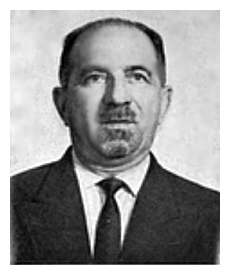
Yitzhak originated from the well-known family in our city, Radomsk – the Epsztajn-Szapira family, which was named after his mother z”l: Maltz'a Dvora Zisman's.
Yitzhak received his education, as was customary in those days, in the cheder and Beit HaMidrash. When he was only twelve years old, he asked to join the organization of Tzeirei HaMizrakhi [Mizrachi Youth], which was founded in our city by the National Religious Youth with the publication of the “Balfour Declaration” (in 1917). Even though he was the youngest in the group, he fulfilled every role assigned to him with love and dedication. Yitzhak was among those who collected the most donation for Keren Kayemeth Leisrael [Jewish National Fund], and those who assisted adult students at “HaMizrahi” school with their studies.
Also in other areas he hurried to help those in need before they turned to him, and he did it out of simplicity and friendliness, and the needy were many in those days – at the end of the First World War.
In 1926, he implemented the idea of settlement in Israel. He left his home, which lacked nothing, and made aliyah [emigration] to Israel. Here he suffered quite a bit, like all the first immigrants in those days, until he managed to get a job. He did not shy away from any job: he worked as a painter, in construction, etc. He accepted every job with love and fulfilled it with responsibility and dedication.
He married Malka, the daughter of our townsman, Mordechai-Yosef (Melinovitser) Ben-Zvi z”l, who was among the first immigrants from our city to the Holy Land, and passed away here at a ripe old age.
Yitzhak-Shmuel was an honest man and was among the Hasidim of the Lelover Rebbe and his close associates. His home was open to all, and when our townsman traveled to Jerusalem, he did not ask: Where would I sleep?…
Yitzhak-Shmuel educated his sons for study and work, for the building and defense of Israel.
His son Dov z”l gave his life in the defense of Gush Etzion in 5708.
May the memory of the father and the son be blessed, and may their souls be bound in the bond of life.
| Binyamin Yemini |
In Radomsk he was mostly active in “HeHalutz HaMizrahi” [“The Mizrachi Pioneer”] movement and Keren Kayemeth Leisrael [Jewish National Fund] committee. He participated with dedication in all the Zionists institutions. He also participated in Bible and Talmud circles.
In Eretz Yisrael, he saved some money from hard and tiring work and achieved success and prosperity in his life. He behaved with honesty, as a pious, pleasant man who always loved to help those in need. He supported many institutions and heads of yeshivot and was the treasurer of the Admor of Lelov Yeshiva. Many of our townspeople were helped by him, some for commercial matters and some to marry off a daughter. He gave benevolent loans from his own money.
It is a pity for those who are gone and no longer found.
| David Margolevsky |
My honored father, Yitzhak-Shmuel, made aliyah to Israel in 1926, and he was then a twenty-year-old bachelor. We never talked to our father about the motives that led him to leave a neat and orderly home in those days, as well as “a city that is all Jewish” (as he used to express himself when he spoke about Radomsk). But over time, as I got to know my father, it became clear to me that the main motivation for this was: the special challenge of making aliyah to Eretz Yisrael at that time. The desire to fulfill with his own body the mitzvah of building the state as a simple Jew who is obligated to perform this mitzvah. And indeed, it never occurred to him to leave Israel, even during the severe times of crisis that he experienced. My father was not addicted to a particular party. His aliyah and path in Israel were not tied to considerations of any benefit on behalf of party bodies. He had a great deal of love for Israel and the people, and he raised his sons in this spirit. Three brothers participated in the War of Independence. The two older brothers enlisted in the service of the people long before the creation of the national institutions. The eldest brother, Dov, fell in the War of Independence.
The character trait that stood out the most in our father was the desire to do everything perfectly. Not to give up or compromise. He could not tolerate those who made promises but did not keep them, and those who had done half a job. He spared no effort to achieve the goal he set before himself, even if it meant a lot of expense (and he spent everything with precise calculation). I think the highest mark my father ever gave someone was when he said: “This person does his work with faith and knowledge. ”
Two types of people were acceptable and loved by him: scholars because the honor of the Torah was dearest to him, and craftsmen who do their work with faith. He never denied those difficult days that he and his family had gone through, as a laborer in the Jezreel Valley and as a craftsman and contractor in Emek HaYarden. In those days, the Jewish faith and the pride of the creative person, who produced a perfect and pure work from under his hands, were strengthened within him.
I don't feel good praising my father in public, and I am sure he would not let me do it. But I cannot help but point out another outstanding quality that he had and developed according to his own way – the desire to help others. His home was always open to everyone, whether for the purpose of “secret giving” or giving charity, whether for the purpose of giving advice, or making peace between a man and his fellow man.
And to conclude, I will quote a passage from the notes he wrote while he was sitting and studying. These words summarize his demands of others and himself, and they are not aimed specifically at the judges.
“You shall set up judges and law enforcement officials for yourself in all your cities.” The word “to you” comes to teach that, first of all, the judge-judge in Israel is commanded to judge himself, to adorn himself with a correct and good standard, to be clean from God and from Israel, as the Sages said: “Any judge from whom one extracts money only by means of legal proceedings, is not fit to be a judge.” And this is also what the scripture repeated: ”Justice, justice, shall you pursue, justice to yourself and then justice to others.”
| His son, Moshe |
Translated by Sara Mages
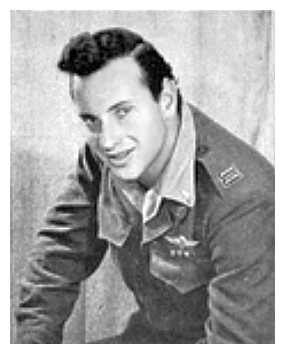
Son of our townspeople, Rachel and David Buchman
He was born on 20 Iyar 5697 (1 May 1937). In 1952, he graduated the elementary school in Beit HaKerem, Jerusalem. He acquired high school education at the Educational Institution of Kibbutz Mishmar HaEmek from 1952 to 1961. In spite of his leaving the kibbutz (due to his great longing for higher education), he remained loved and cherished by all the members of the kibbutz and connected to them with all his heart to his last day.
He completed his studies in humanities and social sciences at the Hebrew University of Jerusalem. Later he studied medical sciences for four years at the Higher Medical School next to Hadassah Hospital in Jerusalem. In all areas of study and research in which he engaged, he was among the talented and outstanding students, who received appreciation and assistance from the aforementioned institutions.
He also excelled in several sports and athletics while studying at the university. He was one of the best athletes among the students in swimming, basketball, and shot put, and won many medals in competitions in these fields. He also specialized in weightlifting and wrestling and even served as an instructor for these in student youth groups in Jerusalem. He was included in the national wrestling team that was to compete in November 1967 at an international sports meet in India.
In 1958, he participated in the Israel Defense Forces delegation in the traditional four-day march in the Netherlands. That's when he met his future wife, Ruth (she also participated in the IDF delegation). They married in 1962 and their son, Alon, was born in 1963.
In addition to his sports activities from a young age, he was also drawn to music and learned to play the piano, oboe, and accordion. From the age of eleven, he participated persistently and regularly in the musical quizzes of the “Kol Israel” radio services and received many prizes from live quizzes. He was recently offered by the Kol Israel Orchestra to join it as a permanent player (second oboe). Previously, he was one of the principal players in the youth orchestra of HaKibbutz Hartzi – Hashomer Hatzair, and the Hebrew University Orchestra in Jerusalem.
In July 1956, he enlisted for active service in the IDF. Three months later, he participated in the Sinai War and was among those who distinguished themselves at the Battle of Rafah. He transferred to an officer course and upon successful completion was assigned to the Golani Brigade's reconnaissance unit. In this brigade, he served in various combat roles until he was discharged and transferred to the Reserve Corps (March 1959) with the rank of Captain.
In the Reserve Force, he was assigned as the commander of a reconnaissance squad of a paratrooper unit and was called to this position during the Six-Day War. He fell on 7 June 1967, among the paratroopers liberating Old Jerusalem, in the section between the Lions Gate and the Mount of Olives, when he leapt with perseverance and heroism to rescue wounded comrades from under the enemy's crossfire.
Worldwide glory to our townsman, Captain Yaakov Eilam (Buchman) – among the heroes of the Six-Day War, 5727 (1967) were crowned with victory, who sacrificed their lives and gave their lives for the people of Israel and the State of Israel.
The Paratroopers in Jerusalem: The Battle for the Wounded
On the night of the battle for Jerusalem, the paratrooper commando unit was tasked with ascending and capturing the Mount of Olives and its surroundings. The initial movement to the destination was aided by tanks, which slowed the movement. The commander ordered the commando unit's jeeps to bypass them and ascend without them. The jeeps traveled along the road that passed next to the wall, right below it, and opposite the Lions Gate crossed the Valley of Hinnom in the direction of Mount of Olives. When the first vehicle crossed the passage above the valley, heavy fire opened on it from a camouflaged tank, which was stationed opposite, and immediately after that the positions on the wall also opened fire. Three of the passengers in the first jeep were injured, but they managed to turn their vehicle around and return to the top. The three jeeps that traveled behind them were hit and began to catch fire. The rest of the vehicles remained out of the line of fire.
Under heavy and effective fire from well-disguised machine guns, aided by the illumination shots fired throughout the battle from Jordanian 81mm mortars, patrol squads began the rescue. Among the men of the first squad was Captain Yaakov Eilam (Buchman), z”l, who, for his extraordinary heroism and perseverance in rescuing the wounded, was recommended by his commander to receive a commendation.
For about an hour and a half, under heavy fire that did not stop for a second, Eilam, with the help of others, managed to make the way three times between the wounded and outside the line of fire, and each time they dragged their wounded comrades with them. In the end, Eilam reported that three seriously wounded remained on the bridge. The attempt to lower a tank down to stop the fire from the positions on the wall was halted due to topographical difficulties. Two hours later, Buchman, and two other patrol members, managed to reach the wounded. They removed their personal equipment, hung on the side of the bridge and made their way along it. After they managed to reach them, two of the rescuers were hit by the heavy fire and managed to get back on top. Eilam remained with the three wounded.
A machine gun, which was placed at the suggestion of one of the commanders, Yoram, did not reduce the fire power of the Jordanian positions, which were well-fortified and well-placed. Later, the tank reached the bottom but failed to hit the position and its ammunition ran out.
In the fourth hour of the battle, the condition of the wounded worsened greatly. The matter became known to Eilam, and he suggested that a tank will block the line of fire between the Jordanian machine gun and the wounded, and then it might be possible to drag them and extract them. The tank got very close to the wounded, was hit and began to burn, while its three men managed to escape from it. From the intense heat created by the tank its ammunition began to explode, and to the light of its flames the Jordanians increased the fire towards the wounded. At the end of the munitions' explosion, there was no longer a sound from Eilam. Another attempt to lower a group under heavy fire to the valley, was made out of the hope that maybe one of the four reached there, ended without results.
This battle for the rescue of the three wounded excelled in its revelation of exemplary personal sacrifice. The fighters who descended below, towards the ravine, knew that they had to pass an open area covered with heavy and precise fire, to extract the wounded out of there.
Dobi tells, Eilam stood out with the great dedication he showed in reaching the wounded at any cost. Out of great risk, he stayed with them on the bridge, calming and encouraging them. His friends assume that he could have pulled himself off the bridge. But the sacred principle of the paratroopers is that they leave no wounded on the battlefield.
| (Haaretz newspaper) |
Translated by Sara Mages
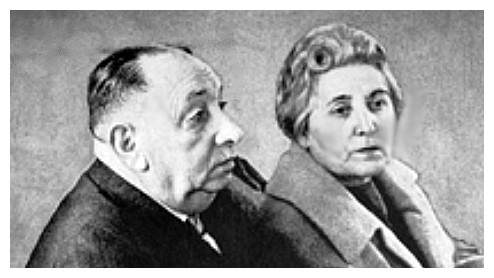 |
| David Koniecpoler and his wife Leah at the Magistrate Court in
Tel-Aviv (Feb. 1966)
during the gathering of their testimony by the Investigative Court from Lindenberg Germany. |
David Koniecpoler, a dear and loyal friend, was among the first to realize the idea of publishing this yizkor book, and one of the activists whose contribution to its preparation and completion is evident in almost all of its chapters. He left us at the closing of its last pages for printing, right at the end of this sacred public work, to which he dedicated his last years in Israel. He walked among us as one of the elders of the survivors of our community, who lived in it during it Holocaust and destruction. During the community's growth and life, he was a prominent figure in the field of political, Zionist, and public activism, which is described in detail by him and his friends in this yizkor book.
He was born in Radomsk in 1896 to his parents Chana and Shlomo, son of Zadok Koniecpoler, from the families of working people in our city. His father was one of the twelve members (as the number of the Tribes of Israel) of Mishmeret Hakodesh [The Holy Guard] society, founded by HaRav HaGaon R' Zvi-Meir HaKohen Rabinowicz, and its role was to establish the Great Synagogue in Radomsk and to ensure its maintenance. In this environment, David absorbed the tradition of Hasidut and the basic of Judaism in his childhood. However, as he began to learn the secrets of the youth of his age, he also discovered the ideals of human equality and social progress that attracted Jewish youth who grew up under Tsarist rule in Russia and in occupied Poland, before the First World War. From that day, David became close to the youth circles that coalesced around the national social doctrine of Borochov-Sirkin, who preached a synthesis between the aforementioned ideals – the national liberation of the Jewish people from oppression and extermination, and their territorial concentration in Eretz Yisrael.
On the verge of the First World War, and in its first years, the political activity was conducted illegally. To disguise it, Jewish Organization for Education and Culture, Kultura, was founded under the military occupation, and among its founders and activists was David Koniecpoler. When, during the war, the Austrian conqueror loosened the restrictions (1916), and free political organization began, a legal branch of the Poalei Zion party was established in our city. This branch, headed by David Koniecpoler, initially engaged in ideological debates, but within a short time it developed into an important public political cell. Later, this branch took the lead in the effort to alleviate the food shortage and the economic hardship that severely affected the Jewish population of our city during the transition period 1917-1920 (the branch established a cooperative grocery store, a communal kitchen and cared for employment).
In 1920, David Koniecpoler moved to neighboring Czėstochowa and integrated there into the active circles of public life and society. Despite being a “stranger” in this city, which had no shortage of public figures and local activists, he quickly rose through the ranks of activism. He was elected as a member of the community committee and became a prominent figure in the entire Jewish population. There, together with his wife Leah, his childhood friend, he established a splendid Jewish home, which was later destroyed with the extermination of all Jews. Both were saved from destruction thanks to his carpentry workshop, where he performed private work for German police chiefs during the Holocaust. Throughout his life in Czėstochowa, including the years of the Holocaust, he had very close ties with his family, friends, and acquaintances in his hometown, Radomsk. He also visited it frequently and returned after the Second World War to search for survivors and participate in a memorial service for its martyrs, which was attended by about ten survivors (in 1947)…
In 1949, David Koniecpoler made aliyah to Israel with his wife (they settled in Holon). He got a job in his profession at carpentry shop of “Solel Boneh”, where he quickly gained sympathy and respect as an employee and a person. He quickly became involved in the life of the Organization of Radomskers in Israel and was, as mentioned, among the first to respond to the call of our beloved, Chaim Goldberg z”l, to collect, compile, and prepare material for this yizkor book. And when the undersigned took it upon himself to continue the book project and finish it, David Koniecpoler was once again among the first to step forward to complete and to write material that was still missing in it.
He devoted himself to this task with the tenacity and dedication that characterized him throughout his long career in public activism, which was ingrained in his blood. He often emphasized that he saw in his work for our yizkor book an outlet for the overflow of memories that he carried with him from his hometown, and as a so-called repayment of the debt to the Radomsk community and its martyrs whose annihilation he witnessed up close. He found an outlet for his horrific memories of the Czėstochowa Ghetto in his shocking appearances before German courts, when he testified about the criminal murders committed by the heads of the German police in Czėstochowa. In August 1958, he traveled to Germany to testify in the matter before an investigative tribunal. In February 1966, this court came to Israel specifically to collect his testimony because his health did not allow him to travel to Germany.
Despite his deteriorating health, David Koniecpoler did not rest when he had to do something for the yizkor book. Indeed, his contribution is evident in almost all its sections – his memoirs, notes, and essays span dozens of pages and cover many different topics. He wrote about Radomsk during the First World War (p. 135), The Eternal Light at the Great Synagogue (p. 159), The “Poalei-Zion” in 1916-1922 (p. 202), The Activity for Keren Kayemet LeYisrael (p. 211), The Jewish “Kehile” (p. 229), Educational and Cultural Institutions (p. 251), “Kultura” – Its Goals and Active Workers (p. 259), The Children's Home Named after Dr. Mitelman (p. 270). He wrote the review about the Nowo-Radomsker Society in the United States of America (p. 499), The history of the immigration of former residents of Radomsk and their organization in Israel (p. 527), and arranged the name index (pp, 585-600). In this index (p. 597), David Koniecpoler's full name, and its abbreviation, is listed thirty times. It is necessary to add to this the rewriting of articles and excerpts prepared by him for the purposes of systematic processing. They are scattered throughout almost all parts of the book, especially in chapter eleven (public figures and political activists), whose author's name appears at the beginning or end with the initials D. K. or under pseudonyms or borrowed names.
In David Koniecpoler's last letters to the undersigned in Yiddish (the language in which he wrote all of his material for the book), it is stated: “When we will be blessed to see the book complete and bound, it will be our reward for the years of effort, health, and time dedicated to this historic undertaking. May we be blessed with the moment when the first book is opened and shed our first tears in memory of our beloved martyrs.”
He was not granted this long-awaited moment, but his longed-for tear was added to the stream of tears of us all, and his soul is bound up in the bundle of all the precious souls of Radomsk's martyrs.
| Yehuda L. |
| Page Number | Photograph |
| 12 | Haim Goldberg |
| 14 | Map of Radomsko and Environs |
| Part 1 – History | |
| 20 | The City Market |
| 21 | The City's Main Street – Reymonta (Kaliska) |
| 26 | Rabbi Yisroel Pinkhas Hacohen Rabinowicz |
| 30 | The Vicinity of Radomsk (The River Warta) |
| 35 | The Dayan (rabbinical judge) Mr.Yisroel Zelwer |
| 36 | Butcher Reb Noakh Rubinsztajn |
| 36 | Butcher Reb Yehezkeil Poznanski |
| 41 | City Hall and Catholic Church |
| 58 | Rebbe Shlomoh Hanokh Hakohan. The last Admor (Hasidic leader) of the Radomsker lineage on a walk with his acquaintances in Marinbad |
| 63 | The Khazan (Cantor) Reb Shlomoh Zaks |
| 63 | Mr. Leibel Shamos |
| 65 | The Author H.D. Nomberg and His Three Sons |
| 68 | The Train Station |
| Part 2 – Rezin Drezin (Mystery of Mysteries)/The Secret of Hasidism | |
| 77 | The Seal of the Head of the Jewish Court Shlomoh Hakohan Rabinowicz |
| 85 | Dr. Rabbi Haim-Dovid Bernard |
| 93 | Rabbi Shlomoh Henekh Hakohan Rabinowicz (The picture is written into the text of the Song of Songs.) |
| 108 | The "Ohel" (tomb) of the Radomsko Rebbes |
| 120 | Reb Yakov-Dovid Wajntraub |
| Part 3 – The Days Past | |
| 130 | The "Sport Wodny" |
| 131 | Abraham-Leizer Gliksman |
| 137 | The Jews of Radomsko who were abducted for forced labor by the Germans in 1915. |
| 138 | A company of German-Austrian soldiers eating in the Radomsko market during WWI |
| Part 4 – Way of Life | |
| 142 | Yisroelka Hamer and Dovid Krojze (Modern Hasids) |
| 143 | The JNF (Jewish National Fund) Committee in 1926 |
| 145 | The Author Sarah Hamer-Jacklin |
| 156 | Leibele the Water Carrier and his wife |
| 157 | "Damski" |
| 159 | The Great Synagogue committee 1930 |
| 160 | The remains of the Great Synagogue after the destruction |
| Part 5 – Economy and Finance | |
| 164 | The Thonet Bros. Furniture factory. |
| 166 | Distribution of clothing to children of the poor |
| 169 | The Needleworkers Association |
| 170 | The Committee of the Leatherworkers Association. |
| Part 6 – Political and Social Life | |
| 174 | Celebrations in honor of the Balfour Declaration (1917) |
| 179 | Members of Zeiri Zion (Zion Youth) 1919 |
| 180 | The Z.S.P chapter committee "Zionist Youth" 1925 |
| 181 | The first committee of the united party "Poalei Zion" "Z.S." (Workers of Zion, Socialist Zionists) |
| 182 | Members of Poalei Zion, Z.S. with A.Sh. Uris 1930 |
| 182 | The P.Z. Z.S. Chapter committee with A. Bialopolski |
| 183 | Members of the P.Z.Z.S. committee with comrades L. Levin (Lodz) and Y. Rabinowicz (Slonim) |
| 184 | The teaching staff at the Mizrakhi school 1919 |
| 185 | The first "Mizrakhi Youth" |
| 185 | A group members of the "Mizrakhi Youth" 1933 |
| 187 | "The Foursome" Some of the founders of "heHalutz" chapters and Z.S |
| 187 | The committee of the "heHalutz" organization. |
| 188 | The first photograph of "heHalutz" 1924 |
| 189 | Members of "heHalutz" on Hachshara (training) in kibbutz Tel Avraham near Kamiensk |
| 190 | Farewell party for Yehudah Liberman on his departure for Hachshara (training) 1927 |
| 190 | A "heHalutz" Hachshara group in Radomsko |
| 190 | Members of the Hachshara (training) during work at the Farbman sawmill. |
| 191 | Participants of the "HeHalutz" Hebrew courses 1928 |
| 192 | A group of Hashomer Hatzair leaders. |
| 193 | The Hashomer Hatzair circle at the Wajntraub Gimnazie |
| 193 | Children perform at the JNF bazaar celebration. |
| 194 | Near stand no.3 at the bazaar in 1933 |
| 195 | Members of "heHalutz" chapter with members of the Hachshara. |
| 195 | Members of the "Hapoel" band with friends from the Hachshara |
| 196 | Members of "Mizrakhi Youth" and "Hashomer HaDati" (The religious "guard") |
| 197 | Members of the "Bruria" Organization. 1933 |
| 199 | Agudas-Yisroel girls' summer camp |
| 201 | The "Zion Youth" committee during festivities in honor of the Balfour Declaration.1917 |
| 201 | The "Fareinikte" committee 1919 |
| 206 | The "Poalei Zion" chapter council 1919 |
| 207 | Members of the "Ovent Korsn" (evening courses) of Left Poalei Zion. |
| 208 | The committee of Left Poalei Zion party. |
| 209 | The Bund committee 1921 |
| 210 | Members of the "Histadrut" |
| 210 | Members of "Gordonia" |
| 211 | The JNF committee 1926 |
| 212 | JNF activists after "Flower Day" in town |
| 213 | The JNF youth brigade 1930 |
| 213 | Convention of JNF activists in Kamiensk |
| 214 | A farewell party of JNF activists for Yehudah Liberman on his making aliyah May 1933 |
| 216 | A group of Agudas Yisroel girls |
| 217 | Members of "HaNoar HaZioni" 1933 (Zionist Youth) |
| 218 | A company of Hashomer Hatzair 1921 |
| 218 | A group of Hashomer Hatzair leaders 1928 |
| 219 | Members of the Freiheit youth council committee |
| 220 | A "Freiheit" get together dedicated to action for JNF Kamiensk |
| 220 | Members of "Freiheit" going on Hachshara (training) |
| 221 | Members of "Freiheit" and "heHalutz" saying goodbye to Yakov Shmuel Moskowicz on his making aliyah 1931 |
| 223 | The Z.T.K. association |
| Part 7 – Public Institutions and Welfare | |
| 227 | The "Linat Zedek" (Righteous Sleep) committee |
| 230 | The community house |
| 231 | The community committee delegation (headed by the rabbi) on the Polish holiday of May 3rd. |
| 232 | City Hall |
| 233 | A summer colony for Jewish children sponsored by the city. 1930 |
| 234 | The Jewish committee for the Polish Air Force 1939 |
| 240 | The "Beis Lechem" society committee |
| Part 8 – Culture and Education | |
| 245 | Mrs. L. Wajntraub the founder of the Hebrew Gimnazie (High School) |
| 245 | Gimnazie alumni 1932 |
| 246 | The last class of the Gimnazie 1939 |
| 247 | The Sholom Aleichem Library committee and activists. 1926 |
| 247 | The library stand at the JNF bazaar1934 |
| 249 | A department of the Berek Yoselewicz Elementary School |
| 249 | The A.N. Mickewicz Jewish Children's Public Elementary School. |
| 250 | A group of women affiliated with "HaKoakh", during a sports class. |
| 250 | "HaKoakh" Radomsko versus "HaPoel" Tel Aviv September 12th 1934 |
| 251 | The first elementary school 1908 |
| 251 | Teachers and students of the girls Gimnazye (high school) 1914 |
| 252 | Teachers and students of the Jewish Children's Public Elementary School 1918 |
| 253 | The 7th grade students of the Public Elementary School 1931/32 |
| 253 | The first Hebrew day school 1918 |
| 254 | At the end of the clothing project for the "Talmud Torah" Children. |
| 257 | The " HaPoel" band 1933 |
| 258 | A group from the founders of "Hazamir" organization (singing group) |
| 260 | The culture organization committee "Kultura" |
| 268 | The "Makkabi" Soccer team |
| 268 | The "Kraft" Sport Organization 1931 |
| 269 | The "HaPoel" motorcycle team |
| 269 | The "HaPoel" soccer team |
| 269 | "HaPoel" Tel Aviv in Radomsko 1934 |
| 270 | The Warsaw motorcycle team on its way to Eretz Yisroel (Palestine) |
| 270 | The Dr. Mitelman Orphanage committee members. 1920 |
| 271 | The committee and pupils of the orphanage |
| 272 | H.D. Nomberg (as an author) |
| 274 | H.D. Nomberg (as a pious youth) |
| 276 | Dovid Kalai (Gold) |
| 277 | "Hashomer" organization 1917 |
| 278 | The Dovid Kalai High School in Givataim (Israel) |
| 280 | Khanina-Yosef Kuszicki |
| 283 | Prof. Yitzhak Zaks |
| 284 | The composer and conductor Yitzhak Zaks and friends |
| 285 | The painter Natan Szpigel during an exhibition of his work in Radomsko |
| 285 | A painting by Natan Szpigel that survived the Nazis |
| 287 | A.B. Cerata |
| 288 | H. Leivik (with his parents) |
| Part 9 – Holocaust and Vengeance | |
| 301 | Miriam Caszewski |
| 308 | During a wedding that was held in the ghetto on Lag Ba'omer 1940 |
| 310 | The ghetto hospital orderly crew with Dr. Sh. Hampel |
| 311 | Children and adults receiving typhoid vaccines |
| 316 | An ID (with the Jude stamp) taken out at Radomsko |
| 321 | A children's ghetto class. |
| 348 | During the Bloody Tuesday Aktsia |
| 352 | Two guards near the entrance to the ghetto |
| 357 | A theater play in the ghetto 1943 |
| 359 | The Umschlagplatz on Mickiewicza St. |
| 364 | The old cemetery |
| 375 | The three Sabatowski brothers |
| 376 | The "Arian"- Halina Forisz |
| 377 | Hershel Grynspan |
| 380 | Manjek Rayngiewerc |
| 381 | Mendel Fiszlewicz |
| 383 | Tuvia Borzykowski |
| 384 | The "Grunwald Cross" (3rd class) given to Tuvia Borzykowski by the president of Poland. |
| 387 | The tomb of Borzyikowski in Kibbutz Lochamei HaGetaot |
| 388 | Rozia Szapira – Bruz Tito's partisan |
| Part 10 – Survivors' Tales | |
| 391 | The Radomsk Jewish Committee 1945 |
| 392 | Some of the survivors near the mass grave |
| 393 | The tomb of Shmuel Rozensztein in the town of Torci in the USSR |
| 394 | Some of the Radomsk survivors near the "Radomsk" monument in Treblinka |
| 395 | A memorial service in Landsberg (Germany) 1946 for the Radomsk martyrs. |
| 397 | The obituaries and funeral of Yakov Cukerman and Yosef Krojze, who were murdered by Polish rioters after the war. |
| 397 | Polya Strawinski's funeral. She was murdered in Lodz during a Zionist convention. |
| 413 | Exhumation of martyrs in 1947 |
| 414 | Exhumation of martyrs in 1947 |
| 415 | View of the Radomsk cemetery in1960 (with remnants) |
| 416 | The memorial on Mount Zion (Jerusalem) for the Radomsk Martyrs |
| Part 11 – Images and Portraits | |
| 429 | The Kanowski Family |
| 430 | The Berl Ofman Family |
| 430 | The Shimon Ofman Family |
| 431 | The Ajchner Family |
| 431 | The Goldberg Bros. (Zelig, Shmuel, Yekhezkeil) |
| 432 | Mrs. Borzykowski (Tuvya's mother) |
| 432 | Czesha Gitler |
| 432 | Shlomoh, Yitzhak and Temer Epsztein |
| 433 | The Eli Grundman Family |
| 434 | The Shmuel Goldberg Family |
| 434 | Zeinwel and Perl Goldberg |
| 435 | The Ahron Dudkewicz Family |
| 435 | Haim-Shmuel Hamer |
| 435 | The Abraham-Shlomoh Hampel Family |
| 436 | The Wajnman Family |
| 436 | The Abraham Wilhelm Family |
| 437 | Leibel Zylberberg |
| 437 | The Zelkowicz Family |
| 438 | The Yustman Family |
| 438 | Haim-Dovid Judkowicz |
| 439 | The Mordekhai Lutkewicz Family |
| 439 | The Haim Jakubowicz Family |
| 440 | The Reuven Liberman Family |
| 441 | The Dovid Noakh Likhtensztein Family |
| 441 | The Dovid-Meir Liberman Family |
| 441 | The Markowicz Family |
| 441 | The Emanuel Moszkowicz Family |
| 442 | The Najkron Family |
| 442 | The Icze Slawiak Family |
| 443 | Yitzhak Pacanowski |
| 443 | The Nakhum Pacanowski Family |
| 443 | The Shmaiahu Przyrowski Family |
| 444 | The Yitzhak Fajerman Family |
| 444 | The Dovid Fajerman Family |
| 445 | The Hershel Pinkowicz Family |
| 445 | The Haim Szwarc Family |
| 445 | The Alter Bril Family |
| 446 | Shmuel and Leah Pariz |
| 446 | The Abraham-Moishe Kaselman Family |
| 447 | Czalel and Miriam Kalka |
| 447 | The Yankel Karapka Family |
| 447 | Berl Krzepiski |
| 448 | The Yakov-Reuven Rozenblat Family |
| 448 | The Moishe-Dovid Sztejn Family |
| 449 | Yitzhak Rubin |
| 449 | The Rikman Family |
| 450 | The Szwarc Family |
| 451 | The Yekutiel and Esther Okrent Family |
| 451 | The Kirszenzweig Family |
| 451 | The Hershel Fakhter Family |
| 452 | The Yakov Rozenbaum Family |
| 452 | Yakov and Frimat Hartman |
| 453 | Moishe-Shmuel Gryn |
| 453 | Yekhezkeil Skornicki |
| 454 | The Mendel and Zusman Epsztein Family |
| 455 | Dr. Yakov Aronowicz |
| 456 | Yosef Behm |
| 456 | Prof. Israel Bromberg |
| 457 | Moishe Berger |
| 457 | Haim Hartman |
| 458 | Mikhal Waksman |
| 459 | Ludwig Wajnberg |
| 459 | Meir Wolkowicz |
| 460 | Yakov Witenberg |
| 460 | Dovid Karczewski |
| 461 | Moishe Lewkowicz |
| 462 | Dr. Y. Mitelman |
| 463 | Reuven Najkron |
| 464 | Gita Najkron |
| 464 | Engineer Y. Poliboda |
| 465 | Mendel Fajnsilber |
| 465 | Dora Rozenbaum |
| 466 | Mendele Taumim-Frenkl |
| 470 | Mendel Lachman |
| 472 | Yitzhak Urbach |
| 472 | Abraham-Binem Ajzen |
| 473 | Eli Elibarde |
| 474 | Nakhman Gold |
| 474 | Avner Gurfinkl |
| 475 | Yakov-Shmuel Haze |
| 476 | Abraham-Moshe Waksman |
| 476 | Yakov Liberman |
| 477 | Shmuel Najman |
| 477 | Fishel Paris |
| 478 | Arya Cipler |
| 479 | Simkhah Kalka |
| 479 | Dovid-Meir Kornberg |
| 479 | Hershel Krojze |
| 480 | Mordekhai-Zelig Rozenblat |
| 481 | Mordekhai-Aron Reicher |
| 481 | Wolf Szapira |
| 481 | Zoken Szreiber |
| 482 | The drama class of Poalei Zion Left |
| Part 12 – Radomsk Environs | |
| 485 | The Rabbi of Plawno |
| 489 | The synagogue at Przedborz |
| 492 | The flour mill near Kamiensk |
| Part 13 – Radomskers Around the World | |
| 499 | Dovid Koniecpoler |
| 500 | Aron Gliksman, Shlomoh Grynberg, Wolf Dikerman |
| 501 | The organizing committee in 1916 in New York |
| 502 | Radomsker immigrants of the 1920s |
| 503 | P. Flakowicz and Harry Fiszman |
| 504 | The memorial pillar for the Radomskers killed in WWII |
| 506 | The executives of the Relief-Help Committee 1949 |
| 506 | The active workers of the women's section of the New York society |
| 507 | The organizing committee at the 50th Jubilee (1949) |
| 508 | Drinking L'Chaim in Y. Pacanowski's house in honor of the laying of the cornerstone for the houses in Holon named after Sol Greenberg |
| 509 | During the celebration of the 60th Jubilee of the Society (1958) |
| 510 | Photocopy of an invitation to the 5th anniversary of the liquidation of the Radomsker Ghetto |
| 511 | Yekhezkeil Pacanowski |
| 512 | Shlomoh (Sol) Grinberg |
| 513 | Max Szapira |
| 514 | Shlomoh Epsztajn |
| 515 | Moishe (Morris) Schwartz |
| 516 | Pinya Kalka |
| 517 | Hershel Epsztajn |
| 517 | Sarah Birencwajg |
| 518 | The Nowo-Radomsker "Relief" in Los Angeles (1948) |
| 518 | Nowo-Radomsker landsleit in Los Angeles 1961 |
| 519 | Israel Merkin |
| 519 | Shlomoh Feldberg |
| 520 | Radomsker landsleit in Buenos Aires |
| 521 | Berl Dudkewicz |
| 522 | The monument in Paris in memory of the martyrs in Radomsk |
| 523 | Yokheved and Abraham-Elie Dudkewicz |
| 523 | B. Dudkewicz carrying an box of ashes from Auschwitz |
| 524 | A group of Radomskers in Melbourne |
| Part 14 – Radomskers in Israel | |
| 529 | The Rabbi Yekheill Landau Synagogue in Zfat/Safed |
| 530 | Kopel Shamas's son and Jakubowicz |
| 531 | The first group of Radomskers to arrive in Palestine/ Eretz Yisrael in 1920 |
| 531 | The settlers of Kfar Hasidim after the first day's work |
| 532 | A group of Radomskers who made aliyah in 1925 |
| 533 | The laying of the cornerstone for the Yitzhak Fajerman house in the heart of Tel Aviv |
| 533 | Packing packages to send to Radomskers in Europe (1945) |
| 535 | Haim Goldberg speaking at the laying of the corner stone for the Holon Houses. |
| 537 | The organization's committee in 1963 |
| 542 | Yitzhak Grosman as a Shomer (guard) |
| 543 | Radomskers on their way to Palestine /Eretz Yisroel for aliyah, in Vienna 1919 |
| 543 | Tourists from Radomsk on Mount Carmel 1924 |
| 544 | Radomskers in Neveh Tzedek (Tel Aviv) 1923 |
| 544 | Radomsker construction workers in the 1920s. |
| 547 | B. Kugel signing the foundation charter for the Olim Houses in Holon |
| 549 | 4 pictures of Radomskers in Israel at various periods. |
| 551 | Tuvia Borszykowski |
| 552 | Reb Yakov Mordekhai Gold |
| 552 | Haim Goldberg |
| 555 | Chaim and Tovah-Henia Gitler |
| 555 | Chaim and Chaia-Rivkah Grossman |
| 556 | Yosef Haze |
| 556 | Israel and Rachel Wizentowski |
| 557 | Sara Zylberman-Davner |
| 558 | Shoshana Yemini |
| 558 | Esther and Dovid Nomberg |
| 559 | Yakov and Rachel Sofer |
| 559 | Reb Tuvia Kalka |
| 560 | Henekh Kalka, Sarah Kalka |
| 561 | Dovid Kroize |
| 562 | Shlomoh Krakowski |
| 562 | Yehoshua-Eliezer Rabinowicz |
| 563 | Tuvia, Sara and Rokhma Rubinsztajn |
| 563 | Moishe Fiszlewicz |
| 564 | Dov-Berl Rozensztajn |
| 564 | Meir and Esther-Rivah Minski |
| 566 | Aharon Bialystok |
| 567 | Arieh Gelbard |
| 568 | Yosef Waldfojgel |
| 569 | Yakov Zlotnik (Zehavi) |
| 570 | Zvi Zeira |
| 571 | Moishe Tandowski, David Minc |
| 572 | Yakov Nonberg |
| 574 | Shlomoh Rabinowicz, Menakhem Rubinsztajn |
| 575 | Dov Rozenblat |
| 576 | 3 pictures in memoriam for the boys who have fallen in battle; Zvi Zeira, Yakov Nonberg, Menakhem Rubinsztajn |
| Part 15 – Supplemental Material | |
| 578 | Reb. Yitzhak Shmuel Rozenblat |
| 579 | Captain Yakov Eilam (Buchman) |
| 580 | David Koniecpoler and his wife Leah |
| 600 | The last photograph. May 1967 |
|
Hear this ye old men,
And give an ear, all ye inhabitants of the land. Hath this been in your days, or in the days of your father? Tell ye your children of it, And let your children tell their children. And their children another generation. (Joel 1[2-3])
And I will show wonders in the heavens
(Joel 3 [3-5]) |
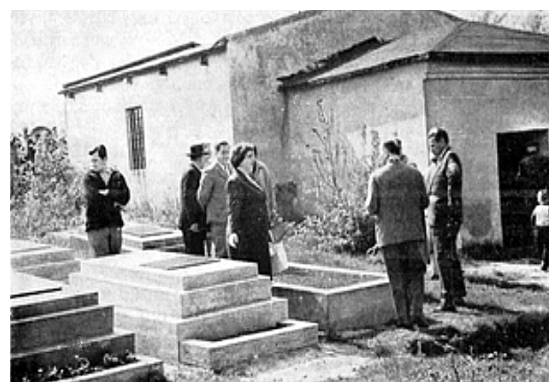
The last photograph of May 1967
|
A holy community swept up in the turbulence of the Holocaust, annihilated and destroyed to the ground,
erased from the Book of the Living, ceased and is no more.
May their souls be bound up in the bond of eternal life.
|
JewishGen, Inc. makes no representations regarding the accuracy of
the translation. The reader may wish to refer to the original material
for verification.
JewishGen is not responsible for inaccuracies or omissions in the original work and cannot rewrite or edit the text to correct inaccuracies and/or omissions.
Our mission is to produce a translation of the original work and we cannot verify the accuracy of statements or alter facts cited.
 Radomsko, Poland
 Yizkor Book Project
 JewishGen Home Page
Copyright © 1999-2026 by JewishGen, Inc.
Updated 10 Dec 2025 by OR