 |
|
[Page 60 - Hebrew] [Pages 177-197 - Yiddish]
by Menachem Kazimierski
Translated by Sara Mages
|
| …gone are now, gone are the Jewish towns,
You look in vain for candlelight in the windows. Gone are the towns. Where the shoemaker was a poet, the watchmaker a philosopher, the barber a troubadour, The moons, winds, ponds and stars above them Have recorded in the blood of centuries the tragic history, Of the two saddest nations on earth… |
| From “Elegy for the Little Jewish Towns”
by Antoni Słonimski |
I remember my town, Wiślica, even though I haven't seen it for a very long
time. Its face was almost forgotten by me, but I see it when I close my eyes. I
see the town where I was born and lived in my childhood and youth. I am
attacked by longing for my home in the town, hidden longings for my town, that
the ripper has descended upon and is no more.
I remember the town with its houses and huts, its streets and alleys and the main square in its center. The beauty of its roofs, red tiled roofs. I remember the synagogues with their worshipers, scholars and ordinary people, and the shtibelekh[1] of the various Hasidim. I remember the many legends that were woven around the Great Synagogue. About its invisible visitors who disappear at midnight, about the control of demons and spirits over it, and about fear that attacked us, the children, when hearing the various stories. I remember the ancient cemetery, not far from the synagogues area, that according to is being told, its history is like the history of the ancient community of the town. As we passed near the cemetery we saw the grave of the town's righteous rabbi, R' Yisrael Horowitz zt”l, sticking out of it.
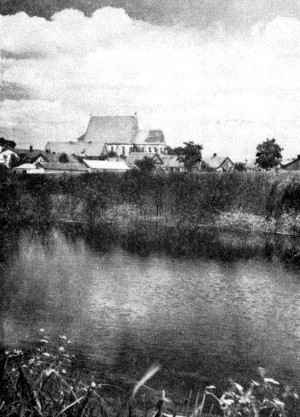
I remember the town center and the large, historic church, which rose to a great height and was built hundreds of years ago. I remember the bell tower next to the church, and the bells that rang on days of joy and days of mourning, on Sundays and on holidays when crowds of worshippers came
[Page 61]
from all over the area to pray in the church. The church bells were also used as an alarm during fires and in an emergency.
I remember “Dom Dlugosza,” a large house near the church. It was built in the 15th century by the first Polish historian, Jan Długosz, who was the bishop of the famous church. I remember the ruined palace which stood on the town's outskirts. The praised Polish king, Casimir the Great, lived there and many legends have been told about the underground canal that connected the palace with the famous church. This palace served as the first stop for King Władysław łokietek, father of Casimir the Great, who returned from exile and was reinstated as King of Poland. In this palace the king convened the nobility for a constituent meeting, at which the first written constitution for the country was given, and which, among other things, recognized the rights of Jews in Poland. The town's Jews were very proud that this constitution was named after their town, “Statut Wislicki.”
I remember the expanses of the town in the days of the blooming spring, the roads leading to the town, the fields, the forests, the lakes and river that surround it. I remember the villages near the town. The smell of the verdant fields and the blooming trees. The cattle herds and the granaries. The universe seemed to have come back to life. I remember the long summer days and the short nights. The harvesting of wheat and rye with the help of sickles, and the piles of sheaves in the fields, the joy and cheerfulness that seized us while playing in the fields at harvest time.
I remember the joy while bathing in the Nida River in the summer months, when we swam across the river, dived and came up. I remember the concern in the mothers' hearts because of their belief that the river needed a sacrifice every year, and as long as no one had drowned, it was dangerous to bathe in it.
I remember the end of the summer, when the fields remained bare after the harvest and filled the heart with sadness.
I remember the autumn and winter, which left their special mark on everything around us.
In the autumn – the rains began to fall frequently, the winds howled, lightning and thunder, bumpy roads, mud and puddles everywhere. Grief and distress surrounded everything. And in winter – the snowstorms, the great cold and the frozen lake and river. The snow lay on the roofs, on the tree branches and on everything, as if the entire universe was wrapped in a white cloak. At the end of winter, everyone was worried when the snow began to melt. When the ice blocks could destroy the bridges – the wooden bridges – and cut off the town from the surrounding area.
Jewish livelihoods
I remember the “fairs” that were held in the town once a week on Thursday. On that day, hundreds of farmers from the surrounding villages flocked to the town, bringing carts loaded with all the best of the land's produce and livestock, for sale to the town's Jews. From all the
[Page 62]
surrounding t towns and villages gathered and came grain merchants, horse and livestock dealers, tailors, shoemakers, and other Jews. Their livelihood was not secure and all their lives they wandered from fair to fair.
In the summer – the sun beat down on their heads and, in the winter – the frost hit them on all sides. These were simple people, humble and honest, who worked hard all their lives and upheld the verse, “By the sweat of your face you shall eat bread,” with all their souls. They ate sparingly and slept little,
|
|
| Wiślica – overall appearance |
[Page 63]
hurried, ran, anguished and painful, as long as they earned some income to support their families. When the entered the market, each one headed to his almost permanent place. The farmers and traders opened their bundles, arranged and displayed their labor on stands ready for sale. On the “fair” days all commercial transactions went smoothly. The market was full of the best and the town Jews bought and sold. A special market was designated for trading in horses and cattle. In this market, we witnessed difficult and tedious negotiations between the parties. Things escalated to angry and sullen faces, juicy curses, raised voices and also raised arms., and only rarely the showed generosity and spoke calmly. Market day served as a “good” opportunity for heavy drinking, and more than once drunks went wild and serious brawls broke out in the town's streets.
I remember the police stations, the officers and policemen with their swords and pistols at their side. On market days, and during the quarrels, their hands were full of work to calm the spirits, and with drawn swords they maintained order and peace. On the one hand, they instilled fear and on the other hand, they instilled confidence in the heart.
I remember the livelihoods of the Jews in the. town. The grocery, haberdashery and various foods shopkeepers, bakery owners and butchers, who made a living with great difficulty. The textile merchants, who always needed the mercy of heaven to survive the bankruptcies that often plagued this commercial branch. The leather merchants, who were dependent on the grace of heaven and always prayed devoutly for rain on the holiday of Sukkot… The iron, wood, and building material merchants, who never stopped wishing for development and construction in the town and the villages around it. The shoemakers and carpenters who never had a penny in their pockets. The livelihood of the nimble tailors, who competed with one another, was as difficult as parting the Red Sea. Most of it came to them in the town fair and from traveling to fairs in nearby towns. From sunrise to midnight on rainy days in summer, and days of snowstorms and severe frost in the winter. The city's carters' community had the hardest time making a living. Tough, kind-hearted, healthy and tall Jews, who always kept a bottle of strong vodka in their bag to revive the soul and warm the body on long journeys on unpaved roads, in gloomy and desolate wide-open spaces, when the winds raged on autumn and winter nights. The first buds of “status” were also seen in the carters' community. There were carters that had regular “lines” to major cities, and these with two pairs of horses, one pair went to the big city and the other to the “fair” in nearby towns. There were special water carriers, one with two horses and the other with one horse. The town was divided into streets and houses, and the carters, who delivered the water, maintained the division without competition between them. Their work was difficult in the winter, when the river froze and it was necessary to break the ice
[Page 64]
to pump the water. There were often arguments with housewives about the amount of water in the buckets due to the ice that formed in the buckets.
I also remember large-scale commerce and industry operated by the town's Jews. The town knew the wealth of those, who engaged in trading with the Polish landowners and in their forests, and knew their respect when the Polish landowners came for a visit to the town. Four to six galloping horses, harnessed to a carriage, flew through its streets, and a lot of dust rose in her wake. With awe and jealous glances the residents accompanied them as they visited the shops for shopping purposes, or at the homes of their wealthy merchant colleagues.
I remember the tartak (sawmill) on the banks of the Nida River. The sawmill was operated and managed by its owner, R' Pinchas Hofenberg and his sons.
This factory employed dozens of skilled and unskilled workers. It supplied lumber and planks for construction and to carpentry shops for the production of furniture for the town, nearby cities and villages. One of the greatest and most beautiful attractions for the youth was to watch the rafts, which came down the river from the Kielce Forests, and delivered lumber to the tartak on the riverbanks. The rafts were managed by the flisacy [raftsmen]. It was a particularly spectacular sight when the rafts came from the Carpathian Mountains and had to be brought upstream. The flisacy harnessed themselves and pulled them to the sawmill while walking on the riverbanks. The tartak also reminds me of the Gordonia hakhshara[2] group, whose main work was in this factory. I remember those young men and women, who came to the town from all over the country, and underwent training working in the tartak before making aliyah to Eretz Yisrael. Those cheerful young men and women left their mark in the town in their appearance, open collars, rolled-up sleeves, and in three-quarter-length pants folded upwards. In their Hebrew speech, in their performances at poetry evenings in youth organizations, organizing classes to study the Hebrew language in preparation for their aliyah to Israel.
The impression they made on the youth of the town was immense. Many left for hakhshara kibbutzim throughout the country, and who knows how many made aliyah to Israel thanks to this influence and survived the Holocaust.
I remember the train station in the town. That small station that connected the town with the big world. One line to the southwest, to the city of Krakow, with which the connections were mainly trade relations. The second line to the north, to the city of Pichów, the provincial city of Kielce and the capital city of Warsaw. All the townspeople, who made aliyah to Israel, passed through this station. I also passed through it before I left the town and headed for Eretz Yisrael. The mighty singing of Hatikvah, by the many companions who came to part from me, still echoes in my ears. Al the town's Jews gathered next to this station to accompany every local person who made aliyah to Eretz Yisrael.
[Page 65]
The synagogues in the town
I remember the synagogues, the houses of worship and the various shtibelekh of the Hasidim.
The Great Synagogue – Di Shul – was in the terms of Mikdash Me'at [small temple]. It was a relatively large building, tall, solid on the outside, and many windows were carved in it. It was not magnificent on the inside, but it had a modest beauty and holy majesty reigned in it. As far as I remember, there were no books inside it and the furniture was also modest. This synagogue had a magnificent Holy Ark, above which were two lions cast from bronze on either side of the Tablets of the Covenant. The climb to it was up many steps. On the right was the prayer lectern. The bimah [central reading platform] in the middle was surrounded by a carved wooden fence and was also accessed by several steps. The women's section was big and wide open. There were fixed places in it for the worshippers. The Great Synagogue was in the style of synagogues in many towns and was one of the most beautiful in the surrounding towns. All walks of life prayed in this synagogue. On the Shabbat and holidays the prayers were led by R' Moshe'le Hazan who was the regular cantor in the synagogue. On festive circumstances, and especially on the High Holidays or holidays, the prayers were led by the town's rabbi, R' Chaim Shlomo HaCohen Schwartz. He had a pleasant voice and was a captivating cantor. When the rabbi appeared in prayer at the Great Synagogue, many flocked from other synagogues to hear his pleasant prayer. The ceremonial prayers on the national holidays were also held at the Great Synagogue.
Close to the Great Synagogue stood Beit HaMidrash. A more modest building, also solid, but lower and its many windows were wide and big. The worshippers in the Beit Midrash also came from all walks of life. Unlike the Great Synagogue, where people prayed mainly on the Shabbat and holidays and very little on weekdays, Beit HaMidrash was filled with worshippers on weekdays, from before dawn until late at night. Nost of the shtibelekh worshipers prayed there on weekdays. The cantor in Beit HaMidrash was R' Emanuel Topf. Beit HaMidrash also served as a place for the study of the Torah. The prayers were led alternately by various cantors from among the worshipers and those who were required to lead the prayer on the anniversary of a death. Here was also the circle for the Talmud daily page. Here sat Jewish scholars and Hasidim and listened to a lesson in the Gemara. At the head of this circle stood R' Natan David Hershkowitz, the town's slaughterer, a prominent scholar who ruled on laws and arbitration alongside the rabbi. Here, they did not excel in wisdom or delve into the depths of the Talmudic sea, but they prayed a little during the lesson. The furniture in Beit HaMidrash was poorer than in the Great Synagogue, but a sea of ??books covered part of its walls.
In another corner of Beit HaMidrash, near the stove, gathered a small community of Jews. These were the “Tehillim Jews.” They listened to a chapter in Kav ha-Yashar[3] in Yiddish, Pirkei Avot[4] on the Shabbat in the summer, or chapters of legends on the holidays, days of mourning and fasting. At the head of this circle stood R' Emanuel. Everything was done to attract the hearts of the common people to the Torah the preservation of
[Page 66]
tradition. Every evening they sat crowded around the table and listened to the lesson by the light of the faint flame of a lantern or a candle. These were Jews who busy during the day with the burden of earning a living, some next to a market stall, some next to an iron and scissors, and some next to a shoemaker's bench. For a brief hour these Jews were lifted from the vale of tears and degenerate poverty. R' Emanue's circle was especially felt on long cold winter evenings around the warm stove.
The Hasidim did not establish houses of worship for themselves in solid buildings. The shtibelekh had no external splendor. They rented a modest apartment, usually one or two rooms, placed two to three simple tables, a few benches along the walls, a Holy Ark that a simple parochet [ornamental curtain] covered its doors, a sink for washing hands and a towel, and here before you a house of worship for the Hasidim. The only decoration was the shiviti[5] on the lectern. Cantors with trained voices did not lead the prayer. Here, they made sure that the cantor was God-fearing and knew the meaning of the words of the prayer.
I remember the Beit Midrash of Rabbi Meirl Horowitz, one of the sons of R' Yisrael, the town's pervious rabbi – the old rabbi. Rabbi Meirl gathered around him a large circle of admirers, many followers revered him as an honest and wise man. He was blessed with noble virtues, and many came to him for advice in times of need and litigate complicated arbitrations. They considered him the “Rabbi” of the town.
Among the various houses of worship, the synagogue at the home of R' Mordechai Lipa should be particularly noted. R' Mordechai Lipa was a carter, a short Jew adorned with a short white beard, and healthy broad body. He was a simple Jew and childless. He decided to do “something” for the sanctification of God's name. He made part of his apartment available for a house of worship for the residents of the somewhat remote neighborhood near the municipal slaughterhouse where ordinary Jews lived. He spared no effort, and after a hard day's work he devoted himself to the maintenance of the synagogue. He personally took care of the synagogue and for cantors in the High Holidays. R' Mordechai Lipa was a Cohen, and because of his devotion and love for the synagogue he was called the “High Cohen”…
Shabbat in the town
I especially remember the town on the Shabbat and holiday, in days of joy and mourning. I stroll, in my memory, through the town's streets and alleys. I see the Shabbat in the town, the preparations for the Shabbat, the shopping at the market on Thursdays – the town's fair day.
I remember Friday – Shabbat eve, when the shops and businesses closed earlier than usual, and the Jews were seen walking on the town's streets to the bathhouse with
[Page 67]
their undergarments under their armpits. At the same time the rush began at home to bathe the children, dress them in clean Shabbat clothes, and everyone is ready to go to the synagogue, or to the shtiebel, to welcome the Shabbat Queen. I remember how the shops closed at once, as if by order, and the streets are filled with crowds walking to pray. I remember Shabbat eve at the synagogues. The candles are lit, a festive atmosphere of Neshama Yeterah[6], and the cantor sings the prayer Lecha Dodi [“Come My Beloved”]. Above all I remember my home on Shabbat eve. a warm home, full of light and joy of the soul. Candles are lit in silver candlesticks, a white tablecloth is spread on the table, and the table is set is set with all the best. We begin with Shalom Aleicheim Mal'achei Hasharet [“Peace be upon you, angels of peace”] in the well-known melody. I remember the festive Shabbat dinner and the songs we sang between courses. Shabbat morning. The town seems to still be sleeping soundly. The streets are empty of people. Here and there Jews are starting to come out to the synagogue for the first minyan. At the houses everyone started to get up from their sleep. Waiting for the Shabbat Goy [gentile] to light the fire in the stoves to heat the house and the food at the same time. It should be noted that the Shabbat Goy was one of the important accessories of the Jewish town in the Diaspora. Without him – who knows how they would have eaten a hot meal in honor of the Shabbat. Without him – how would they have held on. How could they celebrate the Shabbat with joy in their hearts, as a Jew is commanded to do, when it is cold all around. When the “Goy” lit the oven, they drank the hot coffee. Later, Jews begin to flock to synagogues accompanied by their sons with the tallitot in their hands, for the Shabbat prayer. Women walk separately, all dressed in Shabbat dresses and adorned with their best jewelry. The Shabbat is felt everywhere. Even the Gentile shops are empty, the farmers from the nearby villages don't come to the town on the Shabbat. A complete rest is felt and maintained everywhere. Inside the house the atmosphere is free from the six days of work, from the hustle and bustle of making a living, everyone enjoys the sanctity the Shabbat and the Neshama Yeterah.
After the meal and a short rest, the youth begin to gather for an activity at the branches of various youth organizations. They stroll along the bridges over the river for their enjoyment, chatting and debating various topics. The parents fulfill the mitzvah of “sleeping on the Shabbat is a pleasure, ” they rest, doze and also sleep. After the rest they read a Hassidim book in Beit HaMidrash, study a chapter of Mishnayot or a Gemara page. And the mothers – the Jewish mothers – and the book Tz'enah Ur'enah[7] are a pair from heaven. On the Shabbat they don't part from it. They read aloud and the children listen attentively to the stories – Torah stories. They rejoice in stories that bring joy to the heart and shed tears over the bitter fate of the righteous Joseph, who was sold by his brothers as a slave to the Ishmaelites. Slowly, night falls and in the far west the sky turns red. They know that soon the wicked will finish their Shabbat rest and return to hell to be roasted for the sins they had committed in their lives. The unfortunates extend the Shabbat so that they can rest a little longer from hell. But at nightfall the Jewish mother says, “God of Abraham, of Yitzchak, and of Yakov…”and after turning on the light and Ha-Mavdil[8] they return to the six days of work.
[Page 68]
Holidays in the town
I remember the holiday of Passover and the preparations that began many days before. First, the house must be whitewashed. Whitewashing the house is a mitzvah that must be performed every year before Passover. The books are taken out of the house and arranged on tables, chairs, on boards placed on barrels, and anywhere possible, so that they can be aired out by the wind. After the house is whitewashed, the dirt that has stuck over the year is scrubbed and scraped away, the floors are washed, the furniture is returned to the house, and everything is shiny and ready for the approaching holiday of Passover.
I remember baking matzah shmura by the Hasidim on Passover eve. The Hasidic custom of baking matzah with their own hands, at least for the nights of the Seder and the first days, to ensure the strict kashrut of the matzot. The Hasidim consider baking matzot a mitzvah and observe it with devotion. They sing and say Hallel [praise]. They use special water that they had brought (they do not trust delivery persons) from the river the day before, “our water. “
I remember the morning hours on the eve of Passover. Everything is done in a hurry. We eat standing in one corner and burn and throw away the leftover leavened food. We check once again to see if there is anything left that could desecrate the holiday. I remember the Seder nights. We return home calmly from the prayer. The Seder table is set. The silver candlesticks are on the table, and the candles are lit. Light and joy at home. My father is sitting at the head of the table in white kittel [robe], and all the family members, from young to old, sit around. Everyone, with serious and festive expression, follows the start of the ceremony. We fill the first of four glasses and recite the kiddush over the wine. Ha Lachma Ania [This is the bread of poverty]. The youngest child asks Ma Nishtana [what has changed] and we start the reading of the Haggadah, “avadim hayeenoo…” [we were slaves]. Excitement gripped us children when we waited for the door to open, and the arrival of the prophet Elijah. We continue the reading of the Haggadah, The candles are extinguished one by one, the children fall asleep and the adults continue till midnight.
I remember Yom Kippur in the town. From the morning hours it is possible to feel the special atmosphere that characterizes the approaching Day of Judgment. The town's Jews are more anxious on Yom Kippur eve than all days of the year. Sadness and restlessness are visible on their faces. There is no time, they rush, they run as if they have to get something done, they have to prepare for something. The shops close at an early hour. The streets are emptying of people. Even the gentiles know the nature of the holy day at their Jewish neighbors and do not come to town on the eve of Yom Kippur, and certainly not on Yom Kippur itself.
I remember the walking to Kol Nidrei after the final meal before the fast. We walk with hasty steps, hurrying through the town's streets and alleys. Most of the Hasidim are dressed in silk and satin kapotas [long black frocks], wrapped in white kittels. Families, families, walk to the synagogues and shtibelekh of the various Hasidim.
I remember the atmosphere inside the synagogue on the eve of Yom Kippur. I remember the
[Page 69]
large crowd standing in great densely. People are pressed against each other and the anxiety in their hearts is visible in everyone's eyes. I remember the trembling that passed through everyone when the cantor opened the prayer: “With the consent of the Almighty and the consent of this congregation,” and the entire public answered after him with great humility. I remember the great, blinding light in the synagogue as thousands of Yom Kippur memorial candles flickered and shined.
I remember the Neila [locking] prayer on Yom Kippur. As the sun began to set, the worshippers' voices were heard “Keep the gate open for us, at the time when it is closing, for the day is coming to an end.” The prayer is heard with great intention and full of supplications. From the women's section, the silent cries of the praying women can be heard. With the end of the prayer, the sound of the blowing of the shofar and the call “Next year in Jerusalem,” the fast came to an end and most of them hurried home.
I remember the walking to the tashlich[9] on Rosh Hashana. Many Jews gather after the afternoon prayer in group and walk slowly through the town's streets in the direction of the lake. Slowly, Slowly the crowd grows, and the streets are taken over by those walking to tashlich.
I remember how the large crowd stands on the lake shore, holding prayer books in their hands and a quite prayer voice rising from them: “Who is a God like you… from out of distress I called to God.” Jews, whose hearts are burdened with sins, came here to the lakeshore of to shake the sins of the past year from their pockets, bodies, and hearts. At the end of the prayer, as the evening breeze blows, the large crowd begins to return, and in their hearts is relief and joy.
I remember Simchat Torah in the town, It was a joy full of enthusiasm and emotion that surrounded everyone without exception. The preparations for the holiday were like the preparations for any holiday and joy, and the joy began mainly in the synagogues. The synagogues were full of light, warmth, and a festive, joyful atmosphere. They were completely full, usually more than on a normal holiday. Everyone came, fathers and sons, the elderly and the children. Women and girls also came. The children are holding flags, Simchat Torah flags. At the top of the flag is a potato with a hole and a lit candle stuck in it. A sea of flags and a sea of lit candles. The children's joy is great. And now the cantor begins the traditional melody, known to everyone, full of devotion and sweetness Atah horeta lada'at [You have been shown to know] and the large crowd answers with moderation and exemplary order after each verse. When the hakafot[10] begin, the worshippers form a circle, and the joy and dancing reach high peaks in the terms of “all my bones shall say.” Indeed it was a joy in the heart. The next day, on Simchat Torah, the joy continued in the synagogues. After the hakafot all the worshippers, including boys from Bar Mitzvah and up, ascend to the Torah. The little boys ascend to the Torah together. They cover their heads and all the worshipers recite the blessing: “The Angel who has redeemed me.” At the end, Chatan Torah and Chatan Bereshit[11] are called up to the reading of the Torah. A large kiddush was held after Chatan Torah and Chatan Bereshit were called to the reading of the Torah. The kiddush was generous. A major rule was, that Simchat Torah kiddush should be abundant in food and drink,
[Page 70]
especially wine – after all, “wine gladdens the human heart.” After eating a lot of everything good that was prepared for kiddush, the crowd dispersed to the “grooms” homes and emptied everything that was left in the hosts' cupboards and kitchen for a kiddush. At the end, singing and dancing to the point of exhaustion. They returned home tired, most of them drunk, but with a good feeling of fulfilled the mitzvah “you shall rejoice in your festival.”
I remember the holiday of Purim in the town, the cheerful holiday, full of joy, foolishness and laughter. The carnival holiday in the town's streets. The street – full of children and teenagers dressed as clowns, heroes or characters from the Book of Esther. They walk from house to house. Creating a cheerful atmosphere that brings joy that makes everyone happy. During their visits to homes, they were honored with good food and donations of money. The youth in the various youth organizations prepare plays, and there is also happiness and plenty of drinking in the shtibelekh.
I remember the holiday of Purim also at home. A festive atmosphere at home, a set table, la lot of beverages and abundance of the best food. But, most importantly, piles of coins of different value caught our attention as children, The money was distributed among people who came to collect donations for various public purposes or for special needs. Poor people, who waited for this day, also came and received a donation. The donations were given in various amounts according to the “value“ of the fund raisers or of the poor.
I remember the beautiful custom of mishloach manot[12] on the holiday of Purim. Mishloach manot usually included various baked goods, honey-coated oznei Haman [Haman's ears], cookies, and sweets, but above all, the mishloach manot was appreciated if it also included an orange. Thus, for hours, a two-way traffic of mishloach manot went on. The streets were full of children holding bowls or plates wrapped in napkins or foil, bringing mishloach manot to their parents' friends.
Communal celebrations
I remember communal celebrations in which many participated in the town's streets. They were true celebrations full of joy, and I will tell about some of them here.
I remember the joy of the masses in the town when one of the Admorim, a Hasidic Rebbe, came to visit the town. I remember the influx of crowds into the town from the nearby towns. Hasidim in droves came to draw spiritual inspiration from the Rebbe.
I remember the arrival of the Rabbe of Zarki. He arrived on Thursday evening. The Hasidim waited for him in masses at the train station. From the station he came to the town in a special carriage harnessed to four big horses. Inside set next to him his important Hasidim
[Page 71]
R' Natan David, R' Yotze and R' Melech. A procession of many accompanied the carriage on foot and when they arrived in the town, the streets, through which the procession passed, were filled with people. Mothers held their children in their arms to show them the Rebbe's radiant face and to be blessed with his holiness. A lot of light is visible from all the windows to illuminate the streets. I remember the crowds, who accompanied the Rebbe with singing and chanting from the hostel at the home of one of the important Hasidim, to the synagogue. I remember the meal at the, and the great commotion and noise during the distribution of the leftovers from the Rebbe's meal. Receiving leftovers is considered a virtue and a mitzvah, but when the Rebbe began to preach the Torah, silence fell and everyone listened to his words. On Shabbat evening, and for the rest of his stay in town, the Rebbe received his Hasidim individually, and each one gave him a kvitel, meaning a note, on which was detailed his wish. There were also those who came to consult with the Rebbe on business and trade matters.
I remember another great community celebration, which encompassed all classes in town, from young to old. It was customary in Jewish towns that synagogues, shtibelekh, or organizations “wrote” a Torah scroll. At the end of the “writing” the Torah scroll was carried to the Great Synagogue.
I especially remember the bringing of the Torah scroll of the Hashkama [early morning] society from Wolf Bursztyn's house with the participation of the Rabbi of Lublin. It was a mass joy that knew no bounds. Crowds gathered near to the house where the Torah scroll was located. On the day of the celebration, people honor the memory of deceased relatives by writing the “letters” of the last Torah portion. At the completion of the “writing,” crowds of men, women, and children lined up for a festive procession to carry the Torah scroll to the Holy Ark in the synagogue.
I remember well the celebrations in the town's streets. At the head of the celebrants walked the man who had the honor of holding the Torah scroll in his hands, and around him was an enthusiastic crowd who danced and sang to exhaustion. Everyone crowded together to get closer and see the Torah scroll.
I remember that at this celebration two horsemen, mounted on mighty horses and dressed in military uniforms, suddenly appeared. One was dressed in the uniform of a Russian general, and the other was dressed in the uniform of a Russian colonel from the Tsarist era. They were R' Leibish Zeigermacher (Beckerman) and his son Tuvia. Ber Kraus also entered riding on his horse to Mirel Rachel's Chmilenicki shop in the town center. They performed tricks while riding and galloping on their horses, and to the surprise and delight of the revelers stood them on their hind legs.
I remember how the procession arrived at the synagogue. The faces of the celebrants became calmer and more serious. For a brief moment the Neshama Yeterah was lifted when R' Chaim Shlomo HaCohen Schwartz singing Mizmor leDavid [“A song of David”] in his pleasant voice.
[Page 72]
Sad events
I also remember sad events that left a deep impression on the town and were the subject of lively conversations for a long time.
I remember the halitzah[13] ceremony in the town. I was a boy and this event was etched in my memory as if it happened yesterday. When Neta the shoemaker passed away and his widowed wife was left childless, she had to obtain a halitzah from her brother-in-law, her husband's brother, in order to untie her marriage. The rumor about the time set for the halitzah spread quickly. There was a heavy atmosphere in the town. Everyone was getting ready for that day. And when the day arrived, all the shops were closed in the town and work in the workshops stopped. All the townspeople, from the young to old, flocked to the Great Synagogue in which the wide hall in the women's section was prepared for the ceremony.
The area for the audience in the hall was fenced off. The court was composed of the town rabbi, who served as head of the court, and two other judges. A sea of ??people from all over the town stood terrified and confused, restlessness seeping into their hearts and a deep fear surrounding them all. They waited for a long time with increased restlessness for what seemed like an eternity. Suddenly, everyone turned their staring, squinting eyes towards the wide-open door. The shamash appeared, on the doorstep, his staff in his hand, and announced to the court in a loud voice: “I have carried out the court's instructions, I knocked three times on the deceased's grave and invited him to appear before the court, the deceased will appear shortly.” Everyone seemed to “see” the deceased entering and standing before the court. Here and there, women's sighs and even silent cries have been heard.
The head of the court, Rabbi Schwartz, opened by first addressing the deceased and asking for his forgiveness for disturbing his peace – to come and appear before the court. After hearing the witnesses, the widow turned and called out to her brother-in-law, “Thus shall be done to the man who will not build up his brother's household” [Deuteronomy 25:90]. The widow took off his shoe, spat in front of him, and when she threw the shoe aside, the entire crowd moved back, as if to prevent the shoe from hitting someone, with the belief that whoever the shoe hits will die before the end of the year. After all the details were finalized, the head of the court announced that the widow's bonds had been lifted, and the deceased could return to his resting place. The crowd waited until the deceased would “leave” the place first. Then the crowd began to disperse with a heavy heart, some hurried home and some to their business. When the entire crowd left the synagogue, I fled home. I broke into my room, collapsed on the bed and fell asleep. In my dream, I still continued to see that fenced-off corner where the deceased “stayed” after he responded to the court's summons and appeared before it.
[Page 73]
Figures
I remember with love the town's Jews, the dear Jews, who walked and lived for many generations among their gentile neighbors. They met with farmers in shops and by the market stalls, bought from each other and sold to each other. Yet they walked like vague figures, lonely and lost. I would like to dedicate the following lines to some of those dear Jewish.
The first and foremost in the town was the figure of HaRav HaGaon Chaim Shlomo HaCohen Schwartz hy”d. He was a great Torah scholar with a majestic appearance. He was gentle in spirit and affable. Humble in his way of life and known for his honesty. He was known for his humility and welcomed everyone with kindness and a warm smile. He was never angry and had a kind word for every person. He raised a large and prosperous family. His sons and sons-in-law were talented and scholars. His eldest son R' Berale, the Rabbi of Bogoria. His youngest son, Levi'le, was a kind, hardworking, and promising boy. Yitzchak'l, my best friend, was a bright young man, educated, likeable and beloved by everyone. He dreamt of making aliyah to Israel but was not granted. The rabbi's second son, R' Elimelech, the only survivor of rabbi's entire extended family, is in the United States. He continues the tradition of his ancestral home and serving as a rabbi in Los Angeles. RabbiSchwartz was devoted to his community and shared the bitter fate with them.
R' Natan-David Hershkowitz z“l – the town's slaughterer, was second in rank to the rabbi. He was short in stature, and a white beard adorned his face. He was among the important Kuzmirer Hasidim.
A prominent scholar, proficient and sharp. He was approached to decipher complicated places in the Six orders of the Mishnah and Poskim. He was known for his wit and wisdom. Because of his learning and intelligence he became the rabbi's right-hand man and a judge in the town. His eldest son, HaRav R' Avraham Elimelech, was a genius like him and served as a rabbi in the city of Sosnowiec. His young son Yakov, may he live long, survived and lives in Israel.
R' Elimelech Kazimierski – my father z”l, was the closest friend of R' Natan David hy”d. My father z”l was a descendant of the famous rabbi, R' Elimelech of Le¿ajsk, and also carried his name. My father was one of the important Kuzmirer Hasidim, prayed at their shtiebel and participated in the “daily page” circle. They shared the bitter fate together and about them it can be said, “the beloved and pleasant in their lifetime, and in their death, they were not separated.”
R' Uziel Orbach hy”d – of the important Gerrer Hasidim. A learned and intelligent Jew, one of the activists of Agudat Yisrael and the participants of the “daily page” circle. The cantor who prayed the Musaf prayer at the Gerrer Hasidim shtiebel. A wealthy merchant who supported Torah and charity institutions, and a gabbai at
[Page 74]
Chevra Kadisha. He managed to escape the Germans, but the murderous hand of the Polish gentile, who hid him at his home, got him at the end. He was murdered by his gentile “friend” just a short time before the liberation.
There were also Jews of a different type in the town. Those With more progressive opinions and nationalist views. They were intellectual and were involved in public life. I will mention a few of them.
Shabtai Silberstin – a proud intelligent Jew, wise and learned. He gathered around him Jews in Beit HaMidrash, who listened with great interest to his words on current matters, or on matters of very high importance. He was a Zionist and acted in accordance with the principles he preached. His eldest son, Shimon, was among the first halutzim [pioneers] from the town who made aliyah to Eretz Yisrael.
Hertzka Linden – a clever, affable man, pleasant-mannered, and fond of conversation. He was a Zionist and a man of letters. A cantor with a pleasant voice. His entire family perished.
:
|
Yisrael Buchman – a proud, intelligent, educated and learned Jew. He had a sense of humor, used to tell a good parable and a nice story, and sometimes even a joke. He was a wealthy iron merchant, a public figure, and a representative of the town's Jews on the city council. With pride and honor, he defended the interests of the Jews there.
Shaul Zukerman – the “politician” in the town. He was cynical and critical. People always gathered around him, eager to hear news, or commentary, on events in the town, the country, or the wider world. He always stood surrounded by a group of people, whether in the synagogue or on the street corner, who waited to hear his words.
Wolf Borenstein – a wealthy grain merchant and a supplier to the Polish landowners. An intelligent man, handsome and always neatly dressed. A Zionist with strong opinions. He was the leader of the community for a long period of time, and with his head held high he represented the affairs of the town's Jews before the Polish authorities.
[Page 75]
|
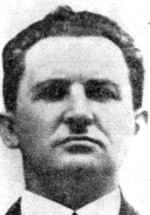
Hanoch Schwager – the richest Jew in Wiślica and the entire area. He owned flour mills, was forest and land dealer, and a wholesaler of tobacco products. He engaged in commercial relations with the estate owners in the vicinity. A philanthropist and kind-hearted man. His home was open to all in need and was always the first to come to the aid of the poor. He had a tradition that before Passover he would distribute potatoes to the needy, in addition to Kancha Depascha [wheat for Passover]. He gave charity in secret and before the arrival of winter distributed coal and firewood to the needy. This tradition has gained a reputation throughout the surrounding area. He was aware of public's needs. Chairman of the board of the local bank, an important financial institution that the town's Jews greatly benefited from. He perished with his entire family in Treblinka.
Moshe Wayzberg – son of R' Shmuel Wayzberg, of the most important merchants and homeowners of his time. A wealthy iron merchant, alert and dedicated to public affairs. Member of the board of the local Jewish bank, educated and nationally recognized. A Zionist from his youth and active in the ranks of the Zionist Organization.
Kopel Banach – a scholar and an intelligent man. A cloth merchant in the town's central square. A member of the board of the local Jewish bank and a public activist. Zionist and member of HaMizrachi organization. The town's Jews flocked to him to seek advice and resourcefulness in tax matters, and more than once they were helped by him. His entire family perished.
Yosef Baum – of the last public activists in the community of Wiślica. Of the Hasidim of the Admor of Lublin, Rebbe Moshe Mordechai Tabreski. A wealthy merchant, owner of a shop in the city's central square. An honest and modest man. He supported Torah and charity institutions. Beloved by the people. He had trade and friendship ties with the Polish intelligentsia and was a frequent visitor to the Pritzker family's estates and the surrounding priests' courtyards. In general, his honesty earned him respect from the authorities and the Polish population, who were considered his clients. He shared his fate with the entire community at the Treblinka extermination camp.
Avraham'l Szydlowski – a pleasant man, enthusiastic and hospitable. Learned and important public figure. He was a wealthy man and helped the needy. He owned a lumberyard, one of the largest in the area. He was a gabbai at the synagogue of Rabbi Meir'l Horowitz. He passed away before the Holocaust from a malignant disease, and crowds accompanied him to eternal rest.
[Page 76]
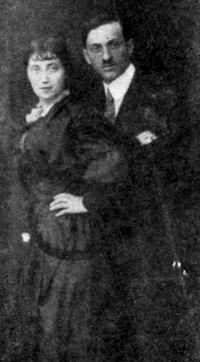
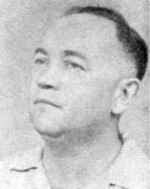
I will also mention here two precious and unique figures in the town. Chana'le Nozyce and her son Meir Nozyce.
:
|
:
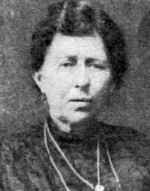
Chana'le Nozyce – was the only midwife in the town and surrounding area. I remember her as an old woman, tall, slightly stooped, with smiling eyes and a kind face. When she was seen walking slowly on the street with a small, wide leather suitcase in her hand, we knew that she was going to a woman who is in labor and a new “person” was about to be born. Everyone's gazes accompanied her with love and blessings. She appeared to us as a figure to whom we all owe our gratitude for the “life” she gave us. She was considered by people to be a brave, wise, compassionate, and good-natured woman. She was a figure held in awe and love on everyone's lips. She passed away peacefully at the age of nearly ninety. Crowds of Jews and gentiles from the town and surrounding villages attended her funeral.:
|
:
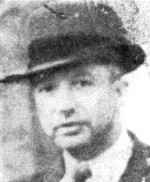
Meir Nozyce – was the town's doctor. He was tall, his clothes were always ironed and neatly dressed, clean-shaven, and a certain sadness was etched on his thin face. His clinic was on Targova Street and was always crowded with Jewish and gentile patients who came to seek healing for their bodies and souls. He welcomed everyone with kindness and treated poor without expecting to be paid. He was the physician and healer of both the wealthy of the town and the common people. He was respected and treated with courtesy by all, yet he was modest in his manners. He was often seen going to the hut of a sick man from the town's poor or traveling to a sick man in the village in a farmer's cart, even in the heat of summer and the cold of winter. He belonged to the town's narrow aristocratic class, held progressive views, was chairman of the Zionist Organization, and supported youth organizations. He prayed in the Great Synagogue and was one of the most important members of the community in this synagogue. He perished in Treblinka.[Page 77]
Leibuhs Zukerman – his image is still etched in memory, a unique figure in the town's landscape. He was fair-skinned and thin, his eyes were dreamy, his face was always pale and his gaze was embarrassing. He was young – but he was not busy with anything. He was involved in the affairs of the world – but he was like a bum. He was self-taught, well-read and read a lot – but very naive. He was a floating figure of a philosopher and always meditating on distant worlds. Nevertheless, he was treated with respect.
R' Hirshel Tope – a Jew of a different kind. A nimble Jews, meticulous and stern-faced, who spent his entire life as the head of Chevra Kadisha. We were teenagers at the time, and he instilled fear in us with his entire appearance and being. his reputation precedes him. We heard stories about his activities in the cemetery and imagined his dealings with the dead. It has been told how he managed to obtain large burial fee from a certain wealthy man whose behavior in life was inappropriate. How he held a big kiddush for his people or drank with them at the expense of one of his “clients” whose end was near. For some reason we thought that with his power and strength he controlled not only the dead, but also the living. He himself, as they said, was not granted a proper burial. When he died during the Nazi occupation only a few attended his funeral.
Yoske Flaum – Wiślica's last community leader. A dedicated public activist. He was active among the craftsmen and the chairman of their organization Yad Harutzim [Skillful Hand]. He was a wealthy man, the owner of a textile business in the town's central square and a tailoring workshop. He had a beautiful and well-groomed appearance. His tenure as head of the community during the Nazi occupation was difficult and tragic. He represented the town's Jews with honor before the German authorities, and more than once risked his life for his community. He endured severe suffering until the end. He walked at the head of his community on the last road, to the extermination crematoriums at Treblinka.
Those precious Jews are no more. Everything has been wiped off the face of the earth. The precious souls have gone up through the crematorium's chimneys, and the wind has scattered them every which way.
The poet Lord Byron has a poem:
To a bird – there is a nest
To an animal – a lair
To a person – a house
And to the Jew – a cemetery
The poet did not foresee that a period would come that would pretend to be a period of progress and humanity – when a Jew would not even have a cemetery. For a thousand years we lived in exile in Poland, and finally its land vomited us out forever.
God will avenge their blood…
Translator's footnotes:
|
JewishGen, Inc. makes no representations regarding the accuracy of
the translation. The reader may wish to refer to the original material
for verification.
JewishGen is not responsible for inaccuracies or omissions in the original work and cannot rewrite or edit the text to correct inaccuracies and/or omissions.
Our mission is to produce a translation of the original work and we cannot verify the accuracy of statements or alter facts cited.
 Wiślica, Poland
 Yizkor Book Project
 JewishGen Home Page
Copyright © 1999-2026 by JewishGen, Inc.
Updated 12 Feb 2026 by OR