 |
|
|
[Page 270]
by Yitzchak Ganuzovitz (Ganuz)
Translated by Rabbi Molly Karp
Within the freight trains of the N.K.V.D.[1] that moved eastward in the year 1940 from the Lida train station to the depths of Russia were masses of residents expelled from the city and its surroundings, and among them – Jewish families. These families and especially a group that on the night of April 13 was exiled to western Siberia, passed through all the upheavals of the years of the war, the wanderings, the deprivation, the frost and the hard labor, while they were all together as one family.
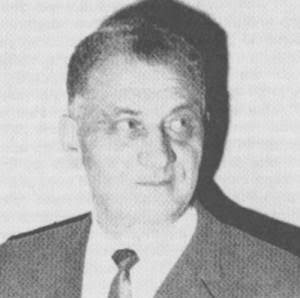
These families were mostly comprised of women and children whose husbands and fathers were imprisoned by the Soviets, and all traces of them disappeared. Within that group of Jews expelled from Lida is remembered for good Reb Aharon Dovid Rabinovitz, may his memory be for a blessing, who knew how to guide, to encourage, to console and to strengthen all of them in difficult and fateful moments, when it seemed that all hope was lost, and they had reached the end of their rope. These notes will be a monument to his memory.
These are not events from that period; very little was given in the notes below as they were, although with changing the names of the people.
The Hope That Was Cut Off
Where are the fathers and the husbands?
This question gnawed at the hearts of the women and their children and demanded an answer. With night they were taken from their peaceful homes, from the warmth of their families, and disappeared without a trace. Thoughts and moods kept changing. Is this situation temporary? Or maybe we will be here forever? What will we eat tomorrow when we finish what we brought with us, and where will we live? Our husbands, where are they? Will they return sometime? When a ship passes in the middle of the sea, a wake of foaming water trails behind it. When a caterpillar passes over grass and sand, its trail remains behind for some time, but they were taken, disappeared, and are no longer. Counted and finished, that a few wives needed to go to Poludino, to the N.K.V.D. office that is there, and demand a meeting with the Commander. They should not come as a complainant, and not casting blame, but to present themselves before him with a simple and short question: where, Comrade Commander, where is my husband? They took him out of the house at night and he disappeared. In the Grodno N.K.V.D. office they said that he was sent to the Baronovitz prison, in Baronovitz they said that they don't know, but they assume that he is in Minsk. In Minsk they told us to turn to Borisov; in Borisov they informed them that they don't know him, and we must turn to Grodno. In Lida they banged on the door in the night and said to pack our things, that they are transporting us to husband and father, who is in Siberia. We have arrived here in Siberia, where are the husbands?
Mrs. Rachel must go with two other women. The language of the state was fluent in her mouth, and she will certainly know how to ask the crucial question: where are they?
The distance of the “quarter” from Poludino was a day's walk, and one had to travel on foot. On account of the excess quota that was made by their group over the course of the last weeks, the three women received a day off, and before dawn they went out on the dirt road through the forests and meadows covered with wild vegetation, that led to the village that was the center of the regional division of the authority.
Spring winds swept past them. The spring was short compared to the summer and there was no difference between the two. The snow melted and became water that barely had time to be absorbed into the black of the ground, and the road before the women was disrupted by lakes.
The N.K.V.D. was located in a wooden house, taller than the rest of the houses of the village. Its roof was covered with tin, and the sidewalk to its door was paved with the dirt of the unpaved street. A tall plank fence enclosed it on all sides. Adjacent to it was the house of the “Reikum” and the office of the Military Commissar. Three houses, which expressed royal majesty and the strictness of the authority drawn over them. Decades before, these houses belonged to farmers that were based in this desolate area, but in the period of collectivization they were imprisoned, expelled, and their property was confiscated.
The soldier that stood at the entrance to the yard slowly smoked a cigarette and enjoyed the slight warmth of the spring sun. He was amazed to see the women marching towards the house and stopped them with a stern facial expression: to where, women, are you headed?
To the Commander of the N.K.V.D. – answered Rachel hesitantly.
- What's there for you?
We came to speak with the Commander. We are the spokespersons that arrived here months ago, from Poland…
This from your faces I recognize! Wait here a minute, I will go into the office and ask…
After a long hour he came out and opened for them the locked gate to the yard. In Rachel's mind the statement of the men of the collective farm shone: “The gates of the N.K.V.D.” are wide to enter but narrow to exit. The entrance to there is like the entrance of an auditorium, but to return is like the eye of a needle. With hesitant steps they crossed over the threshold on the paved path that led to the house.
In a spacious room, on a wooden chair, supported by his elbows on a long table, sat a person of about the age of forty. Dressed in a military uniform, his round hat with a shining visor resting on his hand. This was the hat whose appearance would cast fear into the residents of the village and the villages adjacent to it. His face haggard, somewhat pockmarked, and a part in his blond hair, combed as it should be.
What is your desire? He let slip in their direction with his glance stuck on them from under whitish eyelashes. He did not ask them to sit even though a few chairs stood next to the table; he did not move from his place, as if he was frozen.
The women were pale. Struggling to stop their raging fear of the one sitting across from them, of the face of the picture hanging on the wall above his head, and in it a face sealed with the oozing venom of a great one, genius and omnipotent, maybe human, maybe a god whose spirit is walking in and out of the house.
- What brought you here? He stammered his question a second time.
Rachel began to speak. At first hesitantly, with a restrained voice, to say: They arrested our husbands. They brought us here with our children. When they took us out of our houses it was said to us that we would meet them here. We arrived here, and they are not here. Where are the husbands and fathers?
They are shot! He blurted out abruptly.
Silence turned to stone in the space of the room. Complete silence filled with disappointment.
[Page 271]
- Shot! He added a second time without changing his sitting position or the stillness of his face. They began to sob, softly, shuddering. –
- What is there to cry about – the Commander rose on his feet to his full height and began to walk behind his long table – do we lack men? A mocking smile spilled over his face.
Rachel awakened from her shock.
- How? For what? Why?
Because they were the enemy of the Soviet people. They were officers in the Fascist Polish army.
- Not correct – voiced another – my husband was a laborer…
- Ah… if he was a laborer then he is alive. Certainly he is alive.
- Where? The other drew out her question.
- What's the difference where? He stopped walking with his face wearing a sharp expression, he is alive, that's what's important, and not where. Our country is spacious, and you will go home, return to your work, and don't come with stupid questions.
His last words were said in a hysterical scream, horrifying and threatening. The women turned their pale faces and their exhausted footsteps to the exit out of a feeling that it was likely to be barricaded before them forever.
Accompanying the Dead for Burial
In the adjacent Ryabkino Mrs. Luski passed away. A farmer who arrived there towards morning let them know that one of theirs had died, the one who lived by Pitshurika.
Mrs. Luski was forty years old, born in a town in White Russia. Her husband was arrested, and his trail disappeared, and afterwards she was exiled here with her children. The oldest among them had not yet reached school age, and with his thin bare feet he ran around in the yards of the collective, amazed and astonished at the new world that he had suddenly stumbled upon. A short time after they came the children became ill and were transferred to the hospital that was in the city.
Mrs. Luski was left by herself, lonely as a juniper in the steppe. Like a forgotten sheaf gripped by a whirlwind on the snowy winter steppe. Alone in her grief, closed up in her cold room, she passed away, and who knows the secret of a person's brokenness that cuts one off suddenly from the stream of life while still at the peak of strength. The mistress of the house only knew that her boarder fell ill, apparently got a high fever, and was confined to her bed for a number of days. She did not know anything else to add to these words of hers.
Four went to accompany the deceased on her last road.
Moshe Yussel found it better to bury her in the Khazakhi cemetery than in Russia. The vast majority of the Ryabkino residents were pious Kazakhs of the Muslim faith. He found in them some kind of closeness, in their customs and their way of life, that there were not among them worshippers of the cross, and made his decision as he decided.
A spring sun shone in the afternoon of the day and the heaps of snow became an established layer of water before it became ponds of water. A large pond in Ryabkino, deep and wide that with its waters kissed the dirt houses of the village and in its second passage licked the mound of dirt of the cemetery. Since the mare that was harnessed to the sleigh and that carried the corpse of the dead woman was weak, and broken by the hunger that the long winter decreed for her, the escorts found it best to take a shortcut and transfer her straight over the frozen lake, and not over the roundabout way, around the lake, which was double the distance.
The four escorts walked behind the sleigh, trudging in their torn shoes in the melted snow and the shallow puddles of water, moving with difficulty, with a veil of grief between them. It seemed that each of them was sunken in his own exhaustion, prodding the worn-out mare from time to time, pushing the jolting sled with his hand.
A spring wind blew lightly, stroking their sweating faces and shaking the strings of the earflaps of their winter hats. Moshe Yossel trod slowly. His gaze was fixed somewhere on the bluish mists of the horizon. A rope was wrapped around his waist and under his arm wrapped in a small piece of towel was his thick Siddur. Slamming shattered ice was heard beneath their sinking feet that sawed at the silence that surrounded them. The sleigh was shaking under its load and the mare neighed weakly as if guessing her fate that was threatening from the chasm that was opening beneath her. The escorts were stopped, struck with sudden shock when before them was a fissure in the ice. A fraction of a second and a scream escaped from Moshe Yussel's mouth:
“Grab the corners of the sleigh! Lift it… and spring it forward…
… Hup!
… Quickly!
… Again!
… Did we cross?
… Not yet!!
… Another push… lift it up, up!
… Forward… quickly… quickly!”
Screams were heard in the effort of rescue. In the blink of an eye the sleigh was lifted and with a great motion was flung forward, jolting and pushing the mare. A thunderous cracking was heard behind them and water broke through onto the whitening blocks of ice. Moshe Yussel grabbed the horse's bridle and began to pull her forward in panicked running while the rest were pushing the sleigh with screams of encouragement and urging to the frightened mare.
The four of them dug the pit in the Khazakhi cemetery. Go, grumble and dig in the frozen stony clay soil. Sweat covered them. Wet bitter sweat. Moshe Yussel read a chapter of Psalms before concluding. Breathing heavily from fatigue, and his words were mixed with silence. Fluttering clouds drowned in the grey of the sky, before the sun's sphere rolling towards the horizon, slowly, slowly gathering its dying lights scattered in the sky. Hills of muddy dirt, shards of melted ice, gray snowflakes heaped on the opening of the grave. They held their breath as the edges of the reddened sky turned yellow, pale. Gloom and darkness conquered universe and space.
One of them sought to look at the Great Bear,[2] but for some reason she was late to emerge or she was huddled in the gloomy darkness.
Yitgadal v'yitkadash shmay rabbah.[3]
A Train Track in the Steppe
In the navel of the steppe the women descended from the train with their children and their possessions, under the clear skies of the month of July that stood blue and shaded on a day that was entirely beautiful. Broad endless plains surrounding everything until the end of the end, where heaven and earth merge into each other. They took off their shoes, straightened their tired backs while feeling the sun above their heads, and the grassland firm and solid beneath their feet.
The train discharged them. It whistled with a parting reverberation, and left. Its wheels rattled with greater vigor and it was off on its way, shrouded in columns of the black smoke of the steaming engine and quick as a flash it disappeared behind the horizons.
[Page 272]
Here is the place of your burials! Shouted Vatzek while running around from one group of people to another with a mad gaze, dressed in rags with his long bare feet skipping on the stones of the track. Earth, earth and sky. The exaggerated gaze did not get caught in a tree, in a bush, or on a human dwelling, and the thought was not capable of continuing on one set route but in mixed wondering, stumbling in a jumble.
Three men were mounted on chestnut horses, upright and full of vitality they welcomed those arriving. One of them, who was in a military uniform, slid off his horse, ordered all of them to get off the rail, and with the end of his whip pointed to a place about 100 meters off: there you will sit and wait. They crossed to the place, continuing in long lines, slowly, sluggishly, dragging feet as heavy as lead.
After long hours of expectation two wagons appeared from the direction of the path that ran the length of the tracks. One of them was laden with a barrel of water, and on its platform pulling the reins sat a dwarf with alert Mongolian eyes, and on the second sat the army man and his two escorts. This last one was standing in the wagon. He patted the cheerful horse with his hand and turned towards the crowd of exiles who were gathered around him: you were sent here to help us with a task of great value whose value is now seven times greater now that the German murders have attacked our homeland. We now have war, and according to the saying of Yosif Vissarionovich Stalin the enemy will be defeated…
A commotion passed among the crowd. Indeed it is war now, and this they all knew. But what is the situation at the front, where are the German lines, what is happening now in the world, all of this was hidden from them. No newspaper reached them, and in the remote stations where the trains would sometimes stop for many hours, the local residents were prevented from speaking to these strangers, “enemies of the people,” who were being transported to wherever they should be led.
He stopped speaking as if choosing his words. He set the whip down below the wagon and continued: this railway that is before you is a vital need. The elevation already exists and the tracks are placed on it, trains are able to go on it, although with great danger and a slow pace. But it depends on us to complete it, to raise the iron tracks with the foundations on a gravel substrate that will be brought here, to build the bridges, to strengthen the elevation, and to build it in places where it is absent.
All of them stood attentively. Only the screams of children and crushing commotion rose among them from one of the sides. …Tents will be brought here – he continued without any changes in his voice – here you will put them up and you will live in them. Those who work faithfully, diligently, will receive their portion of bread…and if there will be those whose work and deeds are false, we will find another place for them, and we will determine another fate for them… have you understood?
He did not wait for an answer and also was not in need of one. He threw an inquiring look at the human herd that stood before him, the sharp muscles of his face moved a little. He held the horse's rein in his hand. He let it hang with the whip, and turned with a confident run towards the path that descended somewhere that he knew not where.
Night. The third night already that they are laying in the field with the belongings and waiting for the arrival of the train that would have on one of its cars planks and packages of tarpaulins – the equipment for the erection of the tents. Thus said Vasili the Brigadier. A wandering moon sailed through the curtain of the sky from a star, and on the enduring earth that is swallowed up in the twilight of black darkness, grasses whispered with the murmuring of the light wind. Countless glimmers of the Milky Way stretched toward the Great Bear, which in the grandeur of the view looked down onto the stage of the endless steppe. The night is cold, penetrating into the bones, to the empty stomach rumbling with pains from the portion of foul water that Achmad the Khazak distributed.
After midnight a train arrived and connected to it were two cars loaded with equipment for tents, and work tools. With loud screams Vasili got them all up on their feet. In the presence of the Politruk[4] who appeared suddenly from somewhere, the work of rapid, feverish unloading began. The people were exhausted, with frozen senses and moving awkwardly. “Quickly, quickly” Vasili ran around with wild roars among the women and the youths that were lugging the packages of tarpaulins and wooden posts. “You will pay with your heads for every minute that the train is forced to remain on the track, blocking the passage!!”
The Politruk stood himself on the side, walking on the lower parts of the tracks, watching the scene of the labor, like an estate owner over his many serfs, with tall, upright stature. Wearing grey popika,[5] he moved silently. His light hair was fluttering with the light breathing night wind, caressing the sweating faces of the workers. He does not extend a hand to a post or a package that are being taken off the train car and carried from the track to a distance of hundreds of meters away on the shoulders of women and children. He also does not urge them on. Only from time to time does he approach Vasili and cast a penetrating stare of authority and threat at him, with the blurry lines of his face, veiled in revealing whiteness by the sprinkled light of the moon in the hours before morning, wearing excessive sharpness.
Kol Nidre[6] Night
Yom Kippur eve. Minutes before the setting of the sun they returned from the work, from the section of the track that is next to the bridge, a distance of a one-hour walk from the camp, with their tools on their shoulders. That same hour the water from the Khazak's barrel was already gone, since brigades that returned previously apparently used more than the quota, or also on this day the barrel leaked and the one responsible for the barrel did not have the means to seal up the hole.
In a tin can that he hid behind the bed Molik guarded the water for the inhabitants of the tent. Water of toil and great exhaustion was brought from the barrel after lengthy standing in line, pushing and insults from the Polish youths who were pushing the feet of this little “zhid”[7] with black curls and chestnut eyes, skipping on his thin bare feet on the thorny plants of the steppe, and entirely gripped by the trouble of cooking the meal for the members of his family. Shallow water, insects sometimes slowly swarming around in it. Water that was carrying the stench of sheep droppings and the rotten taste of the Khazak's barrel. But it was water, and it is possible to wash hands and brow with it, to wet dry chapped lips.
They drank the soup quickly, swallowed the portion of bread, and ascended hastily to the wooden bench. Darkness in the tent. Darkness surrounding everything. In the wide-open entrance, golden pale moonlight drizzles in. The train track is quiet. From time to time from a distance the jumping and the stamping of the mare “Bilka” is heard. On her bound feet she wanders over the steppe looking for fresh grass to please her palate. Tired steps go up from outside the fabric wall of the tent and disappear into the clear night, pale with thin light.
Inside the Jews' tent silence prevails. No one dares to interrupt it. A sound of silence extends for a long hour. A woman turns towards Reb Moshe Yussel:
- “Reb Moshe Yussel, will we go out to work tomorrow?”
- “We will not go out… Rachel… we will not go out… tomorrow I will tell Anton the Brigadier, Anton will tell him, on a day like this we the Jews do not
[Page 273]
work. On this day a fish trembles in the water and awaits the decree of his fate…we pray and wait… and wait…”
The sound of Mrs. Rappaport's prayer is woven in darkness. She is sitting on the bench next to her house and in her hands is a Machzor of prayers that is closed but not sealed to her. Her finger is inside it, between the pages where the Kol Nidre prayer appears. She is not in need of light or an open Machzor of prayers. Her prayer is clear, seven times clearer than the light of the sun. Her words are said very, very, slowly, emerging from the suffering heart of a woman whose world was overturned on her, but her strength is in her walking on the path that is stretched out over the abysses of existence. Our city and its residents, what is their situation now? Relatives of the family, friends, what did their fate summon for them under the rain of the bombs of the Germans' carriers of death? What does time have hidden in it for them and for us?
All of them contemplated in the serenity of silence.
My father, my husband, is he alive?… If so, where is he?… What is he doing on this Kol Nidre night?… My son, my brothers, my sisters, where are they right now?… Will we see each other again one time? How much time will we be here? A month? A year? Many years? And afterwards to where will they transfer us? Where will they lead?
The wild song of Vatzek goes up from the adjacent tent and the voices of exhausted women that are trying to appease his exploding anger and trying to expel him from their midst.
He went up on the tent beam. He seated himself there and his song did not depart from his mouth. His wild singing is screaming, irritating, mixed-up melodies. The languages of Poland, Russia, and Yiddish are used in them in a mixture, and like fumes escaping from an engage tailpipe, its words escape to the sky.
In the tent of the Jews it is quiet. The tranquility of the thin silence. Blue dimness of the night is perceived in its open entrance. It seems that it absorbs the sorrow and longing of each one, and the strong emotions cling to it.
The uprooting and the rooting from place to place are becoming a permanent thing. The people, the tents, the work tools and the possessions are absorbed into the cars of the cargo train that arrive at the place, and are ejected at the designated point amidst feverish haste and pressure to not delay the cars more than necessary.
Vodzinoia – this is a small settlement with a number of zemlyankas[8] adjacent to the tracks to whose territory the tent camp arrived. Vodzinoia – this settlement was called, its advantage is that it has a name and it is like its name. It has water pumps in it. Clean water, pure and clear as drops of rain. Here it is possible to drink to satiation, to wash faces and hands without fear that there will not be enough for drinking.
Winter arrived. The beginning of its arrival was severe frost freezing the puddles of water and mud that were pooled all around due to the heavy rains that came down previously, unabated, and finally in a blinding snow storm and piling heaps of whiteness across the steppe and the sides of the tents. An atmosphere of depression fell on everything. People cuddled up in the remnants of their clothing that they still had. Light garments, old and torn. A small amount of winter clothing was distributed to only some of the people who were able to go out to work.
The work was mostly concentrated in unloading trains of dirt and gravel that were arriving unceasingly for the purpose of the laying of parallel rails in the designated place, for a train station, and also for digging pits for telegraph poles for a length of kilometers. The gravel that arrived was piled frozen in the cars, likewise the portion of bread that they received in the “larok” in the late hours of the evening. With iron bars, pickaxes and long axes they were breaking up the heaps of gravel frozen like stone, and dropping it from the cars. For the purpose of digging the pits they would first remove the snow cover from the frozen ground and afterwards they would chip with every metal tool that was able to strike it, pecking at the stubborn uncooperative ground that was covered in an armor of frost.
There isn't here any opportunity to stand, to rest. The frost penetrates completely, and like the stabbing of a sword it penetrates the fingers and toes. It burns the jaws and nose, and white vapor ascends with every breath. Irritation between people grows greater and greater. The number of sick, and frostbitten limbs, multiplies from day to day, and no one knows when…
The buckets of water that are kept in the tent for the needs of the morning freeze during the night even when they are near the iron stove, which dies down after all of them go to sleep.
The cold penetrates the bones and there is nothing with which to light the stove. There is nothing to put into its open mouth, unless one lugs coal from trains that pass on the tracks. This is the job of the youths and children. Trains loaded with coal pass by in a flash. Sometimes it happens that one of them will slow its speed, and one can slide in with the rhythm of the wheels, with equanimity, to the solitary tiny zimlanki. To the tents in their vicinity that are covered with a little snow, that are stuck in the expanses of the whiteness of the steppe, and that are seen from on top of the passing train as hills that have risen like blisters that have swollen on the plain of the land to the plains of the low grey skies.
On the train one needs to jump and catch while walking, so as not to catch the eye of the guard and so that those accompanying the train who are also able to operate firearms will not notice. To throw down the black gold piece by piece, afterwards to jump off it, from the one that breaks out and glides forward in the steaming locomotive's exhaust, with steady and indifferent rattling of wheels. From that caravan of train cars sailing through the vast expanses of the white plain we had to lower coals if we sought life, if we desired to drink warm boiled water, and to bring our frozen bodies close to a warm fire, a motherly caress.
The portion of bread they distributed in the “larok” – a zimlanka like all the cabins, covered up to the roof with snow. Only the black iron chimney, that emits swirling circles of smoke penetrating upwards. The distribution was done in the evening, and sometimes also in the late hours of the night, the time of the arrival of the sled that was delayed for some reason, with the frozen loaves of bread, that apparently arrived from a great distance. People wait in line. A long line that creeps from the door of the larok like a cabbage leaf borer in garlic. After a long day of work the workers stand in line, trudging in the snow, stamping their feet, and blowing on their fingers freezing from the frost.
Translator's footnotes:
by Tziporra Billig
Translated by Roslyn Sherman Greenberg
It was Sabbath (1939), when the shuls were full of people who came to pray. I turn around among the benches and consider each one, how deeply earnest they are in their holy feelings.
Suddenly like a thunder clap everything was marred. A strong noise of cars, tanks and airplanes was heard. The streets became full of people. Everyone went out, filled with great wonderment and with pale, scared faces, trying to see what had happened. One person starts whispering a secret to another: The Russians have come. The Russian soldiers march with great sureness and happiness on the high streets of Lida. Children run and try to drape themselves on the tanks with songs and cries. All hearts beat with joy, not knowing how this happened.
Life in Lida had ended. The stores became even more empty. Long lines formed. One buys and one sells. In order to buy bread, people didn't sleep in order to stand in the line.
The Russian government took over all factories, all workshops, and they became the bosses. My father had to give over his machines and make sure that they worked. My mother went to work in a factory, and then we were able to have bread in the house.
My oldest brother, Reuben, came back from the Chafetz Chaim's Yeshiva in Radun. I just finished elementary school. Life became even harder. The young people were supposed to work on Sabbath and to learn Russian.
I left my friends because I wasn't sure if they now thought the same way I did. My only friend remained my brother Reuben. His friends from the Yeshiva had immediately left the shtetl of Radun and gone to Vilna, since Vilna belonged to Lithuania.
Every day refugees streamed in who had remained without a roof over their heads. The stations, the shuls were already full. The great cold penetrated to the bones. Snow covered the roads. We saw no other way out than to leave the house in spite of our parents opposition. And the day came.
It was Sabbath, a light day. The sun showed itself from time to time. People would soon finish praying. My brother left, not arousing any suspicion. We met on the road, and I accompanied him on his way. After several hours we parted on a small hill. My brother looked back at our city of Lida for the last time.
Our separation was difficult. We decided not to tell anyone in the house, and if the evidence came out, then I too would go away on the road to which we both aspired.
I remained standing at the place, and my brother went on his way. I watched him until I could no longer see him. Then I started to go home.
Two difficult days passed in the house, not knowing what happened to my brother. He did not come back from praying. My parents began to search and asked at the police station. No answer came. Bad thoughts ran through our minds. Tears and groans met everyone in the house.
Suddenly my mother had a thought: Maybe her son went to Radun to meet his friends in the Yeshiva in order to reach Vilna. Mother left everything over, and traveled to Radun. She happened to get there a few minutes before they left to cross the border. They parted with each other, and she remained in Radun until news came that they had all crossed the border safely.
Day after day, and in Lida a strong Communist discipline was imposed. Over every factory the Russian flag flew. In every school they began to learn Russian. The soldiers walk around the streets watching everyone's movements.
From time to time I took bread in my pockets and doled it out to the refugees who lay on the cold ground, hungry and faint. Their joy can't be described when they saw the small piece of bread. And thus among the refugees I found friends from my Movement, who think the way I do, and who were looking for a way to get to Vilna. I immediately took them home, gave them food and a warm bed. I started to perform an illegal task.
When they were ready to go to Vilna, I sought farmers who were willing to help them cross the border. Then I search through the refugees for other friends, brought them to our house, and sent them on to Vilna.
My work increased. Our house was an underground railway stop. My mother helped me a lot. But the border crossing was more strongly guarded, and I became suspect. Then I had to leave Lida with the last group of friends.
by Arieh Movshovitz
To the Memory of My Dear Family That Perished in the Shoah
Translated by Rabbi Molly Karp
June 22, 1941. A clear Sunday morning. The hour is 6:00. A deafening noise of heavy airplanes shocks me out of my sleep. This is the first time that I hear the terrifying whistle of bombs in flight before their explosion. After about a second a huge explosion is heard. My family lived on the top floor of the fire department building. We jump down, get onto the firefighting vehicles, and reach the place of the strike – the railroad bridge coming from Lida – Maladzyechna. The picture is horrifying. A number of travelling train cars are turned on their sides and all around the groans of pain of the wounded, screams of survivors who were out of their minds with fear. On both sides of the track lie slain people, destroyed corpses, crushed arms, torn legs, and parts of corpses in clothing covered with blood.
We carry out a rescue operation. We immediately call ambulances to transport the wounded to the hospitals.
The picture is horrifying. It is seventy times more horrifying for young men like us, who had no experience until now with the atrocities of the war, which are before their eyes for the first time.
The astonishment is the greatest because this is not a disaster caused by an accident, but a sudden attack by murderers on a quiet civilian population, women and children, without a proclamation of war.
I work like a robot without knowing or thinking a thing. The main thing is to load more wounded and to quiet more screams of pain. I want to flee far away from all this. It seems to me that this is a nightmare. But the reality slaps me in the face with the lifting of every new wounded person, a new horror that strikes terror.
The rescue operation concludes. I return home together with my friends. My heart is broken and deeply saddened. This was the most awful and wretched morning of all the days of my life, that my eyes saw the introduction to destruction. Twenty-two years have passed since then, but until this day the victims of that train stand before my eyes.
In the period after this more than once I stood before death and sometimes I was closer to it than to life, but that terrible and wretched morning is carved on my heart forever.
The City of My Birth Goes Up in Flames
June 22, 1941. 12:00. The Soviet Foreign Minister Molotov announces the declaration of war between Germany and Russia. Only a few hours earlier we returned from the rescue operation at the train that was bombed, and again they are summoning us for an emergency meeting. In this meeting it was decided to divide the firefighting center into individual squads and to attach a vehicle or two to each squad. The squads are scattered to all ends of the city for security reasons, and for the need of greater efficiency in offering help. I remain in the headquarters with the central squad in my capacity as a supervisor.
In the evening I lie down to sleep but I can't fall asleep because of the horrors of the morning, and I have not yet reached the age of eighteen.
Anxiously I arose on the morning of June 23rd after a night of wandering. I went downstairs. The reports of the squad commanders arrive in order and with this some hope is aroused, that maybe after all the situation is not so tragic. After only a few hours this hope too disappears.
It is almost 10:00. Tens of noisy, black, and frightening steel birds pounce on the city from all directions at once. The terrifying whistles of the bombs in flight are heard and after a few seconds the great destruction begins. The murderers decided to complete their plot to the end.
Our city of Lida is gripped by flames. It burns at all four ends. After one wave of jets leaves the city, a new wave comes immediately after it, and the thing is continued until there is already nothing to destroy and set on fire.
Terrible screams from the wounded. Slain are lying in every place. Across from our yard a bomb struck the Jewish hospital and the wounded patients are crawling and calling for help. In the yard lies the corpse of a woman and her wounded baby that is in her arms screams from pain.
We return and organize a rescue operation. People who are not wounded are running around without doing anything and without knowing what to do. Our world has been destroyed on us.
The houses of “Zaratza” of “Zakasankes” of “Fiaskes” are burning. Flames have taken hold of the Great Synagogue, and the prayer houses that are on Shulhof Street.
I stand among the ruins of my city that is going up in flames and smoke. Around me are terrible whistles and explosions. I contemplate that here in another minute or two my corpse will also be shattered into stone, towards the destroyed corpses that are before me. And maybe that is better than being a living witness to this slaughter.
Suddenly I see myself as a child sitting on the learning bench in the Talmud Torah and the Rabbi is explaining to us the meaning of the verse “You shall love your neighbor as yourself” and I compare the meaning of the verse against the background of the destruction and ruin that I fell into.
Blood and Fire and Pillars of Smoke…[1]
In the afternoon after hours of terrifying labor all the squads returned to the yard that was at the center. The people were broken and shocked. The commander of the firefighting company and the Politruk, the two of whom came to us from Russia, slipped away and escaped still in the early hours of the morning without saying a word.
In the city chaos prevailed. No one knew what was expected for us in the nearest hours. A rumor was spread that the German troops were already standing in the outskirts of the city and were preparing to enter at any moment. The Soviet army began retreating and leaving the city. Then we decided that we had to save what it was still possible to save.
We informed all those who desired to do so that they should gather the members of their families in order to leave the city. We set the hour of departure and the meeting place.
[Page 280]
The Exodus from Lida
June 23rd. 5:00 in the evening. We gather the three vehicles that are left in normal condition in the square in front of the Pravoslavi cemetery. In the place about 12 families that were ready for the departure gathered and among the families whose names are still remembered by me are:
The family of Miches Poltzek, four souls.
The family of Tzvi Volpianski, five souls.
The family of Nachum Viron, five souls.
The family of Tzvi Boyarski, four souls.
The family of Meir Novogrotzki, three souls.
The family of Gershon Movshovitz, five souls.
Two brothers, Yisrael and Yehuda Kaltzikovsky.
The young man Shlomo Klanitzki.
The young man Arieh Shakfir.
We got up on the vehicles while casting a last glance at our destroyed and smoking city. Our way hurried us towards “Trokel” on a road of forests and dirt roads, since the main roads were swarming with robbers and rioters from the local people.
We reached “Radushkovitz” which served as a border station between Russia and Poland until 1939.
The city was full of refugees with babies in their arms that were gathering like us, with their faces towards Russia. Some of them arrived on foot, and some rode hand wagons and wagons with horses.
Without a permit of the N.K.V.D. headquarters that was in the city it was impossible to cross the border. We were left to spend the night outdoors, some on the vehicles and some on the ground next to them, as war refugees without a home and without a future.
In the morning I presented myself before the N.K.V.D. commander in the city and explained our situation to him. The commander instructed to organize a list of names of the families that came with us. I immediately prepared the list in which I succeeded in adding an additional number of names of people from our city that had arrived in “Radushkovitz” earlier. After the authorization of the list we reached the border, and after an examination we crossed it in peace and reached Hummel. Hummel – in flames. We were forced to bypass the burning city and reached Orsha. In that hour Orsha was bombed and again we were forced to bypass this city and advance in the direction of Minsk. The chain of fire did not skip over this city either. We turned towards the Minsk-Moscow main road.
The chaos prevailed on this artery of movement, which was full of motor vehicles and people on foot, military and civilians. On the sides of the road were left vehicles with no fuel.
Also the fuel in our vehicles was dwindling. After one of them broke down, we decided to leave it on the road and make do with only the two remaining ones.
We reached the Moscow-Smolensk crossroads with the intention to turn in the direction of Moscow, but we were not permitted to continue in this direction, and we were ordered to travel in the direction of Smolensk. Towards evening we arrived there and entered the city after heavy bombing. We spent the night in one of the big shelters and the next day we presented ourselves at the city headquarters.
We were ordered to turn over to the city headquarters the two vehicles that were in our possession while they transferred us to the Kozyalsk commune that was next to Smolensk. The people of the commune received us with sour faces but we didn't stay there long. Two days afterwards government representatives arrived there, and conscripted us for active service in the Red Army. All the men from age 17 through age 50 were conscripted. We were 14 men. We left the commune while leaving our families behind, and turned to the unknown. The only one from among the men who remained with the women and children was my father, may his memory be for a blessing, who was 55 years old.
A number of days after we left the commune the Germans conquered the place and the families did not have time to escape from there. After some time all of them were forced to return to Lida. There they were confined to the ghetto together with the rest of the people of the city who were left in the place.
In the Lida ghetto they perished together with all of the martyrs of the city.
Translator's footnote:
by Eliahu Damesek
In Memory of the Souls of My Mother Malkah, My Sister Frida,
My Brother-in-Law Yitzchak Shlapak and Their Little Daughter Miriam, May God Avenge Their Deaths
Translated by Rabbi Molly Karp
First Attack
On June 22, 1941, the skies of our city were covered with tens of Nazi bombers that threw incendiary bombs and poured black liquid that caused terrible fire throughout all ends of the city. On that day in the morning hours a number of bombs hit the train that was making its way from Lida to Vilna. Next to the train tracks that passed through the city at the end of Sovalska Street a number of train cars were struck. And the number of the victims, among them Soviet army officers, was great.
That day managers of the factories and the large production plants delayed all the workers that had a short time earlier received induction orders, and transmitted to them surprise announcements on the induction into the Soviet army. I too was delayed in the printing house in order to receive an induction order. The treasurer paid me my last wages, and like an arrow from a bow I hurried to reach my house.
The fire had not yet spread in our quarter. I entered the house and encountered my mother, who was running terrified to meet me, and my sister with her three-week-old daughter, and her husband, who had come to us to spend their vacation.
I showed them the induction order for the Soviet army, and began to pack my things.
Suddenly a huge explosion shook the walls of the house, darkness prevailed all around, and suddenly a big fire broke out that encompassed a large area near our house.
I immediately instructed my mother and my sister with her daughter to find cover in one of the places outside the house and my brother-in-law Yitzchak Shlapak (one of the leaders of the Poalei Tzion party in Slonim, who also work for an extended time in Warsaw at The Working Land of Israel newspaper – The New Word) and I remained, in order to take with us what it was still possible to save. The fire spread very quickly. With difficulty we escaped from the house laden with packages, and we hurried breathlessly to the place where my mother and my sister expected us.
I was forced to part from my dear ones since I had to get to the induction site. Failure to present oneself was punishable by death. The moments of parting were difficult and cruel. I hurried in order to reach the conscripts' camp which was outside the city in the forest. As I approached the Rushlaki forest a picture of horror was revealed before my eyes. People were running around like madmen, without knowing where to turn. It became clear that the Germans were near the city, and the Soviet authorities issued an order to run towards the previous Russian border where they thought to get organized to repel the German army.
Many of the youth who were desperate and confused ran towards the Russian border. Other men that had parted from their families took advantage of the chaos and returned to their homes.
The Evening of the Conquest
I returned to the city in order to protect my elderly and crushed mother, and to be with my only sister, my brother-in-law, and their child. I got to the yard in which hundreds of men, old and young, mothers and children, were lying under the dome of the sky.
But it was not permitted to us to lie quietly for a long time. After a number of hours a group of low-flying bombers arrived that began to shoot at us from close range with automatic weapons. Tens fell slain. The murderers did not stop shooting.
A stampede began towards the cemetery that was outside of the city. Packages, pillows, and quilts were scattered in every direction. The wailing and weeping did not stop. Most of the city was burned and became a mound of ruins. The air was full of smoke and the fires spread. In the streets Russian tanks, cars, wandering soldiers who did not know where to turn, still ran around. Outside the city there arrived without pause the continuous reverberation of shooting.
The Soviet army sought ways of flight in order to not fall into the hands of the German murderers. The roads were packed with the retreating Russian army, dead bodies, tanks and cars were scattered on the sides of the road. The Russians soldiers were making it possible for the population to flee. They were bringing women and children up onto their vehicles, and transporting them to their destination. Jews, Poles and Russians began fleeing from the city to the adjacent villages, to people they knew; many others fled for their lives to wherever their feet could carry them.
The members of my family and I moved from the cemetery to the part of the city that was not burned, we reached my mother's sister, in whose house was a cellar in which we could find cover from the bombs.
On June 25, 1941 in the afternoon the strongest German attack on the city began. The bombings and the shooting continued to grow stronger and our lives hung in the balance. Impatiently we waited for the arrival of night, and when it had only just gotten dark we went out on the way. Tired and exhausted we reached a solitary house that stood next to the road, the house of a farmer, an acquaintance of my uncle. We knocked on the door and requested that he bring us into the hayloft, in order to rest a little and eat our fill. The farmer was gripped with fear, but as long as the Russian army was in the area the farmers were helping the Jews a little.
The Bloody Harvest Began
Until June 27, 1941, great battles took place around the city and in its various parts. Daily many victims from among the civilian population fell, the number of killed and wounded grew greater and greater. On June 27 in the afternoon the first German tank division entered the city. Another penetrated the burnt city center, and destroyed a large infantry division. On the next day, on Shabbat, on June 28 S.S. and S.D.[1] units whose purpose was to destroy the Jewish intelligentsia and men of the free professions. Immediately upon their arrival they concentrated in one part of the city the Jews that had been caught and transported them to “Piarov” Square, which is next to the church on Sovalska Street. There the murders separated the lawyers, the engineers, the teachers, and men of other free professions and sentenced them to death. The rest of the Jews of various professions were sent to barracks for work.
The group that was sentenced to death, which numbered 92 Jews, was transported with an escort guard to the ruins of the armories that were built underground, a number of kilometers beyond the forest. There they were tortured and shot to death.
The farmers from the adjacent village were witnesses to the horror show of the German sadists. Many of them were chased from their houses in order to bury the slain.
[Page 282]
Appointment of the Judenrat
In the first week of the entrance of the Germans a number of Jews were invited to the military authorities and it was placed upon them to choose a Jewish Council – “Judenrat” who would put into action the orders of the military authorities.
Chosen were: Lichtman (a teacher), Kotok (a manufacturer), Kertzner (a lawyer), Sokolovski (a bank director), Haber (a school Principal), Zartzein (a teacher), Levin (a merchant), Feinstein (a carpenter), Dr. Kantor (a doctor), Goldberg (a merchant), and Sheinboim (a merchant).
The first order was to concentrate all the men ages 15 to 60 in a special work camp, which was established on the ruins of the prison, which was burned with the retreat of the Russians. In an order it was written that every evader was subject to the death penalty. All of them presented themselves and were put under the guard of the police, under the leadership of a Nazi soldier. At every opportunity they gave severe beatings.
It was assigned to me to work outside of the camp, as one of the officials of the “Judenrat.”
Daily groups were taken out for forced labor accompanied by guards, in the various parts of the city.
The terrible conditions in the work camp, the starvation, and the forced labor left their marks. Tens of men were liberated from work by the doctor for a specific period of time, because of illnesses and weakness. The “Judenrat” doctor was assigned to supervise so that there would not be pretend patients. Every day they waited for the committee to check the patients who were freed from work.
After six weeks the dismantling of the work camp and the recruitment of workers was assigned to the “Judenrat.” From now the order also began for women from ages 16 to 40.
All the male and female workers were divided into work divisions, and at their head were division commanders. Daily all who were capable of work would go out to remove the ruins of the houses, to saw trees, etc. They worked whole weeks in order to remove with the help of explosives the ruins of the great synagogue in Lida, which had stood for decades, whose walls were a meter thick.
Those going out to work received warm soup with rotten potatoes once a day. From time to time the German authorities would permit to take the heads and bones from the slaughter houses in order to put them into the vats of soup. All of the Jewish population received 125 grams of bread per day per person. It was forbidden for the Jews to eat fats. Anyone found in possession of meat, butter, eggs, etc. was sentenced to death.
The Expulsion to the Ghetto
After a short time announcements in three languages were published in the streets of the city: German, Polish, and Russian (in order that the gentiles would know what would be done with the Jews) that in the course of 24 hours:
The Legalization of the Jews of Vilna
When the slaughter of the Jews in Vilna reached its peak a few hundred Jews escaped from there and reached Lida. When they came they turned to the Judenrat to find a way to leave them in the place. The Judenrat implemented various ways and means in order to obtain for them certificates that grant the right of residence in Lida. Menachem Reznik filled an important role in the legalization activities. He knew a number of Polish officials who worked in the city administration in issuing registration certificates. After two witnesses would sign that they knew the person, that one would receive a certificate for residence and work in Lida. Many Jews endangered themselves in providing false witness for the sake of the issuing of the certificate. The Polish officials would receive a sum of money for each and every certificate that they issued. In this in a short time hundreds of the Jews of Vilna were saved, may of whom afterwards found their deaths together with the Jews of Lida.
The Informing and Murder of the Heads of the Judenrat
On one of the days a group of Jewish thieves tried to assassinate the Russian Priest in the city and to rob him of the property that the Jews of Lida had entrusted to his hand. The assassination did not succeed and a few of the attackers were imprisoned. The wives of the thieves turned to the Judenrat with a request for help and the freeing of their husbands. The Judenrat could not take this task on itself and answered in the negative. When this was transmitted to the thieves they decided to take revenge and to inform on the Judenrat that it engaged in the legalization of Jews that escaped from Vilna and provided them with false certificates.
The thieves promised the Nazi murderers that they would cooperate with them and reveal the Jews of Vilna that infiltrated Lida.
The Nazis set March 1, 1942, as the day of the hunt for the Jews of Vilna. In the early hours of the morning the Jewish quarter was surrounded by Polish and Belorussian police who served the murderers faithfully.
At 6:00 in the morning all the Jews were chased from their houses and at 8:00 – they were transported to the “Vigan” area to the square across from the new post office. All the Jews were forced to pass by way of a narrow passage and after the Jewish thief Virobek pointed out fifty Jews, they were imprisoned and shot after two days in the prison yard.
A terrible picture was revealed to the eyes of the Jews who returned that day to their houses-their graves. All the children whose parents had left them behind because of the strong cold,
[Page 283]
and likewise all the elders, the sick and the infirm who did not go out for the order, were found lying in pools of blood that had still not congealed. Thus were shot that day about two hundred souls.
About a week after the terrible provocation of the Jewish thieves, the heads of the Judenrat were imprisoned. The Chairman, Kalman Lichtman, who served for many years as a teacher in the city elementary Jewish school, an impeccably dedicated and responsible Jewish activist; Simcha Kotok, a member of the Lida Poalei Tzion party, a responsible activist in the League for the Sake of the Working Land of Israel, one of the partners in the chemical factory “Corona”; the lawyer Yisrael Kertzner and the lawyer Binyamin Zidrovitch.
They were cruelly tortured and murdered. Their bodies, returned to the Judenrat for burial, were mutilated beyond recognition. The face of the Chairman Lichtman looked like a slab of meat, and his eyes were removed from their sockets. They recognized him only by his clothing. The bodies of Kotok, Kerzner and Zidrovitch were nothing but clumps of wounds and bruises.
The execution of the heads of the Judenrat shocked the entire Jewish public, who saw them as its representatives and best and most idealistic activists in the hardest period of Jewish history in Lida.
Over a number of weeks it seemed to the Jews of Lida that they were left like sheep without a shepherd.
After a short time an order was received to establish within 24 hours a list of people for Chair of the Judenrat. Not one of the members of the Judenrat would agree to take this role on himself. At the end of the matter Dr. Tcharny was added to the Judenrat. He served as a doctor in Lida, and the lot fell on him to serve as the Chairman.
Daily, new decrees were published:
The Opening of Workshops and Workhouses
The Engineer Altman who worked in Steinberg's foundry and was the contact between the Judenrat and the authorities, advised the Judenrat to get a permit to open workshops that would employ hundreds of craftsmen. The suggestion was accepted and it was placed on the engineer to turn with this matter to the regional Comisar.
It was a fait accompli, and the professional school at the end of Sovalska Street was set as the appropriate place for this. The detailed proposal was brought to the city authorities for study and permission.
After a number of days a positive response was received in writing which authorized the suggestion, and enabled the opening of workshops and workhouses in which would be concentrated all the craftspeople who would be employed in the creation of various merchandise for local use and the goals of export to Germany.
The Judenrat and the engineer approached the work in March, and already after a number of hours they succeeded in opening the first workshops: a smithy, a welding workshop, and a shoemaking workshop. After that additional workhouses and workshops gradually began to be opened for carpentry, electrical engineering, tailoring, weaving, sewing, painting, bookbinding, toy manufacturing, ropes, brush making, handbags, etc. An advanced garage for the repair of all kinds of vehicles was established.
The son of the engineer Fahrman succeeded after a number of months of work to prepare for the children of Comisar Hanveg, in a special room in his house, an electric train, which included a locomotive, cars and stations in which it would stop automatically for a number of minutes.
In the workshops excellent craftsmen work, they hired helpers that numbered together with their families about one thousand souls. Many thought and genuinely believed that the certificate that attested to working in the workshops would save the entire family from death.
The Judenrat and the engineer planned continuously how to increase the number of workers on the workshops and workhouses, in order to save in this way, to the extent possible, the Jewish population in Lida. The number of workers in each and every workshop continue to increase every day, and included tens of people who lacked professions.
Raw material was collected from all the factories that remained in the area, that had not been destroyed or burned. The big rubber factory “Erdle,” the nail factory, the factory for chemical materials “Corona,” the iron foundries, etc. Likewise there were instances when Christians informed on their Christian neighbors who plundered various materials from the factories and the Nazi policemen returned this plunder to the workshop warehouses that were under the supervision of the authorities.
The authority and the administration in the workhouses that were surrounded by a wire fence were in the hands of the Jews, under the supervision of a Nazi who was outside of the fenced area.
Each and every day high Nazi officers would visit in the workhouses and the storehouses, a special committee from Berlin who arrived for a visit that was publicized afterwards in articles in the German newspapers in which it was pointed out that there were also productive and industrious Jews.
The Commissar of the region told that he received a letter from the German authorities in which it was said that because of the workshops they were leaving the Jews of Lida alive. All of them worked and rejoiced over every day that passed without mishaps.
The workshops did not only supply the needs of the Germans in the city but also placed large orders for export to Germany.
Many letters of thanks were received which praised the good quality of the products. In the workhouses a permanent exhibition of all the products was arranged, and each one of the Nazi visitors would order what he needed or receive ready-made merchandise to the degree that it was available in the warehouses.
Thus the Jews worked and fooled themselves that the work would save them from death.
Changes in the Atmosphere
At the beginning of the month of May 1942, we began to sense a change in the atmosphere around us. From day to day the relation to the Jews, in both the city and the workshops, grew more severe. The supervising engineer of the workhouses researched and demanded and comforted the craftsmen that all would pass peacefully, and requested to keep the peace.
On May 7, 1942, all of them felt at the time of the work that something terrible might occur, that the ground was burning beneath our feet. The thought about the mass slaughter nested in many minds, but no one dared to utter this terrifying idea. After the work many surrounded the house of the Judenrat in order to discern the truth of the rumors that ere spreading all around. The engineer Altman felt that something was about to happen. But he could not in any way find out what the murderers were plotting.
The Judenrat decided to work all night in order to complete the preparation of work certificates for all of them, since there were men who lost
[Page 284]
the certificate, others change the place of their work, and thus there was a need for many to extend the validity of the certificates that had been issued some time ago.
Thus all of them were inclined to believe that the meaning of the work certificate was a certificate of life.
Mass Slaughter
On Friday May 8, 1942, towards morning when we had only just woken up and opened our eyes, we saw and here we were surround all around by a dense chain of armed Polish and Belorussian policemen, bloodthirsty, the faithful servants of Nazism. From time to time shooting was heard. Here and there German faces were also seen. The faces surrounding us expressed cruelty, stupidity and wickedness, which revealed the essence of their role. They received an order to shoot at every person who came out of his house without a permit or an order. The Poles and the Belorussians, the faithful servants of Hitler, took advantage of every minute to kill a Jew. From their faces a thirst for blood and murder was seen. Already towards morning they had enough time to kill a number of Jews who attempted only to peek at the direction of the door. Anyone who only dared to put his head outside, a bullet pierced his temple.
At six in the morning part of the murderers began to chase the Jews from the houses into the streets. Whoever do not succeed in emerging very quickly was cruelly struck. All of them emerged from the houses shocked and pressed up against each other like a terrified flock of sheep, feeling that something terrible was about to occur.
An order was heard: “to line up in rows, family by family”!
Drunken Hitlerists with murder poured over their faces are running around here and there, and hitting to the left and to the right. A company of soldiers from S.S. and S.D. units arrived in order to carry out mass slaughter. The government of the regional Commissar cracked and the fate of the wretched Jews was turned over to the hands of the companies of the murderers that were commanded to carry out the death sentence.
The regional Commissar and the engineer Altman ran around like poisoned mice and sought ways in which to save from death a portion of the craftsmen so that the workshops would not be entirely paralyzed.
At 9:00 in the morning the sorting at several gathering centers began. The regional Commissar ran from one center to another. Before the dense rows of the unfortunate ones a number of murderers were standing and determining who was for life and who was for death. At first they were still paying attention to the work certificates of those with specific skills, afterwards they became sick of it and they began to push whole groups for death, without considering the certificates. The interference of the regional Commissar also did not help. He received a severe reprimand from the S.S. and S.D. authorities and was asked not to interfere in order not to hinder the “action.” The sorting grew faster and faster.
All those who were pushed to the right side, for death, were struck cruelly by a special company of murderers armed with various blunt instruments and iron rods. All of them were bleeding, dumbfounded, and many fell unconscious.
A horrifying, terrifying picture was revealed when Lida's rabbi, Rabbi Aharon Rabinovitz, may the memory of the righteous be for a blessing, the son-in-law of the Gaon the Rabbi Yitzchak Yaakov Reines, and his family, were transported. The Rabbi would go all the time and read chapters of Psalms, and call out “Shma Yisrael”[2] “Jews are being killed in the sanctification of God's name.”
My mother and I, who held me all the time in her arms, were pushed to the left, with a cruel kick of the foot of the Polish murderer Vasiokovitch, to the side of the handful of Jews who had skills. Even before I had time to recover and look around me, I heard the screaming angry voice of a Polish policeman:
“Don't turn around, stand straight. You will remain alive, you must stand straight without moving. And any one who turns around and looks to the sides will be shot on the spot.”
Those sentenced to death, who numbered eighty percent of the Jewish population in Lida, were transported to the forest about two kilometers beyond the city, in the area of the barracks of the Polish army. About the mass slaughter operation was transmitted to us afterwards by Mordechai Gershovitz (he reached Israel) owner of a bakery and produce merchant, who was wounded in the neck and managed to slip away and flee from the death plaza.
When they arrived at the place, prepared trenches and pits were revealed to the eyes of all. All of them were divided into groups of one hundred people, and were commanded to undress and remain naked. The first group was pushed towards the pit, accompanied by a rain of shots from machine guns, and after it the next groups were pushed to the pit one after the other. The children were torn from the arms of their parents, thrown alive into the pit, stabbed or slashed by the murderers before their parents' eyes.
Mordechai Gershovitz and another number of youths decided to escape from the place of the killing. A rain of shooting accompanied those fleeing. All of them fell. He was wounded, bandaged his wound with a rag that was in his hand, and so fled and was saved from death.
Among those saved was also the young man Kamianski. Shverner, the murderer himself that knew him, took him out of the pit, while his parents were buried alive in the pit.
After the slaughter the Judenrat was forced to send groups of Jews every day to continue to cover the pits with sand, whose upper layer shifted and moved for a long time.
The very few Jews who remained alive after the slaughter were gathered in an empty lot and ordered to kneel with their faces to the ground. The murdering officers and the regional Commissar crossed by us. After some time we were ordered to get up and it was made clear to us that in this way we were forced to thank the Nazis for having left us alive.
Afterwards we were transported to a house that was assigned to us near the place of the ghetto, there our names were listed, and we were commanded to turn over to the authorities every new Jew who would reach the place.
The clothing of the victims, the martyrs, were gathered and piled in a storehouse of the former rubber factory “Erdle.” A group of Jews was forced to sort the clothing, and every garment that aroused “suspicion” of any kind, had its seams opened and was checked. In this way the Nazis collected gold and much jewelry that had been hidden within the clothing.
The sorting continued for many months. Afterwards the used garments were sold to the farmers of the area, and the better ones were sent to Germany as a gift to the families of the murderers.
In the Ghetto
The remnant of the Jews who remained after the slaughter were confined to a ghetto surrounded by barbed wire, adjacent to the Jewish cemetery (on Pastavosta, Veiska, and Chalodna Streets), and in it a few tens of dilapidated houses, from which the Jews were chased before morning. The general appearance in every house was as if after a pogrom. Everything was scattered around, remains of food and shards of glass were strewn on the floor, the clothing was torn into pieces, the feathers were removed from the quilts. Wails and hysterical screams filled the air; the people ran around like madmen, tore the hair off their heads, and called the names of relatives who did not get to return.
[Page 285]
From solitary house the light of a candle or kerosene lamp emerged, which illuminated the faces of those sitting on the ground, with their eyes a fountain of tears. From other houses there emerged the voice of the afflicted, full of sorrow and grief, reciting Psalms.
After Shabbat night went by, a night of horror that continued without end, all of them gathered in one building for communal prayer. The “Kaddish” was said collectively. And when the Chazzan began the “El Malei Rachamim,” screaming and sobs of horror burst out to the high heavens.
On May 12, on the fourth day after the slaughter, about 800 Jews were transferred to the Lida ghetto, remnants of the slaughter in the town of Voronova, which is 30 kilometers from Lida. To the area of the ghetto were added a few farmers' houses and the Judenrat received an order to house those expelled from Voronova.
Stockpiling of Weapons
After the mass slaughter the idea of contact with the Partisans who were active in the area's forests arose among the youth. The young people began to organize secretly without any hint of something becoming known to their parents or to the Judenrat. In various houses they began to dig shelters to the degree possible, in case the ghetto would be surrounded. The work was done at night, hidden from any seeing eyes. But very slowly the information continued to spread about it in the ghetto.
Afterwards the idea came to store up weapons from everything that came to hand. Very slowly the young people began to smuggle small arms into the ghetto, bullets, shells, and various explosive materials.
The weapons storehouses in the former Polish army barracks served as a principle source of the weapons that were brought into the ghetto. In these storehouses there also remained many destroyed weapons. A number of Jews who worked in the storehouses in sorting and gathering parts of broken weapons in order to transfer them to weapons factories, endangered their lives which hung by a thread and smuggled various types of weapons into the ghetto.
A second source for weapons were Christians who were friends of the Jews, who received good money in exchange for this smuggling that endangered the lives of both sides.
Once every two weeks the authorities were giving permission to clean the bathrooms and empty the trash cans outside of the city in a specific lot that was designated for it. On the way back they would fill the trash cans with weapons, which were buried in the ground, and in this way smuggle it into the ghetto, in order to distribute it among those interested who had paid for it.
Each one hid the weapons within his own house.
One time a Polish woman informed that a Jew by the name of Gershon Barchash, a tinsmith by trade, offered her a suit in exchange for a pistol or a rifle. The Jewish youth was imprisoned immediately without even knowing of what they were accusing him. After the indictment was read before him, the young man knew what was expected for him.
At that moment, when the policeman approached the telephone in order to call the S.S. men who would transport him to the prison, Gershon Barchash jumped out the open window, and fled in the direction of the ghetto.
The Nazi policeman raised a shout, and from all sides there began a pursuit after the escapee, and his steps were accompanied by shooting. Poles and Lithuanians from among the servants of the Nazis also joined in order to help catch the Jews who escaped from the hands of his murderers. A bullet of a Lithuanian guard struck the Jewish youth next to the fence over which he was about to jump in order to disappear from the eyes of his pursuers.
The murderers informed the Judenrat to come and receive the body, and Barchash was buried in a row of men of the Judenrat who were cruelly put to death.
On that day the family of the killed also moved to a secret place, and when the Germans arrived to imprison them they were already not there. They were secretly transferred to the work camp in Krasny next to Molodtchena. But with the liquidation of the camp after some time, they found their deaths there.
Other similar events happened in the ghetto after the imprisonment of one of the members of a family. One of the Ratzki family, who lived at the end of Sovalska Street, was accused of selling meat to Jews, then they immediately imprisoned all those who bore the name Ratzki and they were murdered. One twelve-year-old girl from that family managed to escape and hide, but one Polish policeman recognized her and turned her over to the hands of the murderers.
When the young daughter of the tailor Baruch Berkovitz (from Sadova Street) was first imprisoned, all the rest of the family members were gathered afterwards and they were murdered.
The young people came to know more and more that there was no reason to continue to sit in the ghetto and wait for the kindnesses of the murderers or their bullets, and the idea of finding a way to the hiding places in the forest, to the Partisans, developed more and more. The decision and the announcement were not easy. Rumors spread that the Belorussian Partisans that were in the forests and those fighting the Nazis were not accepting Jews into their ranks. When they encountered a group of Jews they would steal their weapons from them and chase them back to the ghetto, with the claim that “if for such a long time you have for the Germans, you won't know your place among us.” The murder of Jews by the Belorussian Partisans was also transmitted from mouth to ear. We checked the source of these rumors and finally we decided to send a group of ten youth who volunteered for the attempt.
At the end of 1942 two young men entered the ghetto without yellow patches. They appeared as Christians and requested details about the family of the butcher Ilotovitz.
The Jewish police that guarded the entrance to the ghetto suspected them but did not investigate them and transmitted to them the place of the family that was sought.
Immediately the matter became known that those who came were two Jewish young men who were saved from the mass murder in the town of Zhetel and came to stay in the Lida ghetto. It didn't occur to anyone that these were two Jewish Partisans who came to take the Fleisher and Ilotovitz families, and the family of the surgeon from Yasnik, out of the ghetto. That same night the two families mentioned above disappeared from the ghetto.
After the visit of the Partisans a group of ten went out of the Lida ghetto in the direction of the forests in order to seek a connection with the Partisans.
After they passed on a dark night about ten kilometers and reached the area of the village of Dakodova, they encountered a group of armed men who spoke Russian. They were stopped, robbed, separated from the weapons, and ordered to return to the ghetto. For their pleas, for their stories of the fate of the Jews in the ghetto, there was no attentive ear.
“Why have you continued to sit there for such a long time?” they screamed in the dark of the night. Towards morning the group returned to the ghetto.
This failure did not discourage the youth. The hoarding of weapons did not stop, and the means to search for and find a connection with Partisans that would accept them into their ranks, did not cease.
In the Company of Jewish Partisans
At the beginning of 1943 there came into our hands a printed announcement from the Nazi authorities in Novogrudok, from which it became known to us about the Jewish leader of
[Page 286]
a group of Partisans by the name of Tuvia Bielski who was taking blood vengeance for the Jewish blood that was spilled by the Nazis.
The announcement was directed to the Christian population in the area of Novogrudok and in it was said that anyone who helped in the revealing of Bielski's tracks and his imprisonment would receive a prize of fifty thousand German marks. Afterwards the mount was raised to one hundred thousand marks.
We began to take interest in the personality of Bielski, and it was known to us that his group was active from the time of the German invasion into Russia.
|
|
| Tuvia Bielski the Commander of a Jewish Partisan camp in the forests of White Russia |
When he was a soldier in the Polish army he organized a small group of fighters, which grew from day to day, and numbered after some time, together with the members of their families, about one thousand and three hundred souls. He took people out of the Ivye ghetto, and other towns adjacent to Lida, and also his relatives and the members of his family from the Lida ghetto, without anyone discovering how all traces of them disappeared.
A band of Jewish youths in Lida decided therefore to clear a path at any price and join the Partisan unit headed by Bielski.
Secretly they took their weapons out of their hiding places, and after wanderings and errors in the underbrush of the forests they succeeded finally in reaching the destination that they sought. A few of the youths returned to the ghetto after a few days and took an additional group of youths out with them to the forest.
In April 1943 my friend Mordechai Koren (he died in the United States) let me know in the utmost secrecy that the Partisan Moshe Manski, who had joined Bielski's group a number of months before, arrived in the city in order to take a group of Jews out of the ghetto. He asked me if I was ready to join this group. I had waited a long time for this kind of opportunity, and when the thing was made possible for me there was no limit to my happiness. I parted from the members of my family, and from my unfortunate mother, took my backpack and the hand grenades that had been hidden until now, and under cover of the dark of night I escaped by way of the gardens and reached the appointed place, to the wood warehouse, adjacent to the fence of the ghetto.
At the appointed hour the whole group in which there were also five women, escaped by way of a hole that was excavated under the wire, and this was covered afterwards in order not to leave any trace at all.
Our feet took us through fields and valleys, we sunk in swampy ground, but we did not feel fatigue, as if we had advanced on a smooth highway. The sense of freedom urged us on from second to second to hurry and reach our destination.
After we had gone about 15 kilometers away from the city and we approached the village of Dakodova, suddenly Russian voices reached us: “Who's there?” “Stop!”
We stood and answered that we are a group of armed Jews from the Lida ghetto making its way to the group of Partisans led by Bielski.
We were immediately surrounded by Russian soldiers in uniform, these were members of the fighting group “Iskra.”[3] It was hard for us to conceive that at such a short distance from the city were wandering Russian soldiers that were fighting the Germans.
To our great amazement the Russian Partisans extended their hand to us in peace, and blessed us courteously.
They showed us the way to the Jewish Partisan unit and ordered the guard that was next to the Neman to transport us across in a boat to the other side of the river. After we had crossed an additional 15 kilometers the dawn broke and we entered the adjacent forest to wait until night fall in order to continue on our way.
We lay down to rest and every two hours a different one of us stood watch, so that the farmers of the area would not discover us.
With nightfall we continued on our way and we were delayed at the edge of the village of Podgin next to the water mill. The clear air and the sound of the water in the silence of the night infused us with strength and power and readiness to overcome any obstacle. A few of our friends knocked on farmers' doors and requested that they make available for us a few wagons in order to transport us about twenty kilometers from the village. The weapons that were on our shoulders placed fear in the hearts of the farmers and our request was fulfilled.
When the day grew light we freed the wagon owners who were ordered to return to the village. After a short time we reached a house surrounded by a plank fence. Partisans immediately came out to greet us and at their head was Asahel Bielski, may his memory be for a blessing. We were welcomed warmly and hospitably, we were asked to enter the house, and the Christian owner of the house and his wife were ordered to serve us sour milk and potatoes. We feasted to our hearts' content, and when we had rested a little after an exhausting two-nights' walk, we thanked our hosts and made our way on a narrow path that led to the Partisans' camp, at whose head was Tuvia Bielsky.
After a one-hour walk in the thick forest we reached the camp in which there were about three hundred fighters, and besides them also women and children and old men who were unable to fight.
From a distance I already discerned the tall, broad-shouldered figure of the Commander Tuvia Bielsky. I knew him personally in the period of the Russian conquest while he was serving as a senior official in the nationalized farm. I only met with him one time in the house of one of my acquaintances, the bookkeeper Krimski, may his memory be for a blessing, and I did not see him again.
When the Commander approached our group we recognized each other immediately, with warmheartedness and emotionally we shook hands and kissed.
The commander received each one of our band with a warm handshake and said: “Where were you until now? Why did you delay in coming, why did you wait until the members of your families were cruelly put to death?!”
After we spent a few hours in the Partisans' tents, it was still hard for us to digest in our minds the sharp transition from life in the ghetto
[Page 287]
to life in the forest. We were in a small Partisan village in the thick forest. A number of huts were stuck in the depths of the ground, and in them were rows of planks that served as beds.
Scattered on the ground of the small area of the camp, the Partisans lay in huts, or next to the huts when they were tired and exhausted from the night's strenuous work, which fell to the lot of each and every one.
Next to the huts that were built in the depths of the ground (a depth of about a meter), stood a few tens of fabric tents and huts, covered with tree bark as a cover for rain, wind and cold.
As the noon hour approached, they would waken the Partisans from their sleep and each one would hurry to the kitchen to receive his portion.
The kitchen was nothing but a long rod leaning on two pairs of small sticks and on it were hung pails, in which the food was cooked above the campfire that burned beneath them. After lunch they would begin the preparations for going out for the activities that were determined by the Commander.
A number of hours after lunch a general assembly was gathered in which the program for the night and the activities that were signaled for the next day was read in Yiddish. The work was divided as follows: part was determined for battle functions, on others general roles and various jobs were assigned such as guarding the camp and the surrounding area, work in the kitchen, taking care of the weak and the sick, etc.
A short time after the gathering each one began to prepare to go out on the way to carry out his role. In the early morning hour they were already waiting impatiently for the return of the Partisans to the camp. Women waited for their husbands, parents for their children, teenage girls for their boys. All of them were tense and fear lingered on every face.
There were many instances when groups were forced to go out for a number of days or even for a whole week in order to carry out various assignments. These were special sabotage groups, which would scatter mines, blow up trains that were transporting German soldiers, weapons, and materials to the front, cut off the telephone and telegraph lines, saw down the telephone poles, and cause damages to the enemy by every way and means. Vigilantly and impatiently all of them were anticipating the coming of the sabotage units. They constituted a source of gladdening and encouraging information about the number of tanks that were destroyed, of the train cars that were taken off the tracks, and of the Nazis who were killed. Whole days in the camp they were discussing the assignments that succeeded or that did not succeed until the preparations for new sabotage actions began.
Every assignment was listed in the account of the group that was carrying it out, and likewise on the account of every Partisan that participated in it. And everyone aspired to increase this account.
Over the course of the short period that six weeks that I stayed in Bielski's Partisans' camp there arrived there from the Lida ghetto a few tens of Jews, fit and unfit for battle. All of them were absorbed into the various groups and fulfilled all the jobs that were assigned to them.
Translator's footnotes:
|
|
JewishGen, Inc. makes no representations regarding the accuracy of
the translation. The reader may wish to refer to the original material
for verification.
JewishGen is not responsible for inaccuracies or omissions in the original work and cannot rewrite or edit the text to correct inaccuracies and/or omissions.
Our mission is to produce a translation of the original work and we cannot verify the accuracy of statements or alter facts cited.
 Lida, Belarus
 Yizkor Book Project
 JewishGen Home Page
Copyright © 1999-2026 by JewishGen, Inc.
Updated 28 Jan 2026 by JH