 |
|
[Page 302]
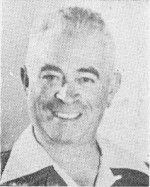
by Kopel Schwarz
Translated by Moshe Kutten
I attended Asher Barash's 60th anniversary celebration, where I heard a dozen or maybe even 15 speeches. These speeches were exceptional, vivid, and delightful. I waited with eager anticipation, almost impatience, for someone to mention that this remarkable figure had his origins in Galicia. I hoped they would connect his work to Galicia even a little, discussing its character, influence, and impact on Barash's work and on others. Unfortunately, I waited in vain, as only one speaker mentioned Galicia; none of the others did. Feeling the need to address this oversight, I decided to ask for the opportunity to speak. However, my request was not granted, perhaps justifiably, as I would have been the 16th speaker at one o'clock, past midnight. Therefore, with the esteemed editor's permission, I will conclude here with what I would have said in the quiet of that night.
Here, I am not speaking as an author or as the son of an author, but rather as someone from Galicia who witnessed the early stages of Asher Barash's literary career, when he was grappling with uncertainties and hesitations as a newcomer.
First and foremost, as a man from Galicia, I felt greatly uplifted here. Galicia is usually viewed as an insult, a notion of suffering and poverty, of trash and the dregs of society. It was said that whoever God wanted to punish was destined to be born in Galicia. Great minds and people of integrity were thought to have emerged in Russia, Germany, France, or Holland! Yet, when I find myself at a gathering where someone from Galicia is being celebrated, even if that fact is downplayed, blurred, or ignored, and even though many, in the secrecy of their hearts, might daily recite the blessing: “Blessed are You, Lord our God, King of the Universe, who did not make me a Galicianer!”–my heart rejoices.
I said I witnessed Barash during the first stages of his career. That was 37-38 years ago.[a] At that time, I was also a young student, almost the same age as Barash. I was then a cultural activist and the editor of a Polish-language monthly Zionist journal for the academic Jewish intelligentsia called “Moriah.” I translated and published Barash's first articles about new Hebrew literature and lyricism in that journal. This young man also gave me
[Page 303]
his first stories and poems to read. Although I did not keep the material and can't recall much about it, the image of Barash remains vivid in my heart.
Today, Barash is rounded and broad-shouldered, but back then, he was a thin, gaunt and delicate youth. Yet, he had eyes full of richness–eyes that captured the heart, piercing and overflowing with intelligence and thought. They conveyed the message that this young man would bring something new into our world, that he would contribute something meaningful and productive – that he was a youth with wings, possessing an extra measure of soul.
Barash came to us in Lvov from a tiny town – “a pitsinkeleh shteteleh” – called Lopatyn. As an activist in those days, I visited most of the cities and towns in Galicia, but never went to Lopatyn, for the place was so small. However, I believe that it is precisely the smallness of the place that left its mark on his work, that determined Barash's uniqueness and his virtues.
The characters in his stories are living, natural figures. We observe them in their ways and manners, with no detail missing, not a single mark or line overlooked. We know what is in their hearts and what is in their minds, witnessing every movement and every tremor. We see them in their Sabbath attire and weekday clothes. We see their relationships to other people and to place. The psychological analysis and the well-formed brush come together and blend seamlessly, creating a realistic story, a photograph of life as it truly is.
What Barash owes to his little town is significant because small towns often lack distractions. There are a few matters to keep oneself busy, no diverse landscapes to catch the eye, no great dramas or tragedies to divert the spirit, and no disturbances of thought. This lack of distractions leaves little choice for those who possess talent and a sensibility of mind, whether a painter or a writer, other than to focus on what is present: the people of the town. You must observe, depict, and describe them as they truly are, delving into their details, reflections, thoughts, habits, and traits. The alternative is to portray a hen scratching in the garbage heap, capturing her clucking, strategies, aspirations, and goals.
In the big city, with its chaos, wealth, and diversity, the inner world of a writer is more vibrant, filled with richer experiences and complications. The range and scope of his experiences are broader, and his thoughts are more scattered and fragmented, capturing everything around him and being eager to grasp more, expand further, utilize, and process. In the big city, a person is only one element in a grand creation, one tree in the vast forest, one picture in a large gallery. There is a whole panorama of sights to focus on, or one can allow the eyes to wander and thoughts to disperse, enabling the spirit to engage with a multitude of influences rather than only one person or only the hen, as is inevitable in a small town like Lopatyn. For this reason, Barash's characters – even those who saw the light of the world in other regions – are so well formed, so complete, and sophisticated, competing with the vitality of creations from the divine, blessed be He.
Original footnote:
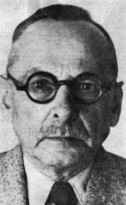
by Mordechai Yalon
Translated by Moshe Kutten
Edited by Barbara Beaton
As a native of Asher Barash's hometown, his image is vividly etched in my memory from the twilight of my childhood. The “cheder” where I studied was located near his parents' apartment, which was connected to my uncle's apartment (who was a ritual slaughterer and inspector). Both apartments shared the same roof, and only a long, narrow corridor separated them. I often visited my uncle and often observed Barash's actions and conduct. Frequently, I saw him sitting in his small study, reading books and writing extensively in his notebooks. I would stand nearby and glance furtively at those notebooks, feeling envious of his beautiful handwriting – those tiny and round letters, like precious pearls, were written meticulously in straight lines!
Barash drew us together with great affection and shared fascinating stories with me (where did he get them from? They were perhaps the fruits of his imagination). He devoted many hours in the evenings to teaching me lessons in Hebrew. Having graduated from the town's state high school a short time earlier, he had mastered Hebrew, Polish, German, and Ruthenian. In our town, he was known as a consummate intellectual and often referred to as the man “who peered and fell victim to his curiosity.” In Lopatyn, there was already a small group of educated youths, the eldest of whom was my brother and teacher, the linguist Hanoch Yalon, who had been living in Jerusalem since 5,681 [1921]. They were the first enlightened individuals in our remote town, and they laid the foundation for the Zionist Movement and the Hebrew language in the region.
And here are a few sketches of Barash's portrait from that time: He was a slender, charming young man, and, despite his youth, he appeared mature and composed. A certain intelligent mischief always accompanied conversations and interactions with others. His features were delicate and smiling; he wore “Pince-nez” glasses in the fashion of the time, and through these lenses, his burning, penetrating eyes sparkled.
In the town there was much talk about him. They said that he wrote poems, stories and feuilletons in notebooks and even published some of them in various newspapers. His stories were about life in the city and the countryside, and his protagonists were the townspeople, Jews and gentiles alike. Since Barash was not careful about disguising the names of the characters in his stories, he was subjected to the wrath of the zealous Jews. He dedicated one of his first stories to my brother, Eliezer Dov Distenfeld, who was a distinguished scholar and one of the first educated individuals in our town.
[Page 305]
Like other young men, Barash left his parents' home at the young age of 16, and moved to Galicia's capital, Lvov [Lviv], to acquire a general education. He then wandered through many towns and made a living teaching. He also published many stories while in these towns.
A short time before the outbreak of World War I, we learned that Barash had made aliyah to Eretz Israel. This event left a significant impression on the town and quickly became a topic of conversation among the residents. Many supporters of Zionism were proud of their fellow townsman who moved to the Holy Land. However, many fierce opponents of the Zionist idea responded with hostility.
When I made aliyah in 5680 [1920/21], my first stop was to Asher Barash's home in Tel Aviv. Our meeting was very emotional. He asked me for details about his hometown, remembering every street and every alley and its residents. He recounted events and memories, and his words were filled with nostalgia for the “good old days.” When I told him that I intended to settle in the Galilee and work in agriculture, he responded with excitement and kindness, giving me books from his library to help me.
We met, [years later], during his visits to Jerusalem. He enjoyed the cool, fresh air and said to me, “I love Jerusalem, its mountainous atmosphere, and the calm and serenity. However, I also love my city, Tel Aviv, very much; after all, I stood beside her cradle.”
A while later, I met him again in Jerusalem, walking through the streets with slow, deliberate heel-to-toe steps, leaning on his sturdy stick, his faithful companion since his youth. He asked me to join him as he reminisced again about our hometown, bringing back memories of various strange and peculiar characters and life events. He had already immortalized nearly all of them in his beautiful stories. In our conversation, he recalled the notorious thief, Peshyemski, who had struck fear in everyone in town, and it was as though the thief were alive, standing before him. When I shared with Barash that this thief robbed our house one Shabbat eve, taking the challahs and the cholent, and on another occasion he stole my father's clothing from the bedroom, he burst into hearty laughter and added a few more “exploits” of that famous master thief.
I had another chance encounter with him on a side street in Jerusalem. His face looked different from how I remembered it. He had a faint veil of sadness in his eyes, as if old age had suddenly leapt upon him. He walked a few steps, stopped, and then continued again, repeating this over and over. It was clear that he was not in good health. “We are growing old,” he remarked as he went on his way. His words sounded uncharacteristically melancholy and contemplative. Suddenly, he recalled the town that had been destroyed and the Jews who had perished in the Holocaust. He seemed very pleased when I mentioned that many of our townspeople now lived in the country. “If only we could all get together,” he said wistfully.
He seemed to be pressed for time. He took a small notebook out of his pocket and wrote something down. “I must return to Tel Aviv,” he said before a very cordial departure.
A few months later, we received the heartbreaking news of his passing.
by Pinchas Lander Elad
Translated by Moshe Kutten
Edited by Barbara Beaton
The Man at Home
It was a two-story house, surrounded by a shaded garden, where tall trees grew, ornamental shrubs lent the garden an air of stability, and colorful flower beds delighted the passersby. The house was divided into several apartments, with Asher Barash's unit located on the lower floor at the western side of the building. The balcony, shielded by a covering that extended halfway down, was always in shade. From the writer's study, a door led to the balcony, where Asher often spent his leisure hours, gazing keenly at the garden that separated him from the street, taking pleasure in the well-tended greenery around him.
Very often, during the early morning or late afternoon on sunny days, Asher Barash could be seen standing in his garden. He was broad-shouldered with a round face framed by thick eyebrows and a heavy mustache, with eyes half-closed in a gaze of constant reflection. He stood slightly askew due to a defect in his leg, as water flowed in a soft hiss from the hose he held over the flowerbeds and shrubs. He enjoyed nodding his head to greet any acquaintance passing by, chatting easily about matters of the garden and the apartment market, the affairs of the day, the ordinary conversations of a citizen confident in his surroundings, the regime, and the value of good human neighborliness – always with a smile beneath his thick mustache. His hair, not yet touched by gray, appeared somewhat disheveled, while the pleasant, cool breeze coming from the sea played with it in the morning or evening air.
On the outside, Barash appeared to be like any other citizen in Tel Aviv, a city known for its idyllic side streets and its faded alleys. Having lived in Tel Aviv for 38 years, since making aliyah in 1914, he devotedly fulfilled his ordinary civil obligations as if they were a commandment. He considered these obligations as his contribution to the revival and establishment of the foundations of the Hebrew man's foothold in his land and city, putting an end to the wandering spirit and gypsy-like tendencies in his blood. It was no accident that Barash never left his home and his land for all those days. In one of his latest tales about Melchizedek Oigenfal[1] (which, to a large extent, includes autobiographical elements similar to those in his stories about Yaakov Rudorfer[2]), the author recounts a secret Melchizedek told his relative. It is a story of shyness and, at the same time, about feeling important.
[Page 307]
The secret that Melchizedek shared was that he vowed never to leave the land throughout his life and never to venture beyond its borders. Barash himself said little about his own life, but when it came to the topic of leaving the country, he openly shared his secret. Did he not criticize others who felt the urge to wander – “What?” he would ask with slight bewilderment and that characteristic smile of his – “Is he setting out again? What is he looking for there? Has he already discovered everything here?”
In His Work Studio
The study was always dimly lit. The walls were lined with bookshelves, filled with reference books, foundational works in literature and literary history, dictionaries, anthologies in Hebrew, German, English, and French, modern Hebrew literature, books on the Bible, and collections of world folk tales. A large, cumbersome writing desk occupied the space. On the wall hung a portrait of Asher Barash painted by a friend in Galicia during the wandering days of his youth. The name of the place where it was painted was stamped on it – Wieliczka, a salt-mining city located near Krakow. In the portrait, his youthful and handsome face radiated health; his clothing was elegant and well-tailored, and a pleasant light seemed to flow from his broad forehead.
Barash entertained guests with tact and awareness of their human importance. And if a child happened to be in his presence, his vitality seemed to increase, as if it had been waiting for just such an opportunity. He became a supporter and booster of hesitant youth, particularly in the realm of literature, and in this role, he was a natural mentor. And here he acquired a self-evident authority – not aggressive or domineering, but something natural and accepted without hesitation. Even the writers who were fiercely protective would easily reconcile when he, A. Barash, as an editor, prepared their writings for the platforms he edited: “Hedim” [“Echoes”], the fine, constructive literary journal of the 1920s, and, toward the end of his life, the youth journal “Atidot” [“Foretellings”]. Those who collaborated on these platforms left their mark on one another, each contributing depth and warmth to their peers' words.
He always wore a good-spirited expression, even on the most difficult days, and he had a keen vision, ready to assist any creative and constructive effort in literature and in life. It is no coincidence that he was actively involved in every practical undertaking of the Writers' Association of the “Vaad haLashon” [“Language Committee”], and any institution aimed at implementing tangible activities. Even in the last two or three years of his life, despite the difficulties of adjusting to conditions after the founding of the state, he did not refrain from taking actions that led to something tangible. Was he not the founder of “Gnazim,” [“Archives”], the bibliographic institute of Hebrew writers and literature, whose foundations he laid and upon which the entire house would be built? This “child of his old age” received immense dedication and continuous effort until it became a vibrant and thriving reality.
The Last Weeks
Asher Barash almost never got sick in his life; at least, nobody could recall him being ill for decades. Only during his last few weeks, did a subtle feeling of heaviness emerge,
[Page 308]
noticeable only to those who knew him closely, and only in small ways. It became known that Barash had fallen ill; his blood pressure was elevated, prompting doctors to order him to stay at home and rest. He was compelled to set aside the proofs of all his stories, which had already been prepared for print and were soon to be published in two large volumes. He also had to stop working at gathering his essays and notes, which were to be collected in the third volume of his complete works.
However, he could not resist the call of civic duty. The casket containing the remains of Peretz Smolenskin was brought to Eretz Israel and was placed in the square of Tel Aviv's city hall on its final journey to the “Har haMenuchut” cemetery in Jerusalem, where speeches of commemoration were scheduled to take place. Among the relatively small crowd that came to honor this occasion was Asher Barash. Leaning on the railing, he stood among the crowd, his face extremely pale, his eyes sunken and darkened, and one could sense how much effort he was exerting merely by standing there. Yet he did not ask to sit down or to retire until the entire ceremony concluded.
The next day, a brutal heatwave descended upon the land. For two days, the scorching heat reached an intensity we had not experienced in many years. This likely had a negative impact on Barash's health, though he showed no external signs. The night before he died, he struggled to fall asleep. Early the next morning, Wednesday, at half past five, when it was still twilight outside, he got out of his bed and went into a side room where he had set up his library. He took a book and sifted through the page proofs. After some time, when he did not respond to his wife's calls, she entered the room and found him lying on the floor, lifeless.
In many of Barash's stories, death unexpectedly strikes his protagonists, always shrouded in mystery. The realistic descriptions in his writings seem completely at odds with the surprising endings. Asher Barash himself experienced a similarly startling conclusion to his life. While the end of the story of his life appeared outwardly uneventful, it nonetheless served as a profound reflection on the events and human experiences amid a world filled with turmoil.
The Funeral
If one were to say that the news of Asher Barash's death came like thunder on a clear day, it would not have been an exaggeration in the least. He was a well-known figure in Tel Aviv, the city where he truly came of age (he was only 25 when he arrived there from Galicia). In Tel Aviv, he gained great literary and public recognition. He taught thousands of students in Tel Aviv, first at the Geulah Gymnasium. Many of his students now hold important positions in various civilian and military professions. He nurtured and advanced more than a few aspiring writers and journalists. At first, no one could believe the report. “What? Barash is dead? Impossible.” Such was the reaction.
A look of disbelief was etched on the faces of the hundreds who walked behind the deceased's bier. After the purification, the bier was placed in the living room of the departed. Two large candlesticks with lighted candles burned by his head. The body of the deceased was covered in black,
[Page 309]
and above it lay a tallit, as was the Jewish custom in the Holy Land. All who were good and cultured in Tel Aviv passed before the coffin – writers, artists, men of the Torah, and the deceased's students. Before notices had been posted on the city's billboards, word of his passing had already spread. Even from the Writers' Association retreat in Zichron Ya'akov, a delegation of writers, who happened to be staying there at the time, arrived. Others also came from Jerusalem and Haifa. That they managed to do so under the difficult transportation conditions that prevailed then can be attributed only to their strong will.
The time for removing the bier was set for four in the afternoon. Long before that hour, crowds began streaming into Mendele Street and into the open area near the house. Members of the deceased's generation arrived, those even older than he, such as G. Shofman, Jacob Fichman, Y.D. Berkowitz, D. Shimoni, Benzion Katz, Yaakov Cahan, and others. Writers whose works were first published in “Hedim”, and who are now themselves editors and shapers of literary paths, also came. From the group of writers who call themselves the “Progressive Culture” writers, not a single person came. But this, again, was not surprising.
The bier was carried through the streets of Ben Yehuda, Allenby and Bialik on the shoulders of authors and admirers of the sages and Hebrew literature. Traffic was halted at several spots, but not completely cut off. Tel Aviv Municipality could have done more to demonstrate its appreciation and recognition of the master of modern Hebrew literature, and the source of pride and the glory of its residents, but it did not act accordingly. The bier was placed on the ground next to Bialik's House, where the author Yehuda Burla delivered a eulogy as a colleague, a friend, and a fellow writer who had begun his literary journey around the same period as the deceased. Following him, a teacher representative of the “Geulah” School, where the deceased had taught for many years, offered a farewell as a fellow educator. Lastly, Mr. Yosef Heftman, the chairman of the Journalists' Association, came to deliver a eulogy on behalf of the organization. Asher Barash made significant contributions to Hebrew journalistic language by serving on the committee that determined journalistic terminology, a committee that had been active for several years.
At the open grave, in the old Tel Aviv cemetery, when the bier was lowered into the grave, the poet, David Shimoni, a companion of many years, rose and mourned him.
“I never imagined, Asher Barash,” David Shimoni began his elegy, speaking directly to his friend who had passed from this world, “that I would have to speak over your grave. It never occurred to me that you, so full of vigor, confidence, energy, and tremendous working strength, would leave us suddenly, without anyone being prepared for it.
“And you, so deeply rooted, strong, never lacking in hope, faith, and composure, acted in such uncharacteristic haste, not quite fitting your nature, leaving us to sigh in your absence.
“Throughout the many years of our acquaintance, I never heard you claim any credit for yourself for any
[Page 310]
deed you had accomplished, even if it were a great one. But there was one deed you did boast about: from the day you arrived in this land, you never left. You never stepped beyond the borders of this country.
And I understood why you took pleasure in that – because you had planted deep roots in the land. You were a man of roots, a strong tree in the garden of our literature. A mighty tree with many branches, under whose shade many found shelter and peace.” And in this spirit and language, he continued to weep for him.
The grave was dug between the graves of the authors Fishel Lachover and Yitzchak-Zalman Anochi. That row of authors' graves, which eventually filled completely, contains the graves of the greats of Hebrew literature – the pillars of the revival period.
In the yellowish sand mound, a wooden stick was planted, bearing a small tin sign. On the sign, in block letters, was the first name “Asher,” and in handwritten letters, the surname “Barash.” The setting sun illuminated the sign, causing the letters to glow, guiding the path of those leaving the cemetery.
Translator's footnotes:
by Mordecai Yalon
Translated by Ariel Distenfeld z”l
|
My brother, Eliezer Dov, who was called Berish at home did not “sit” at the court of the Belz Rabbi like his older brother Mendel Leib, but rather “sat” at home and studied Torah night and day. At the age of two Father brought him to the house of grandfather Joseph Wilder (Joseph the ritual slaughterer), a Husiatyn Chassid and a great scholar, a modest and personable man. The latter brought him to an elementary tutor. At age five he learned Bible and Rashi from Reb Hershel Podkamner and was among the best pupils. At age eight, grandpa Yosel took him and taught him Talmud and Tosefta. At age nine he began to study Yorah Deah, and by his own testimony, by the end of one month he already knew the first portion of Yorah Deah by heart. It is interesting to note that at age 10 he knew how to prepare for Father the conclusion as “first born” on the eve of Passover, as Father was always occupied in the hemp fields and other farming business
Eliezer Dov always wanted to see the Belz Rabbi face to face. Father who used to travel to the Belz Rabbi from time to time agreed and took him along to a relative's wedding in the shtetl of Sokal, where the rabbi was also going to participate. Father gave the rabbi a “note” asking
[Page 312]
to show him his little son. When the rabbi saw him he said to Father: “Yes, yes, I've already heard about your “prodigy” from Rabbi Chayim Leibish Hamerling.
Our grandfather Reb Joseph Wilder was frail and weak of body. However in spite of his weakness he used to immerse himself in a mikva every morning, in summer and in winter and accustomed Eliezer Dov to do the same, since he took him along, sometimes against his will. He was 14 years old when Rabbi Chayim Leibish said about him that in spite of his young age he would not hesitate to ordain him as a rabbi. When he was 15 he began to surreptitiously peek at secular books. However, Torah study did not cease. At that time Eliezer Dov would sleep at the study house rather than at home. There he immersed himself in Talmud, and Yorah Deah with “Pri Meggadim” (“Sweet Fruit”). There he taught himself the Latin alphabet to the point of proficiency in reading and writing and secretly looked at secular books. Later on he would study at home or mostly in the field or the nearby forest, so that he wouldn't be disturbed by surrounding noise. During the night when members of the household were asleep, he would sit and study until the small hours of the night by the light of an oil lamp. He was asked if he ever fell asleep while learning and he answered: “I will grow a braid and nail it to the wall and if I should fall asleep the braid will pull me and I will awaken.”
At that time he wrote an exegesis on the Mesora. He left the manuscript with the rabbi for review. The rabbi did not return it and it is not known what was its ultimate fate. During the burning of leaven, he asked Father to burn another book that he wrote; a third book he buried with his own hands behind one of the farm buildings.
When he was 17-18 there was an obvious change in his life. He started looking openly at Haskala books while continuing to read religious ones. At that time he taught Hanoch Talmud and himself learned accounting in German. At age 18, he left Lopatyn (Tritki) and moved to Lwow. There he studied by himself and with private tutors. He studied languages and later he worked as a clerk in a paper goods store. He took a wife and with his brother-in-law began to deal in the fur trade and was active in a Zionist youth organization named “Tikvat Zion”
In 1916, after Lwow was liberated from the Russian occupation he moved with his family to Vienna. There he continued with his brother-in-law in the fur trade and he had branches in Austria and abroad. In 1919 when I visited his home in Vienna on the eve of my aliya, I found an extensive and varied library, dictionaries in several languages, classic German literature and also many Hebrew religious books. His wife Ida was a great help in his commercial endeavors as she had a great business sense. His only daughter, Fela studied at the university and just before she made aliyah in 1936 received the degree of Doctor of Philosophy. When she arrived in Israel she already had a good command of Hebrew and became a teacher.
The rise of Hitler to power in Germany in 1933 was reflected in Austria too and the Austrian Nazis began to annoy the Jews, boycotting and confiscating their businesses.
[Page 313]
The Nazis confiscated his store and the branches and installed commissars to run the business. They forced Eliezer Dov and his wife to work for them for a pittance. At the end they had to leave Vienna penniless and receive the travel costs from the Vienna Jewish community. In 1939 they arrived in Israel with a few personal belongings that they were permitted to take with them. Here in Israel he acquired a circle of acquaintances most of whom were learned and well-read. His treasury of memories and knowledge was revived. He acquired many books, religious and secular. He read and was known amongst his acquaintances as a “living encyclopedia”, especially in the area of religious literature. His mind was amazingly clear in spite of his advanced age, and he remembered personal dates of famous and renowned people, and authors of Responsa in previous centuries. He would write comments, corrections and references in the margins of the books he read. All of these could provide material for a whole book in print.
In 5727(1966), at age 85, he came down with a serious illness and was transferred to a hospital. Even in the hospital, until his last days he perused books and he told his friends who came to visit him that he had a list of 30-40 books that he wished to read but did not get to.
On the first day of Cheshvan 5727 (1966) he passed away while on the window sill next to his bed was a book that he did not finish reading, with his eyeglasses on it.
His extensive library was bequethed by his daughter Fela to the village of Beit Yehoshua, near Netanya. His wife Ida died on the 1st of Adar II, 5716 (1954) and his daughter Fela did not enjoy a long life and died after a serious illness, on the 24th of Adar II 5734 (1973).
|
|
by Mordechai Yalon
Translated by Ariel Distenfeld z”l
I do not know my brother Mendel-Leib's birthday. I only know that he left Lopatyn before I was born, and all that I know about him is what I've heard from my brothers Dov and Hanoch and from my parents.
As was the way with all the children in the shtetls in those days, Mendel-Leib studied at a very young age with tutors and excelled in his studies. One day, after he had progressed in his studies, he “ran away” with a classmate to Belz, where he resided at the rabbi's court and focused on his studies. For two to three days there was great fear and concern in the house. My parents relaxed only after receiving a letter from the rabbi's court that their son was alive and well, and that he was concentrating on Torah study with good company in the rabbi's court. After some time, he returned home for the holidays. He became a real young gentleman, wore a long kapota (coat) and grew a small beard and side curls, befitting one who dwells in the rabbi's court.
For three years he persisted in his studies at the rabbi's court, and Father was very proud of this son and hoped that he most certainly would become a rabbi. Three years later when he returned home, he surprised his parents in his “strange” attire: his short clothing, his shaven beard and no remnant to his side curls, and his hair in a pompadour “German” style. This was a great disappointment for Father, who identified slightly with radical orthodoxy, and gave him heartache. On the other hand, Mother who was somewhat more progressive in her ideas and more tolerant, saw the change that occurred in her son in a positive light. Apparently there was a sharp family argument on the subject and Father poured his bitter heart out to the local rabbi, Reb Chayim Leibish Hamerling, who was also a Belz Chassid, a great Torah scholar and wise student. This rabbi, who befriended Mendel-Leib before his “running away” to Belz because of his bright intellect and his steady devotion to study, tried to chastise him for his actions. But after he tested him in Mishna and later interpreters he was satisfied that the fellow was a great Talmudist and apparently after that conversation, the rabbi convinced my father. If the rabbi, Reb Chayim Leibish Hamerling – said he – is satisfied with my son, how could I not be? He continued for some time to live in the shtetl but when he saw that there was no future in it he moved to Lemberg. From my brother Hanoch I heard that Mendel-Leib was about 18 years old when he learned the Latin alphabet for the first time, and he continued with general studies
[Page 315]
from private tutors. His brilliant mind served him well in these studies as well. He learned German, Polish and French and supported himself in Lemberg by giving Hebrew lessons. He became a member of a Zionist group “Tikvat Zion” (“Zion's Hope”). Because he had a pleasant voice, he used to be the cantor on Friday nights at the group club, and many would come to hear him sing.
In due course he married and opened an office for commercial information called “Harness” which in time became renowned throughout Galicia and beyond. Until his marriage Mendel-Leib used to return to Tritki to visit dressed in top hat and tails. It was the first formal attire seen in Lopatyn. During the intervening days of the Holy Days, it was the custom of the rabbi, Reb Chayim Leibish Hamerling to invite him to his house and discuss Torah issues. The rabbi had much pleasure seeing Mendel-Leib exuding Torah even while dressed so “strangely” and he used to compliment him. The accolades reached Father's ears and Father was very glad. “Do not worry Reb Avraham” said the rabbi.” Don't look at the vessel but at its content”. Later on, the brothers Dov and Mendel-Leib donated an ark cover to the synagogue in Lopatyn, which became the talk of the town. At the beginning of the First World War Mendel-Leib was drafted into the army. One winter night while on guard duty he was chilled and developed pneumonia from which he did not recover.
|
|
|||
[editor's note: the date seems incorrect.] |
[Page 316]
by Mordechai Yalon
Translated by Ariel Distenfeld z”l
Akiva grew up in an observant home. His mother, Chava-Rivka (a”h), the eldest of my sisters and brothers, was a woman of valor, good hearted, doer of good deeds and hospitable. His father, Pinchas (a”h) was a learned, God-fearing Jew who followed scrupulously all the commandments, great and small. He was smart, with a sharp mind and was blessed with an ability to understand and analyze problems. He especially excelled in solving complicated mathematical problems without employing scientific formulas – which he never learned. In spite of being God-fearing with all his heart, he was very tolerant of Haskala (secular enlightenment). It was brave of him to be “exceptional” in his view of Haskala and of Zionism in the shtetl, where most of the Jewish residents were fanatically opposed to both. Reb Pinchas saw the grinding poverty of the people of the town and tried to avoid a similar fate for his children. He decided to give them a high school education and to ensure a good future in their lives with a solid social standing. This “terrible” act brought upon him the anger of the town's religious zealots and the officers of the synagogue where he worshipped, and they cursed him and persecuted him until he was compelled to leave this synagogue for another. As a result of the atmosphere that prevailed in Lopatyn, as a result of this “shameful” event, Akiva's parents decided to leave the town where they had lived for many years and to move to the nearby city of Brody, a city of general learning since the nineteenth century, where the Jews constituted the majority of the population. Here Akiva's parents found respite from their persecutors and even though it was hard to make a living, they did everything to promote the education of their children. Here, Akiva found Jewish friends in the schools and the company of Jewish youth.
In the First World War, Brody, which was close to the Russian border, was occupied by the Russians. When Brody was liberated by the Austrian armies, Akiva's parents moved to Lwow, the capital of Galicia in those days. It was a city full of Jewish life. In this city flourished Zionism and Haskala, and any youngster desiring knowledge could easily fulfill it in Lwow. There was also a Jewish gymnasium (high school), where Hebrew was taught and a Zionist atmosphere prevailed. Akiva, who attended the gynasium, learned perfect Hebrew there.
When the fighting approached Lwow again and a threat of occupation returned,
[Page 317]
many of the Jewish residents escaped to Czechoslovakia and Austria. Amongst them were also Akiva's parents. They settled in a small Czech town near the Austrian border. From there, Akiva moved to Vienna where he completed his high school education. After the war ended, Akiva returned with his family to Lwow, now in independent Poland, and continued to study and be involved with the Jewish youth. In those days, in Galicia as in other east European countries Jewish youth movements were founded (“HeChalutz”, “ Hashomer Hatzair”, etc.) which spread quickly to the towns and cities, even the smallest and most remote. These movements brought the tidings of the return to Zion and the youth awakened toward implementing aliyah in different ways. Centers were founded for agricultural training, Hebrew classes, geography, sport organizations, etc., all with a single purpose: the land of Israel. Akiva joined Hashomer Hatzair, worked a while in the “Land of Israel Office” and, in the summer of 5680 (1920), moved with members of his movement to Israel. Here he worked in camps mining rocks in quarries in the mountains and in building roads. He was among the first settlers of Hashomer Hatzair, in the month of Cheshvan 5683 (1922), to settle in Bet Alpha, where he was active in public affairs. The habit of hospitality which was present in his parents' house found its full expression here in his public involvement. Friends who knew him in those days tell of his special quality to look after travelers who, in the course of their journey, came to his kibbutz, to feed them and provide them with a place to sleep. Akiva himself told me a large group of travelers arrived at dark after visiting the valley of Jesrael, and he managed to find them all a place to sleep. All the tents were full of guests, he said, and the kibbutz members were crowded in their beds for a few hours since at dawn they had to go to work. This fine quality of hospitality stayed with him till the end of his days.
Unfortunately his health suffered and he weakened to the point where he required treatment abroad. When he returned to Israel he had to consider giving up physical labor. As luck would have it, just then, the head of the National Library in Jerusalem, Professor Sh.H. Bergman, asked the group in Bet Alpha for workers who were unfit for hard physical labor to come and work as apprentice librarians. Akiva was sent to the library in 5686 (1925) and quickly succeeded in acclimating himself to the new profession and to the Jerusalem landscape.
His separation from his kibbutz in the valley came as a result of his illness and the doctors' prohibition of physical labor. However, he desired to live in a commune. When he arrived in Jerusalem he conceived the idea of forming a group that would lead a communal life in the city. When he found others who supported the idea (among them the writer Yehuda Yaari, the attorney Chaim Krongold and his wife Shoshana and others), the group rented a large apartment with a common kitchen and the house became a sort of city kibbutz (the writer of these lines also joined the group). The home was always full of guests from the city
[Page 318]
who would partake in the song and dance. We named the group “Batlania” (Hebrew for Idlers' Place) because of the forced unemployment experienced by many of the members. Akiva was the leading spirit in the group. Even after he came back from studies abroad he returned to the “Batlania” with his young bride. They left only after some time when they moved into their new home. This spirited group lasted nearly two years, and came apart during the “Troubles” of 5689 (1929).
In 5687 (1927) Akiva was sent by the library administration to study in a graduate library school in Berlin. There he married his sweetheart Jenia, who also was one of the early pioneers. They returned in 5689 (1929). From that time on, Akiva rose rapidly in his profession to become the head of the circulation department. In connection with his work he developed friendships with a large group of readers throughout the country. His kindness and friendly help became known far and wide.
During the thirties, when the “small” library moved from its location in the Ethiopian alley to its new home on Mount Scopus, it grew several fold, and with it the number of workers. The circulation department and related divisions absorbed additional workers and Akiva acted as their mentor during the period of absorption. Akiva's approach to the workers under him was expressed in three ways: attention and demand for accountability, a fatherly and educational attitude, and folksy friendship. In spite of his position as the director he was like one of them and often joined them in doing the simplest tasks. In this spirit, with patience and love of the work, throughout his years in the library he taught a large group of young workers who continue to carry out their duties happily and with discipline till this very day. With the same energy, perseverance and devotion – in spite of heart pain – he undertook the move of the library from the Terra Sancta building to its new home in the Givat Ram campus, together with a devoted and loyal group of workers, who adored him. Akiva had the rare gift of combining the boss and the worker in one. His success in planning and moving the books in a timely fashion reverberated in the university community and elsewhere, and was even noted in the newspapers.
His work at the university was not the only undertaking of his life. He was involved in many public affairs without carrying an official public title. He did not make speeches from stages, but as a loyal member of the labor movement and the Mapa”i (labor party) he carried out his duties quietly and for its own sake, and he was ready to undertake any mission for the organizations. He was clear thinking and quick to counsel, and his wise advice was often the subject of discussion in committee meetings without it being known who the source of the advice was. Akiva was a member of various committees of the Histadrut (Israel labor federation) and the Mapa”i. During all his years at the university he was the unofficial representative of the Mapa”i there. For some period he was a member of the workers council. For many years he was a member of the labor exchange and its priorities subcommittee. He analyzed problems with great wisdom and was not afraid to express publicly his opposition to accepted norms even if his was a lone opinion.
[Page 319]
He was amongst the initiators, planners and founders of the workers library of the Jerusalem labor council. During the War of Independence he organized mobile libraries to bring books to outposts and military bases .He was consulted often about opening libraries in various settlements in the country. In the time of the War of Independence he was entrusted to manage the branch office of the Mapa”i paper “Hador”, which he carried out with great success throughout the lifetime of the newspaper.
Akiva's devotion to his family was boundless. He invested all his strength and energy to give his children a broad education. Indeed, he was fortunate to derive pleasure from them. His son Ariel is a physician and his daughter a graduate of the university. He was about to retire from his labors after 40 years of fruitful work, in his quiet and beautiful home together with his spouse when his life ebbed on the threshold of implementing a new life style. The heart could not contain all the good deeds within and stopped prematurely.
|
|
by Prof. Shmuel Hugo Bergman
Translated by Ariel Distenfeld z”l
|
Akiva came to the National Library in 5685 (1925). At that time the library was in its first home in Zichron Moshe, and as a result of its growth we had to rent several buildings near the center in Abyssinian Street in order to house the books. Storing the books, arranging them in their proper place and getting the requested books to the reading room in the central building were, because of this extensive distribution, a complicated and difficult matter which required quick action and responsibility. The workers in the library who worked in the stacks had to transfer the books in the rain, during cold spells and in the burning heat from one street to another. Akiva was engaged in this work at the beginning of his career in the library.
In the summer of 5689 (1929) we transferred the books from these buildings in the central city to Mount Scopus, where Wolfson House was built, destined to become the home of the library. Akiva's job was to supervise the transfer. In the middle of the move, violence broke out in Jerusalem. On that Friday as the Arabs left the prayers at the Dome of the Rock mosque and started the violence and disturbance, Akiva was busy with a group of colleagues in arranging the books in their new place on Mount Scopus. Akiva and this group of workers were separated from the city for many hours, until British policemen arrived and succeeded in saving them from danger and bringing them down to the city.
When the violence was over and the transfer of the library was complete, normal university life began. A new field of work opened up for Akiva. He became the head of the circulation department in the Wolfson building. He was best suited for this duty, since he loved the work and developed personal relationships with the students. From that time until the end of his days Akiva was the head of the circulation department. He established, together with his colleagues, the tradition of good and dedicated service to the readers, which prevails to this day and makes us proud.
In this spirit of giving service to the reader in its highest form, his memory will be blessed among us.
[Page 321]
by Prof. Dov Sadan
Translated by Ariel Distenfeld z”l
A.
The memory and name of Akiva Distenfeld bring to mind spontaneously the net of our meetings that stretched over two generations. The early links of that chain were forged there, in Brody, our childhood town, either as babes in preschool, or as pupils in classes for children big or little. The monitor who picked us up from our homes when we were babes used to cover a circle on his way. He began at the edge of town, near the palace of the Potozkys, where he gathered half a minyan, and ended in the middle of the town, the market square, where another half a minyan was added, and so we came to the cheder of Rabbi Elia Hoydak. Since the monitor picked me up first, he bemoaned sadly and said: “Nu, it begins already,” and as our friend Akiva was picked up last, he would grouse in relief and say “Nu, it ends.” We dubbed him “the beginning and the end.” Eventually, we parted ways, as he went to one cheder and I to another. However, even during those days long ago, his jaw that appeared to grin, and his smiling eyes were impressed on my heart. We were students – in the beginning in classes for little ones in the community school on Mochishe Street, so called from the word “rood” for to annihilate (in Hebrew). Previously it was populated with Armenians who, because of the extent of their competition in commerce and other good things, were called Amalekites. Truly, here we were separated in the class ranking order, as he was ahead of me by one grade. Usually this is a great barrier, as a second grader does not hang out with a student in the first grade. This first grade was called Shtuba (and whoever remained in it or was left over from another class was called Shtubak) . These two grades were close, with a feeling approaching friendship. In charge of the first grade was Miss Mond (whose brother became famous later as a general in the Polish army). Mr. Moshzisker was in charge of the second grade. Those two were in love and eventually married each other. And like the love between the teachers, the pupils also loved one another. Truly we argued whether Miss Mond was right by not giving her heart to the pleasant Mr. Feld, but instead to the angry teacher Mr. Moshzisker.
[Page 322]
This argument and disagreement deepened after Mr. Feld tried to take his own life. However, the factions split between the two grades. And so Akiva and I rooted for Mr. Feld. Years later, when we remembered this episode but had forgotten the reason for our choice, we imagined it was because this teacher hailed from a small shtetl. The barrier of different grades persisted even when we were students in a class for older children in a gymnasium (high school) named after the crown prince, Archduke Rudolf, who met his end by murder or suicide. The school was a large building near the large batteries, the former fortifications of the city that became a lovers' lane. Our closeness remained and flourished from our belonging to the secret organization “Pirchai Zion” (“Flowers of Zion”). The last links in the net were completed here, in our domicile, Jerusalem – as neighbors in the Abyssinian Street alley, (and he was the leader of the commune which was called the “Batlania”, which also included among its members Menashe Unger), as neighbors, houses across from each other in the quarter of Geula, and especially being in the same work space, in the university, first at Terra Sancta and later in Givat Ram.
There were two separations between the first and last link. The first separation occurred during the First World War, when the refugee wave carried us to safe havens. Akiva went to a far away city in Czechoslovakia, and I to nearby Lwow. Eventually he arrived there as well. We met here as members of one movement, in the beginning Hashomer and subsequently (after its union with Zeirei Zion), Hashomer Hatzair . There was another four-year separation when the wave of immigrants, commencing and continuing the Third Aliya, carried him to our land where he was one of the road builders and founders of Bet Alpha. He returned to Lwow for a brief time because of his illness, and there we met in our work. He worked in the Land of Israel office, as assistant to its director, Hillel Shpindler, and I served as the head of HeChalutz center.
And I did not comment on all of this but to stress that after (and perhaps because) of each parting, our network of contacts tightened up, and the early and late links joined together, with the wheel of memory turning on and on.
[Page 323]
I remember him thus, radiant in the small and narrow playground of the cheder, where we played practical jokes on the righteous rebbetzin, the wife of Rabbi Eli Hoydak, when we poured the rose water into the Sabbath hot plate among other pranks, or in the large playground of the school, where we used to annoy the principal, Mr. Philip Ashkenazi, one of the leading assimilationists in town even though he was a gifted speaker of the Yiddish language (as was his predecessor Hirsch Reitman, the author of the “Kittel,” constructed like Schiller's “The Bell”). At times, while visiting a class, he would surprise the students with a lively story whose subject was a quarrel between two porters, with their rich and lively language. Yet his ears burned when he heard the Jewish tongue coming forth from our mouths, as it did during the noisy intermissions, and he forbade it. Anyone caught transgressing the ban was the recipient of his heavy hand which was assisted by a long ruler, that left an impression. We contrived to make our speech in a mock German tongue, and we sang loudly the verses of the town fool, Mr. Jonas Beri, who wrote them for his beloved, the empress Elisabeth, wife of Franz-Josef .He did not stop romancing her even after she was murdered by Lochini. And this is how the rhyme went: “Roses, carnations, and heather, my shoes are made of leather” and especially, “We and I are a prince, to whom belongs a princess.” When that educator became angry at us and yelled at us for trying to make fun of him by kidding around, we responded with stubborn innocence that we were speaking German, and we did not know that German, spoken by the Kaiser, and like him, our teachers who were teaching it, Mr. Fogel who was easy to anger and the kindly Mr. Wildholz, was not permitted to be spoken. His hard hand planning to land on our heads, the heads of the troublemakers, remained in midair, as if fulfilling the writing: “And his hand which he sent unto him dried up.” And so was the rule in the secondary school, especially during the meetings of the parallel classes, which were scattered among two far away buildings, which met in a large hall in the main building either for joint lessons of members of the three faiths or for art lessons directed by Mr. Ficur, whose size and visage are like his name, as he resembled a stork, or for lessons of the adherents to the religion of Moses only, to learn a few chapters of prayer and some chapters of Jewish history from our teacher Rabbi Dr. Joshua Ozer Prost. The early lessons were a cause for fighting over the drawing supplies as the Polish students who belonged openly to their organization, were dedicated to using pencils and work books marked “made in the land”. We, the Jewish students, especially those who belonged to the secret organization “Pirchai Zion” insisted on pencils marked with the Star of David which claimed such and such percent to the Jewish National Fund. As far as the work books, we found them disgusting since they were made of paper manufactured at the factory in Charlany belonging to Dr. Kulisher the leader of the assimilationists who weaseled himself with various tricks and lies as the parliamentary representative of our town. The late lessons were an excuse to annoy our religion teacher, a scholar who was a captive in a strange locale, since previously he was
[Page 324]
a learned rabbi in Andrychów, replacing Rabbi Jacob Joseph Kooback, the author of “Jeshurun”. He felt our open provocation about his being careless with the Polish tongue, which covertly was directed against the fact that unlike his colleague who also taught Jewish religion in our secondary school, Dr. Yitzhak Zoler (later he became the rabbi of Rome and in the end converted to Christianity), he did not join the Zionist movement which attracted the students, including his only son, David Zvi (who passed away several years ago in Haifa). He actually hindered us (and almost failed in the senior class our high school student Nathan Michael Gelber, the noted historian).
Whenever I remember those distant days, I visualize the faces of our friends, some gullible and some clever and scheming. But above all of them, I remember Akiva's shining smiling face as if triumphant with its distinctive signs, this light whose vitality was not diminished all his life.
[Page 325]
that they would repeat with a stammer. Possibly they were like a breakthrough lesson on their road to Zionism's awakening.
Zionism was not new to our town in those days. A few yards from the house of the usurer where Akiva's family dwelt, there was a large sign over a large store in square letters: Tartakover Brothers. The head of the firm, Nathan, and his brother Chaim were among the heads of the Zionists in town, and were the activists. A few years earlier we saw them active in the first truly democratic elections, when our town elected A. Shtand its representative to the parliament in Vienna, where he was the first Zionist, and our pride. If it were not for the tricks and fraud of the authorities he would not have been defeated the last time around. The mutual experience in both elections for us who were only children, was that we participated in the tumult, especially shouting derogatory cries against the Zionists' captain's competitor. We did not know why we called the assimilated industrialist “straw mattress.” He spread bribes right and left to buy the votes of constituents. The People's House, on Leszniow Street, was the property of Mr. Freedman who came from East Prussia, and when he married off his two twin daughters to two twins of the town's society, who were among the first chovevey Zion (lovers of Zion) there, he gave the building to the needs of the Zionists. It was a building alive with a multitude of groups and factions: here was the library, and here was “clear language”, and here the Jewish National Fund on whose behalf we labored collecting aluminum foil and corks, here was the sport group “Dror”, who outgrew the small yard and exercised in the grounds of the old army barracks. Here also Hebrew flourished. Many were attracted to this building and its atmosphere. Anyone with common sense could not help but notice the typological differences between the Zionists and the junior Zionists. There is no similarity between the city's natives and the two groups of newcomers – those immigrating from across the border and those coming from within it. To state the main difference, the natives, and especially those who descended from residents who dwelt there for generations, carried on mightily the old traditions. The outsiders, recently arrived new inhabitants, mostly those of the nearby shtetls, brought renewal, based on youth. They were the young bloods who shook the spirit of the town to rejuvenate and revitalize it.
And to the point, we find a fine example in the children of Lopatyn – the Distenfeld family, part of which settled in our town beginning with Reb Eichel and ending with Akiva's family. Reb Eichel was a typical maskil, (follower of Haskala) who used to walk with our teacher Reb Joshua Oscar and discuss with him in good days the days of “stars of Isaac” and days of “first fruits of the times”. (He was not the first maskil from Lopatyn in our town, since among the contributors to Hertz's “Mire Shafer” there was in our town a man named Moshe Lopatyner). Everyone respected that pair of friends, who strolled the city streets daily in a measured gait. But the young Zionists had
[Page 326]
some resentment in their hearts, not on account of their friendship but because they were in-laws – Reb Eichel's daughter, a pretty and educated Hebrew girl, had in her heart Joseph Aharonowitz, who in his heart was attracted to her. When he left our town where he was a teacher and a youth leader and went to the land of Israel, everyone assumed that she would follow him. But the friendship was strengthened in a knot of marriage – Reb Eichel's daughter went after the son of Joshua, who was the rabbi Dr. Shalom Oscar, formerly a rabbi in the Mohrin congregation and later a religion teacher in the secondary school in Stanislaw and Lwow and then a member of the editorial board of Eshkol. In regard to Akiva's family, according to the notorious Austrian custom, the children were not named after the father, Reb Pinchas Winkler, but after the mother, Mrs. Chava Rivka Distenfeld, the eldest sister of the scholars, Reb Dov Berish and Reb Henich, the greatest linguist of our tongue in our generation, Hanoch Yalon, and the youngest Mordechai whom we called the uncle. This was a family where the love of Torah and the love of Zion merged together. The same applied to the other Lopatyner family, the Barash family. The older brother came to live permanently in our town (and worked in the sawmill of Nahum Gelber, the father of the historian, among the community leaders of our town) and was among the best of the Hebrews, but still stuck at the edges of the Haskala; and the younger brother, the lively writer Asher Barash, was already completely involved in the realm of modernity, and came to dwell in our town on a temporary basis. He taught Hebrew, continuing in the tradition of the teachers who preceded him – Joseph Aharonowitz, who founded in our town the circle of “pioneers of Zion”, whose members followed him when he went to the land of Israel where he became one of the leaders of Hapoel Hatzair, Moshe Bluestein, who is the Dafna[1] famed for his children's poems, and Rafael Soferman, who like him, moved to the land of Israel early, in the days of the Second Aliyah.
These children of Lopatyn possessed a great vitality – the girls pretty and fetching (one of the family's daughters was a real heart breaker, and two of those smitten by her, one a Ukrainian officer and one our friend Hafner, committed suicide). The boys were healthy and lively, and they and those like them were renewing the lifeblood of the town, which was still excitable but also somewhat fatigued. What is a greater sign for a healthy circulation than ruddy cheeks and smiling eyes that were the constant companions of the illuminated smile, the smile of our friend Akiva, who was the youngest of the Lopatyn boys in our town.
And the light of his smile, a permanent light, was like an external marking of an internal quality – the beating of a loving heart of a good man doing good. If we may speak of changes that occurred in this eternal light, it is a change not of kind but of direction – during childhood it served the pure naughtiness which created mirth around it. During middle age it served the overflowing kindness which did good with its surroundings. Between his childhood and middle age his basic trait ripened – he was a man of kindness and helping hand. This quality made him a supporter of individuals and helper to many.
[Page 327]
Since most of his deeds were done covertly and quietly, even those close to him did not know the extent of his work. However, they knew that should they themselves be needy, or if a needy person came to them, a telephone call was all that was needed. Akiva heard such and such and immediately delivered a small act of salvation which ended as a great one.
And if I could count his helpful deeds, the few known to me and the many that I was not privy to, I would not be able to name enough, and I am referring to all the deeds of helping and defending people, among them famous personalities, who were being crushed by evil because of their innocence and credulity, and he was like a shutter before a catastrophe. I will hint at what appeared to be the source of his good deeds – the love of his beginnings, the home where he was raised, and a love that widened and enclosed circles upon circles as if to swallow and incorporate a whole world.
Translator's footnote:
|
JewishGen, Inc. makes no representations regarding the accuracy of
the translation. The reader may wish to refer to the original material
for verification.
JewishGen is not responsible for inaccuracies or omissions in the original work and cannot rewrite or edit the text to correct inaccuracies and/or omissions.
Our mission is to produce a translation of the original work and we cannot verify the accuracy of statements or alter facts cited.
 Radekhiv, Ukraine
 Yizkor Book Project
 JewishGen Home Page
Copyright © 1999-2026 by JewishGen, Inc.
Updated 1 Jul 2026 by LA