Table of Contents Next Page »

[Page 28]

Streets and their Inhabitants[a][1]

by Avraham Zunis

Translated by Theodore Steinberg

Lists and recollections from the shtetl of Ataki (Bessarabia) dedicated to the board of “Emigrants from Ataki and its Surroundings” by Avraham ben Shabtai Zanis, who was born in Ataki in 1884 and lived there until the Second World War in 1941.


List of Streets
  1. The Mountain
  2. The Old City
  3. The New City
  4. Shmule Street
  5. Kizhne Street
  6. Shul Street
  7. Gypsy Street
  8. Maidan Street
  9. Mahala Street
The Streets and their Inhabitants

The Mountain–The Mountain, the first street, mixed Jews and Gentiles, extended from the top of the hill to its base, where the old Jewish city began.

After 1920, Jews from the old city, grain merchants, rented Gentile buildings on the mountain in order to be near ti buy incoming grain that the Moldavians brought to Ataki.

  1. Eliezer Yudkis with his three sons, a daughter, and a son-in-law.
  2. Yisroel Myshe Naslavsky and his wife, 3 sons, and a daughter.
  3. Eliezer Gershman and his son Moyshe Duvid.
  4. Ephraim the penitent, his wife Batsheva, and four sons. Emigrated to Brazil with his
[Page 29]
    whole family in 1925.
  1. Chaim Naslavsky and his family, two sons and a daughter. His son Avraham emigrated before the Second World War.
  2. Nosan Yampolsky–a fisherman.
  3. Chaim Butshkisl–emigrated to Brazil in 1928.
  4. Eizik Kitavir.
  5. Eliezer Moyshe Yurkovitz.
  6. Duvid Khan–came from Mohilev in 1919, lived in Ataki until 1946, was a manufacturer.
  7. Hersh Dikler, his wife, son, and daughter.
  8. Yosef Dikler and his family (a son and daughter).
The Old City
  1. Avraham Pfautzky, his wife Tova and son Tula, a photographer, and son Eliezer and two daughters. It is appropriate to mention that at the time of the Romanian repression of the Jewish population, after the killing of General Furtsh-Stan, the people were hungry. Avraham Pfautzky bought flour with his own money and distributed it to the poor (may his memory be a blessing).
  2. Avraham Reyzin–arrived from America in 1920 with capital and opened a large grocery store with a supply of naphtha and benzene.
  3. Moyshe Lemel (Blunshteyn) emigrated before the First World War to America and after the war returned to Ataki with some capital. He was worth 2 million and married off his daughters, one in Ataki and the other in Sabko.
  4. Baruch Mekler and his wife. A daughter, Malkah, graduated from the gymnasium in Mohilev. Then she studied at the university in Kiev. A second daughter returned to Ataki from Kiev, married a student, and emigrated to North America. Now I read in the “Latest News” that Baruch Mekler's daughter is a great writer of poems in English.
  5. Gershom Mekler–dealt in iron. A wife, two daughters, and one son. The two daughters are in Eretz Yisroel.
  6. Avraham ben Yakov Sudker–an enthusiastic Zionist–a wife, five sons, and two daughters. One son, Shmuel, and his family perished in the Shoah. His wife Fridl and all the remaining children came to Israel at different times. Also the granddaughter Fira Sudker (Goredzky) and her family came to Israel. Avraham Sudker himself is buried in the Ataki cemetery. He died in 1935.
  7. Avraham Ber Yurkuvitz. A flour merchant with a wife and three children.
[Page 30]
  1. Naftali Yurkovitz and his wife, with four daughters (a Mekler).
  2. Yisroel Yurkovitzo–grain merchant.
  3. Syuma ben Naftali Yurkovitz–lives in Gavatayim.
  4. Yakov Yedisis and his family.
  5. Yisroel Yakov–had a hotel near Pfautzky.
  6. Avraham Yosef–a grocery across from Pfautzky.
  7. Tzvi Bikman and two daughters.
  8. Yudel Huzner–a barber.
  9. Chaim Fisher–former wagoneer.
  10. Zelig ben Berl–head of the wagoneers.
  11. Yosef Greenberg–from Kishinev.
  12. Eliezer Rochels (Gluzman)–oil factory.
  13. Velvel Galfrin–Gluzman's partner in the oil factory.
  14. Yitzchak Fudgayetz–grain merchant. His daughter Rokhl in Jerusalem.
  15. Melech Schneider, his wife Zipporah, his son and his wife, and his daughter Malkeh.
  16. Reuven Fudgavetz and his wife Luba Grubarg.
  17. Moyshe Becker (Britshansky). His daughters Zissl and Sheindl are in Israel in Even Yehuda.
  18. Zissa Roitman and his wife, a daughter and three sons.
  19. Avraham Roitman, his son Duvid Roitman, a horse merchant.
  20. Michael ben Yitzchak Broberman and his family (went to Israel).
  21. Avraham Becker–a baker with two children.
  22. Barleh Gershman and his wife. A son, Shloyme, and a daughter.
  23. Asher Melamed and his wife, with their son Avraham and his family. The whole Temelman family.
  24. Avraham Sofer and his family.
  25. Meir ben Avraham Sofer and his family.
  26. Duvid Tendler, his wife and family.
  27. Binyamin Bikman and his family.
  28. Chaim the shoemaker.
  29. Tanchum the shoemaker.
  30. Gedaliah Medved and his son Mendele and his wife.
  31. Moyshe-Mutl Zubkov, an egg merchant.
  32. Benny Elgort and his family.
[Page 31]
  1. Meir Mizrach the elder.
  2. Aharon Mizrach and his family.
  3. Leib Talisnik and his family (a Gemara teacher).
  4. Avraham Schnirman, his wife, his son Shmuel, and three other sons, and his daughter, the wife of Meir Roitman. They went to Israel in 1938.
  5. The carpenter Leib Avraham and his family, with his son and his wife.
  6. Duvid Zubkov and his wife, the daughter of Moyshe Mutl. Went to America in 1935.
  7. Avraham Rothschild and his family (a tailor).
  8. Yitzchak Sayder and his daughter (a barber-surgeon).
  9. Charna Kreitshman.
  10. Aryeh Kreitshman (lives in Kfar Saba) and his second wife, Atti from the Fioni family.
  11. Lippa Melamed, an elementary teacher (with his son Moyshe Melamed).
  12. Baruch Barinboym–grain merchant and old iron.
  13. Chaim Shmuel and his family (Katiginik).
  14. Simcha Ahar'le
  15. Yishayahu Trinkelsky.
  16. Avraham Akalesnik (Katiginik).
  17. Issar Dubinka and his family–grain merchant.
  18. Avraham Dubinka and his family (grain merchant). After 1920, the Dubinka brothers went to Dundushani.
  19. Itshele the Little and his family (Katiginik).
  20. Levi Guner–Katiginik.
  21. Mutti Ber–martyr–gravedigger.
  22. Nuta Pfautsky (a broker).
  23. Muttl Lekach and his family (a broker and small grocer).
  24. Moyshe Groll-a tailor and his wife and children.
  25. Zissa Bartnowsky–trustee of the “meat tax.” Had a factory for butter. He got the milk from peasants in Karolshofke. He sold the butter in a little shop in the market. He had a son of 18 and his daughters who helped him in his business. He supplied all summer and winter to Eliezer Goldberg who sold large amounts in the surrounding forests. One of his daughters, Sarah, lived in Kfar Saba. In 1950 she and her husband emigrated to Rio de Janeiro. The second daughter lives in Kfar Saba with her husband. Her name is Frieda.
[Page 32]
  1. Yakov Notika, a women's tailor, and his wife Chaya Rivka.
  2. Eliezer Shochet Reyzen and his wife (the oldest shochet, 80 years old).
  3. Moyshe Flederman and his sons, egg merchant.
The New City

Beyond the wooden bridge began the new city, or as people called it, “the Market.” All the peasants from the surrounding Wallachian villages, such as Karlshofka, brought to the market their produce, dairy products, and poultry and bought manufactured goods, groceries, haberdashery from the merchants in the market. A list of the inhabitants and merchants in the market, with craftsmen such as tailors and shoemakers.

  1. Chaim Shor and his wife, two sons, and a daughter.
  2. Hersh Kuperman and his family (who moved to Dundushani).
  3. Yisroel Goldenberg and his daughter Malkah, moved to Czernowitz.
  4. Leah Fass.
  5. Simma Rosenblatt.
  6. Rabbi Mikhail Karkoshansky, his wife and four sons.
  7. Bar-Aryeh Lerner came from Brazil and settled in Ataki.
  8. Chaim Chazzan, manager of the Talmud Torah.
  9. Melech Zilber–lumber warehouse.
  10. Asher Aberbach–moved after the war to Kishinev.
  11. Avraham Ber–tailor.
  12. Yosef Mardanek and his brother-in-law Avraham.
  13. Duvid Bronshteyn (his wife was the daughter of Naslovsky), moved to Brazil in 1939.
  14. Shloyme Lehrman, pharmacist, his wife and son.
  15. Avraham Zilber, his wife and son.
  16. Froika Koyfman, his wife, two sons, and daughter.
  17. Meir Stolyer.
  18. Eli Magazinek, his wife and four children (baker).
  19. Avraham and Rozia Volman and two children. Haberdasher.
  20. Moyshe Zbedinok–merchant for books and written materials, is wife and children: Itta and Yishai.
  21. Notik ben Yakov, a woman's tailor, and his wife and daughter.
  22. Avraham and Rosa Benham–cotton worker and his family.
  23. Yosef ben Benham and his wife (a glazier).
[Page 33]
  1. Nachum Goldenberg and his wife Rokhl. Perished in the time of the Nazis.
  2. Yakov Mendel Rabinovitz–seller of goods–with his son Moyshe and daughter Genia.
  3. Velvitz Melamed–elementary teacher.
  4. Moyshe Aharon–son of Velvel Melamed (gave lessons in the “elementary school”)
  5. R. Yerucham Goldenberg (lumber warehouse) with his wife Rokhl.
  6. Pinne ben Yerucham, his wife and two sons.
  7. Dr. Goldenburg (I saw him in Ataki in 1944).
  8. Frudel Karmensky and his son Eli (sold manufactured goods).
  9. Eli Karmensky (lives in Rishon LeTzion with his family).
  10. Avraham ben Tzvi Batshkis and his wife and two daughters (haberdasher).
  11. Babik Avromov and his wife and daughter.
  12. Leib Fieldish and his wife and son Yankele.
  13. Bernish Portnou (sold hides).
  14. Elik Kramer (sold cowhide) and his wife (a righteous woman).
  15. Bomi Stoller and his wife and son.
  16. Yitzchak ben Avraham Sofer and his son (merchant of manufactured goods).
  17. Chaim Bleivas and his wife and children Aharon and Meika, a kindergarten teacher in the “Tarbus” school.
  18. Yonah Goldman (haberdasher).
  19. Yakov Garbati and his wife Rosa (grocer).
  20. Hershli Gara and his wife, his mother, his daughter (haberdasher).
  21. Yechezkel Hagiben–food kiosk.
  22. Shmuel Schechtman–manufactured goods–and his wife.
  23. Shlomo Mashkis–lower quality tailor (candy).
  24. Shmuel Mashkis–lower quality tailor.
  25. Yitzchak Mashkis, his wife, his daughter, and four grandchildren (lower quality tailor).
  26. Eliezer Brunshteyn, his wife Rivka, and three sons in Brazil.
  27. Henny Brunshteyn and his wife and daughter.
  28. Pina Nestor, his wife Chana, and his son Syuma–vodka wholesaler.
  29. Dr. Shimon Fleck, his wife Kalra a dentist with two daughters.
  30. Eliezer Brunshteyn, his wife Rivka, emigrated to Rio de Janeiro.
  31. Zalman Eizikov and his wife and daughters (Chana and Rokhl).
  32. Abba Goldberg and his wife.
[Page 34]
  1. Mekhil Duchovny, his wife Inda and their son Binyamin.
  2. Ettil–wife of Ozer ben Aharon–grocer.
  3. Aharon Goldberg–grocer.
  4. Hersh Drum–seller of salt fish, sugar, salt (wholesale).
  5. Rivka Taliks (manufacturer).
  6. Brothers, sons of Mottl Vaskaboynik–Berl and his wife and two daughters, and Yosef and his Wife (sellers of high-class shoes for men and women).
  7. Avraham ben Tzvi Zunis and his son Zanvil and his daughter Rosie (manufacturer).
  8. Yehoshua Heschel and his wife Chana–grandfather of Yosef Slitornik.
  9. Yechiel Slitornik, his wife Shifra, and his two sons Yoske and Yankel.
  10. Avraham Shulman, his wife, the daughter of Yakov, and his daughter Nagiya (glassware).
  11. Zelig Becker and his family (baker).
  12. Ezra Groysman and his wife and two children (ironware).
  13. Moyshe Muliber and his wife and son (shoes for peasants).
  14. Gershman and Leib Khet, shoes, and his wife Hinda.
  15. Zelig Gindis, his wife Chana ben Yakov, a son and two daughters who, of all the families, remain in Ataki.
  16. Abba the kosherer [?] (Greenberg) and his wife and two sons–Moyshe and Duvid and one daughter.
  17. Moyshe ben Yosef Yehuda and his wife Shprintze and son Yankele.
  18. Avraham ben Aharon, his wife and son Chaim Bakuhl and family.
  19. Rachmiel the lame, two sons, his wife, and 5 children.
  20. Eizik Stolier, his wife Sheva, two sons: Yakov and Yosef, and a daughter.
  21. Mottl Germansh, his wife Rokhl, two sons: Nuni and Berl, and a daughter (flour and grain).
  22. Shachna Diamant, his wife Golda, two sons and two daughters. Sold grain.
  23. Moyshe Berman, his wife and two sons (perished in Transnistra).
  24. Yakov Gelman and his wife, son Musia and two daughters: Chava and Sarah.
  25. R. Yossl Zilbershteyn, his wife and three sons.
  26. Moti Zilbershteyn, his wife and son.
  27. Zeyde Zilbershteyn, his wife Fanya and two sons.
  28. Nehemiah Zilbershteyn, his wife Rivka and two daughters.
  29. Yisroel Rakh and his wife Batya.
  30. Avraham Meizlis, his wife Rokhl and three sons: Zalka, Chaim, and Asher (who lives with his wife in Haifa).
[Page 35]
  1. Pesach Sirta, three sons and three daughters (innkeeper).
  2. Duvid Stolier, son of Pessi Melamed, and his family (sold food poultry and eggs).
  3. Yankl Sirkis, his wife and daughter Zipporah (who lives in Jerusalem).
  4. Leib Chassid, his wife, three sons, and a daughter.
  5. Avraham ben Shabtai Sonis, his wife Luta-Leah, and four children. Two of them moved to Rio de Janeirokk. Eliezer lived in Gavatayim and had a daughter named Ruth.
  6. Moyshe Gershman (butcher), his wife, two daughters, and a son, Sholem.
  7. Yehoshua Schachtman, his wife and daughter Yenta.
  8. Leibl Gershman, his wife, and three children.
  9. Leib Turbin, his wife, and three children.
  10. Chaim Aharon (preacher) and his wife Kroyne.
  11. Yankl Hof-Hof, his wife, and two children.
  12. Mottl Cassirer (grocer).
  13. The heirs of Tzvi Halboym–haberdashery.
  14. Adil Shulman–small grocery.
  15. Yankel Koyfman, his wife Manya, and two children.
  16. Moyshe Manimis, his wife, son Givn, three daughters (grocery).
  17. Benny Bard–his wife Palia and daughter (grocery and seltzer).
  18. R. Yose Ber–Gemara teacher, his wife and son Benzion.
Shmole Street [Yiddish]–The Narrow Street [Hebrew]
  1. Shloyme the deaf, his wife Pessi.
  2. Noach Motisis, his wife, two sons, and a daughter.
  3. Chaim Motisis and his family.
  4. Leib Lekhtzir, his wife, son and two daughters–soap factory.
  5. Avraham ben Shaya Yudel, his wife, son, and two daughters.
  6. Yakov Goldenberg, his wife and son–Moti, a scribe.
  7. Leibele Droznenr, his wife and two daughters (chazan and matchmaker).
  8. Gershon Sapoznik and his family–hatmakers.
  9. Yankele the elementary teacher and his family, his son Nati (the deaf).
  10. Binyamin Yitzchak and his family (Gemara tacher, Lithuanian).
  11. Moyshe Liakh and his wife and two children–sold fruit.
[Page 36]
  1. Hersh Tzvag and his family (carpenter).
  2. Chaim Medved, his wife Sarah. Came to Ataki from Moscow. Left in 1922.
  3. Shmuel Teslir, his wife, three sons, and two daughters.
  4. Baruch Leib ben Shmuel Teslir (from Kishinev).
  5. Reuven Katzav [butcher], wife and three sons.
  6. Moyshe Leibles, teacher and chazan–and his wife.
  7. Leibti ben Shmuel Avraham, his wife Yocheved (challah baker).
  8. Chaim Shinski–son Sholem and daughter Esther (sold flour in the market).
  9. Hersh Bandir and his family.
  10. Nahum Becker, his wife, and two sons.
  11. Shlomo Becker and his wife and two children–bagel maker.
  12. Aharon Riemer, his wife, and two sons.
  13. Moyshe ben Simcha Markman and his wife (sexton in the Sdigory synagogue).
  14. Tzvi Viener, his wife Bobtik, and three daughters: Fania, Shiva, and one who moved to Colombia.
  15. Yishayahu Kamuel and his wife.
  16. Yakov Kovil (gravedigger and seller of gravestones), his wife, and two children.
  17. Meir Kovil, his wife and two children.
  18. Zeyde Goldenberg, his wife Chaika, and two children.
  19. Reiza Gabrielles Halboym–widow of Tzvi Halboym.
  20. Chaim Linetzi, daughter Esther, and son Sholem.
  21. R. Duvidl Chasid, a God-fearing man and wonderful scholar.
  22. L'guzah Velvel and Gissia.
Kizhner Street–Furriers' Street
  1. Avraham Yampolsky, his wife, two daughters, and sold (sold hides)l.
  2. Yonah Stolyer, his wife, and children.
  3. Simma Goldberg and her children (grocer).
  4. Asher Ma'amad, his wife and child.
  5. Aryeh Lerner, his wife, and two sons.
  6. Yosef Lubarsky, his wife, and daughter.
  7. Chaim Schneider (low quality tailoring–confection).
  8. Yehoshua Gershman (sold hides and shoes–sent with his family to Siberia in 1940).
[Page 37]
  1. Chasya Derman and hher daughter, who married Zolke ben Avraham Meislis.
  2. Avraham Rosen–furrier.
  3. Moyshe Meir–furrier.
  4. Baruch Leib–furrier.
  5. Leib Tsukernik, his wife, and three children (made candies).
  6. Yisroel Yulis (shochet who also dealt in hides and shoes) and three daughters.
  7. Peysi Melamed and his daughter and her husband Yossl (a teacher, also sold earthenware).
  8. Netta Kizhner, his wife, and daughter (Ben Mordechai Yidel, elementary teacher)d.
  9. Yankel Koyfman (sexton in the Kazatchi shul).
  10. Moyshe Omdman, his wife (seamstress), son, and two daughters.


Synagogue Street (Up to the iron railroad bridge)
  1. Tuli He-Mekhonal Me'Azela, his wife, and two children (tailor).
  2. Yasha Lampert, his wife Hanacha, a son, and daughter (scribe).
  3. Levi Zbederniak, his wife Chaikakk, daughter Luba, and two sons. One son went to America in 1923 (tavern).
  4. Moyshe Yedisis, his wife Luba, and two children.
  5. Mottl Dvushnik and his wife.
  6. Zangvil Kalyuskia, two sons, and daughter Basya.
  7. Baruch Genel, his wife, two daughters, and a son.
  8. Duvid Mandelblatt, son, and daughter, moved to Czernovitz in 1930.
  9. Mechiel Boloshnik, his wife and child (hotel).
  10. Meir Roytman, his wife Clara, and two sons. Went to Israel in 1938.
  11. Lippa Datz, his wife and two sons, Syuma and Yosef, and daughter Paula.
  12. Panu (teacher).
  13. Shabtai Visman, his wife, two sons, and two daughters (butcher).
  14. Sarah Mirelesl (sold lime)
  15. Nachum Shor, his second wife, and two daughters.
  16. Ozer Dimant's son, Nachum Dimant.
  17. Aryeh Otnir, his wife, two sons, and daughter (grocer).
  18. The widow of Zeydele Schochet.
  19. Ephraim Shochet, his wife Malkah, two daughters, and Ben Chaim Rozniak.
[Page 38]
  1. Yechiel Zilber, his wife and son, Pinna Zilber.
  2. Meir Zilber, his wife Rosa, and one daughter.
  3. Yitzchak ben Moyshe Aharon (chazan), his wife, two daughters, and a son.
  4. Rabbi Abba Zev Root, his wife and daughter.
  5. Shloyme Khalfin and his sons: Yitzchak Yakov, Avraham, Guina, Dudee, and daughters Ida and Shira (large oil factory).
  6. Chaim Rosenfeld (commissioner at the Volshintz railway station).
  7. Moyshe Kalbitsch.
  8. Moyshe Purim.
  9. Reivush ben Eliezer Royzen and his wife (shochet) and their children Chava and Berl.
  10. Tzvi ben Sender Kohashi, his wife, son, and daughter.
  11. Moyshe Bratman and his family, his wife and two children (broker.).
  12. Moyshe Medved, his wife, and four sons (broker).
  13. Baruch Bratman, his wife Chana, two daughters, and a son (arbitrator and broker).
  14. Avraham Fieldshteyn, his wife Esther, son and daughter (broker).
  15. Mitzi Shteynberg, his wife Manya, and two children (fabrics).
  16. Kuzak Leib is wife, and son Mattya.
  17. Pakar the carpenter, a foreigner, son of Lipa Data and Volochnik.
Gypsy Street
  1. Itzik Tesslir, his wife and son Mordechai.
  2. Yenkel Froims and his family.
  3. Yechiel Shinder and his family, moved to the United States in 1914.
  4. Yeshayahu Schinder, his wife and children.
  5. Feivish, his wife, and four children.
  6. Daniel Tesslir, his wife, and three children.
  7. Fishili Shteynberg, his wife, and five children.
  8. Bluma Dia Droybritshla
  9. Michal Shimshins, his wife, and two children.
  10. Baruchale Shimshins, his wife, and two children.
  11. Muttele Hagibn–sold poultry in the market.
  12. Yakiv Banta, his wife, and a daughter.
[Page 39]
  1. Homino ben Duvid Schneider, his wife, and three children (tailor).
  2. Eliezer Bendil, his wife and two sons (shoemaker).
  3. Mendel Shimshons, his wife, and three children (butcher).
  4. Yankel ben Chaim Leib, his wife, and three children (shoemaker).
  5. Moyshe Kreirutshke, his wife, and two children (wagoneer).
  6. Moyshe the wagoneer, wife and two children.
  7. Yakov Zimmerman, his wife, and two daughters and six sons.
  8. Yoel Berman, his wife Riva, two daughters (Buzia and Malkah) and a son, Shloyme.
  9. Avraham Dorfman, his wife, and their son Benny.
  10. Baali, his wife, and one daughter (carved meat from the slaughterhouse).
  11. Leyzer the wagoneer, his wife and children.
  12. Shvartz Avraham, two daughters, and son Duvid–Haifa.
The Maidan
  1. Velvil Batchkis, his wife Malkah (oil factory).
  2. Yisroel Schachtman, two sons, a daughter, and his wife Chana-Sarah.
  3. Son-in-law of Moyshe Peysi–blacksmith.
  4. Avraham Bruchman and his wife and four sons. Three of them went to America.
  5. Chaim Portnoy, his wife and son (machinist).
  6. Yosef ben Aryeh Lerner–Returned from Brazil and married his wife in Ataki.
  7. Max ben Yitzchak Tulshinsky–sold vegetables.
  8. Sholem Tzaduks–an old man of at least 90.
  9. Hernoch Veynshteyn is wife, eight children. The children went to America.
  10. Friedel Portnoy with his brother Michael went to New York before World War i.
  11. Avraham Chazan ben Moyshe Aharon, his wife Rivkah, a son Miendel, and a daughter.
  12. Yechezkel Kuperman, Esther Zippard, two sons, and three daughters.
  13. Parnes and his wife, a son and two daughters.
  14. Fishl Glazier, his wife Chana, four daughters, and a son who went to Chile in 1926.
  15. Moyshe Kogan, his wife Manya, and two daughters (grocer).
  16. Asher Tzifferman, his wife Lyuba, two sons and three daughters.
  17. Leib Garman, his wife Yuta, a son, and a daughter.
  18. Yonah Tendlerk, his wife Dvorah, no children.
[Page 40]
  1. Pinchas Diman, his wife Chantzia, and two children (grain merchant).
  2. Pavel Dimnat (grain merchant).
  3. Hersh Goldenberg, his wife Bella, and seven children.
  4. Hershel Vekir ben Moyshe Brutchinsky his wife Sarah, and children (merchant).
  5. Mottl Kubrichis wife Rivkah four children. His son Avraham went to Brazil.
  6. Albert Shans, his wife Esther, and two children.
  7. Menashe ben Yehoshua Bolotshnik and his family.
  8. Dollik Gurbick, his wife, daughter, and four sons.
  9. Moyshe Bronfman, his wife and son son-in-law of Yisroel Yulis.
  10. Sharkah Fein, son, and daughter.
  11. Mutti Shteynberg, his wife, two sons, and two daughters (sold horses).
  12. Zalman Kaluski, his wife Chana, two sons, and one daughter.
  13. Ezriel Koyfman his wife Chava two sons, and one daughter.
  14. Meir Visman, his wife and two children.
  15. Yissak Khalfin, his wife Nini, son Zali, and daughter Edah (oil factory).
  16. Mendel Slutzker, his wife Tema and son Syuma.
  17. Artzi Kulfkatshi, his wife Etty, son Moyshe, and daughter (bank manager).
  18. Menashe Greenberg, his wife, son, and daughter (manager in the savings-and-loan).
  19. The lawyer Feinblatt.
  20. The lawyer Gruberg.
  21. Duvid Shprintz, his wife, son, and daughter (arbitrator).
  22. Chaim ben Yankel Feivush, his wife and two children (wagoneer).
  23. Guini Khalfin, Paula, Lusia, Shalvah.
The Outskirts
  1. Simcha Butshkes, his son-in-law and daughter (tavern).
  2. Moyshe Shulman and his wife (small grocery).
  3. Chazakli Fishman, his wife, daughter Kitovar, two sons (grocery).
  4. Gershon Tendler and his wife, two sons, and three daughters.
  5. Moyshe Balban, his wife, two daughters, and two sons (tavern).
  6. Sholem Schachna Shapiro, two sons, and four daughters (grocery).
  7. Lazir Groberg and his wife, two sons, and two daughters (oil factory).
[Page 41]
  1. Sender Galbord, his wife, son, and two daughters (grain).
  2. Sender Beider, his wife, two daughters, and four sons.
  3. Duvid Fishman, his wife and children.
  4. Ben-Tzion Katz, his wife Rokhl daughter Rivkah, son Eliezer. Rokhl's parents were Yechiel and Passi.
  5. Leibele Brunshteyn, his wife, two daughters, and son.
  6. Yankel ben Avraham Klikhman, his wife and three daughters (tavern).
  7. Ben Tzion Eizikov, his wife son, and three daughters (grain).
  8. Yehoshua Heschel Vinsov, wife Libba, and their children: Lilia, Polya, Yonah, Mendel, Gittl.
  9. Duvid Yoshpe, his wife Fanni, and theiur children: Lyuba, Clara, and Meir.
  10. Yosef Rosenthal and his children:k Rivkah, Buzia Sholem, Zalman, Dina, Yisroel, Melech, Liza.
  11. Berl Bogorutshi, his wife Yocheved, and their son Chaim.
  12. Yitzchak Vinrob and his wife their son Leib, and two daughters: Manya and Leah.
  13. Avraham Timmelman, his wife Chaika, son, and three daughters.
  14. Yosef Vaynzof, his wife Pessia Chaya, 5 sons and daughters.
  15. Pinchas Friedman, his wife Batsheva, son, and daughter.
  16. Teacher Shimon with his wife and two daughters (worked and lived in the oil factory courtyard that belonged to Khalfin.
Original footnote:
  1. Avraham Zunis is the author of the list. Zunis came to Israel in 1946 with his wife and children and created tese lists from memory. Avraham Zunis, z”l, is buried in Kfar Saba.
    We publish his words as they were given, that is, in a mixture of Yiddish and Hebrew. The writer was for many years the assistant head of the local council. Perhaps his memories are not correct in all details (and perhaps he kept them in his writings). Return
Translator's footnote:
  1. 1. The following chapter was written by Avraham Zunis (or Zanis) based on his memories from long ago. It was written in a mixture of Yiddish and Hebrew, and the Yiddish spellings are often idiosyncratic, which means that names often appear with various spellings. In an attempt to be faithful to the original, I have simply transliterated the spellings as they appear. Also, I have preserved the irregularity of his formatting. And there is no chronology in the list: he mentions people who lived in Ataki at a variety of times. Return


This Is How the Small Town Lives In my Memory

by Ezra Nakhis

Translated by Theodore Steinberg

My name is Ezra Nakhis, born February 1, 1918, in Ataki. It is hard to return to Ataki after so many years of wanderings and experiences. Nevertheless, I will recall something.

Ataki was a small town by the Dniester River. The city was on a hill surrounded by hills. Near the town was the city of Mohilevl-Podolski, which belonged to Podolia.

In 1918 the Romanian government seized Bessarabia. This happened at the time when Lenin led the Communist Revolution in Russia. Many people fled from there to Bessarabia for safety.

When we were students, we envied those who lived there in their communist world. When they would celebrate their big holidays–the First of

[Page 42]

May, the Seventh of November, the day marking the announcement of the great victory of the revolution–they would hang huge pictures of their heroes with large banners, and they marched to a military orchestra. We would go into the high attics and watch with envy.

We had to be very careful that no one from the Romanian border patrol would catch us. They would lock people up and beat them. In such cases the parents would come and pay a bribe to get their children back.

Now about the town:

In the center was the square where the Jewish population lived. Glavne Street was the “street with stores” that belonged to the wealthier people. Shops with haberdashery, shoes, stores with new fashions, food stores, shops for wine and liquor with accompaniments like herring and sour treats. Mostly Gentiles visited the taverns that sold their merchandise–pork butts.

On market days, many Moldavans would come from the surrounding villages to sell their goods: vegetables, fruits, chickens, geese, ducks, turkeys, cattle, goats, and pigs. Others came, too–each one yelling loudly after he had set out his treasures. Nor was there any lack of poor people, cripples, who would play a fiddle and get money or food. After selling their goods, the Gentiles visited the shops to buy various things, material for clothes for themselves and their families. Tailors and old-clothes dealers for a small fee would fix up clothing for the Gentiles and their families. They did not care about style.

After clearing their fields and gardens, the peasants prepared for winter. Since there were no factories in town for the peasants to work in, they stayed in their warm homes and drank a bit.

A second street in the market was “the street of craftsmen.” Craftsmen would make caps of fleece that they would sell in the springtime.

Now we move into “Shul Street,” where there many shuls–each profession had its own shul: the tailors, the shoemakers, and so on. The rabbi davened in a beautiful beis-medresh. People called him “Abba.” On the “Days of Awe” he davened in the Great Synagogue–a magnificent building, with marble columns, with a splendid Holy Ark with beautiful ornaments. The women's section was upstairs. In the Great Synagogue, people who were more or less wealthy and could pay davened. Well-known cantors would be brought in and even choirs with a conductor. Every householder took in poor students for meals.

Great was the joy at Simchas Torah, when people made the rounds in the synagogues, women and girls kissed the Torah and wished everyone a good year.

Everyone loved to attend the concerts of cantors, because in addition to religious melodies, they sang Jewish songs. The concerts were held in the Great Synagogue and in other shuls. In those days there was no other entertainment. Better homes also had record players with large horns on which they played records with cantorial music by Yosele Rosenblatt, Koussevitsky, and others.

The Yiddish theater presented more historical pieces: the Sacrifice of Isaac, Shulamit.

[Page 43]

The “hindmost street” stood at the shore of the Dniester. Craftsmen lived there, along with many poor people. In the only two-story building there were soldiers from the Border Guards. (Later on they moved elsewhere.)

The exit from “Shul Street” led to Maidan, where many Gentiles lived. There were nice houses with fine gardens. All government institutions: the primary schools, the bank, the tax office and schools, separate for girls and for boys. There were only five class levels. Anyone who wanted to continue his education had to go to a larger city. Only wealthy children had the possibility to study more, and some became doctors, lawyers. The main building on this street was the church, a beautiful, tall building with a huge garden surrounded by a high iron fence so that the children could not get in. This was the spot to go for a walk. People would go back and forth, some alone and some holding hands. Many marriages came from there.

Let us leave Maidan and turn back. We come to the street that people called “Mehala.” To get there, one had to cross a railroad bridge that led to the bridge over the Dniester toward Mohilev-Podolsk. The Romanians damaged the bridge. Only the supports and other parts remained in the water. The train would come to the bridge and stop. The population in this area was mixed: Jews and Gentiles, but over time the number of Jews declined. The small school for boys was enlarged in 1930. When the wealthy Atiker Gruberg lost his fortune, his buildings were dedicated to the school. They preserved the garden. For taking a plum or an apple, the guilty party would get a good ear-twisting. The “Mehala” was a long street, and from there the road led to the railway station. Every day some thirty people would come through the station from Czernowitz, Yoss and Bucharest. From Veltshinetz the train came to Ataki and stood in the clearing, but it could not go back. The locomotive had to push it from behind. It would bring letters from the children in America and from Romanian cities where many young people worked and studied.

In the empty street near the Dniester, people feared to go out at night because the soldiers would stop them, force them to lie on the ground, in the mud during the summer or the snow during the winter. The Veinzoff family who lived in that street are in Israel and could probably tell more. Our friend Gittl also lived there, and that was a problem because she had to be accompanied home.

From there the road led to the cemetery, which was in the village of Kadian, beyond Veltshinetz. The deceased could not be taken there by auto because there were not yet any in Ataki. Also not by wagon. Those who accompanied the body would return home by way of Mehala. The family would go by carriage or phaeton. The bearers, poor things, who had carried the body for eight or ten kilometers worked hard for their little income. From the same road the way led to the villages Sekuran, Britshan, Lifkan, and further to the big city of Czernowitz. Wagons with good horses

[Page 44]

took merchandise the long way from Ataki to Czernowitz. The trip there and back took a week.

Now I turn to a second part of the shtetl. From the market, one crosses a small bridge, under which streams of water flow from the mountain to the Dniester. When there are hard rains, the streams spread, flood the bridge and often the nearby homes and harm the poor people.

Crossing the bridge, we come to the Old City. Some shops, a few shuls, craftsmen, and on a parallel street there was a second huge shul.

Not far away is Shnirman's oil factory, where a score of people worked. The oil, made from sunflowers brought from surrounding towns, was sold in the shtetl but most of it went to the large cities. Shnirman had a rival. In the “Mehala” there was a large factory. The train would bring in cars of sunflowers and go back with oil. The owners were the Khalfin brothers, rich men with nice homes and gardens. Their children studied abroad.

What did the two factories do for the shtetl? First, they gave employment to several score of workers. Second, they provided the populace with cheap heating from the shells–the sunflower shells. The furnaces were built in a wall between two rooms, and they warmed both rooms. The shells would be put into the furnace through a little door and heated until it was warm. The people could sit on a sofa and warm their bones. People heated things up for the night so they could sleep in warmth.

The Old City extended to the mountain on one side and on the other side to the Dniester.

Far from the city were large woods. In one forest there was a large monastery with nuns and churches. Once a year, they marked a great holiday for Jesus Christ. Thousands of pilgrims from the whole area would come to pray. This was the opportunity for a large market.[a]

The members of the illegal communist party would use the noise and chaos of that day to carry out their propaganda and distribute diatribes against the capitalist regime. When the police showed up and tried to seize them, they ran wherever they could.

Now we go to the Old City, where the road to the mountain begins. It is quite a long way. At its start, there are some small businesses, the tavern of the Cherkis family, where they would celebrate when they returned from the fair. Further on was a large shul for the neighborhood.

Some of the residents would sell grain to the peasants–wheat, rye, ears of corn, sunflowers. The grain was stored in special warehouses and was later sold to large merchants. The sunflowers supplied the oil factories.

The owners of the factories were very wealthy men. They only married within their ranks in order to prevent strangers from participating in their kingdom.

[Page 45]

In winter, when snow fell on the mountain, we boys and girls would come with sleds made of wood or iron. From up on the mountain we let ourselves go down to the Old City, one after the other, betting on who would be first. Sometimes someone would overturn, receiving a blow or even breaking a hand or a foot. In such cases it was hard to wait for the next year in order to be in the game.

Because the mountain stood opposite Mohilev-Podolsk, it was used as an observation point for those who wanted to watch the celebrations of the Bolshevik holidays.

From the mountain, the road extended to the villages that supplied the shtetl with vegetables, fruits and provided the merchants with the things they needed.

In my opinion, in those years about a thousand families lived in Ataki. There were no medical facilities in the shtetl. The pediatrician, Dr. Fleck, was known. He also attended to elderly patients. Sometimes he visited patients at home. Often he took no fees.

Later on came Drs. Goldenberg and Rosenthal. There was also a Christian doctor, very ugly, who was called “Ratza.” People compared him to a poor woman named Ratza (who sold bagels and rolls at the gymnasium).

The barber-surgeon Sedik had many patients and helped sick people no less than a good doctor would have. He did cupping for those with colds and used leeches for blood pressure. He was quite popular because he took small fees and often helped more than a doctor.

Another barber-surgeon was Moritz Rosenzweig, who was also not too bad. There were also two midwives, one called Madame Kazvik and the other Sonia Laguza. They each had their clients and both had great experience. All of Ataki's children passed through their hands. When it was necessary, people went to a doctor. There were cases when women died because the hospital was far off in Soroka, eighty kilometers from the shtetl. No one yet knew about Caesarian sections.

About medications: in Lehrman's large apothecary a couple of women worked. Later his son learned to be a pharmacist. There were also drugstores that were allowed to sell medical equipment, but they were not permitted to sell medicines. The owner of the drugstore in the Old City was Froymshtick and of the one on Shul Street was Rosenzweig and of the one in the Maidan was Slutzker.

Slutzker was also the government rabbi, who registered children's births. He was also a history and religion teacher in the school and in the gymnasium.

The Gentiles learned with a priest and we with the Rabbi Slutzker.

He was an active Zionist and did a lot of work with the youth organizations “Shomer haTzair,” “General Zionists,” and “Gordonia.”

Let me return to medical matters in those years. When poor people and their children became ill, they could not pay

[Page 46]

the doctor or the barber-surgeon. They went to the government clinic in the village of “Karlarashufki.” There the ill were seen without payment. But there were long lines. Gentiles from the villages also came to that hospital. People would come in the middle of the night to get in line, and they often had to wait a couple of days to be seen by a doctor. Consequently, the ailing poor often went first to Belz, Kishinev, or Soroka. The leading institution of the area was in Soroka.

Now I will turn to the entrance of the Old City. On the right side of the stream that led into the Dniester were the public bath and the mikveh. On one day women would bathe on the next men. There were no bathtubs. There was a large room with faucets for cold and hot water. One had to bring a basin from home. Mothers brought along their children, boys and girls. Men brought brooms made of leaves and went to the shvitz [sweat] room. Whoever had a strong heart went to the terrace and enjoyed it, then went to the mikveh.

Rich people had basins of tin in their homes. They would set up a samovar by the chimney of the furnace. They filled it with cold water, heated it with corncobs until the water was good and warm. The whole family would take turns bathing in the same water.

This was quite a bit of work, because then the water had to be poured out, so this system was used only in winter when it was hard to go to the bath and it was likely to cool off.

In summer it was totally different. People would put a barrel in the courtyard and fill it with water. The sun would heat it. Then everyone could bathe. This was cleaner than the basin in which a whole family would bathe in the same water.

Many women would heat water on the stove in wooden tubs and bathe their children. In the summer it was easier and everyone went to the Dniester. On one side the women and girls would bathe by the broken bridge. The men, boys, and students, when they had time, loved to gather there. Some liked to read a book or to sunbathe or to swim in the river. They had to be careful, because there were no lifeguards. It was forbidden to swim far out or the soldiers on watch would shoot, because they feared lest someone would cross over to the communist side.

In the evenings, young and old would gather by the water. It was happy, and the time flew by. It would happen that someone, usually children, would drown. That was very hard on everyone.

A little further on was the spring. The water that came from the mountain was cold and tasty. Women would go there to wash clothes.

Members of the Zionist movement, each with its own group and leader, would gather at a flat area on the mountain for gymnastics, marching, conversations, dancing, singing, and noshing.

[Page 47]

In the evening they would return home, having drunk the good water, get into a circle, dance, and celebrate until late at night.

Every period emphasized the education of the young. One of the most important organizers of the Zionist young people was Benjamin Duchovny. When he came to the country in the thirties, he was called Michli. He was a writer and put out many books. A second leader of the young people was Shloyme Berman, who now lives in Kibbutz Sha'ar ha-Amakim. Also Yoske Shternik. All of them knew Hebrew, but more than these was the government rabbi Slutzki, who made aliyah in those years.

At the same time there was an organized communist party that fought against the Zionist youth and called on them to join the communists. In some cases they succeeded. The police followed them. Among them were the children from some fine families: the Roitman, Duliar, Ackerman, Hermans. The police would arrest, smash their bones, and put them in prison.

Rich parents sent food and clothing to the jails, and the detainees would divide them up among themselves. They received much help from the “YOKN,” which collected money from those who wanted to contribute so the detainees would not die of hunger.

The communist young people were sure that their ideas would bring relief for the Jewish people, because antisemitism was pervasive. But when the Soviets seized the area and took over, people were disappointed. People quickly saw that this was a balloon filled with hot air. But then it was too late.

The surrounding countries–Poland, Bulgaria, Romania, Czechoslovakia–now had the same regime as Russia. America was far away, and money was scarce.


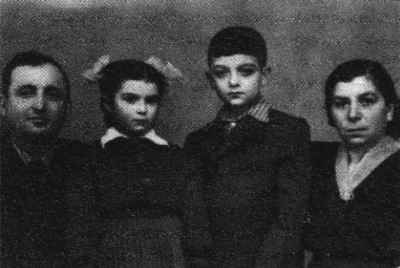
Ota047.jpg
The Nakhis family in Czernowitz: Chanya (Brand), Syuma, Raya, Ezra

[Page 48]

ota048a.jpg
 
ota048b.jpg
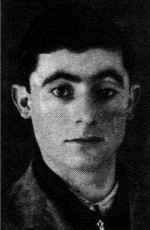
Mordechai Nakhis
– brother of Ezra Nakhis
 
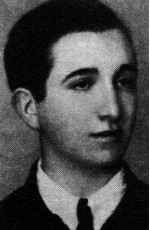
Yankele Brand
– brother of Chanya


I say to you, “Let's see what's going on in the world.” The “world” was the home of Vaskaboinik. We went there with noise, dancing, and singing, and the police broke in. Some of us escaped through the window, but about twenty young people remained. We were arrested and taken to the police station, where we spent the whole night. Our parents did not know what happened to us, because the police had never before fallen upon Zionist young people. This time, having no communists, they decided to go after “HaShaomer haTzair”. They interrogated us to see if we were connected to the leftist movement, and because we lived near the border, they decided to send us to the military court in Yoss.

The government rabbi, Slutzki, with other dignified citizens of the city, got involved and in a little while we were freed, pending the trial in Yoss. The news that Zionist young people would be judged caused a tumult. The higher rabbi from Kishinev, Rabbi Tzirlson, got involved, and he ordered that the judgment should be annulled. And that was the end of the story.

How did the shtetl observe Shabbos and holidays? The organized young people would meet and go for walks around the Christian villages, in the woods. In the summer, most of them would gather by the Dniester. A large number–men, women, children, brides with their husbands–in the glade near the Maidan. Years ago there had been a stop there for the train that connected the shtetl with the large

[Page 49]

cities of Romania. The rail remained on the right side, and to their right were gardens. On the left there was a place covered with vegetation. The air there was pleasant, and people liked to go walking there or to meet, to talk, or to read.

Not far off was a hill. On Shabbos and holidays we would often have a good time there. Going down from there were vineyards. There we bought inexpensive wine grapes and drank grape juice.

Aside from the government shul, there was also a Talmud Torah in town where children were taught how to pray, Chumash, and how to put on tzitzis. Children from poor homes learned there. They paid nothing, and they were also fed. The Jewish community maintained the Talmud Torah. Children of wealthier parents studied with private rabbis, with Moyshe Leibeles, Avraham the Black, Shmileib Royzn, or Velvel Brand, who was also a teacher in the Talmud Torah.

Many children studied in the “Tarbus” School, where, despite the opposition of the government shul, the children learned Hebrew. The first director was Grubman, a Zionist. The teachers: Hochman, Samet, the Galaster daughters, and others. On Maidan there was a large kindergarten where little children also learned Hebrew. They were prepared for later study in the “Tarbus” school.

The shtetl had two libraries: a large one on Maidan, established by the Zionists. There one could get books by Sholem Aleichem, Mendele Moycher Seforim, Sholem Asch, Y. Peretz and Markish, as well as translations from Russian, German, and other languages. This was a more aristocratic library.

The leftists had their library, a more proletarian one. It was open only in the evening.

Some Atikers subscribed to the newspapers from Kishinev, and sometimes a Jewish newspaper from Warsaw would make its way into town. People also read the Romanian newspaper from Bucharest, the “Adevar” [the “Truth”].

Yiddish performances at Leib Beilis' were given by Zaydee Zilbershteyn, Shmarak and his sister, and many others. The money that people paid was dedicated to the poor. In summer, the city students staged parables by Eliezer Shtaynberg, which charmed the young people. Also, traveling Yiddish troupes would come sometimes. They would appear without scenery, in badly lit halls. Although the repertoire consisted of cheap operettas, one had to put up with them. The artist Zina Zlataya and her husband Leibovitsch, Ziegler and his daughter, Sevilla Foster were very popular.

The Volfensen Troupe in the thirties had a young girl and called her Sidi Tal. Later she became a famous artist, well-known throughout Romania. She was especially famous when she appeared in Bucharet in “The Treasure,” “The Yellow Shadow,” and others under the direction of the well-known director Yakov Shternberg.

In 1935 I traveled to Czernowitz with my friends. When I returned to Czernowitz after the war, I went to see my old home. The small, clean shtetl of Ataki no longer existed. The market, part of the Old City, and part of Maidan were gone. Where they had been was now a park with walkways. On some days, music was played there and Gentile girls

[Page 50]

and boys had a good time.

There were no Jewish children. The houses that remained had been sold to the Roma. They now owned the town. The Jewish population had gone to the larger cities: Czernowitz, Belz, Kishinev, and other cities in Russia. Now they are coming to us in Israel.

So ends the story of Ataki. When people come to Ataki by train or car, they see nothing. Everything is strange. You recognize nothing. Remaining are the cemetery and the Great Synagogue, which has been turned into a club.

That is the reality.

The book that the Atikers will produce will remain for us only a memory.

Original footnote:

  1. See the picture on page 62. Return


Table of Contents Next Page »


This material is made available by JewishGen, Inc. and the Yizkor Book Project for the purpose of
fulfilling our mission of disseminating information about the Holocaust and destroyed Jewish communities.
This material may not be copied, sold or bartered without JewishGen, Inc.'s permission. Rights may be reserved by the copyright holder.


JewishGen, Inc. makes no representations regarding the accuracy of the translation. The reader may wish to refer to the original material for verification.
JewishGen is not responsible for inaccuracies or omissions in the original work and cannot rewrite or edit the text to correct inaccuracies and/or omissions.
Our mission is to produce a translation of the original work and we cannot verify the accuracy of statements or alter facts cited.

  Otaci, Moldova     Yizkor Book Project     JewishGen Home Page


Yizkor Book Director, Lance Ackerfeld
This web page created by Jason Hallgarten

Copyright © 1999-2026 by JewishGen, Inc.
Updated 27 May 2026 by JH