 |
|
|
[Page 24]
[Page 25]
|
[Page 26]
|
|
[Page 27]
by Yaakov Fichman
Translated by Jerrold Landau
|
Our house – this beloved nest that was burned Now, upon its foundations, it became ruins, Its granaries were destroyed, and its animal sheds By the hands of enemies – no… merely the hands of gentiles, Of the village! Sowers of corn and treaders of wine, Praying for dew and for rain, Crossing themselves out of fear of heaven: His violence when it was hinted to them: rain!…[1] This house of ours stood on a mound, open To the summer sun and to the autumn winds. In the heavy winter, thick snow covered it And in it there was the tooth of a coarse beast. …
Ah, this was my house, a view of the river-slope
A landscape of the river outlet where the living island murmurs
There were simple Jews, silent, breakers of clods of earth,
Where are they now? Some night storm carried off |
Translator's Footnote
by Y. Chaimson
Translated by Jerrold Landau
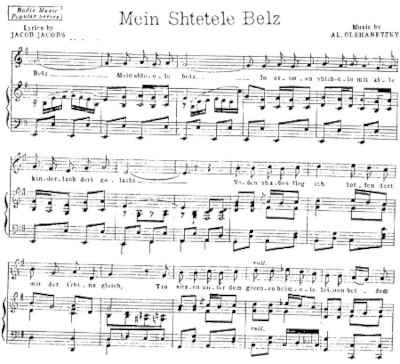
Come on – find me a Jew who has not heard this famous, heartfelt, little song:
|
“Beltz, my shtetele Beltz My little home where I Spent my childhood years;
Beltz my shtetele Beltz,
Every Sabbath, I would run
Beltz, my shtetele Beltz |
That little song – composed by the well-known actor Jacobs, with music by Alexander Olshanetsky – the Jewish life of the well-known Bessarabiaian city of Beltz[2] is indeed vividly portrayed.
[Page 29]
|
Translator's Footnote
by Ștefan Ciobanu
Translated by Jerrold Landau
Bessarabia – Monograph[1]
Ștefan Ciobanu – The General Exhibition and Sample Fair of Chișinău, 1926
Bălți – The change in orientation of Bessarabia's economic life since the Union[2] will surely lead to the rise of some towns and perhaps to the decline of others.
Bălți is one of the towns of Bessarabia that has the greatest chances of development under the new living conditions.
Situated on the Răut River, in the middle of northern Bessarabia, at the crossroads of the roads leading to Iași and Cernăuți, Bălți in recent years has gained very great economic importance.
The history of this town is lost in the mists of the past. According to tradition, Bălți existed in the fifteenth century, when it was devastated by the Tatars (A. Zaschuk).
Bălți emerged at the beginning of the eighteenth century as a market town. Peter the Great, in his retreat toward Russia after the defeat at Stănilești, left large quantities of provisions in Bălți.
The Tatars seized them, plundering the inhabitants of the market town. At the moment of the annexation of Bessarabia, the market town of Bălți was private property of the boyar [hereditary nobleman] Panai and belonged to the county of Iași. In 1818, Bălți was visited by Emperor Alexander I, who ordered that Bălți take on the status of a town (A. Zaschuk). Thus, Bălți unexpectedly became the capital of the county, which from the year 1887 changed its name to Bălți County. Until recently, the town of Bălți was private property of the Catargiu family, and the growth of the town of Bălți is connected with its history. In 1880, Bălți had a population of 8,838 individuals; in 1897 – 9,975; in 1904 – 20,769; and currently (1926), according to data from the Bălți town hall, the population amounts to 35,000 individuals, of whom 10,800 are Romanians, 21,000 are Jews, 2,050 are Russians, 100 are Armenians, 332 are Poles, 150 are Lipovans [Russian Old Believers], 49 are Germans, and 220 are of other nationalities.
Religious life in the town of Bălți is represented by two Orthodox churches, one Armenian, one Catholic, one Lipovan, four synagogues, and twenty-two Jewish prayer houses.
With the establishment of the episcopate in the town of Bălți, the foundations of a cathedral were laid.
Since the Union, a normal school for boys has been established in Bălți, and the private boys' and girls' high schools have become state high schools. In the town there are twelve primary schools and four kindergartens. The economic life of the town of Bălți, which is intensifying day by day, is represented by 1,175 commercial enterprises, eight banks, six cooperatives, five systematic mills[3], two breweries, one distillery, twelve oil factories, one cotton factory, and quite a large number of smaller factories.
Translator's Footnote
by Dr. Schwartzfeld[1]
Translated by Jerrold Landau
Dr. M. SCHWARTZFELD
Din – Istoria Evreilor[2]
Împopularea, Reîmpopularea și Întemeierea Târgurilor și Târgusoarelor în Moldova[3]
București 1914
p. 35–39
The immigration of Jews was, in those moments, a true blessing; to encourage it – just as that of Christians – two new market towns were founded in the eighteenth century: Bălți and Pânzăreni[4] situated across the Prut.
If we were to believe Zamfir C. Arbore, the town of Bălți would not have been founded until 1818, after the annexation of Bessarabia. He writes: “During the native rule, Bălți was not an urban commune, not even a small market town, and in the place of the present city there was only a little village sunk in marshes. A mere circumstance caused this poorly situated village to be transformed into a town, a county capital.”
“On April 19, 1818, Emperor Alexander I, coming from Hotin and going toward Chișinău, was forced to spend the night at Bălți, where his heavy imperial carriage became mired in the mud. There he received the news of the birth of his grandson Alexander II, and, in memory of this family event, he granted the village of Bălți the prerogatives of an urban commune.”[i]
While it cannot be disputed that Emperor Alexander I transformed Bălți into a county capital, it can be stated with certainty that Zamfir C. Arbore is mistaken about the origin of this town. Bălți appears as such already in 1803 in the Condica liuzilor[5], as the property of Lady Maria Costachi. It therefore existed before the annexation of Bessarabia to Russia, at the beginning of the nineteenth century[ii]. In reality, however, it was founded, if not earlier, certainly by 1779, under Constantin Moruzi, who, it seems, granted the owner at that time a charter of establishment. What leads us to this conclusion is that we also find a second charter from the same ruler, dated January 12, 1782, whose purpose was doubtless to confirm the contract made by the estate's proprietor with a number of Jews who had come from foreign lands, in order to
[Page 32]
to settle on his estate and to found the new market town. This latter charter was confirmed by Alexandru Constantin Mavrocordat on December 20, 1782, by Alexandru Ioan Mavrocordat in 1786, and finally by Alexandru Constantin Moruzi on July 24, 1792. That the Jews were the founders of this market town can be clearly seen from the extract preserved for us in the Condica Divanului Domnesc [Register of the princely Divan] of 1792. In it are mentioned the following: “The Anaforaua [petition] of July 1792, confirmed by Alexandru Constantin Moruzi-Vodă on July 24, 1792, in the matter of the Jews of the market town of Bălți, with Stolnic [boyar court rank] Iordachi Panaite, the proprietor of this market town, concerning the payment he takes from them on the goods they sell,” as well as the charters cited above, which the proprietor of Bălți had produced in order to obtain the final princely confirmation.[iii]
The predominance of the Jewish element results not only from the agreement concluded by the proprietor with the Jews, but also from the fact that at the beginning of the nineteenth century – and perhaps even in 1792 – they were numerous enough to form a community of chartered Jews. The Condica liuzilor, the first, though very defective, statistical record of taxpayers in Moldavia, drawn up in 1803, does not give the number of Jewish taxpayers of Bălți, nor the amount of the tax they paid. This sum, which would allow us to estimate approximately the number of taxpayers, is likewise absent from the public accounts published for the tax of 1805–1806, in which the dues of the four market towns of Soroca[iv], to which Bălți belonged at that time, are entered under a single heading. But that the number of Jews must have exceeded that of the other townspeople follows from the fact that the said 1803 statistics mention neither a Christian merchant nor a Christian townsman, but only 120 persons enjoying exemption[v]. The Jews, moreover, became the overwhelming population of the town, with a total population of 11,118[vi]. As for the impetus they gave to the city, it is shown by the statement of an author who published his travel impressions from the 1840s, calling Bălți an important and commercial city. He adds: “After you have traversed the country beginning from Novoselitsa without encountering any activity, you have a particular pleasure in arriving at Bălți. Here industry reigns; merchants are numerous and the population considerable. Besides the almost daily fair, the town has very frequent cattle markets, and transactions amounting each time to many millions of rubles are carried out₀ The merchants are almost all Jews.”[vii]
Original footnotes
Translator's Footnote
by Professor Eliahu Feldman
Translated by Jerrold Landau
|
|
In A. Walden's book, the New Shem Hagedolim [Names of Great Ones][i], it is stated that the Kabbalist Rabbi Yitzchak the son of Yaakov Ashkenazi – to whom the Kabbalistic composition Brit Olam [Eternal Covenant], based on the letters of the aleph-beit, is attributed[ii] – was the head of the rabbinical court of “Beltza”. Apparently, Walden bases this on the nickname “Blitzer” which was used by Rabbi Shaul the son of Yosef of Vilna in his approbation to Rabbi Yitzchak's book. This happened in the middle of the 18th century.
Relying on what was stated in Walden's book, some of the Jewish encyclopedias, as well as other compositions, state that Rabbi Yitzchak was the rabbi of the community of Beltz. That means that by then there was already an organized community in Beltz by the middle of the 18th century, headed by a scholar of renown. However, this has no basis in fact. Beltz was still a remote village situated in a marshy district (from which the name of the city derives) in the district of Soroca in the eastern portion of the Principality of Moldavia, between the Prut and Dniester rivers. It is possible that a lone Jewish family, or even perhaps a few Jewish families, lived there, and whose income was based on a lease granted by the estate owner – a right he possessed by virtue of his standing as the lord of the manor. The primary source of income for such families would have been from the sale of [alcoholic] beverages – as was the case in many villages of northern Moldavia. There was certainly no Jewish community there at that time, and there is no doubt that Rabbi Yitzchak did not live there. The nickname “Blitzer” that was used for Rabbi Yitzchak in the aforementioned approbation certainly applies to some other locale – perhaps to Blitza in the Vilna district in Lithuania, or Blitza next to the port city in the district of Mohilev in White Russia.
A Jewish settlement in Beltz only arose during the 1780s, after the owner of the land upon which the village of Beltz was founded received a permit in 1779 from the prince of Moldavia at that time, Constantine Moruzi, to turn the village into an urban settlement and to hold market days and a fair. In the wake of that permit, the estate owner, Iordache Panaită, evidently invited Jews to settle in Beltz so as to develop economic activity. It even seems that he set up an agreement with them outlining the rights that he was giving to them and the payments that would be collected from them[iii] – as was done in that period by many Moldavian estate owners who received permits to set up urban settlements on their lands and invited Jews come and settle in those settlements. In any case, it is clear that a Jewish community arose in Beltz at that time. Its existence was first demonstrated by a document from the year 1784. In that year, a Jew from Beltz, Shlomo Moshe Leib, leased all the income owed to the owner of a large estate in the district of Soroca, which encompassed several villages. From the breakdown of the income items that were leased out, and from an estimation of the leasing fees that the lessee was required to pay, it is evident that he was a very wealthy man.[iv] Eight years later, in 1792, the
[Page 34]
question of the payment that the estate owner collected from the Jews came before the prince, related to the merchandise that was sold through them.[v]
Around the time of the annexation of the areas between the Prut and Dniester, later known as Bessarabia, to Russia in 1812, 244 male heads of families[1], totalling 1,220 individuals based on the accepted estimate of five individuals per family, lived in Beltz, according to the census that took place in the area in 1817. They consisted of 39.4% of the population, which numbered 620 heads of family, totalling 3,100 individuals, again using the estimate of five individuals per family.[vi]
The Jewish community of Beltz grew significantly, at a high rate, during the course of the 19th century, along with the growth of the Jewish population of Bessarabia as a whole, in the wake of the influx of Jews to the region from adjacent Ukraine and Poland during that period. In 1864, the Jewish population of Beltz already numbered 3,124 individuals – meaning that the number of Jews in the city grew by 156% over the course of about fifty years. Even so, this growth was proportionally much lower than the Jewish population growth in other cities of Bessarabia. For example, the Jewish population growth of Soroca was 427%, and of Khotyn was 1534%. Since a large stream of gentile immigrants arrived in Bessarabia during that period, the proportion of Jews vis a vis the general population of Beltz barely changed, and even declined slightly. It stood at 38.7% in 1864.[vii] However, we must state that the data is not exact, and it is possible that both the number and proportion of Jews in Beltz at mid–century were higher than the percentages given above. From this, we can also surmise that the Jewish population of Beltz during the first half of the 19th century was also larger.
The growth also continued during the latter half of the 19th century. In the general census that took place in Russia in 1897, 10,348 Jews were enumerated. It is evident that throughout the entire nineteenth century, from 1817 until 1897, the number of Jews in Beltz grew more than eight–and–a–half–fold–an increase of roughly 750%. During the latter half of the century, the rate of growth of the Jewish population exceeded that of the gentile population. As a result, the percentage of Jews vis a vis the general population rose to 57%. That means, at the end of the century, Jews formed more than half of the population of the city.[viii]
With the growth of the population of Beltz, it became an administrative center after it received the status of a city in 1818 and was declared as the capital city of the district of Jassy (from 1887: district of Beltz). Wide-branched economic activity developed. Beltz was an important center of commerce, both internal and external, at the beginning of the century. First and foremost was the livestock trade, which was the primary export of Moldavia, and in 1812, also of Bessarabia. Witnesses from the end of the 1820s describe important fairs that took place in Beltz, to which large flocks of horses and cattle were brought from all over Bessarabia to be sold to purchasers who would come in large numbers from outside, or local wholesale merchants who would send them to Austria and Germany. Along with this, commerce at the fairs also included agricultural products of various types, primarily grain, but also vegetables, tobacco, hides, milk, and beeswax.[ix]
This vibrant activity also continued for decades after this. A French traveller who visited Beltz during the 1840s describes it as a city with an abundance of merchants, and in which diligence prevails. He relates that, aside from the market days that took place almost every day, there were frequent fairs at which the livestock trade and large-scale business deals took place.[x]
Beltz was the most important center of trade-fair commerce in Bessarabia. The fairs were the largest and most significant in the region. More than half of all trade conducted at the fairs throughout Bessarabia was concentrated at the Beltz trade-fairs. For example, merchandise worth approximately 198,000 rubles was brought there in 1862 – 57% of all the merchandise brought to all the fairs in all of Bessarabia that year. The value of the merchandise was approximately 57,000 rubles – 45.6% of the value of the merchandise sold at those fairs that year.[xi] Beltz also became a first-class center for the cattle export trade. In the middle of the 1860s, that sector of commerce covered about 70,000 heads.[xii] In addition to the commerce at the fairs in Beltz, there was also retail business at the shops, which numbered 78 in 1857. During the middle of that century, the city had four trade workshops, including one for the manufacture of hats.[xiii]
[Page 35]
This economic activity can also be seen from the number of merchants registered in guilds. According to Russian law, these guilds were the special framework in which the residents of the city were organized on the basis of a legally mandated minimum capital requirement, and they paid their taxes according to that declared amount. They were then authorized to conduct large-scale economic activity, and benefited from various rights. Naturally, it was wealthy people who registered in the guilds. In 1861, there were 422 merchants registered in guilds in Beltz, and together, they had capital of 262,000 rubles, meaning an average of 6,200 rubles for each merchant. The merchants of Beltz were wealthier than the merchants of several other district cities in Bessarabia, such as Khotyn, Soroca, or Bendery, where the average capital per member was between 4,260 and 4,770 rubles.[xiv] As we have seen, the Jews, who formed no less than half of the residents of Beltz, filled a central, primary role in the economic activity of the city. Already in the testimony noted above, describing the activities in Beltz during the 1820s, the Jews are mentioned together with the Greeks and Armenians as participating in the commerce described there.[xv] The aforementioned French traveler, who visited Beltz in the 1840s, as we have noted, writes that almost all the merchants of the city were Jews.[xvi]
It would seem that most of those registered in the merchant guilds were Jews. We do not have any data from the 1860s, but, as is mentioned in an article sent from Beltz in 1880 to the Jewish-Russian newspaper Rassvet, there were sixty wealthy Jews, and three hundred well-to-do Jews.[xvii] That year, the writer Zalman Epstein portrays Beltz, in an article that he sent from there to the Hameilitz newspaper, as “A city of no small size… whose vigorous commerce sustained it, and whose inhabitants enjoyed a very good standard of material well–being.”[xviii] In an article sent from Beltz two years later, another writer of that newspaper says, That “there are many magnates” among the Jews of the city.[xix]
During the 1870s and 1880s, there were several enterprises owned by Jews in Beltz that could be considered to be manufacturing enterprises. Lipson owned a steam-driven flour mill, which was the third largest in Bessarabia. It had forty employees (fifteen Jews and twenty-five Christians). Its annual revenue reached the respectable level of 320,000 rubles. During the 1880s, it milled more than 3.25 million kilograms of flour annually. During those years, there was an additional flour mill, much smaller, in Jewish hands. It was horse-operated, and employed four Jews. Other enterprises owned by Jews included a foundry that employed fourteen workers, four of whom were Jews. Its annual revenue was 16,000 rubles. There were two soap factories, with an annual revenue of 13,000 rubles, and which employed eleven people, five of whom were Jews.[xx]
However, the wealthy people and enterprise owners were the minority of the Jews of Beltz. Most of the Jews of the city belonged to the working class – small-scale businesspeople, tradespeople, and employees. We have no information about the professional composition of the Jews of the city, but it seems that there were an especially large number of tradespeople. According to the author of an article sent from Bessarabia in 1887 to the Jewish-Russian newspaper “The Weekly Chronicle of Voskhod”, sixty percent of the Jews of the city were tradespeople or simple employees.[xxi] In the words of another article sent to that newspaper from Beltz in that year, there were 723 craftspeople, 582 employees, and 975 apprentices in Beltz at that time. We can assume that the vast majority lived in Beltz itself. The article also details the trades in which the tradespeople worked: The vast majority of them worked in the clothing and shoe trades – with tailors and shoemakers at the center – as was the situated in every place where there were Jewish tradespeople in Eastern Europe. However, the spectrum of trades in which the Jewish tradespeople worked was broader – there was virtually no trade or sector of work in which Jews were not involved. That even included the trades which were considered “difficult”, and in which in general very few Jews worked, such as the building trades. There were watchmakers, smiths, packers, print setters, bakers, butchers, harness makers, saddlers, seal makers, soap makers, furriers, painters, carpenters (including construction carpenters), roofers, brickmakers, plasterers, glassmakers, builders, oven makers, engravers, locksmiths, and blacksmiths. There were many water carriers.[xxii] It is noted above that there were Jewish employees in all the workshops owned by Jews. The Jews of Beltz did not disdain any work, and the possibility of profiting from it also attracted Jews from nearby countries. A man from Galicia, Avraham Feuer, who visited Bessarabia
[Page 36]
at the end of the 1870s, writes in his memoirs that Jews from Galicia who settled in Beltz “plastered walls, excavated cellars, dug wells, and carried gravel to the foundations of the houses.” He continues to tell about one Jew from Galicia, “Who was the head of the community in his small city, and had no business of his own. The townspeople believed he had discovered a buried treasure in the earth, but in truth he traveled each year to the city of Beltz for three months and worked at all kinds of jobs.”[xxiii]
Alongside their growth in numbers and the development of their economic activities, communal and spiritual life also developed among the Jews of Beltz. Communal institutions, and institutions for aid and education, which were needed by all Jewish communities, arose in the city. There is no doubt that a synagogue, or at least a place for communal prayer, opened with the arrival of the first Jewish residents to Beltz. There was one synagogue and seventy-six Beis Midrashes in the middle of the 19th century.[xxiv] Beltz had one synagogue located in an old building, built of wood, until the end of the 1870s. The synagogue was closed by the authorities at the end of 1882 because the fence in the women's gallery had broken. The shaky situation of the synagogue is clear from the articles from Beltz that appeared in the Jewish newspapers. These articles express criticism of the organized community, its heads, and its wealthy people for not concerning themselves with constructing a building appropriate for a synagogue.[xxv]
Strong criticism was not only expressed toward the heads and wealthy people of the Beltz community regarding the synagogue. They were accused of not being prepared “To pay attention to, or give thought to, any matter concerning the community – of failing to establish anything that would carry real blessing,” and that they were “Always busy with their work and businesses, and do not even find a single hour to devote to communal matters… most of the communal matters are conducted clumsily, and everywhere one looked, there was nothing but confusion and disorder.”[xxvi] These accusations are similar to those that appear in other articles sent to Jewish newspapers from Beltz. They also accuse the wealthy people of Beltz of being immersed only in their business and pursuit of profit, and of being completely oblivious to communal matters and the lot of the poor who require assistance.[xxvii]
Nevertheless, it seems that these accusations, the likes of which were raised during those years by many moderate Haskalah writers in Russia, do not survey the entire scene, for there is no shortage of characteristic exaggeration during that period in articles of that genre. Indeed, during the 1860s or 1870s, a Jewish hospital was founded in Beltz, which had fifteen beds in 1877.[xxviii] The same article that strongly criticizes the wealthy people of Beltz also describes the efforts to found an organization to assist the Jewish poor in the city. The purpose of that organization was to assist its members who fell sick to bear the costs of medical expenses and support of their families – meaning to give aid to members who find themselves in a difficult situation.[xxix] In 1889, a Talmud Torah was founded in Beltz in which approximately a hundred children from poor families studied without tuition fees.[xxx]
Similar to other communities in Bessarabia, the community of Beltz was not a center of Torah study, and rabbis of renown did not serve there. During the middle third of the 19th century, Rabbi Shimshon Yaakov occupied the rabbinic seat of Beltz. He maintained a correspondence on halachic matters with Rabbi Yosef Landau, the rabbi of Jassy from 1834-1853. Rabbi Yosef was a rabbinical decisor at that time, and a rabbinical authority for the Jews of Moldavia and northern Bessarabia. Rabbis of northern Bessarabia would turn to them with their questions. Nevertheless, despite the status and authority of Rabbi Yosef, Rabbi Shimshon Yaakov did not accept the decisions of Rabbi Yosef in every case. Rather he relied on his own healthy opinions, and Rabbi Yosef had to explain his decisions at length in order to convince his disputant from Beltz. Rabbi Yosef approached Rabbi Shimshon Yaakov with the language of honor and esteem. He called him “The sharp Rabbi and Gaon, expert in the recesses of Torah, the renowned pious scholar.” Even though that salutation is of the accepted formula for addressing rabbis and correspondence between scholars, it still is a mark of the status of the rabbi of Beltz.[xxxi] Rabbi Yisrael the son of Rabbi Shneur Zalman Yaffa served as the rabbi of Beltz from the middle of the 1880s. He was appointed to this role in 1885 when he was only twenty-seven years old.[xxxii]
As the other Jews of Bessarabia, the Jews of Beltz also cleaved to Jewish tradition, with a traditional way of life and traditional education methodologies. However, the Haskalah movement began to penetrate Beltz at the end of the first half of the 19th century, expressing itself first of all through the request for general education. In 1847, two Jews from Beltz who
[Page 37]
entered agricultural settlements approached the authorities with a request to permit their children to study in university. Their request was approved.[xxxiii] We do not know whether and where the children of those two Jews had obtained their general education in preparation for their entrance to university.
The principal and most important impetus for the spread of general education among the Jews of Beltz came from the Russian authorities. At the beginning of the 1840s, the Russian government put forth a plan to reform Jewish education with the aim of imparting general secular education to the Jews of Russia, with the aim of weakening their connection to the tradition of Israel and traditional Jewish values, and drawing them nearer to the general population. The accepted assumption with the Russian authorities was that traditional Jewish education, with the Talmud at the center, educates the Jews to a life of emptiness, in which they take advantage of the gentile population by cheating and usury, and to hatred of Christians and separation from them. As a result, throughout the Russian government circles, the Jews were considered a damaging element in the state, living on the account of the Christian population whom they hate, and from whom they keep separate. The only way to change the Jew into a useful element, or at least to a non-damaging element toward the Christian population, and to bring him closer to the general population of the country, was to weaken his connection to the tradition of Israel. As has been noted, this could be accomplished by imparting general education. To that end, it was decided to establish government schools for Jewish children, in which they would study secular subjects, first and foremost the language of the country, side by side with Jewish subjects, the quantity of which had to be smaller than the general subjects. Those who conceived of the idea of this reform sought to especially limit the study of Talmud. The schools were to be of two levels: the first tier with a limited curriculum, and the second tier in which the curriculum would be broader. The supervisors were required to be Christians, whereas the teachers could be Jews and Christians.[xxxiv]
A first-tier government Jewish school in the framework of that plan was opened in Beltz as well.[xxxv] Two permanent Jewish teachers taught in the school – Yehuda Shapira and Hillel Rivush, both from Lithuania, and one teacher outside of the staffing quota whose nationality we do not know. A Christian superintendent also served at the school. Twenty-six students studied there that year. Through the year, thirteen students were removed from the school, only two of whom had completed their studies. The thirteen[2] others were removed from the school and seventeen new students were accepted. The school, which was housed in a wooden building, was financed to the sum of 1,200 rubles. The sum came from the river tax imposed on the Jewish population of Russia with the opening of government schools for Jews.[xxxvi]
The above data indicates that the state of the school during those years was considerably poor. The number of students was quite small. Only a small number of those registered actually completed their studies. It seems that in Beltz, as in other communities within the Pale of Settlement, Jews related with suspicion and wariness to the schools that the government opened for them. Quite justifiably, they regarded them as a tool meant to distance Jewish children from the traditional Jewish way of life, and even to cause them to leave their religion. Therefore, they refused to send their children to them.
The situation did not change with the passage of years. A school principal from Bessarabia, who made an inspection trip through the schools of the district in 1869, found only eleven students in the Beltz school, only one of whom possessed a sufficient level of basic knowledge. In the wake of this situation, he recommended that the school be closed, and that the budgetary allocation be transferred to general educational institutions: half to open an analogous class in the church school, a quarter to go to the rabbi of the community to teach the Jewish religion to Jewish students studying in public schools, and a quarter to open a division to teach trades. The Jewish-Russian newspaper that published this accounting complained that the proposal would take money collected from Jews and transfer it to gentile institutions.[xxxvii]
Nevertheless, despite the dismal situation of the school and the paucity of students, the reality of its existence aroused and stirred up the Jewish population of the city. Its teachers, who came from other regions of Russia, its students, and especially its graduates – few as they were – filled a pioneering role in disseminating Haskalah ideas. We see that there were already Jewish students in the public schools by the end of the 1860s.[xxxviii] They were lone individuals, but they existed. The writer and fighter for
[Page 38]
Haskalah, Avraham Gotlober, visited Beltz during his trip through southern Russia. He tells with great satisfaction in his trip journal that when he came to the city: “The enlightened and honorable teachers, Mr. Shapira (he was also the government–appointed rabbi of the community) and Mr. Ginsting, both young, natives of Lithuania who graduated from the Vilna Rabbinical Seminary[3], and the honorable supervisor of that school (first tier), the Maskil and wealthy man Reb Mendel Grossman, a young man of the wealthy stratum of the people, who loves wisdom and honors those who pursue it, along with another man whose name is Dr. B. Berliner, and my faithful friend, whom I had not seen for more than twenty years, Dr. Lemil Bortnik, and his son – these dear people gathered around me, and their gaze upon me was like the gaze of a father or a brother, and that is how it was in my eyes as well. They purchased from me, at full price, five excerpts of the book Mimitzrayim [From Egypt] that was published recently in Vienna (5622 [1862]).”[xxxix]
The demand for general knowledge among the Jews of Beltz increased as time went on. One observer was able to note that in 1880, the recognition of the need to give their children some measure of proper education, and especially to teach them the Russian language, grew among the Jews. According to him, many sent their children to the public schools, and some gave them private teachers, regarding whom the observer issues strong criticism.[xl] Another observer from that year describes the situation in Beltz in a similar fashion: He too writes that the parents who, just a brief time previously did not agree to send their children to a public school, now do so. According to the words of that observer, many Jewish parents wanted their children to learn Russian, German and arithmetic, and they give them over to private teachers.[xli]
One can see a sign of the advancement of Haskalah among the Jews of Beltz from the language of the request from a circle of Maskilim in the city to the authorities in 1887 to authorize the opening of the aforementioned Talmud Torah. They wrote that it will be run “On rational principles.” The request was approved by the authorities[xlii], and the Talmud Torah was opened in 1890, as stated above. Indeed, written and oral Russian as well as arithmetic were taught alongside Jewish subjects.[xliii]
Despite the advancement, it seems that in the middle of the 19th century, Haskalah only encompassed a restricted stratum of the Jews of Beltz. The vast majority remained faithful to the traditional way of life and style of education, and strongly opposed the ideas of Haskalah. From a general census that took place in Russia in 1897, we can see that only 18.7% of the Jews of the city knew how to read Russian. That percentage was below the average of all of Bessarabia, which was 21.7%, and was also one of the lowest of all the areas of the district.[xliv] Even so, this low percentage shows that by the end of the century, there was already a stratum among the Jews of Beltz who had gained minimal general education.
The main factor in the spiritual and religious reality of the Jews of Beltz also during this era was Hasidism. “The spiritual and traditional condition of the community of Beltz was… bad. Even here, Hasidism reigns on high, and everyone, from youth to old age, are its faithful servants, while its enemy – wisdom – stands outside, unable even to set foot on this holy ground, the inheritance of these wild Europeans.” – that is how the writer Ephraim Deinard, who visited Bessarabia, including Beltz, in 1879 describes the situation of the Jews of Beltz.[xlv] The Hasidim of the Friedman dynasty, Rabbi Yisrael of Ruzhin and his descendants, had great influence. Their Hasidic court was in the town of Sadagora in neighboring Bukovina, where Rabbi Yisrael had lived since 1841. Hasidim of that court had their own Beis Midrash in Beltz, called the Sadagurer Kloiz.[xlvi] There also were Hasidim of different dynasties, centered a great distance away, in Beltz. Jews who came to Beltz from elsewhere in the Pale of Settlement retained their loyalty to the Tzadikim under whose leadership they had lived, continuing their Hasidic affiliation in their new place of residence. Avraham Ber Gotlober, who spent time in Bessarabia in 1828 as well, met there a resident of Beltz who was a Chabad Hasid and who had certainly come from Lithuania or White Russia.[xlvii] Tzadikim of different dynasties would also visit Beltz on occasion. They were received graciously by the Jews of the city, who would give their donations and redemption-money in a generous fashion.[xlviii]
The situation of the Jews of Beltz, like the Jews of Russia in general and the Jews of Bessarabia in particular, worsened noticeably with the adoption of a new approach to the “Jewish question” in Russia at the beginning of the 1880s after the ascension of Alexander III
[Page 39]
to power in 1881, and with the strengthening of the oppressive policies against Russian Jewry that came in its wake. The Jews of Beltz, like the other Jews of Bessarabia, did not suffer from the wave of pogroms that swept southern Russia between 1881 and 1884. But after the assassination of Alexander II on March 1, 1881, they too fell victim to the wave of fires – apparently deliberately set – that spread through all of southern Russia in the summer of 1882, and in which almost exclusively Jews were affected. The large fire that struck Beltz in April 1882 destroyed approximately 650 homes (including 35 Christian homes), leaving the residents bereft of everything.[xlix]
The Jews of Beltz suffered greatly from the administrative trajectory that was begun by the authorities against Russian Jewry during those years, and that continued until the fall of the Czarist government in 1917. That trajectory was felt very clearly in Bessarabia as well.[l] The Jews of Beltz suffered in a unique way from the restrictions imposed upon Jews in an area of fifty verst (approximately forty-three kilometers) along the length of the western border. These restrictions were first imposed on the Jews of Russia in 1825, under the pretext that Jews living near the border were engaged in smuggling and therefore they must be kept away from the border. The restriction did not apply to Bessarabia when it was first established, but it was enacted there in 1839. Since Beltz was located within fifty verst from the border, the restrictions applied there as well. However, in practice, the authorities were not strict with upholding the restrictions, and many Jews lived within the area of the border strip – including Beltz – even though they did not have the right to do so. As the years went on, enactments were made that provided a general exception for the Jews who were living illegally in the border strip. With this, there was scrutiny from time to time regarding the rights of the Jews who lived in the border area to be present there. The central authorities, and primarily the local authorities, would take steps to tighten the borders, and would promote the deportation of the Jews who were living in the strip illegally. That was the case as well with the Jews who lived in Beltz. In the 1860s, several craftspeople whom the government found to be lacking permission to live in Beltz were deported by order of the border authorities. The Jews who were ordered to leave the city presented a complaint to the interior minister, but he rejected it and the edict of deportation remained in force.[li] In 1879, the district governor ordered the police chief of Beltz to check whether the Jews living in the city were indeed authorized to be there according to the statutes that established the rights of the Jews to live in the border strip. The district governor pointed out in his directive that, as far as he knew, many Jews were living in Beltz illegally.[lii]
The trajectory of the authorities of the strip against the Jews living in the border strip, in Beltz as in the rest of Bessarabia, became more strict and severe with the strengthening of the government policies against the Jews at the beginning of the 1880s. From that time, until the repeal of the restrictions upon Jews from living in the border areas in 1904, Bessarabia was the primary point of the activities of the Russian government against Jews in the strip. Recurring investigations took place in various settlements in the strip to assess the rights of the Jews living there to actually be present in those settlements. The Jews were ordered to prove this through the required documents, which was virtually impossible under the conditions that pervaded in Russia at that time. Anyone who was not able to obtain the required document was deported. Since the local officials were the ones who administered this matter, the Jews who lived in the border strip were dependent on the goodwill of those officials, who always interpreted the statutes relating to that matter in the most stringent manner, and issued decisions to the detriment of the Jews even if there was no reason to do so. In actuality, those Jews were dependent on the mercy and goodwill of the local officials. The result was that deportations of Jews from the border strip became a common sight in Bessarabia.[liii]
The Jews of Beltz suffered along with all the Jews of Bessarabia living in the border strip. Information published from there in the Jewish newspapers tell of the process of harassment and deportations – at frequent intervals and under false pretexts – that the authorities conducted against the Jews of the city. Jews who had lived in the city for decades were ordered by the police to prove their rights with documents, so that their rights to be there would be recognized. Anyone who was unable to provide such documents was liable to deportation. The people of means were able to obtain the documents that allowed them to remain in the city, but the poor people, along with anyone who did not succeed in obtaining the required documents, were indeed deported. The police would deport several families almost daily. Hundreds of families were deported in the year of 1887 alone. The deportations were also conducted under very difficult weather conditions, at the height of winter. The deportees were required to walk on foot, accompanied by soldiers, as was the practice
[Page 40]
in Russia regarding prisoners who were being deported to some far-off place.[liv]
The police sought to also deport from the city Jews who had full rights to be there. Among them were Jews whose fathers and family heads were registered according to the law as permanent residents of the city, meaning that their descendants and family members were permitted to live there.[lv] Similarly, Jews who registered as residents of Beltz according to the existing statutes, and had therefore obtained the legal right to live there, were deported.[lvi]
There was no easing of the situation of the Jews of Bessarabia who lived in the border strip, and for the Jews of Beltz in particular, even after the Czar authorized an edict on June 2, 1895 permitting all Jews who were living in the border strip on the day of the publication of the edict to live there, but forbidding any new residency of Jews in the district. That edict also prohibited the Jews from moving from place to place within the strip.[lvii] The local authorities in Bessarabia contrived difficulties in carrying out the Czar's edict, and even found ways to extort money based on it. The police chief in Beltz did this as well: the system he implemented for Jews who lived in the city to benefit from the Czar's edict actually prevented them from doing so.[lviii]
There was a deterioration in the economic status of the Jews of Beltz, parallel with the deterioration of their legal status that began in the 1880s. The 1880s and 1890s were years of tough economic depression in Russia. That depression was felt in full force in Bessarabia as well, where it affected the Jewish population in a serious manner due to their great dependence on the agrarian economy. In addition to this, given the campaign of the authorities against the Jews of the region – both against the Jews who lived in the border strip as described above, as well as against those who lived in rural districts where their rights of settlement were restricted by the “provisional statutes” declared on May 3, 1882 – the local authorities in Bessarabia took advantage of these statutes to carry out mass expulsions of Jews from the rural areas.[lix]
The Jews of Beltz were affected by the depression in the same way that the other Jews of Bessarabia were. The news published in the Jewish newspapers regarding the situation of the Jewish population in the city talks about a freeze in commerce, and about Jews who, having no other option, went out to agricultural work with landowners in the area. The situation of the Jews of Beltz also became more precarious in the wake of the arrival of indigent Jews who were deported from the rural areas by the authorities.[lx]
The administrative pressure and economic straits also moved the Jews of Beltz – as it moved masses of Russian Jews, including the Jews of Bessarabia – to leave Russia and seek refuge in other lands, due to the persecution, edicts, and the sources of livelihood that had dried up at home. The emigration flow of the Jews of Beltz increased during the thirty years prior to the First World War. Some went to Argentina, while others set out for North America. There were those who decided to make aliya to the Land of Israel.[lxi]
The movement to Zion awakened in Beltz as well during the 1880s. In 1885, a Chovevei Zion group was organized with more than one hundred members. It disbanded in 1887, however.[lxii] At that time, a group of Jews who, together with several Jews from the nearby town of Fălești, decided to form a moshava in the Land of Israel. They sent two emissaries to Paris to ask for the assistance of Baron Rothschild, who promised to help them. They settled in Qastina (later known as Beer Tuvia), which was purchased for them. However, discord quickly arose between them and the baron's agent who was appointed to oversee the moshava. Most of them left and returned to Russia, and the moshava disbanded.[lxiii]
Despite the emigration from the city, the number of Jews of Beltz increased to close to 14,000 by the eve of the First World War. This was certainly in the wake of the arrival of Jews who had been expelled from the villages. The Jews of Beltz formed 60% of the general population of the city.[lxiv] The communal activity of the Jews of Beltz also did not cease, but rather continued to develop – despite the legal and economic difficulties; and to a large extent even as a reaction to those difficulties, in order to deal with the problems raised by those challenges. In January 1908, a loan and credit fund was formed – one of the network of such funds that were founded in those years by the ICA [Jewish Colonization Association] in various cities and towns in Bessarabia to assist the Jewish tradespeople, small-scale merchants, and farmers by giving them inexpensive credit. The fund developed quickly. It seems that
[Page 41]
it came to provide the needs of life for the Jews of the city. The number of its members grew almost fourfold within six years of its founding: One year after its founding, on January 1, 1908, it had 572 members; the number grew to 843 by January 1, 1909; to 1,150 by January 1, 1910; to 1,867 by January 1, 1912; and to 2,025 by January 1, 1913. A considerable proportion of the members were tradespeople: Of the 1,867 members of the fund on January 1, 1911, 465 were tradespeople. That year, they formed a quarter of the members of the fund. The fees and size of the loans given out grew in parallel with the growth of the membership. The membership fees grew from 11,490 rubles in 1908, to 16,802 in 1909, 25,646 in 1911, and 28,236 in 1912. The sum of the loans totalled 54,402 rubles in the first year, grew to 86,744 rubles in 1908, and reached the very respectable sum of 288,664 rubles in 1909. During the years 1911-1912, it first dropped to 263,895 rubles in 1911 and then to 251,438 in 1912[lxv] – despite the growth of membership during those years.
Medical assistance services also broadened, even though they were designated to help the weaker strata of the Jewish population. During the years 1913-1919, an infirmary and a pharmacy were added to the Jewish hospital. During those years, a Bikur Cholim society functioned that concerned itself with giving medical assistance to poor sick people in their homes.[lxvi]
Alongside the aforementioned institutions which were meant to serve the weaker strata of the Jewish population in the city, the private school for boys that operated in Beltz on the eve of the First World War was doubtlessly targeted toward the wealthy strata. General studies were also taught at the school.[lxvii] That was a sign of the advancement of general knowledge within the Jews of the city, primarily among the wealthier circles, who were more prepared than the other strata to impart general knowledge to their children, and thereby advance the process of inclusion into the surrounding society.
Original footnotes:
[Page 42]
[Page 43]
Translator's footnotes:
|
|
JewishGen, Inc. makes no representations regarding the accuracy of
the translation. The reader may wish to refer to the original material
for verification.
JewishGen is not responsible for inaccuracies or omissions in the original work and cannot rewrite or edit the text to correct inaccuracies and/or omissions.
Our mission is to produce a translation of the original work and we cannot verify the accuracy of statements or alter facts cited.
 Bălţi, Moldova
 Yizkor Book Project
 JewishGen Home Page
Copyright © 1999-2026 by JewishGen, Inc.
Updated 14 Jun 2026 by JH