 |
|
[Page 483]
By Reuven Rogovin of Petach Tikva
Translated by Jerrold Landau, based on an earlier translation
by M. Porat z”l that was edited by Mike Kalt
I shall sing out to our Melamdim (teachers), despite the fact that they did not spare from us the kantshik (whip). In fact, they wanted our best. They did not want to let us follow the ways of the irresponsible shkotsim[1] who abandoned the yoke of the Torah. Rather, they desired that we become proper Jews, accepted by G-d and by fellow humans. The teachings that we learned with them bore good fruit.
Reb Moshe Feiva the Melamed
The melamed Reb Moshe Feive appears suddenly in my memory. In addition to his teaching, this melamed used to earn a Grivene (Russian kopeck) filling narrow paper tubes with cut tobacco and selling them to his regular customers. For example, when we taught the verse “I was young, and then grew old, but I have never seen a forsaken person whose offspring beg for bread.” (Psalms 37:25), he would fill several tubes. It was bad and bitter for the pupils when a tube ripped or when his wife would bring in tobacco from the Stambol or Mesaksudia firms which was too dry to properly use to fill the tubes. He “worked” all day, until Ashrei Yoshvei Beitecha, that is, until the Mincha service.
Reb Nachum Yudel's the Melamed
Reb Nachum Yudel's did not fill cigarettes, but he had a different weakness. He would refrain from answering questions that referred to the mysteries of the Holy One Blessed Be He. When we were studying
[Page 484]
the Book of Proverbs, a fine, G-d fearing, young man, who served his G-d faithfully, died in Volozhin. I asked the rebbe: “Is it not written in Proverbs, ‘Fear of G-d prolongs days, whereas the years of the wicked is shortened’ (Proverbs 10:7). If that is the case, why did such a young scholar die in an untimely fashion rather than the elderly “Pop” (priest) Migolewski of Vilna Street?” The rebbe rebuked me and said, “Youa are a shegetz!” That was his response.
Reb Nachum also served as a prayer leader, and would lead services on the High Holy Days. During the study times, we would suddenly hear the melody of Hineni Heani Mimaas[2]. Reb Nachum was preparing for his role: serving as the prayer leader for the High Holydays in the Beis Midrash.
Translator's footnotes:
Translated by Jerrold Landau based on
an earlier translation by M. Porat z”l
Donated by Schelly Dardashti
Our Sages used to say, “Everything depends on luck, even the Torah scroll inside the ark” (Zohar, Nasso, 134). Even a name depends on luck. What was the sin and iniquity of this man whose parents called him Kalev, after his grandfather? He did not get satisfaction from that name. People would joke that it the cold of the melamed outside – and they meant Reb Kalev[1].
Reb Kalev was concerned about the future, after 120 years, when he would be summoned to the Heavenly Court and his body would be lowered into the grave. When people would visit the cemetery, they would see a line of tombstones. They would call out “Here lies Reb Moshe, here lies Reb Chaim, here lies Reb Avraham,” and all would be good and fine. Then they would suddenly approach a grave and call out, “Here is buried a dog.” Perhaps people would believed that indeed a dog, and not a human, was buried there!
However, Reb Kalev faced much more serious troubles. During the First World War, a German airplane dropped a bomb over Volozhin. The bomb fell on the pharmacy of Gluchovsky, between the houses of Leizer the Baker and Yochanan Rodkes. The shrapnel from the explosion killed two soldiers and a horse. One piece of shrapnel flew by Saneh the Tailor and hit Kalev the Melamed – that is, the very same proper Jew who recited “Blessed be He and blessed be His Name” tens of times daily – it was specifically him that the shrapnel injured. Only G-d knows the answers!
Translator's footnote:
Translated by Jerrold Landau based on an earlier translation
by M. Porat z”l that was edited by Schelly Dardashti
Last but not least, was my teacher and rebbe, Reb Avraham Gorelik. His was a modern cheder. He was an enlightened Jew who loved the Hebrew language boundlessly. He was the first in Volozhin and environs to conduct his cheder in Hebrew as an obligatory language. There was a sign in large letters on the walls of the cheder: “Speak Hebrew!” Hebrew became a subject of study, like mathematics, nature, geography, etc. This was a novel thing, a revolution in educational methodology. The second and third volumes of Halashon and Bikurim served the help books.
Gorelik the teacher was strict, and he demanded from his students things that seemed beyond their capabilities, and the capabilities of a person in general. He allotted only two days to memorize
[Page 485]
Bialik's “In the City of Slaughter.” He also allotted two days to “The Dead of the Wilderness.” He allotted three days to Hamatmid, and only one day to learn “Between the Lion's Teeth” by Y. L. Gordon.
The cheder was located in the house of Rochke di Almone (the Widow) on Smorgon Street (Smorgoner Gasse), near Chaim der Shneider (the Tailor) house. In its second year, the cheder relocated to a house next to the house of Avraham der Vafelnik (the Clay Maker) on Brovarner Street.
Reb Chaim der Shneider visited the class in the evenings and was happy when he heard all the Moisheles and Shlomeles speaking the Holy Tongue aloud among themselves.
All of Reb Gorelik's students, together with their loving admirer Reb Chaim der Shneider, were murdered in a single day[1]. Only two survived. One was Michel Lea Dina's (lives in the United States), and the writer of these lines. “Swords were pulled out and bows tensed by wicked godless murderers to defeat poor and pauper and to slaughter those who follow the path of uprightness.” (Psalms 37:14)
Translator's footnote:
by Mendl Volkovitz / Netanya
Translated by Meir Razy
Donated by Anita Frishman Gabbay
|
My father taught his pupils the Bible, Talmud and arithmetic. School days were thirteen hours long and that meant that school was run from darkness-to-darkness in winters. The classroom was lit by one small kerosene lantern.
My father loved his pupils as if they were his own children. When they excelled in their studies, he would give them candy “that was delivered by angels”. Those who were not bright received his special attention. His dedication earned him the community's recognition as a “good man”.
His students came from Volozhin, Mizeki, Zbazaza, Vishneva and Bakshty. Our house was near the little synagogue (Kloizel) on Vilna street and the Cheder was a room in our home. Its only piece of furniture was a long table with benches on each side.
My father's aspiration was that his pupils would grow up to be good men and good Torah scholars. They would pray with their whole heart and would stay away from modern trends. Although he charged very low fees, some of the parents could not pay for their children's education. However, my father never rejected a pupil for not paying. Therefore he had to live with very little and did not see much pleasure in his life.
He was a very modest man who stayed away from gossip and lies. He never cheated or spoke badly about any person.
[Page 486]
He hated arrogance and people who were quick to promote themselves. He spent his time studying the Torah and following all its rules. At the end of each working day, he used to enter the synagogue and study Talmud which gave him a feeling of elation. On Friday nights he joined the other men in the synagogue, studying Talmud or that week's portion of the Torah. He was a Chazan and enjoyed reading aloud from the Torah. At these times, his happiness could be heard in his voice and his soul.
My father did not live for many years on this earth. Over time, his sickness diminished both his spirit and his physical condition. He died in Volozhin on July 31, 1932, only fifty years old.
By Binyamin Shafir (Shishko)
Translated by Jerrold Landau based on an earlier translation
by M. Porat z”l that was edited by Eilat Gordin Levitan
|
|
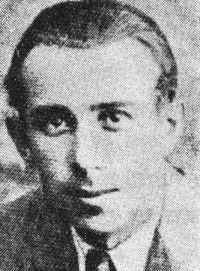
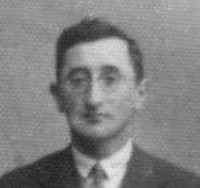
Yaakov Lifshits was born in Rakov in Iyar 5667 (April 1907). His father had passed away when Yaakov was about ten years old. Despite financial difficulties, his mother was able to send him to study in Yeshiva. He studied a great deal, but he preferred secular studies. He left the Yeshiva after several years and continued his education at a Russian primary school in Rakov.
He was accepted to the Vilna Technical School in 5685 (1925). From his early childhood, he had been attracted to mathematics and the exact sciences. His interests helped him get accepted to the Technical High School. After 2 years of study at the Technical High School, he transferred to the teachers' seminary that was directed by Dr. Shmuel Yona Tsharno.
He graduated from the seminary in 5690 (1930) and was appointed as principal of the Rakov Tarbut School. After working there for only one school year, he was accepted as the principal of the Tarbut School in Volozhin, where he served as principal as well as a teacher of mathematics and physics[1].
Yaakov was an enthusiastic Beitar member since his youth.[2] He followed the ideas of that movement and fought for his world outlook. He found an arena for his communal activities in Volozhin, for a recognizable portion of the youth and adults belonged to Beitar and the Revisionists. Nevertheless, his life was not easy, for his opponents filled him with bitterness. However, there is no need to recall these forgotten thigs, for the wisest of all men said: “Their love and their hatred, as well as their jealousies have already passed.”[3]
Yaakov led the school with talent and skill. He raised it to a high level, and saw
[Page 487]
success in his toil He became bent over under the burden of the work, but he accepted everything with love, for he was performing a holy task. He was the forger of the path of the school.[4]
For eight years, Yakov stood as guard of the Hebrew education in Volozhin until the Soviets came in 5699 (1939). With the change of regime, the wheel of fortune turned upon him as it did for every Jew of the city. The new regime removed Yaakov's soul from him and killed his spirit. Yaakov became depressed. The Soviet supervisor invited him for a meeting, and informed him that the language of instruction must now change to Yiddish, “as per the parents' demand.” The school leadership became Communist. The principal was Jewish woman from Russia, and Yaakov served as the vice principal. Nevertheless, Yaakov was the de facto principal. It was very difficult for him to get used to the new guard, who removed the soul and spirit of the school The curriculum was in accordance with Communist doctrine, and it was forbidden to deviate from it. Yaakov was constantly under the scrutiny of the “searcher of hearts” – the Soviet inspector. The school ran under the doctrine of “watch your words,” and “he who guards his mouth and tongue is protected from tribulation of the soul,” with searches and spying on the actions of the Jewish teachers.
Yaakov's spirit became burnt out during the Soviet period. They forced him to be the “destroyer.” The content of his life was taken from him. The source from which he drew his inspiration, hope, and faith was drained. He walked about as a shadow among the isles of the ruins of the world of his life, that wonderful world of Zionism and Hebrew culture that built him up piece by piece throughout his short life that was crowned with deeds and vision.
The burn-out of Yaakov's spirit began during the Soviet era, and the arrival of the Germans put an end to his physical and spiritual existence together. He was taken out to be murdered when he was still in his prime.[5]
Translator's footnotes:
Another event I remember is that with my ten years old classmates, we were invited to our teacher's apartment on Vilna Street in Volozhin to hear classical music. The young Lifshits couple were able to buy a real gramophone, one of the first in the Shtetl with some Yiddish, Hebrew, and classical records. This event was a memorable one for me, though it took place some seventy years ago - we heard the famous Tshaykovski's “Nutcracker.” Return
by Benyamin Shafir (Shishko)
Translated by Meir Razy
Donated by Anita Frishman Gabbay
|
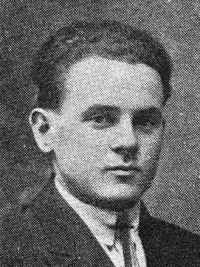
Noach was born in Volozhin to his father Shimshon Perski. Noach's grandfather was the Starosta Rabbi Yoseph-Yosel Perski, a member of the family of Rabbi Shimshon “the Dayan” (the judge) who lived at the time of Rabbi Itzele, the son of Rabbi Chaim of Volozhin (see pp 46-48).
He was educated in the Yeshiva “Sheary Torah” in the town of Kremenchuk and then the Remilis Yeshiva in Vilna, under Rabbi Mila. He graduated from “the Doctor Kahanshtam Teachers Academy” in Vilna and was a teacher at the Tarbut School in the town of Suwalki and Valozhyn. He was a handsome man with curly hair. The combination of his inside beauty as well as his outside appearance created the all-encompassing person who inspired his students. He educated a whole generation of pioneers to work, love their nation and their country.
[Page 488]
He refused to continue teaching during the Soviet occupation (1939-1941) period. During this time the cheder was converted to a Yiddish-based school. This change was attributed to a “request by parents”. Being a proud Jew who was committed to the Hebrew language he preferred to lose his work rather than give up his principles.
When the Germans occupied Volozhin he was the first to carry the yellow star of David on his chest. He considered this a symbol of national pride.
His whole family was murdered in Volozhin. Only his brother Yitzhak, who (at the time of writing) lives in Israel, survived.
Written by one of his students
Translated by Jerrold Landau based on an earlier translation
by M. Porat z”l that was edited by Judy Feinsilver Montel
|
|
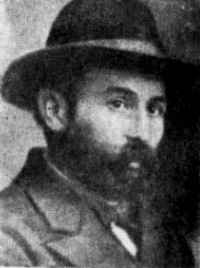
Reb Eliyahu Yitzchak was born in the Oshmyany district near Vilna in 5644 (1884). He studied in a cheder in his youth. He came to study in the Volozhin Yeshiva in 5660 (1900) and learned there until 5666 (1906). Reb Eliyahu Yitzchak immediately became known in Volozhin as a precious young man. While still young, he married Dvora Elka, the daughter of Reb Yitzchak Perski.[1]
Even though Reb Eliyahu Yitzchak was great in Torah, he was discreet, and comported himself modestly with all those to whom he came in contact, in business as well as Torah and the wisdom of Israel. Although his humility was his primary trait, he was honored and revered, and his name spread out as a well-rounded man, modest, full of learning, with a good personality and fine traits.
Not only was he great in Torah, but he also excelled in secular knowledge and wisdom. In those days, more than 50 years ago, any scholar in Volozhin could obtain anything his heart desired in Torah literature – Talmuds, books of Midrash and Kabbalah, and other holy books. However, a Hebrew newspaper was an unusual sight in Volozhin. Reb Eliyahu Yitzchak was among the few who subscribed to Hatzefira, in partnership with the teacher Avraham Gorelik.
He did not read the newspaper only in order to know the news and what was taking place in the wide world. This was a reading of holiness. Therefore, when he received the newspaper from Ozer der Raznoshchik the postmaster, he would go to Gorelik's house. These two scholars would sit next to
[Page 489]
the table on stools and first scan newspaper with reverence. They would touch it and feel it. Only after this spiritual preparation did they begin to read it. This was the order of the reading: they would divide up the newspaper, with each taking a page to read. When each one finished their section, they would swap, until both finished reading the entire newspaper. The debates only began after they finished reading: each stating their opinions. They would discuss the issues for many hours, debating and expressing opinions about the issues of the day that the had read in the newspaper, and about other issues about which they had not read in the newspaper, but which they knew from their day-to-day life and their interest in questions of literature, politics, etc. They also dealt with issues of Hatechiya, debated about Tolstoy's “War and Peace,” or expressed their opinions on the murder of the anti-Semite by the Jewish student Bogrov. The Beilis trial which took place in the year 5673 (1913) played a significant role in these debates. Indeed, these were various problems that stood in the forefront of the events of the world at that time. The surprising thing is that these debates were conducted in pure Hebrew.
Reb Eliyahu Yitzchak occupied himself in Torah all his days. He studied, taught, and groomed many students. In addition, he served as the Jewish history and Bible teacher in the Polish primary school. He also taught those subjects in the Polish Gymnasja and the commercial school.
The Polish professor Konofnicki, who served as the principal of the gymnasja, did not miss any of Reb Eliyahu Yitzchak's classes. He was a full participant in all of them, and listened to any word emanating from his mouth. He would say, “These classes are the words of the true G-d.” He learned a great deal from them, and enjoyed his style of lecturing and skill at explanation.
Reb Eliyahu Yitzchak joined the Zionist movement, and was an enthusiastic and dedicated member of the Mizrachi party, an activist in the Jewish National Fund and Keren Hayesod. He was active, and encouraged others to participate, as he fulfilled national and communal roles. He also served as the communal head in his time.
Reb Eliyahu Yitzchak perished in the Volozhin ghetto together with his wife and many members of the community during the great slaughter that took place in May 5702 (1942). The Nazis closed off the ghetto. Reb Eliyahu Yitzchak ran from his house to a hiding place that the people of the city had built. He was shot to death by an S.S. man as he was running.
His two sons and daughter live in the Land. One of them, Yosef Schwartzberg, served for many years as the secretary of the Organization of Volozhin Natives in Israel. The second, Mordechai, served as one of the secretaries of the Ramat Gan Workers Council. The daughter built her home in Kfar Vitkin.
This is the comfort and this is the revenge for the pure, refined life that was snuffed out, and for the destruction and loss. The children of the Holocaust victims are building the nation and the Land.
Translator's footnote:
[Page 490]
By Fruma Tzitreen (Rogovin)- Tel Aviv
Translated by Matz Dany and Matz Rivka
– A. Berkovich's granddaughter
|
|
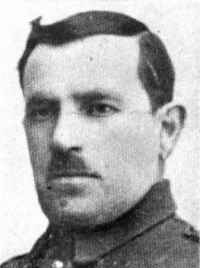
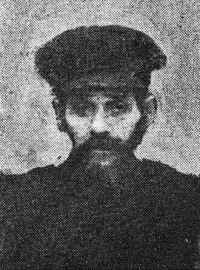
Abraham Berkovich was a notable and important person in Volozhin. For that reason, I can still clearly recall his character traits. He was very handsome, of average build, smart and always in a humorous mood.
He came from Minsk. His parents were orthodox Jews and they wished to send him to study in the Volozhin yeshivah. However, he preferred secular studies, and with his father's permission, he attended a high school in Minsk. After his father's sudden death, he was forced to leave his high school studies so he could help his mother with the household income. He continued with night lessons. He learned on his own and read many books. He was able to gain a great deal of knowledge.
He settled in our town when he married Keile from Volozhin. He opened a pharmacy in the most central location, in the market place, in the house of Mushka Persky (the baker). The pharmacy was decorated in very good taste. Two of its walls were covered with fitted polished shelves and on them were medicines in bright glass jars. The floor was polished with red varnish and covered with carpets, which were made by local farmers.
For a few years the pharmacy was the family's only source of income. When the children grew up and the parents decided to send them to a high school in Vilna, Keile opened a fabric store to supplement their income. The business succeeded and it enabled them to cover the large expenses they had acquired for their children's education in the big city.
Abraham Berkovich had his hands everywhere. There was not a trade that he was not proficient in. He truly had golden hands. He was familiar with various construction skills (although he never officially studied them). After the big fire burned the town in the twenties, he remodeled his shop in the Perelman's building, so he could still make a living. At a later time he bought from Yehuda Abraham Persky, the ritual slaughterer, his burnt bricks building. He cleared the damage and the water and rebuilt it. His power of invention was revealed when he invented a round heating oven covered with tin-a real invention in Volozhin of those days. He knew carpentry, and the furniture in his home, which had an original style, was all hand made.
Prior to every Passover, he would work diligently to beautify and to decorate his house with many colors and ornamentation. The sight was heart warming and cheerful. He also excelled in sign painting posters and announcements. He likewise applied make-up for the theater actors.
[Page 491]
Those deeds revealed his artistic talent and creative imagination. In addition, he would read the Torah and would blow the Shofar in the synagogue. Although in all these skills he was self-taught, all things he did turned to artwork.
“The Fire Brigade” was his main hobby. He founded it and chaired it until 1935. From that year on, the Polish government took away the management of the association from the Jews and gave it to the district governor. Berkovich remained as a consultant and an honorary member only.
Berkovich was always very active and restless (due to his good physical health). His hands were always occupied with toil. His brain was always engaged with ideas and plans. For instance he realized that the city needed an optician. He gained quick knowledge in this area, he brought an optical instrument and the problem was solved. A story was told about him: once someone came to him to order glasses. Berkovich checked his vision and found it quite normal, but the “patient” insisted he needed glasses. Berkovich gave him clear glasses and asked him to come for a check up after some time. The man came back and was very satisfied that the “glasses” saved his power of vision.
Many who knew Berkovich mentioned in many occasions his stories and fables, we'll present some of them.
* Reuven Rogovin told the life story period of Berkovich before he came to Volozhin. Back
By Lea Baksht (Feigenbaum) – Netanya
Translated by Jerrold Landau based on an earlier translation
by M. Porat z”l that was edited by Sandra Krisch
|
|
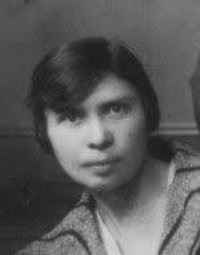
Yaakov (Yani) Garber was one of the prominent figures in our city. He came to Volozhin during the 1920s and immediately gained a circle of acquaintances and friends. He had higher education. His intelligence was noticeable in his mannerisms and his cultural approach to people He was careful about the honor of his fellow.
There was a piano in his house – something uncommon in Volozhin during those days. This magical box turned Garber's house into a public venue. Many people sat on the large porch of his house to hear the news. Yani subscribed to various newspapers, and anyone who wanted was allowed to read them. Therefore, his house was always filled with readers who were interested in what was going on in the world.
His wife Dina (known as Chaya Dinka) also had higher education. Fate was cruel to her, and she did not merit a long life. She died during Chanuka of 5684 (1933). Mourning was decreed in the city, and all the events that were to take on the holiday of Chanuka were cancelled.
Yani owned a liquor store and a flour warehouse, and was the provider of kerosene. Nevertheless, he did not aspire to amass possessions, but rather to do good for the community. He was modest, and did not pursue lofty positions. However, the Jews of the city recognized him for his fine traits, and wanted to appoint him as the communal administrator [Parnas]. They recommended his candidacy as mayor. He was invalidated because he was Jewish, and merely served on the city council. He served the community faithfully in that position. He toiled with the community for the sake of Heaven. Many came to ask his advice, and found an understanding heart and an attentive ear. He received everyone politely, and his hand was outstretched to the needy. He never pushed off someone who approached him with “Go and come back.”
Even though Yani was an erudite man who sat on “a high and lofty chair” he did not boast or act haughtily. It was as if he fled from greatness. He walked among the simple folk as an equal among equals. During his life, he fulfilled the adage of the sages, “Go see how the masses conduct themselves.” He walked around the marketplace in order to hear what the peddlers and stall-owners were saying, what was pressing them, and what was bothering them. They regarded him as one of their own. Thanks to this custom, the people were satisfied with him.
Yani was the father of two sons. One of them, Daniel, lived in Russia and earned his livelihood as a pianist of renown. The second son, Moshe (Monek), came to the Land of Israel with the army of Andras. From here, he left for Italy, and traces of him were lost.
Yani was a dedicated Zionist in heart and soul. I was about to make aliya to the Land of Israel in 5697 (1937). This was after the Przytyk pogrom. I discussed that bloody event with Yani. He regarded
[Page 493]
this pogrom with the utmost of seriousness. He saw it as a harbinger of evil for the Jews of Poland. Therefore, he encouraged my aliya and was deeply sorry that he was forced to remain in the Diaspora. I received letters from him when I was in the Land. He wrote his final letter when the Soviets entered Volozhin.
Yani served as chairman of the Judenrat during the time of the German occupation. The Germans demanded that he provide three hundred Jews for “work.” Yani did not suspect murder, and he believed that this was indeed about work, through which the workers would be able to survive. Yani joined them. He realized his terrible mistake when they arrived at the sports field in front of the barracks. He requested that the Germans shoot him first. They gave him this final “act of mercy.”
Translator's footnotes:
Yani from Nikopol in Ukraine, where he met his future wife, Haya-Dina, born Perlman. The Perlman family lived in Nikopol during the First World War.
Yani owned oil, flour, and wine stores. Yani and his family lived in the big stone house built by count Tyszkiewicz for R' Hayim and ultimately inherited by Malka Perlman (born Itskhaykin), Haya-Dina's mother. The stores were situated in its large cellars. Yani also managed his business from this house.
Yani was musically talented and blessed with perfect pitch. He often joined the Beitar amateur chorus. The choir's singing became a true multi-voice concert when Yani added his voice.
Gossip held that Malka, Dania's grandmother, once said “The teacher woman is already covered with gold while Dania is still playing octaves.” But Dania continued his piano studies in spite of the shtetl's sayings. In parallel with high school studies, he took music lessons in the Vilna conservatory, and he used to play concerts in public. Ultimately the piano saved his life. During the Soviet rule, the authorities invited him to teach piano in Russia. There he married a Bobruisk-born girl; she too was a pianist. They lived in Russia when the Germans occupied Volozhin. Dania the pianist survived the war.
Monia (Moshe) Garber was killed in the Monte Cassino battle against the Germans as a soldier of the Polish army.
After the Germans occupied Volozhin, Yani Garber was nominated to function as head of the Volozhin Judenrat. The SS ordered him to gather three hundred Jews to carry out a job near the military sport stadium. The assembled group was confined in the cinema building near the stadium. Word spread that all of them would be executed in the stadium. Yani understood that the Germans cunningly lied. As the Judenrat head, he could go free. But it was against his nature. Yani asked to be the first to be shot. His request was fulfilled. Yani Garber, one of the most honored Volozhin citizens, head of the town's Judenrat, was murdered at the sport stadium in Volozhin on October 28th 1941.
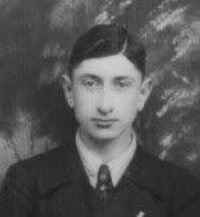
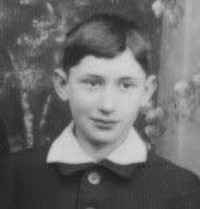
Yani Garber was the first Volozhin martyr in the first Volozhin mass slaughter.Mr. M. Porat, who was related to the family through Yani's wife, added a great deal of additional information and three pictures in his original translation. I reduced the main translation to match the original text, and I include his additional material (which was woven into his original translation) below, largely unedited:
By Shulamit Goloventshits (Berger) – Bet Shemesh
Translated by Jerrold Landau based on an earlier translation
by M. Porat z”l that was edited by Eilat Gordin Levitan
Yisroel Lunin arrived in Volozhin in the year 5670 (1910) to study at the Etz Chaim Yeshiva. The Yeshiva was headed by Rabbi Refoel Shapiro. Yisroel married Shayna Berger, daughter of Feitche and Tzvi. After his marriage he worked in the hides and linen business in partnership with Itche Meyer Berman and Lipa Levin. The linen was transported by railroad to Vilna. The business flourished greatly.
Reb Yisroel adapted himself to the life of Volozhin, and was elected as gabbai of the Kleizl. He devoted his time to aid and assistance of the poor and the to economic development. He was amongst the founders of the public Bank (Yiddishe Folks Bank) and became its director. The bank supported small businesspeople and tradespeople. He was also among the founders of the self-defence group during the First World War, and was an active participant in its activities.
Reb Yisroel also concerned himself with the maintenance of the Yeshiva building, which was heavily damaged during the First World War. He wrote letters to Volozhin natives in the United States in which he asked for their assistance. The funds indeed arrived, and the Yeshiva was reconditioned. Lunin also concerned himself with the dwelling conditions and sustenance for the Yeshiva students.
The following event demonstrates the relationship of honor that the community had for Reb Yisroel Lunin. Volozhin had about a dozen wagon drivers who transported passengers to and from the railway station. Then Chaim Meir Yeshaya rose up, purchased a bus, and began to transport the passengers to the station. The wagon drivers remained without sustenance, and it reached the point where they were lacking a morsel of bread. They asked Reb Yisroel to become involved in the matter. He felt that urgent action was necessary to save the wagon drivers. He recommended to Chaim Meir Yeshaya that he form a cooperative and accept all the wagon drivers as members. He accepted the recommendation out of respect for the rabbi, and, in this way, the wagon drivers were saved.
When the Polish regime was formed, Reb Yisroel Lunin was elected as head of the community of Volozhin. He earned the recognition and esteem of the Jews of the city. He went with the spirit of the times. Therefore, he supported the establishment of the Tarbut School.
[Page 494]
|
|
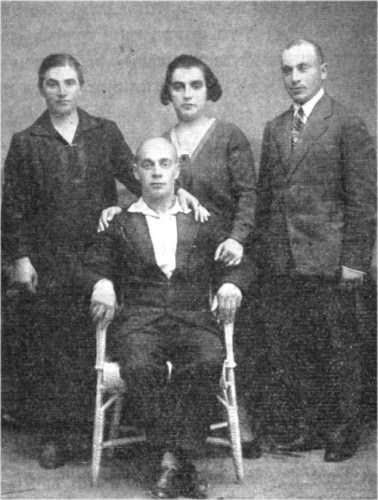
Unfortunately, we did not succeed in obtaining Reb Yisroel Lunin's picture. We present here a picture of his family: Standing from right to left: Alter Shimshelevitch (Lunin's brother-in-law) the first victim of the Volozhin Holocaust, who was shot immediately with the arrival of the Germans. Chaya Lea Shimshelevitch (Berger), Sheina Lunin (Reb Yisroel's wife). Seated: Shlomo Berger (Lunin's brother-in-law, died in Israel) |
Lunin was an ardent Zionist. I remember Grabowski arriving from Vilna to collect donations for Keren Hayesod. He called a meeting in the Kleizl. To his dismay, the response was very weak. Nevertheless, he did not despair, and he conduced Zionist publicity along with Shlomo Chaim Brodna and Yaakov (Yani) Garber. The result was satisfactory. When Grabowski came to Volozhin a second time, the Jews of our town gave him a great deal of jewelry and valuables as donations to Keren Hayesod.
Lunin and his family shared the same fate as our dear townsfolk. (Regarding his end, see the article of Mendel Wolkovitch “The Destruction of Volozhin” in the Holocaust section).[1]
Translator's footnote:
|
JewishGen, Inc. makes no representations regarding the accuracy of
the translation. The reader may wish to refer to the original material
for verification.
JewishGen is not responsible for inaccuracies or omissions in the original work and cannot rewrite or edit the text to correct inaccuracies and/or omissions.
Our mission is to produce a translation of the original work and we cannot verify the accuracy of statements or alter facts cited.
 Valozhyn, Belarus
 Yizkor Book Project
 JewishGen Home Page
Copyright © 1999-2024 by JewishGen, Inc.
Updated 24 Jan 2024 by JH