 |
|
[Page 10]
Translated by David Goldman
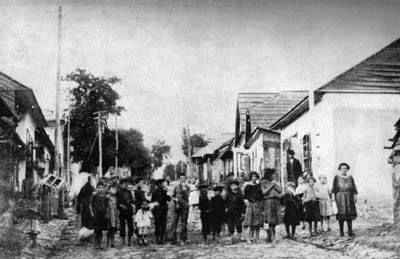
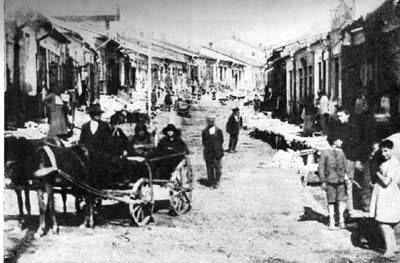
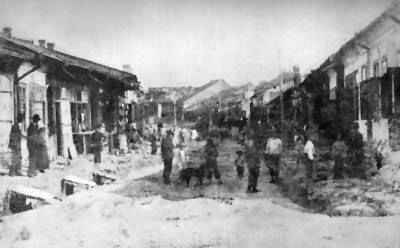
Since the Holocaust, interest in the Old Country and the shtetl has grown much stronger and more attractive among the Jewish people. People who had quickly given up interest in the shtetl years ago, or who had thought of the word shtetl as referring only to their own family, have found, since the deaths of their own relatives, substitute family from among survivors of their shtetls – a person from the same town turns into a family member. They started longing for their parents and siblings, and if they were no longer alive, they wanted to find people who saw them or who spoke to them last.
In addition, those growing older began longing for the “good old day” of their childhood and youth. They didn't want to lose the life-long memories that the butcher had tried to wipe out. This is why many emigré associations, institutions and memorial books developed.
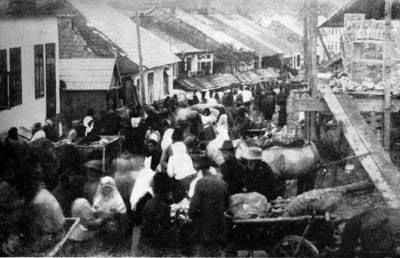
Of course, our Lipkany was never a major center of Jewish life or an exceptional community among the Bessarabian shtetls before the Holocaust (except for the surprising concentration of genius in the images of its scribes and scholars – a veritable treasure trove for such a faraway shtetl). Lipkany, like all the rest, had always been involved in the usual worries of earning a living (commerce, crafts, brokerage), bringing up children (cheder, synagogue, yeshiva) and marrying them off. The spiritual life was synagogue, righteous leader (tsaddikim), chassidim, rabbis, ritual objects, ring leaders, disputes, character traits. Charity, anonymous charitable contributions, assistance for various problems. Faith, trust in G-d, forgiveness, accepting physical suffering, pure family life. With the Enlightenment, there were the gymanzia, political parties and not enough modern institutions. From time to time, normal daily life was interrupted by evil decrees and persecutions: cholera, crime, “rushed” weddings, fires, wars – and then back to normal daily life, busily engaged in personal and community life – until the arrival of the Holocaust.
Unfortunately, we don't known very much about the history of our shtetl. Relatively speaking, Bessarabia has a young history. Of course, we almost never had the usual elements in other Jewish communities: community councils and records. These didn't exist in either under Romanian or Russian rule. We have to make due with the small amount provided to us by our associate, Yankele Tamir (Berger).
Our book has several goals:
This book does not reflect, and cannot reflect, everything about the community's life in all its aspects, colors and historical periods. This book represents merely a drop in the bucket, but for Lipkany emigrés in Israel and elsewhere it represents a wellspring of unforgettable memories and emotions about their childhood, youth and later lives.
20 years have passed since the Holocaust. The wounds have not healed, and will never heal. May the “gravestone” serve as an eternal memento of our shtetl forever.
Our modest book is now written, including the literary section, by our fellow Lipkany emigrés - simple Jews who are neither professional writers or scribes. They have dedicated the best and finest of their thoughts and feelings to their shtetl.
May those who provided materials, photos and pictures of the shtetl be blessed (especially Nissan Gershenson of Brazil). We offer our heartiest thanks to our friends who were involved in putting the material together: Moshe Zilberman-Silon and Yaakov Berger-Tamir, together with the vital assistance of Notta Roitman. Moshe Zilberman-Silon made corrections together with Moshe Steif. The members of the editorial board were Dr. Menachem Naor, Rabbi Orenstein, Moshe Steif and Reuven Dagan. They gave of their time and effort to improve the book, make it more attractive and a high quality product.
We also wish to thank the members of the book committee each of whom, to the best of his ability and situation, contributed to getting this book published by collecting material and financial resources: Gershon Bronstein, Pedatsur Shreiber, Yosef Beretz, Yaakov Steinberg, Chaim Fichman, Liber Barab, Pinchas Goldenberg, Chonya Wolfson and Baruch Feigengold
[Page 12]
Translated by David Goldman
|
|
[Page 13]
|
|
[Page 14]
|
|
[Page 15]
|
|
[Page 16]
|
|
[Page 17]
|
|
[Page 18]
|
|
[Page 19]
|
|
[Page 20]
|
|
|
JewishGen, Inc. makes no representations regarding the accuracy of
the translation. The reader may wish to refer to the original material
for verification.
JewishGen is not responsible for inaccuracies or omissions in the original work and cannot rewrite or edit the text to correct inaccuracies and/or omissions.
Our mission is to produce a translation of the original work and we cannot verify the accuracy of statements or alter facts cited.
 Lipcani, Moldova
 Yizkor Book Project
 JewishGen Home Page
Copyright © 1999-2026 by JewishGen, Inc.
Updated 21 Jan 2019 by LA