 |
|
|
[Page 82]
The Kremenets Community under Polish Rule
Munye Katz (Haifa)
English Translation by David Dubin
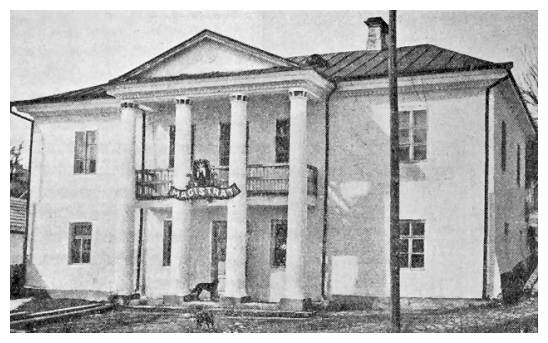
After the establishment of Polish rule in Kremenets in 1920, various agencies, assemblies, and committees became active in town. Only in 1928, however, under the law governing the autonomy of religious minorities, did an organized Jewish community develop in Kremenets, as it did in other towns.
The first Community Council was elected in 1928 to a four-year term. The election was by secret, direct ballot of male voters age 21 and older. The first head of the community was Avraham Vaynberg, a Zionist, one of the honored elders of the city. The council was an official institution with specific authority under the law. Among its duties was dealing with Jewish issues and education. Beyond those responsibilities, the council also dealt with practical issues such as social services, health, and vocational training, because it saw the vital importance of alleviating poverty. From 1932 budget published in full in the Kremenitser Shtime, we see that the community was directly involved in (1) the slaughterhouse, (2) the bathhouse, (3) the cemetery, (4) the hospital, (5) the rabbinate, (6) the Talmud Torah, (7) the home for the aged, (8) hospitality, (9) registration of the Jewish population (births, deaths, marriages, etc.), (10) care for Jewish soldiers on leave, (11) care for Jewish captives, and (12) occasional social work as required.
[Translator's Note: Kremenitser Shtime means Voice of Kremenets.]
Moreover, the Community Council supported other organizations, such as TOZ; the ORT school; the Benevolent Fund; Chashmonaim, the sports organization; and others.
[Translation Editor's Note: TOZ stands for Towarzystwo Ochrony Zdrowia, Polish for Association for the Protection of Health.]
To cover its budget expenses the Community Council used fees from the enterprises it controlled (fees for ritual slaughter, cemetery fees, registration fees, and the like). Thus direct taxes were charged to the Jews of the city. There were over 1,000 items on the 1932 budget.
The Community Council worked on various projects without undue publicity. In its meetings, it would decide on the issues of the day, and its personnel would carry out the decisions.
Unusual problems, such as distributing wood during the winter or distributing matzot (the maot chitin campaign) and potatoes for Passover, would provoke great behind-the-scenes wrangling. This was also true when it came to choosing a new rabbi or ritual slaughterer. The Community Council would also call public informational meetings in the Great Synagogue or the new Kozatski Study Hall, where stormy, protracted arguments would take place. Decisions, sometimes contradictory ones, were reached. The decisions were not binding on the council, which always retained its own authority by virtue of its elected status, but it would generally consider the decisions made by the voting public during these meetings.
[Translation Editor's Note: Maot chitin (literally, “money for wheat”) is the custom of providing for the Passover needs of the poor.]
[Page 83]
Undoubtedly, the Community Council was very influential in the city's public life. It was natural for political organizations in town to try to influence the Community Council and even rein in its power. There was no shortage of struggles for power by powerful individuals. Moreover, the community was quite accustomed to bitter political battles especially between the Zionist representatives, with M. Goldring and Perlmuter, and the apolitical citizens under Sh. Brodski and his colleagues, whose opponents saw them as tools of the government. The strife within the community was even reported by the local media.
After the death of Avraham Vaynberg in 1930, a second Community Council election was held, and Moshe Kapuza, Meir Goldring, Dr. Zalman Sheynberg, Tsvi Barshap, Avigdor Perlmuter, Rabbi Mendiuk, Sh. Brodski, and the representative of the neighboring village Pochayev were elected. The second head of the council was Avigdor (Zeydi) Perlmuter.
In the next elections in 1934, the third head of the council, Sh. Brodski, was elected. He served in this capacity until 1937.
From the council's official inception, the Polish authorities inspected its actions and well knew how to use internal struggles to its advantage. The climax came in 1937, when a struggle broke out between the sides and the rabbis of the town took an active part (Rabbi Mendiuk on the side of the Zionists, and the religious Judge Lerner on the side of Brodski et al.). The regional government official suspended the elected Community Council under the rationale that internal struggles were endangering the community's normal functioning and the council's activities. The government appointed Fred Rozin, the engineer (the son-in-law of the old industrialist Yisrael Margalit), to the office of “commissar” of the community, with several advisors at his side. The most active and dedicated of them was Ratsenfeld, formerly a government-appointed rabbi in the village of Shepetovka.
Rozin the engineer was distant from religious life, had been brought up in an assimilationist environment, was a reserve officer in the Polish forces, and was trusted by the authorities. Moreover, the government entrusted the community's authority to him. It must be noted that Rozin fulfilled his duties dutifully and with understanding, establishing community institutions and even managing to promote peace between the warring factions. As a result, in the elections of 1938, a united list of candidates appeared.
In the fourth council, Getsi Klorfayn, Tsvi Barshap, L. Krivin, Y. Gintsburg, A. Maystelman, Yisrael Margalit, Rabbi Mendiuk, and the representative of the village of Pochayev served. The fourth head of the council was Yisrael Margalit. This council functioned until World War II – until the arrival of the Russians in Kremenets on September 20, 1939.
The secretary of the Community Council was Duvid Leviton, and after his death in 1934, his son Arye Leviton took his place.
Light and shadows appeared in the workings and daily activity of the Kremenets community, but during all the years of its existence, it served as a true advocate and powerful castle for the Jews' autonomy in Poland and succeeded in going beyond the bounds set by the authorities.
Zev Shumski (Tel Aviv)
English Translation by David Dubin
The Jews of Kremenets always took an active role in the town, whether in its administration or its organization. During changes in regime, the various governments could not ignore the Jewish population, and they incorporated the community's notables into the town's administration. In the years before World War I, three Jews served on the City Council: Yosef Bitiker, Yisrael Margalit, and Mikhael Shumski. The friendly relations assured the people that the general atmosphere in town was more liberal than in previous administrations under the Czar, and anti-Semitism was not prevalent in town. Jews paid city taxes and benefited in one way or another from city services as citizens, merchants, and businessmen. However, attaining public office was not even a dream …
During World War I, the mayors of the town were the Catholic priest Bilatski and, after him, the Ukrainian Tsayts. At that time, Azriel Kremenetski arrived in town, and he served as assistant mayor and, after a time, as mayor. In the struggles between the Russians, Poles, and Ukrainians for influence in the town and bitter changes in government authority, the Jews were a neutral and steadying force, and it was natural that a Jew would rise to the rank of mayor.
Under Polish rule, Reyveski, Bartok, Zelevski, and Yan Bufra served as mayors in succession – the latter for many years, until the Soviets captured the town. During this period, 12 representatives from various circles served on the City Council on behalf of the Jews. Every few years, new elections would be held, but, notably, very few personnel changes were made between one election and the next. The following served on the council (with minor changes from one council to the next):
Goldring – from the Zionists
Zalman Sheynberg – from the Zionists
Perlmuter – from the Zionists
Chayim Rozenberg (1927–1930) – from the trade union
Lisi – from the trade union
Goldenberg – from the craftsmen
Yitschak Yosef Alterman – from the craftsmen
Maystelman – from the craftsmen
Chayim Bakimer – from the merchants
Brodski – from the merchants
Gershteyn – from small business
Mikhael Shumski – independent
These men served in the seven-member city administration under Polish rule:
Azriel Kremenetski
Shlome Fingerhut
[Page 85]
|
|
In spite of the variety of factions, the Jews in the city formed a united coalition, voting as a bloc except on matters of importance to a particular class, when trade union delegates from Jewish trade unions sometimes voted with Polish and Ukrainian delegates against delegates from the other Jewish factions.
Jewish officials were not appointed in town even under the Poles, other than one Jewish tax collector and in the town power plant, where Jews served as engineers, fee collectors, and specialized workmen because the plant was originally under Jewish ownership and had been transferred to the town with its workforce intact. Jews did serve the town as suppliers and middlemen. Also, the town had no choice in several special services, which could only be provided by Jews: dyers, tinsmiths, builders, plumbers, electricians, locksmiths, carpenters, coachmen, and even street repairers. Especially notable was Chayim Leyzer Lamfel, a street subcontractor, who would deal only with Jewish workers, relatives, and others who were expert at paving roads and paths.
The City Council meetings were held in public and sometimes drew large crowds, especially on matters of monetary allotments, which aroused great public controversy and sometimes were even debated in the Jewish newspapers. The town allocated set sums for Jewish public institutions, such has the home for the aged, the Jewish hospital, the ORT school, the bathhouse, the orphanage, and others, and the allocations engendered widespread public struggles. In the final years before the Holocaust, an anti-Semitic spirit entered Kremenets, and from 1930 on, the deprivation of rights, alienation, and clashes grew.
[Page 86]
|
|
I could not complete my overview of the Jewish role in the town without mentioning the town secretary, Strumchinski, a Pole who held the position for decades, first under Russian rule and later under the Poles. He did not love the Jews, but he loved their money and was known as a bribe taker. The Jews appreciated this and “took care” of him so that he would take care of their municipal issues. This “honored” arrangement held strong under the different regimes. He was also an officer in the fire brigade (in which there were many Jews), loved his uniform, and was thus called “General Strumchinski.”
With the Russian conquest of the town (September 22, 1939), a Jew, Moshe Sugan, a local Communist, was appointed mayor, and soon thereafter his successor, the Ukrainian Kustriuva, who was not a town resident, was appointed. In that period a Jew, Avraham Rayz, was appointed chief of police; he had previously spent many years in prison on the charge of being a Communist.
A. Gluzman (Afula)
English Translation by David Dubin
Synagogues and study halls held a highly honored place in the lives of Kremenets Jewry, and they played many roles in different situations. First and foremost, of course, they were places for prayer. Jews came there to pray three times daily, not to mention on Sabbaths and holidays. Secondly, they were used as venues for celebrations. They were the news centers of the city, places to discuss politics. Each class and social group had its own prayer hall. One's class could be distinguished by the synagogue one frequented. Groups without their own synagogue building would at least have their own minyan.
During the work week, the Jews engaged in a battle for their very sustenance. But when the Sabbath or holidays arrived, all the stress and troubles were forgotten. Then all were partners in the day's restfulness and joy and in hope and celebration, sharing the “honors” of the liturgy and Torah readings, and peace and tranquility reigned throughout the community. If there was an occasional disagreement, it was only for the sake of heaven.
The scene was unforgettable on a Sabbath morning, when the entire length of Sheroka Street began to fill with streams of distinguished community notables, craftsmen, and merchants in Sabbath garb, holding their children's hands on their way to Sabbath prayers. All the stores were closed. Each person went to his own synagogue, to his own permanent place. At around noon, people left the synagogue and held their secular conversations and discussions about synagogue goings-on, giving reviews of the cantor's or magid's performance, and they would part with the “Good Sabbath” greeting, go home to recite the Kiddush, and enjoy the restfulness of “the day more honored than all others.”
The Great Synagogue was the most important synagogue. It was actually considered one of the most beautiful in Poland. It was housed in a grand and lofty building adorned by a surrounding stone-paved courtyard. The architecture was beautiful. There was no real intimacy of unity. The congregation was varied and not always the same. Distinguished householders did not pray there, but nouveaux riches, young married men, craftsmen, and travelers did; cantors and famous singers would lead the services on Saturdays. There were also regular cantors like Cantor Sherman and the brother of the famous Koussevitsky. Cantor Sherman was a fine-looking, tall man, wearing modern clothing with an aristocratic air. He had a fine tenor voice. When he appeared wrapped in his prayer shawl and began the prayer “How goodly are your tents, Jacob” in his powerful voice, silence fell upon the crowd of congregants. He would descend the stairs at his own slow pace and cross the synagogue between the aisles of congregants to his place next to the Holy Ark, which itself was a work of fine art.
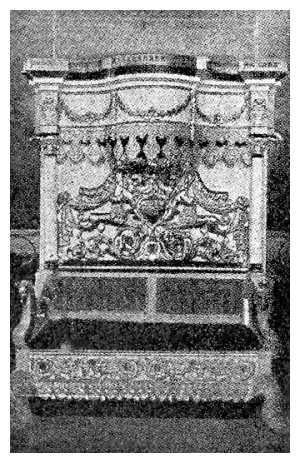
The synagogue was full of glory during Hanukah, when, according to custom, the first candle was lit, accompanied by song and instrumental music. Great crowds streamed in to hear the celebration and the performance of the family musical ensemble Hatskele and Anzele the violinists and their sons the flutists, and the singers Fingerhut and company, who would sing “These Candles” and “My Rock of Salvation.” Then the large menorah was lit, and immediately a multitude of electric menorahs would light the area.
[Translator's Note: In Hebrew, these song titles are Hanerot Halalu and Maoz Tsur, respectively.]
Beautiful experiences and cherished memories of childhood were associated with this synagogue.
How wonderful was the tradition of escorting a bride to the Sabbath services during her first week of marriage!
[Page 88]
For this auspicious occasion, a special dress and headdress were prepared for the bride. When all the congregants had assembled in the synagogue, a stream of marchers left the bride's home accompanied by her in-laws, her friends, and others, all dressed in especially fine clothing – and in the center was the bride's shiny countenance, happy and serene. The young matron was accompanied by love and good wishes from all the surrounding houses in honor of her first visit to the synagogue. In the synagogue, she was brought to the eastern wall of the women's section, and hundreds of women raised their eyes admiringly to the beautiful and graceful bride and thus welcomed her to the bosom of the holy community.
The Great Synagogue also served as a meeting hall for public assemblies, celebrations, and the greeting of important guests.
The Kozatski Study Hall. This study hall was completely different; it was the second largest of the Kremenets synagogues. Several hundred congregants came on the Sabbath and during the week. The main hall was large, as were its windows. On the walls were drawings of animals and birds in shiny colors, which inspired a distinctive frame of mind. Many explanations of the origin of the synagogue's name were common among the populace, one of them being the thought that people rushed through their prayers there like Cossacks … The congregation was multifaceted were also: working men and young merchants, peddlers, porters, people without specific occupations, and some travelers. The women's section divided the hall into two, taking the form of a roof-covered balcony in one third of the hall. There was always noise there: people coming and going. Many minyanim prayed there in succession, and if one tarried, there was a second and a third minyan waiting. Prayers were recited aloud, with voices heard from one end of the synagogue to the other. Large tables were arranged along the length of the hall, each serving as a meeting place for a specific group. At the first table, people read newspapers, while the Zionists of the town ruled at the second, where Torah study was not pursued, but instead Zionists spoke and magidim gave their sermons, as worshipers at this study hall were among the most excellent listeners.
On winter nights, storekeepers and workers who had frozen during the day came to the study hall, quickly washed their hands, wiped them on the moist, long towel, and rushed to warm their bodies and souls, and especially to enjoy the camaraderie of their fellow Jews, hear a good word or some news, or read the synagogue bulletin.
The most interesting figure in that synagogue was the cantor, R' Yisrael, a tall Jew with a beautiful, dark beard flowing over his shirt who was always dressed in a clean suit. He was the assistant to the cantor Moshe-Chayim. He could always be found at the synagogue involved in spiritual matters. He was beloved and respected by all. His sprightly step and kind demeanor toward all engendered honor and respect in those who encountered him.
The women's section during the High Holidays was a special experience. Next to the long tables sat the poorest women, who could not read from the prayer book. A woman who knew the prayers would sit at the head of the table, and she would read the prayers and supplications aloud, show the words to the assembled women, and indicate when to cry …. More than one would begin to cry before the right time, at which point cries and wailing would come forth from hundreds of women. The men below would pound angrily on the tables and scream upward, “Women, women, not yet ….” The cries would then die down slowly. Innocent, dear souls – this is how they spent their holidays. Later at night, they would go at their own pace through the alleyways of the marketplace to their homes, where their families would be waiting patiently for their dinner.
The Old Study Hall. Those who prayed in the Old Study Hall were peaceful and patient. The owners of nicer homes, wood merchants, and wholesalers, such as the Bukimer, Lastsuver, Kapuzer, and Katz families, as well as the ritual slaughterer Leyb, prayed here.
[Page 89]
Dr. Landsberg was one of the members of the Jewish intelligentsia who prayed here. The congregation comprised approximately 150 people. It was the only study hall on Sheroka Street without a women's section and the only one with a rabbi, the elderly rabbi from Krilovits. Young workers prayed here also, and each Sabbath they read the Torah portion themselves, usually in the home of Eliezer Vakman. They divided up the honors of being called to the Torah there, and after the additional service they made Kiddush over wine. “Sabbath and holiday Jews …” the sexton of the study hall, a wood merchant, saw it as his special privilege to underwrite all the synagogue's expenses.
Glory and honor were showered on the synagogue on Yom Kippur eve, Kol Nidre night. Large wax candles were set up in boxes of soil laid out in the hallway. The congregants were in their places. A deathly silence took hold of the small synagogue, each person silently praying Tefilah Zakah. The old rabbi ascended the platform and quietly began his sermon, including words of rebuke appropriate to the time and ending with a “happy new year” blessing to the congregation. The congregation listened to the rabbi's words with respect and an uplifted soul.
[Translation Editor's Note: Tefilah Zakah (“pure prayer”), recited individually before the Kol Nidre prayer, states that the individual forgives anyone who may have sinned against him or her in any way.]
|
|
in the Great Synagogue |
The priestly blessing in the Old Study Hall was beautiful. It was pronounced in a special way by the Kohen R' Itsi Shkurnik, a merchant from Nofketora, and his sons. He was a fine-looking Jew with a long beard, wrapped in a prayer shawl with a large collar-piece. He and his five sons stood for the washing of their hands before the priestly blessing. Three Levites with special cups in their hands poured water on the priests' hand, and when R' Itsi – a textile merchant the rest of the year – stood among them surrounded by his five sons and intoned the special tune to bless the holy congregation, he was wrapped in glory and splendor like a High Priest ….
[Page 90]
After services, the congregation would surround the elderly Dr. Landsberg to hear from his lips about the Land of Israel, which he had seen in his travels. Like an ever-strengthening fountain, his stories streamed forth, and the congregation never tired or wearied of hearing the man who had had the privilege of seeing the wondrous sights in our glorious Zion with his own eyes ….
House of Prayer. Continue on Synagogue Row to find the second merchants' synagogue – the House of Prayer. The Kitay, Landsberg, and similar families prayed here. The House of Prayer was always full wall to wall with worshipers. It was also the town's news center. People wrapped in prayer shawls stood outside in the hallway and the narrow alleyway; groups of people would talk about secular topics and the goings-on in town. For many years, the sexton was Kitay, the iron merchant, who also had a traditional hold on reciting the “You Have Learned” prayer on the night of Simchas Torah. In fact, the younger members once tried to change this tradition, and one of the wealthy merchants even paid a large sum for the honor, but at that moment some important members got up, took the elder Kitay firmly, and brought him to the lectern. Thus the “putsch” failed … and the younger generation was utterly defeated; apparently great rebellions were not Kremenets' forte ….
[Translation Editor's Note: “You Have Learned” (Ata Horeisa) is the beginning of the set of verses recited on Simchas Torah (Rejoicing in the Law), when the reading of the Torah is finished and begun again.]
Huge throngs streamed to the House of Prayer on the night of Selichos. Here the Selichos were chanted in a different tune, and the echo of the prayers with their haunting melody resounded a great distance.
[Translation Editor's Note: Selichos are penitential prayers recited in the period leading up to the High Holidays and culminating in a service the Saturday evening before Rosh Hashanah.]
Itsi Badrik's Kloyz. Why this synagogue was called a kloyz and who Itsi Badrik was – no one in this generation had any idea. It was only known that after it burnt down, it was built anew as a synagogue for young merchants and craftsmen. Berl Royv, a textile merchant, served as sexton. The atmosphere was light. The members were lighthearted and appreciated a good joke. More than once they tried to derail the cantor in his Sabbath eve tune toward the holiday prayer tune. The elders naturally objected, but they could not hide their smiles over the cantor's exasperation in his attempts to return to the Sabbath eve tune.
The Porters' Small Synagogue. Along one of the long corridors in the Great Synagogue's courtyard was the Small Synagogue of the town's porters. Each weekday they would assemble a minyan with difficulty, but on the Sabbath all the laborers in town gathered there. They comprised two groups. On one hand were the young laborers, who formed a type of cooperative consisting of owners of large wagons that transported goods from trains to town. They did not deal in small contracts or the transport of packages and bags; the elder porters did this work. Both groups included powerful, strong-shouldered men with warm, Jewish hearts, always ready to help a fellow Jew. Of course, the leaders of the synagogue came from the elder group, from which were chosen the four sextons to whom all paid heed. After the six-day work week, the porters came to their small synagogue. Their boots were cleaned and polished, their trousers were folded above their boots, and they were dressed in their wedding kapotas. Early Sabbath morning they said Psalms here, and the finest readings took place here. People would stream to the Porters' Synagogue from all over town to recite psalms before prayers. With a pleasant tune and extra intention, even without understanding the meaning of the words, the simple folk would repeat Psalm after Psalm for each day of the week. Also, on Sabbath afternoons after naptime, people would listen to the teacher Hirsh Itsik give an explanation of the Torah portion of the week. An elderly Jew with a gray beard, he tried to perform the special good deed of educating simple folk about the Torah by using books of legends from the midrash Ein Yakov. For them this was a true Sabbath joy, a recompense for and lessening of the burden of their hard work during the previous six-day week.
[Page 91]
Thus they would sit until nightfall, and only then did they pray the afternoon prayer and eat their third Sabbath meal as prescribed, drinking a mouthful of good whiskey and washing it down with challah and salted, pickled fish. After singing and the evening prayer, everyone would return to his home and his burdens.
The Tailors' Small Synagogue. The tailors and furriers who worked for the area farmers prayed here on Sabbaths and holidays. Every weekday, sewing machines rattled in the small factories while they traveled between “markets” in the towns and cities to sell their wares. On the Sabbath, after their meandering journeys through snow and rain, they congregated in their miniature temple, telling each other their adventures and news, and after prayers they would go together to recite Kiddush over a cup of wine. Some of them also knew how to sing. At to their machines, they would sing folk songs and the most beautiful cantorial pieces; they were actually considered some of the most knowledgeable people in the city regarding the cantorial arts.
The Butchers' Small Synagogue. Its location was Katsavim Street, next to the large slaughterhouses. The butchers and the ritual slaughterers who worked with them, powerful and strong like cedars, prayed here. On the Sabbath, they came all dressed up with the wealthy Leybchi in the lead. Frequently, arguments erupted over issues as the “jurisdiction” of a ritual slaughterer, community elections, etc. The arguments were for the sake of heaven, however, and the synagogue united them all.
There is no describing the happiness that prevailed on Simchas Torah. Drinking was the order of the day, and more whiskey was consumed here than anywhere else.
The Hasidic Synagogue. Several generations before, the Grand Rabbi of Kremenets, R' Mordekhay'le, prayed here, and since then it has been called the Hasidic Synagogue. In the last several decades, this was the synagogue of the rabbi from Piotrkov, who lived right next door. The rabbi would sometimes come to learn Torah in the synagogue, and this was the only location in the city where nightly learning took place. Also, during the day a stray Jew might come in to “grab” a page of Gemara. The tables were full of books. Along the walls were stands for individual learners.
The Nishvits Synagogue. This synagogue, which also stood in the courtyard of the aforementioned, reportedly had been associated with the followers of the Rabbi of Nishvits. It was even said that among the fringes of the Nishvitsers was a string of blue, of which only the Rabbi of Nishvits knew the secret of dyeing. All this was in the distant past, however. In modern times, the congregants of the Nishvits Synagogue did not differ from the other synagogues in town in their liturgy or customs.
There was one Hasidic rabbi in town, Rabbi Moshke'le, but he did not have a “Hasidic table” or take “contributions.” He lived in a fine apartment and had a personal synagogue where his sons and close relatives prayed.
R' Hirsh Mendil Rokhel, a well-to-do merchant and head of a many-branched family, also had a private synagogue such as this. Most of his family members were Zionists, while the remainder wanted to hear nothing of Zionism. R' Hirsh Mendil erected a synagogue in this courtyard for the prodigal family members, who, to honor him, would come inside with him to pray on the Sabbath and holidays.
|
|
JewishGen, Inc. makes no representations regarding the accuracy of
the translation. The reader may wish to refer to the original material
for verification.
JewishGen is not responsible for inaccuracies or omissions in the original work and cannot rewrite or edit the text to correct inaccuracies and/or omissions.
Our mission is to produce a translation of the original work and we cannot verify the accuracy of statements or alter facts cited.
 Kremenets, Ukraine
 Yizkor Book Project
 JewishGen Home Page
Copyright © 1999-2024 by JewishGen, Inc.
Updated 20 Mar 2013 by LA