![dab254.jpg [17 KB]](images/dab254.jpg) |
Chairman of the “Bund” party in Dąbrowa
|
by Naftali Lenczner
Translated by Lance Ackerfeld
At school
I don't remember almost anything of my childhood, as if it hadn't existed at all. It seems that my life skipped the period of childish mischievousness, games and children's amusements, and I had gone directly into the world of youth.
In our city there was no Jewish school. A small portion of the Jewish youth
studied in the Jewish school in the nearby city – in Będzin. I, like most
of the Jewish youth in the city, attended a Polish school. Amongst the fifty
students in the class we were three Jews. In the higher classes of the public
school, the Jewish students stood out as the best students. Celebrations were
organized in the school for the parents on any date related to a national event
in Polish history, such as: the 11th of November and the 3rd
of May. The students had to prepare lectures on a topical subject and the best were
selected by the teacher to be heard at a public celebration. My school friend,
Moniek Neufeld and I, submitted the best work of all the children in the class
and, for a change, both of us were selected to talk in front of an assembly of
teachers, parents and students at a national celebration. The principal of the
school once came into our class and preached morals in approximately this
language: “I had hoped to hear a lecture on Polish heroes who fought
gallantly against foreign invaders – from a Polish child, and here, a
number of times a Jewish youth has stood before the assembly of three hundred
Poles and lectured in front of them in good taste, with enthusiasm and
fundamental knowledge of the historical theme and the Polish language – a
chapter in our history, as if it was the history of his people. I am proud of
the Jewish students who have learned Polish history and language, but I demand
from the Polish children: You are to excel in these subjects!”
Livelihood
For most of the years we lived in the Reden colony, on the 1st of May Street, opposite the “Bet Midrash” [house of religious learning]. We had a coffee shop. Amongst our clients there were Jews and also Christian Poles. For Purim, Simchat Torah and so on we supplied drinks to most of the synagogues and “shtiblech” [a shtibel is a familiar community synagogue].
The coffee shop was filled with Poles during the week, who sat for hours and
hours over a cup of drink and a dessert. Two days a month were difficult and
filled with tension, and they were: in the middle of the month and at the end
of it. These were days that the industrial workers, the factory and the coal
workers received their wages. Most of workers were simple people and their
twice-weekly [should be monthly] wage they squandered, for the most part as
they received it, on food and gluttony. The city streets were filled with
drunks who rolled in muck and mud, whilst screaming, squabbling and fighting.
In our coffee shop, as well, quarrels between clients broke out, when the heavy
drinking began to take effect. Sometimes I witnessed drunken rioting in our
shop, whilst bottles, glasses and furniture were broken, with bodily injuries,
till we were compelled to call in the police. The drunks usually didn't harm my
parents, however, it did occur that my father mistakenly received punches
whilst trying to come in between the quarrellers.
|
|
| Nachum Granatman
Chairman of the “Bund” party in Dąbrowa |
|
|
| B. Lenczner's announcement
about the relocation of his kosher restaurant “Tel Aviv” from 3 of May Street to Sobieskiego Street |
During the same years in which lived in the Reden colony, we prayed in the central synagogue on the 1st of May Street, that was filled and brimming with worshippers three times a day during the week. In the morning they began praying at sunrise. For most of the day Jews sat in the “Bet Midrash” and studied. In the evening, when the “Mincha” and “Ma'ariv” prayers approached, the synagogue was once again filled with worshippers. Between the “Mincha” and “Ma'ariv” prayers the congregation split up into two groups: one – said psalms with their cantor, and they were the majority, and the second – individuals, continued reading through the “Gemara” by long tables. After the evening prayer they remained bending over the many books of learning for an extended period, in groups and individually.
Most of the public actively participated in community life and responded
vigilantly to the community leaders. More than once I heard heated arguments
amongst the customers, regarding who should be honored as the “Chatan
Torah” [person called up to the reading of last portion of the Torah on
“Simchat Torah”] and who deserves the “Chatan Bereshit”
[person called up to the reading of the Torah on “Simchat Torah”] Or
on the eve of “Simchat Torah” – who should be honored with the
“Achat Hareot” prayer. There were also vocal arguments about
“aliyot” [going up] to the Torah readings. These worshippers left a
lasting impression on me with their delightful prayers on Saturdays and
holidays and I remember Icchak Oks z”l, Alboim and Lemkowicz who passed in
front of the ark during the “Shacharit” [morning] prayers with lively
melodies and with the congregation participating in singing the chanted
sections; also Rabbi Jakob-Tuvia Kozoch, who usually sang the “Mosaf”
[additional] prayers in a low, serious and resonant voice. In particular, the
“Mosaf” prayers during the “Yamim Hanoraim” [intermediate
days between “Rosh Hashana” and “Yom Kippur”] of Rabbi
Szalom Judkewicz left an indelible impression on me. Even today I am full of
respect and reverence for this dear man who provided me with hours of spiritual
uplifting that came from the heart and rose up to the heavens.
[Page 256]
His sons dressed in black silk clothes assisted him, the traditional dress of
Chassidic Jews. He immediately conquered me with his “Hinneni Hani
Mamash” prayer, the prayer of the cantor before the “Mosaf”
prayers. Quivering and in trepidation, he begged the G-d of Abram, Isaac and
Jacob that He speed the way give mercy to the Jews. In a quiet voice, filled
with lament and supplication he requested from G-d:
![dab256a.gif [3 KB]](images/dab256a.gif)
and gradually his pleading voice grew stronger:
![dab256b.gif [3 KB]](images/dab256b.gif)
The voices of the sons merged well with the father's supplications, and together they created a pleasant blend of voices, that was a cry from the depth of the heart:
![dab256c.gif [4 KB]](images/dab256c.gif)
Our grandfather, Reb Zacharija Granatman, who prayed in the Radomsk
“shtibel”, had a “claim” on the “Shacharit”
prayers during the “Yamim Hanoraim”. The grandchildren helped him
with the prayers and grandfather's preparations before the “Yamim
Hanoraim” prayers, had an affect on us from the beginning of the month of
Elul. The Chassidic congregation was very pleased with his prayers. Grandfather
received many bravos for his delightful praying, and we were pleased with him
and saw ourselves as part of his success.
In the family
We were six brothers in our home: Aaron-Icchak, Chajm-Lejb, Herszko-Naftali, Josef, Izik and Dawid. The two young brothers were killed in Auschwitz together with Mother. The parents paid a deal of attention to bringing up the sons, and did not spare labor or financial means to provide us with a general education and religious study.
Father – Jakob son of Aaron Icchak Lenczner
Mother – Brajndl daughter of Zacharija Granatman
Mother – despite the fact that she was always busy at home and in the shop – took care of our every need and took interest in every detail of our lives. If on every weekday both of them were immersed and occupied in the onus of a livelihood, running frightened from the drunks' disruption, and full of fear that the frightening scenes that the children witnessed in the shop would harm our youthful innocence and purity – when Shabbat came a new world opened for them, a world of tranquility and joy. On the Shabbat evening, on coming home from synagogue, a tastefully arranged table awaited us and the lighted candles gave a festive feeling. Mother received us at the door with a face shining with pleasure. In reply to our joyous “Shabbat Szalom”, she placed a warm kiss on every one of our faces. Father immediately stood at the head of the table and began singing “Shalom Aleichem Malachei Hasharat” [Welcome ministering angels] and each of us participated in welcoming the ministering angels and the other Shabbat songs. Over the faces of Father and Mother floated a smile of joy and thanks for the greatest gift given by G-d, called the Shabbat, in which there is no worry about livelihood or fear from drunks.
On Shabbat evenings, during the wintertime, I sat with my mother till late and read from the Good Book, stories from the sermons of the Torah sages. Mother was very sorry that she hadn't undertaken religious studies, and the bible was closed and sealed for her, (her parents did not value religious studies for a girl). I felt a pleasant duty to provide her with a few hours of contentment in opening a small access to our past riches. My mother was very shocked by the selling of Joseph episode, and stressed that the brotherly hatred to Joseph was a result of envy of the fact that Jacob loved him more than the other sons. Indeed, my mother was careful to show the same bond of love to all of us. Tears ran from her eyes, when I read the torturous and hellish path that Joseph underwent with the people of Ishmael on his way to Egypt.
On one long Shabbat evening, after the meal, Uncle Nachum Granatman (my mother's
brother) visited us. He was the chairman of the “Bund” in the city, a
very educated man. A lively discussion began on the state of the Jews in
Poland. My older brother, Iccak, belonged to the “Hashomer Hatzair”
[“Young Guard”] movement, Chaim-Lejb – to the Zionist youth
movement, and Josef and myself – to the “Hashomer Hadati”
[“Religious Guard”] movement. At almost every opportunity that we sat
together, lively arguments took place on the importance of each movement and
the type of government that should be established in the Land of Israel. Our
parents became used to these conflicts of ideas and once in a while were forced
to calm the stormy spirit of their sons, calming us by noting that firstly one
needed to reach the land of our forefathers and after that to argue about the
type of administration. This time the argument became extremely heated being
influenced by the extreme opinions spoken by our uncle. In his opinion we
needed to fight for an honest and just regime wherever we were situated. The
Jewish worker was obligated to fight a struggle for survival wherever he was.
Uncle Nachum negated our long-awaited aspiration of reaching Israel; the Land
of Israel had no special meaning and its main task was, in his opinion, to
organize thousands of Jewish workers into the framework of various trade
organizations, and through them to strive for a fair existence for the Jewish
worker.
[Page 257]
This time all the brothers were united in their vigorous opposition to his
opinions and set out on an overwhelming attack against the “Bund”:
How was it possible to agree to the opinion, that there was no Jewish nation in
the world? That only the working class was vital and the most important? Each
of us fervently expressed our viewpoints – the viewpoint of each of our
youth movements, on the timeless desire of a people dispersed throughout the
world to go up to the Land of Israel, and re-establish a national homeland, to
learn the Hebrew language, learn the glorious past of the nation and continue
the customs of generations. Very excitedly each of us expressed our opinion and
the argument became more and more heated, till Mother stopped us by saying:
“Today is Shabbat, why squabble? You know so well how we eagerly look
forward for the Shabbat to come. You know that is it written in the holy books,
that two angels come to us on Shabbat: one good and one evil. When they come
into our apartment and see the table laid out, Shabbat candles lit, tranquility
and joy dominate the home, the good angel would say: “May it be His will
that the next Shabbat will be like this”, and the evil angel reluctantly
replies “Amen”. If, G-d forbid, it is different – the evil angel
says his “May it be His will” and the good angel reluctantly replies
“Amen”. Do you want to drive off the Shabbat from our home? Thus the
argument ceased.
[Page 258]
by Nesia Narkiss [nee Sturchajn]
Translated by Jerrold Landau
|
|
| A group of female Zionist activists in our city
From the right: Lea Rozen z"l, Regina Futerko, Gita Narkiss, Chana Sztorchajn (Janowski) z"l, Nesia (Sturchajn) Narkiss |
Not everyone was able to sit in a built-up store. Most of the merchant women sat outside at their stalls. The population was from the poorest of the folk: small-scale merchants, tradesmen, tailors, shoemakers, carpenters, sewers, hat makers, barbers, bakers, and shoe sewers.
Huta Bankowa was different from all the other quarters. The shops had nicely set-up with display windows. The population was also different. Anti-Semitism stood out most in business, starting with the priest of the church who would openly preach anti-Semitism, and ending with the newspapers which would incite with cheap slander.
The situation reached the point where they posted men with slogans, “Suboj du sabgo.” This was still before the First World War.
Education
The Jewish population was concentrated in the oldest areas. The area was apparently secure and religious: the synagogues, education of children, and garb were traditional for the Jews of Poland: a small felt cap, and a velvet cap and long cloak on Sabbaths and festivals. After the war, the younger men changed to European garb.
The cheder played a great role in the education of the child. The child entered the cheder at the age of three or four. The belfer (teacher' assistant) would pick him up and bring him home. The child received his primary Jewish education in the cheder. He was educated in morality, the proper path, and the fulfilment of the commandments. In general, there were no ignoramuses among the Jew. Even the poorest parents would spare food from their mouths to send their children to study Torah.
The older children spent most of their day in cheder. They returned home in the evening using lanterns with burning candles. The accommodations were poor. The students were taught for the most part in the private home of the teacher, where they studied their lessons together.
Those of means sent their sons to continue their studies in Olkusz or Wolbrom after their Bar Mitzvah.
[Page 259]
The lads who returned continued with secular studies or Jewish studies.
There was a Jewish public school in our city, whose principal was Taupil Sadokorski from Galicia. The family spoke German at home. Girls studied at school in the morning. There was a separate room in that school where a modern teacher taught religion. The parents who were not overly concerned about tradition sent their daughters there, whereas their sons studied with Sadokorski in the afternoon. Sadokorski of blessed memory was strict. He punished the students with a slap on the fingers with a ruler, putting them in the corner, etc. He died of a heart attack. After the school was closed, the girls in general studied in a private manner with Polish teachers. The boys studied with teachers who came from Będzin or Sosnowiec. The following is a typical incident in the education of boys in those days: One bright day, my brother Avraham returned from Wolbrom with blue marks on his body. He told us that the rebbe beat him with a sock full of copper coins because he did not know his chapter of study. He did not remain with that rebbe any longer.
The Community in our City
The community was complicated due to the various types of Hassidim. When it came to choosing a rabbi, shochet [ritual slaughterer], Chevra Kadisha and all other clergy, the Hassidim disputed the choice: The Gerer Hassidim wanted to have their candidate. The Aleksander and Radomsk Hassidim, etc. disputed this.
Mutual Aid
Mutual aid existed amongst Jews from time immemorial. A lad in cheder would be taught about the commandments of assisting the widow, orphan, stranger, and even the slave. Assistance and concern for the needy was important. Tending to the sick played an important role for those lacking means. There was also a charitable fund, support for poor brides, and tending to wayfarers. The householders would invite guests to the meals on Friday nights and Saturdays.
The women's organization also had important role. They tended to women in childbirth and their children. When they were unable to fill the rotation at the sick person, they would send a woman in need of a livelihood, who would receive a salary for tending to the sick person. They were also involved with collecting food and challos for the Sabbath, collecting winter clothes, and ensuring proper care for the deceased. The expenditures came from regular donations. There was a charity box in every home. Even we, the young children, would place a few coins in the box every Friday. There were honorable families who were in need of assistance. Those families were provided with their needs in secret[1]. Matel Potrko of blessed memory was one of the activists. She also served as treasurer.
The assistance was great and especially important during the war.
The Revolution of 1905 in Russia
The revolution also left its mark in our area. New winds began to blow in our city. The greatest influence was on nearby Będzin. Most of the population of Będzin was Jewish, and the center of all the underground political parties was there. Of all the parties, the “Achadosnikes” remains in my memory. They organized the Jewish maids, workers, and apprentices. Since they demanded particularly good social conditions, a fear fell upon the employers when they saw this group in the city.
The Polish socialists organized the coal and iron mine employees, who worked in the belly of the earth for twelve hours a day. One day, Jewish and Polish workers gathered together, headed by the Polish intelligentsia. On Szosowa Street, they displayed Red Flags and placards calling for liberty and good conditions. They sang, “Out with the Czar!” – songs for the liberation of Poland from the Russian yoke. The scene was splendid. Three Jewish girls marched among the variegated crowd: Chana Rajchman, Gutzia Klajman, and one of the Potrkow girls. The joy did not last long. The uprising ended with tragic prison sentences…
It is difficult to rehash the tragedy of Polish Jews under Russian occupation. Even before a Jewish lad had to present himself to the army, their parents would be full of worry – and even more so once the summons for enlistment arrived. Then, panic and nervousness would arise in the city There was a great deal of anti-Semitism in the army, as in every area of life. Parents attempted to free their sons through any means possible – even by inflicting a small blemish, such as amputating a toe. If they did not succeed in freeing the son, he would leave the country in an illegal fashion to go to Austria, Germany, or the Land of Israel. Even the parting was difficult. Sons who had no other options were drafted into the army.
The First World War, 1914-1918
One night, we heard the movement of Russian soldiers coming from Będzin, where the Cossack command was stationed. It was forbidden to put on a light in the houses. Through a crack, we looked with baited breath at what was transpiring outside. The Russians with all their heavy equipment were moving in a direction unknown to us. This was a night of watching – everyone waited in fear for daybreak to find out what awaited us.
[Page 260]
Quiet pervaded in the morning. The atmosphere was electric. The Jews did not open their shops. There were rumors that the Germans were in the area of Zag³ębie. The first Germans appeared in the late afternoon. They were riding horses and looked splendid in their shiny clothing. The level of tension of the Jews dropped.
Through a period of days, a large army with heavy equipment moved from Będzin to Dąbrowa. The soldiers requested food and drink. The diligent people prepared cakes, sweets and drink, and they were repaid for their merchandise with a “Danke Schoen”[2].
A portion of the army remained in Dąbrowa. They expropriated rooms for the captains. They slept on straw-covered floors due to lack of space. They cooked vegetable soup and provided bread for them during the first days. They hid the girls…
After a protracted war, the Russians left Polish soil after a period of occupation that had lasted for generations. There were no battles in our area. The Austrians and Germans conquered the soil of Poland. They divided the area between themselves. The Austrians ruled our area, the Germans ruled Będzin. A permit was required to cross the border. The Jewish population welcomed the Austrians with enthusiasm. There were many captains and Jewish soldiers in the army, including some enthusiastic Zionists. The Jews became friends with the Jewish captains and soldiers. They were coveted guests on Sabbaths and festivals, as well as on regular weekdays. Some of them went to worship in the synagogue.
When the Austrians organized the military administrative matters, they also began to concern themselves with the civilian population. They distributed ration cards for tobacco, cigarettes, textiles, dishes, and any thing that was not needed for the war effort. They took from us copper implements, even including doorknobs. There were copper vessels that had been passed down from generation to generation. We had a large kettle that was only used on the Sabbath. Mother pleaded that the kettle not be taken, but it was in vain.
Most of the franchises were given to the Jews. Many types of merchandise disappeared from the marketplace, and prices immediately began to rise. Profiteering grew more and more. The situation reached the point where the merchants purchased packaged merchandise and sold it at a profit. The packages thus passed form hand to hand without anyone knowing what was in it.
With the outbreak of the war, all the political movements that had been banned under Russian occupation began to reorganize. The Austrian occupiers did not object to this, on the condition that they not act against them.
It seems to me that this was approximately 1916: A convention of Zionist activists took place in Kielce, at which, among other things, they deliberated on how to draw the youth close to the Zionist movement. The following were chosen for the Dąbrowa delegation: David Janowski, Szlomo Halpern, Nachman Gutman, and perhaps also Lea Rozen. After adjudications at the headquarters, the Hashomer movement was set up throughout Poland. The main task of Hashomer was to educate the younger generation with independent education, to awaken love for the Land of the Fathers through the study of history, Hebrew, and preparation for aliya. The roll call was conducted in Hebrew. Hashomer was set up on scouting foundations: hikes, familiarity with nature, orienteering, first aid, mutual assistance, and encouragement to perform good deeds.
Hashomer organized national celebrations on Chanukah, Tu B'Shvat, Purim, and Lag B'Omer. Passover was full of meaning and interest – the Diaspora was slavery. To become a free people, there was a need for a homeland. History books had great influence.
It was not easy to obtain permission from the parents to allow their children to be part of Hashomer. Often, we had to visit the families and explain to them that Hashomer has great educational value.
Hashomer also had general Zionist roles such as the distribution of Jewish National Fund boxes, the selling of shekels [tokens of membership in the Zionist movement], and participation in ribbon day[3].
A curiosity from those days: One evening, Father returned from Mincha and Maariv at the rabbi's (Pczanower). He was sad and nervous, and turned to me: “Is it correct that you walked on the street with Rozen's daughter (Leah), and approached men to tie ribbons on the memorial day of some Zionist, Herzl?” (thus did the Hassidim tell the rabbi). “Is it permissible for a Jewish girl to approach a strange man?” “Yes, this is correct,” I answered. I explained to my father who Herzl was and his value as a human being and a Jew. “He sacrificed his family and life to return the Jewish nation to the Land of the Fathers. We continue in his path. All the money from the shekels on ribbon day, which your rabbi is angry about regarding Jewish girls – every coin is dedicated to the purchase of land in the Land of Israel.”
I was very happy about this conversation. This was a chance to expose to father the visage of his rabbi. “Do you know,” I said to him, “that in the courtyard of the rabbi lives a teacher from Lithuania who runs a cheder, and has a wife and children? The rabbi incites the parents to not send their children to this cheder because he is a 'Litvak' and explains the Chumash in a slightly different manner. Therefore, he remains without students.”
“This is an honorable family whose main livelihood comes from students and teaching. His father died when he was a young man. He is a refined soul. I knew the family well. Their spirit did not fall.
[Page 261]
The eldest son is diligent in his studies, an autodidact. He knows French and several other languages. He served as a teacher of holy subjects to adults. He made aliya and participated in the editing of Dr. Mezei's medical dictionary. The daughter studied sewing, and thus did they earn their livelihoods. The mother and children also made aliya to the Land.”
|
|
| A group of the first girls of Hashomer Hatzair in Dąbrowa in 1919
Activists: Gita Frenkel-Narkiss, Nesia Sturchajn-Narkiss, Freda Sturchajn-Narkiss, and Miss Nauer |
The war changed the outlook of many families. Parents sent their children to the Yavneh Hebrew Gymnasja in Będzin. Nachman Gitman went even further afield, for he sent his children to Vienna. The mode of dress of the children became European. In general, a change took place in all areas and aspects of life due to the presence of the occupiers from Vienna in Dąbrowa throughout the First World War.
Once, my father entered the girls' bedroom in our house. A large picture of Herzl was hanging on the wall. He asked, “Who is this handsome man with a beard, but without a hat?” When I told my father his name, he trembled: “A person who wishes to bring the nation of Israel to the Holy Land is photographed bareheaded?” Without saying a word, he took out a pencil and drew a yarmulke on him.
The Battle Between Parents and Children
The family of Getzel Sturchajn (Elyakim) was not similar to the rest of the families of the city. The father was born in Dąbrowa. His parents Chaim-Zimel Sturchajn and Gitel (nee Fructszwajn) was a large family that lived in Reden. His parents apparently came from Pozen, as can be seen from their names.
Sturchajn's wife, Chaya-Sara nee Markowicz, was born in Częstochowa and educated in Warsaw. She received a six-year education and became fluent in several languages. She was from an Orthodox, cultured home. Her father was a grain merchant, who dressed in European style. His long beard was nicely combed.
Getzel Sturchajn was the only child of his parents. He was
[Page 262]
Orthodox, upright, and straightforward, and impractical in his day to day life. On the other hand, his wife was full of energy, diligent, with a developed educational sense. She directed the business in the store with outside helpers when the children were still small. She conducted the household with the help of a Jewish girl from the village, who had come to learn how to run a household and to cook.
|
|
|||
| Reb Getzel Sturchajn's mother | Reb Chaim Zimel Sturchajn
Reb Getzel's father |
My father did not get involved. He relied on our mother. He sat in the large room studying Torah most of the time. On Sabbath eves, as well as Sabbaths and festivals, the older children would eat at the long, nicely set table with our parents. The sons sat on the side of the father, who was seated at the head of the table. We sat on Mother's side. The guest that Father had brought from the shtibel sat next to the sons.
Who does not remember the preparation and anticipation of each holiday, especially for Passover: the bringing down of the dishes that the children loved, and the new clothes. This festival was especially magical in the eyes of the children. On Purim, the room was full of guests, and there were all sorts of delicacies on the table. We children performed “The Sale of Joseph.” The money that we received was dedicated to the poor.
The Source of the Revolt in the Family
My parents had twelve children: nine daughters (one died while still young), and four sons. The following are the names of the children in order: Teibele, Esther, Avraham, Chana, Chava, Yitzchak, Nesia, Moshe, Freda, Rachel, and Yaakov.
Teibele got married at the age of 16 to a Yeshiva lad from the family of the Rebbe of Radomsk. Szlomo had talents in drawing and languages, but he did not develop any of them. Esther got married to Yaakov Frajdman, a progressive youth, who was a merchant. Avraham studied secular subjects privately. He got married
[Page 263]
to a girl from the Peifkopf family of ¯arki. He was among the first of the Sturchajn family to rebel. Avraham, Chanoch-Gershon Szpilberg of blessed memory and Nusbaum were among the founders of Mizrachi. They also founded a modern cheder. (I heard all this from his wife Feigele.) He aspired to make aliya to the Land. He died in 1919 of typhus in Dąbrowa, leaving behind a widow and three children – two sons and one daughter. Gutzia died of an illness, Izaak died in the war, and the youngest Mordechai and the widow made aliya to the Land. He was a charming lad. He enlisted to the Haganah at the age of 16, and stood on guard in Ramat Rachel. He died on the first day he was at the Dead Sea, and was buried in Ramat Rachel.
|
|
|||
| Chaya Sara Sturchajn,
Reb Getzel's wife. She had secular knowledge, and followed her husband in religious affairs. |
Reb Getzel Sturchajn
A devout member of the "Shomrei Hachomot" |
Chana did not have good fortune. They imprisoned her in a labor camp in 1914 along with all the foreign nationals. All the foreigners worked in the canned food and ammunition factory. When I was informed by an Austrian captain that all the foreigners were in a labor camp, I asked where my sister was. My joy was boundless when I found out all the details including the address. We began to write to her through the military post (David Janowski was her friend). We consulted as to whether it would be appropriate to urge her to return home. What benefit did she have from working and living under difficult conditions? Mother wrote warm letters to her, asking her to return, since she and Father forgive her for all the suffering she caused them. This was not convincing to Chana. The captain advised my mother to approach the camp leadership to free Chana. She returned home for a short while.
A new setback awaited my parents when they found out that their rebellious daughter's groom was David Janowski (a relative from my father's side), the prominent teacher, excellent educator, and veteran Zionist – who was known in Dąbrowa and the area as someone by whose influence the finest youth left their ancestral tradition. The wedding was modest. They moved to Częstochowa, where David worked as a teacher in the Hebrew gymnasja. Chana completing her nursing studies and worked until the ascent of Hitler. Their only son was sent
[Page 264]
to the Land in 1937 to study medicine at university. He was very active in the defense of the Land, as well as in the Diaspora. Chana and David prepared to make aliya to the Land, but did not have the chance.
A New Chapter in the Sturchajn Family
Many factors led me to embark upon the path that I went: the education in the home, and my left-leaning tendency. I delved into women's status in the group, especially that of a Jewish woman. Most of them bore a yoke: raising many children, conducting the household, and in the best of circumstances only helping in business. I came to the conclusion that I would not follow that path – I must study a profession if I wanted to be free and independent. It was clear to me that a clash with my parents would take place at the moment that I request that they allow me to continue my studies. Father opposed it, and Mother understood that I had decided to study a profession – and it did not matter which one.
I got to know Yitzchak Brukner in those days. He was a Bundist. I met him through his sister, who was my friend. I me him often. Our conversations were interesting. I was a strange creature to him – a girl from such a home, with such ideas. He wanted me to join the party. I opposed it, because the party restricted all independent thought.
At that time, the Hashomer movement was forming. David Janowski tried to convince me that my ideological outlook does not have to prevent me from being a Zionist in Hashomer. Zionism is not a political movement, but rather a movement that desired to return to the ancestral homeland, to be a free nation. No political movement would solve the Jewish problem in the Diaspora – only we could do such with our own powers. Educational work with children enchanted me. Future aliya to the Land further justified the need to learn a profession. In our house lived a family, one of whose sons worked in a printing house. Thanks to him, I was taken in as an apprentice. I left after a brief period. I went to study with the Karpensztajn the photographer. They did not know this at home. Father realized that I left the home frequently, at set times. I always had to make up excuses.
One Sabbath afternoon, Peretz lectured on his book “Night in the Old Market” I went to Będzin to hear the lecture along with Gita and Yitzchak Janowski. Fortunately, we returned early. Another time, Milikowski came to speak on Friday night, again in Będzin. We returned late. Father waited for my return, and interrogated me as to why I had come so late. I told the truth. “You certainly took money with you?” I responded strongly, “I did not take money, we went by foot.” “Did you know that it is forbidden to walk that distance on the Sabbath?” We always treated our parents with honor and respect. Apparently, I had raised my voice – and Father slapped me for the first and only time. I left the house and went to sleep at Gita's house. My mother attempted to calm the dispute, and demanded that I return home. The slap had its effect. The situation in the house became more and more severe: It was forbidden to take books from the library, it was forbidden to leave the house in the evenings, it was forbidden to return home late. I carefully analyzed all the possibilities and outcomes.
|
|
| Josef Kanarek
One of the first of Hashomer in Dąbrowa. He died in the Polish military |
One day, a man from Piotrków came to the seminary to seek a kindergarten teacher who speaks Yiddish. The second condition was that this job must be approached with love, with dedication, and boundless understanding for the most impoverished students. The seminary principal recommended me.
[Page 265]
The previous kindergarten teacher who worked there punished the children with all types of punishments, and even put them in the cellar. I understood the conditions… On my first day in the kindergarten, the children were sad. They did not trust me, and did not speak much. I tried to draw them near with games and stories. This situation did not last long… “Something that comes form the heart enters the heart.” The closed hearts of the broken and worn-out children of the impoverished people were opened, and mutual connections were forged. Most of them were war orphans who were gathered up from the street. I dedicated myself to the children with love and with all the warmth of my heart, to the point that if they walked barefoot, so did I. I lay down with them barefoot on the mats. I ate the same food that was fed to the children. The party received provisions from the JOINT. I made efforts to ensure that the children would receive proper nutrition to the extent possible. This was my happy period.
In the summer of 1920, my friend Mordechai Narkiss (then Potacz), whom I had met in Hashomer in 1916, arrived. He informed me that we had to go to the Land of Israel. A serious discussion ensued: “You are Zionist? You are a bourgeoise? It cannot be – we thought that you were more extreme that our party, that you are a Communist.” The debate was vibrant. I responded: “Tell the leadership that I do not belong to any party. I belong to the Nation of Israel, and I am traveling to build my home in our homeland.” It was difficult to convince the leaders that I must leave the institution. Leaving these darling poor children was doubly difficult.
The children begged and pleaded, “Nesia, do not leave us. We are good children. We love you !!!” The request moved me, and the echoes of these please accompanied me for many years.
I informed my parents that we were going to the Land of Israel. Mother wrote that I should come home, and that we should get married before the journey. Father demanded strongly that this request be fulfilled. The wedding took place in Kraków in the presence of a small group of family members. That evening, I accompanied my friends to the Czech border in the direction of Vienna, where we would wait for the certificate. I returned to collect my belongings, and to travel with him. We remained in Vienna for three months, because Moshe Sharett (then Shertok)[5] wanted Narkiss to remain and work for Young Zion. We decided to not remain in the Diaspora.
We reached the Land in 1920 on a transport ship. The journey took 21 days. My brother Yaakov was in the Land. In 1929, he was forced to leave, since he belonged to the Communist party. The British informed him that if he does not leave our good Land, they would deport him. He remained faithful and active until his last day. He left a daughter.
From the entire family of my sister Teibele and her husband Szlomo Rabinowicz of blessed memory, only their son Avraham Rabinowicz remains. He was in a German camp. He married a girl from Będzin who was also in the camp. Yocheved and Avraham made aliya and raised a family. Chana and David left a son, Shaviv, who is in the Land, and did a great deal in the service of the homeland.
Despite the revolt that I declared against the way of life of my parents, they are dear to me, and their memory will never leave me.
Translator's footnotes
[Page 266]
by Efraim Lenczner
Translated by Dr. David Dubin
Of ten measures of political, and especially Zionist, activism given to
Dąbrowa, nine were taken by the Reden Colony.
Most of the initiatives, organizations and activists of the various parties arose from the Reden Colony, and among all the neighborhoods of Dąbrowa, they may have held a relative majority in each party and institution.
The axis around which the social issues' noise, activity and tempers revolved in Reden Colony was the study hall. The study hall was not merely a place of prayer and Torah study. But rather it was a meeting place for the Jews of Reden, young and old. Whether regarding political and public issues or whether they involved social or charitable issues.
We well remember the battles that raged between the walls of the study hall before political events, such as elections to the Polish sejm (parliament) or city council, – with the appearance of speeches from all streams up to and including the secular Bund.
It is clear and inherently obvious that an emissary from the Land of Israel visiting Zagłębie regarding the Keren Hayesod (United Israel Appeal) or Jewish National Fund such as Leib Yaffe or Uri Zasławski from Nahalal, were expected to appear before the Jews of Reden at the podium of the study hall in order to extend them regards from the Zionist project in the Land, to inspire and encourage them in their love and fervor for the Land of Israel.
As stated, the study hall podium was not only for those coming or going, or for electing a rabbi or ritual butcher, – but also for social needs, occasionally summoning and calling various public figures – and the lion in the group was Ruwen Lichtcyer of blessed memory – to remember and emphasize the indigent. I remember Szlomo Halpern of blessed memory ascended the podium and delayed the Torah reading until the congregants pledged to donate the funds needed for an emergent matter.
The base for most social action, as noted, was the study hall, and the season when most of the action took place was around the holidays: On Purim via the “platters” arranged on tables at the entrance, or via various activists, volunteers and donors who went door to door collecting money for the needy who were down on their luck and those who needed funds “in secret” so as not to embarrass them and for others who found themselves in financial straits.
On Simchat Torah a large fundraiser was from “pledges” made by those called to the Torah, and the Jews of Reden gave with a generous hand because winter was approaching and it was necessary to prepare warm clothing and shoes, potatoes and charcoal for the furnace. Prominent in his philanthropy was Nachman-Gutman of blessed memory who gave serious sums to charitable causes and also to Zionist causes.
Before the “Flour for Passover” campaign – an appeal for those in need of Passover items such as matzos, wine fore the four cups etc. – the public servants prepared lists in the study hall and sent the donors from there. It is interesting to read a paragraph from a 1935 letter from Dąbrowa written by the well known activist philanthropist and public servant Lajbl Szeczinowski of blessed memory to Chanoch-Gerszon Szpilberg of blessed memory in Tel-Aviv: “The flour for Passover comes together through Mosze Bitner and Isaac Guterman.”
I remember the ”Jablona incident.” On one Sabbath in 1920 it became known that Jewish soldiers in the Polish army who were imprisoned and sent to Jablona under suspicion of espionage would be passing through Dąbrowa by train. With the speed of lightning a collection of Challah bread and other comestibles was assembled, and despite the prohibition of carrying objects outside the city limits on the Sabbath – (“The saving of lives takes precedence over the Sabbath”), the supplies were brought to the study hall and from there to the hungry soldiers at the train station.
A “visiting the sick” society was formed which had as one of its functions ending volunteers to help the sick at night to lighten the load of the family slightly and to encourage them. The “society” had its home in the study hall and there the rotations of volunteers were determined.
Since we are dealing with “societies”, it is also worthwhile to
mention the society for purchasing and repairing books that had as one of its
functions to acquire holy books and to submit torn books for binding. On the
front page of each book was the stamp: “The society for purchasing and
repairing books – Study hall of the Reden Colony.” When someone in
the Reden community died, the mourning fell on the entire Reden family. Yaakov
Szalom Fiszel of blessed memory would prepare the boards for the coffin in the
study hall, nailed them together with one of the neighbors when necessary,
until Reb Vova of blessed memory came and took care of the arrangements for the
purification of the body and the funeral.
[Page 267]
At the left of the entrance, on the eastern wall next to the Holy Ark a Jewish
National Fund charity box was fixed. One of the JNF's activities was screening
a film with photos of Jewish settlements on National Fund land in the Land of
Israel. This activity took place in the women's section of the study hall.
The study hall was the central location for placing notices, especially at the holidays, of Keren Hayesod and Jewish National Fund appeals, annual or other business evaluations, and also announcements for Zionist activities or raising the shekel donation. It is understood that there were also announcements and other activist materials from the other parties, and there were also anti-Zionists, but their influence was relatively minor, and therefore I am elaborating in the portrayal of Zionist activities, also because I was closer to the Zionist movement and served for a time as a delegate of the Jewish National Fund.
In the Reden Colony there were no Shtiblach (one-room synagogues) or other regular prayer groups during the year other than one or two for the Sabbath prayers and especially for the High Holidays. One of them which was especially prominent in the fastidiousness in pronunciation and understanding of the themes was that held in the home of Reb Chaim-Lajb Ingster, of blessed memory. The prayer leader was Majer'l Grajcer; Reb Majer'l was a prosperous and God-fearing Jew, and he was known as a divinely inspired prayer leader, who intoned the prayers and hymns, mostly in his own tunes, accompanied by a choir he assembled and trained beforehand as required. Among the choir members from 1914 which even as a young child I remember being moved by were: Aron Lemkowicz of blessed memory, Herszl Gliksman of blessed memory and Icchak Oks of blessed memory. They formed a unified harmony of beautiful and varied voices, which during other holidays would rise to the podium and regale the congregants with their mellifluous tones.
About fifty years have passed, and I still remember the “Hineni” (introductory prayer on the High Holidays) with Reb Majer'l's unique pouring out of emotions at “mi-mekomecha” in the Kedusha prayer, the “Mechalchel chaim be-chesed”, etc. These tunes are etched with pain and sadness into our minds and hearts with the loss of our beloved, our martyrs, our relations and acquaintances, God should avenge their blood.
Two eyewitnesses, survivors of the Holocaust, attest that Reb Majerl's (ob blessed memory) sister was among the group of women assembled for deportation to Auschwitz on the eve of Yom Kippur, and she prayed before them the prayer of Kol Nidre with emotion and fear and pain over the bitterness of their fate. An awesome cry erupted in the death camp, and the unfortunate women cried heartrending tears with prayers on their lips to the vengeful God.
As mentioned, there were no private prayer services or Shtiblach in Reden Colony, but there were members of various Hasidic sects with their own traditions and prayer versions, and of course this necessitated a certain level of tolerance on the part of the other congregants. In general, the Jews of Reden were outstanding in their democratic inclinations. For example, when Chaim-David Herszfeld led the Sabbath prayers he sang the “Hakol Yoducha” in the style of Radomsk, while at the time all the other prayer leaders only sang “Kel Adon” (the last, poetic section of the prayer).
While we are mentioning prayer leaders, it is impossible not to mention the learned prayer leader Szalom Judkowicz who besides his beautiful prayers also read the Torah divinely. Whoever heard him sing his tune of the Tisha B'Av dirge “Eli Zion Ve-Areha”, would feel and almost be able to visualize the Holy Temple in its destruction, but also whoever heard Reb Szalom of blessed memory recite (from the Torah) the Song of the Sea “Thus sang Moses…” – and with what enthusiasm and victorious shouting he chanted “Horse and rider were cast into the sea” – felt the feeling of salvation – then as now – upon him.
Reb Joska Rozenfrucht of blessed memory (“Joska Dinah's”) my mother's brother may he rest in peace, a faultless and God-fearing Jew, was a moving prayer leader, his High Holiday prayers would elicit heartrending weeping and conversely with his enthusiasm could be joyful and make joyful with song: “Be cheerful and happy on Simchat Torah, for joyfulness is better than any business (Sahra is better than sehora)”, and the congregation followed after him and poured out joyous voices in powerful song to celebrate the Festival of the Torah.
In the study hall there were several habitual Torah learners: First and foremost should be mentioned Herszl Kajzer of blessed memory from whom words of Torah did not cease, day or night, even though he barely eked out sustenance of his family with mere bread and water. The tale is told that once, while everyone was singing and dancing on Simchat Torah Herszl Kajzer stood aside, lost in thought as usual. Reb Szlomo approached. Szlomo Halpern of blessed memory approached one of the congregants and asked: “Can you guess what Reb Herszl Kajzer is thinking? 'It is my Torah, yet they are happy.'”
At various times other occupants of the study hall included young unmarried and married men who learned day and night. One of them, Josef Ruwen Rubin of blessed memory, who was learned and shy, modest and enlightened, also, the most upright of men and righteous Reb Tewel of blessed memory and the pious Riwke'le may she rest in peace – the sister of my mother may she rest in peace. There were others like these who “peeped” only at the early morning lecture before leaving for their occupations, or between the afternoon and evening services.
On the holidays, especially the eve of the second days of holidays in the
Diaspora, the tables were surrounded by those studying, or those who “knew
the book” delving into a page of Talmud or the “Ein Jakob”
(Talmudic legends) while the study hall buzzed with people celebrating and
talking even about secular subjects.
[Page 268]
Some of the founders and first members of the Zionist organizations passed
through the study hall “school”: Menachem Wajnszel (The Menachem) of
blessed memory, Mosze Hirszfeld of blessed memory, Juda Lancner of blessed
memory, Juda Barzeli of blessed memory, Abram Grosfeld of blessed memory and
Mosze Trajman of blessed memory. Also, the first Zionist union library, which
was in the home of Abram Mosze Ruszink of blessed memory, was founded by
graduates of the study hall who bought the newspaper “Heynt” [Today],
and by redeeming all the coupons that they collected they acquired all of
Mendel's books. This was the origin of the Zionist union library which
underwent many transformations, was at first called “Ezra” and then
“Ezras Mosze” named for Mosze Hirszfeld of blessed memory.
In 1914 Mosze Hirszfeld of blessed memory was shot and killed by a German soldier as he passed near the train tracks. This tragic event greatly impoverished his family and all of Dąbrowa and especially all the residents of Reden. His friends in the study hall decided to perpetuate the name of Mosze of blessed memory via a charitable work called “Ezras Mosze”, which among its functions was to amass necessities and Sabbath Challahs for the needy. These activities took place mostly in the study hall.
Any traveling guest who appeared in the Reden study hall on Sabbath eve would be invited by one of the congregants for Sabbath eve dinner and Sabbath luncheon. Every Sabbath there would be several guests at the tables of the Jews of Reden.
Reb Gimpel Trajman stood out in his unique hospitality, a tinsmith who lived by the work of his hands. Among the other mitzvahs, he chose to do the good deed of taking in pious people and those down on their luck. Year after year he would accommodate the Rabbi of Hrubieszów (Rubishuv). After about a week, the Rabbi's presence would be “felt” in the study hall, his appearance was singularly patriarchal, and quiet reigned in the study hall as the Rabbi recited the Shema prayer at length with a pleasant and trilling voice “So that you will remember and do all His mitzvahs” and only then would the leader of the prayers end with “the Lord is your God…It is true.” It is understood that the Rabbi also accepted kvittlach (inscribed individual requests) in Reb Gimpel's home, and for those unable to visit the Rabbi, the offices of his sexton accompanied by a good Jew, resident of Reden, would act as his messengers and bring his blessings to the Jews of Reden, according to a fixed list.
Another annual guest would come to Reden and be housed by Reb Gimpel: “Fiszel the blind” (“Der Blinder Fiszel”). He recognized everyone by voice, would spend about a week in Reden, would collect his contributions from all the Jews of Reden from a list that was prepared for him, and on the Sabbath would honor those praying in the study hall with his rendition of the morning & supplementary prayers at the podium. The study hall was on the right side by the entrance, through a hallway passing the apartment of Judel Rozenblum of blessed memory and his family. During holidays his home became a “second room”, for Torah reading. On the left was the residence of Majer-Natan Sliwka of blessed memory and his family whose home would also take in some congregants on the holidays, especially on Simchat Torah as a “third room”. His apartment was southeast of the study hall and was used as a congregants' Sukkah for the requisite Kiddush on the sukkot (Tabernacles) holiday.
The apartment of Jakob-Szalom Fiszel of blessed memory was close by the “women's section” in the north, next to the “all-year sukkah” with the shlag – a roof covering the vegetation on the sukkah all year long able to be raised on hinges and opened on the Sukkot holiday. His apartment was connected to the study hall, and he himself was connected to its congregants, and when they had personal troubles a not insignificant number of them would often receive in his apartment their first aid, and there were two drawers in the counter of his shop of which one was reserved solely for charitable causes and giving secretly (as per Chanoch-Gerszon Szpilberg of blessed memory).
People also came to the doorway of Reb Jakob-Szalom of blessed memory for medical help, and if the ailing person or his relatives determined that the illness was caused by the “Eina Bisha” (evil eye), Reb Jakob Szalom of blessed memory knew a remedial formula via recitation of an appropriate prayer while holding a handkerchief which he received from the relation or the messenger of the sick person. After the prayer he gave the handkerchief to the messenger, who on the way home was forbidden to speak a single word if he met someone on the way. When the messenger returned home he would place the blessed handkerchief of the sick person's head, and this miraculously helped very frequently.
Reb Jakob-Szalom of blessed memory, who many called “Der Vetter Jakob-Szalom (Cousin Jakob-Szalom)”, was a great lover of Zion, dedicated and true to the Zionist ethos, recruiting and encouraging the youth working for the Land of Israel, was held in esteem by his relations, the children of Mottel and Simcha'le Liberman, all of whom moved to the Land. His eyes beamed with happiness when he read aloud in the study hall a letter he received from Cwi-Juda Barzilai (Liberman) of blessed memory in which he described the lives of the pioneers in the Kibbutz, the work of creation and settlement and Jewish defense during the events of 1929.
Every Yom Kippur Reb Jakob-Szalom came to the podium to lead the Neilah prayer,
reciting “Open up the gates for us at the time of the closing of the
gates” prayer with great emotion, and perhaps he also meant that the gates
of the Land of Israel which were locked in the face of the (potential)
immigrants longing for Zion.
[Page 269]
In the western courtyard of the study hall were stairs leading to the second
floor, to the apartment of Frimet'l Sliwka of blessed memory, widow of Reb
Szymon of blessed memory one of the founders of Reden. The study hall was owned
by them, and when Frimet'l of blessed memory immigrated to the Land of Israel
in 1925 to be with her son Josef of blessed memory as a member of the second
aliyah and a resident of Nahalal and with her son Jakob of blessed memory who
was before his immigration a very active Zionist and donor to the Jewish
National Fund she entered the study hall and bade farewell to all the
congregants. The remainder of her life she spent in Nahalal. She was steeped in
the village life and died at an old age.
It is worth dedicating several words to Jakob Shalvi (Sliwka) of blessed memory. After the First World War the active, young Zionist group dispersed, with the enlistment of a large proportion of them into the Polish army and with others leaving for the Land of Israel or elsewhere for the purposes of getting to the Land of Israel in a roundabout way. Among them were: my brother Cwi-Juda Lancner of blessed memory, Juda Barzilai of blessed memory, Lipcia Grosfeld (Hirszfeld) of blessed memory, Abram Grosfeld of blessed memory and to be distinguished for living a long life Naftali Rechnic, Mosze Trajman, Szmuel Wajsholc, Jakob Federman and others. Jakob Sliwka of blessed memory, a remnant of the group left in Dąbrowa at that time served to arrange activities and Zionist fundraising and as a youth leader. This writer served for a while as secretary of the Jewish national Fund during his term as officer and after his immigration I was chosen to replace him. It is incumbent upon me to note that he gave me inspiration and guidance in Zionist work in general and the Jewish National Fund in particular. His memory should serve as a blessing.
At the entrance to the study hall, along the hallway at right next to the women's section, wooden steps led to the eastern part of the second storey, residence of Bluma Rozenfrucht of blessed memory, widow of Reb Mosze-Leib of blessed memory, brother of my mother may she rest in peace. He was one of the first sextons of the study hall, and died in the prime of life, leaving behind Zelda-Bajla may she rest in peace wife of the Canadian Reb Lejbusz of blessed memory, the Maskil (Enlightenment follower) Reb Ruwen, Malka and Fridel (God should avenge their blood) and Liba (God should avenge her blood), the last born after the death of her father and received his slightly altered name. Her daughter Aliza, a Holocaust survivor, lives with her family on a Moshav in Israel.
I would not be fulfilling my obligation to my parents if I did not dedicate a few lines to their memory.
My father Szmuel Zanwel (God should avenge his blood) was a traditional,
religious Jew, but at the same time relatively progressive in the spirit of the
time, tolerant of his children who with their politics of various Zionist
streams slightly overstepped the usual bounds. Humble and honest in business,
he was among the first donors to the Zionist funds, but he did not merit
immigration to the Land of Israel as he died with the six million, God should
avenge their blood.
|
|
| Forced labor during the Holocaust
Zanwel Lenczner, Jonatan Neufeld, Cukrowski, Mendel Ostrowiecki, Herszl Liberman |
My brother Elimelech, God should avenge his blood, was a founder and activist of the “Torah & Toil (Bnei Akiva)” movement in Dąbrowa, whose only aspiration was toward Zion, but he did not merit it. From an eyewitness: In the labor camp a notice was publicized that any slave laborer who felt fatigued could sign up to be sent to the infirmary. Elimelech's condition was quite bad, but he hesitated about whether to sign up, because he feared for his life and suspected an evil motive for the announcement, yet he nevertheless appeared and enrolled. The Nazi murderers deported him with other unfortunate Jews, God should avenge their blood.
Two lovely, young, cheerful and noble sisters: Libcza and Hinda-Zelta, God should avenge their blood. They were also members of the Zionist youth and were preparing to immigrate, but they also were victims of the evil verdict – to Auschwitz.
Two ten-year-olds: Israelik God should avenge his blood, my sister Sara's son who was orphaned of his mother at birth and my brother Aron-Icchak God should avenge his blood. What was their crime? And why did they become victims of their fate?
Also, my aunt, second wife of my father God should avenge his blood, was not
saved by her acts of kindness and generosity for her late husband and his
children, and she went with them to Auschwitz.
by Dvora Reichert-Ochs
Translated by Jerrold Landau
My city Dąbrowa Górnicza, where I was born and spent my youth, is situated between the city of Będzin and the semi-agricultural hinterland: Ząbkowice, Slawków, and others.
When we got up early in the morning, we would see thousands of people dragging their feet at the side of the road with carbide lanterns in their hands, headed for the mines that were scattered through the city. The mines were surrounded by tall wooden fences, and the entrance was through an iron gate with a thick grate. Inside there were tall wooden towers – which were the elevators through which the people, horses, and other materials to extract coal descended. There were also those who did not succeed in ascending due to a break in the elevator [cords], a flood, or a gas leak.
This mass of people returned to their homes in the afternoon, tired and worn out. The procession to and from work went mainly through the colony of Reden. The colony was intersected by the main street, paved with protruding stones. The rattle could be heard from afar when a wagon passed by. There were open ditches on both sides of the road to collect rainwater in the winter. This road was named for the queen of Poland, Królowej Jadwigi.
Two rows of crowded houses adorned this street. Jews lived in them, and there were many shops at their doors. One shop was next to the other. For what could the Jews do? They were not permitted to engage in productive work, so shops sprouted up like mushrooms after a storm. These shops provided all the needs of the mines. My father of blessed memory also set up his shop among these.
It was long and narrow, and was called a shop for toys, writing implements, and galanteria. All the Jewish and Christian children from the area would come to buy products in the store of my father of blessed memory. They loved and honored him since he always greeted them with a smile on his face, and enjoyed their pranks. They bought colored paper for a few coins to cover their notebooks and for celebrations, as well as candles, fireworks, etc. This store also served as a gathering place for philosophical debates on topics of importance in the world, on the Bible, and on the religious and secular ways of life. The enthusiasm reached its peak when it came to topics of Zionism, which were close to my father's heart, as a Mizrachi follower. These debates often took place during the busiest time of work, which was very disturbing, but my father could not stand aside and refrain from expressing his opinion. Various activists would bother him in the middle of the day with all types of communal problems, as they were seeking ways to improve the economic, social, and cultural situation of the local Jewish population.
My father was a tall Jew, with blue eyes and a small, blond beard. He took upon the yoke of communal work with joy and love, despite his business, which did not allow him to dedicate many
[Page 271]
hours of the day to his fellow. We could not disturb him for we saw that this gave him satisfaction and meaning in life. It was not only Jewish activists who bothered him. People would also come from the Polish strata to chat and enjoy his life wisdom. The farmers of the area came to him to request a balm for their pains, and he gave them all medical advice that he found in a thick medical book. Word that my father was distributing medical advice spread out very far and wide in the villages and the area.
|
|
| (No caption) Sabbath blessing |
My mother, a quiet, modest, Jewish woman, followed father's path and supported him with her whole heart, even though she knew that his many side occupations with the community and Zionism disrupted the smooth operation of the shop – she understood him, and supported him. She educated her children in this spirit, the spirit of Zionism. We studied Judaism from a private teacher rather than in the Beis Yaakov School, since that school was under the supervision of Agudas Yisroel, and in those days it was imbued with hatred for any longing for Zion.
The Sabbath was the finest day of the week. On that day, my father distanced himself from his weekday pursuits and concerns for livelihood and communal affairs with which he was occupied during all the weekdays. He turned into a new man with his Sabbath garb and additional soul[1]. We accompanied him as he walked calmly to the synagogue. The girls, combed and all washed up, rested at home with their mother from the toil of Friday.
The Friday night meal lasted a long time, with hymn after hymn. We accompanied him, and he never stopped singing with his Sabbath devotion. Our father was known as a lover of the cantorial arts, and he often served as a prayer leader with his sweet voice.
Thus did the Sabbath meal continue until a late hour. After the meal, he would peer into the Zionist Heint newspaper and enjoy the good articles. He would read the article of Kipnis to Mother.
In the Sabbath afternoon after an hour of rest,
[Page 272]
the whole family would go out to enjoy the fresh air. At times, Father's friends would accompany us, and debates and discussions on various topics would take place the entire way. My father again entered into the conversation, convinced of the correctness of his opinions. The stroll through nature left us in a good mood. The expanses of fields, with ripened wheat stalks, awakened my father's love for art, and he did not stop talking about the beauty of G-d's creations. After the stroll, we would return home for the third Sabbath meal in the late afternoon, which was accompanied by songs of longing. My father could not stop on time, and he did this willingly, for the departure of the Sabbath Queen was difficult for him.
Times changed. The skies of Jewish Dąbrowa darkened, and anti-Semitism displayed its talons. We stopped strolling. We went to the movement [meeting place] and laid the foundations for independent Zionist actualization – for actualizing the dream of my father that he himself did not merit in seeing.
The Courtyard
The house in which we lived consisted of two large houses facing Królowa Street. A large iron gate joined the two houses, behind which were two courtyards and two gardens – one was solely a vegetable garden, which was always closed and locked; and the other, wide open, was filled with fruit trees and all types of vegetables. It was a garden full of light and the joy of life. Falcon trees[2] grew at the entrance, and to their side there were red, sweet cherry trees. The garden belonged to the family of Reuven Grosfeld.
Everyone, both near and distant neighbors, enjoyed visiting this private garden. My father of blessed memory loved to sit in this garden and study Torah on Sabbath mornings, with a chorus of birds hovering above his head.
For us children, this garden was a miniature Garden of Eden on earth. The pleasant shade was something special for us. W learned to guard it with special sensitivity. At times, we were graced with a radish or a carrot sprouting up from the fresh earth, or a sweet cherry that had just been cut from the tree. This was an indescribable joy, for who as a Jew in a smoke-filled city could merit to eat a fruit cut directly from the tree, or a vegetable that still has the aroma of the earth?
Mrs. Grosfeld dedicated herself to the garden with her full heart. She guarded it in every way, and tended to it with her full talent. Indeed, the garden was in no way inferior than those of the Christians in our area. The garden also had a small pool. On Rosh Hashanah, that pool served for all the Jews of Reden as the place for the casting off of sins during the Tashlich service.
When we grew up, the Hashomer Hatzair chapter took the place of the garden. The place once again bustled with Jewish youth. Instead of [spending time in] the aesthetic garden, they wove in their hearts their ideas of a new world, of love between humans, of a state that would be fully Jewish, and where Jews could walk with upright stature and without fear.
We grew up. Everyone went on their own path, with the manifest idea of arriving and building up the Land of Israel. Thus, our childhood was pleasantly woven in the bosom of our dear parents.
Under the sooty skies of Dąbrowa, we didn't know and couldn't guess that we would be one-time witnesses to the cruel, wild destruction that was wrought upon any who was created from a Jewish mother and father.
Translator's footnotes
[Page 273]
by Chava Kariti (Gurst) of Kvutzat Mishmar Hasharon, Emek Chefer
Translated by Jerrold Landau
Life in the city of coal mines and Huta Bankowa (the iron smelter) stands before my eyes. The window of the home where I took my first steps was the opening to a world populated by furnaces, a landscape of gigantic chimneys spewing smoke, the din of machines, and masses of workers who came and went to the loud sound of whistles that indicated the change of shift. During the evening hours, the sky was red beneath the iron. Coal miners would descend to the belly of the earth, with a carbide flashlight dancing in front of them lighting the way. To us, this was a dream world, a room with rays of light between the cracks of the shutters after the house lights went out. The movement did not cease throughout the entire day, and the toil did not end throughout all the weekdays.
My father arrived in the city in his youth along with his grandfather Yitzchak Aharon. As the firstborn son, he was the first of the family to leave the crowded street (a sort of Jewish ghetto), which had a synagogue on one side and a mikva [ritual bath] on the other. He moved to Ulman Street, across the yard of the synagogue, and opened a store for butter and cheese.
Mother was modest women, descended from a family of rabbis. Her brothers were all scholars of stature.
Their descendants merited to study (at the early post Bar Mitzvah age) at the table of their grandfather Reb Moshe Cohen of blessed memory. They left with great property [i.e. heritage of learning] and completed their studies in the Hamizrachi, Yavneh, and Tachmkemoni schools of Warsaw. Father, under the influence of his father-in-law and brothers-in-law, became an enthusiastic Hassid of the Rebbe of Aleksander, who was known for his sharp opposition toward the Rebbe of Ger. I recall that my parents' home was imbued with quiet, calm, and a traditional atmosphere. My father, a G-d fearing Hassid, upright in his path, conducted his affairs with wisdom and was successful in his work. Nevertheless, he did not attain a large scale [i.e. become a wealthy man] due to his meticulousness in the traits of uprightness and modesty. The ideas of Herzl penetrated even our traditional home – the blowing of new winds was felt, when young men of the family told various stories about the Land of Hope. When word of the Balfour Declaration reached our ears, (and we schoolchildren did not precisely understand that “the wealthy philanthropist Balfour” had given us our land as a gift or obtained it for us) a young man joined our family, Avraham Yitzchak Szeps, a native of Będzin, who moved through the depths of Russia until Kokoz[1] with the armies of Nikolai. He was imbued with the religious Zionist idea and dedicated himself with all his energy to found the Mizrachi school in our city. He set up a house of worship in the school for the parents of the students, that primarily functioned on Sabbaths. Of course, all the donations were dedicated to the redemption of the Land. The proclamation of Rabbi Kook calling for the redemption of the land of the Jezreel Valley, was affixed to the walls.
Our cousin Avigdor Hirsch Wolhendler, who merited to study Gemara and Tosafot at the table of Grandfather of blessed memory, already had a large collection of Hatekufah and Hatzefirah, monthly periodicals during those days edited by Nachum Sokolow and the Zionist greats.
A young man, our cousin Szlomo Weinreich, came to us and served as a teacher at the Mizrachi School (the first school our city) and later in Yavneh in Będzin. He was the founder of the first Mizrachi school, which in 1920-1921 reached the pinnacle of its development in the field of education on the Jewish street of our city. Jewish studies were taught in the Hebrew language (without the “teich” Yiddish translation). There was a choir with songs of Zion, physical education, a drama club which put on performances, and general secular subjects. The students did not have a set uniform, but they all had a common hat: with the shape of Trumpeldor's hat with a blue and white lace as a decoration.
My orthodox father, who was exacting in the stringent as well as the easy commandments, who honored his father greatly, displayed great daring (in those days) in sending his sons to this Hebrew school despite the spirit of the Hasidim of Ger, their Agudas Yisroel party[2] and their spokesman: the local rabbi and his entourage. Grandfather, who was a confidante of the rabbi, was drafted into the battle to remove his grandson from the Mizrachi school. Father did not contradict Grandfather, but in this case he sided with Zionist education – and was victorious. Later, this school supplied youth to all the
[Page 274]
the Zionist and pioneering movements: staring with the Hashomer Hatzair scouting movement (before it became political) and later to the Socialist Zionist movements. When Gordonia was founded, the youth streamed to it as well.
We children joined up with the Zionist idea in secret so as not to vex our parents, who were orthodox in their thinking. However, it was not possible to hide this for a long period. The time came that A. Yaffa visited our city on behalf of the Jewish National Fund or the Keren HaYesod. People gathered from all the youth movements to greet the guest. I was given the role of greeting the guest on behalf of Gordonia. I ascended the stage in the uniform of the movement, and then the “awl was let out of the bag”[3]. Many of my father's acquaintances witnessed the event and told Father of “my praises.” Since our parents found out, we explained them our path and aspirations. They were proud of this in the recesses of their hearts. Our mother Rachel (like the Rachel of the Torah) was a good intercessor for us, with her faith that through this path, “the children will return to their borders.”[4]
The aspiration to fulfil this idea in those days involved leaving our native town and going out to Hachsharah [Zionist preparation], as did my brother and I during the 1930s.
Let this article serve as a memorial candle for our parents, brothers and sisters, who did all that they could to settle the family in the Land of Israel, but the certificates were delayed, the time of the Holocaust came, and the youths were sent away – and did not return. My parents were taken out on Yom Kippur 5703 [1942) from the synagogue which was run in our house in memory of our grandfather of blessed memory, and not one of them returned.
|
|
| A festive roll call of all the groups of Hashomer Hatzair |
Translator's footnotes
[Page 275]
by Josl Charif (Jerusalem)
Translated by Dr. Hannah Berliner Fischthal
Dąbrowa of my childhood is engraved in my imagination. When I was just a
small boy, in our hut in the village of Piotrkowice situated near the Austrian
border in Miechów Powiat [county], I would hear talk about Dąbrowa.
The peasants would talk about Dąbrowa when they would come into our
canteen. Dąbrowa, it turns out, was a new world for them, with a different
non-rural way of life. Those who wandered away, leaving the village and going
to Dąbrowa, we called “Dąbrowniakes.” And to this day
Dąbrowa remains foggy in my memory. I knew the town less well than
Będzin or Sosnowiec. We called the area “Zagłębie
Dąbrowski,” which added a special dimension, not of the surface, but
of the viscera of the earth and of everything under the earth.
Although there were some rich farmers in the village who lived an honorable life, and also a remnant of a princely estate, most of the population was poor, owning small pieces of property that yielded insufficient livelihoods. The black coalmines of Dąbrowa, instead of the green fields and lawns, captured people's thoughts. New sources of income were opening up – also for Jews. I remember still some of the ”Dąbrowniakes” who had the courage to tear themselves away from their poor village homes. At first just the men. And afterwards, the whole family. With time, we, the single Jewish family in the village, also became “Dąbrowniakes.” But that is another story.
I used to listen to the letters that the “Dąbrowniakes” wrote to
their families back in the village. The wives brought the letters to my mother,
may the Lord avenge her blood, so that she would read them aloud and write
replies. Hearing about the various concerns, the hard labor in the coal mines,
and the longing for home in the village, my childish fantasies created an idea
of a different world, a world that was actually under the earth, where people
tear coal out of the depths, facing mortal danger, for which they receive a
ruble as a reward for their labors. On a holiday, or during the summer, one of
these workers would come to the village. It would also happen that a worker
would return enlightened, telling various stories about strikes and strikers in
the coalmines and in the iron foundries. A new world started to wake up and
take hold, with its fears and hopes. This also affected us, the only Jewish
house in the village. My two older brothers, Hercke and Fajwel, also left the
village, but not for Dąbrowa. Hercke, may the Lord avenge his blood, left
for Będzin, and Fajwel z”l, the younger one, went to Sosnowiec. When
my brother Hercke, who had sympathy for the Achdut [unity] Society, would come
to the village for a visit, he would keep the peasants up until late at night,
enlightening them; I listened too. They were not only in the coalmines. The
peasants considered becoming “Dąbrowniakes.” My family also
followed in their footsteps. In 1910 we all left and settled in Sosnowiec. In
our village we were thought to be “Dabrowniakes,” although Jews from
Będzin and Sosnowiec were engraved more in my memory. Remembrances of
Dąbrowa, although cloudy, are always in my mind.
[Page 276]
And whenever I visited Dąbrowa, it looked to me like I always imagined it
in my village of Piotrkowice during my early childhood.
Coal dust, brick houses, which were once reddish, houses that stand on excavated earth. Also the Jews in Dąbrowa looked different from the Jews in Będzin, Sosnowiec, and the surrounding towns. An earnestness was poured in their faces, the burden of work lay on their backs, worries took over their gazes.
Yet, in those years of the First World War, in Dąbrowa too, there began to develop an intensive cultural and social life under the German occupation, even though privations and hardships went deep into the bones, especially Jewish poverty.
A very strong influence came from Zionist pioneer and social movements. The young, full of fire, threw themselves totally into social work. Living in difficult circumstances, they were fully devoted to higher ideals. We also took part often in gatherings of the Poale Zion. I remember our young friends, their lively discussions, and the cultivated awareness that sprouted from them.
It was a Jewish life of strivings and struggles in Dąbrowa, as it was in all of Zagłębie. Nothing remains of Jewish life in Dąbrowa, nothing more than a reflection. For Jews there is no more continuation there, not on earth, and not under the earth.
The “Dąbrowniakes” from my village, who settled, worked and changed their lives, still live, although under other circumstances, better or worse.
Jewish life is extinguished. Our memories are wrapped in coal dust. Not more is left of our near ones than their frightened looks, which were in their last minutes a confession of sins before dying, turned to us in the land of Israel. Let us in a yizkor melody always remember those who lived and hoped for better days, for the redemption they were not able to await.
We will remember these sunny characters who strove for a new life, together with us, without hatred, without envy, without fear, but did not achieve it.
And what we will create, renew and build, will be elevated with their dreams for a secure life on our own land.
The future generations, in their happiest moments, within the joy of security,
shall remember them.
[Page 277]
by Yosef Yizraeli
Translated by Jerrold Landau
|
|
| The Right-Wing Poale Zion party in Dąbrowa |
The 1930s were years of vibrant activity in our city. Chapters of all the youth movements operating on the Jewish street arose in Huta. We can note with satisfaction that the youth in our city was organized, and alert to the changes in Jewish society. Aside from a few of the glistening youths who crossed over to snobbish assimilationism – “the gymnaszts” – the vast majority spent their time in the youth movement gathering places, in the chapters, and “blocks” of their organizations and movements.
The young members were connected with a strong bond to their chapter, which they visited each evening. There, they could read daily and weekly newspapers. There, there was a library, and clubs for Hebrew, political economy and literature took place. At times, they just spent their time in mutual conversation. There, love bonds were formed and couples were created. Song of longing, of the nation and the homeland could be heard. Parties and communal activities took place. From there, they went out to collect money for the Jewish National Fund, to demonstrate on May 1, and to post placards during the time of elections. The “local” bustled with activity and the youth living in Reden, who went out
[Page 278]
every evening to go to Huta where the chapter was located, found some salvation there from the stifling atmosphere of the town, from the torment of the soul – toward the storm of struggle, activity, and progressiveness.
|
|
| "Poale Zion" demonstrating |
Most of the participants in the Socialist youth movement were from the poorer classes. Their parents worked in the trades, were shopkeepers, or officials. Most were unable to finish public school, or they did graduate but could not continue further due to the want in the home which forced them to learn a trade or enter a factory or workshop. The local group, which was composed of thousands of heavy manufacturing workers, and their struggle for proper working conditions, also forged the consciousness of the youth to aspire for an improvement in their work in the workshop, and to rise up against any exaggerated oppression. It was natural that the youth was searching for an active, progressive Jewish environment. It was difficult for the youth to decide which movement to join. Various opinions and ideologies floated on the Jewish street, instilling confusion in the hearts of the youth. It was difficult to enlist youth to the Socialist Zionist movement at a time when the leftist movements – the Communists and the Bund – had the advantage of a conspiratory ideology and clandestineness that enchanted the youth. The Revisionist youth also had a publicity advantage that was expressed with its brown uniform (“the mondir”) and glistening militarism that attracted the youth, but there was no field of activity in our city.
The deepening of Zionist knowledge began after the movement decided at its convention that aliya and personal pioneering actualization was the only way that obligates every older youth of the Socialist Zionist youth movement. They began with greater energy to study Hebrew and understand the fathers of the movement: Brener, Berl, and Tabenkin. Emissaries from the Land changed the face of the movement: We moved over to personal actualization, to preparation for a life of work in the field and physical labor, to communal life in order to harden ourselves for the trial awaiting us in the kibbutz in the Land. During the years 1932-1935, youths from Dąbrowa began to travel to hachsharah kibbutzim in Baranovich, Pinsk, £ódŸ, Grochów, Cologne, and other places. There, we met with youths with different mentalities, with deep roots in Judaism and Hebrew culture, youth from Pulsia or Volhynia – the mutual influence was blessed from both sides.
I will note several active members who are no longer alive: The first without doubt was Shimon Gutman. He was a lad with personal charm, with broad knowledge in the realities of the world –
[Page 279]
an intelligent person destined for leadership. The pathways of Judaism were not clear to him, for he was educated in a non-traditional house, but he was connected to the party and to the youth. Even though he was a high school graduate who was preparing for university, he bore all the educational efforts of the movement on his shoulder. He and his fiancée Chava Wisloc did a great deal for the movement. They both perished in the Holocaust.
In my opinion, the second was Noach Krempel. He was one of the founders, with boundless energy for activities of the movement. He was a simple person, not a member of the intelligentsia, and not a great writer. At times, it was difficult for him to pronounce high, complicated words, but he had a phenomenal memory and rhetorical talent. He would address a large crowd without fear. He would immediately retort any interruption. He knew the theory, was able to bring forth the ideas from the main topic and construct a publicity speech. He was the spokesman for large events such as elections, demonstrations, strikes, and farewell parties. He was the best organizer. He died of an illness a few years ago in the Land.
The three Wisloc brothers should be noted here. The entire family were tailors. The parents and the sons all had a full-hearted tradition for activity in the movements. The oldest daughter was the living spirit of Freiheit. Aside from them, there were many other activists, but the Wisloc brothers and sisters excelled as a family group. This is their main merit. They perished, and their place of burial is unknown.
I cannot conclude the article without mentioning two episodes that point to youthful naivete and energy of the young people in the parties who travelled the Jewish street in those days: The members of the committee were siting at their seats one evening and deliberating: how to attract youth to the Tz. S. Youth. There were those that said that it was most important to found a library where they would exchange book and develop courses. The “local” [chapter] would have to fill that role, but from where would then obtain a library? Noach said: The General Zionists have two libraries – why do they have two and we do not even have one? Let us go and take it. What does it mean to take? And who will give? Noach said that he wants the rest of the party to conduct an “expropriation.” The parties would take money from citizens or tradesmen for conspirational purposes, and it was forbidden to open a mouth.
A vibrant debate ensued: is one permitted to expropriate for cultural purposes? Hershel opposed it as a matter of conscience. Shimek based it on a scientific-revolutionary perspective. Finally, it was decided in favor. Noach was given the task of perpetrating the act in accordance with all principles of conspiration. One dark night, a hand cart with three chests of books was brought to our room. Since the books were stamped with a seal, and the police would search for the stolen library, it was decided to send a member of the party to Kraków to exchange the books. As is known, Kraków was in Galicia, and the Galicians who smelled a business here placed difficult conditions. Finally, without choice, we received only 150 books in poor shape in exchange for the 300 books. We calculated and find that had we purchased a library of 150 books ourselves, it would have been far cheaper. However, the “expropriation” accomplished what it was supposed to.
The second incident was as follows: During the revolution of the 1930s, an opposition arose that claimed: What should we say to the revolutionary youth, for we are like General Zionists, and it will not be so. The opposition, again with Noach at the head, decided to steel the seal with the list of members. They discussed and carried it out. We entered my parents' room, looked for the key in the drawer, and brought [information of] all the movements and the youth to them. A tumult arose in the camp – what can we do without a seal? It is the end of the world! A delegation was sent to the regional committee, the district committee, and later to the headquarters, where they told us: Do not worry. In any case, the name of the movement will be changed, and you will get a new seal. The seal descended to the depths, and it is gone to this day…
The writer of these lines was enlisted to the Freiheit headquarters in Warsaw for office work in 1932. After the first convention, he went to hachsharah in the Shacaharia Kibbutz in Baranovich. There he directed and organized chapters in the districts of Volynia and Pulsia. After a series of summer camps for the movement in Czechoslovakia, he made aliya to the Land at the beginning of 1935 and settled in Ramat Rachel until the end of the War of Independence. I returned to Dąbrowa after the Holocaust on a mission of the movement from the Land.
|
JewishGen, Inc. makes no representations regarding the accuracy of
the translation. The reader may wish to refer to the original material
for verification.
JewishGen is not responsible for inaccuracies or omissions in the original work and cannot rewrite or edit the text to correct inaccuracies and/or omissions.
Our mission is to produce a translation of the original work and we cannot verify the accuracy of statements or alter facts cited.
 Dabrowa Górnicza, Poland
 Yizkor Book Project
 JewishGen Home Page
Copyright © 1999-2024 by JewishGen, Inc.
Updated 24 May 2019 by LA
![dab255.gif [30 KB]](images/dab255.gif)
![A group of female Zionist activists in our city - dab258.jpg [26 KB]](images/dab258.jpg)
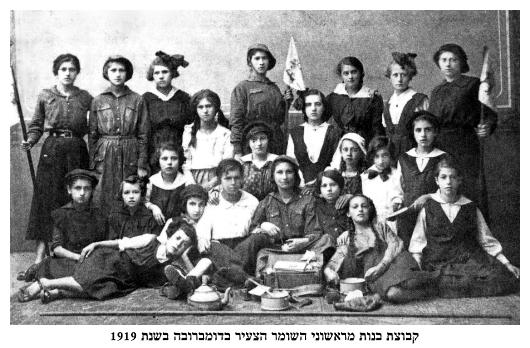
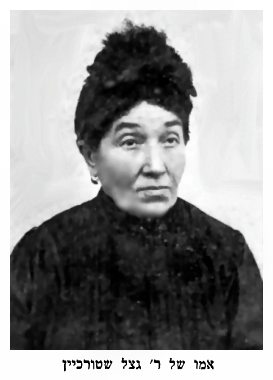
![Reb Chaim Zymel Sztorchajn - dab262b.jpg [15 KB]](images/dab262b.jpg)
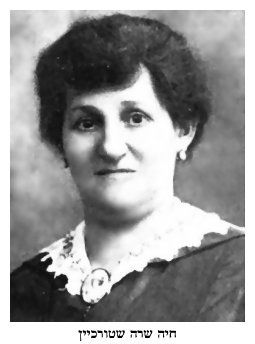
![Reb Gecel Sztorchajn - dab263b.jpg [15 KB]](images/dab263b.jpg)
![Josef Kanarek - dab264.jpg [17 KB]](images/dab264.jpg)
![dab269.jpg [30 KB] - Forced labor during the Holocaust](images/dab269.jpg)
![Sabbath blessing - dab271.gif [18 KB]](images/dab271.gif)
![A festive roll call of all the groups of Hashomer Hatzair - dab274.jpg [40 KB]](images/dab274.jpg)
![The Rightist Poale Zion party - dab277.jpg [35 KB]](images/dab277.jpg)