 |
|
[Page 53]
by Moshe Shamir
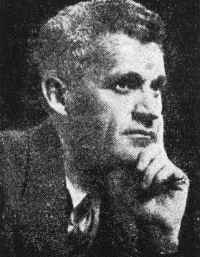
I wish to bring a recommendation to establish a full curriculum of study that would become obligatory in all of our schools: “My Parental Home”.
The study material in this subject will be – the home of each student, his parents, their origins, history, work and way of life. As the course of study continues, it will broaden to include the grandfathers, grandmothers, their lands of origin, their cultural surroundings and their communities.
The coursework would primarily be independent work: essays on important topics in the annals of the parents and the family, collecting of photographs, documents, books, poems or drawings based on the material, etc. With the passage of time, the material would take on a more objective form and would encompass the arena of Jewish life from which the parental home stemmed.
… The issue of the “Jewish mission” would benefit from this new subject.
… It should be pointed out that the feeling of identification with the Jewish nation throughout its generations and in different places would be enhanced in the Israeli youth through occupying themselves practically and intimately in their family history – not as something imposed by other people (which can cause a distaste), but rather as an open enjoyment of a person who is increasing his sense of self…
by Rachel Soloveitchik (Janosevitch), Tel Aviv
|
|
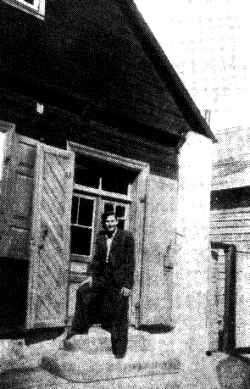
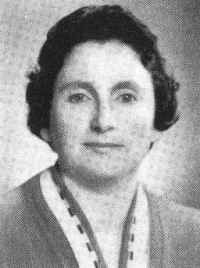
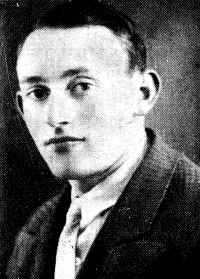
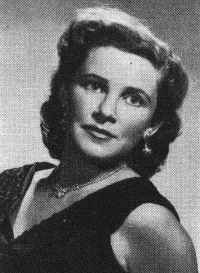
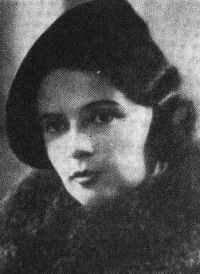
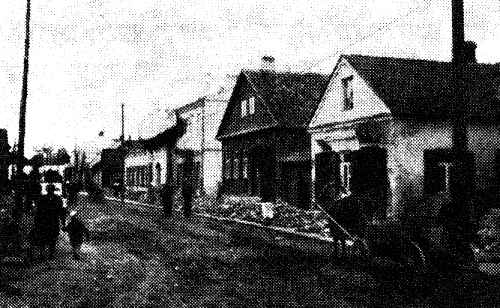
Who of the Jonavers does not remember the large, brick house, with its green shutters and garden decorated with colorful flowers on the Street of the Road? The interior of the house was constructed of four large rooms with a kitchen, a small porch, and benches on the side of the street. I still recall my family home with all of its splendor.
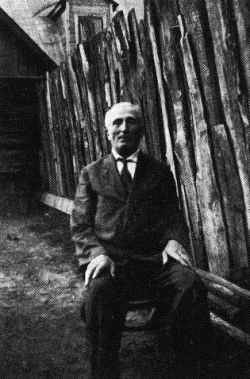
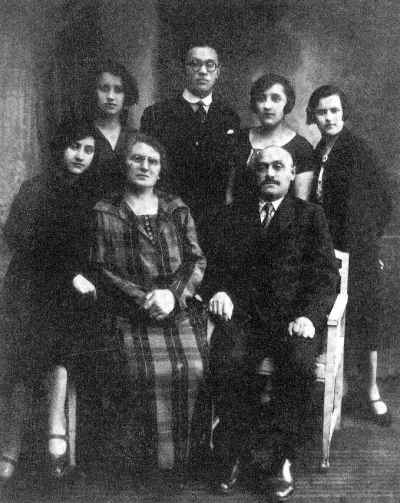
My late father Yosef the son of Yaakov Janosevitch of blessed memory, was a great scholar and a Maskil, as I heard from his acquaintances. He was a merchant of forestry products by profession, and he spent most of his time on business trips. Despite this, he also found the time to sit and study a page of Gemara and Mishna. I recall the bookshelves along the walls, overflowing with sacred texts, which were considered by my father as treasures of silver and gold. He dedicated much time to educating his children, the only son and the four daughters. In particular, he invited praiseworthy teachers from outside to teach the children. My parents were observant of the religion and tradition. In the house, a cordial spirit of mutual dedication pervaded.
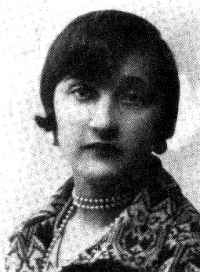
To my great agony, this ideal situation did not last long. At the outbreak of the First World War, we were forced to leave the house and the city in accordance with the decree of expulsion issued by the Czarist government, which applied to Jews of the Kovno region. My father, whose entire property went to the government treasury, suffered a heart attack and died suddenly in a strange place. My widowed mother and the children returned to Jonava in 1918, in mourning and lacking of means. My mother maintained herself with difficulty. The large home remained, but the breadwinner was missing. My brother Nathan, thanks to his education and intelligence, entered cultural life and became very active in our city. In order to ease the situation of our family, he moved with his wife to live in Kovno, where he obtained the position of communal secretary. He excelled in his dedication and his fruitful work, and reached the level of one of the renowned activists in Lithuania. He founded an organization for ethnography and Jewish history, and was very active for the national funds in the city. He established a family with three talented daughters. All of them – he, his wife, and his daughters – perished in the Kovno ghetto.
My eldest sister was married to the teacher Rosenberg, who was a veteran member of the teaching staff of the Tarbut School in Jonava for years. He educated hundreds of students in national tradition and Zionism. Many of these are today in the Land and remember him positively. My brother-in-law, my sister and their two children, our mother, and another sister and her family all perished in Jonava. I was fortunate, for I was able to escape to Russia with my husband. We endured a difficult period there, and my husband died. I remained alone. I arrived in Vilna in 1945, and what I feared was true. As I have stated, nobody from the family remained alive.
I had another sister in the land, one of the first chalutzim of Lithuania. From the first day, I decided to use all my means to leave Russia and join up with my sister. I succeeded, and I arrived in the Land in 1956. Here, I continued with my profession as a kindergarten teacher for ten years. Through this, I now receive a pension. Despite my small pension I do not complain about my lot, for I am among friends, and I am happy that my objective was fulfilled, and I am amongst my people in the Jewish State. In my thoughts I still live with all my dear ones, victims of the Holocaust. May their memories be blessed.
by Shimon Noy (Gorfein)
|
|
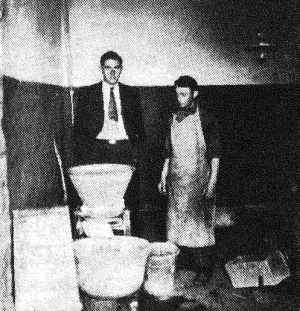
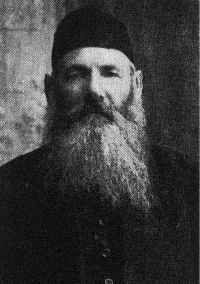
I am here in Israel, so I must first and foremost give thanks to my father Menachem Mendel for making sure to give me a Hebrew and Zionist education from my childhood.
It was already possible in those days to find within a single family of Jonava both Hassidim as well as members of Tarbut and the Culture League. Even though my father came from a large family in Kamenetz Litovsk in Poland that was meticulous in the observance of commandments, when we came within the bounds of Lithuania at the conclusion of the First World War, I recall him as a dedicated Zionist and a man who followed the spirit of the times.
When I was still below school age, at approximately 5 ½, he sent me to Pitkowsky, the fine teacher of young children. Pitkowsky sent his eldest son to the Yeshiva of Hebron, where he was slaughtered.
Later I transferred to Beisegoler and Shima-Meir until I turned 7. Then I studied in the Tarbut School. My father was a member of the parents' committee.
I recall that he used to come on occasion to remind the students to urge their parents to pay their tuition. He would issue his statement in the Hebrew language with the Askenazic pronunciation, of course. When we finished school our parents made sure to find teachers so that we could continue our studies locally for an additional year. After that, I was sent to study in the Real Gymnasium in Kovno.
Father was alert to what was transpiring in the Zionist movement. He would often contribute more than we could afford to the funds. Since our small grocery store did not occupy him greatly, his time was free to become involved in the matters of the world. He wrote articles as a form of a diary about events that took place during those times. As he analyzed the political situation in the world, he foresaw the outbreak of the war. Incidentally, he wrote these records in Hebrew.
We would often read information in the newspaper about what was transpiring outside the bounds of our city. I already began to read the Yiddishe Shtime from the age of 8. He subscribed to the newspaper in partnership with Moshe Jalinowitz.
My father was known as a kind hearted man. Our gentile customers especially praised him. He would issue them credit, for he trusted every person. There were certainly those people who took advantage of his trust, and remained indebted to him for large sums. It would seem that this spirit of winning over the hearts of his customers often led to losses, for what was good for the customers was not so good for the family. However, this is the way it was.
People would frequently visit us and engage in conversation. My mother Reizl was known for her handwriting, and many women would come to her so that she could write the addresses in the vernacular. They were certain that when she wrote the addresses, the mail would reach its destination… When they began to collect donations for the redeeming of the Land, my mother donated gold earrings.
My grandmother Rivka Yehudit is also remembered positively. She was known as Rav Yudis (a corruption of Riva Yehudit) perhaps because she was considered one of the scholarly and knowledgeable women of her generation. Through her frequent reading of Tzena Urena, Menorat Hamaor and other books of that genre, she amassed a comprehensive treasury of popular proverbs and stories, which she was able to fit into any topic that was being discussed with her. Therefore, I spread her name even when I was on hachshara, and I attributed statements to her that I was not sure if she really said, but that without doubt might have been said. These include, “better a wrinkle on the clothing than on the forehead”, or similarly, “a spot on the clothing rather than on the soul”…
She had a great deal to say about marriage matches, brides and grooms. She also knew how to sing old popular songs. It is too bad that I did not have a feeling for folklore, and that I did not think of writing these things down. There was indeed much to record. These matters have been forgotten with the passage of time. The hand of time took its toll.
Before the festivals, she would send my sister with packages of money to distribute discretely to the poor people of the town on Breizer Street.
My father wrote on Sabbaths and also turned on the lights. He would go to the synagogue only on Sabbaths. Incidentally, as far as I recall, the atmosphere in the synagogue was quite liberal. People came to be seen, and retreated into the hall during the reading of the Torah to discuss various matters. They would torment people by hiding their tallis. On Tisha BeAv, the day of mourning for the Holy Temple, people would throw thorns as a joke in order to lighten the mourning… They would stick to the clothing of the important elders of the town, to the point where the mourning became a source of fun, Heaven forbid.
|
My father apparently preferred the interpersonal commandments to those between man and G-d. Many people who recall him as a pleasant man will confirm this.
In the meantime, my mother was afflicted with partial paralysis. This tied down my father to the place, as well as my younger brother Asher, for they could not leave her alone. In this situation, and with the rest of the difficulties associated with aliya, they could not think about aliya to the Land of Israel.
Thus, they remained there in their difficulties. In the meantime, Mother died, and the bitter days came when both our brother and father perished in such a tragic manner.
They did not merit seeing the desired Land. We were not able to save them.
by Sara Burstein of Tel Aviv
|
|
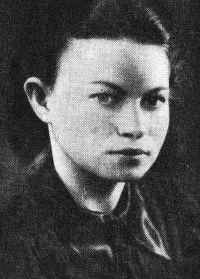
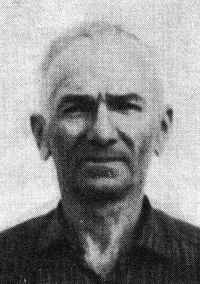
Bringing forth memories from days gone by is like mining pearls from the depths of the sea. One is connected and delves into each and every memory, even the weakest one. Slowly but surely the tapestry broadens and a wonderful picture appears before one's eyes -- a picture composed of many details. The eyes of your spirit see it with wondrous clarity, and the ears of the spirit suddenly begin to hear the echoes of dear acquaintances, and the echoes of the sounds of loved ones that have been hidden away. Even the sense of smell does its part. You sense smells that have disappeared, absorbing them into yourself, and it seems that only yesterday they broadened your nostrils. Even the sense of taste is awakened, and you sense on your palate the taste of various dishes and foodstuffs from Mother's home, that had not been tasted since. Suddenly you sense a strong desire to return to that time, to relive those experiences, to be enveloped with the love and the concern of dear parents; but the reality slaps you on the face. What has passed will no longer return. You are left only with impressions in dreams, memories and visions, a sort of “from there you will see the Land, but will not enter it.”[1]
A G-d Forsaken Town
The home of our father was in Kaplice. The Lithuanians changed its name to Panoteriai. This small town was 17 kilometers northeast of Jonava. To get there, you must travel 9 kilometers on the Jonava Road in direction of the city of Wilkomir. You turn northward on a dirt road, and then the remote town spreads out before you between the pastureland and the greenery, between the thickets of forest and the fruit orchards. There we were born and received our childhood education. We only moved to the “metropolis” of Jonava in the 1920s. However Jonava was always our center. We were tied to it with family ties. Jonava provided us with most of our provisions. Even the rabbi to whom we had to turn with questions of kashruth was the rabbi of Jonava. On a completely different topic, the cemetery of Jonava served Kaplice.
Kaplice -- this was a G-d forsaken town in the eyes of everybody, which in its best years only consisted of several quorums of Jews. When we left it, only two or three families of elderly people remained.
[Page 59]
There was no school, no library, no cultural center, and even no post office in the town. We had to travel several kilometers to the nearest post office. On the other hand, it had a synagogue, and also a Catholic church. Their cemetery was around us, and one side of it bordered our yard. There was a “monopol” (government liquor store) in Kaplice. It supplied those in “need” with the bitter drop, which was their daily bread especially on their holidays. The priest with a long frock, the spiritual leader of the Catholics, lived in the bowels of the house of prayer. From time to time, he would pass through the Jewish street with all of his splendor, his silver tipped cane flying in his hand.
For Us - The Center of the World
Indeed, our town was poor -- poor in population and in institutions. However, in our eyes, it was the center of the world. An exceptionally active, bustling life from all perspectives sprouted there. Everyone, both the Jews and the gentiles, worked like toiling ants without darkness. There were several people with trades among the Jews: Yossel the shoemaker, Yasi-Kanczeker the blacksmith, Peretz the tailor, and Chone the potter. We children spent long hours with the shoemaker and were always excited to see the “secrets” of his trade. Kaplice had several meager stores, and also several Jewish merchants who spent most of their time peddling their merchandise in the neighboring villages. There were also several “clergymen” concentrated into one man: “Yossel the Shochet” as we called him. He was also the cantor and the mohel (ritual circumcisor), and at times answered straightforward questions on kashruth. Aside from this, he was also involved in all types of other businesses, such as selling non-kosher meat to the farmers, leasing a fruit orchard in the summer, etc. in order to sustain his wife and children. There was even a shamash (beadle) in our synagogue, “Rafael the Shamash”. Aside from serving as the shamash, he was also involved in the sale of Sabbath candles made of sheep fat, and several other such trades.
The main thing -- Kaplice was a Jewish town in the full sense of the term, albeit in miniature and with a small Jewish population. However, it was a town where even the Keren Kayemet (Jewish National Fund) was not forgotten. Campaigns would be conducted for it from time to time. I remember the blue ledgers of the Keren Kayemet upon which was written: “The town Kaplice, the names of the donors, and “collected by David Burstein”. On holidays, especially the High Holy Days, the town would suddenly grow and reach large dimensions. Isolated Jews from all the nearby villages would come to celebrate the holidays in a Jewish environment and to get an aliya in our synagogue. Every Jew in our town would take in a guest, lovingly take care of these “villagers” and enjoy the experience.
When the holidays were over, the town would shrink once again to its usual dimensions.
My Father becomes a Maskil
We were five children, one son and four daughters. We were born and raised in the home of our parents in Kaplice. This was a large, spacious house, surrounded by a yard and all sorts of buildings such as stables, granaries, a store and rental houses. There was a paved yard in front of the house. On the other side, there were grass meadows and flowers surrounding a well of fresh water. Behind and on the eastern side was a cultivated fruit orchard, consisting of choice types of fruit. In the corner of the orchard was a synagogue that was built on our land. Behind it was a potato field, and our bathhouse was in the right corner. There was another field on the left side, in which our father planted alfalfa, grass and clover. In front of it there was a young fruit orchard that father planted, and that was already producing fruit. Mother's vegetable garden was between the trees. She tended to it with great love, and was very successful. In his youth, our father of blessed memory was a Yeshiva student and a Maskil. He went through all the incarnations of Yeshiva students in those days in various Yeshivas in Jonava and Wilkomir, including taking his meals on a daily rotation system. However, to the disappointment of Grandfather and Grandmother, he finally turned his back on holy studies, and did not earn his livelihood from his learning. He began to read secular books in Hebrew, and became fluent in that language. He even “transgressed” by writing articles and essays
[Page 60]
in a unique weekly humorous publication that was published by three Maskilim of the town for their own enjoyment in their own handwriting, and was called “Kaploria”. Father, one of the three, signed his articles as DV”Sh (David the son of Shlomo). I was still able to read those few unique periodicals. They were hidden in a drawer, and at special times we would take them out, read them and enjoy.
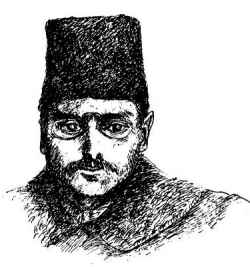
When father got older, he turned to business. Keeping with his family tradition, he was a merchant of forest products and wood. He succeeded because he was diligent and worked a great deal. He would arise before dawn every day, light the kerosene lamp, get a cup of tea from the samovar, and sit down to study Gemara and Mishna. He studied Torah by the light of a lantern with his sweet voice and soulful dedication, and turned into the pillar of fire from which we children “warmed ourselves” throughout our life. We all remember this, and we all yearn for this with the depths of our soul. His sweet voice and wonderful melodies would pour out with a quiet voice. Father learned while we were still in bed, dozing but not asleep, with our ears absorbing this wonderful sound, as the soul felt like it sprouted. We could never get enough of the sweetness and enjoyment. The water urn at the edge of the table hummed away, adding its own touch. I often dreamed that I was listening and absorbing the warm tunes into my soul, as my soul was departing. However, I woke up, and it was only a dream. After father concluded his learning, he would go to the stable. In the summer, he would hitch the horse to the four wheels of the wagon with a type of straight rod, and then ride away. In the winter, he would hitch the horse to a small, light sled. Thus would Father leave the house with its sleeping residents and travel to his business. He would tarry outside almost the entire day. On the way, he would pass the village of “Pagloz”, seven kilometers from the town. The post office was located there, and he would bring the letters, and especially the newspapers from there. He subscribed to all of the Hebrew newspapers that were published in those days in the large Jewish centers, such as “Hatzefira” from Warsaw, “Hazman” from Vilna, and “Haolam” from London. He would read and write only in the flowery Hebrew that was customary in those days. When he arrived home toward evening, he would eat his only warm meal of the day, occupy himself in various matters related to day to day life, and go to his couch to lie down and read by candlelight, of course. He read newspapers and other secular writings. I do not know when he went to sleep and for how long he slept, but it was sufficient for him, apparently, and he did not suffer from lack of sleep.
Father -- Involved in Everything
Father was a dedicated and active Zionist. When I was still a girl, I found a copy of a letter from Father to a friend of his in America in a drawer. The letter was, of course, in flowery Hebrew (this was the Hebrew that I absorbed as well). I read it and devoured it like a ripe fig before summer. The letter was long, and I was of course unable to understand everything. The letter was filled with ideas and concepts regarding Zionism, Herzl, the Congresses, and other great Zionist leaders. It seemed to me that it was discussing some Zionist Congress. Father investigated and purified everything that he copied into his heart as his core beliefs. It is unfortunate that this letter has disappeared with the vicissitudes of time, and is not with the rest of his things. It contained a great deal of material that would help understand Father, who was one of a kind: a Torah scholar, a scholar in secular subjects, astute in world affairs, someone who knew how to express his ideas in clear language, a logical thinker, and possessing a refined sense of humor with which he would spice his general conversations.
Aside from his work in the forest business, he was expert in all types of other work. He was competent in all types of agricultural work, since we had large plots of land surrounding the house. Sometimes in the summer, Father would lease plots of land around us and work them himself. When the season came, he would plant, harvest, gather, and put the produce in storehouses. Sometimes he would also include the children, who were then still very young. Of course, there was an important reason to have the children work: the fear of rain that might cause the hay to rot. He would corral the adults and the children, and with all of our work, the matter would be settled very well, with Father standing at the head!
Father would even take care of our old and new fruit orchard faithfully. Thanks to him, his garden was very successful. After I left Kaplice, I never again tasted the taste of those types of fruits that we had in our garden. At the beginning
[Page 61]
of the spring, father would hoe around the trees, fertilize, prune the dry branches, tar the trees as a protection against worms and other pests, erect supports for the trees that were laden with fruit so that the branches would not break, and do many other such tasks. He would toil and work without stop, and without concern for his energy and time. His Zionist activities found a broad field of action in the narrow confines of our tiny town. In his capacity as the gabbai of the synagogue, he would canvas all of the worshippers for the Keren Kayemet. The donations were indeed modest, but he would collect every coin, and joined together they would add up to a reasonable sum. Aside from this, he participated in the Zionist committees that were set up in nearby cities, and thereby he would strengthen his Zionist faith.
I Too Learn in Cheder
Aside from its main role, our synagogue also served as a cheder for children. The women's gallery was on the same floor, and only a partition separated the men's section from the women's gallery. There were small windows in the partition through which the women could look into and pay attention to the men's section in order to follow after them in the prayers. A narrow walkway from the main street above the well-known bog led to the synagogue. It was full of dust in the summer and mud in the winter. We children did not like to use it, so we would pass through the fence that encompassed the entire yard and all of the buildings therein. With one jump, we were in the cheder. Along the way, we could still snatch some fruit and enjoy it. A non-local teacher always headed the cheder that was conducted in the women's gallery. All of the children who were in need of Torah, without differentiation by ages, would come to the cheder. The teacher would try to the best of his ability to impart Torah to students, either with pleasantness or with a sailor's rod -- all in accordance with the need. In this manner, I too was absorbed into the cheder at a young age. Suddenly, at the beginning of the period of study, I was left without my playmates. They were all in the cheder, and of course, without choice, I followed after them and spent
[Page 62]
my time together with them. It was more interesting than wandering about alone on the street. In any case, I also absorbed the studies.
I was fortunate, for during the time frame that I am discussing here, the disseminator of Torah was a wonderful teacher -- a young man named Shmuel Brandwein, the son of the rabbi of Kaplice. He knew Hebrew well, and was also expert in the ways of the world. He was about 17 years old. The Torah that I absorbed from him served as the foundation to my future studies, and I will always remember him with love. When my parents saw that in any case, I was in the cheder as an onlooker from the sidelines, they decided to settle the matter officially. Thus was I counted in with the rest of the students. From that time, Father began to treat the matter of his children's education very seriously. He attempted to bring in the best teachers. To this end, he came into contact, in writing or face to face, with those who worked in the Hebrew newspapers, and asked for recommendations of good teachers. It was customary at that time for talented youths to travel to small towns to teach Torah to Jewish children. In the meantime, they would earn some money so that they could continue their studies. Since Vilna was the Jerusalem of Lithuania, where those who were prominent in the Hebrew language gathered, and where the “Hazman” Hebrew newspaper was published, Vilna was the prime locale for Hebrew teachers.
I remember that at the time when I was digging through Father's writing table, which was overflowing with all types of letters and papers, I found postcards from Chernowitz (the father of Yaakov Tzur of our day). In those postcards, they discussed a Hebrew teacher for Kaplice. In this manner, we gained two additional teachers -- a man named Huberman and a woman who had already learned at a modern cheder and knew the Russian vernacular language. These teachers laid the groundwork that later bore tasty fruit and led the way to the Hebrew gymnasium that was set up after many years. In the interim, years passed and a further group of our children joined the cheder and entered the yoke of studies. Thus were we hatched in the cheder, and were happy with our lot. As has been stated, the cheder was located at the edge of our garden. In the summer, the windows were opened, the air was clear, and the aroma of the flowers and fruit filled the room. Before my eyes, the large, intertwined pear tree with small yellow pears appears. Its foliage covered almost half of the roof the synagogue and the cheder. We would enjoy this fine fruit during recess. I will never forget that during recess, my brother and I would climb the cherry tree next to the cheder and collect and eat the sweet cherries that grew on the sunny side of the tree. In this way, our lot was better than that of other cheders in small towns, which were located in gray, unventilated rooms with stifling air. Approximately two years before the First World War, we got a “Rebbe” from Jonava. We called him the “Kaplicer Rebbe”. He was an elderly man named Brandwein, who was a relative of our family. He gave the best of his energy to teaching and disseminating Torah. The best of the youths were his students. His hometown was Kaplice, and he had also been the rebbe of Father and other family members from the previous generations. In his old age, when he wanted to rest a bit and locate himself in the bosom of nature, he returned to Kaplice with his wife. His only son, who had been my first teacher, was already in America, and they remained isolated and alone. This wonderful rebbe was filled with Torah and general knowledge, and he also had the ability to teach with pleasantness. (His strictness had dissipated in his old age.) We all loved him, and thanks to this, we succeeded at our studies. His memory will not depart from us. We will also remember him with love and reverence. He would teach us to read, and also to write compositions on all types of topics. He imparted good manners to us. The first Hebrew book that we began to study during his time was “Hadibur Haivri” for beginners, and the second was “Hadibur Haivri” for advanced students. The last one of this series was “Hasignon Haivri”, a very serious book as I still recall. I never saw these books again.
In those days, the Herzlia gymnasium in the sand dunes of small Tel Aviv was talked about a great deal. There were daring people who traveled to the land of Israel to study there, in the first and only Hebrew gymnasium. Our parents dreamed of this, and my brother and I aspired to this with all our might. The novelty attracted our interest, for we had no such concept of that yet. But the difficulty was as follows: we were too young, and the gymnasium only accepted students from the Diaspora at a much higher age than we were at that time. Therefore, this dream only materialized in my home many years later. To my dismay, the aura of that school was no longer the same as it had been in my childhood.
[Page 63]
Mother's Hands Were Also Full of Work
Thus did we grow up in Kaplice as if in a greenhouse, far from the wide world and its vicissitudes. Nothing impeded our spirit. Complete harmony pervaded between our parents, and this had a positive influence on us children. Mother of blessed memory was the ideal helpmate of her husband. She was a beautiful woman both inside and out, refined and graced with many fine qualities, healthy and radiant, with a good temperament and merciful heart. She had a developed sense of esthetics. She loved nature and its creations, enjoyed the beauty of nature and attempted to bring its beauty and charm inside the house. She loved cleanliness and order, and her work was done with full completion. She did not lack any energy and strength for her work. All of the wide-ranging housework was upon her shoulders. She would go out early in the morning to bring the cows to pasture. She loved that journey. As she returned, she would gather ripe berries to bring to her children, including wild strawberries, which ripened early. In the meantime, she turned her eye to a variety of wildflowers. She loved even the most modest flower. These flowers, along with the flowers that she grew in the garden at the side of our house, would be arranged in arrangements of various shapes. In our days, there are courses for flower arrangements. Our reverend Mother knew everything with her natural sense, and was no less proficient than the professionals of our generation. Aside from cows, we also had horses in the stable, chickens, and ducks in the winter, which were fattened up to provide fat and cracklings (gribenes). The vegetable garden also demanded a great deal of dedication and work. Mother was astute, and made a greenhouse for spring vegetables. The beds were covered with closed glass panes of the same type that were used in winter for the double windows that kept the house warm. Thanks to Mother, we had radishes, green onions, and cucumbers before their normal season. However, how much work and toil did Mother invest I this! Bread, challahs, biscuits, cakes, and everything else were baked by Mother in large quantities. What hard work this was! She had to light the oven, spend hours afterward cleaning it from the ashes and embers, and craft large loaves of bread with a faithful hand in such a way that one loaf looked exactly like the next. The baking took about three hours. In addition to the regular bread, mother would bake special bread -- challahs in boiling water -- which had a unique taste. The loaves were smaller, and their aroma came from the cumin and the fennel that were sprinkled upon them liberally. This bread was Mother's little secret. Today we call it a “patent”.
All of these efforts succeeded exceptionally well for her, for she put a great deal of love and diligence into her work. In the summer, when the fruit began to fall from the trees, we would gather them, and mother would cut the pears and apples into small slices and put them to dry in the oven after the bread was removed. These dried fruits would then serve us through the winter as compote, or Mother would make them into a type of drink called “Kwass”. We would drink it when it was still hot, and then later when it was cold, and we could never have enough of it. The taste was splendid. I never tasted such a tasty drink again, despite the many drinks with fancy names that are found in the stores. Mother was an exceptionally good cook. Her dishes and tasty foods earned her fame. Her handmade cereal and noodles were complete in their outer form, as if made by machine. How she knew how to do this -- only G-d knows.
Toil and Efforts -- and Enjoyment
Even the drawing of water from the well was fraught with a great deal of toil. The well was indeed in the yard opposite the kitchen windows, but it was very deep. One had to turn the handle manually for a long time until the chain with the bucket reached the bottom of the well and came up again. We required a great deal of water for our large house, and especially for the horses, cows, and other living “inventory” that required a great deal of water. During the cold, winter nights, when the area around the well was still frozen and the ice reached the height of the well itself, Mother would toil to draw endless bucketfuls and carry them to the stable and the barn. I would stand next to her at times and light her way with a flashlight. For me, even this small work was toil, for it took a long time, and going out from a heated house
[Page 64]
to stand in the freezing cold was difficult for me. I was always astonished that this work was not disparaged by Mother, and her spirit did not waver and she did not complain from the first bucket until the last one. What type of patience did she have! She accepted everything with a cheerful face. During her few free hours, she would embroider, occupy herself with other fine handiwork, sew, and mend. She taught herself how to do everything. I recall that when there was a clothing shortage during the First World War, and the children grew out of their clothes, mother did not hesitate. She removed the furniture covers in the salon, which were made of white linen with red, stiff, curled decorations, and sewed shirts for the children. She sewed warm covers for the shoulders and warm kerchiefs for the head from all types of material that was in the house.
Mother especially loved her small flower garden opposite the windows of the house. The arrangements were professionally crafted, covering the other side of the well with a blaze of colors. Every section of earth was worked with a simple hoe, and every arrangement was different from the others. All types of flowers grew and flourished there. Every species had its own place, and one type was not mixed in with the other. All of them joined together to form a magic carpet. This was expert workmanship! There were no seeds for planting available for purchase in Kaplice, let alone the type that Mother needed for her creations. She did not hesitate to go to a distant village in order to obtain the type of seeds that she wished to plant in her garden. Her voice was sweet and clear. She would sing a great deal during her work, and loved all types of song and melodies. One of our teachers, a lad from Vilna, also knew how to play a violin. Mother loved to listen to his playing, and her soul would weaken from the sweetness. Finally, she also tried to play the violin with the assistance and guidance of the teacher. The tune that she succeeded in playing was, of course, “Hatikva”. Our first teacher visited the Yiddish theater during his vacation and saw Goldfaden's “Hamechashefa”. When he returned, he told about the wonders and miracles that he had seen in that play. He offered to perform it before us. I recall that night as if it were today. Father and the children were already sleeping. The teacher, mother, one neighbor and I participated. We sat down together in the narrow kitchen as he performed for us in accordance with his G-d given talents. He jumped, ran, and sang the known tunes. Mother's face was filled with happiness and joy. She did not miss even one of his movements. She meditated on this for many days, and her enjoyment did not diminish.
Aside from the routine work, mother had a store in the second wing of the house. She had owned this store even before her marriage. Father did everything he could to liquidate the store, but Mother did not agree. In general, the store was closed, but when a customer came to house, mother took the big key and went with the purchaser to fill his wishes, which was no small matter. During the long winter nights, Mother would occupy herself with plucking duck feathers for pillows and blankets. Of course, everyone helped her, especially Grandmother, her mother, who lived with us throughout her life. This was the coffeehouse, the cocktail party of today's times. Even the neighbors were would join together, and the conversation would flow. Jokes and pleasantness would fill the time. Mother was loved by everyone, even by the gentile population. When Mother would come across a drunk who was causing a disturbance on their holidays, she would quiet him down with pleasant words. She educated her children in pleasantness and uprightness, and especially desired that the children would study, without concern that they would not be able to help in the house.
When the teachers were no longer sufficient for the older students, they would be sent to Jonava and Wilkomir to continue their studies. Finally, after the First World War, they were sent to the Hebrew gymnasium in Kovno. She was very proud and happy about this.
Our Experience During the War
The First World War broke out in 1914. We children did not understand much about the tribulations that were taking place. On the contrary, in our eyes, this war brought changes and new matters in life. At the beginning of the war, The Germans expelled the Jews from the fortified city of Kovno, and the Jews spread in all directions. We also got visitors -- two aunts, sisters of Mother, came to us until the wrath would subside. The aunts came along with their large families, including children of our age. Aside from this, many Jewish families who lived in nearby villages where the Germans had already begun to invade began to stream to Kaplice as a waystation.
[Page 65]
Some of them lived in Kaplice during that time. Some moved on and continued their journeys into the vast expanse of Russia. There was confusion and tumult. However, we children felt only the joy of life. We gained new friends. New games that we had not known until that time interested us greatly. We were very happy. Our parents did not think the same way.
I recall a large fire in a nearby village that covered the evening skies of Kaplice with a mist. In the train station of that town, father owned a warehouse for treated lumber that was to be sent abroad. The Germans set it on fire, and everything was destroyed. Mother, Father and Grandmother were broken, agitated and fell into endless despair. However, we did not understand this exactly, or perhaps we were not given the facts so as not to upset our high spirits. After about a year, we too were expelled to the district of Vilna. Even there, we were not as despondent as the adults in the family. All of these new experiences, such as traveling in wagons hitched to horses -- six wagons as I recall, with all of the family members including Father's parents, and one aunt and her family -- were happy and interesting experiences to us. Their impression was very great. At first we lived in a wood bunker of a forest guard in the district of Vilna that was owned by our parents. However, after some time, we were deported from there as well, and we moved to the nearby town of Galon. Once again we packed up and hitched up the horses. It was joy and pleasure for us. Relative to Kaplice, there were many Jews in the town of Galon. There, we found many children of our age, and the joy was great for us children. We endured this “exile” with great ease.
When the Germans conquered our place of residence, and advanced further toward the capital of Vilna, we returned, with our youths and children, to Kaplice our birthplace. However, the problem was as follows: Kaplice had lost its charm in the eyes of us children, for we had already seen “the world”. Our horizons had broadened, and we had grown up in the interim. The town had almost been completely liquidated. Some of the families had moved to Russia -- some died in exile, and others had not yet returned. Some of the young people had begun to immigrate to America and other places in the world. It was difficult to constitute a minyan for the synagogue. Great hunger pervaded in Vilna after it was conquered. People began to wander throughout Lithuania to search for food. Many refugees thereby came to Kaplice, and then wandered further. When these refugees joined the worshippers, we were able to arrange public worship. In the meantime, the studies of the children suffered. There were no children of school age aside from us. The older children were sent to study in the nearby cities. Our parents began to think seriously about leaving Kaplice. It was difficult for them, and they deliberated over the matter a great deal, especially Mother. However, at that time Father had a share in a match factory in Jonava, and he spent a great deal of time in travel back and forth. The three older children were already in the gymnasium of Kovno or were preparing to enter there, so it was no longer worthwhile to maintain a teacher for the two younger ones only.
We Move to the “City” of Jonava
In 1922, the house and all of its contents were finally sold, with the exception of the synagogue that was transferred to the Jewish community of Wilkomir along with one Torah scroll. The two others were returned to the families that had donated them: one to Father's family and one to Mother's family. With a broken heart, Mother took leave of the place that she had loved so much, especially from the bosom of nature that had been her lot throughout all the years of her life. She had to suddenly get used to a new life, with no garden around the house, no flower garden opposite the windows, and no forests growing on all sides. With the passage of time, she solved the problem of a garden in a miniature fashion. Mother succeeded in growing splendid plants and all type of aromatic flowers and even vegetables such as tomatoes, onions, and radishes grew in crates of earth on the small area of our porch. This was a “symbol” of what there was in the past. Slowly, we became absorbed into the new life of Jonava. Father of blessed memory struck roots very easily there. He found a broad arena for his Zionist activities in this large community, and gave of his energy to all types of communal affairs. He became the gabbai of the synagogue and conducted its financial matters. He was always bent over some sort of accounting ledger. He was also active in the public bank, and he served as its chairman for several years. He devoted the best of his energies to the building of the Land of Israel. He was the chairman of the general Zionist organization, the Keren HaYesod and the Keren Kayemet. He was a delegate to all types of conventions and meetings, and would often travel to the national center in Kovno. He slowly limited his business activities, and was no longer involved in the ways that he was
[Page 66]
in former years. His business dealings in Jonava were local. He was a partner in “Oran” match factory and in the “Kemach” factory. He had more time for communal affairs. However, no change took place in his pre-dawn studies. He would continue to study with the old melody, and all members of the household would listen to this with bated breath, and with the hope that this would only continue and continue.
A Visit that Did Not Go Well
Most of the daughters had married in the interim, and everything continued calmly -- however, as is known, this was not to last. In 1935, Father finally decided to travel to the Land of Israel as a tourist. The Maccabia was taking place in the Land. He was accompanied by a nephew as he finally traveled to see the Land that he pined for all the days of his life, and which was the pinnacle of his dreams. He had a brother and other relatives in the Land, and he already owned some land. He set out to the Land with an exalted spirit. He liked the Land, of course, and traveled to all sorts of places. However, his luck turned sour, and there were two week-long heat waves that year in the Land. The conditions in his brother's house were very primitive in those days. There was no refrigerator, the water that came in from the pipes that rested on the ground was hot, and it was even impossible to take a cold shower. Father suffered very much, and his strength faded. The travels tired him, and he did not find rest in his brother's home when he returned. The mites and other insects vexed him greatly. In frustration he decided to return to Lithuania. He returned disappointed and full of bitterness. He would say that the spies did not exaggerate when they said that it is “a land that consumes its inhabitants”[2]. He further continued his activities for the Land with love. He would constantly repeat, “My children will get lost there if they go. They are so delicate and weak, how could they get used to so difficult a climate?”
Were it not for this unfortunate incident of his unsuccessful visit to the Land, all of his children, as well as Mother and himself would all be here. However, fate did not have it thus. Were he to have had the ability to divine the future and foresee the bitter fate that awaited his 'delicate' children and his wife in the frozen wasteland of Siberia, without anything, and with physical and spiritual tribulations -- he would certainly have hastened them all to make aliya to the Land. But who is wise, and who can know?
Fate Did Not Skip Us
In the meantime the cruel world events of the Second World War did not skip over Lithuania and Jonava. The Russians ruled over Lithuania and took revenge against their opponents with a strong hand. Deportations and expulsions to Asiatic Russia began, to a place of darkness and the shadow of death. To our sorrow, Father was not exiled, since he was sick at that time when they brought the rest of the members of the household to the train station to begin their wandering in the breadths of Russia. Mother's fate was better, for she was deported along with some of her children, and she was reunited with others during the time in Russia. Thanks to our wonderful Mother, her character, activities, and flowing energy, some of the sting of exile was removed. In a situation of great want and with the difficulties of nature, she was the pillar of support for her children. She assisted them with advice and with physical work. She encouraged and comforted them, so that their spirit would not fall. G-d only knows from where she drew such strength. Thanks to her, all of them maintained their stand during the darkest years of their lives.
Father was imprisoned in the Kovno ghetto, without any relatives aside from one son-in-law. He endured three terrible years. However, as I knew him at that time and always, he did not abandon his learning even there. Perhaps this helped him somewhat during those difficult times, and sweetened the bitter fate that came to him. What did he think about when he had no information about any of those who were so dear to him?
From the Kovno ghetto, he was transferred to the Stutthof Concentration Camp in Germany. The rest of the elderly, ill, and weakened survivors in that infamous concentration camp were sent directly to the furnaces, and Father was among them. I had two regards from him from people who saw him in that concentration camp while he was still alive. A good, faithful friend told me that he had chatted with Father in that camp. Father seemingly knew the fate that awaited him, but he did not speak at all about any physical matters, but rather about lofty issues. He held a small Bible in his hands as a small remnant from all that he has, and a faithful souvenir of his life.
[Page 67]
|
|
The Survivors of the Family Get Back Together
My family and I were saved from the talons of the enemy while there was still time, even before the Russian invasion of Lithuania. One month after the outbreak of the Second World War, on the eve of Sukkot, 1939, we left our house -- my husband, I and our two young daughters -- leaving everything behind except for the four suitcases that we took with us. The papers had already been prepared, and we made aliya to the Land after much wandering.
After I got in contact with Mother and the family in Siberia, a constant exchange of letters ensued. When the time came we decided to send packages to support them, and of course also the needed papers to bring them to the Land. My luck was bad, and I was not able to take Mother out under any circumstances, despite her old age and her strong desire for the Land to be her final resting place. I only succeeded in traveling to Russia for a trip, and visiting mother and the rest of the family for a five day visit.
This was a heartbreaking visit, that is impossible to describe. Mother passed away at an old age approximately one year later. The worshippers at the synagogue that she used to attend when she was still healthy eulogized her. They said, “She was like her name -- Eidel, refined -- she was indeed like that.”
About one year later I succeeded in bringing my only brother to Israel, and about three months later, my youngest sister. Now my family is all in the Land.
[Page 68]
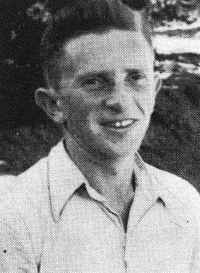
by Dov Blumberg of Capetown
|
|
| The Jew singles out Friday And honors it more than the other days of the week. This town and its Jewish residents, From young to old, testify to this. In the windows of the houses, the candles were already lit. The fire in the oven was burning and flaming. The dough was already mixed and rising, The yeast and oil gave it zest. It puffed up and dropped, puffed up and rose.
Zisla Brechkis washed her hands with the required volume of water
The market was full, people were hurrying, |
| A long and pleasant, ta ta ta. It was good and pleasant for the Jew in the bathhouse. Naked, everyone is equal, And the hot and cold water are so pleasant, The men and women leave with their faces glowing The tribulations of the week and the difficulties of livelihood have dissipated from their bodies.
In the house, the hot water urn receives them with love.
The town was emptied of farmers and gentiles,
The elderly Shmuel was walking with his long coat,
The appearance of the houses and the square changes.
Everyone is sitting in his set place
Enthusiastic warmth envelops everyone,
The cantor is on the podium, with a silk mitre on his head,
The melodious prayer continues, and the honored guest is invited
The door of the house opens. We approach Mother and kiss her.
The golden fish tastes like the Garden of Eden. And the soup -- And the round carrots, in circles, and the roasted meat.
Mother is proud of the meal of angels, and with golden tears
The Sabbath hymns - who can forget the pleasant hymns
Father takes out books, and asks questions Everyone is rejoicing, everyone is happy, they are the sons of kings.
Friday and Saturday are partners with G-d; |
[Page 70]
by Ala Daltitsky (nee Abramovich) of Tel Aviv
|
|
My best, happiest and most joyous years -- without worries, without bitterness -- were the years of my childhood and youth, which are always preserved in my mind. Indeed, most of them were years of physical tribulation and meager livelihood, but these were my best years, about which I can talk endlessly. It is most unfortunate that these years passed so quickly, and were followed by years of war and inhuman suffering.
I decided to write some memories about my father's house, which will be for me a form of “kaddish” and perpetuation, that will always be found in the Book of Jonava.
My Parents' Home
I grew up along with my family on 118 Kaunas Street in the city of Jonava. My family consisted of my father Avraham Yitzchak, mother Rivka, older brothers Zelig and Velka, and my younger sisters Sara and Beila.
Our house was build of red bricks, and was more or less protected from the fires that frequently afflicted our town.
My Father, who was among the Maskilim of the city, belonged to the general Zionists. He educated his children with a Zionist education and love of Israel. He spoke a free and fluent Hebrew, Russian, and German, and of course Yiddish. I never remember a day when Father went to sleep without reading a Hebrew book before bed. He had a thick book called “Jesus of Nazareth” which he read frequently, aside from the books of Shalom Aleichem and Mendele Mocher Seforim -- all in Hebrew. We children studied in the Tarbut Hebrew School. I concluded it and received a graduation diploma. My father was always a member of the parents' committee of the school. Aside from this he studied Torah books a great deal, for he had studied in a Yeshiva when he was a lad.
When we would go out in the evening to stroll or to go to the Hashomer Hatzair meeting place, of which I was a member, he would say, “It is better to sit at home and read -- this will give you much more in life.”
Even when he was eating, he had to have an open book in front of him. Aside from this, he knew how to and loved to play chess. Every Sabbath afternoon instead of resting, my father would go to the house of Nathan Wolchokovsky to play chess. Yankel Weitzstein, Yosef Perlstein, Yehuda Rashkes and other Maskilim who loved to play chess would be there.
[Page 71]
My father would say that the game of chess kept him away from the worries that had gathered up during the week, and that it was good that he was free of them, at least on the Sabbath.
My father was also the gabbai of the synagogue. He served in that role for 25 years. Elections for the position of gabbai took place every three years, and they never found a person more suitable than my father. The position of gabbai caused him all sorts of concerns. The cantor of the synagogue was Alter Zuchovsky, who sang such sweet tunes, that the entire congregation sang together with him. When he was sick once, Father had to travel to search for a cantor for the High Holy Days. It once happened that a cow passed through the courtyard of the synagogue and, you should forgive me, she took care of her needs there. The policeman Labas then appeared and brought Father a “protocol” (ticket) to pay a fine of 15 Lit.
My father did not like the Lithuanian language, and was not interested in learning it. In order to speak with this Labas, he always had to call our neighbor Mordechai Gurwitz, who spoke a fluent Lithuanian. Mordechai would always persuade Labas to cancel the ticket. Aside from this, my father sang nicely. He had a good sense of hearing. It was sufficient for him to hear a tune once for him to be able to sing it. He taught us the songs of Goldfaden from “Shlomit”, “Hamechashefa” and “Bar Kochba”. He had seen these plays once, and was able to sing them completely. He also knew songs in Hebrew, Russian, and German, as well as modern music. We children inherited these traits from him.
On Sabbath evenings after the meal, Father would begin to sing, and we would help him. Our songs could be heard from near and far, and people would come out of their houses to listen. Father was then very happy, and he beamed with contentment. My brother Wolf sang especially well. He was a splendid tenor. My sister Sara also sang well. Father used to say that were he able to, he would send both of them to Kovno to study voice.
My mother was a quiet, goodhearted woman, who was very concerned with the education of her five children. I remember that she would milk our cow and give every child a half a liter of milk and cake and say, “Go compete among yourselves, who will finish first!” Of course even if we did not want to drink, we drank because of this contest, and Mother made sure that we would not leave even one drop. She took great care that we should be satiated and healthy. Perhaps this helped me to endure the great hunger during the war.
My brother Zelig got married and worked in a match factory.
|
|
As is known, there were many wagon drivers in Jonava. First they would travel on wagons from Jonava to Kovno, a distance of 35 kilometers. In later years, they purchased a bus. The wagon drivers chose Father to do their accounting. The accounting was performed in our house twice a week. The shouts of the bus owners were strong. They suspected each other of being dishonest and not putting all of the money into the pot. However, Father slowly calmed them and explained to them with great wisdom that they must trust each other
[Page 72]
and not be suspicious. They loved him very much and said, “Avraham-Yitzchak, there is nobody like you! In the company of elders you act like an elder, and with the youths, you are a youth among them.”
During his work with the bus owners, Father learned how to analyze their characters and their weakness. He even composed two songs about them that were sung by the entire city[7]. Father sang his songs to the drivers. They grabbed him and lifted him up due to the great surprise as to the degree that these songs were appropriate for their lives and personalities. These were the Goldman brothers (the “chalulim” as we called them), Shmuel Dragatzki and his sons, David Lukman, David Elia Yudelevich and his sons, Asher and Yitzchak Itzikovich, and others.
The Youth Were Exemplary
|
|
|||
When we grew up, the physical situation in the house was much better. I worked, sewed blankets, and studied the trade with Beila Yaffa, the wife of Avraham Yaffa. Later I married their son Tzvi. My sister worked as a saleswoman with Kafar, the large textile shop. We arranged large excursions during the summer in the Girialka Forest, which we loved. We would sail boats on the Vylia. In the summer we would swim in the river and enjoy ourselves on its banks. In the winter we would take long walks on it after it froze over and became a sheet of ice.
Aside from Hashomer Hatzair, to which I belonged, I would occupy myself in athletics at Hapoel. I must point out that the Jonava youth was, as is said, “a healthy soul in a healthy body.” The youth were exemplary. Every Sabbath eve, we would gather in the Hapoel hall and conduct an Oneg Shabbat celebration. We would sing and recite. All of these events left an impression on me that I will never forget.
However, all did not last long. In 1940, the Russians conquered us, and all of our Zionist parties disappeared from the horizon. The Communist party took their place. This Communist regime only lasted for one year, for in 1941 the Second World War began[8]. The Germans conquered us, and took almost all of the 5,000 Jews who lived in Jonava out to be murdered. Of course, this healthy youth was not able to stand against the enemy with empty hands, so they perished -- these fine athletic youths along with their parents and families.
The Jonava youth who made aliya to the Land in 1933-34 spread out -- some in kibbutzim and others in the cities. When we Jonavers get together, I feel great closeness and warmth toward each and every one, for they are all dear to me.
by Aryeh Solsky
|
|
|||
Our family lived in Jonava for several generations.
We moved to Russia at the beginning of the First World War. We returned to the town in 1920 without Father, who had died of a heart attack due to the threats of the N.K.V.D.
I was then eight years old. My mother was the sole breadwinner. It was very difficult. I began to study in the Tarbut School.
The town was then in a period of flourishing, full of life. Every Jew felt as if it was his private home. Sabbaths are particularly etched in my mind. The youth would then go out to the fields or the villages and enjoy themselves in tranquility.
The majority of the youths dreamed of making aliya to the Land of Israel some day. There were often debates with those youths who were sympathizers of the Soviet Union. Indeed, a significant portion of the youth succeeded in making aliya to the Land prior to the Nazi invasion.
My grandfather Reb Yehuda Movshowitz served as vice mayor for several years. His mastery of the Lithuanian language put him in good stead. He participated in delegations to Kovno and in deliberations with government representatives. My sister Malka and my brother –in-law were active in Tzeirei Tzion and sang in the choir. I did not remain in the town for a long time. I came home for every festival in order to enjoy the atmosphere of the Jewish holiday.
The last time I saw Jonava was during the time of the Nazi occupation. I visited for a few hours. I was able to see the atrocities and terror of the occupation. I begged my sister Malka and her husband Tzvi Opanitzki to move to the Kovno Ghetto, but she preferred to remain where she was. After some time, she was murdered in a forest along with the members of her family.
Our family included three brothers and a sister. My younger brother Yitzchak made aliya in 1934, and died of an illness in 1965. My brother Moshe was a teacher by profession, and moved with his family to Kelme. They were murdered there by the Nazis. My mother and I moved to Kovno. Mother died in the Stutthof Concentarion Camp.
One of the experiences which is especially etched in my mind was the laying of the cornerstone of the university in Jerusalem. This was a festive day for the Zionist youth. We went out on a parade in the streets of the town with waving flags, and we sang the songs of Zion. A small group of Bundist youth gathered in the Yiddish school, stood against the walls and sang: (Dance, enjoy, evil spirits. Today is your time). The cruel fate later afflicted all of them: Zionists along with non-Zionists.
I was liberated from the Nazi yoke by the American army. My brother Yitzchak of blessed memory assisted me in coming to the Land. At first, my absorption was difficult. I finally became acclimatized, established a family, and today I am happy.
I will never forget the years that I spent in Jonava.
by Shoshana and Mordechai Rashkes
|
|
|||
Jonava -- the city of our birth, where we spent the years of our childhood -- is no longer. It was burned and destroyed. Empty fields with white heaps remain. These are the latticed chimneys that stick out from the ruins as monuments in memory of the martyrs who were murdered by the Lithuanians, may their names and memories be blotted out. Large families, well rooted, poor and rich, merchants and tradesmen -- from most of these families, not even one survivor remains.
Two people survived from our family: Mordechai made aliya as a chalutz (pioneer) in 1935, and Shoshana (Reizl) was the only survivor of the seven Lithuanian-German levels of hell.
Our father Reb Yehuda Leib was born in Kovno on the Yarok River and studied in the Telz Yeshiva under Rabbi Eliezer Gordon along with Rabbi Meir Berlin (Bar-Ilan) and Yisrael Rozenson. He was known there as the Kovno genius. He also studied in the Slobodka Yeshiva. He received his rabbinical ordination at the age of 16 from the Gaon Rabbi Yitzchak Elchanan Spector. He was a relative of the Baal Machshavot (Dr. Elyashiv) and Rabbi Izekl Charif.
Already in his youth, he was influenced by the Haskala movement and began to study on his own languages and mathematics. There was no mathematical problem that he could not solve. Within a year, he had passed his matriculation exams and became a teacher in Marijampole. He had mastered languages: Russian, Polish, German, Hebrew, Yiddish and Lithuanian.
Later he was influenced by Zionism and headed the group of intelligentsia who founded the Zionist organization in Kovno. From then, he dedicated himself to the ideal of the building of the Land and its life. He went from house to house, affixing the Keren Kayemet boxes to the walls. He helped establish the Avraham Mapu Library. He was sent to the sister of Mapu in Riga in order to get a picture of her brother for the library. Similarly, he was among the founders of the Hebrew schools and the “Di Yiddishe Shtima” (Jewish Voice) daily newspaper. For a time, we received that newspaper without paying.
He was among those who greeted Dr. Binyamin Zeev Herzl in his visit to Vilna. He was also sent to the congress in Basel by the Zionist center.
He was among the founders of the Tarbut School in Jonava, and a member of the parents' council.
Here, in Jonava, he married Fruma Caro, a fourth generation native of Jonava. Her father was nicknamed Ben-Zion Mordechai Reuven's -- for the name of his grandfather and great-grandfather. He received a present for his marriage from the Zionist council -- a rare, original picture of Herzl. The names of all of the members of the center were signed upon it. A wedding invitation was affixed to its broad, black frame that was plated with silver. We would take this picture to Zionist celebrations.
[Page 75]
Our mother was a descendent of Rabbi Yosef Caro, the author of the Shulchan Aruch (Code of Jewish Law). Her father was a large-scale merchant. He occupied himself with the manufacturing and export of tar. An entire village of farmers, Dumsiai, worked for him. They would burn dying trees, extract the oils, fill up barrels, and ship them by train to Koenigsburg, Moscow, and other cities. At that time, Grandfather Ben-Zion had the biggest house in Jonava. It was a brick house with a roof of tin sheet, with a yard, stables, and a store. Grandmother Rachel gave birth to 14 children, but most of them died in their childhood, except for our mother who was the youngest, and her sister Chaya who was married to Reb Herschel Peretz, a scholar and a teacher of children. After the death of the Rabbi of Rockiai, he was offered the position of rabbi of Jonava, but he declined due to modesty. Then Rabbi Silman, who had been his student, was appointed.
Our mother studied with private teachers. She studied Hebrew, Yiddish, Russian and German. She read books in three languages. She was a very intelligent woman. She participated in debates on various topics that took place in our house when Father's friends came to play chess -- especially Itzik Dembo and Yankel Weitzstein. As they played, they would debate problems of the world.
Mother toured various countries before her marriage. She loved theater and opera, and would sing to us pieces of opera that she had seen in Moscow and Vilna. After an eight year romance, Mother married Father around the time of the passing of her father, who did not support the match while he was alive.
Our mother was one of the prettiest girls in the town. She was refined, cultured, and educated. She also excelled in discreet charitable giving.
Before every theatrical performance of the dramatic club, Miriam Nochimovich and Golda Sirek would come to her to choose various dresses from her wardrobe that were appropriate for their roles in the play.
Father was not a merchant, but rather a communal activist. He was a scholarly Jew who often studied books.
During the expulsion in 1915, they moved to Russia. They wandered around from town to town. They tarried in Minsk, and knew hunger and want. When they returned, they found an empty building without windows or doors. Father then founded a cooperative to supply provisions at low prices to refugee families who had returned. He was also one of the founders of the public bank. He was also the representative of Keren Hayesod.
Along with Shmerl Stern, he would read and expound on Gemara in the new Beis Midrash. He would pose questions to Rabbi Silman, who would require several days of study in order to answer them.
Near the time of the outbreak of the Second World War, he helped establish the Kibbutz Hachshara in Jonava. He dreamed and hoped to settle in the land of Israel. After he would send the children, he and Mother would come.
He would walk in a room and recite verses of the Bible by heart. On Sabbaths, during the reading of the weekly portion, he would enter into debates with Yosef Intriligator, the son-in-law of Reb Moshe David Morr, who was a scholar.
Father was very fluent in the Lithuanian language. He would write requests to government institutions on behalf of Jews and gentiles -- to reduce the tax burden or to obtain all types of permits. He would travel to Kovno himself to arrange matters. Everyone depended upon him and trusted his honesty. At first, he did not want to accept payment, except for trip expenses. Later, people began to pay him for his efforts. They realized that he needed it, and it was appropriate. He did not take from everyone, just from those who could afford.
Once, a gentile asked him:
“You invest so much effort in this, and receive such a small payment -- only one Lit.”Father answered:
“Even that I do not need to take. I am not owed payment for the knowledge with which G-d graced me.”The gentile shrugged his shoulders.
[Page 76]
Jews and gentiles owed him a debt of gratitude. When the policeman wrote a “protocol”[9], they would come to Father. He would send a message to the police officer to attempt to have the fine canceled. (The fine at that time was 15 Lit, a reasonably significant sum in those days.)
Once Shima Meir the butcher came running to us with tears in his eyes.
“Woe, Reb Yudel, help please! The policeman Labas wrote me a protocol because he found a cigarette butt next to the sidewalk.”Father got up from the table in the middle of his meal, hurried to the Pristov (police supervisor), and proved to him with intelligence and clear logic that the fine must be canceled. That is indeed what took place. Shima Meir wished to pay him for his efforts, but Father refused to accept anything. Shima Meir pleaded:
“How can I express my thanks to you?”Father replied:
“Go home, and buy 'good things' for your grandchildren.”Thus was our Father: A righteous intercessor for the Jews of the town, who never refused to help a gentile. Indeed, he was loved by everyone.
All of this did not stand in his stead during the great, terrible disaster that overtook us.
Amalek remains Amalek.
Pour out your wrath upon the gentiles who do not know you.[10]
We lament those who are gone and will not be forgotten.
Our brother Ben-Zion was the first in the family to break the tradition of the “philosophy of the middle class” -- to be embarrassed to be a tradesman. Father supported him, but Mother was not pleased with this. He studied upholstering with Motel Horwitz. Later, he became a first class tradesman. He had a workshop and a store in Kovno. He escaped to Russia, and was in the Lithuanian Division. We received news that he fell near Wilkomir.
|
Our sister Rachel was an accountant for Kopel Runik and his sons. She married a member of the “proletariat”, the carpenter Yitzchak Goldman. He owned two carpentry shops along with his parents and his brothers: in Jonava and in Raseiniai.
May their memories be blessed.
Translator's Footnotes
|
JewishGen, Inc. makes no representations regarding the accuracy of
the translation. The reader may wish to refer to the original material
for verification.
JewishGen is not responsible for inaccuracies or omissions in the original work and cannot rewrite or edit the text to correct inaccuracies and/or omissions.
Our mission is to produce a translation of the original work and we cannot verify the accuracy of statements or alter facts cited.
 Jonava, Lithuania
 Yizkor Book Project
 JewishGen Home Page
Copyright © 1999-2024 by JewishGen, Inc.
Updated 16 Oct 2019 by LA