[Page 244]
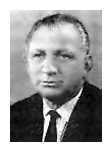
Ber Bagon
Translated by Ada Holtzman
Bagon Ber, a composer, conductor and a master. He was born in Wilna (Vilnius). His father was a writer. Bagon was fully absorbed with the Jewish tradition. He studied music by the famous cantor A.M. Bernstein and in the Polish conservatoire in Wilna. He moved to Warsaw and continued his studies in the Warsaw conservatoire. At the same time he already guided a chamber music orchestra. Bagon was zealot of the Jewish music, and when 10 years anniversary were marked from the death of Yoel Angel, he organized in the conservatoire of Warsaw a grand concert dedicated to his memory.
The concert took place on May 9th, 1937, and was opened by a speech of Leon Levita (among the Zionist leaders in Warsaw) and Ber made a lecture about Yoel Angel. In the musical program participated Zimra Zeligfeld and M. Klincki and the chamber orchestra conducted by Ber Bagon.
His quartet to wind instruments, “Judaica” was played in a chamber concert of the Warsaw conservatoire.
Stanisław Bodensztajn
(1906 - 1939)
Translated by Ralph Wittcoff
Violinist and orchestra leader. Born in Shpola, Ukraine and emigrated to Warsaw at an early age. He studied violin at the Warsaw Conservatory, played in the well known night clubs, “Oaza” and “Bristol,” and founded his own orchestra. Stanisław Bodensztajn perished in the first month of the war during a bombardment.
Chaim Bodensztajn
(1908 - 1981)
Translated by Ralph Wittcoff
A viola player, younger brother of Stanisław. Born in Shpola, Ukraine and emigrated to Warsaw as a child. He studied music at the Warsaw Conservatory under Professor Czink and Eli Kochanski. In 1926 he became a professional musician, playing on the radio, in movie theaters, and sometimes in concert.
In 1936 he was invited by Bronisław Huberman to join the Israel Philharmonic Orchestra which Huberman founded, and Bodensztajn lived in Tel Aviv until his death.
[Page 245]
Icchak Bakman
Translated by Ada Holtzman
Bakman Icchak – a cellist, the young brother of Szymon Bakman. He was born and grew up in Radom. He studied music in the National Conservatoire, with the Professor Kochanski and Chamber music with Mr. Szaliewski.
He played the cello in the String Quartet of the Warsaw Conservatoire. In a competition of String Quartets, which took place in Warsaw, his Jewish quartet won the first prize. He also played in the Chamber Orchestra conducted by the young master Ber Bagon.
During the war he fled to Russia where he perished.
Szymon Bakman
Translated by Ada Holtzman
Bakman Szymon – a violinist virtuoso, born and studied in Radom, and then continued with advance study abroad and reached the grade of a master musician. He won a few prizes in international competitions of playing the violin.
Szymon Bakman appeared in concerts in capital towns of Europe and finally settled in Zurich' where he was the leading player in the Philharmonic Orchestra. From time to time he used to arrive to Warsaw and played there in the Philharmonic Orchestra.
[Page 247]
Abraham Beigelman
Translated by Ralph Wittcoff
Saxophonist and accordionist, son of Szymon Beigelman. He studied music with his father and excelled in playing the accordion and saxophone. Well grounded in jazz music, he played in the best jazz bands in Łódź, and was often invited to play in other large cities. He perished during the Nazi occupation.
Chaim Beigelman
Translated by Ada Holtzman
He was a violinist and a saxophone player. He was the son of Szymon. He was born in Lodz at 1916 and studied music there. He was educated in the environment and atmosphere of Jewish music lovers and he excelled in his music playing. He played in the entertainment theater “Ararat” and later in night clubs.
Chaim was the only survivor of the Beigelman family. After ghetto Lodz he was in various German Concentration Camps and in the end was liberated in the small town of Kamm in Bavaria, where he founded an orchestra name “The Happy Boys”, who served the American Forces in Germany. With this orchestra he also played before the Displaces Persons Camps in Germany. Later on he immigrated to the United States and he settled there.
[Page 248]
Chanan Beigelman
(1916 - ?)
Translated by Ralph Wittcoff
Saxophonist and accordionist, son of Szymon Beigelman. He studied music with his father and excelled in playing the accordion and saxophone. Well grounded in jazz music, he played in the best jazz bands in Łódź, and was often invited to play in other large cities. He perished during the Nazi occupation.
Szymon Beigelman
Translated by Ralph Wittcoff
Clarinetist and musician. The father of the well-known conductor David Beigelman, he was born and lived in Ostrów Mazowiecka and later moved to Łódź with his entire family.
He played in the Yiddish theater and was a zealous master with a devoted following in musical theater. In his Tales of the Yiddish Theater World, Julius Adler wrote of Szymon Beigelman, “In those times, when I conducted an orchestra, I often held him up as an example of honesty and devotion to his people”
He had nine children and all of them obtained a musical education. For a long time he also conducted a theater orchestra.
[Page 251]
Stanisław Belzacki
(1891 - ?)
Translated by Ralph Wittcoff
Pianist and composer; jazz musician. He was one of the most active popular entertainment musicians in Poland. He led a famous quintet which used to perform in Warsaw at the coffee house “Esplanade.”
He single-handedly arranged jazz compositions, his own and others', which were very warmly received by the Warsaw public.
[Page 252]
Pola Braun
(? - 1943)
Translated by Ada Holtzman
She was a composer and texts writer. She lived in Warsaw and composed music to the Polish theater. In the Warsaw ghetto she wrote poems which were sung by the singer Diana Blumenfeld. Among her famous poems: “Zuruk a hajm” (return home), “hat rachmanut” (please have pity), “a chalom” (a dream) and others. She was murdered in Majdanek during the year of 1943.
[Page 253]
Zdizsław Gotlib
Translated by Ralph Wittcoff
Violinist, clarinetist and saxophonist from Kraków. He studied music while a student at the Jagiellonian University. He began playing as an amateur and later became a professional saxophonist. The ensemble to which he belonged carried the name “Shal”, and was recognized as one of the best in Poland.
-- J. Radinski: Obywatel Jazz (p. 105)
[Page 260]
Israel Yehoszua Gelbert
(1895 – 1942)
Translated by Ada Holtzman
Music teacher in Jewish schools in Lodz . He was born in Ozorków. He was the brother of a famous musician in America, Michal Gelbert. He studied music in Lodz and was a teacher of music and singing in secular schools at that town. He fulfilled his positions with much dedication and responsibility. He excelled in his love to the Jewish child. Gelbert also wrote music to Hebrew texts.
He perished during the Nazi German occupation in one of the Actions (Akcja).
[Page 278]
Jakob (Kuba) Weissman
Translated by Ralph Wittcoff
Pianist and accompanist. Born in Krakow, he completed the piano course with Prof. Jan Hofman at the music conservatory in 1939 before the outbreak of the war. He had already performed in various venues while still a student, and it was predicted that he would have a great future in music. At the beginning of the Second World War he fled to Lwów (Lemberg) where he was murdered by the Nazis.
-- J. Radinski: Obywatel Jazz (p. 163)
Sam Weinroth
Translated by Ralph Wittcoff
Violinist and jazz expert. He was born in Łódź, studied violin and was intrigued with jazz music. He was devoted to improvising new melodies to syncopated rhythm. Later, he created his own ensemble, “Sam Weinroth Syncopators,” which was recognized as one of the best in Poland. He played American and English tunes with his own additional improvised refrains, which were received with great applause by his listeners.
--J. Radinski: Obywatel Jazz (p. 104)
Not in the Hebrew book
Josef Tropfe
Translated by Ralph Wittcoff
Violinist and saxophonist; jazz musician. He was born in Lublin and studied music there, and later in Warsaw. He played in the best jazz ensembles. During the war he was in Russia, and played in the orchestra of Henryk Wars. He is now situated in America.
[Page 283]
Zimra Zeligfeld
Translated from the original text in Yiddish by Berta Kipnis*
Edited by Ada Holtzman
Zimra Zeligfeld (? – 1942) – folk singer, interpreter of Yiddish songs. She was born in the little town of Staszow and was the oldest daughter of a poor heder teacher ("melamed"). Since childhood has she shown a musical gift and was blessed with a beautiful soprano voice.
When the family moved to Warsaw, new opportunities were open for the young Zimra. She joined the M. Shneur's folk choir. The conductor took interest in the gifted singer and promoted her to a soloist. And when Menachem Kipnis left the Opera, he found in Zimra a partner who joined him in popularizing Yiddish folksongs in Poland.
Zimra Zeligfeld sang with ease, and her lyric soprano resonated pleasantly. She never sang out of her register, and various melismatas and embellishments she did softly and calmly. Her interpretation was thought through and well prepared and she has never acted on her whim. After Zimra married M. Kipnis, the couple Kipnis-Zeligfeld became the most popular singing duet in the Yiddish artistic and musical world. With their numerous concerts in little towns and cities they revealed to the “Amcha" (the common folk) Jew the sounding world of the musical creativity and for the sophisticated intellectual listener – the originality of the Yiddish melodies.
Even in Warsaw ghetto Zimra Zeligfeld took part in concerts ventured by the Jewish Organization. In one of the “actions” she was captured by the Nazis and sent to Treblinka, where she was murdered.
Bibliography
- Zalmen Zylbercweig, “Leksikon fun Yidishn teater”, Kadoshim-band, Mexico-City, Farlag “Alisheve”, p.3799-3803)
- Redaktsie-kolegie: “Dos Bukh fun Lublyn”, Parizer komitet, Paris, (p. 306)
- Zigmund Turkow: “Di ibergerisene tkufe” (p. 207)
- Yonas Turkow: ”Azoy es iz geven…” (p. 243)
- M. Kipnis: “Hundert folks-lider”, Buenos-Ayres, 1949(p. 17-21)
- Yonas Turkow: ”Farloshene shtern: “ (p. 137-142)
*About the translator
Berta Kipnis was born in Ukraine, immigrated to the US in 1979. In a few years, while visiting Israel with her husband Nahum, she met his great uncle, famous writer for children, Levin Kipnis. Levin, then in his late 90's, told them the fascinating story about Menachem Kipnis, who was a brother of Nahum's great grandfather and as an orphan was brought up in the home of Levin's father in Ukraine.
Back in the US, Berta and Nahum with the help of YIVO found memoirs about Menachem and his own books and articles, published in “Haynt”, and were able to enjoy his wit and knowledge of Yiddish music.
[Page 291]
Henryk Lebendiger
Translated by Ralph Wittcoff
Percussionist and jazz player. He started playing while still a gymnasium student and used to play as an amateur at high school dances. Later he played with various ensembles. With the development of jazz music in Poland, he became the major supplier of sheet music and records for all the jazz ensembles there. He was in close contact with foreign firms, and imported everything relevant to popular music, such as instruments, sheet music, arrangements, phonograph records, etc. He is now located in America where he continues with his music activities.
-- J. Radinski: Obywatel Jazz (p.106)
[Page 297]
Leon Mitelsbach
Translated by Ralph Wittcoff
Pianist and jazz musician. Studied and completed his piano studies at the Fryderyk Chopin University of Music in Warsaw. He acquired a love for the rhythm of American jazz and, from the beginning, created ensembles of that character. “OK Band,” of which he was the conductor, was one of the best jazz orchestras in Poland. Later he worked with the orchestra of Front-Heiman and that of Roman Messing. He emigrated to America.
--J. Radinski: Obywatel Jazz (pp. 95, 103)
[Page 298]
Fred Melodysta
Translated by Ralph Wittcoff
Cellist and banjoist. A member of the well known musical family, he founded dance bands in the nineteen twenties. He is regarded as one of the precursors of jazz music in Poland. During the time of the Second World War he was in the Soviet Union, and later traveled to Israel with the army of General Anders.
Fred Melodysta - cello, Henryk Gold - violin, and Jerzy Petersburski - piano, created a trio that toured regularly, giving concerts in Israel and Egypt during the war years. General Anders was very proud of them, and they played for the guests at important official receptions.
Fred Melodysta died in Israel.
-- J. Radinski: Obywatel Jazz (pp. 95, 103)
[Page 299]
Henryk Messing
(1902-1942)
Translated by Ada Holtzman
A violinist, theater conductor. He was born on 1902 in the town of Łódź. He was a descendent of a musician family. In his childhood he studiedto play the violin and started also to play in an orchestra. He was connected to the Yiddish theater in Łódź. For many years later he became the conductor of various Jewish theaters' ensembles. In the last years before WWII he lived in Baranavichy where he conducted the municipal orchestra. He also managed schools orchestras. He was murdered by the Nazis.
Mieczysław Messing
(1905-1949)
Translated by Ada Holtzman
A cellist. He was born and grew up in Łódź. In his childhood he excelled by his musical talents. In the age of 15 he graduated the Warsaw Conservatoire playing the cello. He was the pupil of Prof. Zink.
Professor Zink was playing in the Opera's orchestra. Once when he was sick, he sent instead of him his pupil Mieczysław Messing. Messing played then the role of a solo viola. It was in the opera “Straszny dwór” (The Haunted Manor) written by Stanisław Moniuszko (1819-1872). The conductor Jakob Hirszfeld was deeply impressed by Messing music and became his closest friend. Zdzisław Birnbaum, the conductor of the Warsaw Philharmonic, was interested in the young musician and directed him to continue his studies in Berlin, where he lived in the house of Birenbaum's mother.
From the year of 1925 and on he lived in Berlin from where he used to go on tours to various European countries, including cities in Poland. He used to travel with his brother, the violinist Henryk and his sister Felicja, to play chamber music. In the Thirties he moved to Argentina, where he managed very rich musical activity. He died young.
[Page 300]
Felicja Messing
(1904-1942)
Translated by Ada Holtzman
A pianist. She was born and grew up in Łódź. She was the young sister of Henryk. She studied to play the piano in the Warsaw Conservatoire by Henryk Melcer-Szczawiński. She worked in the Polish Broadcast Orchestra as a violinist and an accompanist. In the years when Arnold Szyfman was the theatre director, she was responsible on the music part of the Polski Theatre.
During the German occupation she was very active in the ghetto artistic life. She was murdered in one of the Actions.
Roman Messing
(1910-)
Translated by Ada Holtzman
A violinist and conductor of jazz orchestra. He was born and grew up in Warsaw. Already as a child he used to sing, while the family trio Henryk, Felicja and Mieczysław was playing. He accompanied them with his beautiful alt voice.
He studied in the Warsaw Conservatoire; His professor for violin was Prof. Józef Jarzembski and Prof. Grzegorz Fitelberg for conducting the orchestra. He completed his studies being the pupil of Prof. Walerian Bierdiajew.
He started his career as a player in the Yiddish Theatre of Warsaw, under the conductors: Icchak Szlosberg, Szmuel Wajnberg and Wyciek Rotsztajn. Finally he left the theatre and turned to Jazz music.
Roman Messing is considered one of the pioneer musicians of Jazz music in Poland. He was very dynamic person, entrepreneur, full of resourcefulness. In Warsaw he directed a very popular group and was in charge of the radio orchestra in Katowice.
By the outburst of World War II he escaped to Białystok and during a few years he was active in various groups. Fore sometime he worked in Russia with Adi Rozner.
Roman Messing arrived to Eretz Israel with the Andres Army. He worked in the I.D.F. radio “Galei Tzahal” and edited the broadcasting of light music. In the past years he is the director of the cultural committee of ZOA, “Beit Zionei America” in Tel Aviv.
Cwi Naparstek
(1895-1982)
Translated by Ada Holtzman
A clarinet player, saxophone and bassoon player. He was born in Warsaw and since 1903 lived in Łódż. He was a descendent of a musicians' family and ever since he was a child he played the clarinet. He was the pupil of Prof. Zilberberg in the conservatoire of Winicki in Łódż and afterwards he was the pupil of Prof. Hilcher.
In the tears of 1913-1914 he played in the opera of Kalisz and while the philharmonic orchestra of Łódż was established, he was among its first members. For a certain period he played with the philharmonic orchestra of Warsaw but in the year of 1922 he returned to Łódż and played with the philharmonic orchestra there until 1938. He arrived to Eretz Israel, following the invitation of Bronislaw Huberman, and was among the first players of the Israeli philharmonic orchestra, where he played until 1961.
[Page 304]
Leon Pomeraniec
Translated by Ada Holtzman
A pianist, accompanist and theater player. He was active for many years in entertainment music and jazz, together with the best musicians in this field. During WWII he managed to arrive to Japan and from there to America, where he accompanied Misha Alman and Yasha Hefetz with the piano. He was also a member of a musical triplet who played on a very highly valued artistic level.
[Page 305]
Stanisław Petersburski
Translated by Ralph Wittcoff
Pianist, jazz musician. Petersburski was one of the eminent pianists in Warsaw. He was a close friend of the violin player and composer, Henryk Gold. With him, Petersburski played in the famous night clubs in Warsaw, such as the “Cafe Club,” “Adria,” and often from the stage of the theater, “Morskie Oko”.
During the war he was in Russia and, later, with the army of General Anders, arrived in Eretz Israel. He lives in America.
This material is made available by JewishGen, Inc.
and the Yizkor Book Project for the purpose of
fulfilling our
mission of disseminating information about the Holocaust and
destroyed Jewish communities.
This material may not be copied,
sold or bartered without JewishGen, Inc.'s permission. Rights may be
reserved by the copyright holder.
JewishGen, Inc. makes no representations regarding the accuracy of
the translation. The reader may wish to refer to the original material
for verification.
JewishGen is not responsible for inaccuracies or omissions in the original work and cannot rewrite or edit the text to correct inaccuracies and/or omissions.
Our mission is to produce a translation of the original work and we cannot verify the accuracy of statements or alter facts cited.
 Jewish Music in Poland between the World Wars
 Yizkor Book Project
 JewishGen Home Page
Yizkor Book Director, Lance Ackerfeld
This web page created by Lance Ackerfeld
Copyright © 1999-2025 by JewishGen, Inc.
Updated 14 Apr 2014 by LA
![mus064.jpg [21 KB]](images/mus064.jpg)