 |
|
|
[Page 313]
|
[Page 314]
by Aharon Leib Oshman, New York, (nephew)
Translated from the Hebrew by Harvey Spitzer z”l
|
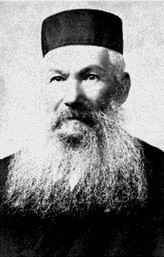
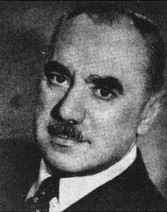
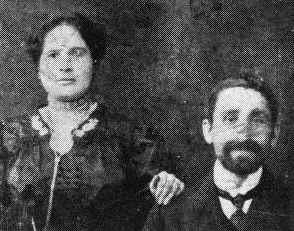
Rabbi Moshe Hurewitz, called by his acronym, Ho-Romoh, was born in Korelitz on the holiday of Shavuoth (Feast of Weeks), in the year 5631 (1871). His father, Rabbi Aharon-Yehuda, son of Rabbi Avraham, died in the prime of his life at the age of 39 and his mother, Chaya-Golda, daughter of Rabbi Nissan, remained a young widow for years. After her husband's death, she devoted her life to the love of her orphaned children, and the Romoh emphasizes in his book, “The Romoh's Outlook”, that all his Torah knowledge was her shadow. After his marriage to Grunia, daughter of Rabbi Yitzchak-Ze'ev from Eishishok, near Vilna, he left Korelitz and served for 18 years in the rabbinate in Lithuania, in the town of Legum in the district of Kovno. This was prior to the First World War when Judaism flourished in all its beauty and glory. It was at that time that his first two books appeared: “The Romoh's Sermons” and “The Romoh's Visions”, containing general sermons, sermons for the Holidays and for all the Sabbaths of the year, all bearing the national seal, all of them drawn from life and built on the words of our Sages. His third book, “The Romoh's Logic”, printed by the Tefillah Publishing Company in Warsaw in the year 5690 (1930) and his fourth book, “The Romoh's Outlook”, published in the year 5694(1934) with his coming to New York, were the fruit of his observations of the terrors of the First World War and the terrors of the Russian Revolution. He served for 16 years in the rabbinate in the town of Roslav in the district of Smolensk, where he saw Russian Jewry in its tranquility, in its fighting a heroic war for its existence and in its heroic death.
His book, “The Romoh's Outlook”, includes observations on everything that had occurred during the last 25 years, years which confounded the world and people's minds. This book stands out to a great extent with its sound logic. With his clear outlook, the Romoh transmits his view as to what happened with the world in general and with our people in particular. His fifth (and final) book, “The Romoh's Observations”, was published in New York in the year 5699 (1939) - the fruit of his observations during the five years of his life in the USA. At a time when American Jewry had not yet managed to assume the form worthy of it, he was one of the first to cry out, “How long will you waver between two opinions”, and he called out to the Jews of the USA to rise to the challenge of helping our people at a time of distress, when the existence of our people in the Land of Israel and in the Diaspora was in danger.
The Romoh was one of the most famous rabbis of his generation, one of the most well-known preachers of his time. He was a poet of Judaism, which he considered the most important thing in life. He dreamed the dream of the final redemption, and his love for our land brought him much closer to its free builders - in opinions. His books and sermons had a great influence on all those who read or heard them. In his lifetime, the Romoh became a symbol of honor to the Torah, a symbol of the Angel of Peace, a symbol of devotion to our land and the martyrs of our people.
He passed away in New York in the year 5706 (1946) at the age of 75.
[Page 315: letter heading:]
Author of:
“Droshos Horomoh”, “Chozyonos Horomoh, ”
“Hegyonos Haromoh” and “Hashkofos Haromoh”
253 MADISON STREET
NEW YORK CITY
With God's help, October 23, 1946
To my dear nephew, my sister's son, Aharon Leib and his enlightened wife Sarah and their little son, may he become great!, Shalom!
Painfully submitted by Sarah Osherovitz - Ra'anana
|
|
|||
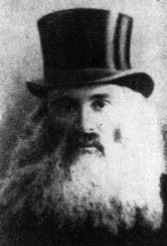
My father and teacher, Rabbi Avraham Hirshovitz, son of Rabbi Yona Hirshovitz from Korelitz, who was called Yona Zalamanker, was great in Torah knowledge, a leader, an orator and a lobbyist for the benefit of his co-religionists. He was a Zionist and took part in rabbinic conferences on behalf of Zionism. He served in the rabbinate in the towns of Kamai, Rovinishok and Skidel. He died on the 5th day of Tishrei 5675 (1915).
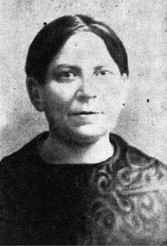
My mother and teacher, Mrs. Rivka Hirshovitz, was modest and honest. Her heart and hands were always open to the needy and oppressed. She passed away on the first day of Chanukah 5685 (1925).
by Tova Londin-Rogovin
Translated from the Hebrew by Ann Belinsky
|
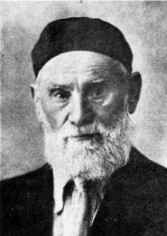
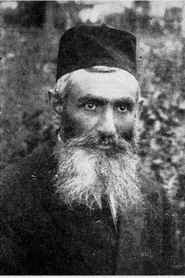
He was born in the village of Zessolia near Minsk. His father Mendeli was a God-fearing Jew and great in the Torah. In their old age his parents travelled to the Holy Land and are buried in Jerusalem on the Mount of Olives. My father had a wide-branching family, four brothers and two sisters, all of whom were engaged in Torah study. One of them was Rabbi in Niesviezh. Most of them are not alive. Some of the remnants of the family live in America. When my father set up his family in Korelitz, he had been authorized for the Rabbinate, but did not agree to work in the Rabbinate, for his own reasons. He decided his place was in the Bet Midrash (house of study). My mother died in her youth. She left behind two sons and two daughters: Shlomo-Haim in London and Avraham-Eliyahu in Paris, Breyna-Feigel and her family were murdered in the Holocaust and Gitel is in Israel. It was hard for my father to carry this heavy blow and with no way out he left the children with my mother's parents and returned to Minsk, where his sister lived with her family. He lived the rest of his life in Persepha (a suburb of Minsk), and was the right-hand man of the local Rabbi. He taught Gemara to many pupils. He lived in poverty and bore his suffering in silence. During the Bolshevik period I was with him for eight months and got to know him; he was a believer, straightforward and well-liked. He read the newspaper every day and enthusiastically followed what was going on in the world. He loved Eretz Yisrael with all his heart and wanted to come to live here, but didn't make it. He died a martyr's death.
by Yaakov Avramovitch
Translated from the Yiddish by Harvey Spitzer z”l
|
Shlomo London, a former resident of Korelitz, lived in London. He was involved with his fellow countrymen from Korelitz until his death.
I was among the few Korelitz survivors who were saved from that horrible war. We were in a kibbutz (collective settlement) in Italy in 1946 and I remember when we suddenly received a letter from a man who was looking for Jews from Korelitz. When we met with the man in Milan, we found out that Shlomo London had asked an acquaintance who went to Italy to look for Korelitz Jews and help them obtain whatever they might need. The man left us money and Shlomo London's name.
In 1962 Shlomo and his wife visited Israel, where he had a sister, Gitel. Several members of the Korelitz Committee met with him at that time. He was interested in everything. We informed him that we were dreaming of erecting a “monument” in memory of our dearest ones – parents, sisters and brothers, who were so cruelly murdered. In other words, we wanted to put out a Yizkor Book. We received £500 from him, the first donation for this fund. Shlomo corresponded with us until his death.
by Michael Beigin
Translated from the Hebrew by Ann Belinsky
Tzvi Kivilevitz, the teacher at the Hebrew school “Tarbut”, lived on Mount Zapoli. At the entrance to his house was a sign: “Welcome” and on the wall was written: “If G-d does not watch over the house - its builders have toiled in vain”. During the big fire in the town in 1929, when half the town was burnt down and the flames reached his house, Kivilevitz's wooden house remained whole.
The house was one full of public activity; where meetings and assemblies were held and where the many ideas were born - all against the background of Eretz Israel. He was a modest man who didn't demand require much from life and on the other hand, was active and energetic for public interests. In his “live newspaper” he would accompany every person making aliyah (going to live in) to Eretz Israel with yearning and with great devotion as if all of us were participants in this individual's aliyah. I was amongst those to whom he dedicated a place in his “newspaper”. He always believed with complete faith that the day would come and he himself would make aliyah to Eretz Israel. During the First World War he was in German captivity for three years. He published his impressions of the war and of his captivity in his “live newspaper” and thus tried to impart and pass on what he had gone through and learnt to his friends and acquaintances whom he so respected and loved. He hoped that the day would come and he would publish a book from the collections of his articles. But he never reached this day.
by Leah Kornfeld-Lubshansky
Translated from the Hebrew by Ann Belinsky
|
Among the figures that walked amongst us and determined the way of life in our town, is included Alter Mordechovitz, the ritual slaughterer. He was a learned man and well versed in the Torah. A genial smile hovered on his lips as if requesting to gladden the people around him. He lived with his family in modesty and when it was suggested to him to be the Rabbi in large cities he refused, in case others would be pushed aside. When R' Alter became sick, the people of the town wanted to repay him for his good heartedness, his spiritual assistance and good deeds, by giving help where there was sickness, calling for a doctor, or reading Psalms in the synagogue. He and his wife Sara-Dvorah led an exemplary life. They educated their children in their spirit.
by Michael Beigin
Translated from the Yiddish by Harvey Spitzer z”l
|
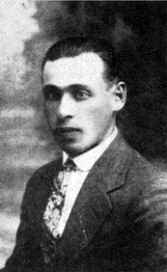
Kalman was born in Korelitz in 1899, son of R' Alter, the ritual slaughterer. We know little about his childhood. Kalman was an active member of many institutions such as in the administration of “HeChalutz” (organization to train youth as pioneers in Israel) and the Jewish National Fund. He was also an active member of the library, in the management of the fire department, etc.
While in Novogrudek during the First World War, he was secretary in the “Shokdei Melacha” trade school organization, in the management of the orphan home and in the management of the free kitchen which provided cocoa and small buns with sweet soup. In a word, he was a true community worker.
When Kalman came to this country, his home was always open to those who were hungry and to Korelitz Jews in particular. He would welcome each person with a smile, a joke, and dispelled everyone's unhappy thoughts and bad mood.
Despite his poor health, he didn't rest until he helped each former Korelitz resident adjust and get started in their new country, and he observed the “yorzeit” of the great massacre. He was the first president of the “Yotzei Korelitz”, Korelitz Benevolent Society.
Kalman suffered for years. His voice became weaker at each memorial. His eyes grew dim, but his energy kept him on his feet.
He was a modest person and was careful never to insult anyone.
Kalman passed away on March 4, 1959 and left us forever.
by Chasia Tutel-Oberzhansky
Translated from the Hebrew by Ann Belinsky
|
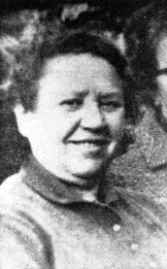
We called her Leah'keh - an expression for fondness and soul relationship; when we got older, we called her Leah Kaplan. My earliest hazy childhood memories stream by and are linked together with Leah'keh to the point that there is a blurring of bounds between us. We were both pupils in the heder “Hametukan” (“Improved” elementary school) of Archkeh the “Melamed”. When we became the only girls in the town to join the boys studying Gemara, we were nicknamed “Half-boys”. Leah'keh was prominent as a talented pupil, diligent and dedicated. With her honest, solid and consistent character she quickly rose to the rank of leadership in the “heder”. Before we are 12-13 years old, we are already given the job of rehabilitating the social and spiritual life of our town, which was almost destroyed in the First World War and Leah'keh is in the centre of activities and events. She has a hand in establishing the Childrens Library, from which the public library developed with hundreds of volumes, organized the “Club” that was initiated by our friend Mordechai Karolevtzky (Malchieli), and it was Leah'keh who faithfully bothered to gather us together for weekly meetings - for discussions and shared reading.
When a local branch of “HeHalutz Hatzair” (“Young Guard”) was set up in May 1924 in Korelitz by Bialopolsky, a shaliach (emissary) from the main branch inWarsaw, Leah'keh was among the first ten boys and girls that came to the “Ezrat Nashim” (women's section) of the synagogue, where Bialopolsky established the branch - and she was also chosen as a member of the committee. From that very moment and until she made aliyah (went to live in) to Eretz Israel, all her life was dedicated to “HeHalutz HaTza'ir”. Afterwards, to “HeHalutz”, and to work for the National Fund organisations. Her entire personality was concentrated in one goal - emotional and spiritual preparation towards making aliyah. Leah'keh was blessed with all those dear and rare qualities which characterize the best of the Jewish-Russian intelligentsia from the days of the Bilu (first Russian pioneers, 1882) and up to the breaking forth of the young Russian Jews - a second and third generation from the October Revolution - to the beaches of the Homeland as a result of their aversion to the life in the Diaspora and its baseness on one hand, and longing for the life of redemption and a honor in Eretz Israel on the other. Leah'keh did not make do with her work in “HeHalutz” - she also did her proletarian duty - and went to acquire a profession in Vilna. On her return after receiving a diploma as a perfect dressmaker, with her practical talent, she dressed and decorated all the young girls in the town with all the latest models of dresses. Finally she left for the pioneering hachshara (training farm) in Stolin and from there to Eretz-Israel - to a life of pioneering fulfillment on a kibbutz. We admired Leah'keh for her original and pure integrity, her sharp, non-compromising logic, her loyalty to the aim of pioneering, her deep affinity for books, for her continual self enrichment.
Leah'keh was my friend and companion from the moment I learnt to recognize the environment, to think, to feel and look for ways of shaping personality and until the moment our ways parted when I left Poland. I always thought of her - in bringing up my town Korelitz in my mind's eye - in every place that fate brought me to - and a pleasurable, soft warmth came into my heart - when I remembered her. Our shared memories are engraved - preparing lessons, swimming in the river, playing games, shared reading, discussions, and dances, and above all the daily activity in “Hehalutz Hatzair”, in the reading room, the library and spending time in her parents' house, which was like my parents' home.
And here came death and took Leah'keh away forever. An important link was taken out of the organism of “the I” of Korelitz and is no more.
by Chasia Tutel-Oberzhansky
Translated from the Hebrew by Ann Belinsky
In Norfolk in the State of Virginia a week before Rosh Hashana 5729 (1969), Yona ben Shlomo Oberzhansky died in his fifties. He was involved in the life of the conservative community in Norfolk, member of the local Zionist branch and a generous donor to the National Funds, and proud of the “Bonds” that he purchased towards the efforts on behalf of the building of the State of Israel.
In the second half of September 1969, after 12 days of a difficult fight with a heart attack, he returned his soul to the Creator. Yona was the scion of an old family in Korelitz that had planted roots in the town in the second half of the eighteenth century. On his father's side he was a great-grandson and grandson of landowners, learned scholars of the Torah, heads and leaders of the community. One his mother's side, Itka was the daughter of R' Moshe Shmuel Trotsky - a learned Torah scholar and a wealthy log merchant who was from the dynasty of the Luria family from the Minsk branch, which can be traced back to the Ari Hakadosh, Rabbi Yitzhak Luria of the Safed Kabbalists of the 16th century. The house of the grandfather R' Avraham Yitzhak and father Shlomo Oberzhansky was open to all who needed, and mother did her charitable deeds in modesty.
He made aliyah to Eretz Israel illegally, tried to find his place there, but in 1940 made his way to the United States, raised a family and had three boys to whom he gave a basic Jewish education. My grief is immeasurable - as the older sister, after the loss of my parents, and murder of my younger brother Moshe Shmuel, he [Yona - AB] was cut down like a tree and died in the Diaspora and not on holy ground.
|
||||||||||
|
|
JewishGen, Inc. makes no representations regarding the accuracy of
the translation. The reader may wish to refer to the original material
for verification.
JewishGen is not responsible for inaccuracies or omissions in the original work and cannot rewrite or edit the text to correct inaccuracies and/or omissions.
Our mission is to produce a translation of the original work and we cannot verify the accuracy of statements or alter facts cited.
 Karelichy, Belarus
 Yizkor Book Project
 JewishGen Home Page
Copyright © 1999-2024 by JewishGen, Inc.
Updated 11 Oct 2014 by LA