 |
|
|
[Page 315]
Meir Seeman of Tel Aviv
Translated by Jerrold Landau
|
|
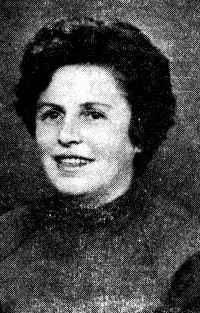
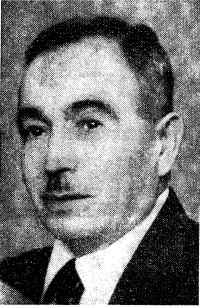
| Uncaptioned. Meir Seeman |
a) “Eicha Yashva Badad” Oh How Does it Sit in Desolation1
Oh, how does the city of Turka and its environs sit in desolation over its Jews. All of their friends, the Ukrainians, have dealt treacherously with them – behaving like enemies to them. The children went to the crematoria or were murdered locally. They went about without strength before their enemies, the Ukrainians and the Germans, may their names be blotted out. Their enemies have seen them, and mocked at their desolation.
The Jews gave up all of their valuables for food, to refresh the children of Turka and the area. The elders perished for want of food to restore their souls.
Outside, the sword ruled, and inside the house – death. All of their enemies, of Turka and environs, opened their mouths to them, they whistled and gnashed their teeth: “We have swallowed up, this was they day that we waited for – we have found and seen”. Indeed, they slaughtered and had no mercy.
My eyes shed streams of tears over the destruction of the Jews of Turka and environs: Those who used to eat fine food gasped outsideÉ and cleaved to the garbage heaps. Those who were victims of the sword were better off than the victims of hunger.
b) The Destruction of Husna Vyzna2
On a summer Sunday in 1941, we heard in Husna that Hitler, may his name be blotted out, went out to war against the Russians. On the Friday of that week, five days after the beginning of the war, the Russian soldiers left the village. Three hours after the departure of the Russian militia, the Ukrainians were already breaking the windowpanes of Jewish homes. On Saturday morning, one could already see Ukrainians with rifles, as they rounded up Jews from Husna and Kryvka to hew rocks on the streets of Husna...
And further: Already on Sunday, placards were posted indicating that Jews must wear a patch with a Star of David; Any Jew who disobeys the edict was to be sentenced to death. Furthermore: the Ukrainian population must not come into contact with Jews. No Germans were seen yet; however a few Hungarian soldiers from the border guard found their way into Husna in order to fulfill their commandment3 of robbing Jewish houses...
The following Friday, the resident Tzvi Sternbach, who worked in Barinya for a baker, came running into Husna, black with fear. He told the following: In Barinya, the Germans and their Ukrainian assistants rounded up twenty Jews, who had to take spades and dig pit on a hill in Barinya... The Germans shot ten Jews. The rest of them were forced to cover the grave and dance on top of it, after those that were shot were tossed into the grave... However, the Jews of Husna did not believe him. They cursed him for causing trouble...
Jews were forced to work. Two weeks later, again on a Friday, we heard a taxi coming. In Husna, a taxi had never before been seen... We realized that this time, Germans were coming. I quickly remembered the story of Barinya, and I jumped out the window and hid by the edge of the river. The Gestapo entered our house, and found my parents and a young sister. They sternly commanded my sister to run to all of the Jews in the village and tell them that they must come with spades in their hands – to work... If she does not do this promptly, my parents would promptly be shot. My sister ran and fulfilled the order – however all of the Jews fled to the nearby forest... The Germans and Ukrainians realized that they were left with only three Jews, so they abandoned the entire enterprise. That Sabbath, all of the Jews of Husna and Kryvka remained in the forest.
A few days later, 24 Germans arrived in Husna. They set themselves up as border guards in a special, large guardhouse that the Russians had recently built, also for the purposes of border guards. A few days after their arrival, the mayor4 Husna called all of the Jews together and announced that, in accordance with an order of the Germans, the Jews of Husna and Kryvka must appear each day at the German command. Their task would be to provide wood, and to draw water from the well at the border house. At that time, the well was operated by hand (earlier, it was operated by horses).
Things went on and on, each day coming with new edicts... All cattle and fowl had to be given away...All heirlooms and gold were given away... People gave their belongings away, believing that this would be the end: that they would be allowed to keep their lives...
Hunger, want and terror grew stronger day by day. Jews of Husna and Kryvka went around with wooden shoes, torn and in shackles – and starving. They went to their work with the Germans day by day. Each day, they had to fill up the tankers with 3,000 liters of water. The Ukrainians did not even let the Jews grind a small amount of oats in the Husner water mill, which had previously belonged to the Jews Tzvi Goldreich and Yitzchak Hanes of blessed memory.
Terrible news came from all sides... This was the situation until the final liquidation in the summer of 1942.
Translator's Footnotes:
[Page 318]
by Helena Ringler (Gissinger) of Netanya
|
|
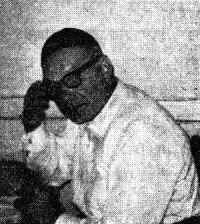
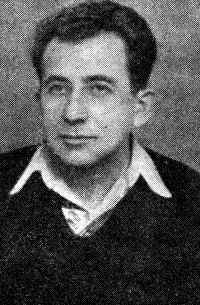
| Uncaptioned. Helena Ringler |
Borinya, one of the villages in the district of Turka, had a population of several hundred Jews at the time of the German invasion of Poland in 1939.
Confusion and fear overtook the Jews of the village when the Nazis entered. This was despite the fact that several Jews remembered the Germans from the era of the First World War. They could not imagine that such cultured people would be able to perpetrate such base, murderous deeds!
In the meantime, the local Ukrainians pillaged in Borinya. They beat the Jews and stole their property to their hearts content. When representatives of the German authorities entered, “normal life” pervaded in the village, so to speak.
Their first command was that the Jews must place a white band on their left arm so that they could be recognized. The men had to appear for work daily. This was, of course, gratis work, under the “supervision” of the Ukrainian guards. Those Ukrainian guards tormented the hungry, weakened people in a cruel fashion. Women were sent to clean various communal institutions.
Nevertheless, despite the difficult life and the social, moral and economic tribulations, the Jews continued on with their dismal, difficult lives. A spark of hope and an illusion that the terrible time would pass remained in the hearts of everyone, for it was difficult to believe that even more difficult times were to come, and that there was no bounds to the tortures.
I recall that my brother Shmuel Gissinger returned home perplexed and harried a few days after the Germans entered the village. When he came home, he stumbled upon a German captain who was passing in front of him. The captain stopped him and asked him why he, a Jews, dared no greet him, the German captain. “Since I do not know your honor,” was his answer. The Nazi slapped him over the face several times
[Page 319]
and stated, “How do you dare speak to me in such a fashion, Jew?!” This incident, not one of the most severe, instilled fear upon the entire Jewish community.
The Gestapo men arrived after some time. None of us imagined that the meaning of that word was – death. This time, they were looking for people named Furman. They captured approximately eight men and took them to the police. Aside from them they took 30 men to a field outside the village and commanded them to dig a grave. The following people were among those arrested at that time: Ben–Zion Furman, his daughter Golda and her husband Moshe, Yitzchak Furman as well as his wife who was also named Golda, Zusia Furman, his wife, and several other members of the Furman family whose names I do not recall at this time. They were brought under guard to the field next to the grave. They called out the name of each one of them, and they approached the grave, one by one, under guard, and were shot. They also read out their verdict and the accusation before them: There were German settlements in the vicinity of Borinya. Before their retreat, the Russians arrested and killed the owners of these settlements, and since Furman's daughter worked in the kolkhoz [collective farm] that was set up in one of these settlements – anyone with the name Furman was sentenced to death. According to their calculations, they had to kill ten people. Since there were only eight Furmans, they captured two others Jews, who were the youngest of those that dug the grave, and murdered them as well. Their names were Dolinger and Meir Jager.
The diggers of the pit were witnesses to the murder perpetrated with German precision. The victims were first beaten with murderous blows. The area was surrounded by German and Ukrainian guards, and it was impossible to even think about any sort of escape… Jager's older brother was among the diggers. As I had said, they murdered Jager along with the Furmans. They had to cover the grave over him and the rest. Since the earth pulsated about the bodies of the people who were buried before they expired, they were ordered to put stones atop of the pit…
Not only did the bereaved families not dare to complain, but they were even afraid to weep over their dead.
The hunger afflicted everyone. The farmers no longer knew what to demand from the Jews for a handful of barley or several potatoes. In general, they were in no hurry to sell food to the Jews, for they knew that in any case, all the fortune of the Jews would fall into their hands for free…
On the night of February 2, 1942, the Gestapo and Ukrainian guards surrounded the houses of the Jews and removed all people that they found
[Page 320]
there. Among them were Shmuel Gissinger, Moshe Rozen, Muno Sofer, his sister Mani, Nusia Friedman, Ben–Zion Liberman, his two sons Yisrael and Avraham, Yehuda Liberman, his brother Shlomo, and others – 36 people. After they beat them all night, they led them naked and barefoot in the cold, and bound them two by two behind the village, where three graves were waiting. Some of the Ukrainians tried to save Shmuel Gissinger, but when the Gestapo was informed that he was a lawyer, they refused to free him.
After the act of murder, the German policemen from Turka broke into the house of Shmuel Gissinger, where his widow and two orphaned children were located. One of the policemen, named Vikki, asked Regina Gissinger (nee Taffer) with satanic laughter if she knew where her husband was. She did not know that her husband had been murdered, and she answered that they had taken him at night. Then Vikki “explained” to her with full seriousness that her husband had “travelled to heaven.” He commanded the Ukrainian policemen to take everything that was in the house. They removed all the furniture and bedding, and even the small amount of food. The same thing was repeated in the home of Moshe Rozen, the brother–in–law of Shmuel Gissinger, who lived in the same house. Rozen had left behind a wife in her final month of pregnancy, as well as a three–year–old child. He was a native of Turka, the son of Chana and Mendel Rozen.
After this aktion, there were other “unofficial” snatchings and murders. In December 1942, the remnants of the Jews of Borinya who were still alive were transferred to the Sambor Ghetto.
At that point, Borinya was Judenrein.
[Page 321]
by Yosef Brenes of New York
|
|
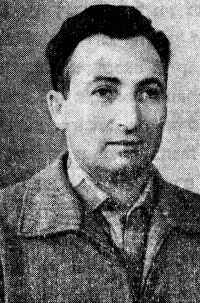
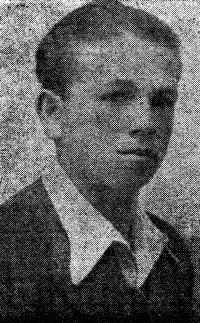
| Uncaptioned. Yosef Brenes |
When the Polish army was defeated, all of the soldiers fled to their homes. At that time, the Germans (the so called “Shtraf Ekspeditzia”) found a group of people, including Jews, returning home to Borinya, and shot them on the road leading to Jaworów. There was great chaos at that time. Many Ukrainians began to come to Borinya from all the surrounding villages, because a rumor was spreading that Jews were responsible for the shooting, and that all those running about were prepared to pillage…
However, one of the gentiles appeared in the middle of the market and announced, “It was not the Jews who were guilty. I have seen myself that there were Jews among the dead…” The words had their effect, and the first pogrom was averted.
It was Rosh Hashanah at that time, and we were worshipping in the Beis Midrash. An order arrived from Zalman Frajdman that the Jews must attend the funeral of the fallen Ukrainians. Of course we went for the sake of peace.
When the Russians retreated, they announced that anyone who wishes to come along with them can do so. However, very few went with them. First, we did not have any good experiences with them. Second,
[Page 322]
good reports were coming from Krakow that life under German rule was normal…
Those girls and boys who retreated with the Russians had earlier been members of Komsomol1 and were active with the Russians. They no longer had any choice. The Furman family, a certain Heger and others were among them.
When the Germans entered Borinya, they immediately gathered the remaining members of the Furman family along with about 20 innocent Jewish youths and shot them. They were tossed into a mass grave that we had to dig in advance. We had to dance on the grave until the victims were silenced… We the gravediggers were told to not tell anyone about this. Otherwise, we would meet the same end…
Shortly thereafter, the Germans took over the administration from the Gedula Firm, and imposed set quotas upon the Jewish men and women regarding how many cubit meters they could till. They also promised to give certain provisions for the work.
The quotas were very difficult. People, even if ill, had to go to work. Rumors were spreading that people were being snatched from the houses to be shot – which was better than going to that difficult labor.
We discussed escaping, but everyone had reasons to remain. One had young children, another had old parents – how could one escape? As the manager of the work in the forest, I had the ability to go from one forest to another. I began to dig a bunker. I thought that we might need it later.
[Page 323]
Ukrainian bands took advantage of our situation. They offered to transfer people to the Hungarian border in exchange for money. They would take their victims to the border. Then they would obtain notes from them stating that they were in the best condition – and after that they would murder them in a bestial fashion.
An edict came: All men, women and children must go to the ghetto in Turka. Each family can take along food and clothing, and everything that the possessed. Chaos broke out as everyone moved through the city. In the city, everything was taken away from them. The people were confined in old barracks without food and drink. The next morning, with force and threats from the Germans, everyone was led to the railway station, loaded up like animals, and sent to death camps. Anyone who attempted to escape was shot on the spot. My brother Tzvi was shot near the station by his one–time classmate with whom he had studied together and who had been a frequent guest at my parents' home. The scene that unfolded that day is beyond description.
There were 50 working people in Borinya. We continued to work in hunger and need. Things continued on in this fashion until December 19442, when announcements were posted that Borinya must become Judenrein, and all the workers must transfer to the Sambor Ghetto. It seemed that everyone could take what he could, and could travel by train.
At that time, many young people began to escape to the various surrounding forests, or to hide with neighbors. My late wife and my sister–in–law Esther, who is now in New York, had a few agreed upon places to hide with gentiles. At that time, it seemed that the war would last at most six more months. However, at the end, all the gentiles who had promised to hide us were afraid, and we were left in our desperate situation.
Translator's Footnotes:
[Page 324]
by Shlomo Katz of Haifa
|
|
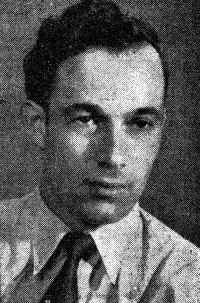
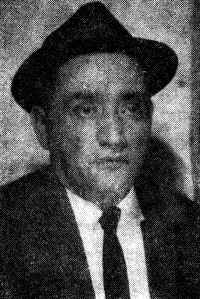
| Uncaptioned. Shlomo Katz |
Life of Calm and Tradition
The village of Dzvinyach extended along the San River. It was bordered in the east by the village of Tarnowa Gizna, and in the west, by the village of Didyova. For the most part, Ukrainian farmers lived in the village, as well as about 30 Jewish families who were also occupied with agriculture and small–scale commerce. Most of them were related through marriage, and therefore were like one large family.
All of these Jews were observant and lived traditional lives. They wore the streimel and kapote on Sabbaths and festivals, and worshipped in the synagogues that met in private homes. The youths would gather together in the hall of the Mizrachi Movement on Sabbath afternoons in order to hear lectures on Zionism, etc. Some of them went on hachshara and hoped to make aliya to the Land. The Jews lived peaceful lives in this manner until the outbreak of the Second World War in 1939.
The Germans for the First Time
A few days after the outbreak of the war, the Germans reached us from the west. Their first command was to gather all of the men in the gmina (governing house), but the Jews hid in the forests and did not appear at the roll call. The rumor had already reached us that the Red Army was also approaching. Indeed, that same day, the Russians approached and arrived at the San River from the east. Thus, there was a division between the Germans and the Russians: some of our houses were on one side of the San and the others on the other side. Most of the Jews left their houses on the German side and streamed to the Russian side. Both sides set up sentinels, and crossing the San became almost impossible. After some time, an exchange of property and population between the Jews and Ukrainians took place, and all of the Jews moved to the eastern side.
[Page 325]
Evacuating the Civilian Population
Already by the middle of the winter, the Russians issued a command to evacuate the civilian population from the border district, and move them to the interior of the country. The Jews of Dzvinyach were moved to Malinsk in the district of Rovno. We moved there by train. Every family was given a dwelling as well as employment in accordance with profession. All of the Jews of our area organized themselves and set themselves up in one district with the approval of the authorities. We were once again a large unit. We worked in the fields, in porting, and in transporting and cutting trees. The Russians treated us well, and we lived a renewed normal life.
1941 – The Germans Return!
At the outbreak of the war between Russia and Germany, the Russians began to retreat. Some of us retreated with them, but the numbers were small. Families with young children or elderly parents did not move. Thus, after a brief period, we again found ourselves under the Nazi boot.
Their first command was to wear the yellow patch so that the Jews could be recognized immediately. A command was issued to collect money as well as valuables to give over to the Germans. Immediately, various persecutions of the Jewish population began. They cut off half of the beard of Binyamin Breier, an honorable Jews from Tarnowa. They confiscated horses and cattle that we had brought from home, and drafted us to forced labor, especially in repairing railway lines that had been destroyed with the retreat of the Russians. We worked at harsh, backbreaking work without receiving anything in return.
The Berezna Ghetto and Work Camp
After fixing the railway line, the Germans deported us to the Berezna Ghetto. There, they separated between men who were capable of work and other family members. There, we were required to give over the small amount of property that we somehow still had. We were now empty of everything… Men who were fit for work were transferred to a Work Camp in Kostopol that was under the supervision of the S.S. and the Ukrainian police. There were about 300 of us Jews there, including the following people from our region: Avraham Yaakov Breier and his son Shalom, Shalom Katz and his son Shlomo, Gedalia Erlich, Chaim Parnas, Gedalia Kesler, Yosef Neuman, the brothers Chaim, Shlomo, and Lipa Rand, Meir Fuchs, Yaakov Lerer, his brother–in–law Avraham Breier, and others. Our job was to load trees on the train cars. The work was difficult. Food was not given to us. Rumors about actions and murders circulated daily. We also saw Jews being hauled to places of murder following the actions. We were in constant fear that our turn would certainly come.
[Page 326]
Then, one night in the month of Elul 1942, we saw that we were surrounded by the S.S. men and a growing number of Ukrainian police. We immediately understood that our turn had come. At 2:00 a.m., they took us out to the center of the field of the camp. A heavy guard with automatic weapons surrounded us. Now, we had no doubt regarding the aims of the murderers.
In the yard, we attempted to crowd together and remain together – especially our group – as we waited for what was to come. When the command was issued to arrange ourselves in rows of three, Yaakov Breier, who had been a Jewish captain in the Austrian Army, began to shout, “Jews, we are being brought to slaughter! Hurra! Flee for your lives. Escape to wherever you can!”
A tumult broke out with shouts of “Hurra!” We began to flee for our lives in all directions. The guards began to shoot at us, but we had nothing to lose. Whomever fortune shined upon escaped. Those who remained in the place or were caught during the escape were taken out to be killed the next day.
A. Y. Breier, Shalom Breier, Shalom Katz, Shlomo Katz, Gedalia Kesler, Avraham Breier and several other Jews from other areas survived from our group.
However, most of them eventually died there. May their memories be a blessing.
[Page 327]
by Zerach Katz of Kiryat Chaim
|
|
| Uncaptioned. Zerach Katz |
In 1940, the Russians transferred us from Dzvinyach Gruna on the San to Malinsk, a town on the railway line between Kostopol and Sarna. We received a house about two kilometers from the town. My father and older brother traveled to Malinsk every day to work at the railway station in transporting lumber or loading lumber onto wagons. My sister, brother, and I went to the school that was next to the station. Our neighbors around us were Poles or Ukrainians, and related to us in a sufficiently positive manner.
When the war between Germany and Russia broke out in 1941, the Germans had been with us within two weeks already. The Germans employed the older people at fixing the railway tracks that the Russians destroyed during the time of their retreat. The Jews knew that the Germans would not let them remain scattered, but rather would finally gather them into a ghetto. Therefore, our mother of blessed memory made sure that the young children would remain with Polish residents in the area. During the time of the deportation of the Jews from Malinsk to the Berezne Ghetto, my two sisters Fania (Talila) and Chana and my brother Peretz remained with the Poles.
When they brought us the Berezne Ghetto, we tried to keep the entire family together. However, after a short time, they took Father and my older brother to a work camp in Kostopol. The economic situation continually worsened. I decided to return to Malinsk to find something to eat. One day, as they were taking the Jews out from the ghetto to work, I went with them. I did not return at night, and I continued along through the Ukrainian villages to Malinsk. The distance was about 30 kilometers. I arrived at my brother, who was with a farmer, and told him that the children are hungry for bread. He gave me some flour. I also approached my sisters and there too, I received a portion of wheat from the owner of the house. I returned to the ghetto with this double portion. I did this at night, but the problem was: how to enter the ghetto with flour on my back? Somehow, I succeeded in sneaking in toward morning, while the residents were still sleeping.
[Page 328]
I remained in the ghetto for only 24 hours. Toward morning, I set out on the way to a farmer who lived near Malinsk who promised me at one time to take me on as a cattle herder. I made this journey to the ghetto and back two or three times. Along my way from the Berezne Ghetto to the village, I also snuck into the train station in Malinsk. I met Father and my brother Shlomo there, and gave them greetings from Mother.
When I reached the ghetto for the last time, they told me that something was about to take place. I left the ghetto that night and returned to work with the farmer. The next day, I was already in the pasture with the cows. At night, I sat and thought about the journey that I had undertaken (every time I made this journey to the ghetto and back, all types of unpleasant surprises took place). They told me that my brother and two sisters had come to me, for the farmers were afraid to keep them. Thy told me that all of the Jews from all of the surrounding cities in the area had been killed. My householder, an elderly Pole, told us to enter the barn for the night, and to hide the next day in the bushes in the area for a few days until the wrath would pass. This was on the 21st of Elul, 1942. At night, we snuck into the piles of fodder where we made caves and fell asleep. During the day, we hid in the bushes. We knew that other Jews, including relatives, were hiding in the surrounding forests. However, we were afraid to search for them in the forest. They also knew that we were hiding in the bushes in the area. One day as we were sitting among the bushes, we heard two people approach us. We recognized them. They were Gedalyahu Erlich and David Lipa of blessed memory. They took us to them. There, we met other uncles and aunts. My grandmother and sister Lea all escaped from the work camp in the area at the time that they came to take them back to the ghetto.
I found out that Father, my brother Shlomo and other Jewish families were hiding in the forests around the village of Polonne. I decided to go out and search for them before the snow would fall. The distance was about 20–25 kilometers. I went out on the journey toward evening and walked at the side of the road. I hid every time I saw a form approach me. More than once, the form that I saw also disappeared and did not pass by me… I was very frightened. The problem was, how to find the place where Father and my brother were hiding. I wandered around all day at a distance of 200 meters from them and did not find them until I chanced upon a path and continued to walk along it and reached the place in the evening. They did not believe their eyes, and I too did not believe. There I met, aside from Mother and my brothers, Avraham Yaakov Breier with his two sons, daughter and niece, the Kesler family with three
[Page 329]
children, and several other local Jews (that means, they had lived there for many years). The next night, we returned to my sisters and brother in our forest.
As time went on, we heard that Ukrainians had murdered Sara Kesler, her son Hirsch, Avraham Yaakov Breier with several other Jews, Breier's children, and Gedalyahu Kesler with his son and daughter of blessed memory. They came to us in the forest. Since we were a large group, it was dangerous to remain in one place. We had to exchange ourselves at all time so that the local residents would not know exactly where we were. We were afraid of the Germans as well as the Ukrainians. During one attack of the Ukrainians upon a group of Jews, Gedalyahu's daughter Mania Kesler and my aunt Mindel Rand (nee Parnas) were killed.
With the liberation of the area by the Russian Army in February 1944, we left the forests where we had been hiding for a year and a half and returned to Malinsk.
In March of that year, I reached Berezne with a group of six youths whom the Russians promised to send to school in Russia. We arranged all our required papers, and set out by foot to the nearby railway station along with a large group of Ukrainians whom the Russians had drafted to the army. Along the way, we had to stay over in a Ukrainian village. The Russian who was responsible for the entire group arranged for us to sleep in one of the houses in the village. We all slept with our clothes, only taking off our shoes. They woke us up toward morning and told us to go outside. I looked through the door and saw and saw that a Ukrainian was standing there with a gun, urging, “Hurry, hurry.” That moment I approached the opening of the window. The Ukrainian jumped and dragged me back. At that time, four youths managed to jump out the window and began to escape in the direction of Berezne. The Ukrainian managed to capture one youth (Eliahu of blessed memory, the son of Gedalyahu Kesler). He dragged him to another room which did not have any windows. Instinctively, I crawled back to the room (before the Ukrainian managed to close the door). I jumped out the window and began to run in the direction of the city of Berezne. I met the four youths on the way to the town. We reached the town and called upon the Russian Army for help. We returned to that village, but found neither the Ukrainian nor Eliahu there. We could not find out where they took him.
We returned to Berezne, and from there to Malinsk.
[Page 330]
by Shalom Katz of Tzfat
|
|
| Uncaptioned. Shalom Katz |
After the great slaughter in the Kostopol Camp, when a few Jews, I among them, succeeded in escaping, I did not know who had remained alive. I ran wherever my feet took me. I ran to the forest. As I was running, I threw off my coat that I still had from the Russians, so that it would be lighter for me as I ran to the forest. I heard a shout, “Father, where are you?” This was my son Shlomo, who had found the coat as he was running, and recognized it as his father's garment.
That is how we met up in the forest. There, I we found three other Jews from our camp who had fled. They were from Stepan. We were together for a bit of time, and then we were separated. My son and I wanted to go to the town of Berezne, where the rest of our family were in the ghetto. Along the way, as we were walking among the fields, a gentile showed us the direction to go to Berezne. When it was already day, we came up to a house and again asked the way to Berezne. Seeing that we were Jews, the gentile answered that we should not go there, for the Germans were killing the Jews there.
[Page 331]
From that gentile, we learned that a Ukrainian from Dzvinyach was there in the village. We secretly went to him. The Ukrainian received us nicely. He gave us food and told us to rest in the stable. After a short time, he came to us in the stable and told us to go on further, for he was afraid of the neighbors. Our pleading was to no avail, and we had to leave his house during the day. We went to a second and third gentile acquaintance. Nobody let us in.
In Strange Fields
We left the village at night and wandered in the fields in an unknown area. Finally, we went to a gentile who lived far from a settlement, near swampy fields bedecked with bushes. There was no forest there. There, we found out that some Jews were still alive in the area, and that they were hiding. We worked for the Ukrainian for two months. We rested in the stable during the day and hid at night.
When the gentile no longer wanted to keep us, we went on further. In a different village, we were approached by a Ukrainian who offered to keep us for work. I went outside to rest a bit, and my son remained waiting in the house for a bit of food. In the meantime, a young Ukrainian entered the house and recognized that my son was a Jew. He took him to turn him over to the Germans. I saw everything, and could do nothing to help him… Fortunately, my son managed to escape from him along the way, and we were reunited at night.
We wandered further, hiding in the fields. We met a Jew from Berezne who was familiar with the area. From him, we found out about many other Jews who were hiding there in
[Page 332]
the surrounding fields. Together with him, through snow and water, we entered the forest.
There in the forest, we met a few Jews from our area: Avraham Yaakov Breier with his four children, Malka Breier, and Gedalia Kesler and his family. There were also some Jews from Berezne. There, we found out that my other five children were alive, and were hiding in another forest about 30 kilometers from here. Two days later, my son Zerach came to us in the forest, not knowing that we had come there. He was the go–between for the Jews in both forests.
Zerach told me about everything that taking place in the area. The three of us went to the other forest where the other children were located. My wife, my youngest daughter, as well as my father were killed in the Berezne Ghetto on the day of the last aktion.
Life in the Forest
I was now together with my six children. Now we had to find a way to continue to survive. I found other relatives there – my sister–in–law who was already 70 years old: Hendel Rand. Her two sons and her daughter Mindel with her husband, and a daughter–in–law were with her. Our good neighbor from our home, Gedalia Erlich, was also there.
We made a bunker, and exchanged it from time to time out of fear. At night, we would go to the nearby villages to beg for food from the gentiles. We cooked in the bunker at night, so that nobody would see the smoke.
In the meantime, a misfortune took place. A pot of hot soup fell on my daughter, and her life was in danger. We were helped there
[Page 333]
by Gedalia Erlich. Together with my sons took a bed sheet, swaddled my daughter, took her to a gentile acquaintance and laid her down there atop the oven. She remained there for a month together with my oldest daughter. There, she healed her sick sister with linseed oil and gave her food. At the same time, my older daughter knitted sweaters for the gentile. Then, they both returned to the forest.
That same Erlich helped me greatly with life in the forest. This was in the winter of 1942–1943. The salvation did not come in the summer either. My son Shlomo went out to the partisans, and I remained in the forest with the younger children.
Banderovches
In the forests, there were Banderovche Ukrainians who were seeking to murder Jews. The fear of them was greater than of the Germans. The Germans were afraid to go into the forests. The Banderovches also murdered entire villages of Poles – and their workshops remained empty. Therefore we would go at night and take some food. We took wheat and potatoes and hid them in barrels in pits that we dug in the forest. We hid them in many places and made markers. We prepared for a new winter. We built new bunkers, for we moved our places.
Liberation
We began to hear the artillery of the approaching Russian Army. In February 1944, the front came through our forest. For security reasons, we remained in the bunkers for the entire week. After that, we sent out three people to find out about the situation. They returned and told us that the Russians were already in the villages.
Translator's Footnote:
[Page 334]
by Yosef Brenes of New York
The Morning After Judenrein
Life in the bunker began the morning after Judenrein – that is, when we had to transfer to the Sambor Ghetto. We had to connect with somebody who could bring us something from time to time. However, all of the gentiles who had made promises now had regrets: nobody wanted to help us. Having no other option, I turned to a farmer who had at one time worked for me, transporting wood and other things with my horse. His name was Ichnat Sokol. That farmer responded to me, “Go into the bunker in the forest, and I will help you with what I am able.”
The bunker had been prepared several weeks earlier. It was a hole in a hill, dug large enough for three people to lie down and sit. One could not stand up in it. I could not dig any further in the rocky ground. Furthermore, I had intended that it be small so that it will be warm in the winter. It turned out the opposite: It was very warm in the winter, but we froze from cold in the summer. On some occasions, we had to go out of the bunker to warm ourselves up in the sun…
Nobody could notice the entrance to the bunker. It was made under an old, fallen tree trunk that had been broken off by a wind perhaps 50 years earlier. The trunk was more than a meter thick and perhaps 20 meters in length, and a great deal of moss was growing around it.
Morsels of Food
I worked out with Sokol the farmer that we would meet under a certain tree once a week. I
[Page 335]
dug a pit by the tree, where he would be able to leave some food if for some reason we could not meet. The place was an hour walk from the bunker. More than once the journey was fruitless, or I did not find the way. I wandered around an entire night and returned to the bunker.
Later, I decided to make markers on the trees, so that I would be able to find the way. I worked for several weeks making cuts in certain trees. I also got used to seeing in the dark. All of this was in order to remain in contact with that farmer to obtain some food.
We lived under terrible conditions, but with an urge to survive. Nothing was too great to help us to maintain ourselves. We searched for berries in the forest, and picked nuts from the trees. Winter approached, and the gentile informed us that he would be unable to come in the winter. We prepared a hole not far from the bunker, and filled it with potatoes, turnips, and beets that could last us a long time. We fasted every Monday and Thursday… The farmer also brought us 200 kilograms of rye and a small coffee grinder to mill it. We would mill it and put it in the soup, so that we would be able to sustain ourselves.
Sick and Hungry
The entire time, we were sick more often than healthy. We would sleep for entire months and endure the tribulations. There was a rock in the bunker that I was unable to uproot while digging. It indeed caused us difficulties: it hurt my stomach which was always lying upon it. Eventually, I became accustomed to it. When I was later free, I could not sleep unless I put some hard and uncomfortable object there…
[Page 336]
Our dream was to go outside, wander around freely, and eat a morsel of bread… The farmer indeed finally brought more to eat: bread, butter, and marmalade – what had happened? Perhaps he wants to be free from us? We realized, however, that this was for another reason: The Germans had begun to retreat from Stalingrad…
In the meantime, the front approached us. We already heard frequent shots in the area. The forest started to fill up with soldiers and other strange people. We had been lying there already for 19–20 months. The fear was greater, but hope was also growing ––perhaps we will indeed succeed in surviving.
In the meantime, we were hungry. I would go out of the bunker in the morning to fetch a bit of water. Once, I saw a shot deer not far from the bunker. The Germans probably hit it with a bullet. However, what does one do with such a large animal? First of all, I removed the lungs and liver with a small knife and cooked a good meal. Then we began to search for a way to utilize the flesh. We dug a pit, filled it with snow, and laid the dear in it. We ate of its flesh for two months.
We also had a hidden stove made of two stones. The smoke was directed 20 meters below the ground. In this manner, we managed to hide the smoke. Inside, we had a small lamp. One liter of kerosene lasted us for two months. We did not burn it regularly, just in times of need. We lit fire by rubbing two stones between dry, rotting wood, which would ignite…
I recited my prayers every day sitting on a tree. Once, sitting on the tree, I suddenly heard a voice approaching me. I quickly
[Page 337]
got down from the tree and entered the bunker. The voice was from two or three Germans who were sitting not far from the bunker. We held our breath and my hand grasped the hand grenades that the farmer had provides us with. In such a case, they might be useful. The talking lasted for a half an hour, or perhaps an hour, and then things became silent. We breathed a bit more freely, but the fear was so great that our feet would not move… After several hours, we regained our composure and finally crawled out of the bunker. We found a bit of liquor, some meat, a piece of bread, half a box of sardines, and even a piece of chocolate. We even found a leaflet that was an appeal from the German General Paulus1, who had surrendered in Stalingrad. In the appeal, he warned the German Army to refrain from spilling blood cheaply. Hitler had lost the war. Now he will kill the German people.
The front approached closer and closer. We heard shots and airplanes. Food was available again – would we survive? I went out on a Saturday afternoon to fetch water. I heard loud talking when I approached the bunker. This was our farmer, who had come to tell us the news: the Russian Army was already in our area – we were free!
Translator's Footnote:
[Page 338]
by Yitzchak and Avraham Schindler of Kfar Ata
The Germans Arrived…
The Germans arrived in our village of Krasne near Turka in 1941, and immediately took ten of our best and finest young men, brought them to the top of the mountain, and killed them one by one by shooting. After several days, the Jews were taken to harsh labor. Many were sent far from their houses. Indeed, letters arrived from them, but they were infrequent.
We and our family members were given work in cutting down trees in the forests of our region. Our payment was two kilograms of black bread per week. Our family still had food… However, there were many families who were left with nothing, and did not even have bread. This work continued for a year. We lived in fear; for news reached us that they were murdering Jews in all places.
At that time, Gestapo captains reached our village, accompanied by a Jewish captain whose name was Baruch Aharon Rosen. They traveled from city to city and from village to village in the black automobiles in order to proclaim the edicts of the German Army. The current edict included the removal of property, including blankets, gloves, pillows, all clothing, work implements, plows, as well as food. They were to be taken outside and given to the Germans. They also requisitioned the animals.
The Ukrainians Begin to Act…
After a few days, a curfew was imposed upon the Jewish residents. It was forbidden for a Jew to be seen on the street after 6:00 p.m. One day, an edict was issued by the Ukrainians in the village that all Jews were to gather next to the school on Friday. Our family, who came early, did not find any living person there yet. Therefore, we went to chat a bit with some family members who lived nearby. The Ukrainians suddenly appeared and imprisoned us in one of the school rooms under the pretext that we were involved in politics. We sat in that room for nearly four hours until they freed us. That night, the local priest came to us and promised us that nothing will happen to my family. This was in exchange for the assistance that I extended to him when the Russians were in the country. I was on the committee at that time, and I helped him.
[Page 339]
In the meantime, the situation of the Jews became more severe. They were forbidden to gather in groups. The Ukrainians broke into the houses and pillaged anything that came to their hand. They took a great deal of property, and especially food. They also took care of people on the streets and did whatever they wanted to them.
To the Ghetto:
After a few days, an edict was issued by the Germans that within three days all of the Jews to gather in one place, since they had set up a ghetto in Turka, and all of the Jews were to go there. We were very afraid, since we knew that a ghetto is no simple matter that passes quickly. We heard that they kill Jews and work them hard. Mother, who had relatives in Smozhe, was able to move there since she had been born in that town. We packed everything possible, including some furniture that we dismantled and bedding, and gave them to our gentile neighbors. We gave six good outfits to our Christian maid.
At midnight, we moved mother to her relatives in Smozhe. The next day, we went to the gathering place that was designated for us. In the meantime, we found a Jew named Michcha Steininger who told us, “You have no place to go. They are murdering Jews in the ghetto, and you are literally going to meet death by bullet.” After my brother and I heard this, we succeeded in escaping to the nearby forest and hid there through day and night.
In the forest we were secure from the Germans, but open to beasts of prey. This was a thick forest, through which nobody dared to traverse alone during the day, and certainly not during the night. It is easy to imagine our fear when we were forced to spend and entire day and night there. Therefore, we decided at night, to go to our mother to see how she was doing, and to decide what to do further. The family with whom she was staying could not take in us as well, for this was absolutely forbidden. Mother, whose hometown this was, was permitted to be there. Not so with us.
When we told our uncle the situation, he told us that he had heard that those people who had worked before and now went to the ghetto received permits that allowed them to return to their former employment, and would not be bothered further. We again decided to go in the direction of the city… A brigadier named Yehoshua Langnaur joined us on the way. That Yehoshua had some sort of identity card from the Germans, and he was certain that they would not capture us. We already knew Yehoshua previously. He had worked with us in the forests. He told us that when
[Page 340]
difficult days come, he wanted to join us. He would dig for us a comfortable place to hide, and since he had a certificate, he would be able to provide us with food.
Finally, this Yehoshua was caught by the Ukrainians. On the way to the ghetto he freed himself from the chains and escaped across the forest. The watchman, who did not recognize him, turned him over to the Germans who shot him on the spot.
We continued on our way to the city. This was in the early morning. An old acquaintance named Yehoshua Szpilman appeared before us and told us what was taking place in Turka: They were murdering Jews on the streets. Everyone was dying or being taken to the camps. He advised us to not go there.
Persecutions
We turned around once again and returned to Mother. Our journey went through a thick forest at the ridge of a large hill, where in general no person set foot. We went along this route all night. When we reached the peak, we sat down to rest and fell asleep… We woke up at daybreak. We were very perplexed, so we went deeper into the forest and sat there. At night, we returned to the village where Mother was staying. We ate there, and returned to the forest. Thus went our life for two weeks. During the days we sat in the forests, at times under heavy, torrential downpours. At night we went to see Mother and to eat a bit. The rest of the Jews in the village barely dared to allow strange Jews into their homes, for the Germans would murder the entire family if a Jew from another place was found.
One day we heard that the wood factory in Smozhe was accepting Jews for work. Anyone who obtained this work would receive an identity card that would protect him from being snatched to the ghetto and the like. I, who had previously worked in this factory, went there. I requested work from the work director. His name was Levincki. He was a pleasant, polite gentile, and he said that he was prepared to help me. I gave him the two gold watches that I had, but he did not want to take them. He took us on for work without any repayment. We began to work.
One day, S.S. scooters and closed cars arrived at the factory. The Nazis talked with the director of the factory. Immediately thereafter, the director told us that we must leave the place, since they are taking the Jews to the ghettos in the village of Krasne. My brother and I wanted to cross through the town with the hope of saving Mother and taking her to the forest, but when we reached the mountain and looked from above, we saw that they were already hauling tens of Jews. We were too late… We later found out that Mother was in the field at the time
[Page 341]
that the Gestapo captains arrived. She sensed the approaching danger, and ran home in order to escape to the forest – but they caught her and took her to the ghetto along with the rest of the Jews. According to the news we heard, they already murdered her along the way. At night, we stood outside and saw how the gentiles were pillaging and taking everything that they wanted from the house.
We returned to our village of Krasne, for we had heard that the mayor had designated one of the houses for all Jews who succeeded in escaping from the ghetto. When he saw my brother and me, and another family member with a wife, two daughters and a son, he decided to give us our own house. We worked for various gentiles at various jobs until one day; a certain gentile took us to himself for regular work. We were like his slaves, but he treated us in a decent fashion.
In the Bunker
One day, a command arrived to turn over all the Jews. A few Jews escaped immediately, and some others were captured. The gentile with whom we worked wrote a letter requesting that they leave us with him. In the letter, he took it upon himself to kill us with his own hands if he would find out that there are no more Jews in the entire world… But the authorities did not agree, and we were forced to escape. This gentile promised us that if we would survive until December 13, we would continue to live always… In the meantime, my brother, another relative and his family, and I went to the forest. There, we decided to separate, and to meet on occasion at a certain gentile. However, they captured and murdered that relative and his family.
My brother and I dug a large bunker and decided to find shelter for a certain time. In the meantime, we approached a different gentile acquaintance, and requested a bit of clothing and food. At an earlier time, we had given over our property and clothing to him. He gave us pants and other such items and said that we do not need any more, for in any case, we would not live long… He wanted to give us a sack of potatoes, but we did not take it for we were afraid that this would make it more difficult to escape.
We remained in the bunker until December 13. We ate and lied down the entire time. At the designated time we exited the bunker, went again to that gentile, and asked him to give us more clothing and food. However, he refused to give us, saying that we would die soon, and it would be a waste. In the meantime he got dressed. When my brother asked him why he was getting dressed, he responded that he was preparing to accompany us, for the gentiles would murder us on along the way… We realized, however, that he was intending to turn us in to the authorities. We thanked him for his “good heart” and disappeared to the bunker.
[Page 342]
The snow melted the next day, and it was a nice day outside. The sun was shining and the birds were singing… We left the bunker to rest a bit. Suddenly, we heard footsteps approaching. We immediately returned to the bunker and began to shiver with cold. The voices came closer, and we realized that the gentiles had indeed come to the forest to murder us. We heard them discussing this. One of them said, “Indeed, why are we searching for them now, to kill them? One day the war will end, and we will be able to kill them on the street.” The other responded, “If you say this, and many others say this – it will turn out that many Jews will survive, and then, woe will be unto us.” The rain and the wind that started up suddenly chased the gentiles away from the place. Even though we were hungry, we did not go out to search for food that night.
Thieves for Hire…
The following evening we went to a different gentile, named Roman, who had once promised us that if things were bad for us and we were in a difficult situation, we could come to him. We arrived to him at midnight. He was happy to see us and said, “G–d had sent you to help me, and I will help you.” It seemed that he did not have bread at home, and therefore he gave us milk to drink. However, if we would obtain hay for his cows, he would be able to plow other people's fields, and then there would be food for him and for us… We took two blankets, went to the gentile Lorenz, stole two bundles of hay, and returned…
This continued for 18 nights. During the day we slept in an attic. This continued until Lorenz realized that hay was being stolen from him, and he hid it… We returned without anything and realized that now we would have to return to the forest. But that gentile told us that the hay that we had brought him would last the cows for one month, and we could stay with him.
In the meantime, we received 20 dollars from a Jewish lad who wished to join us. However, since we were filthy and lice–ridden, he regretted this. He forfeited the dollars. We gave the dollars to that gentile with whom we were staying during that period, and remained there for a sufficiently long time. We performed various jobs for him. My brother set up a good wagon for him, but it was missing two front wheels. That gentile who was passing through the town “by chance” saw two wheels that would be very fitting for his wagon and asked us to go and steal them… This was on a Friday. We told him that we would not go that night, but we went on Saturday night and “took” the wheels. The people who were guarding the fields almost caught us. As we were returning, we passed through a forest and heard voices. We turned around, and the two wheels on our backs banged against each other and made a ringing sound… The gentiles stood and said, “Some sort of demon is making
[Page 343]
strange sounds at night. It must certainly be Jews.” We stopped moving for some time, and continued along our way when the gentiles disappeared from the horizon.
The next day, we went to steal bundles of hay, when we suddenly heard a shout “Stop.” We were startled. We dropped the bundles and fled to the forest. We remained there for two nights and returned to that gentile. He told us that he was afraid to keep us any longer, despite the fact that he had food for an extended period, since those gentiles who saw him had figured out that we were the children of Rachel, from the lice–ridden sheets that were covering the hay that we wanted to bring to spread in the cave in which we lived…
Preparing to Cross the Border to Hungary
We then decided to go out and ask for help from that Lorencz. He told us that he could bring us across the border to Hungary. He also promised to clarify how we could arrange ourselves there. Jews from Hungary sent everyone 100 Pengő (Hungarian currency) two shirts and 100 cigarettes. They said that it would be possible to stay with a Jew named Mordechai Gutman.
My brother, Shmuel Freilich, his wife and three daughters, two of them married, and I gathered together and decided to cross the border to Hungary. Two daughters, who did not want to go without a guide, decided at the last minute to return to the forest. I returned to the village to fetch my brother's tefillin bag, the only property that we still possessed. The girls parted from their parents with bitter weeping. We recited the Wayfarer's Prayer [Tefillat Haderech], and requested from the Holy One Blessed Be He that He do good to us and make our journey successful. We set out on the journey.
Of course, we only traveled at night until we reached the river. Since the river was not yet completely frozen, we were forced to cross it by walking through the cold water. We got undressed and crossed. We reached the mountain and ascended it. Then Shmuel realized that he had made a mistake on the route and did not know how to continue. His wife began to scream and wail. Then we decided that, since there was a village on the descent of the mountain, my brother would go down there and ask the name of that village. I parted from my brother with bitter weeping, not thinking I would see him again. He went down. He went to the first house, where he saw a woman outside, and asked her the name of the place. The woman responded, “Who are you that you do not know where you are?”… My brother Yitzchak immediately made up a story that his brother, a tobacco salesman, had been captured in Hungary, and now he wanted to go to save him. The woman believed him, took him into her house, gave him food, and showed him the way to Hungary. He returned to us in peace, and we began to walk in the new direction. We had to cross the river again and traverse
[Page 344]
the mountain. When we reached the border, we lay down for a long time at the side of the road until the road was emptied of all vehicles of the border guard.
In the Designated Village in Hungary
After Shmuel and I scouted out the area, we reached the designated village. We went to Mordechai, and knocked on the door of his barn. A voice was heard from inside in Yiddish, “Who is there?” Shmuel responded, “I, Shmuel Freilich.” No response came, and the door did not open. We entered the pen and froze there from the cold of the snow that stuck to our clothing. The next day that Mordechai came out and gave us coffee and a piece of bread. Of course, this did not satiate us. They sent Shmuel and his wife to one attic, and his daughter, my brother and I to another attic. The attic was open, and therefore a fierce wind blew in it. We froze from cold throughout that entire day, and our teeth chattered as if they would break.
At night, he took us all down to the potato storehouse. There it was hot, and the air was clear. We had to sleep on the wet potatoes. Our bodies were filled with wounds. The swarming lice began to itch and hurt. Our entire body hurt. We lived under such conditions for two weeks. Then, Mordechai transferred us to a Jew named Tuchman, who was Shmuel's cousin. He received us very politely.
It was Friday night. We all sat down and ate in a fashion that we had not known for a long time. We remained there for a week until they (a Jewish group) decided to transfer us to Budapest. There, we were to obtain papers and identity certificates with Christian names. The Jews who had transferred us placed my brother and me in one place and Shmuel and his wife in a different place. They told us that if we were to be asked for papers on the train, we should respond that a soldier had purchased our tickets.
In Budapest as Christians
We arrived in Budapest in peace, and went to the restaurant where the refugees gathered. This was on 11 Kiri Street. We ate and drank to our fill, but they did not give us a place to sleep since we were dirty. He continued from there to the synagogue. We lay down there to sleep, but the shamash did not permit this. From there, we went to a certain Christian hotel, where we received lodging for one night. They did not want to accept us for more than one night, since we did not have Christian papers, and it was possible that we might be caught.
The next day we went to the city hall to receive Christian papers. They photographed us and we filled out various forms. We received our certificates six days later. They called my brother by the Christian name
[Page 345]
Ignac Koblaski, and I was called Edvard Koblaski. I was constantly afraid that I would forget the name of my father and mother, and the name that they called me… I registered as a farm worker and my brother as a smith. They sent us from there to the work in the city of Neidvarok. We were received there by Naftali Adler, who was the son–in–law of the Rebbe of Visznitz. He arranged for us places to work and eat. We received 45 Pengő while still in Budapest, with which we purchased new clothes and food. This Naftali made sure to find us a workplace where they did not work on the Sabbath. This was in a factory for weights, owned by Lichtman, a G–d fearing Jew. My brother received work in the smithy, but there they did work on the Sabbath. Each week he found a different excuse in order to not go to work. However, out of fear that they would finally suspect him and capture him, he left the workplace and transferred to a suitcase factory. We set ourselves up properly, we ate well, and our economic situation was good. Everything was like this until the Germans entered Budapest on March 20, 1943. A great fear overcame the Jews.
One day, the owner of the factory called me and told me that he knows my origins – that I was a Jew. He probed and asked many questions. When did I escape and leave Poland? What was the situation of the Jews in Poland during the time of the German invasion? I answered all of his questions in brief, and explained the situation to him. He invited me to his home for Sabbaths. I lived with him for more than a month.
In the Neidvarok Ghetto
A ghetto was established in Neidvarok on April 5, 1944. We begged and pleaded for the Jews to leave the city while it was still possible to do so. I told them everything that had happened to us, about the myriads of Jews who were slaughtered – but they did not believe us and did not listen to us.
Then, one day, a Jew was captured on his way from the synagogue. Of course, this immediately caused many echoes, and people began to be afraid. However, even then they did not escape. They trusted that their money and all their friends in the police would help them. After a short time, 30 Jews were captured. In exchange for them, the Germans demanded 30 fully furnished rooms. They received their rooms immediately, and the captured Jews were freed. All of the Jews were brought into the ghetto that was established. That factory owner with whom I pleaded and begged so much to leave and escape from the city, and who trusted in his remaining money – met my brother in the ghetto and begged from him a box of cigarettes and a liter of milk…
[Page 346]
We were about 60 Jews with Christian papers. We lived in dwellings outside the ghetto. My brother and I did not have entry certificates to the ghetto. The factory was closed for about two weeks. Then, it was reopened after the ownership was transferred to a Hungarian gentile. We all returned to work. We lived in relative calm for quite some time, until we heard knocks on the door of our dwelling one Sabbath. We were very surprised, and we opened the door. Policemen stood at the door. They asked us if the Koblaski brothers and two other youths lived there. We responded affirmatively, and they asked us to come down.
All the Jews with Christian certificates were gathered downstairs. We were arranged in rows, and the guards passed by us to determine who was a Jew. I was one of the first to enter the room, and I was asked to pray. I crossed myself and prayed with “devotion”. Then a physician examined me and determined that I was a proper gentile… I was afraid that my brother would stumble, since he did not know the “blessings.” However, to our good fortune, they asked him if he was the second Koblaski. When he answered affirmatively, they immediately transferred him to my side. Everyone except for two people passed the examination.
Escape to Romania
However, from that time, we no longer felt secure, and we decided to escape to Romania. We got in touch with Miklos, a gentile who transferred many Jews from Hungary to Romania. He asked for 1,300 Pengő. Of course, we did not have such money, so my brother returned to Budapest to sell various belongings of Jews that were left with us. We arranged with that Miklos to meet us in the railway station and to take us. We were four people, but when we got there, we found another 18 people whom he also agreed to transfer. We traveled in a train full of German captains, but everything went in peace. We traveled until the Romanian border depot. There, we got out and went through the fields. We walked all night, and we arrived in a Romanian village toward morning. We entered a house, ate and drank, and set out on our journey at night. My brother and several other people who were at the head of the group walked with the guide, and I walked behind with the wife of Yisrael and another gentile. Suddenly, that gentile decided to return to the village. We attempted to convince him to continue on the journey with us, but he refused. In the meantime, all of the first ones got father away from us, and since it was dark, we could not see the route. We continued alone along the straight path until we reached a crossroads. We did not know which way to turn… We screamed and called out, but this did not help. Yisrael ran after that gentile to ask him which way to go. In the meantime, dawn broke, and we, the woman and myself, stood in an open field. We entered the nearby forest and sat there all that day. We returned to the village in the evening.
[Page 347]
We entered a house, ate to our fill, and asked the master of the house to take us to the city of Arad. He agreed on the condition that we give him a suit, which we gave him. However, the gentile lied to us and did not bring us to the city. In the meantime, rumors spread through the entire village that there were refugees there. We went to the local police, since there was no choice, and it was no longer possible to escape. At the police they told us that the first group was also caught, since “their” gentile also escaped and left them alone, not knowing the route… They interrogated all of us and sent us to the police in a different city, the city of Tinca, where they were treated us harshly and beat us cruelly. They took all the property and food that we had. We met a Jew there who promised to bring us to the guards at the Hungarian border, where they would free us.
Interrogations and Suffering
They brought us to the Hungarian–Romanian border, and warned us that if we were ever to return to Romania, they would kill us. This warning was repeated several times. The Romanian police showed us the route to go to Neidvarda. The journey was at night, so it was comfortable. However, since we were about 30 people, we were afraid that they might capture us – and then we would be goners! Therefore, my brother, Chaim and I went in a different direction. We walked all that night until we noticed houses, fields and people toward morning. We did not know whether we were in Romania or Hungary…
We approached one of the houses and asked the way that leads to Neidvarda. The gentile told us that the railway station was close by and we could travel on it. He told us to wait, for he wanted to go with us. Not even five minutes passed when he returned with… a policeman. The policeman interrogated and questioned. We told him that we lived in the city of Neidvarda and worked in the factory, but it was closed when the Jews were taken to the ghetto, so we went to seek agricultural work in the villages. We lost our way at night, and reached the village toward morning. Then we asked him for directions to return to the city. The policeman took us to the military police where they interrogated us thoroughly. We had to give over all of our property: money, clothing, etc. They did not beat us, but they shouted at us and placed each of us into a separate cell. They called us out for interrogation every two hours.
The interrogations were accompanied by death threats. After several interrogations, they called me. The policeman said that they had killed my two friends, so I now can state
[Page 348]
the truth. When I heard this, death did not matter to me, so long as I would not state the truth. I got up, raised my hand, and said that I was prepared for death. The policeman saw this and told me to sit down. Another policeman who was present in the room went and called my brother and Chaim… The end of the matter was that the police wrote a note of confirmation to the civil guard that we were gentiles who had gone out to seek agricultural work – and we had been caught by chance…
We were transferred the civil guard, who also interrogated us. We repeated our story again and again. We remained in that police station for about four days, until… we were summoned to a new interrogation. We were put into a cell where there were criminals, murderers, and robbers. They provoked us in various ways, to the point where we were forced to ask to be transferred to a different cell. We were transferred. We were freed after the interrogations, and we finally returned to our place of residence of Neidvarda. We began to work in the factory, and amassed money.
After some time, the ghetto was liquidated, and all of the Jews were taken to be murdered. The danger increased.
Return to Romania
We once again paid a significant sum to a gentile, who agreed to transfer us to Romania. We arrived at a village in Romania. When we were in a room there, we found various notes and letters from Jews who had been there previously. Our acquaintance Shmuel Freilich was among them. The next day, the person who transferred us, a mute youth, sent us to be transferred to the nearby city. At first we suspected him, but then we went. When we arrived there, we found the Jews who had escaped before us. All of us stayed with one shochet. Since we were more than 50 people, he was not able to keep us all. My brother and I went to a certain family. This was on the Sabbath. They were poor, but they still gave us food. We were very tired, and fell asleep quickly.
In the afternoon, they came to tell us that a car was waiting to take us to Arad. Of course, we quickly went, and drove with them. Along the way, the police caught us and began to interrogate us… They decided to transfer us to the police in Tinca, where we had been previously, and who had warned us not to return to Romania, or we would be killed. We began to fear for our lives. However, a certain Jew promised to save us. He bribed the young men and women of the village to each keep one of us, and then it would seem that we were guests. He told the Tinca police that we were tourists.
[Page 349]
We returned to that shochet in Dionto, and remained there for several days. After some time, they again gathered all of the people in a large transport vehicle and took us to the city of Arad. From there, we were transferred to Bucharest, where we received Polish papers. We were no longer afraid. By then, the Russians had conquered Romania – we were free!
After about two weeks, I received a notice to travel on the Solahatin Ship to the Land of Israel. I arrived in the Land on Chanukah, 1944.
by Tzipora Zelmanovitch (Katz)
The family of my uncle Shlomo Bruner numbered 11 souls. Aside from his wife Rivka, he had nine children: Esther, David, Leah, Ben-Zion, Sheindel, Avraham, Udes, Shmuel, and Chaya-Sara. The family hid in a bunker that was dug in the forests of Rosokhach. About two months before the liberation, the Germans uncovered the tracks of the gentile who brought them food, and reached the bunker. Two of the girls fought valiantly against the Nazi murderer who wanted to capture them, and succeeded in killing him. However, they were shot by the Nazi friends of the murdered man as they were escaping. My uncle, aunt, and all the rest of the children were murdered by the Nazis when they were captured.
[Page 350]
by Yeshayahu Schwartz of Netanya
|
|
| Uncaptioned. Yeshayahu Schwartz |
When the Germans came to us in 1941, the tribulations began immediately. The Ukrainians began to pillage Jewish property. A little later, they also began to murder Jews. The Germans issued an edict that every Jew must wear a white band with a blue Star of David so that people could see from afar that a Jew was passing by… Anyone who did not follow the edict would be shot.
Plunder
Later, the Germans began to take Jewish property. We received an edict that we must give over our animals, grain, and everything that we had in the storehouse. I saw how the Germans were purchasing our animals from the Germans at an auction. Their joy was great when they could get everything dirt cheap. An edict was issued that every Jew who had animals, hens, grain, and the like would be shot. My mother and sister wept bitterly as we gave everything over. They could not imagine what type of a misfortune was still awaiting us.
Later, the Germans took our furs, and we were left naked, barefoot, and hungry. They issued an edict that all Jews must cut off their beards and peyos. The Jewish
[Page 351]
women were pulling their hair from their heads. I think about the great misfortune that afflicted my father: his beard and peyos were his pride.
Murder
One night, the Ukrainians came and arrested my brother Ben-Zion. They held him under arrest, beat him, and did not give him any food. We brought him some food from home. They took it from us, told us they would give it to him, but did not give it to him. Later, they took him out to the forest, beat him murderously, and murdered him. They did the same thing with my cousin Eliahu Katz. They took all the young lads from Ilnik at one time and murdered them. These included Shmuel Lauterman, Itamar Rosenberg, Sender Fuchs, and Yitzchak-Izak Fuchs.
Hunger
Hunger began to prevail in Turka as well as in Ilnik. People began to suffer from the effects of hunger. Anyone who noticed that his foot was swollen realized that he was going to die… Today one could be talking with a person – and the next day he could already be dead. Anyone who had anything to sell tried to do so for a bit of oatmeal or potato peels. People cooked grass and mixed it with a bit of oatmeal to bake small cakes. The children were excited about such a piece of cake…
I went to work with the gentiles. I drove the horses and dragged the plow, as I toiled for 14 hours. In return, I received a bit to eat. I brought half of the portion home. In the meantime, the entire work with the farmer became improper – if they caught me they would shoot me… Later, an edict was issued that all Jews must have a work certificate. My father and I obtained the certificates, but my mother, sister Reizele and brother Hershele were unable to obtain them. When an edict was issued that all Jews who do not have such a certificate must present themselves in Turka, and register there
[Page 352]
to obtain certificates – I already knew that they were just fooling us. I already knew their dark methods…
In Concentration for Annihilation
My brother, sister and mother went away to concentrations points in Turka. I went along with them. All the Jews from Ilnik and many villages around Turka were there. I saw thousands of people there, including our entire family from Bikla, Yavorov, Jablonka, Walsza, Libechiv and other places. We kissed and embraced, and asked, “What will be here?” Nobody knew how to answer.
My father and I returned to Ilnik. We did not sleep the entire night. In the morning, we took a bit of food and wanted to bring it to the city. However, as we were leaving the house we met several gentiles who informed us that the Gestapo had taken all the Jews. Food for the family was already too late…
The Nazis surrounded the Jews with dogs and wild shouts, pushed them onto wagons like stones, and transported them to Belzec… We wept for them day and night, for we already knew the dark truth. We worked in the forest with 100 grams of bread per day. I did not have the energy to haul the thick beams. My father did everything to lighten my workload.
And again a dark end. They surrounded us in our house at night and captured us all. They did not even let us put on our shoes. I stuck my feet in my galoshes and went outside. They seated us in the snow, and Ukrainian police began to beat my father. I could not help at all. I then had an opportunity to escape. My father was so badly beaten that he could not move. They pursued me, but did not succeed. I never saw my father again. Feiga Rosenberg later
[Page 353]
told me that when they were later taken to the camp by train, my father told her that he was happy that I had escaped. Perhaps one of the family will survive. Feiga later jumped off of the train and survived.
Wandering in the Forests
I entered the forests naked, barefoot, hungry, and alone like a stone. Later I met friends who helped me. We began to make bunkers and prepare for the winter. In the meantime, we received information that the Germans knew about us and that they were preparing to attack us. We lost our bunker in the fiercest snow and storms, so we looked for a hiding place in a second forest. We remained there until the end of the winter.
During the summer, we met other Jews from Turka in the forests. There were also Jews from Sambor who fled there during the time of the liquidation. I met Avraham Feiler, Avraham Libhart, Yosha Szleicher, David Laufer, and others. We were a large group and this strengthened us a bit. We no longer had to ask for a bit of bread from the Ukrainians – we would take it by force. We brought an animal into the forest and had some food to eat. I found some clothing from somewhere, and living became a bit easier. We began to prepare for a new winter in the forest.
Battle with Germans
For the second winter, we prepared two bunkers, 50 meters apart. Each bunker had two “stories,” an upper and lower. It was quite warm in the top story. In the lower story, where I slept, it was very cold. Cold and hunger were constant. We would always remain on watch and guard.
Shlomo Yitzchak Entner was standing on guard, when he saw hundreds of Germans coming from afar. We all
[Page 354]
left the bunkers. We did not see them well, because the bullets from both sides were hitting the branches, stirring up the snow. I was running around the mountain when I saw that Mrs. Shuster had been wounded. She shouted at me to help her. Unfortunately, there was nothing I could do for her. When the shooting between the Germans and us stopped, the Germans broke into the bunkers. We thought that they would surround us, and we were prepared for our final battle. However, they apparently had regrets. They were afraid of entering deep into the forest.
Yitzchak Oferman shouted to me, “Are you still barefoot!” Only then did I notice that I was barefoot, until then I did not feel it. My feet were red like fire – for how long can a person stand barefoot in the snow? I was wearing only a shirt. That was the way I had left the bunker. I begged my friends to shoot me, for I had terrible pains in my feet and I knew that without shoes, I would not be able to manage. Of what use was it to suffer?
Mendel Fuchs from Ilnik had a blanket with him. He tore it into two. He covered my shoulders with one half, and bound my feet with the other half. Someone had a bit of string, and they bound me up.
I wandered around in the wind and deep frost until night. At night, my friends went out to procure food. I tried to go along with them, but at the end they left me behind.
Hungry, thirsty and in great pain, I entered a sheep pen and fell asleep. However, when the gentile came to feed the sheep, he saw me and shouted at me to leave immediately. All of my pleas had no effect. He grabbed at me wildly and
[Page 355]
tried to stab me. I left the pen and began to return to the forest. I leaned against a tree and wept…
The thought came to me to pass through the mountain and go to Ilnik, where I had gentile acquaintances. With my last strength, I climbed up the mountain, dragging along my rags in the deep snow. I saw a hut at the summit and entered it. The gentile sat me down near the oven, and gave me hot milk. I swaddled my swollen feet. The gentile comforted me and kept me for two weeks.
[Page 355]
by Yeshayahu Schwartz
|
|
| Uncaptioned. David Laufer |
When I write these words about you, David Laufer, my heart is broken. Why did you not survive to see the downfall of the German murderers? Even more – why were you not permitted to witness the freedom of the Jewish people?!
When you used to speak to me – your aspirations were for your freedom and to come to Israel. You were the one who
[Page 356]
always comforted me and never let me become discouraged. You always said that we would survive everything. When you had a morsel of bread, you would share it with me. You always carried yourself like a soldier, and your weapons were in your sack. When we would go to a village to fetch some bread, you would always look at me – to see if I was going with courage, was I not falling down, or was I perhaps rolling around in some pit.
This went on until the dark day came when the Germans and their Ukrainian assistants attacked our two bunkers and fought against 60 Jews. Shlomo Yitzchak Entner was standing on guard. When he saw them, he shot at them, and we left the bunkers.
The Germans then shot at us with machine guns. It was dark. The snow fell off of the trees, for the bullets hit the branches. Not far from the bunker, a battle was raging to the last bullet, and you yourself took care of so many murderers. I saw how you crawled on your stomach in order to distance yourself from them, but you could no longer crawl in the deep snow, so you remained lying there.
We fought against them, but unfortunately, we could not hold them off. They approached you and shot you in cold blood.
You, David Laufer, were a true hero. You are no longer with us, but your heroism will shine its light for generations.
|
|
JewishGen, Inc. makes no representations regarding the accuracy of
the translation. The reader may wish to refer to the original material
for verification.
JewishGen is not responsible for inaccuracies or omissions in the original work and cannot rewrite or edit the text to correct inaccuracies and/or omissions.
Our mission is to produce a translation of the original work and we cannot verify the accuracy of statements or alter facts cited.
 Turka, Ukraine
 Yizkor Book Project
 JewishGen Home Page
Copyright © 1999-2024 by JewishGen, Inc.
Updated 2 Dec 2014 by LA