 |
|
[Page 9]
by D. L.
Translated by Rita Ratson
Donated by Erin Einhorn
The thought of issuing the almanac or “Pinkas” is not a new one. The
idea evolved years ago, and was ready to be printed, but the outbreak of the
Second World War made this work impossible to complete.
In 1929, Szymon Rotenberg began writing the story of Jewish Zagłębie in general, and his birth city of Będzin. He alone, for over 10 years had researched in the archives of the records of Zagłębie and the works of Polish historians and old records of the Chevra Kaddisha [burial society] and local Jews who were knowledgeable. Szymon Rotenberg researched everything that had been previously written about Zagłębie and her principal city and when after 10 years of work he completed this monumental work, which filled 500 pages in an album format, it reached the stage when this book was ready to be printed.
When the terrible tragedy of the war destroyed Jewish Zagłębie, the “Zagłębie Almanach” also died. I don't know if anyone from Będzin read the “Zagłębie Almanach”.
It seems that I was the only person from Będzin to have seen this monumental work, completed and in print.
Rotenberg's younger brother – Hersz Lajb – had a print shop in the house I lived in, on 56 Malachowski (Street). Here Szymon Rotenberg printed three copies of the book. I remember how Szymele, as we used to call him, used to come to the print shop every day to help his brother with this work. Every day he brought new documents, erased and added to complete defects (missing pieces of information) to the already printed pages. His brother's protests did not help; that this work would never be completed.
Szymele did not tire in continuously printing and reprinting. I remember his joy when a new idea was successful – in explaining a legend or to insert a small story of Będzin life.
Finally, the book was completed and ready for printing in 1939. Of the three proof copies that he printed, he gave one to the “Starosta” (district head) of Będzin for the Polish censorship, without which we were not allowed to print. The second copy he divided into sections and sent it to Będzin people throughout the world. Sadly, I was unsuccessful in finding the distributed pages (sections), except for a few pages which his brother in Paris had, and which M. Hampel in Israel possessed.
The third copy he kept for himself, and waiting for confirmation from the Polish censor, in order to begin printing the “Zagłębie Almanach”. The horrific war broke out and the printing of the book was not a consideration due to the fact that the Germans did not allow Jewish books to be printed.
The last time I met with Szymele Rotenberg was on July 30, 1943, in the ghetto in front of the house where the youth club met. We sat together, the author of these lines, Israel Gertler, and S. Rotenberg, and discussed how to save the writings (the work) from disappearing. We had already set ourselves to the task of accounting for our time, for we had already come to the conclusion that the days of the ghetto were numbered and that we stood before total annihilation; to which we thought: maybe one of us will remain alive and then we'll know where to find this book.
We decided that Israel Gertler should bring a milk can on the following day, into which we wanted to put the “Almanach” and also the diary that Szymon Rotenberg wrote in the ghetto. Unfortunately, we were unable to put this plan into effect, because in the morning the “Aussiedlung” (deportation) had already taken place. The last Będzin Jews were taken away by force to the Auschwitz gas chambers.
A week later, I managed to return to the ghetto where 150 Jews still remained. They had the task of liquidating Jewish property. Because of the fact that these Jews were involved in this task, they were entitled to live a further four months.
I immediately went up to Rotenberg's apartment and looked where the “Almanach” should have been. However, I didn't find the book. Only after the war, when I came to live in Israel, I wrote a letter to the survivors in Będzin. I asked them to look for the lost “Almanach”; unfortunately without success. After extended investigation together with Bendiner people who were living in Israel, I determined that the “Almanach” was located with a certain Mr. R. I consulted Rabbi Hager, of blessed memory. With the help of the “Irgun Ole Zagłębie” (Association of Zaglembian Immigrants) we managed to retrieve the book from Mr. R. It was shown that this was the copy that the “Starosta” had previously received. Polish officials found the book after the war. They thought that it was a religious book and handed it over to the Jewish committee. Unfortunately, we weren't entirely content at having found the book. From the monumental work on Zagłębie Jewry, which had around 500 pages, only 100 pages remained. It seems that those people who had the book in their possession didn't look after it. A momentous work, containing ten years' research on Zaglembian Jewry, has been lost.
We hereby publish the part of the book that was saved as written by S.
Rotenberg, of blessed memory, without changing the order in which prepared.
We owe this to the holy memory of Szymon Rotenberg. We have merely carried
out a few corrections and added several remarks.
[Page 10]
by Szymon Rotenberg
Translated by Rita Ratson
Donated by Erin Einhorn
|
|
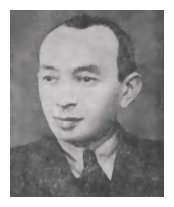
| Szymon Rotenberg |
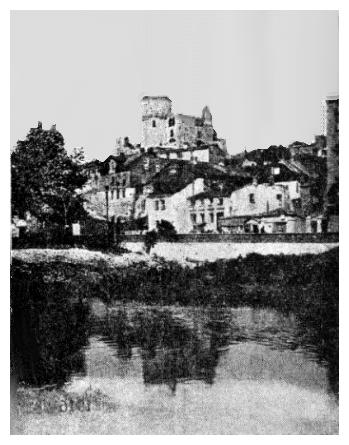
Before we approach the story of the Jews of Będzin, we will firstly give a historical overview about the establishment of the city. Będzin is the regional capital of the district of Kielce. The city lies on the left bank of the “Shvartzer Przemsza” (Black Przemsza River) and as you walk you would encounter the ruins of the old castle. In the 14th century the city was called Bondien; in the 15th century: Bondin and Bondzin; in 16th and 17th century: Bendin and Bendzim. Beginning in the18th century: Będzin.
Będzin is one of the oldest cities in Poland. Early in its history the population occupied itself with fishing, and settled around the fortress, which was situated on a tall rocky mountain. During the reign of King Boleslav The Shy (1279-1238), a wooden castle was built on the ruins of the fortress. Boleslav took the colony (village) around the castle and united it with his castle and imparted on it the character of a village with the right to have a market.
Choosing this particular place as for a settlement was not accidental, because in early years, a stream ran through here which was an artery that led from the Przemsza to the Warta River and from there, through the Oder (Odra) River to the Wisla River. An ancient overland route that connected Krakow with Greater Poland through Silesia also ran through Będzin.
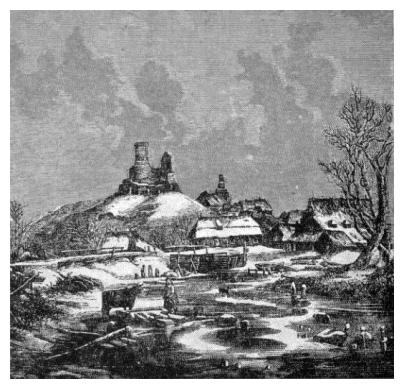
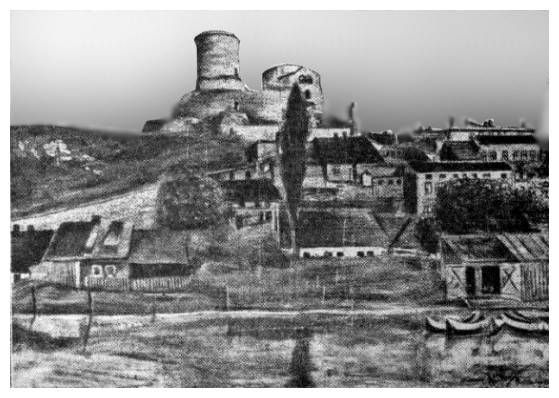
To begin with, the Polish king Kazimierz the Great, who understood the importance of the mountain as a strategic point, destroyed the wooden fortress, and in its place built, around the year 1358, a mighty stone castle, which oversaw the Polish border and guarded them from attacks by the aggressive people from German Silesia.
This was a mighty, immense castle built of stone – a three-tiered fortress with 4 meter thick outside walls. A 10-12 meter high wall surrounded the castle. In this particular period, the city still did not have security walls; only wooden walls with wooden gates. When Kazimierz completed this structure, he built the city, transferring the residents from the earlier Będzin settlement, which was located in the Malobadz region of today.
Around 1364, stone defense walls were built and their remnants exist until the
present day. In Zamkowa Street are buildings that were built upon the ruins of
these walls, as were the Zaulek alleyways and the ancient Jewish cemetery in
Zawale Street, and in recent years it is still possible to identify remnants of
these walls.
|
 |
 |
|
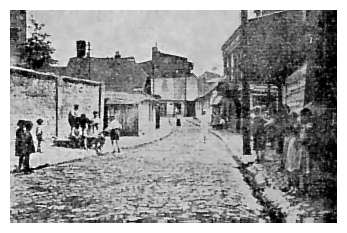
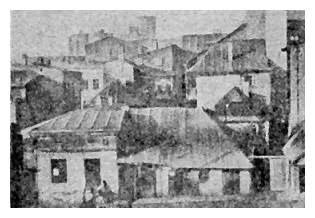
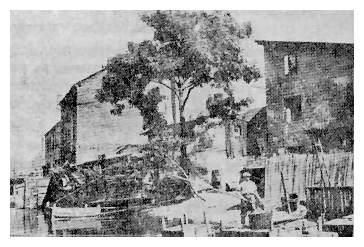
| Podzamcze Street in 1936 | The surroundings of Podzamcze in 1867 | |
 |
 |
|
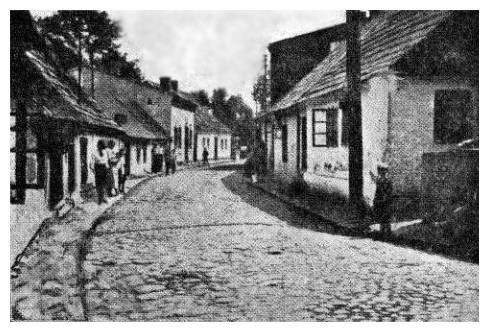
| A section of Podzamcze Street, 1937 | The fortress in 1937 – Oil painting by Arthur Wiener |
by Prof. Dr. Majer Bałaban (Warsaw)
Translated from the Hebrew by Lance Ackerfeld
[see Pinkas Zaglembie, page 500]
When we speak about the Kościuszko Uprising and about the
“campaigns” of the legions of Napoleons armies, we always encounter
the name of Berek Joselewicz, as if other Jews did not participate in
Napoleon's military battles. However, ledger records from new investigations
bring up names of soldiers and other officers in the Polish Army.
One of the exceptional Jewish officers was Jakob Szpot, son of a poor craftsman in Będzin. This officer participated in the Spanish “Campaign”, excelling in the battle and because of this Napoleon awarded him a medal of honor. Szpot also participated in the battle of Moscow and fell in 1812.
Heronim Borowski, a citizen of the Lublin district, tells of the heroism of Szpot, in “Jutrzenka” from 1861:
In 1908 officer Jakob Szpot served with me in the army in Spain. He was a very upright person and one of the heroes of the regiment. He always went first and in the brutal battles he commanded his men with composure, as if it was a parade on the Parada (festive army ceremony) field. He did not own property but nevertheless distributed a fourth of his wages amongst the soldiers, who excelled in their heroism and behavior. There were many instances of his courage and I will note one of them. In January 1908 Szpot was dispatched by General Chłopicki to conquer the small town of Cuenca [Spain], an important military position, during our Marsch (march) on to Saragossa. Szpot conquered the town, heading 200 soldiers amongst which there were 60 Frenchmen. After a short time he was surrounded by 3,000 Spanish soldiers, to whose aid came local residents. Szpot now had to fight against a double enemy: internal and external. Nevertheless he didn't hesitate and went out towards them. The Spanish knowing that our numbers were few, attacked us with great enmity, however after three hours, they retreated, leaving 300 casualties, excluding wounded of a similar number. Szpot's soldiers also suffered badly and half of them fell or were wounded in the battle. Szpot himself was wounded by a bullet in his leg and a sword to his head. In spite of all this he fought bravely, however the Frenchmen in the regiment refused to continue fighting, since twenty of them were killed, the rest were wounded and those that remained alive were weak and their spirits were low. Szpot pleaded with them to no avail: “We will all be killed, however we must obey the General's order”.
The French surrendered and gave themselves in to the Spanish. Szpot was left with only thirty soldiers and with them he planned for a new battle, which was very bitter. They displayed extraordinary resistance. Szpot was wounded in another two places. His few soldiers asked him to rest a little, however he refused, saying: I promised the General to fight till the last drop of blood. The Spanish overtook the house, in which Szpot was barricaded, set fire to it, however Szpot did not surrender, defending without any hope of surviving. Miraculously the 11th mounted regiment appeared, having heard shots form this battle. They provided assistance, and thus Szpot was saved with nine of his soldiers who had remained alive. However all of them, to a man, were severely wounded.
In recognition for their heroism, Napoleon awarded them medals of honor, the Order of the “Honor Guard”.
I should add – writes Heronim Borowski – that Szpot was a member of
the faith of Moses [Jewish], son of a craftsman in the town of Będzin and
he fell in the battle field in 1812.
[Page 34]
by Dr. Emanuel Ringelblum
Translated by Rita Ratson
Donated by Erin Einhorn
One of the anomalies of Jewish economic life is the abnormality of the Jewish
labor force. It would be hard to find Jewish people in capitalist countries
working in large scale industries, mining and so on. This particular phenomenon
of Jewish workers being concentrated in particular branches of small industry,
has already been established by Borochov
[1]. We won't be able to analyze this
question because this is a theme on its own, which has already been studied by
many economists.
I would like to illustrate this situation with an example from Zagłębie.
|
|
| Podwale Alleyway |
At the time, in this particular industry, manpower was lacking. They had to bring qualified craftsmen from other countries, in order to build up a work force.
As mentioned, the poor Jews of Zagłębie, mainly from Będzin, were eager to work as miners and wherever the minister, Prince Lubecki, reached he was asked how he would handle this question.
In the book written by the well-known researcher, Professor Natalia Goncziarowska in her book about mining and glassworks in Congress Poland during the years 1815-30, we read about this industry. She noted that a significant number of Jews sought employment in this industry. It was decided that they should be permitted to receive jobs under the condition that they work as day laborers, however, not as permanent workers with a weekly salary. We also read about the efforts of the Jews of Będzin to infiltrate this industry. We learn that the poor in Będzin sought employment in the Ksawery coal mine, which was founded at this time.
At another meeting, Prince Lubecki declared: “One would be able to utilize the poor Jews as coal miners and thus we would receive many laborers for the real work in the mining and glass working industry.” As noted earlier, the decision was that Jews would be only able to be employed as day workers.
How this developed further is not known. Whether Jewish workers were actually employed as mine workers in Zagłębie or whether the decisions made on paper, is not known. The elder citizens of Będzin would have been able to comment on this matter and further research is necessary on this very interesting subject.
The example of Będzin, where Jewish poverty was not any worse than of the Christians, for whom special housing was established and efforts were made to provide good working conditions for them, is a distinct illustration of the sort of ruin that economic anti-Semitism brought on Jewish life. The crippling of the economic structure of the Jewish population was a consequence of the state of the times, as it is today.
Note from the editor:
On further research we found that there were few Jewish coal miners in those
times. It turned out that in spite of the efforts of the poor Jews of Będzin to
find work in the Zaglembian coal mines, and in spite of the recommendations of
the minister, Prince Lubecki, to permit them to be day workers – the local
authorities did everything in their power to daunt the aspirations of
Zaglembian Jews in these industries.
The reason is economic anti-Semitism as was clearly shown by Dr. Ringelblum.
|
|
| View from the corner of the Rybna Alleyway
(the Butcher's Alleyway) |
by M. Kantori-Mirski
Translated by Ricky Benhart (nee Schikman)
XIV-XVI centuries
In the area of Zagłębie and its surroundings, you see the appearance and presence of Jews, here and there, as traveling merchants as early as the 10th century. At the end of the 11th century following the persecutions in Czechia [Czechoslovakia], there is a first wave of refugees coming to Zagłębie which becomes a safe haven for them, and where behind the walls of the fortress they find shelter and even protection.
Another group of Jews arrives in the Zagłębie area after the year 1226, i.e. after the second round of persecutions in Czechia. Several families settle in Będzin, Czeladź, Szewer [Siewierz?], Koziegłówki, Żarki and Pilica. On the reliance of Kazimierz [Casimir] the Great who granted them the privilege in 1368, several families settled in Będzin, and one in Sielce[*].
In the beginning of the 15th century, Germany again began to expel the Jews by means of pogroms. In Cologne, Mainz, Augsburg, Erfurt, Würzburg and Magdeburg, they treated Jews mercilessly, expelling them from the area. Later, when other countries followed Germany's lead – such as Hungary, the Alp countries, Spain and Portugal – then larger groups of Jews began to appear in Zagłębie, mostly in Będzin, where they arrived from Czeladź, Szewer [Siewierz?] an Koziegłówki, since they had been expelled from these last cities on the order of the Bishop of Kraków. At the same time Jews settle in Wolbrom and a bit later also in Olkusz, where they soon attained an impressive influence because even in the salt mines they had their own representative in the person of Herman Zelik, the vice-salt administrator (in the year 1437).
Będzin was the center for the Jews. Already at the end of the 15th century the Będzin Jews were strongly organized and ruled over their co-religionists who lived in the Zagłębie area, and also in Mysłowice, Bytom [Beuthen], Chorzów and Tichy [Tichau]. This is where their social, political and religious lives as well as their judicial lives were concentrated. The smaller communities and suburbs of Mysłowice, Bytom, Chorzów, Olkusz, Wolbrom and Pilica also belonged to the Będzin community.
Under the authority invested by Stefan Batory [Stephen Báthory – (1576-1586) reigned together with his wife Anna; regarded as one of the greatest kings of Poland] there was a privilege granted in the 16th century, allowing the Jews to live anywhere; the city delimitations were abolished and Jewish merchants received equal rights legally the same as the non-Jews. In Olkusz Jews were allowed to own mines and also to deal in the metal industry. Around the year 1596, the administrator of the royal tax collector of the mines in Olkusz was in the hands of the Jew Mosze Ezra.
In Będzin, the local Jews enjoyed the privileges of Batory, because in “The Będzin Archives”, called “landvoytishe”, we find for the first time in the year 1584, the name of “Josek the non-believing Jew” who had a house near the “Rose Square.”[**] The following year there is recorded in the above-mentioned archives a second house on the Square which belonged to the 'non-believing Jew' Jakob. In the year 1587, another Jew, Jakob Baruch, bought a house in the city from Marcin Raciborski, as did the Jewess Rojza Abramowa buy a house from Marcin Szanijawski, which had a brewery and a stable. She paid 700 Polish Guilders. At the end of 1593, we find again in the Archives, the name Marek, the 'non-believing Jew' who bought a house behind the castle, from Wawrzyniec Warmuz. From this moment on, Jews appear all over the city in different streets and also as house owners on the main square: among others, for example, Jicchak Zalman, Rojza Lewkowa, Icek Markowicz, Abram Majerowicz, Jacob and Josef Abramowicz and many others.
In Olkusz, the Jew Marek Faktor, became very influential in the mining industry, together with his sons Eliasz and Jakob; and the salt-mine books mention the name of Natan Gebler, a mine-owner and owner of a lead hut which was called “Shmidovska”.
|
|
| View from the fisherman's district on Sawala Street |
by Moisze Manela and Sz. Rotenberg
Translated by Rita Ratson
Donated by Erin Einhorn
The old Jewish record books of the various societies not only contain
information about the societies and their members but also mention historical
materials, which are of great importance to the story of the Jews in the city
and even of the Jews in the country.
The social institutions often present a picture of the cultural, economic and sometimes of the political situation in the Jewish “kehila” [community] of the times for which the lists and registrations of the institutions cover.
The record books of the Jewish societies of Będzin are spread out before us and from them we learn that since early times there have been an entire series of cultural, economic and philanthropic institutions which have been called a “Chevra” [society]. Sadly, the most important historical occurrences were not always registered in these institutions; and to this end, one often finds complete notations of events of lesser importance.
It's possible that the educated society members, who were registered in the record books, were interested in even the more insignificant events.
For this particular research, we have made use of following registers:
“Będzin Chesed shel emet” [Będzin burial society],
“Chevrat Chayatim” [Tailors Association],
“Chevrat Hachnassat Kala” [Bridal Fund],
“Chevrat Tehilim” [Psalm society],
“Chevrat Noseh Hamateh” [“Baton carrying” society],
and “Chevrat Malibish Arumim” [Society for clothing the needy].
(Chevra Kaddisha)
This particular society is the most important and oldest source for our
research.
It is quite a small book, bound in leather, pages numbered 1 to 178, on old dull pages, which are partially yellowed and partially greenish-grey from age. The later pages are made from saturated, heavy and perfectly smooth paper. The first pages, which are numbered, is like an “old vessel filled with ancient wine” in contrast to the later pages on which very few are written on and look like “new but there is nothing new in them”. The book of records is 14 x 16 cm in size – bound in leather with brown canvas covers. There is no title page. On the page before page one is the following written in simple handwriting: The registry of “Chevra Kaddisha” in Będzin from ancient times. Other than that, the following note is on the page:
“In this record book there are several people that were written about in the “Chevra Kaddisha” record book of 5447 [1687] like on page 16 and 17 and also page 5 there is an account page from the year 5440 [1680].“
On page 1 there are important historical significant entries, which is expressed in flowery Hebrew:
“With G-d's help.” … [Hebrew text]
by M. B. Berg
Translated by Rita Ratson
Donated by Erin Einhorn
I
Before the World War
The last 25 years of Jewish life in Zagłębie are – in general – rich
in various events. All of these events, which occurred in Jewish social and
communal life were always echoed throughout Zagłębie. Jewish Zagłębie always
reacted – sometimes greater, sometimes weaker – to all the events
that we underwent.
Now, with all those years are behind us, it seems that we are looking into a past that has disappeared long ago. The new era that began after the war, will not allow the tragic situation from before the war to return. However, in the light of the reality we live in, we see that the numerous problems facing the Jews have not disappeared and that the many burning problems have remained in the same actuality that they existed 25 years ago. It also has become clear to us that since the plight of the Jews repeats itself throughout history, 25 years is quite a relatively short interval in time.
The final years of Czarism were very difficult for the Jews in former Russia. After the freedom movement was stifled during the years 1905 to 1906, a reactionary regime with an iron fist was established. Black money was rampant and being under the gendarme's thumb, where no free thought was permitted, social and cultural work was barred in even the most honorable environments since the Czarist spies saw revolutionary shadows everywhere (“fifth columnists”).
It is self evident that when one writes about Jewish life during the last years of Czarism that a whole complex of Jewish persecution and decrees, that would certainly have been carried out with completely brutal severity and had it not been for the world war, the Czarists were prevented from realizing their murderous plans.
In the year 1913, the Czarist government began invoking an old law according to which Jews were not permitted to live in an area within 21 verst [3] from the border. The Jews from the Zaglembian villages were, because of this, obligated to leave their homes.
With the participation of Rabbi Jekutiel Zalman Graubart, a Będzin memorandum was edited and a telegram sent to the Ministry of the Interior to prevent this fateful decree. In a separate action the Jewish deputy of the “Gosudarstwenaja Duma” [parliament], Dr. Bomasz, had endeavored to contact high levels in St. Petersburg, in addition Baron David Ginsburg was asked to intervene on this behalf.
In a letter dated March 22nd, 1944, Icchak Grinbaum wrote to Rabbi Graubart about the reaction to this fateful sentence:
“I have received a letter from the Jews living in the villages from the district of Będzin and asked me to reply to Dr. Bomasz and to write a telegram to the minister to expedite the expulsion and to inform you about this matter. Hence, I am informing you that I wrote to Dr. Bomasz today and also added the necessary material. I will have the telegram ready within the next couple of days and will send it to you promptly.”
During the period of the expulsion we were witness to another tragic event that left behind a substantial impact in the Jewish economic structure. This was the boycott that was organized by the “Endecja” [4] against the Jewish population following the election of the Russian parliament in 1912 where, with the help of Jewish votes, the candidate of the PPS [5], Jagiello, was elected and the “Endecja” candidate, Kuchaszewski, failed.
In this particular “holy” anti-Jewish act, the entire “Endecja” party and press was antagonized. In the Zaglembian communities a complete chain of cooperative stores were opened, which took away a large number of Christian clientele from the Jewish storekeepers. The boycott drove many thousands of Jewish business owners to the brink of economic destruction and they were wiped out.
The “Endecja”, in their Jewish struggle were not alone; they also had the assimilated Jews of Zagłębie come to their aid, who had not remained behind the times in relation to their friends in Warsaw. As we read in the “Endecja” newspaper “Iskra” number 287 from the year 1912: “The assimilated Jews of Sosnowiec sent a telegram to Warsaw protesting against the non-election of Kuchaszewski.” The assimilated Jews of Będzin sent a similar telegram.
The economic destruction in the Jewish community, which came as a result of the Czarist Jewish persecution and from the boycott was a factor behind the beginnings of mass emigration.
Thousands of emigrants passed through Zagłębie which is encircled by borders; apart from legal emigrants a large number of illegal emigrants flooded the borders, and it quite often occurred that poor emigrants from various cities fell into the hands of professional smugglers who simply robbed and abandoned them to the G-d's care in the Czeladz fields. No amount of warnings helped. The total number of victims continued to grow.
At the Sosnowiec railway station there was a D. K. A. employee with a shiny tin badge on his cap, who moved about there but was not able to render much assistance. Large groups of emigrants passed through Zagłębie, through Myslowice, to Galveston, North and South America, Argentina, Brazil and other countries. We saw the “parade” of Jewish poverty for ourselves. The nearer we drew to the world war, the number of emigrants continued to grow (from Poland, Lithuania and Russia).
On its outset, the world war cut off the stream of emigration and returned the
Jewish masses to other directions of pain and suffering.
(Character traits covering one quarter of a century of cultural pioneering work)
by L. Szpigelman
Translated by Ricky Benhart (nee Schikman)
Edited by Toby Bird
1) A Short Introduction
To write the history of the “Zagłębier Zeitung” [Zagłębie Newspaper] is surely no easy task, if one wants that this work to be accurate and conscientiously done, because a whole era comes into play here, a jubilee where you have to turn back the pages and refresh the memories of 26-27 years ago.
In such moments very variant and colorful memories arise that keep on changing while flashing by, with one memory chasing the other, and we think that we are looking through a kaleidoscope in which we admire a marvelous symphony of colors.
When you take a newspaper in hand and want to acquaint yourself with it, you must first look at the title to see how old it is, for how many years it has been published, and if it has reached a respectable age; only then can it be treated with the respect and acknowledgement that it deserves.
Naturally, as soon as a newspaper has been in existence for a long time, then we have to pay attention to it, even if it is only for the age that it has reached, in the same way that we respect an elder person which we assume has acquired wisdom as well as age over the years.
And a newspaper is indeed like a living being. From the first moment of its inception, it has to be nurtured like a child from birth on.
And there is a lot to endure from this capricious child-newspaper: all of a sudden it has uncovered a secret which has the whole town and its surroundings reeling; another time the same child sends out warnings not to play in the mud from which it could become very difficult to disengage and get clean.
This is, in fact, the mission of a newspaper, i.e. to be alert and like a sensitive seismograph, to detect the differentiated vibrations in the social life of the place.
The coin also has a flip side: the newspaper, from its side, has the obligation to do everything in its power in order to reach a certain required level if it wants to aspire to the moral right to dictate and to deliver decisive opinions which the public should consider.
In order to attain this degree of acceptance, we have to conserve the sanctity of the printed word. Each problem must be handled honestly, with integrity and sincerity. The truth – no matter how terrible or awful it might be – must be the ideal of those that nurture the newspaper, but simultaneously, lies must be uprooted without consideration of whom it might bother or anger.
Did we preserve these axioms? Was this the ideal of the founding fathers? These
very important questions should only be answered by the reading body of the
newspaper, these very same people who were raised and educated by “The
Zagłębie Newspaper.”
On July 21st, 1911, the first edition of the “Zagłębie Newspaper” was published. But in those years, to publish a newspaper was no easy matter for two reasons. First of all, the average person was afraid of approaching the printed word, notwithstanding that this same person might have had a tremendous love for Jewish culture. On the contrary, the stronger the relationship, the greater the appreciation for the printed word; thus the more one felt the responsibility it implied.
Just as a pious scribe would go to the Mikveh to purify himself prior to writing the holy letters of the Torah, thus also the writer felt the words he was to publish as holy script. He, therefore, viewed his work not as a profession, but rather as a higher ideal which he had been granted from the powers up above.
Secondly, in those years – during the reign of the Russian monarchy – it was not easy to get a concession for a newspaper, so that the publication of one was not entirely kosher. Therefore, they couldn't even consider, at that time, to give the “child” the name “The Zagłębie Newspaper.” They had to try to finagle and fool the Tsarist regime by giving the paper the alias “Advertisement Sheet,” which was edited as a free attachment to the Warsaw newspapers. Otherwise, they would never have been able to sneak it in.
Later on, we were allowed to charge for the paper, and from that moment on we were able to assume the role of an independent organism which was spread from Sosnowiec to Piotrków and was, aside from in Łódź, the only Yiddish publication in the Congress-Poland province.
The “Annoncen Blatt“ [Advertisement Paper] quickly started to develop, so much so, that it was soon necessary to open a publication department in Częstochowa. This department was under the leadership of Rafael Federman, with the association of Mosze C. (Checinski is now a publisher in America). The newspaper was also distributed farther in Piotrków, Radomsk, Kielce, Lublin and even in Upper Silesia which at that time was part of Germany.
The fact is that the local Jews were already quite assimilated and did not have
any real interest in a Yiddish newspaper, but the fact that Zagłębie
and Upper Silesia were bound economically forced the Upper Silesian Jews to
remain in contact with us.
[Page 65]
The merchants in Katowice and Bytom [Beuthen], the industrialists, the doctors
and others like them, knew how to exploit this newspaper infrastructure and
filled it with advertisements at a time when the general public did not
understand why they spent so much money on such foolishness.
The advertisement section flourished, but the informative part of the newspaper lagged behind and developed very slowly. For example, the writer of this article started to edit publications in the form of “letters” under the alias “Abraham” – reflections of current social life. Later on, the chronicles of all the cities and towns became richer and more interesting.
Thereafter, we were joined by Lajbl Goldsztajn, who worked intensively writing theater reviews and also some light articles.
At the same time Jeszaja Lewkowicz appeared who began, more or less, to take part in the newspaper.
Later on he was joined by Maks Aronowicz, who took part in the newspaper with enormous sacrifice making the effort to give the newspaper a fitting tone and form.
Szlomo Abramson, living in Będzin, also contributed to the economic articles, which were written with a business sense, and the reader felt that he is being addressed by a knowing intelligent person from whom there was much to learn.
The following people began to contribute individually with polemic articles: J. Wygodzki, Goldmer, Jewic, J. M. Wajnryb, B. Preger, etc.
Kielce, that played a major role as a state capital, awarded us the then still very young poet Fiszel Bimko who, today, occupies a very important place in the Yiddish literary family of America.
This was a first period of the Yiddish published word in Zagłębie.
It should be stressed that all of the co-workers, aside from myself, did not know at the time that the newspaper was illegal and that we were threatened at any moment to be arrested. Notwithstanding all that, we persisted until we were finally granted a concession from the Piotrkówer governor for our newspaper, and at which time it began to be called “Unzer Telefon” [Our Telephone].
If we had already progressed, making the “Annoncen Blatt” [Advertisement Paper] into an independent paper that cost money which had, at the time, an immense importance – the fact that we received this concession meant that we had broken through a tremendous barrier, permitting us to work legally.
For this unbelievably difficult pioneering work, I, who am penning this article, must thank my father who stopped for no one and at nothing until he was able to realize this concession for the paper.
Prior to this moment, we had to print our newspaper in Szlomo Belchatowski's printing shop in Piotrków, which, I must say, was not an easy task. Having received the concession for “Unzer Telefon” [Our Telephone], we started to look around for a printing shop in the Będzin area. In order to achieve this we linked up with Efraim Zajdner, who, in those years, possessed the largest printing shop in Będzin, and on November 1913, the first edition of “Our Telephone” appeared as a totally legal newspaper. This date is most important with relevance to the affairs of the Yiddish press in Zagłębie.
Just after 2 editions of the legal newspaper had been published, we received, from Breslau [Wrocław] the sad news that the Będziner Rav, Reb Issachar Graubart z”l had passed on. We then printed an extra edition which was distributed in thousands of copies, not only in our city, but also in the surrounding area and in cities farther away. The interest in the newspaper became so big that we had to start printing daily, at least until after the eminent Rabbi's funeral and his burial.
As time went on, the newspaper invested more and more resources in itself and gathered around it the cream of Yiddish-speaking Zagłębie.
As an impartial organism, our newspaper tried to function on a very high level and thus battled for a better existence and a more beautiful future. Our articles which were logically written drew respect and interest and thus also attracted a continuous stream of contributing co-workers such as J. Pejsachson, M. Halpern, G. Stawski, B. Tencer, M. Fajnkind, etc.
But in the middle of the development of our newspaper, in its most glorious and
sparkling period, lightning struck and the fires of Hell descended as World War
I broke out in 1914.
Friday, July 31st, 1914 the newspaper appeared, and the next day, on Saturday, the Russian militia, Natshalstoveh, and the governmental police administrators fled to Warsaw in a tumult.
Sunday, Zagłębie was already occupied by a German military division. The fear was unimaginable because the Germans declared war and imposed occupation conditions, first of all, requisitioning all food products.
We were immediately cut off from Warsaw and Łódź and had no
communication so that we found ourselves in a box, closed in, without being
able to catch our breath. Then, at the same time we found ourselves also in an
indecisive position. What should we do? Publish the newspaper? Contact the
Germans, who theoretically are those that have to supply us with the
information? And then present the newspaper to the censor?
[Page 66]
That was surely dangerous because everyone was sure that any day the Russians
were going to return, and then all of us who had any contact with the enemy
would be sent off directly to freezing Siberia. On the other hand, to stand by
on the sidelines and not publish the newspaper at such a critical moment in
history, when more than in any normal time we have to take upon ourselves this
responsibility, didn't suit us either. After a lot of tribulations, we decided
to publish the newspaper anyhow, and because of the explosive current events,
we also decided to transform it into a daily for the time being.
Not having any other Yiddish newspaper, we simply swallowed all the expenses ourselves. One should not forget that at that time the newspaper served as a guide. The newspaper printed and informed the public of everything that had to be publicized and all the changes made by the German commanders, and thus the readers were informed when they are allowed to be in the streets, (curfew), what is not allowed in the house without special permission, etc… Our task was also to warn the inhabitants that they should listen to the orders of the civilian militia, even if they are fellow Jews or even acquaintances. The daily newspaper then became an important factor in our daily lives.
The longer the Germans stayed in Poland, the more they began to boss the people
around, especially so in the Zagłębie area, where - because of its strategic
position - they felt more secure and comfortable. It went so far that they
confiscated one of the editions of “Our Telephone” and ordered the
newspaper to stop printing. But the question was not solved therewith. One fine
day, a committee presented itself with the editor-in-chief of the German Press
Representation at its head which requisitioned our editing office, demanding
the private telephone communications with the Russian army from which we
receive our information for the news in “Our Telephone”. (They
thought we had a type of Red Phone linked to the government.) When we explained
that the name alone of the newspaper refers to the word 'telephone' and it
doesn't mean that there is virtually a telephone in use, nor do we have any
such communication, they didn't believe us, and they started searching all over
the office and the printing room for such an underground telephone. Of course,
even in the printing room they found no such telephone or apparatus. But the
end was that they did not allow us to continue publishing the newspaper. We
were written off by them…
Edited by Lisa Newman
Early on Monday, November 11, 1918, we in Zagłębie began to gradually
sense there would soon be a breakthrough in the world order. Over the next
several hours, the German military and civilians fled; they simply disappeared
from Zagłębie with lightning speed, and customary German orderliness
and punctuality. By the time we inhabitants began to understand the historical
events occurring around us, there was not a single German left in sight.
A new civil militia was immediately established to maintain order; many Zagłębie citizens took part, and we even received weapons in order to achieve this objective.
At the same time our newspaper “Our Telephone” (which had strongly opposed the Germans) reappeared, only to be discontinued again by the Polish government on June 28th1919, till the whole issue of “Our Telephone” could be cleared up.
In order not to lose momentum during this important historic time, we republished our earlier issues: on July 4th 1919 there we published “Friday” and on July 11th “Shabbat Eve”. But in the absence of specific explanations about the closing of “Our Telephone” we didn't dare risk publishing further issues without approval, and so on July 18th 1919 we began publishing instead “The Zagłębie Newspaper”, which exists until today.
With the rebirth of an independent Polish government, Polish citizens were freed from the yoke of slavery and a new life pulsated. Together with the Polish people, we Jews, also contributed bricks and mortar to the immense rebuilding process of an independent Poland. At this historic moment our social life began to take form too: the newspaper became a living factor, the roadmap for the citizens who undertook their responsibility towards the newly established government.
We were very careful to maintain a “clean” newspaper, not to dirty or degrade the written word. We avoided dealing with personal polemics, nor did we allow individuals to carry out, in the name of the newspaper, things that would be to their benefit alone. We did, however, show the utmost recognition and gratitude to honest and devoted social representatives who acted for the good of the whole. More than anything else, we hated false flattery, and felt no obligation in that regard, as might have been the case in other provincial newspapers.
In fact, many individuals have tried to take revenge on us whenever possible,
but we do not concern ourselves with that at all. From the first day the
newspaper appeared until today, we never sought favors or advertisements from
any company or large industrialist, nor did we pursue any demands or favors via
the newspaper.
[Page 67]
Indeed, we refused to celebrate the newspaper's 25th anniversary with a jubilee
issue (as would have been appropriate to a newspaper of our standing) as
friends locally and abroad suggested, simply because publishing such an issue
would have entailed great expense and required subsidies from outside which we
did not want.
The newspaper refused to favor one side or another; we always served the interest of the people and fought for the good of all, no matter their political allegiance.
The newspaper's faithful readers are found not only in Zagłębie, but also among our Zagłębie brethren abroad, in Israel, America, or anywhere else in the world; wherever they are, they seek in “The Zagłębie Newspaper”, “the haymish, warm regards from the old home that they once knew”.
Our in-house permanent editorial staff includes R. Let, S. Lewkowicz (Ben Amotz), Selekt, Eles, and Dr. Papori, and the following regular contributors: J. Oberzanek, P. Blumenkranc, Ch. Zieloni, S. Rotenberg, Dr. Weinziher, Dr. Rechtman, Juda Jafet, J. Wygodzki, Z. Haber, L. Goldsztajn, Rosa Jakubowicz, L. Tenenbaum, and N. Szternberg.
Important work, worthy of mention, was carried out by the following co-workers: M. Fajnkind, in 1934, wrote, among others, in-depth dissertations on subjects, such as “The Będziner Community in the Second Half of the 19th Century” and later “The First Epoch of the Sosnowiecer Community”. Aside from that, for every holiday there was an historical account in accordance with the holiday on hand.
 |
 |
|
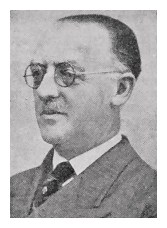
| Eliezer Rubinlicht
(The chairman of the community committee) |
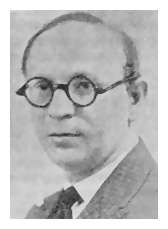
Abram Liwer
(Vice chairman of the community committee) |
|
 |
 |
|
|
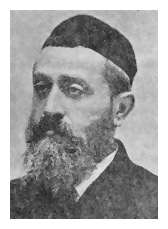
Szlomo Jicchak Rinski
(The chairman of the community board) |
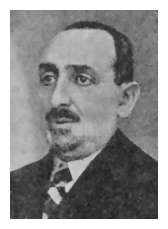
Nuta Londner (Vice chairman of the community board) |
S. Lewkowicz (Ben Amotz) is co-editor and directs the Zagłębie chronicles. He also puts together the satirical and humorous “Koch-Leffel” [wooden spoon] and writes vividly under the generic name of “Heard and Seen”. He also worked on the editorial correspondence of “Our Panorama”.
S. Rotenberg at first wrote articles about current events, later covering problems of the times under the heading “Remarks”. As well, he gave details about professional events in art and reviewed art exhibits and musical and theatrical performances. When Rotenberg returned from Vilna where he studied in 1932-1933, he publicized concerning the differences in our newspapers and this in a series of articles entitled “The Lithuanian Jerusalem”, wherein he came to express the general life in Jewish Vilna, and in specific the activity of the important Jewish culture in Vilna and its social institutions. For his work, Rotenberg was rewarded with a collective letter of gratitude/appreciation from the presidents of all these institutions. This letter was forwarded to us and published in “The Zagłębie Newspaper” September 1, 1933.
P. Blumenkranc reflected on the most sensitive and disturbing issues of the times, as well as writing serious articles about various subjects both Jewish and secular. Blumenkranc also painted beautifully and wrote fine theatrical reviews and critiques.
G. Stawski wrote for us reports and character sketches about modern leaders of national thought such as N. Sokolow and Ch. N. Bialik, whom he still remembered from the time that he was a teacher in Sosnowiec. Stawski also wrote about the differences within the newspapers. In 1936 he wrote a larger interesting dissertation entitled “Memoirs of the First Zionists in Zagłębie”.
In the largest capitals abroad we were represented by the following correspondents: Z. Haber (Vienna), Dr. Imerglik (New York), S. Wajs and Motek Hampel (Israel). Dr. Froman covered the rest of America, Africa and other countries.
As you know, we have several editorial friends, who write under aliases without revealing themselves, nor do they allow the editors to reveal their identities. Readers and friends of the newspapers have a hard time accepting that they should read weekly articles written by “X” or “Y” without knowing who the person is behind them.
This happened years ago. In Sosnowiec, all the readers were certain, just as two plus two equals four, that Dr. Papori is no other than Dr. Perlman. And as many times as we might have declared to our readers that it is not so, they believed neither our nor Dr. Perlman's denials, and he therefore often bore the brunt of their dissatisfaction. But he had an opportunity to prove to his followers and opponents that Dr. Papori of the newspaper was not himself, when one of our colleagues published an article that presented the problems of the community in a manner that did not correspond to Dr. Perlman's opinion, which was known as he was a community representative. Yet still there were those who remained in doubt, and only when Dr. Perlman passed away and Dr. Papori continued to write, were they convinced that his declaration and ours were the truth.
Another episode with one of our pseudonyms happened in Będzin, several years ago. A delegation of three well-known and respected people in the city came into the editorial office and requested to know the identity of our colleague who penned under the name of R. Let. He had apparently offended the pride of their association for which they suffered a material loss and since they didn't want to have a run-in with the editorial staff, they only wanted to sue the author himself. Of course we responded that we were not allowed such a thing without the author's approval. But they declared that they knew anyhow who the culprit was, that everyone knows that the author is in reality Rubinlicht. They were convinced that that R. Let stood for Ru-Benlicht.
Such incidents arose because we allowed writers to keep secretive pseudonyms.
Since 1933, we have also published for Kielce and surroundings an altered edition of our newspaper, called the “Kielcer Zagłębie Newspaper”.
The reader who eagerly takes up the newspaper surely doesn't realize how difficult it is to edit a newspaper that is responsible towards the public, and keeps to an adopted line of thought; reading the finished product, he doesn't see the difficulties and sacrifices involved in producing it.
Thus we made an attempt at a short characterization, an overview of the
publication of “The Zagłębie Newspaper” in all its stages.
|
* 3 km from Będzin. Return
** In the old civil acts of the city, if reference was made to a Jew, there was always added the phrase 'non-believing Jew'. Return
JewishGen, Inc. makes no representations regarding the accuracy of
the translation. The reader may wish to refer to the original material
for verification.
JewishGen is not responsible for inaccuracies or omissions in the original work and cannot rewrite or edit the text to correct inaccuracies and/or omissions.
Our mission is to produce a translation of the original work and we cannot verify the accuracy of statements or alter facts cited.
 Bedzin, Poland
 Yizkor Book Project
 JewishGen Home Page
Copyright © 1999-2024 by JewishGen, Inc.
Updated 04 Aug 2023 by OR