 |
 |
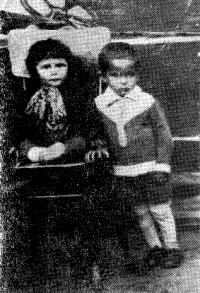
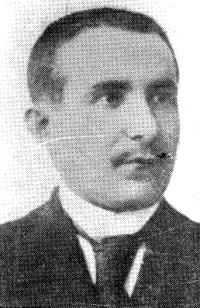
From Kazan. Killed in the Glubokie
Ghetto at the age of 58
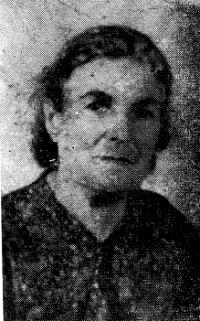
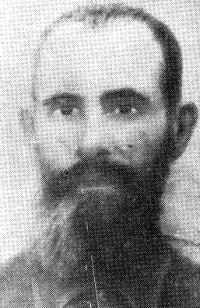
From Kazan. Killed in the
Glubokie Ghetto.
|
|
[Page 397]
(Kozyany, Belarus)
55º18' 26º52'
Translation supplied by Eilat Gordin Levitan
Geographical Position
The shtetl Kazan (Kaziany) was situated on high ground surrounded by forests. It was twenty kilometrs from Postovy and fifty from Szarkoviszizna, on the little Disenka River, which flowed into the huge Dvine river. The river was the source of livelihood for the Jews of the shtetl. During the summer, the logs of the surrounded forests were floated on this river to Riga. The Jewish population consisted of three hundred souls. Since there were about five thousand Christians, the Jewish population was barely noticed. The main Jewish occupations consisted of business in flax, wood, grain, and hides. They were also storekeepers. Some stores, where you could buy almost everything, were quite affluent and profitable. The only laborers in the shtetl were the tailor, shoemaker, and blacksmith.
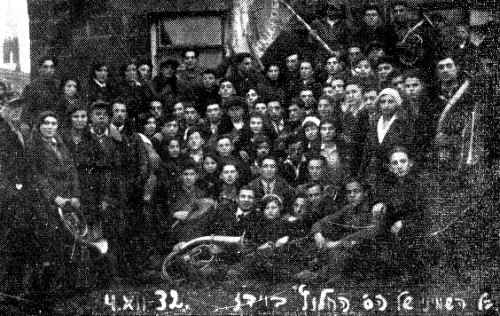
After World War I, the shtetl experienced a cultural revival. A Folkshule ( school), based on Yiddish traditions, and a more modern Hebrew Tarbut School were established. A Drama Circle was also organized and it performed the well-known plays of the Yiddish theatre repertoire, such as Gordin's Slaughter, Kobrin's Village Boy, Sale of Joseph, and others. The main performer was Shlomo Blacharovitsh, who also was the director. He had acted in the Moscow State Theatre. A second performer, who was also well-known, was Moshe Beigel. He had played in troupes together with Marevsky, Bulov, Kaminski, and others.
[Page 398]
The Drama Circle had a library which also served as a gathering place for the youth to engage in discussions.
|
|
|||
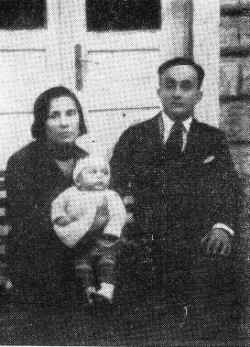
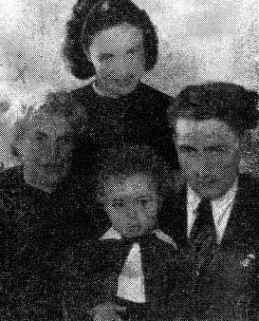
From Kazan. Killed in the Glubokie Ghetto at the age of 58 |
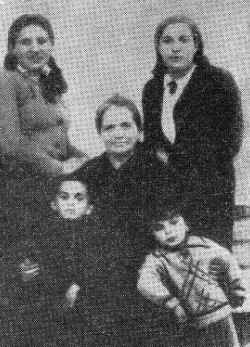
From Kazan. Killed in the Glubokie Ghetto. |
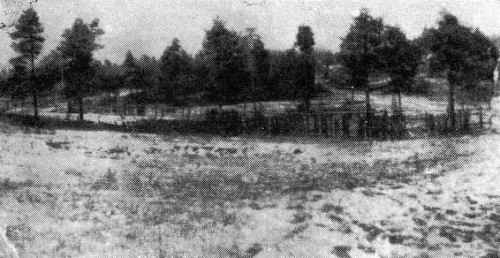
In this way, the shtetl lived under the September of 1939, when the Russians arrived. The new regime instituted the order mentioned in the stories of previous shtetls. The only difference was that the rich Jews of Kazan were sent deep into the Soviet Union. Meir-Aaron Reichel was in this way saved from the destruction and now lives in Israel. The misfortune struck Kazan just like all other shtetls, with the coming of the Germans in the June of 1941. The first victims were the Feigel family. In the middle of the day, they took Chono Feigel, his son Hishke, and his daughter Rivke to Shlomo Hochman's garden, where they were all shot. In Kazan itself, no ghetto was set up. Most Kazan
[Page 399]
Jews fled into the forests, where many hid and fought with partisan movements until the end of the war. Some Jews fled to the Sz. ghetto and shared the fate of the Sz. Jews. The Jews that hid in the forests saved themselves from destruction. They were helped by the fact that Kazan was surrounded by large and thick forests. The high-command of the partisans was actually in that area and also the famous Tshapaiev-Otriad.
|
|
|||
The Kazan Jews avenged themselves on the murderers – the Germans as well as the local Lithuanians and White Russians, taking them from their homes, “repaying” them, and then setting fire to their houses. The Germans got their repayment in another way. Bridges, warehouses, and railway lines were blown up and German-occupied villages were encircled, bombarded, or put to the torch.
[Page 400]
In these operations, the youth of Kazan were especially distinguished. Gutman Feigel and Leib Reichel were decorated more than once for their courage by the Russian partisan high-command. The German regime even put a high price on their heads. Guman Feigel survived and he now lives in Vilna. After the liberation of Kazan, Leib Reichel voluntarily enlisted in the Russian Army. Unfortunately, he didn't live to see the murderers' final collapse since he fell in battle near Berlin.
|
|
Also of great help to the partisans in the Kazan forests was the mother of Leib Reichel. When the Germans entered Kazan, she was sixty-two years of age. She refused to wear the yellow Star of David and she dressed herself as a peasant in order to travel to surrounding villages in search of food for her family. As mentioned, many Kazan Jews had fled into the surrounding forests. At the time, there weren't any partisan groups yet. By themselves, they had to obtain provisions to live, as well as arms to defend themselves against the bloody enemy who lurked on every side. Baile Reichel displayed unusual heroism. She devoted herself completely to helping the Jews
[Page 401]
hiding in the forests. With her disguise as a peasant, she brought food, arms, and important news to the most dangerous places. In this way, she maintained communication between the Jews of the forests and those in the ghettos. In those trying times, a simple message that someone was still alive was very happy news. However, this was not her only task. She would also take Jews out of the Sz. and Glubokie ghettoes and show them where to find the partisans. Many Jews were saved in this way.
|
|
|||
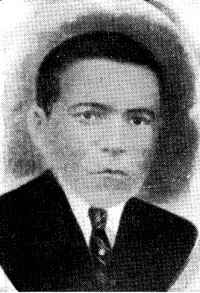
They were killed. |
Once, after she had led a young lad into the forest, she returned to find missing her husband Velvel and son Berke. The Jewish police had taken them to Glubokie for liquidation. There, the local regime demanded Jewish victims on a daily basis. She immediately went to Glubokie and came to the head of the Judenraat, Liderman. She begged that her husband and child be allowed to leave the ghetto. She promised
[Page 402]
him gold, but he wouldn't hear of it. They died in the Glubokie ghetto. She returned to the forest and this was understandably risky. She continued dressing as a peasant and acting as the contact between the partisans and the ghetto. When she arrived at Poligon Station near Sventzian, she was once more to experience tragedy in her life. The Germans had set up a ghetto in Poligon, into which they had driven the Jews from the surrounding small shtetls and villages. In this ghetto were her daughter Malka with her husband Meyer Gedud and their four children. Baile had arrived at the ghetto just before the eve of the slaughter. The Germans hired her to wash pots because they thought that she was a Christian. She wanted to take the son-in-law and a couple of the children out of the ghetto, but her daughter was tired and sick and didn't want to remain alone. A few days later, the slaughter took place and nine thousand Jews were butchered in one day. A huge pit was dug. They would put the victims on a board over the pit, shoot them with machine guns, and dump them into the pit. Many were buried alive in this fashion.
|
|
|||
[Page 403]
Baile Reichel, together with other peasants, witnessed this slaughter. She saw how her daughter Malka and her family were put on the board. . .
Returning the forests, she continued her work with the partisans. She eventually found one of her grandchildren who now lives in Kovno. To this day, many surviving partisans of the area speak with amazement about this wonderful and heroic woman. Fate brought her to Israel and she lives there with her son Abraham, who arrived during the Third Aliyah. Her daughter Rivke also lives there and she spent the war in Russia. Baile is now seventy-five years old and she still helps her daughter with household chores. Jews come to her as to a saint. Unfortunately, until now, no one has undertaken the writing of her biography.
|
|
As we mentioned, a good number of Kazan Jews, mostly the young, survived. They now live in Israel. Together with the Chalutzim who had arrived before the war, they are quite a group! They are: Tzvi Sversky, Sonia Chatzkels, Yentke Groisdorf, Abraham Reichel, Miriam Boim, Yosef Lipshitz, Baruch Lipshin, Shlomo Notels, Yisroelke Notkowitsh, and Fradke Sversky. In Argentina, one can find Hertz Reichel (Baile's son), Genye Feigel-Modlin and Yisroel Reichel.
|
|
JewishGen, Inc. makes no representations regarding the accuracy of
the translation. The reader may wish to refer to the original material
for verification.
JewishGen is not responsible for inaccuracies or omissions in the original work and cannot rewrite or edit the text to correct inaccuracies and/or omissions.
Our mission is to produce a translation of the original work and we cannot verify the accuracy of statements or alter facts cited.
 Hlybokaye, Belarus
 Yizkor Book Project
 JewishGen Home Page
Copyright © 1999-2024 by JewishGen, Inc.
Updated 20 Sep 2020 by LA