 |
|
|
[Page 361]
Jakov Linherz, Rehovot
Translated by Gloria Berkenstat Freund
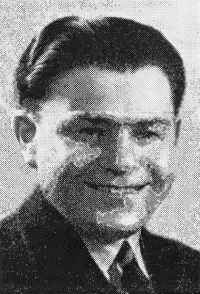
Motl Tovya's [Tovya's son, Motl], the synagogue gabbai [assistant to the rabbi], was a tall Jew, solidly built with a long, grey beard. He wore a tall satin hat on Shabbos and during the week and was always preoccupied, was always busy.
He was not absorbed by business matters; he was only engaged in mitzvahs[1] and good deeds. He was always happy, with a smile on his lips and he spoke words of faith to everyone: God will help! It will be good!
There was no Jew in Chelm, both young and old, who did not know Motl Tovya's.
He took care of the city's Jewish soldiers, seeing that they had somewhere to be on Shabbos and yom-tov [religious holidays]. When it happened that there were five or six soldiers left in the prayer house and everyone else had already left, he took them home with him on Shabbos and yom-tov. He would also provide Jewish prisoners with a minyon [10 men necessary for saying prayers] and with food.
He collected money to marry off orphaned or poor girls. One would often meet him carrying full baskets of cake and whiskey and everything necessary for the bris [ritual circumcision] or wedding of the poor.
His greatest mitzvah [good deed] was to entertain the bride and groom. He was the bodkhen[2], the klezmer [musician] and in-law at the wedding of the poor.
He was also the gabbai [usually an assistant to the rabbi] for the organization that distributed clothing to the needy, insuring that the poor children in the Talmud Torah [elementary school for poor children] had shoes and warm coats.
He also brought the esrog and lulav[3] to the homes of the sick. He did not forget to do the smallest thing on behalf of the needy. His did his aid work with complete commitment.
Translator's footnotes
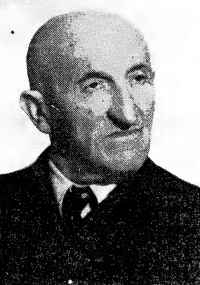
Moshe Zamler was a baker; he worked 15 hours, day and night. His eyes were red from not sleeping enough, but he had a strong will and
[Page 362]
strove in life. Even though he was not content with his appearance.
I remember how he came to our home on a Friday afternoon, turning to my mother, may she rest in peace, saying that he needed to see me. At first, my mother wondered how it was possible that a Jew of more than 30 years of age had a need to see a 14-year old young man. I happened to be in the house and went over to him. He said the following to me: “I am ignorant; I can only read a little, but, unfortunately, I can not write. If have to sign my name, I place three crosses. I already have three children and they will certainly be ashamed of their ignorant father. Help me to become a person. I need your help. With God's help, I will compensate you. We are neighbors; when you have the time, and when you want to, come in and teach me to write.
I was very pleased by what he said. I began to fill my task in the best possible manner. In the course of eight months, Moshe Zalmer showed that he had learned to write in Yiddish, Polish and do a little arithmetic. His joy was without end.
Later, when I emigrated to Eretz-Yisroel, he accompanied me to say goodbye and he confided a secret to me that he was considering going to Eretz-Yisroel and he actually did.
When I met him in Eretz-Yisroel, he told me how he had sneaked across the border to Romania and how he worked at a saw-mill at a saw. He came to Eretz-Yisroel illegally using the name Leib Psubski.
He then asked his wife and children to come to Eretz-Yisroel. However, his fate was that on erev Yom Kippur [the eve of Yom Kippur] he fell at his defense post, hit with a bullet by an enemy – a follower of Hitler Germany.
We will never forget his memory!
Feiwl Fryd was the nerve, the driving force in Jewish communal-cultural life in Chelm. With his erudition and political-communal consciousness, he brought clarity to the Jewish masses in Chelm.
I remember Feiwl Fryd from the year 1918 until I left Chelm in the year 1933. I heard news irregularly from him during the savage Hitler era. After the great bloody flood, I established a written bond with him.
Today, Feiwl Fryd is in Lublin, Poland. The fact that he survived and endured left a bitter stamp on him. He did not find a place in Chelm, no peace. The empty Jewish city where for many years he had occupied an esteemed place drove him to the neighboring city of Lublin. He is old, in pain, weak, often sick and with little energy for living.
|
|
I remember the radiant years of Feiwl Fryd; what colossal enterprising power and instinctive strength he possessed. He created and took part in the activities of many societies and organizations. He was the one who stood by the cradle of the workers movement, devoted to it with heart and soul.
My father, may he rest in peace, tried to make Feiwl Fryd loathsome to me; he once represented him to me in dark colors as a Bund member and revolutionary. He told me that in 1905, F. Fryd had caused great trouble with his “agitation” among the workers during the well-known strikes of that time. (He once came to our house in the masterskaja (factory) with a gun and threatened…)
Feiwl Fryd was the first one who took me into the Yiddish and literary world. As editor of the Chelemer Shtime [Voice of Chelm] in 1925, he encouraged me to write, made me a co-worker at his newspaper.
I remember the time when Feiwl Fryd was the librarian of the Borokhow Library in Chelm. He also was the founder of this library 30 years ago, when I first started to read Yiddish and Feiwl Fryd advised me about the first book I should read – Sholom Aleichem's 75,000…
Feiwl Fryd was a good lecturer. His reports in the meeting room of left Poalei-Zion and in other auditoriums drew great masses.
It was said in Chelm that, under Czarist rule, Feiwl Fryd was exiled to Siberia for revolutionary actions. After the [First] World War, F. Fryd's activities became very visible. He was very active in the left Poalei-Zion Party; he was editor of the Chelemer Folksblat [Chelm People's Newspaper] for a time.
Feiwl Fryd was a child of the people. Therefore, he was beloved and respected by everyone. He was modest, did not consider himself better than anyone. He was acquainted with rich and poor, did not push himself to the front and to glory; was a dear and skillful cultural volunteer, a guide for many Jewish young people. He also was a teacher at the Jewish public school for many years.
At the end, it must be remembered that he was employed as a translator for the publisher, Sh. Jaczkowski in Warsaw, the publisher Goldfarb and others. He translated the works of Emil Ludwig, Zinkler, Zaszczekno, Dunkan and others.
During the years 1918-1922, before he emigrated to America, he traveled to Cuba – and years later, the intelligent and modest Waserman advanced greatly in his new home, America.
He graduated from a teacher's seminar and became a skillful cultural worker and a good teacher. He carried out his work as a teacher in many schools in America, in a series of cities, and became much beloved by hundreds and thousands of Jewish children, as well as by their parents.
Karl Waserman is by nature a dear person with a great love of people and, in particular, of children. He is a writer. One often meets him in the children's division of the Morgn Freiheit [Morning Freedom, a Yiddish newspaper], where he plays a large role among his co-workers, with children's games, jokes and riddles.
Waserman was also a co-worker at Yungvarg [Youth, a children's magazine]. It is thanks to the children's schools in New York that his book, Shpiln un Retnishn [Games and Riddles] was published. Waserman comes from Chelm from a poor family. His father was a tailor and died prematurely in America.
H. Sh.
Approximately 30 years ago, A. Y. Dubelman pulled out of the small and quiet shtetl Rawicz, a shtetl that was near Chelm – pulled himself into the larger world.
While still a young man Dubelman aspired to go to a large Jewish center, where Jewish life pulsed. Dubelman was drawn to the large Jewish center, New York, and one day he left his home shtetl and went into the world.
Dubelman did not succeed in entering America and he remained stuck on the way, in distant Cuba, where has lived for nearly 30 years. Dubelman made his home in Cuba with the intent of developing the Jewish community there and publishing the Yiddish word.
Dubelman published two books in Cuba, Dertseylungen fun Kubaner Lebn [Stories from Cuban Life] and Havaner Lebn [Havana Life], for which he was also an editor. He was a contributor to many Yiddish newspapers in other countries.
M. Tenenboim, Israel
Leibele Stol was well known among the Chelemer youth in general and among the progressive youth, in particular.
The progressive youth were extremely active in Chelm, equipped with extraordinary daring at filling the assignments from the Communist Party.
Although the Communist Party in Poland was dissolved because many of its members were branded as traitors, the progressive young people in Chelm did not cease their Communist activities nor abandon the connection to Moscow. With great stubbornness, they continued their illegal activities and fought the reactionary [actions] without interruption.
One of these young, stubborn people was Leibele Stol. He worked with a tailor on Lubliner Street. He carried within a fervid belief that a brighter morning would come from the east and all those persecuted would become free and happy.
The atmosphere in Poland was strongly anti-Semitic and reactionary; the ideal for the young Christians was to attack Jews and to see broken Jewish heads. It felt as if the casks of gunpowder would be thrown open and the cursed hand of venom and hatred would on any day throw the world into a burning torch.
[Page 366]
The city garden in Chelm was the meeting place for the young of various shades of opinion. There various ideas were debated, about thinkers and their schools of thought. The Zionists youth, the Hashomer Hatzair [Socialist Zionist movement] and the progressive youth would come together.
Leibele Stol often appeared in the garden with his group. He was the one who set the tone in all discussions and he argued for his political opinions with great zeal and enthusiasm. Leibele Stol would hectograph [reproduce by means of a gelatin duplicator] leaflets. I remember how he distributed them on the 1st of May and threw them into workshops where the workers produced agricultural implements. He and his group would knock out the window panes and throw proclamations inside calling for the workers to join the struggle against the despised capitalism.
When the war broke out, he and all of his comrades escaped. However, the Hitlerist pestilence headed them off. He returned to his birthplace, broken and sad and hid for a time. He was forced to leave his hiding place because of hunger and pain and was caught by the Gestapo.
Honor his memory!
The first murderous German edict – the Chelm-Hrubieszow-Sokol death march – showed that the delusion held by some of the Jews about the Germans, that they were not so brutal, was false. The face of their wildness was stripped naked and clear. The reverberation of the shooting in the Hrubieszow forest, the spilled blood on the Chelm-Hrubieszow-Sokol highway shocked the Chelemer Jews and the Jews in the neighboring towns and cities.
A group of young people did not take part in this death march. They hid in a cave. The nights were dark and they would go out of the cave at night and infiltrate the shops, taking food.
The Polish shopkeepers noticed that the Jewish businesses that were transferred to their authority as soon as the German entered were being opened at night. They organized a group of Poles under the leadership of the well known enemy of the Jews, Akola Bulak, the baker and they trailed the Jews to the cave when they would come out at night. The Poles took a long rope and one of them let himself down into the deep cave with the rope. However, their “scout” did not return. The young Jews quartered him into pieces with sticks and iron crowbars.
[Page 367]
The Germans and Poles conducted a police raid of this cave and the entire group fell into the murderous-fascistic hands.
At the head of this group was Mendl Stam. He was rebellious and possessed a great entrepreneurial spirit. He was not helpless within the walls of the prison; he attacked the Gestapo and escaped with a revolver.
The Germans nailed up notices promising a great reward for those who caught Mendl Stam. A search was made for him. The Gestapo led him away to prison. The Germans took revenge on him. They administered a violent death on him – he was tortured to death.
Let his memory be blessed!
Dr. Yisroel Oks was a bright figure, a dear Jew with a sweet Jewish heart that dissolved the fog and then separated out the lines of illuminated light. Thus did Dr. Yisroel Oks shine and radiate with his Jewish perception that brought light into the flickering darkness. Jewish paupers knew that Dr. Yisroel Oks and his old mother and his dear Yidishe tokchter,[1] his wife, would not forget the poor and would always help him and on Fridays prepare a Shabbos package for him.
This bright personality, Dr. Y. Oks, who perished in the Chelm-Hrubieszow-Sokol death march, worked with my father in the interest free loan fund and I saw his interest in every needy person coming to him for a loan.
With a bent head and broken heart, we must remember his service to the community. His curled head of hair, from which a considerable amount of silver hair shone out, gave him the appearance of a typical Jew, of which he was not ashamed. His smart, dark eyes always smiled good-naturedly.
Dr. Oks was famous in Chelm as a medical doctor and as a city businessman who could also study a page of gemara.
Honor his memory!
Translator's footnote
[Page 368]
Y. Ceber, Australia
Translated by Gloria Berkenstat Freund
|
|
Yisroel Yitzhak Nankin, the son of Fishl, the tailor, was one of the most active workers in the artisans' union. He absorbed the feeling of justice, of fairness and love of the Jewish masses and was active for years in activities on behalf of the Chelm artisans.
There was a threat of economic danger to the Jewish artisans when the Polish government issued reactionary guild laws in the 1930's.
At that time, the central Jewish Artisans' Organization in Poland began a widespread campaign among the Jewish craftsmen to inform them about the anti-Semitic guild laws. Yisroel Yitzhak Nankin threw himself with heart and soul into this informational activity.
At every opportunity he defended the right of Jewish artisans and the common people.
His was the chairman of the Jewish Tailors' Organization and of the Spoldzielczy Bank [Cooperative Bank founded by Agudas Yisroel]. He was also one of the founders of the “Linat-ha-Tzedek” [hostel for the poor] and was also active in the “TOZ” organization [Society for the Protection of Health].
The “Linak-ha-Tzedek” gave him a special memento as an award on his 30th birthday and he received a golden memento from the Chelm Artisans' Union.
In 1936, at the age of 41, he breathed out his soul. His untimely death was a great loss for the Jewish craftsmen and the mass of the people in Chelm.
[Page 369]
Sh. Tenenboim, New York
Translated by Gloria Berkenstat Freund
My father had several brothers: one in Zwolen, a second one in Siedlice, a third in Warsaw, a fourth – in Chelm. We, small children, did not know our family. My father had an inclination to move every half year from one small village to another. An old ruin stood somewhere; he rebuilt it, fixing it up with his own hands and brought light and sun into the old ruin. After this, when we had lived [there] for a half year, my father would again rebuild a deserted palace of a count and we would move there. Once my father traded horses; he only bought sick horses. He would come home from the fair with such a sick, wounded horse that it was a pity to look at it. In the course of weeks he would heal it, washing it at the village pond, clean it, cover the wounds with fresh skin. The horse shone in its good home. We all became accustomed to horses; first, my father sold it for a pittance and then bought some sort of bloodied, gloomy horse at the fair and again healed it for weeks.
Once it happened that my father bought a sick horse from the Oblase landowner. The horse lay in the stall writhing in pain.
My father firmly decided to have the horse. He paid and as soon as the horse had been led outside with great difficulty, it fell over and died on the landowner's field. My father was engaged in lawsuits with the landowner for many years. But the landowner still demanded money from my father for bringing a dead horse on his land…
At one time my father was occupied with watchmaking. He would buy old, dead watches, clear them out so that they would go as fast as if they had been given life and he sold them. Our house was always a hospital of dead watches with dirty dials like the faces of corpses. That is the kind of watchmaker my father was.
Perhaps a great doctor who wanted to heal the world was lost in him.
Wandering from village to village, we did not know our family. And this was mostly regretted during the lonesome hours. Now, when they have all disappeared as if into a dark abyss, I am sorry that I did not know them. I would have wanted to describe them. From time to time the familiar face of an uncle, an aunt would suddenly appear and my mother would cry at their leaving and my father would “rejoice” and go back to his dying horses, to his dead watches, to his neglected ruins…
I would want to write an entire book about my father's fantastic character, about his extraordinary talent as a writer, painter, speaker. The walls of the houses,
[Page 370]
the watches, my father would paint them all in gold and silver paint. He would record events and stories of the dark war times on the edges of the sacred book pages. There was a colorful artist in my father that was lost with him. I inherited my own writing talent from my father. But this is just a spark of the great flame that blazed in his great heart.
My father's brothers were lonely, sick and poor Jews. They toiled bitterly in their lives. Only the brother in Chelm was a Jew, a rich man. He was named Reb Pesakh. And for as long as I remember, he lived in Chelm. And speaking about him, about his good luck, about his successful children, about his beautiful wife, already well known Chelm stories were told. Wonderful Chelm arose in the spell of the famous, fantastical humor. In the enchantment of pointed jokes, in the grotesque of all the wonderful, soaring, glorious Jews who all took part in the Chelemer uproar of destiny, in the gaudy carnival of lucky and unlucky. From every Chelemer Jew dripped ideas, shrewdness, wisdom and wit; the Chelemer Jews were all covered with the light of the moon, which they captured; wanted to lock the heavenly rose in the barrel as other folk and authors chased after the bluebird of Meterlink, after the blue flower of Novalis [romantic German poet Georg Philipp Friedrich Freiherr von Hardenberg]; in the manner of the pie in the sky that a lover says to a lover in the aromatic lilac night. The Chelemer fools entered my heart with their dreamy-blue eyes, large heads full of wisdom, red, fiery beards, lit by the moon. I loved them, these glorious, great, holy fools from the great, golden Jewish folklore.
My Uncle Pesakh appeared in our home only once in my life. He fell as if from heaven. Expecting to see a happy, Chelemer uncle, it was a sad, Polish Jew who sat at the table. He looked so much like my father that I had the thought that my Uncle Pesakh would, God forbid, not know whether he was really the uncle or really my father.
Perhaps in my heart I wished that my uncle from Chelm would forget who he was and that he would remain with us and think that he is our father and that my father would
[Page 371]
leave as the uncle from Chelm… Quiet, after so many years, sat the uncle from Chelm. And my father also was quiet. Both brothers had not seen each other for many, many years. They had become grey during that time.
My mother placed food on the wooden table [covered] with the cut oil cloth, on which there were blotches of ink. (Here we had first learned to write with large letters…) My Uncle Pesakh's pale, gentle hands with a bloodless parchment skin, scraped on the table. He savored food. Instead of my mother's food, he took a package of macaroons from a satchel and with his thin teeth bit a small macaroon and drank from a glass of milk…
– What do you eat for breakfast? – my mother asked, eager to know what is eaten in a rich Jewish house.[Page 372]– A small macaroon… A little preserves… – answered my uncle.
– And for midday? – My mother further asked.– A piece of chicken… A little soup… And we snack on macaroons…
– And what is eaten for dinner?
– Very little. We drink a glass of milk with a macaroon…
We children listened to this great “conversation”… Now we were very surprised by our uncle's wealth. That in a Jewish home one could indulge in eating macaroons at all three meals; this was beyond our fantasy. Only a Czar could indulge in eating macaroons at each meal… If this was so, then the uncle from Chelm was indeed a very rich man…
The separation was sad… At the crooked road near the damp “Olszine” (woods), the two old, sad Jews… With grey beards and quiet faces, and behind them went my mother with we children. It was at dusk. A cuckoo sang its last coo-coo. A golden nightingale trilled a golden love song in the woods…The sun was large, like an enormous eye of God, Who already saw the future crimes across the Polish earth…
– – – Sorrowfully, we went home, as from a funeral… That evening we did not speak at home. We were somehow silently frightened. As if we felt that a great misfortune was coming – that our Uncle Pesakh from Chelm and his entire family would be annihilated with Polish Jewry.
Only in later weeks and months did we talk about our rich uncle who ate macaroons at all three meals…
[Page 371]
by B. Alkwut-Blum
Translated by Gloria Berkenstat Freund
| A voice without words awoke The distant, ancient east in my brain And brought me to a small house That lay quiet and white like an egg in straw.
Here I spent the night
I saw, saw the full moon on the mountain –
I saw my father over a light
Home. Mountain. City of world fools. |
[Page 372]
| And as we three brothers are a cadre Parted all over the world – How we have carried your need for legends.
A true story. But, from where. Oh,
Only a word bloomed here,
White night. The face of the night
Negl-vaser.[2] Morning sighs. Shemas. |
Translator's footnotes
|
|
JewishGen, Inc. makes no representations regarding the accuracy of
the translation. The reader may wish to refer to the original material
for verification.
JewishGen is not responsible for inaccuracies or omissions in the original work and cannot rewrite or edit the text to correct inaccuracies and/or omissions.
Our mission is to produce a translation of the original work and we cannot verify the accuracy of statements or alter facts cited.
 Chelm, Poland
 Yizkor Book Project
 JewishGen Home Page
Copyright © 1999-2024 by JewishGen, Inc.
Updated 3 Apr 2021 by LA