 |
|
|
[Pages 625- 626]
By Malka Milchtajch- Lorber Z”L
Translated by Blima Rajzla Lorber
The Last Action
I
| In the Ghetto of Chelm nobody remained. The inhabitants were taken during dawn, under an intense rain, like animals, to an unknown place. They were nude and barefooted. The lines were huge, they crawled slowly and also slowly they prayed while walking. The day went away and also did the night. A new day was breaking. Their feet and their bones seemed to be broken. They could not walk anymore. Even so, they did not surrender. They went on, they did not surrender. What will happen, nobody knows. There were old men, children, parents carrying packages of sadness and bitterness, together with the yellow strips around their arms. Everything very painful. They walked without rest, without bread nor water. The streets were dark and it was cold and humid. The sky cried rivers of tears. In a low voice, crying, the Jews asked themselves: “What will happen to us?” “It does not help crying,” they said. They were pushed with weapons, but their strength was at the end. Nevertheless, they were forced to walk. “Our enemies are riding at our side.” “Where will they take us?” They asked with their eyes, crying. Mothers held their children, hugging them strongly. They remained silent, but their hearts protested: “How did we let them take us like animals to die? We cannot suffer anymore! Whatever will happen needs to happen.” When somebody was late, he was shot. The second, the third… the hundredth and in their lips words of fear and anger burned. Nobody saw anything in the darkness. They only heard shots. Old men and young men just like trees fell down. If someone was left behind, a tremor went through his body. From the ones that were behind, few remained. A mother shouted: “Please, what was our sin? Pity! You stepped on my little child.” They were no more silent and they heard a cry: “Do not kill my child! Only kill me. It is better to kill me.” The weapons went on shooting. The soldiers beat people with their weapons. There was no more salvation. The S.S. soldiers ran and with rage they screamed: “Here, your unfortunate ones, you are blamed for your own misfortune.” Again, a child cried and was still being dragged. “Father, I am not able to go on anymore! I stay here in the forest.” The father begs: “Be strong, a little more. Do not stop, walk my son!“ And he was already looking his only son, a child, being eaten by dogs. One more day went away with a lot of suffering. What will tomorrow bring? Will the Germans will still be alive? “If parents and children do not die tomorrow, still these unfortunate Jews will be free,” the soldiers screamed. The hearts beat afraid. Oh God, soon life will end. With range and dark the night fell again. It rained, rained and rained. A sharp wind blew: the end will be very sad. And it turned dawn. In the forest, a plain. No, it was not imagination, the last hour beat. We cannot waste time and we should say the last prayer. The hole was big and fresh. It will shelter people's sadness. A soldier's voice was heard: “Get to the edge of the hole.” Suddenly, an aged hand raised and turning the face to the bandits, with the his fist closed the old man spoke: “Innocent blood spilled will never remain silent. Put an end to this fight, you will not win. My curse will get to you like a strident blitz.” With all his strength the old rabbi screamed: “Look at me, I will jump first in the hole. Do not be afraid, because when one cannot live, death is also beloved.” Shots began to be heard and a voice recited “Schmá Israel….” Everything was quiet. No screams were heard anymore. The earth covered all of them, hiding deep inside the last pain. |
II
| If I still will be able to return. Destiny I will take me back to my country. Who will listen to my first cry ? The one who comes in front of me will give me a warm hand ? Who will wait for my return from so far ? Whom will I hug, crying, embraced at his neck, whom ? The streets were destroyed by the enemies' hands. Shots were like hail. The streets I knew so well. They will be ashamed! The houses destroyed , in ruins. Broken homes. The tough stone roads painted with blood and human insides. In front of me there are graves and shrouds that will call me for a saint revenge –“They will pay!” Sometimes, I will not find not even shrouds. Other times there will not be signs of human bones. My return is horrible. The feeling is what will I find. I will find the tombstones in ruins, written with the martyrs' blood, who in Eternity will remind what the murderers did. All decapitated. No one remained!. I will neither find my mother nor my father, nor sisters or brothers, nor friends or relatives. My town is a desert. It seems a cemetery, after a gale has destroyed everything. I will be depressed and pain and suffering will wake up my sadness. It can be that in Majdaneck crematorium I will need to seek for a rest of ashes, in plantations as fertilizer, in Treblinka. Or to seek in a third death camp or can it be in the tenth. No powder remained from these of my people who had fallen. I will not see any writing, tombstone or sign. To whom will I ask when sadness comes? So weak and nobody to console me. I swallow my rage. They who took everything of good from the martyrs With a hateful look and with all my anger I can now spit. As a flame which illuminates the way of the wanderer, Strong it will bind. Poor wanderer! For my youth's sad and bitter years, I will again have to leave my destroyed old home. From the one who dreamed to return soon. |
III
| He was together with thousands of people, waiting to be taken to the gas chambers. He felt his mother's hand pressed his warmly. “See, soon they will take you for the sad action.” He did not see nor listened to anything. He was feeling his mother's tremor. “Oh God, we didn't deserve such a death!” The look was pale and embittered. “Show us a miracle, we do not deserve such a punishment.”. Mindless, her lips murmured: “Worse than death is the mother's suffering.” The voice was suffocated. He opened his shirt. Only destiny wanted to play a game on him. “Oh, bad luck! Do not separate us both now! Oh, foolish boy! You still have a lot to suffer. Mother, may we not be separated before death.” Glances of envy accompanied him. “Why was he luckier than the others?” But his fate did not bring him happiness. Inside of him, tears burned as fire. He was nineteen years old, with the impulse of youth. The head, a brown forest. And the eyes aimed at dreams in the sky. He knew how strong he was, he hoped to be a great man. The only child, he was his mother's pride and she believed the world would hear from him. A vigorous body, firm hands as tree branches. The chest inspired with energy. He could not see anybody to be harmed, he could not silence. Now, he was feeling as thousands of them. Fear was on his face. It is more difficult than death, more difficult! He felt so depressed with the executioners. They ordered him and two other boys to go to the place of the slaughter in order to select and to organize clothes so that they could be transported in the wagons. The three friends made a pact. When the wagons were full, they, at night, would enter quietly and there, amid the clothes, they would hide. The train left fast as a ray and in a wagon, hidden, three hearts beat together. The eyes shone in the darkness, burning. The way for the station was getting shorter. A deep sound, cutting as a handsaw, could be heard. The wind blew the night breeze, The faster they fled from death's claws. With thousands screams, the quiet night calls. He was the first one to jump. Just as the roar of a shot at night. The two other ones also fell, for the prison guards were taking care wagons' roofs. The train swallowed the night's noise. It was already dawn. He walked silently. He was cleaning up his mouth when he came to and he felt like reborn. He was alive and the earth his feet stepped on was free. He approached the two boys and saw them wounded. “You, friends, can not stay here, because the day is breaking. Look, I am well and healthy and I will take you both with me.” It is as soon as he said that he felt he would not be embarrassed, and the swollen eyes started opening up, a pain groan kept silent. “Oh!”, both of them said at once. They looked at him but they did not recognize the old man They jumped all of a sudden and looked at him. “You are well and healthy, you said! Oh, Schmá Israel! In one hour you got old.” Without believing in that, he pulls some hair off his head. “Oh, Great God, my brown hair is white as snow.” At the age of 19, in blooming of youth, the youngster became an old man. |
By Khananie Binsztok
Translated by Miriam Leberstein
Several Chelemer Jews died in battle against the Nazi murderers. Yashe Kratke died in a battle with the Germans near Warsaw on the second day of Rosh Hashonah in 1944, while we were crossing the Vistula late at night. We were surrounded by the German army and very few of us survived.
There were two young brothers, Bolek and Yurke Ivre, whose mother, Tanye, was a well–known dentist in Chelm and whose father, Y. Ivre, died during the death march from Chelm to Hrubieszow. Both brothers, well–trained officers, fought the entire time of the war. They were wounded many times, but still survived the war.
After the war ended, they were sent back to Poland. The elder brother was appointed the leader of a group assigned to fight the remnants of roving bands of thugs and was killed in the course of fighting. After this tragic event, the younger brother could find no rest and thirsted for revenge. At his own request he was transferred to the same city where his brother had died. There he fought for an entire year against the treacherous bands and on the very anniversary of his brother's death, on the day of the elections to the first Polish sejm [legislature], he was killed by an enemy bullet. We were deeply shaken when the sad news reached us at the Jewish Committee in Lublin.
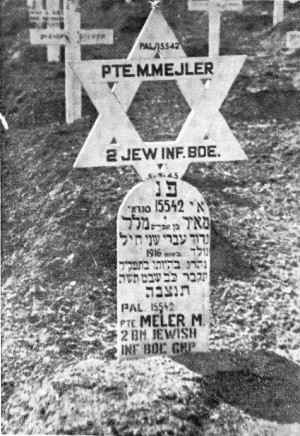
A young boy from Chelm, M.N. Liber from Hrubieszower Street, was at the battlefront all through the war. He distinguished himself and participated in the most difficult and dangerous battles. He was killed while swimming across the Oder River.
Another young boy, Leyzer Roznblum, fought the entire time of the war in the Russian and Polish armies. In battle near Berlin, Roznblum was on assignment in the forest when his group was surrounded by Germans and he died a hero.
Many Jews from Chelm died in battles and struggles with the Nazi serpent. It is difficult to tally up each name.
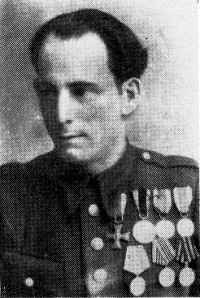
Finally, I want to mention a young man, Mordkhe Brayer, a painter by trade. He and I served in the same division in the fiercest battles deep in Germany. In the city of Kohlberg he was assigned to a division of mine–throwers. Mordkhe Brayer did not leave the battlefield until he had fired all the mines. After two weeks of heavy fighting, one of his officers stated that Brayer had made a major contribution to conquering Kohlberg. He was awarded the highest medals and honors for his heroic fighting.
By Y. Fainsztok
Translated by Miriam Leberstein
In September, 1939, Chelm had 18,000 Jews, approximately 60% of the total population. The town had two Yiddish newspapers, a Jewish gymnazie, a Tarbut school. There was an entire street of besmedreshim [houses of study and prayer] and shtiblekh [one room houses of prayer] for various Hasidic sects, such as the Kuzminer, Trisker, Lubliner, Radziner, et.al.
On October 9, 1939, the Germans invaded. Persecution started on the first days. Jews soon lost all protections. Local sinister elements took advantage of the situation. In addition, every evening the Gestapo drove around and searched the homes of the more prosperous Jews. Many Jews were beaten. Women were ordered to strip naked and do gymnastic exercises. Then the Germans would pick out the best of the household possessions and drive away. This lasted for weeks; people got used to it.
The cold winter sadly dragged on. In the town hall, engineers were planning how to enclose the Jews in a ghetto. But the Judenrat, led by Frenkel, managed to bribe the head of the Gestapo, Hager, and the plan wasn't carried out immediately.
Jews moved around the town more freely, breathed more freely. There were no more beatings or forced labor. Somehow they managed to make a living.
Suddenly, like a hammer blow, in August 1940, the Judenrat announced that people should be careful, that something was about to happen. People arranged various hiding places and did not sleep at home.
One night, 4,000 S.S. men spread out among the Jewish population, going house to house, and arrested 483 men, while the others remained in hiding. The Judenrat vigorously intervened for two days, exploiting every form of influence and they managed to free 411 men; 72 were deported to a camp in Belzec.
The Judenrat organized a relief committee to help those who had been sent to the camp. Each week a couple of men travelled legally to Belzec, bringing food for the Jews, as well as valuable tiems as gifts for the soldiers guarding the camp. On Yom Kippur, 71 people returned home from Belzec. One had died.
The summer ended. Transports of wounded and frozen German soldiers began to arrive from the Eastern front. The brutes began to grow anxious and we felt it immediately. The Gestapo warned the Judenrat that Jews should participate more in work, rather than politics or strategizing. Soon, they resumed beating people in the street, seizing people for forced labor, and threatening to establish a ghetto.
In December, 1941, in the course of two days, the Jews in the more beautiful streets were evicted and forced into small, muddy, dirty by–streets. Jews were forbidden to use the main streets. Conditions worsened again. A rumor spread, that the ghetto would be established on January 1, 1942. The Judenrat and Frenkel again made huge efforts, distributing money and valuable gifts, and they did not establish an actual ghetto. But they did force the Jews to crowd into a few small streets. Three to four families shared a room with a kitchen.
Suddenly, we got the news that Lublin was being “cleaned out.” That was the greatest blow. We knew that our turn would be next. The Judenrat came up with an idea and offered up 6000 workers for the water system. In April, 1942, 5,000 to 6,000 workers, men and women, stood in water up to their waists and dried the swamps and flooded meadows near Chelm. They toiled long and hard, but that did not help.
In August, 1942, quite early on the Sabbath, a luxury car drove up t the building housing the Judenrat and five unfamiliar Gestapo officers [not from Chelm] got out. They told the chairman that at 2:00 P.M., all the Jews must assemble at the square with 15 kilos of baggage, because they were being sent to “Pinsk.” Frenkel immediately intervened with the local German authorities and was somewhat successful .The local authorities declared that all the Jews still in Chelm were essential workers. The other Germans, however, didn't want to go away empty handed. They went into the streets, seized about 300 people, shot 50 on the spot and took the rest with them.
On Octobber 23, 1942, a large group of S.S. men and Gestapo surrounded the Jewish quarter. The aktsie [raid,operation] lasted two days; 2800 people were taken to Sobibor and 800 were shot in town. Within a short time, on November 6, the last aktsie was carried out. Chelm was declared Judnrein [free of Jews]. For several days, the town was a real battle post. A lot of Jews were actually in good hiding places, but the Gestapo had search dogs and found them and shot them or sent them to Sobibor.
Of the more than 18,000 Jews [before the war], by November 1943 about 700 Jews – mostly tradesmen –– were left, hidden away in platsvukes [German workshops]. But every few days these were reduced and then only 70 were left.
In May, 1943, they liquidated the platsvukes, but the Gestapo prison selected 15 tradesmen – tailors, cobblers, furriers, boot–makers – who were miraculously saved. For the convenience of the Gestapo they were left until the end.
On July 21, 1944, the Red Army occupied our town and freed the 15 Jews in the prison and about 50 Jews who were in partisan groups and in the forest.
Thus, of the 18,000 Jews, there emerged from the forests and camps about 100 people. A number of Jews, mostly young people, had escaped to the Soviet Union. That is the final summation.
|
|
By A.Y. Kornblit, New York
Translated by Miriam Leberstein
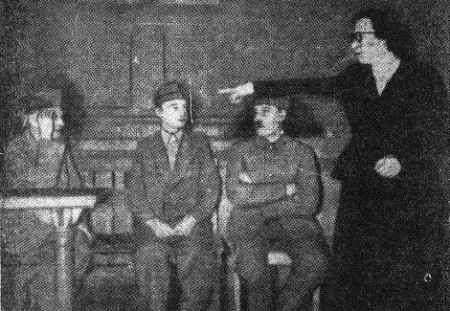
Esther Terner is her name; I remember her from before the war. She was a pious Jewish girl, raised in the spirit of Beis Yakov [Orthodox religious schools for girls] by pious Jewish parents, refined and protective; an only daughter, who had been, as they say, tied to her mother's apron strings. Yet this refined girl possessed the courage and pride to understand that since God had preserved her life and protected her in the German death camps, so that she emerged alive from the Sobibor uprising, she was obliged to take revenge for the torture and murder of our people.
Even before liberation she kept in mind the written notes she had found in the clothing of the Jews who were gassed: “Remember, you who remain alive, to take revenge for our innocent Jewish blood.” After liberation, her conscience tormented her, she could not rest. By coincidence, while in Germany, she recognized one of the chief murderers in the Sobibor death camp and turned him over to the justice authorities, who sentenced him to death.
As we see in this photo, Esther Terner, whose last name is now Rov [?], identified many other Nazis in the German courts.
I recently encountered Esther with her husband and newborn child in New York, where they are rebuilding a life for themselves in the free land America. She feels she has repaid a significant part of her debt by obtaining revenge against one of the murderers of the Jews of Chelm, most of whom were killed in the gas chambers of Sobibor. But she considers her debt to be even greater. “I will never forget the German murderers. Jewish blood will not have been spilled in vain. If revenge is not accomplished in our generation, we will transmit the same feelings to our children and grandchildren: to remember what Amalek [anti–Semites] did to us! Never forget!
|
|
Translated by Miriam Leberstein
On a rainy evening, a Pole drove a wagon full of hay into a partisan camp in the forest.
We hurried to empty the hay out of the mysterious wagon. Before us we saw flecks of frozen blood. There were black, bloodied sacks, which held the bodies of five Jewish partisans who had been killed in battle. Their names were: Moniak Shafran (born in Otvotsk); Yekhiel Bronshteyn (born in Polenits, on the Otvotsk railroad line); Ber Gingold (born in Chelm); Avrom Tikatsinski (from Garvoln); Arye Blumenshteyn (from Warsaw). They had been on their way to carry out a partisan mission when they were attacked by the Polish Fascist organization, NSZ (National Armed Forces), and were killed after a four–hour battle.
Moniak Shafran came to the forest right after the deportation of the Jews from Otvotsk in August 1942. Yekhiel Bronshteyn escaped from the Warsaw Ghetto in on January 18, 1943. Ber Gingold came to the “Regut” forest right after the liquidation of the Jews of Chelm. Blumenshteyn and Tikatsinski came to the Regut forest after the Warsaw Ghetto uprising on April 29, 1943.
Within a few days of arriving at the partisan post in the forest they distinguished themselves with their daring attacks upon S.S. guards in the ghetto, and leading the Jews out from the ghetto into the forest.
On August 17, 1943, there was an oppressive feeling among our squad. We had heard rumors about the Kalushin ghetto. The Jews there had been deported in 1942, and in 1943 the Germans announced that they were creating a new ghetto there. This was a ruse to lure Jews who remained to come to Kalushin and to kill them. Many Jews were deceived and came to Kalushin, relying on the fact that the announcement had been signed by the German governor, Hans Fischer.
We partisans knew what the Germans intended and put out propaganda telling Jews not to go to the ghetto, that the Germans would kill all the remaining Jews – we estimated that there were 20,000 Jews left in various places. But our efforts had little effect.
By August 17, we had received word that regiments of S.S. troops and Polish police grenadiers were pouring in from the area around Kalushin. The Jews in the ghetto were in a panic.
Fearing an uprising in Kalushin like the one in Warsaw, Generals Tropp and Brand sent large military regiments into Kalushin. Although the S.S. commander had announced that nothing bad would happen to the Jews and that the Germans were there to prevent a pogrom by the Poles and Ukrainians, his words did not calm the Jews
We sent out the five partisans named above, who were supposed to penetrate the ghetto and persuade the Jews to run away and not to rely on false promises by the Germans. They travelled by bicycle. On the way, four kilometers from Kalushi, they encountered the NSZ, who attacked them with heavy fire. A shooting battle broke out and two of the five soon fell dead. The remaining three ran deeper into the forest and the NSZ, who were numerous, pursued them. Having no more bullets, the partisans set fire to the forest in order to chase away their Fascist pursuers. But that didn't help and all three were killed.
When the five comrades failed to return from their mission in the afternoon of August 17, fifteen of us set out to look for them. The forest was still burning and Polish fire fighters were driving in to extinguish it. On the road we saw entire divisions of S.S. riding trucks and tanks in the direction of Kalushin, and German Messerschmidt airplanes were circling over the forest, looking for our tents, that is the homes of the “Jewish bandits.” After that came other airplanes called “Henke” and Messerschmidt 109.
The planes began to bomb the forest. The Germans intention was to frighten the Jewish partisans as well as the Jews in the ghetto, who would know that the forest was not a refuge for them.
Once again, five partisans went to look for the five who were missing. One of them, Shloyme Lederman from Zamosc, was killed by a bullet fire by a Polish policeman. The remaining four came back with the news that S.S. divisions were still travelling in the direction of Kalushin.
We emerged from the haystacks where we had been hiding and set off for Kalushin. Our plan was to break into the ghetto shooting, to make a way for Jews to escape. At 10 P.M. we began shooting at the German guards at the ghetto guard posts. We were deafened by the German shooting. Not until 1 A.M. were we able to chase the Germans from one of the guard posts. Out of the ghetto
[Pages 637-638]
came Jews, young and old; children of 5–6 years old ran as quickly as the adults. I remember how a small child dragged his mother along, saying, “Come, let's run faster.” Until the Germans were able to recover control of the guard post, 200 Jews escaped.
We began slowly to retreat from Kalushin. We were pursued by the polish police and German field gendarmes. After an hour–long struggle we managed to evade our pursuers. Five of us were killed: Moniak Bialekman from Kielce; Zise Kats from Chelm (his partisan pseudonym was Zigmund Kot); Motl Pasternik from Zamosc; and Melekh Rozenberg from Chelm.
As soon as we returned to our partisan camp in the forest we learned that five murdered partisans lay in a nearby village. Partisans hurried to the village where saw five sacks in which their bodies lay; these were brought to the forest in a Polish wagon.
When we opened the sacks, we saw a frightful sight. Moniak Shafran's body was so riddled with bullets it looked like a kitchen grater. Yekhiel Bernshteyn lay peacefully as in a heavy sleep, as if he would soon wake up, an ironic smile on his young face. Arye Blumshteyn's body was partly burned. Ber Gingold was holding a gun in his hand, as if unready to give up the fight with the Fascists. Avrom Tikatsinki's right hand and both ears had been cut off as if with an ax and his genitals were gone. His teeth were tightly clenched, indicating that he had been tortured alive, and had clenched them to prevent himself from revealing the secrets about the partisans which the torturers were trying to extract.
We buried them all in one grave. On the grave we placed a wooden memorial carved with their names and the Inscription: “For your and our freedom,” and we whispered “Revenge, revenge, revenge.”
|
|
By Yekhiel Yoykenen, America
Translated by Miriam Leberstein
|
They were driven to slaughter, the upright and the lame and among them all was my pious mother
Khane Maytes –
The murderers beat them,
The best of mankind
That they will be punished |
By Ben Tsion Mitzfliker, Montreal
Translated by Miriam Leberstein
June 18, 1944 was a lovely summer day. The sun reached even our narrow prison courtyard and warmed with its rays. Suddenly we heard: “Get up!” We recognized the voice of the head prison, the sadist and murderer Oberschafuerer Kenig, may his name be wiped out. “Today let's drink to brotherhood,” he said in German. This request was unexpected. We were not accustomed to such words from such a monster.
At the time, I was walking around the courtyard, looking at the high gray walls and thinking how I could escape from this hell. Suddenly I was summoned. The head was in the shoemaking workshop, holding a bottle of whiskey. “Well, Mitzfliker,” he said when I was still on the threshold, “Don't you want to have a drink to brotherhood with your chief?”
“Why not?” I answered. “But, excuse me, I don't drink alcohol.” I believed that in those horrific times, our torturers should drink and we should stay sober. I took the opportunity to ask the chief to permit me to say something. “Bitte schoen,” he replied. My comrades exchanged glances. I saw they were not pleased with my request. I gathered my courage and began to speak. “Herr Chief: As you know, we are the last Jews in Chelm and our fate lies in your hands. If you want, we could remain alive. We are the last of the last.”
I don't know if he understood this to mean that I was giving him the opportunity to rehabilitate himself. But he answered: “Yes, you are not the last. I know many more Jews from Chelm. One thing is clear. If I remain alive, you will remain alive; but when I die, you too will die.” Walking drunkenly, he left the workshop and we remained alone.
Some of my comrades were very upset that I had spoken so openly to the chief. Others were pleased. Until now, we had discussed and thought out all of our conduct. But my conduct was spontaneous and mine alone; that was what had displeased some of them.
The chief's response gave us a lot to think about. Obviously, his answer did not reassure us. The words “If I die, you too die” gave us a bit of encouragement; they meant that he thought his life was not so secure, that he too could die.
The Gestapo in the meantime was preparing for evacuation. Our hearts rejoiced but at the same time we were sad. We rejoiced because we, the last Jews of Chelm, had lived to see the rays of the rising sun that would free the remaining Jews in the forest and hiding places.
In the distance could be heard the dull roar of cannons regularly going off every minute. Then night fell.
The night was full of nightmares for us. We were locked in a single cell, not in barracks as previously. They took anything we had that was valuable. We knew what this meant. We expected to be shot any minute. The sound of cannon fire grew even louder.
When they summoned two of us to help pack the Gestapo's things, we thought that our final hour had come, that they were calling us to kill us one at a time. Our feelings in those moments are easy to imagine, even though we had prepared ourselves. When our two comrades returned from their work, it was already broad daylight. We were assigned to pack up the workshop, preparing to evacuate, to Radom as the Gestapo tried to convince us.
The sound of cannons was for us like a beautiful rhapsody, just as if nature wanted to present a magnificent concert with our long time torturers. The compositions of Beethoven and Bach paled in comparison to the music that we heard that day. We wanted to look into the eyes of the Germans, to see their nastiness mixed with fear.
After that feverish day night fell, the last night for the murderers and torturers of our dear Chelemer Jews. While in the West, the sky over the Lubliner forest was already dark, in the East, toward Brezna and Sobibor, it was infused with a phosphorescent glow. Over the semi–dark skies of eastern Chelm flew the steel birds of the Soviets and they began to bomb the evacuation points of the Germans. It is impossible to describe the chaos, especially the nervousness of the Gestapo whom we observed out of the corners of our eyes. They were simply out of their minds. Our nerves were strained. What would happen?
[Pages 641-642]
Would they forget about us in the midst of this great chaos? The question tormented us.
During one of the air strikes in the evening, we went down into the cellar, to the heating room for the prison where we were allowed to go during air raids. After an hour, we left the cellar and went upstairs and we didn't see any Gestapo. We thought they were hiding somewhere. It turned out they had run away like mice, but we didn't know that.
Only in the morning did we realize that we were alone, without our masters. But we had other guests – German soldiers from the battlefront, tired and broken down; they could barely walk. We didn't reveal ourselves to them and went right back to the cellar, which they couldn't have known about.
Some of the comrades didn't want to hide in the cellar, thinking that they would search for us there. Others thought that we should use the opportunity to hide in the lion's jaws. The latter position prevailed.
The cellar had a catacomb, 4 meters square, 1.2 meters high; to occupy it we had to stay in a seated position. At the entrance to the catacomb someone had placed a cupboard and an old sofa which served to conceal the entrance. We all got inside the hiding place, all squeezed in together. The last to enter, who were near the entrance, moved the sofa closer, so we were safe from any searchers. Now began the suspenseful waiting: life or death?
We hadn't brought any food with us; no one had even thought of that. After a few hours, we heard loud explosions. We quickly understood that before they left, the Germans were demolishing important objects and buildings. Our prison had to be among these and we believed it would be destroyed, so that we would find our grave here, just as if we had been directly killed by the Germans.
Heavy artillery battles interrupted us. We could tell which shooting came from the Soviets and which from the Germans. The thunderous noise from the east dominated with its high baritone. The German response grew less and less. Then the shooting stopped. We didn't know if it was day or night.
A while passed and we heard a fight with rifles and machine guns and the noise of heavy tanks. We knew they were tanks, but which tanks? We couldn't determine if they were the Germans. We had lost contact with the outside world.
We figured that the town was already in Soviet hands. We decided to do whatever we could to establish contact with the world and decided to send one of us out as a messenger – like a dove sent to see if the flood had ended. The person we selected was the shortest of us, a former singer in the choir of the Chelemer cantor. He quietly slipped out and returned with the news that he had seen people in military uniforms but he could not determine if they were Soviets or another military force. He hadn't seen a red star on their hats, but he was sure they weren't German. We waited again for a long time.
Again we sent our messenger. He quickly returned with the news that at last we were free. The prison courtyard was packed with Russian soldiers. With superhuman effort we began one by one to extract ourselves from the catacomb. I looked back at our oasis, our hospitable catacomb, and said goodbye with a glance.
The bright light dazzled us. The Russian soldiers could not believe that we were Jews. A Russian officer, a Jew, told us to go into town and pick out a house where we could live for the time being.
I still remember that day. It was July 22, 1944, a lovely, warm day. The sun shone brightly, or maybe that was just what we thought. But where would we go? Where was our home, where were our families and friend, where were our people, where were our good Chelemer Jews? The town was empty. A town without Jews, and we, the last of the Mohicans, the last Chelemer Jews, now felt the entirety of the tragedy, the heartbreak.
I will end with a list of those with whom I survived: Shloyme Brustman ( tailor); Manis Tsitron (bootmaker); Gitl Libhober seamstress), and her son and daughter; Berish Kelberman and his wife; Isser Zilber ( tinsmith); Khaim Sobol (bootmaker); Hersh Boksnboym (shoemaker); Shloyme Bubis (shoemaker); Shtshupak; Khaim Kirzhner; Nisnboym; Tantshe (carpenter); Moyshe Nayman (tailor); Ben Tsion Mitsfliker.
By Abish Goldman, Porto Alegre, Brazil
Translated by Miriam Leberstein
|
|
As one who fought the Nazi brutes on the battlefront, I want to note some of the heroic acts of our landslayt who fought in the liberation armies of Poland and the Soviet Union, as well as in the Partisan divisions in the forests.
In 1939, Chelm was for several weeks under Soviet rule. It is difficult to describe the terrible impact of the news that the German barbarians were taking over the town. The Soviet authorities announced that the Red Army was retreating to the Bug River and gave us two weeks to cross the border into the Soviet Union. The very next day many people, mostly young, left Chelm, fearing revenge from the Polish anti–Semites and even more from the Germans.
Some Chelemer Jews settled in nearby towns like Luboml, Kovel, Ludmir, Lutsk, et.al. At the time, I was with my friend Dovid Shlakhtman in Ludmir.
Later that year we heard horrific news about our town. Chelm had already suffered numerous deaths under Nazi occupation. We learned of the mass murder that occurred when the Germans drove thousands of Jews to the market place, telling them that they would be taken across the Bug to the Soviet side. Instead, they murdered the majority of them on the way.
The several hundred who crossed the Soviet border were detained there. The Soviets did not trust them and sent them to work camps in Russia. Chelemer Jews who had already settled in the Ukraine were in a difficult situation because of the large influx of emigrants. Many of them voluntarily registered to work in Soviet Russia.
I managed to get work in a government printing shop in the city of Lida, near Baronovitsh. Later, in 1940, because of the distrust of Polish citizens, they began to arrest refugees from Poland. I was arrested in May and sent to the Lida prison and from there to a work camp in Russia. With me in the same camp in Opalukhe was my landsman Mendel Tsimerman. He was lucky to have a special assignment there and he had it better than I did.
In 1941, when the Germans attacked the Soviet Union, all the Polish citizens were granted amnesty. After being freed from the work camp I travelled to the Caucasus, where I found many Chelemer landslayt working in various places. But because of the German offensive in the Caucasus we were evacuated deeper into the Soviet Union. Passing through Samarkand, Tashkent and other places I encountered Chelemer landslayt everywhere; all felt a deep yearning for our home town.
I settled in the city of Prunze in Kirgistan. There I heard about the horrific extermination of Polish Jewry. We were shattered by the bitter news about the death camps –Auschwitz, Treblinka, Majdanek, Sobibor, et. al. A terrible thirst for revenge, a burning urge to obtain payback for the murders of our parents, sisters and brothers, impelled us to join the armies fighting for liberation.
In 1943, the First Polish Division, “Kosciusko”, was formed in the Soviet Union. I entered the Polish army and was immediately set to the First Tank Brigade. There I met two more Chelemer landslayt, Yosek Kratke and Beniek Tshesner. We often chatted about our home and were glad to be able to attack the Germans in our tanks.
I met with Beniek Tshesner often. He told me he has left his wife and child with a Polish family in Lutsk and that when we liberated Lutsk he would seek them out Tshesner was already an officer and worked as a clerk at the army command. Yosek Kratke was also a high ranking officer and was transferred to another regiment. I was soon transferred to tank training and later office school, where I was the first deputy of the leader of the first tank battery.
[Pages 645-646]
The Jewish soldiers serving in the Polish and Russian armies were united in their drive for revenge. The Jews in the First Polish Division felt we were well treated there.
In 1944 we entered actively into battle. Many Chelemer landslayt served voluntarily in the army. After heavy fighting our division reached Kiverts (near Lutsk). There I again met up with my landsman Beniek Tshernin who with tear filled eyes showed me the wedding ring of his wife whom he had left in Lutsk, and told me, “This is what remains of my wife and child.” The wife and child and the wife's sister were brutally murdered and buried in a mass grave outside Lutsk. The Poles told him that the earth over the grave continued to heave, moved by the still living victims buried there. I shuddered at the thought that I had left behind my parents, sisters and brothers five years ago. What had happened to them?
Then, we prepared to march into Warsaw in a quick offensive. We were already in Luboml, close to Chelm. The Germans attacked us with heavy artillery but nothing could stop us; we marched into Chelm. We entered Koliever Street late at night. The town was ablaze with fire. The train station had been bombed and was burning. Adolf Dorman's factory was burning. We drove through the Jewish cemetery but it was unrecognizable ; it was just an overgrown field.
We drove along Oblanske Street. From there, I cut through Narutovitsher Street to Potshtover Street, where my family lived. My tank comrades waited for me as I knocked on the door, my heart leaping with anxiety and hopeful anticipation. The door opened, but instead of beloved faces, I saw strangers, Christians who were now living in our house. They described the death of Chelemer Jews, taken by the thousands from the Chelm ghetto to a place outside town near the slaughter houses, where they were shot and lay buried in a mass grave. Chelm was “Judenrein.”
Dejected, head bowed with deep pain in my heart, I left my home, swearing to avenge the blood of my family, my landslayt, and the Jewish people.
We marched into Lublin and to Majdanek, the death factory where millions of Jews were killed. We liberated the famous Lublin prison, Zamek, where we found many Jews and Poles who had just been shot. We marched quickly to Warsaw. During heavy fighting in the Praga neighborhood two landslayt fell: Shaye Krotke and Binyomen Naymark.
In 1945 during the big offensive against the home of the Nazi barbarians, I encountered many landslayt in various divisions fighting on the front in Berlin. Many of them were awarded medals and decorations for heroism.
I participated in many battles. I was wounded twice and received many medals and decorations including the highest Polish medal, the Cross for Heroism.
We Chelemers who fought on the front, like Jewish fighters in general, thirsted for revenge. We didn't forget for one moment our tragically murdered sisters and brothers. In the battles we took thousands of German prisoners of war. On one German officer I found photos of dead Jews taken in Tarnow, Poland in 1940. He had kept these photos as a memento of his “heroic acts.” I told this murderer that I was a “Jude” and that now he would pay for these killings. Two bullets rendered this criminal harmless. I kept the photos. On their backs were inscriptions written by the murderer himself.
Chelemer Jews took an active role in the Polish and Russian army in Berlin. We were happy to see how the thousands of soldiers in the “undefeatable German army”, barefoot, hungry and defeated, were sent to prisoner of war camps in Siberia. They paid for their crimes but we had arrived too late to save more Jews from death.
As soon as the war was over, I got a pass to go to Chelm. I still had the illusion that I would find someone from my family. The Jewish Committee was already at work and I found just a small number of landslayt who had survived. Our town, without Jews, looked like a big cemetery. Where the old synagogue had stood was an empty lot. The besmedresh was boarded up. The cemetery was destroyed, everything wiped out.
I met a landsman, Mone Tsitron, who told me how my brother Motl was shot in his home and my brother Lipe was the last victim. My whole family, together with thousands of others,
[Pages 647-648]
was taken on the death march. But I found the crippled beggar who used to sit cross legged at the market square, crossing himself and asking for alms, at the same place, as if nothing had happened.
At the Jewish Committee I also met landslayt who had just returned from the Soviet Union. All of them were in need of assistance. Jewish partisans worked for the Committee: Gedalye Bakatshuk; Shaye Herts and his wife; Mrs. Levenshteyn and many others. They strived to serve the needs of the arrivals and to alleviate their condition.
Among others I met Serl Shishker and her children and her sister Sorele. They asked me to accompany them to their previous home on Oblonska Street and help them dig up gold items that they had hidden before running away. As a soldier, I obtained permission from the police But our labors were in vain. We dug up the entire cellar and found nothing. The Poles had beat us to it.
The Polish anti–Semites still pursued the small group of survivors. Armed bands were still raging and killing Jews. The fear was indescribable. It became impossible to stay there. I visited our house and Chelm for the last time.
As in a sweet dream I recalled my childhood, my dear parents, sisters and brother who were so tragically killed here. I recalled the life of Chelm, the political parties, the young people, the sports organizations, where for many years I attended sports competitions. It was all a dream! Only smoke and ashes were left.
I left my town forever with a deep wound in my heart that will last forever. Later, I got married and with my wife emigrated to Brazil to join my only surviving brother, who helped me establish my own printing shop.
|
|
By Shimshen Brayer
Translated by Miriam Leberstein
When the terrible war broke out and the Nazi brutes attacked Poland in 1939, I was already in my second year of service in the Polish army. I was 23 and participated in the battle with Hitler's armies. The polish army was quickly defeated. A chaotic mood reigned. Our fight with the Nazis last until the Soviet army began occupying Ukrainian territory in Poland.
At that time I returned to Chelm, which was now occupied by the Soviets. After three days in Chelm, I was obliged to leave. The Russian army left Chelm after the [Molotov– Ribbentrop] pact with Hitler. The Bug River became the Soviet border. Many Jews left with the Soviet army; I joined them and because of that I am alive today.
At the outbreak of the war with Germany in 1941 I was in Kiev and would receive letters from my mother. The letters were sad, soaked in blood and tears. My little sister would write that she no longer had the strength and courage to live under the Germans. She was hungry and tormented, worked hard at breaking stones. She was 15 years old. Before the war she had finished 7th grade, worked and helped my mother, and now she was enduring so much suffering. She didn't mention our other sister.
In 1946, when I returned from Russia to Chelm, I didn't recognize the town. There were no Jews. Poles worked in the formerly Jewish businesses and lived in the Jewish houses. Many Jewish businesses were boarded up, the streets were empty, the market place deserted. Shul Street was full of ruins, the besmedresh boarded up. Jewish Chelm had disappeared. Every corner wept.
I found out that the Nazis had killed my mother and sisters, my uncles, aunts and cousins, along with all of Chelemer Jewry.
I served in the Soviet army for more than a year, seeking revenge. I did take revenge, but that was not enough, after I saw the great catastrophe, the great Holocaust.
|
|
JewishGen, Inc. makes no representations regarding the accuracy of
the translation. The reader may wish to refer to the original material
for verification.
JewishGen is not responsible for inaccuracies or omissions in the original work and cannot rewrite or edit the text to correct inaccuracies and/or omissions.
Our mission is to produce a translation of the original work and we cannot verify the accuracy of statements or alter facts cited.
 Chelm, Poland
 Yizkor Book Project
 JewishGen Home Page
Copyright © 1999-2024 by JewishGen, Inc.
Updated 13 Nov 2020 by JH