Wyszków (‘Vishkava’) Vital Records
Provide key to identifying gravestones in the Sysków Holocaust Monument Project
The Records
In 1997, even before the signing of the agreement between the Polish State Archives and JRI-Poland for the indexing of Jewish vital records of Poland, special arrangements were made with the Polish State Archives to obtain photocopies of the index pages of all Wyszków Jewish vital records registers. This indexing was done so that the records could be used to help identify the surviving gravestones.
Wyszków is on the Bug River, 55 km northeast of Warsaw on the highway to Bialystok. The late 1800s records for many other villages in the area were kept in the Wyszków registers. A list of some of the nearby villages is noted below. Researchers with roots in any of these surrounding localities are likely to have family connections in Wyszków.
The JRI-Poland on-line database now includes entries from all known Wyszków vital records registers for the years 1874 to 1909. During 2005, indices for the years 1898 to 1903 will be added to the database; at that time there will be on-line access to information for more than 6000 records. The Wyszków data are for the years during which our grandparents and great-grandparents were born and married and when our great-grandparents and earlier ancestors died. These indices have provided descendants of Wyszków and area families with readily available information for the first time on these crucial three or even four generations of their families.
The Wyszków index pages are unusual in that the town or village where events took place also is recorded in most years. The birth index, for part of the database, contains fathers’ names, moreover for several years, both fathers’ and mothers’ given names appear in the index.
The Cemetery Monument Project
JRI-Poland is proud to have played a role in this important memorial, a project that opened the door to obtaining access to the Jewish vital records of Wyszków. Click on any of the images to see a full-size version.
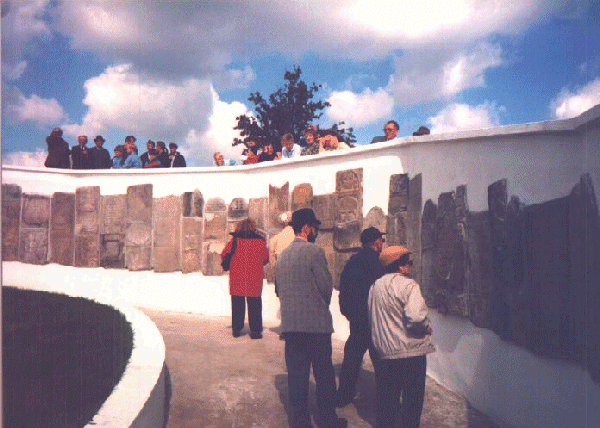
Recovered matzevot in the Wyszkow Holocaust Memorial
Commissioner Lee Seeman.
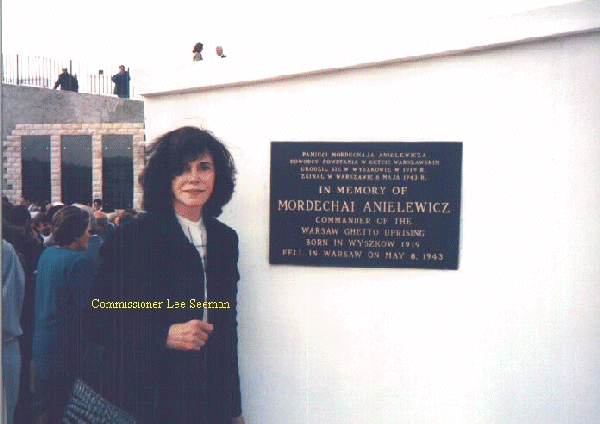
Mordechai Anielewicz of Wyszkow
Commander of the Warsaw Ghetto Uprising
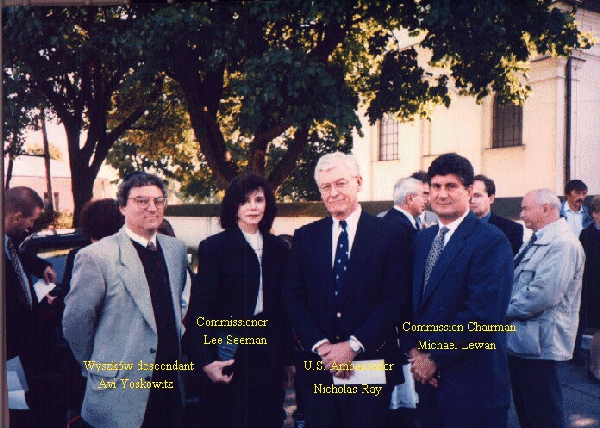
Seeman, U.S. Ambassador Nicolas Ray, Michael Lewan, Chairman,
U.S. Commission for the Preservation of America’s Heritage Abroad.
On September 14, 1997, a dedication ceremony was held for the large monument on the southern border of the former Wyszków Jewish cemetery, overlooking the Bug River flood plain. Almost 100 surviving Jewish gravestones and pieces of gravestones have been incorporated into the curving walls of this historic monument. The planning and construction of the monument was conducted under the supervision of The U.S. Commission for the Preservation of America’s Heritage Abroad and coordinated by commission member Lee Seeman, but was funded by ‘Vishkovers’ and their descendants all around the world.
The database of indices to Wyszków’s Jewish vital records in the Polish State Archives branch in Pultusk, as well as the later records in the registers in the Wyszków Civil Records Office, are being used to connect the broken shards of the tombstones to the people who were interred. Using the detailed photographs provided by the U.S. Commission, many pieces of broken tombstones have actually been united to form the names of people who lived and died in or near Wyszków.
The Wyszków indexing project was organized by JRI-Poland Board Members Stanley Diamond and Michael Richman. The painstaking detective work to identify the gravestones was carried out by Michael along with Sarah Lasry (Montreal). Here is an example of the double-sided gravestone for Aron Hersz WIDELEC identified using the Wyszków vital records.
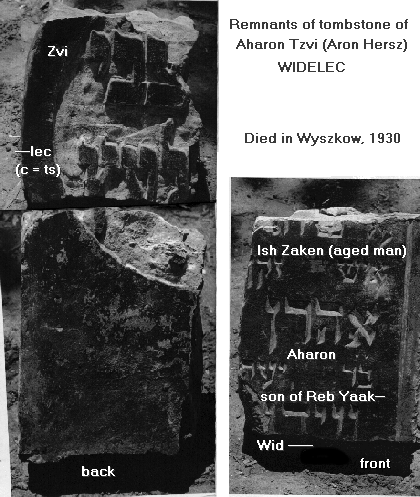
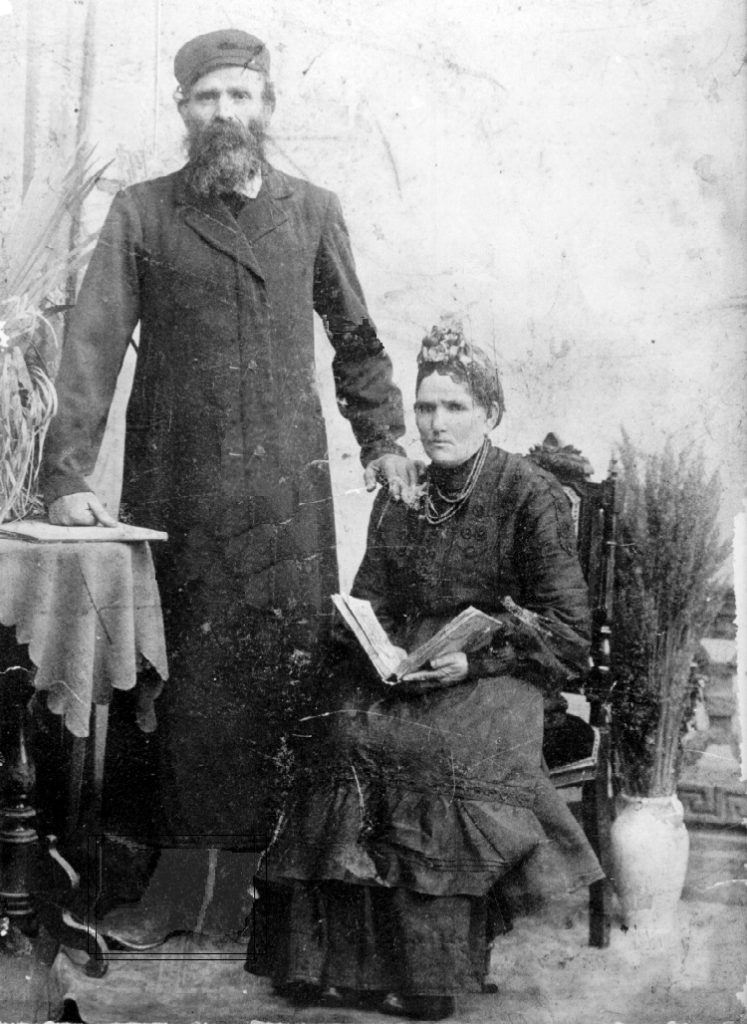
“the giant of Branszczyk” (Wyszkow district)
Click here for information about the WIDELEC family and the Beta-Thalassemia genetic trait.
The Wyszkow Gravestone Identification Project
 |  |
| Stanley Diamond at gravestone of great-uncle Aron Hersz Aharon Tzvi WIDELEC | Howard Orenstein at gravestone of great-great-great-uncle Moshe Nuchim ROZENBERG |
The Wyszków gravestone identification project has already led to finding descendants or relatives of individuals commemorated in these stones. Click here for the list of twenty stones that have already been identified.
While the indices have been funded, JRI-Poland needs the help of Vishkovers and Jewish genealogists researching nearby towns — who are likely to have some family connections in Wyszków — to provide additional contributions to make it possible to create detailed extracts of the records (with father’s and mother’s names) to aid in the search for matches to additional gravestones. If you know Vishkovers — whether or not they are genealogists — please tell them about this project. We are sure they will be interested – and inspired.
For contributions to the ongoing project effort, or other related research items, please direct your questions to the town leader using the form on the Wyszków Town Page.
Partial list of the villages included in the Wyszków records:
- Branszyczyk
- Dlugosiodlo
- Dabrowa
- Daleki
- Kalinowa
- Kamienczyk
- Komorowo
- Kregi (Krengi)
- Mystkowiec
- Nury
- Pludy
- Poreba (Poremba)
- Rybno
- Sieczycha
- Somianka
- Trzcianka
- Turczyn
- Zygmontow
Surnames
Surnames may provide pointers to researchers interested in not only Wyszków, but also to many other towns and villages northeast of Warsaw. If your family lived anywhere in the area, and a familiar surname appears on this list, there may be records for you.
Pay attention to variations in spelling which were typical in Polish vital records. e.g. BURSZTEJN, BURSZTIN, BURSZTYN
For a list of family surnames in the Wyszków vital records, please navigate to the Wysków Town Page.